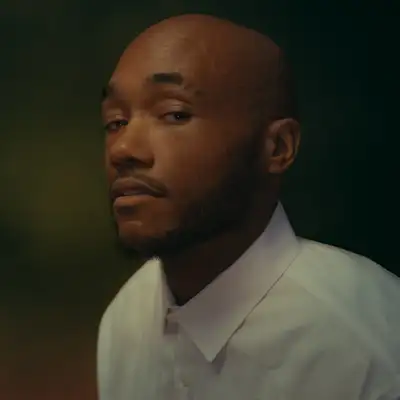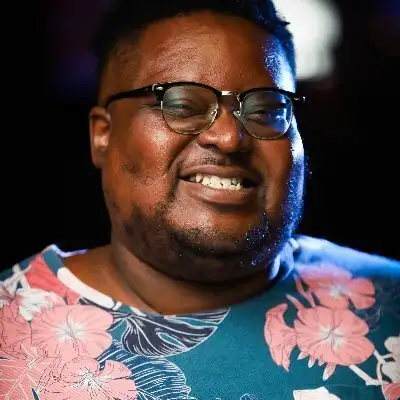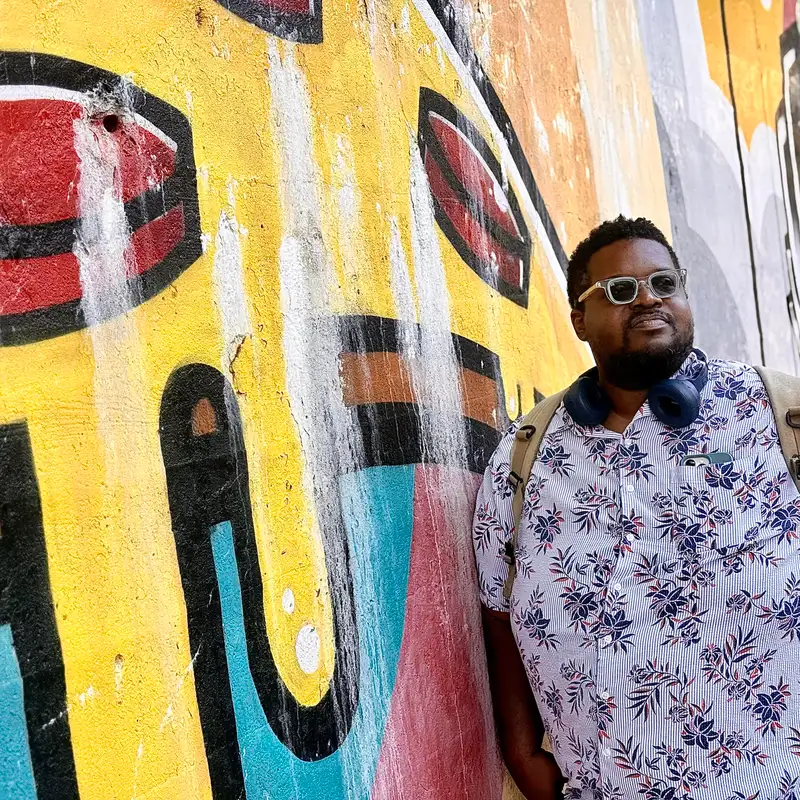
Alex Jennings
Download MP3rob lee: Welcome to The Truth In His Art, your source of conversations, connecting arts, culture, and community. These are stories that matter, and I am your host, Rob Lee, except no substitute. Today, I'm excited to welcome back a returning guest from my New Orleans mini-series, where we discussed his book, The Ballad of Perilous Graves.
My guest is a talented writer whose work has appeared in a number of publications, including Fantastic Stories of the Imagination and Uncanny Magazine. So I'm eager to catch up. Please welcome back to the program, Alex Jennings. Welcome back to the podcast.
So for those who haven't had the opportunity to listen to the first interview, first conversation that we had way back in 2022-2023, it was in April of that year. I would love it for you to share your story. This is a storytelling podcast. It's not just a Q &A. It's not just an expose or a retrospective, but it's a mix of many things. So if you will, could you introduce yourself in your own words?
alex jennings: My name is Alex Jennings. I am an author, a poet, a summertime performer. I've done a little bit of acting. I did stand up for a while. And I grew up overseas, born in Germany, raised in Paramaribo, Suriname, Tunis, Tunisia, and the United States. I moved to New Orleans almost on a whim in the summer of 2006, as the city was still getting on its feet after Hurricanes Katrina and Rita and the failure of the federal levies.
And I lived there for almost 20 years before moving to Baton Rouge to teach at LSU and then on to Chicago to attend Northwestern. And my work, my prose work is mostly contemporary fantasy, but I do kind of hop around. I'll write horror. I'll write not as much high fantasy, a little bit of science fiction. I like crime fiction as well.
And, you know, my first book came out in 2022. That was the Ballad of Perilous Graves, which was kind of a pippy long stocking adventure set in a version of New Orleans where music was a kind of magic. And I'm working on my second novel now, which is currently titled Dead End Boys. And it's set in an alternate New Orleans where instead of tourism, since the Civil War, the main industry in New Orleans has been communicating with the dead.
Well, and my main character is a former standup comedian and podcaster who has come back to town to take care of his auntie. And no one has seen a ghost in New Orleans for about 10 years and nobody knows why. But all of a sudden, my main character, Paul, starts seeing ghosts again and something, something strange is going on. So he's trying to figure out whether he wants to go back to comedy. And also he's contending with the absence of his twin brother who disappeared when they were nine. And of course, all these things are connected. Thank you.
rob lee: Wow. That's, um, now it's like, yeah, so all the details that you can share before the book comes up, give me more.
alex jennings: Well, I mean, to write it, I've drawn on my experience as a comic working in New Orleans. I'm still pretty close to standup comedy in the comedy scene. My wife started standup in New Orleans around the same time I stepped back and wasn't doing it as much. And, you know, we've been on some shows together since we've been together and it is fun. I wish I had more time for it.
But doing two graduate degrees at the same time has made that very difficult, especially with working on a novel at the same time. Like, it's a lot, but I would like to go up more. I do enjoy it. I still enjoy rock and room and Chicago is a great city for it. In fact, we're going back down to New Orleans next month for the Tolodano Comedy Festival.
A bunch of our friends are going to be in it. So my favorite comics are in it. So this book was a chance to sort of pay tribute to my friends and colleagues in New Orleans comedy, as well as shout out some of the comedians that I've loved for a long time.
And then it also gave me a chance to say something about blackness, about the pandemic and about the creep of fascism and how creativity functions in this world that seems to be on fire right now. So I think people will dig it. It's a good, it's a good along well.
rob lee: That's good. And that's definitely going to poke on to a few other questions that I have later. So there's two I want to have in this sort of introductory foray here. So the first one is what brought you to writing, to prose, to education?
You know, when I look at your background, especially you're touching on sort of you educator and also writer and amongst all of these other things, what brought you to the two?
alex jennings: Well, I come from a family of educators and my grandmother had a rule in our household when I was born that no one was allowed to speak to me in like baby talk or like motherese. Like they had to use full sentences with me and they needed to talk to me like a person.
So from a very young age, I was raised to respect the importance of words and to respect and learn to manipulate languages best I could. And my grandmother also, she was a big believer in telling stories and reading to us as we were going to bed at night, except she was a hard worker and she would get sleepy. So, you know, as she would tell these stories, like she'd start to doze and her like her wig would flip back on her head. And a story that started off familiar, like the three little pigs would wind up with the three pigs sailing hot air balloons to the moon with Abraham Lincoln to free the Hebrew slaves, you know, so that idea of stories where anything could happen was super important to me. And, you know, my dad reinforced that by reading fantasy novels to me and my little brother when we were kids. And at the time, we didn't see ourselves reflected in those works a lot. And I remember one night my dad was like, I really wish there was a fantasy novel where everybody's black and the darkest blackest one was a hero. And that really stayed with me. And so that's what the ballad of perilous graves was pretty much like it's an all black cast pretty much.
And like the darkest, complexed character is the hero of the piece. And it was kind of my my gift to my father in exchange for gifting me with the enjoyment of fantasy and an understanding of its possibilities. And I'm glad I was able to get that out while he's still here so that I could I could show him what all that meant to me.
rob lee: That's tight. Um, yeah, thank you for that. The other thing that I was really derelict in, I didn't ask when we previously chatted was, you know, that your background, like there was a bit of travel in your background living in different places, different cultures. And there's a degree of impermanence and then sort of juxtaposed to, you know, 20 years or so living in New Orleans. So talk about how sort of that impermanence to permanence kind of influence your storytelling, whether in prose or even in comedy.
alex jennings: Well, I think I think one way that influenced me is like I learned to form connections with other people very quickly and like build a rapport very quickly. And it also it also kind of changed the way I experienced language because I was living in these countries where language where English was not the most spoken language. And so I would like I would sort of listen for English wherever I was in public.
And I noticed that when we moved back to the States, that was something that really stayed with me. Like now when I'm in a crowded room and like that, I can't tune out conversation because there's part of me that's still listening for English. And it also helps me crib dialogue and like really pay attention to speech patterns like something that I was happy that people noticed in my first novel was there are so many New Orleans accents. And I tried to represent as many as I could on the page and like sort of give a give a sense of the rhythm of them so that if you're familiar with those speech patterns, like you'll be able to pick it up.
And I was very happy people noticed because I wasn't sure whether that was going to work or not. But so like that quick building rapport is extremely important to comedy, like extremely important because you have like, I'd say realistically, a few seconds to really connect with the audience and get them to feel like they care what you have to say. And they're interested in your perspective. And like that's also really important in short story work, you know, creating a hook that's going to make people want to read past that first introductory statement. And so like I think my background has had a lot of bearing in that way from a craft perspective. And then it's also definitely affected my teaching because I also teach graduate fiction at the Stone Coast MFA program at University of Maine. So yeah.
rob lee: That it makes me think of two things. One is the beginning of a big crit song of all people where the beginning of it is just like you have like 30 seconds maybe to hook someone or your song, you don't have that two or three minutes that they're going to listen to the full joint. And the other is a conversation that I had today about sort of, you know, AI being a part of folks' processes of like you write something and then it just doesn't sound right. It doesn't read right.
It feels artificial. And you're putting that in front of someone at a currency that's so, so, so valuable, right? That attention economy. That thing is so valuable and you almost can't get it back.
You know, you can get money back. And I mean, we know how people look at money and all of that, but your attention. That's the thing that's so, so if it's one of those things where you're going up there and you have like a bit, I like, I let people cook, right? But when someone goes up there and it's like, where's the story going? You know, we're like, what are we doing? And it's like, get to the punchline and, you know, so on. And some of the card, some of the comedians using that as sort of the example here. I like how they go about their stuff, but there is a limit, you know, to how long you can rate retain someone's attention. Yeah.
alex jennings: Yeah. That's why that's why it's so important to, to do your last per minute and like really, really get a pop as soon as you can. So the people will stay hanging on your every word. Like one of my favorite comics is Jay Jordan. He, he is a New York comic. I think he's from Mississippi, but he recorded his most recent special in New Orleans and his, his laps per minute are so high, man. Like if you watch his special on Hulu, he actually had to bring it down so that, so that audiences wouldn't miss the jokes because they were still laughing from the last punchline. It's fascinating to see those LPMs.
rob lee: And in the last sort of comparison I'll make to that before moving to this next question around influences is it's the same thing you watch a movie. You know, you're looking for like an action movie. And I think over the last, I say five years or so with those conversations around the second screen experience, we don't expect you to be engaged. And I don't like that. I think it leads to bad movie making. If we're going good or bad, I think it leads to bad movie making, which you put on the screen as it should be there for a reason. So in that, I do remember there was a point where you look back at a movie from the 70s, you're like, all right, there's a really cool car chasing it.
But for the most part, their story building, the most of it, not a lot of action beats. You know, what is it? I ate it. What is the APM action per minute? But it's now we get it too much of that, that it just feels like a two hour sizzle reel. That's great in terms of, but it feels like this is made by a fan and two, three, four hundred million dollar budget, but it's nothing really there stitching the stuff together. And it's just like, well, you got to start off with a strong action piece, then about 10 minutes and no action piece. And then we got to get a little story in there, then another action piece.
alex jennings: Yeah, I'm hearing now that the Netflix formula has become making features that people can watch kind of in the background as they're folding their laundry. I hate it. That's crazy to me, man.
Like that's crazy. That seems like such a dilution of the art form. And I worry about the same thing happening for prose fiction, especially because those two art forms are such close cousins, you know, like the whole reason movies used to be 90 minutes is because that's the length of a dream cycle as you're sleeping. And I mean, creating the dream in that way is such an important goal of both of those media. And I just, you know, I hope ours doesn't get watered down like that.
rob lee: And I'll add this to it because I've been teaching podcasting for like the last three years, I'm doing a summer and, you know, we talk about audio versus doing video, then you hear sort of the opposite conversation. And I'm like, I don't know if you need video.
I think it's just an excuse for you to pay more and have all of these different things. No one needs to know what I look. I look crazy right now.
alex jennings: This is a work shirt. And and in it, I think what's being said is important, but you're getting that sort of opposite message. And then the thing that's really interesting, which you describing there is
rob lee: Netflix has pulled themselves into the whole podcasting realm, but it's just video shows. And it's just like, I hear you, but you're really not doing the thing. It's just like, I rather have the immersive thing that you're still going to receive it, I suppose, but it's maybe too much stimuli to have you paying partial attention, visually, partial attention in terms of receiving the message artably. And I just rather you be able to just listen to it, have it plugged in, do whatever you're doing, not trying to juggle three things. Yeah.
alex jennings: And I just have a hard time devoting my full attention to a podcast, even even one that I truly love. My friends, I listened to my mama told me on a regular basis. That's like one of my favorite podcasts, period. And they, they record it with video and it's on YouTube to watch.
And like, I just don't watch the YouTube episodes because like, I don't have the kind of time where I can, I can just do that. It's a different investment. It is. And I like to, I also like to listen to podcasts and audio books and stuff while, while I walk, is when I'm out walking. And that's, that's really important to me. So.
rob lee: Yeah. I mean, I did buy, I get that Spotify, like your Spotify wrapped. I'll give you this context since you're a big Walker as well. Like, last year I had six million steps and it was like, you had this much Spotify. Like you listen way too much.
I was like, because I'm walking all the day, like a crazy person. Yeah. So I want so much fun. Yeah, absolutely. Um, I want to move into sort of influences a little bit, but I'm going to add a little bit of a spin to it. Obviously, you know, you've touched on the past through various interviews because, you know, I did some research on you. I was like, I had him on.
Let me have him back on. And, you know, Octavia Butler is on there, Victor Lavelle is on there and amongst other, other influences. And I find that as time passes, our influences are either more refined or some of our influences are more prominent in a sort of recent work. So tell me about some of your more recent influences, whether it be literary or otherwise.
alex jennings: Well, Percival Everett has been a big one. I would say that, uh, Shari Renee Thomas is both. Well, I mean, she's been an influence for such a long time because she, she really blazed trails for us, uh, black folks in the speculative fiction field. And she continues to do great work.
She's running the magazine of fantasy and science fiction, where I also have a, uh, speculative poetry column that I do there regularly. And I, I say over and over again to anybody who will listen that I really do feel that black women are on the bleeding edge of speculative fiction just because of the social and familial and societal position that they are forced to occupy. And I feel like Shari is a major example of this. And, you know, it's like we've, we've become friends over the years and I, I run a lot of my decisions by her, um, not just when, you know, we're working together with her as my editor, but just on things in general, because I value her opinion so much. Um, Nisi Shaw is a big one for me. Um, Percival Everett has, has been a growing influence over the past several years, just because his fiction, there's something truly beautiful and layered and super literary about it. Uh, and I just can't get enough of it. Like I, I started reading so many of his books, I think last year really, like when, when, uh, American fiction came out, I went back and read Erasure and, you know, James came out and that was a huge deal and that was fantastic. Um, I just really like the way he approaches, uh, genre tropes to make literary points and create literary effects.
And then, you know, Chris Iboni is a, is a big one. He's the reason I'm at the Lituids program. And I love his, his prose. I loved, uh, the secret history of Las Vegas when I read it.
But after I realized I was going to be working with him at this program, I picked up a copy of his poetry collection, Smoking the Bible. And let me tell you, like I, I lost my brother a couple of years ago. So I've been grieving that and that collection surrounds like his experience of saying goodbye to his own brother and like reckoning with like their family history and the, the relationships connected to that.
And it just like, it hit me like an ax blow to the face, man, like that, that collection is truly amazing. And I can't wait to see what he does next. I think he has taken a break from publishing, uh, because he has had a child and he wants to make sure he's got a good foundation for the first few years in his child's life. But, uh, yeah, his work really thrills me in a, like it, it thrills me like the stuff that I discovered when I was young, like when I was discovering Octavia's work for the first time and realizing, oh no, wait, these are actually black people in these stories. Uh, that's, you know, that was, that was a major, major importance to me. Yeah.
rob lee: Oh, thank you. That's, um, think when, when, when we had these conversations around discovery, right? Like, and, and I've been struggling with that word, especially how it's used on the interwebs these days. It's just like, oh, you discovered that. I'm sure did you learn anything about it? Or did you just become aware of it? But I think in the true sense of discovering something new and how someone in our sort of age group or, or older may dive in and say, all right, what else do they have there? What else did they do? And really that's your thing for a while.
And then maybe there's an influence. And, you know, as long as I've been podcasting the other podcast I used to do my, my brother, um, he would come to me. He's one of my bigger fans.
He's probably my biggest fan. And he's just like, yeah, I know what you was listening to when you was doing that series of interviews or those, those podcasts, he was really into this thing or you were really into this anime or really into wrestling at that time. And the style or the type of questions is baked in there because I was really immersed in it. And I think that's how discovery looks.
And that's how discovery is. And what you were describing with some of the authors that you're really finding a lot of joy in their work, you're doing from a whole like back catalog or have you as some instances for flight, personal Everett, you're going back to like 2002 on through, he said, with James, which was last year. Yep.
alex jennings: Yeah, it's fantastic. Like I always love checking out a new artist and realizing that there's this whole back catalog to discover as well. Like a Henry, Henry Dumas was like that for me. Um, cause I hadn't, I hadn't really heard about him. I hadn't even really heard about Afro surrealism until people started throwing the term around to describe Atlanta, the TV show. Um, and so finding out about Henry Dumas and reading his poetry and his prose has been like just a huge deal for me lately.
rob lee: So when we last talked, you touched on this a bit earlier, you've moved since we last talked, you've moved from Louisiana, you know, you was New Orleans and Baton Rouge. I'll share this because it's kind of funny.
It's been a source of comedy for about a year now. When I first went down there last year for Marty Gras, there was some brother of lighter persuasion. He had a Joe Burrow jersey on and he said these words in this order, I'm the number one shooter out of Baton Rouge and I was like, this is my favorite person. We said that to each other so many times, we have our partners that are to each other so many times down there. I'll remember that.
So Baton Rouge is on there for you. And in that time, I would imagine being a part of sort of a creative community. You have your friends down there who are doing interesting work. You touched on the comedy scene a bit earlier. So looking back, what was it like being a creative person in that sort of environment and what has it been like?
You did touch on being able to connect really easily with folks. How has it been kind of pulling up stakes, if you will, and kind of rebuilding that in Chicago?
alex jennings: I mean, it's been a very steep adjustment. I lived in Louisiana longer than I've lived anywhere on earth and I got used to the rhythm of life down there. I got used to the cultures and the way they intersect.
And so coming so far north, it's been a lot. There are major similarities that comfort me. You know, Chicago is very much itself in a similar way to the way that New Orleans is itself. Like there's a defined culture or mix of cultures. There's a certain perspective, a certain outlook, and there's a certain pace of life.
So recognizing that has helped. But just for one thing, snow in the winters, man. I spent a long time growing up in Maryland. So it's not like it's completely foreign to me, but the amount of snow that we have had this winter in the Chicago area has been insane. I guess our huge snowstorm last January in Louisiana kind of helped as a dry run for that.
Because this is something else, man. And like the snow will stay for days and days and days. I'm not used to that at all. Like just the other day, it was snowing in Chicago and my friend John went out of his way to let me know that in New Orleans it was 81 degrees and he had worn shorts all day. And that was, man, that's a tough one. But you know, I got my good coat.
We've got our winter wear and everything. And so it's not as hard as I had expected. But like sometimes it really gives me pause. Because one thing I was not expecting was to see miniature icebergs in Lake Michigan. I've never seen anything like that. It is crazy.
I was walking along the Loyola dunes at the beach when the snow was still there and seeing the way the snow had piled up on the dunes and the fissures through the snowpack and like how there were actually like ducks and geese and seagulls hanging out of the water. And I'm like, you'll must be here for work. Because I can't imagine that you're here for fun and you somehow don't know you have wings. Like why are you around?
rob lee: One of the things that, you know, Chicago is a winning city, right? And when it's super windy, it's like that bit when the wind is like whispering to you, like that's a ten-ass coat. You know, I feel like that's the thing that happens all the time.
alex jennings: Yeah, it's sure. Like that wind man. Like, you know, I didn't know what people were talking about when they said Chicago was windy. But like where I live in Evanston, not too far from the beach, like that wind.
Like sometimes, and I know this sounds like her hyperbole, but sometimes it legitimately hurts my feelings. Like it's 13 degrees. The wind chill brings it down to like negative nine. And they're telling us on the news, like you can't be outside for more than 10 minutes or your body will start to die.
And I have my fur hat and my coat and everything. And the wind comes by and it's like, it's like a giant dude on roller skates just pushes you and is like, get out of my way.
rob lee: So one of the things that happens when the temperature and the wind, I really don't like the wind. I really don't like, like rain, but I'll, you know, try to fake it sometimes.
I'm like, oh man, this is a weird day. And I'll just put a smile on. However, because it's so windy, you go to the emotional thing because it's so windy, my eyes will belie tears. So it's like I'm smiling and then my eyes are running. It's like, is he all right?
alex jennings: I am not, but it's not as bad as it looks. Like so many times I've stepped out of my house and cried a single tear and it made me feel like koota kente or something. I don't belong here.
rob lee: I thought it was that old commercial of the indigenous dude. It's like you do some crash down and then the one tear comes out.
alex jennings: That's true. We are like, I am in New York. So iron eyes, Cody, like, right.
rob lee: So I got three more real questions I want to hit you with. So it's been a few years since the release of the battle of the perilous graves and it's good to kind of go back after time has passed and with time removed. What is your reason now for writing stories?
Like you touched on the next novel you're working on and that aligns with sort of the history around storytelling, storytelling centered around like black folks and sometimes the the darkest pigmented person being in the lead. Go back to your sort of why. Is it the same? Has it evolved? Where we at?
alex jennings: I think it has evolved. I think the knowledge that some of my greatest most fervent dreams in life not only were achievable but have been achieved is very important. It's also it's also given me an adjusted sense of priorities and lets me know what's important to me. For instance, you know, like I have gotten a lot of correspondence from people who have connected with the book. A while back, one fan wrote me to tell me that when he's playing with his son, he'll say clickety clack, get into my sack and then throw a sheet over his son and they'll laugh together about it. And I was like, that is I couldn't put a dollar amount on that.
Like that is like that to me like that is what I play for. And that's so much more important than however many copies sold and like the book being everywhere. And it's helped me. It's helped me better define what I'm reaching for with this next piece of work.
Yeah. It's also helped solidify my understanding of what genre fiction is for for me. Like part of what I'm doing with this new book is really examining the impact of our history and the influence that it has on black culture and and the influence that it has on what blackness is now today.
Because something that figures heavily into the plot and the background of the novel is the German coast slaver of old from 1811. And that's kind of where the magical stuff begins to enter this world. And it's it's hugely important to the plot and it's going to be important to, you know, the next book as well.
Because like, OK, yes, I say this now that I've cleared it with my editor and everything. But this book is not a direct sequel to Ballad, but they are connected. They do take place in the same world. And like this book with that book and with the next book that I'm writing are going to be something of a trilogy. And I'm very excited about that.
rob lee: See, I'm dropping Joe. I love this. I love this. Thank you. Thank you. And here's the thing that you've done that, you know, in examining and answering that last question, this is the benefit of letting the guest cook. You actually knocked out one of the other questions. So I only have one real question now left.
And I think this is the one I was referring to earlier. So in light of sort of recent experiences, relocation, what it feels like to live in America, it feels like it's a black mirror episode every week or every day. Are there any genres or styles you're considering branching into that perhaps you've not thought of before? Or you're like, maybe the next one is going to be this version of this style or this version of fiction?
alex jennings: I mean, there aren't there aren't a ton that I haven't thought about already. Something that I've been kind of halfway considering is lit RPG, but I don't know that I would want to tackle that in the traditional sense. Like I would probably be doing my own spin on it, which wouldn't be as technical as some of the examples I see. I do definitely want to do more crime fiction.
I got to do that. I enjoy it so much. And I feel like it's also so important to the culture of the underclass, especially in America. I think that I think that I started exploring that a lot when I was working on ballad, because like if you are a student of jazz, looking at the way that rose up organically from history and from the underclass is like it's essential.
So I definitely will be doing some more work on that. You know, I've always wanted to give romance a shot. Romance is like the most rigid genre. But I think I think I might have a couple of stories in there. And then of course, like I still I still want to get into comics a little bit more.
I've done a little bit of hired gun work for Disney with Star Wars. And I definitely want to do some big two comics. I have some ideas there, especially for a buddy comic with static shock and jakeen thunder. I've got that in my pocket DC.
rob lee: I like it. I get a lot. I want to move into it and thank you for the claims with the real portion now time to indulge with the rapid fire portion.
Sure. So I played some spend a little time on the socials and going through things. I had to ask you about this one. How do you like your coffee? How do you take your coffee? So there's your big coffee drinker.
alex jennings: I am a big coffee drinker. I I tend to like my coffee with oat milk, maybe a little bit of honey and some Splenda. I probably have my coffee a little bit too sweet, as my wife says. But hey, you know, my A1C is way down.
I'm working in man. But yeah, I also like when it's when it's warm out, I like to drink a lot of cold brew coffee and I have I have a cold brew toddy that I use to make it. That my wife doesn't like that. She she says she's irrationally afraid that she's going to knock it over. And I'm like, well, just I'm like, if you knock it over, clean it up. That's all I've knocked it over before.
rob lee: I've been on this triple quartado with a splash of coconut syrup fix.
alex jennings: Oh, yeah, I'm out here. I'm out here in these streets.
alex jennings: Yeah, yeah. Maybe there's some real good coffee in Chicago, man.
rob lee: I went to when I was up there a couple years ago, I went to the Swatta coffee spot and I was just like, all right, I was like, you know, it's not a gimmick, right? I was like, I got to try the camouflage latte because it had like some matcha in it. And I was like, this hits. I was like, I wasn't expecting that.
It looks crazy, but it hit. And I was working on my Japanese and do Japanese. I was like, Swatta son, he just like looked at me side-eye. And I was like, all right, I guess it didn't really work out. Like you actually old drawing board. OK, here's the next one.
And this is kind of a two parter, but still rather fire. Name a show that was good, but it disappointed you. It didn't kind of give you everything you wanted.
alex jennings: I mean, like those those first few seasons were solid. There were some moments that gave me chills, man. Like like when when Thon was the main villain. Yes. Like the first time around, Tom Kavanaugh played that role so well. Like I would watch that show and be like, no, that's him. Like that's him. And I thought they were going to have one of my favorite superhero comics moments from all time.
Yeah. Like this is this is back in the day when Zoom and the flash are racing each other and Thon starts smack talking. He's like, Barry, I'm going to murder your wife. I'm going to murder everyone you love. I'm going to kill all of them just to get it to you.
That's how much I hate you. And Barry looks over to him and he's like, you know what? I believe you and then reaches out and snaps his neck. And I was like, what? Reading that when I was eight or nine, it really, really got me. Yeah, the flash is definitely one of those.
rob lee: Yeah, I was big on that show. One of my possible relatives is in it. Jesse Martin is just like, are we related? Because my real last name is his real last name and the area. And, you know, you do that goofy, who do you look like? If you come in up as a person for me, that's like, OK, I say, let's look this up. Let's see who this dude is.
That's like Virginia going. Anyway, from the aforementioned show, flash, what would be the one fix as I do a movie review show? And I always have like, you may have a movie that quote unquote, a bad movie. But I always think it's one fix away from maybe moving from a C movie to a B, maybe a B to an A. So if you could go through reverse flash, I'll go back in time, if you will, will be the one fix you would change in the flash TV show.
alex jennings: OK, for me to bring the show back in line as they were as they were winding down for their end game, instead of going the way they went, what I would have done is explore the original timeline of the show, because like the way the show opens up is telling us that the timeline has been tampered with that Barry got his powers too early and that and that Thon has arranged to make all of these things happen on this new timeline. I would have wanted to see the original version of Barry. I'd want to see what he was like if his powers came in a lot later. I'd like to see how it was different. The way that he got his powers instead of from the reactor explosion. All of that, I would have explored all of that just to bring everything full circle. And I think it would have had a stronger finish.
rob lee: That sounds like a writer that just came up with that one. I like that. I like that. So thank you for indulging the rapid fire. And this is now the last, last part we have is the sage advice. So this question is a little long, but the framing is still around sort of advice or just insight. In today's media landscape, because I think, you know, we all types of media, there is a concerning trend towards the narrowing storylines, especially in genres like sci-fi, Afrofuturism. This is fueled, I think, by sort of a risk adverse producers and publishers leading to limited funding and suppression of diverse narratives.
And I say that without derision, right? Including the removal of books from like libraries. Like you think about DC, you say, oh, we got to get that out of there. How that exhibit shouldn't be there.
Those books shouldn't be there. So given that context, how can we effectively ensure the survival, if not growth of sort of diverse narratives? What strategies, in your opinion, should creators, audiences, communities sort of like employ to keep important stories like accessible and like pop culture?
alex jennings: I mean, don't let people tell you what you can and can't make. Like the way technology has advanced, like it is much easier to produce and distribute your own work than it has been at any other time.
And I'm not I'm not even including like AI and like how that whole theft engine has affected things. I'm talking about like if you sit down and you come up with something that you believe in, something that you needed to create because you wanted to experience it and it didn't exist. Like you can find a way to get that into other people's hands. And we only have so much control over what's going to survive us. So I like to view it as all of this matters because none of this matters. Like we can't tell what is going to stick and what's going to stand the test of time.
So we have to treat everything we do as if that could happen. And so like, who are you writing to? What is the need you're filling? What is the story doing that you feel has to be done?
Like, what are you creating? Because like they can't stop that. And like what it's going to come down to is these giant gatekeeping industries can fail, but art is created from the ground up. Like these these industries aren't really creating anything themselves. Like all they create is infrastructure and you can find a way to bring these things into being without them. And that's what we have to do.
rob lee: I agree with that so much. It's always say it this way. It's just like the people with the money, they don't have taste. They don't have original ideas and, you know, their job is chiefly to make money. And I, you know, call it what it is.
You set it very aptly. It's a theft engine. And, you know, we see these things.
They're not their ways to optimize, perhaps, to make up for lack of people power. You know, it's like I'm doing this by myself. I could easily hire someone to clip this, but I don't have the funds to do that. So let me have someone clip this through an AI platform, but it loses that human touch. Or, you know, at times when you dabble as someone crafting questions or trying to build out something, you start to lose that human element. And it's baked in somebody else, an invisible person who helped build out sort of the schema and the script of these things, whether it be the AI or whether it be the gatekeepers around it of what's safe and what's funnable. You know, it's just like we have taste. I have taste, you know. And we see these things and it's sort of being in the know. Like I'm not going to knock someone for doing a certain thing, but me, I don't want to do a video show if it's not the thing that I'm doing. If I don't see the merit in it, then why would I do it? This right here, me and you chatting, this is for us.
But I said, let me make this into a video because someone in a suit who has no idea what I do or why we're even having a conversation is telling me to do so because it's more engagement. Right.
alex jennings: And I mean, there's so much. There's so much vital independent work going on right now. And like people are making the crossover from independent stuff to traditional publishing all the time.
Like Leslie Penelope has done that. Also, I don't know if you know him, but Dominic Rabrun has just released a collection of short stories called Veve Punk, which is like he's from the DMV, he grew up in Silver Spring and this is a world where there's this corporatization of like Haitian spirituality. But on the spirit side, not just on the physical side.
And so all of the Haitian laws are taking a different tack to existing in the world and they're separating themselves into shares that people are able to buy and like co possessing people. Like it's nuts and it's so good. He's also like a multi threat artist. Like he does visual art. He does voiceover. He makes games, all sorts of stuff. You might want to check that cat out.
rob lee: Absolutely. Absolutely. And big fan of Leslie Penelope as well. So that's a pretty dope friend of the pod as well. So that's what I have. We got it. I think we made it today. So there's two things I want to do as we close out here.
One, thank you for coming on. I've written a lot of notes of just things that you've said during the pod. I've got to look this up. There's another one you just said I got to look that up. So appreciate that old professor. I like that, you know, few details here. And secondly, I want to invite and encourage you to share with the listeners where they can follow you, check out your work and stay up to date with you. The floor is yours.
alex jennings: I'm on Blue Sky, Alex Jennings at Blue Sky Social.org. I'm also on Patreon. It's Jennings 79. I share a lot of stuff on Patreon. I do videos. I put up stories. I put up poetry. I comment on what's going on in my life and in the world. I'm also on Facebook still, oddly enough.
Well, I'm 46, so I get to do that. And I'm on TikTok. I do TikTok.
Let's see. I think what is my TikTok again? The ticking and the talking. All these kids. These young rappers. I'm Magic Negro on TikTok. M-A-G-I-C-K-E-N-E-G-R-O. And same on Instagram. So yeah, like that's basically all the places you can see me right now.
rob lee: And there you have it, folks. I want to again thank Alex Jennings for coming back onto the Truth in This Art and giving us some insight and some updates of coming soon developments. And for Alex Jennings, I am Rob Lee, saying that there's art, culture and community in and around your neck of the woods.
You just have to look for it. Hey, guys, Rob Lee here, and I wanted to tap in at the back end of this episode, urging you all to continue sharing, subscribing, leaving a review. And just overall support of the podcast.
Feel free to follow on thetruthinousart.com, Truth in This Art on Instagram. Drop us a well wish. Drop us some comments on the new episodes. Those comments mean a lot. And yeah, look forward to the Unfractured Atlas. You can support that way as well. So thank you for your continued support.
Creators and Guests