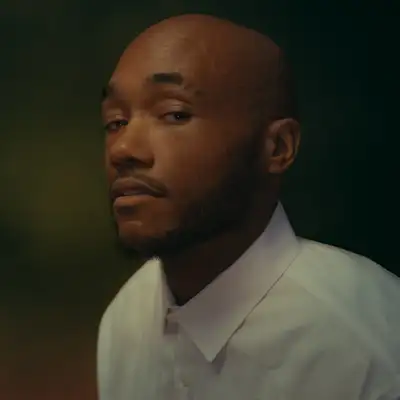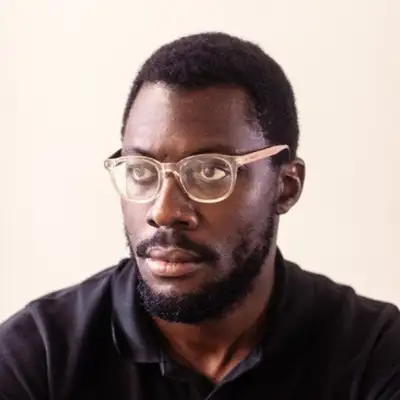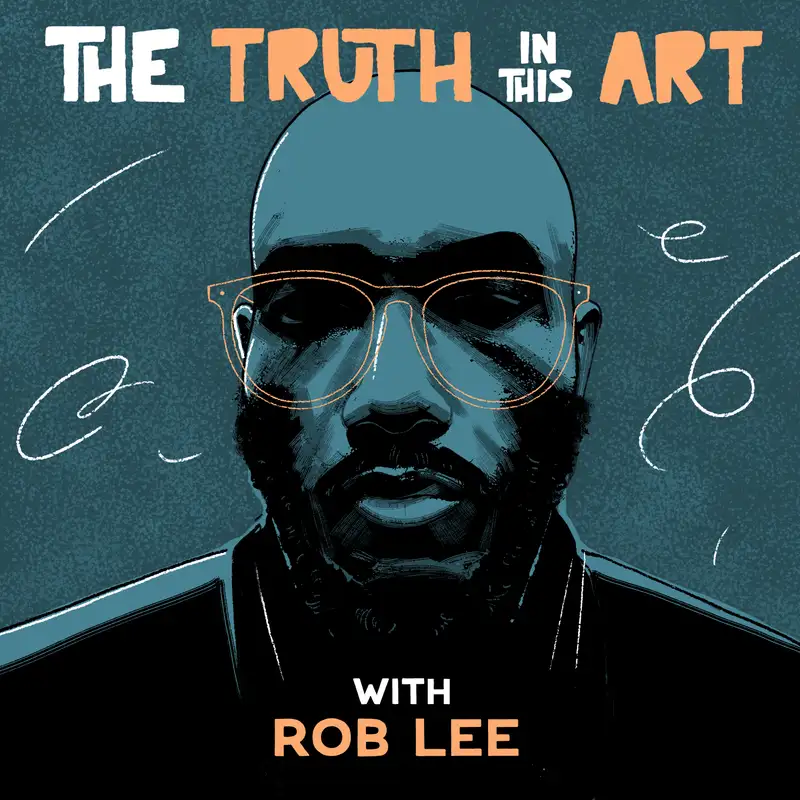
Artist David R. Ibata on Vignettes (Recorded at Vika Gallery)
Download MP3Rob Lee: Hey guys, Rob Lee here. And um I had the pleasure recently to um sit down in DuPont Circle in Washington DC in that that neighborhood and um have a conversation with uh my friend David Abada at the wonderful uh Vika Gallery on 1700 Connecticut Avenue Northwest.
Um the entrance is on uh R Street, uh just to give you those details. And this is uh conversation, uh artist talk, or as I describe it in the conversation, a director's commentary of uh my friend David Abada's uh solo show titled uh vignettes. Uh Vignettes is a visual exploration of the influential moments, experiences and cultural forces that shaped David Ibada into the person and artist he is today. Growing up in Maryland and Washington DC during a period of significant transition, Ibada witnessed a city and culture in constant evolution. His work draws from people, places, images, sounds and experiences that surrounded him.
From the movies and the media that shaped his experiences to the music that defined this generations and the realities of violence that were unavoidable in this part of his life. So this is um the I guess i uh the way I can look at it in a way I I'll spin it to you all and I had the recording of the conversation live in front of an audience at the gallery. Um is the work is there, the work is amazing, and having David share his insights and the thinking that went into the work made it a much richer and uh fuller conversation. So I'm uh happy to share um our conversation, which was recorded on October third at the Vika Gallery for David Abada's work, um vignette. Be sure to follow David and follow Vika Gallery, it'll be in the show notes. Um and follow the truth in its art on Instagram and wherever you uh consume media.
Speaker 2: Yeah, and um really fortunate and excited to be here today to maybe continue our series of conversations, yeah, really, but in this sort of format and for this body of work that you put together over the better part of what a year, right?
Yeah. It's like I made even working up the year, I I probably did like two or three shows. Yeah, and then I had to like kind of strip things down, like that works, that doesn't work, you know.
So what this I've just still didn't do this, uh yeah. So, you know, you've been here before or you've done a conversation before with me, so we thought with that first question. Uh and as I like to go with it, this is your story.
I'm just a guy, I'm just a sharper here, you know. Um so you know, we're here and when you decided to name the show vignette, not memories, not portraits, not chapters. What were you trying to tell us and and how do you see like your your own life? Because this this work is very like personal.
It has a vulnerability here. So tell us a bit about the naming that went into it. Uh I was looking at f uh memories uh uh kind of was flooding back. I was gonna get older memory sort of floor back in my mind and uh kind of flashes and uh remember I remember the time this out of the other time that happened. Um I was looking for a titled that uh was something kind of a bit of usual. Well not a word that's usually usually memory common uh or you know flashbacks or whatever but vignettes, you know, we're class to it. But yeah, I just I just kind of I get older but I just think back about growing up and um Sometimes I I can remember when I started remembering things, does that make sense?
Yeah, I think about like how do I become the person I am now? What happened to me? And it's like, you know, it's almost like it just happened. I go back and think about the beginning and I think like, oh, that just happened a moment ago. So you know, remember it's kind of a flood of black every once in a while. I thought it was just alliteration.
You know, and yeah, I I thought it was that really and I was like, Were you you trolling, bro? And then stepping into it And stepping into it and you know, this show opened back on the eleventh of September. And so, you know, we're number a few weeks in at this point, and I remember seeing like different references and following you and you talking about it and sharing different pieces, and I was like, this this plays like fragments of memory. Yeah, my my story's a lit, yeah. I kind of lined them up.
No, but the the I do I put a lot of videos uh you know, leaving uh stuff I was I was thinking about, like I was a post videos from like the movie Hook. Yeah, I remember that as a kid. Yeah. It's just like Ruby and and um that just like as like a foundation memory of like movies growing up and like, man, I remember I thought I could fly after I saw that movie. I couldn't.
Right. I hurt myself, but like I thought I could that was just this p a powerful image or this music video or this whatever. Um even like I think like I there's a school up in D s up on Georgia Avenue I used to go to. Um I remember I went there years ago just to like look at it. The carpet was the same.
Yeah, a flashback of like, oh my god, I remember we used to watch like, you know, whatever show music video right there on the floor, you know, I just I just remember all these things from growing up in this area and um and as I get older you sort of you want to hang on to that stuff, you know. Yeah. And so uh yeah, that's your question. It's it's revisiting, right?
Yeah, yeah. But I do have one like sort of a side. You mentioned Rufio. Did you have your hair dyed like red and black at the time? No. I'm just saying, I think you can't you have hair, I don't.
So you have a strong hairline. my mother. I'm committed to that.
This is who I am now. So in in talking about it having a little bit of that inside track the process that described as raw, right? And you know, personal exploration. Where did you start conceiving like sort of the show, the number of pieces and things to make that nature and I have a follow up, but when did you start that process? Uh I didn't think about it for a while. Um you know, I think I did a bunch of shows that weren't personal. I lived in a show called quantifiable unknowns as pretentious as a title sounds.
I didn't have the pandemic. I'm showing that T right there. Yeah. Because I was like it it's like, you know, you know I can I can see you, but I don't really know you fully. Yeah, yeah. You know, Yeah, bullshit. But you know, and I it was really I think I thought it myself, like, who am I?
Yeah. And um so I started going back into my past and like I think I had a lot of family turmoil, so I started really trying to hang on to like a lot of you know, the house I grew up in is gone. Yes, you know, my mom was in the hospital like uh Cripple Limits now. These links to the past are just are are evaporating.
Sure. And so I tried to I was like hanging on to like what what made me me, you know. Um this little book over here, this little thing over there. And um and so I started and then also just like how I grew up. I think about this stuff all the time, I'm like, what if what if I just do a show about myself and try to be honest? Um you know, like it's as abstract as a show makes feel in some places.
I guess to me it feels very personal. Um uh and like I said, I had a lot more paintings that probably didn't fit the way I wanted them to, so I I took them back. I'm like, no, I need to go deeper, it needs to go more personal, so I um that's what I did.
I try to uh I mean each I mean each of the works has a very you know, a very deep meaning. Um but I it's something I didn't know about for a while, but I didn't know how to pull it off. Like this show to me as an experiment. Yeah. Um like and maybe I'll go deeper still later.
Uh but I would think if it worked for now, you know, if I could if I could push myself to that place. Uh and in going deep and doing that sort of vulnerable thing, I think this is where you and I have sort of that that kinship where it's like I don't want to talk about myself. I don't want to like I really don't. So what was that like in and going deep and now even saying potentially going deeper and w what was there was there a sign that said, alright, this isn't deep enough, I gotta Yeah, I think um Well, I guess watch like see that piece right there with the you know watching a bunch of black men get killed constantly does that makes you think about life a lot more.
Yeah. And and didn't know that you escaped some of that, a lot of that, uh you know, um but I don't know if I thought I feel the same age as me when he got killed. And I don't kind of hit me hard, like, damn, you know. Um I used to live I used to live in Oxford, Maryland, and um I grew grew up and a kid in Upper Marble, which is close by got an lynch recently. And so you start to just like, damn, you know, um like I d I you know, I'm alive, I'm I'm conscious of stuff.
I need to go deeper to myself as and figure out really who I am. Um You can you can be snuffed out any minute. Yes. You know, um in different ways. Um and so it was just taking my life more seriously, I guess too as I got older. Um understanding who my family actually is, uh in some cases was, um who I am in relation to them.
Um so it yeah, and I I just I didn't want to feel like I was just you know BF in the audience. Like no less because I also been listening to different you know p podcast and different interviews talking about what it is to be, you know, a man and what it is to you know what's expensive of as there's a black man or how the how the world sees you and so stuff I was thinking about a lot more anyway. Um I said, yeah we knew I've talked about too so uh it was like no I need to I need to really explore some of this um as as far as I can. And also like because I keep interested for an audience too. Sure for until the audience can feel that they can come into a show and get something from it and and you know and what from what uh we just been saying a lot of people have been coming in and really like feeling that they they're it was personal connection to the work.
Sure. So I you know I hope so yeah. I I think you you touched on something so for context you're you're about a week older than me which I I still always like buzz out on. I was like I'm older than everyone I know or I'm younger like a lot younger than everyone. It's always trying to figure out where I'm at in relation and I mentioned that we're both in our early forties and sort of growing up in the nineties you get that thing of you'd be lucky to get past twenty five.
Yeah. Yeah as a black man and it's part of the and as you touched on with this particular piece it's just like yeah this is a marker cat like yeah. That one was interesting i if you 'cause I I started uh I'm just a so I started shooting um I was I went to a project where I painted I'm still trying to get it off the round where I painted big eyes to a special forces. Or not ex military I met some special forces guy guys in the meantime. Um
ex military or or you know ex police officer or active duty police officer were one of just talking about like what is your experience with just beat your job. I remember I met a guy who survived January sixth. Wow I painted him um he was really nice guy. I
was really sort of like Lance Bass actually really sweet person. But he's got PTSD. He talked he was talking about the experience. So I remember watching uh the six on the T V we were I was teaching but we were doing virtual teaching. Some of uh it was like it was and there was a Wednesday where um we were we had winds off at a certain point which was merciful. I was watching TV and I was like, what's going on the Capitol? Break the glass like holy shit they're they're actually doing it and it was like damn right. I
grew up here like I would never have thought to do that ever. And I remember the first time I visited the Capitol um it was through Taylor, uh Taylor Griffin, um who works worked for uh Pelosi uh friend who's moved that she was a started with the San Fran. But she um she was just this grand tour of the place. I remember the first one I went I was there's a two yoke cops atches. Yeah with M4s I was just like yeah that makes sense. Yeah I was like that's okay. Like and I'm just like I don't think that'd be in where are these cops you know but but I guess when I went to um when I started shooting he goes a range and and you get you can buy targets. Sure.
And I went um you someone's gonna just like cart shooting guys with a John and L or whatever. I went to uh my first time at a a shop over in Waldorf called uh Ted's outdoors. I I ventured there. I probably feel like accue, you know just like actually the home of uh the high coach of Beretta. I was like trying to look at Time War, drive back and time back with my MacDonald Waldorf um hang out as a kid. And I went to three I got Ted Outdoors and I went as much looking through they had like these targets that were that and I'm like oh shit, you know. the guy with a hoodie And then beard, you know oh God was beard like you know it's just like oh shit yeah oh my god yeah but it's like it's like oh shit, I forgot where I was yeah. Right. And
to me aiming at that, you know, that's your that I said that I was a bad guy, you know Ted Bandai targets it says it's just like ooh Right. So what you said about yeah we're not gonna make it past twenty five, you know that hearing that. I grew up you know we're hearing about like the crack air. Like you know every day on TV it's like some grandmother like talking about my baby's dead or whatever. I grew up here to that. Yeah. We think about a community or we you know just murder, murder, murder, death, crime, bur you know, that's what you hear. So I stayed in the house. Right.
I used to watch Star Trek. I was like fuck the streets like that I'm like I'm painting drawing and completely away from it. But I tried to do it to avoid it. Yeah. You know actually but I know um I thought it was in my class too once at one point I ended up I was I used to skate classy like for Boba. Yeah. Um
and I got arrested one day by the park police. Right. Yeah Russian record I didn't know I was trying to see what I bad is because I was skating with my buddy my best friends he had apps on him, you know. I I had this new I had this new trucks on the bottom of my board. But I used to work at a skate shop too on Central Street on Chinatown. And um hit the board. I
I know. But I had his new trucks on the bottom these trucks are the ones that didn't hold the wheels and um I I was skating the cops came from nowhere it was playing clothes park police. Which they usually raise a square when you're you know on a Saturday. We were there like a weekday. It's something like people there skating on a weekday we just were there. Cop Clint rolled up on us and I had a fortunately I had fucked parking police on the bottom of my board. There was another There's other skater I used to skate with there who was part of a group called Pit Crew had above his board I looked at the hand I was like Yeah man I could hand these guys. They they would pull you over, they pull a bunch of us over and they would like question, you know, they let a bunch of the white kids go and see they were questioning you like aren't you from like aren't you from like you know from Minnesota or something, aren't you? Did you did you bomb bags and they asked him questions like that. Just
to see what you would you know. Yeah. And so one day when they got us, uh I asked him can I just keep a truck I just I just bought him please I mean I'm just you know and then the guy's like I'll get all rusty you know no Miranda no just put my hands around I rented on free applause. So yeah. I'm in it. Put me back with squaw car was like, you know, guys asking the question like you got a you got a girlfriend, you know I'm like, no, do you have a you know strike one do you have a job and I'm like I was like yeah yeah you are you're at school yeah uh and and just kind of just seeing who I had I was and they actually looked at my sketchbook when I got to the the uh the it was a Hanny's point in the station that's in the shoe legacy though my shoes they fingerprinted me. No Miranda, nothing and just put a fuck with me. And then they put me in a cell for like two hours, right? Yeah I didn't have a record nothing. Yeah.
And they they were just trying to figure out what to do with me. They look at my scratchbook I had I had like drawing a shape of air or something soon. And they're like, this is a black panther talking that's believing what they asked me. They're just ignorant guys. Yeah.
With none better than you. Put me in jail cell I think I told you this before. So got a cop comes in with like he's like I thought it was on your board. Isn't that for me to call you board fuck you up. And he's like attacking with a kid like a 12 case shotgun and he was strolled and and he it's just like oh I was like yeah that's stupid but I wasn't I wasn't like afraid yeah I was just like it was like wow this is real. Yeah. But this is something that my first day of high school Oxford high school I was in history class and the guy asked um the kid in the in the class uh how many of you have been in jail like half like seven of the boys in the class raised their hands. Wow
guys like I got I just got up Tuesday, you know. So that was the environment I was in high school Oxville felt like a like a a side experiment. You know it was 'cause you you had kids that had been in jail. I I work at school now and they're just like it's it's just buttery. It's like watch this. it's so
and I was like I came from the jungle. We had bomb threats people got shot yes robbed every day you know it was like it just it was trap buttons everywhere so it was it was just that was just like that was normal in me, you know in in going through the thinking and the process for this show you're revisiting that that time frame. Yeah that period and I forget high school anymore so now I'm like I don't put that about my I just kind of skipped it. yeah yeah I think it's like, I just blank it out now but it that's uh when I as a teacher I just like damn my surge is so much different than this you know and it's um so in looking through this since we're in here w around the work yeah I I want to go sort of at the chronological of it all what was the first piece that you worked with on the last piece that you you worked on within the first one was probably this one um this was one of my students actually uh in Yaqum. Um I
did I forgot when I started this. We did a shoot we were just like I think it was toward the end of the year. And I was like yeah I was like Yaku was a kid who I really admired because he he ended up winning our student show. There's another class in the show um and then there's uh there's a senior show. So when he was a j uh sophomore in the other class show um his work I didn't feel like it was ready. I feel like he I said no you need to work harder. Your work's
just not there yet. Instead of getting like again upset and like you know cry about it he actually like he was like he took that you know you know you're right. Yeah and he bubble down and worked harder and I said I noticed that. I'm like okay and he came um he he showed for the for the the the show anyway because I always tell the kids show for your friends man. Sure show show for your classmates. Um it shows character, you know and like um so he came he did all that stuff and then one time it was senior show he he did a piece on Low Lives in New York these guys that would rob you know the the highest stores and then go with the stuff at parties yeah, yeah. And so
he did his sh uh work on that, and then the there was a um a judge from the Transformer Gallery that came to the judge to be the judge for the show, the theater show. And Yaakum all everybody else kind of left out, they were kind of arrogant about it. They thought their work was amazing. I mean, and yeah, I was kidding here, Alex, who's a great painter, you know, who has who left his work there, and then And then Talia, Leah, who was also like not as Alex had some great paintings. And Yaakov's work was actually not as technically great. But Yaakov came in and I explained his work to the judge with all the enthusiasm in the world, and he believed in it. Yeah. Because that
the judge like really like was taken by that. Yeah, that's this is dope. It's a great concept, I love it. And then I'm winning. Wow. And
everybody was surprised, like, oh my God, fuck you know. And then we were walking out to the uh we were walking out to I was talking to him and family to their the car and um after the the ceremony, and by then some people had left, some other students were just like sucked out because they were just so assaulted that I didn't win and went first place. And Yachov said to me, I know they all looked out on me. I know that I was starting crying. I was
like, he knew that they didn't his other classes didn't regard him. Right. With that, you know, but it uh was that much um the respect that he was due. But he still like worked his ass off. Yeah. And
I was I was super proud of him. So after all that, there were you know, before the end of the year, you're like, I didn't I I think I had him pose. Like, you know, I want you to s and he it was a little ruler too. Yeah. And
I put a light on him, you know, you know, and it was just like, damn, dude, that that but that kind of broke my heart. I'm like, he I think smart kids, he's a risky now, you know. You know,
and but it's like that really that coming back from from nothing, you know. I told him, he remembered when I told him, like, you're not ready. Some kids would take that and they would just be like, ah, fuck you, and blah, blah, blah. You know, but he actually understood what I was saying. Sure. You gotta
work harder. And then with this being tied to like what, like Excalibur, right? Yeah. The movie I grew up watching, yeah. You know, the John Warman Excalibur, that I just sort of sat in my mind. I'm like, that's that's the movie is just odd, I love it, you know. And then the theme of it, you know, also, you know, just like it was tied to that paint in there too. So like
um this like kid, he's bachelor kid from nowhere being able to rise up and become like, you know, the champion or something. Yeah. And then and I know with painters, right? Yeah, you know, they're never quite done. It's like I'm always touching stuff up, I'm always looking at it. Yeah. What is the one that you touched last within the work that's around us? Um, I probably know that one last. Okay. Um
and beat me, and we talked about that when I was a bit. Uh or maybe this that was the two pieces by that paid man there. I painted
those. Yeah, probably that one. Yeah. Moving into this next question, um, which is always ghost because last time we did a recording, we just went off the rails. And um one of my favorite pieces here is Uncanny Spectacle. You know, take a step. I'm a fan Oh, there's a painting over there, uh, in the corner. It's almost like I already had the notes and going in the direction where you pointed it. Yeah. Um,
that was okay, so it was the backstory at all of that one. The painting, well, as I saw it was a pain. The pain
there uh with the eyes, but uh it's called redacted, it's my dad. Um I always met once or twice in life. And when I was born when I was like five, and then I never saw him again. The two paintings next to it or his two kids. So he had two German kids. He was married actually, uh, to a German woman. And I know the I know them now, but we still still a little, you know, spicy, but I actually look like him. I had
he gave me his name upon my birth. That's some biblical shit. Yeah. That's why
I'm like, well, it's you know, then types of Excalibur, it's like, wait a minute, what the fuck? So he gave me my name, but there's a meaning behind it. He just went left and didn't leave anything. No money, no, no, no writings, no nothing. So the meaning had to be I had to figure out who I was from just nothing. Sure. Um
well actually no, it was more than one time he came. But he stayed with us for a week. I might
have been a time. So that's that painting in the corner is us when we were in Baltimore, we're in Baltimore Harbor with his best friend who was in town actually. And there's I think I said best friends took a picture of with the three of us, a mom, him, and myself together. Not only
like the family photos we have as the three as us together. Yeah. To me and my little short shorts in the 80s. And uh so that uh yeah, it was just like that sort of moment. I was like, wow. I can't remember that moment from the inside, but I I'm looking at it from outside, I'm like, wow, did that happen? Yeah. Because that's one I think when I came down here, I immediately went to for the opening, I immediately went over there to this wall. Yeah. That's where
I started. I kept coming back over here, and that particular picture of the three of you, I just remember you posted like the original. Yeah, yeah. And I was thinking, yeah, this is just like the this is the image. It feels like this is just the image, but it's a painting of the image. Yeah. And it's invoking a I guess a deeper thing. It's like
me and you know each other, but I felt there was more depth and knowledge that you painted that particular one and what the choices were and what images you wanted to have. Yeah. Yeah. i mean I mean the pain and my dad took like a long time. I was gonna do it for a while. Then I put it back in. You know, um I didn't really felt any kind of I wasn't like part working about it, but I just kind of just want to see if it works. But yeah,
that one to me that was that was like wow. Um like I didn't know I could I I didn't know I'd ever paint that. I never really know. Um but here we are now, yeah. So talking about memory more macroly speaking, right? Why do some moments stay with you forever even when you can't remember sort of that whole day? Like especially
when we get sort of corner right here. Yeah, I don't know. I mean I remember like I I'll this one's silly. I remember we're told the Matrix. 1999, It
was like a crossover point of like, you know, I remember being with an audience watching that movie and like everybody's been like, Oh shit, look at that. Yeah. Full of time, I know. Full of time, yeah, it's just, I remember I remember movies a lot. I I I guess because I was raised by T on TV. Sure. I
thought this one over here, oh this one over here is like a kid looking at a uh TV of uh the guy with a sword. It's actually the Lord of the Rings the guy. But it's
like I thought it was raised. Yeah. Yeah, it was like laxy kids, you know, and then um I come on and watch TV, watch cartoons or whatever, but uh or I go to the m the movie channel and just watch movies. Yeah. And I
grew up watching just movies and then looking my friend I remember Randolph, who's working on the X-Men 97 right now. Nice. Um love the kid. He uh
I actually wanted it 'cause he he a lot of the guys, a lot of the men the black guys grew up with were fatherless. Sure. My friend Randolph, my friend Fagan, who's a fucking genius. He is a genius at physics. Um but there was no one to really there's no mentor there who really died in, but I I love the guy. We grew up
skating in DC as well. Um and let's see, who else? It was just a bunch of them. Um guys from high school too. Um so without the uh that's where I was like, well, yeah, we we look at the Michael Jordan when growing up. You know, there's this Jordan, Jackson, and Mike Tyson. You know, these
examples of of super excellence. Well Jordan I used to watch the uh NBA finals with my mom um I was growing up, and like Jordan was just an example of like just just power and manhood and like remember when he won that game when he was sick? Blue game, I was like, did he how do you what? I remember I was like that that enchanted. And I remember when he did the he had a fist up and I was like, well, I watched that together just like well the edge of a seek, like, oh my god. So when I I seemed to like, you know, but it's no I remember you just remember this this example of like and that's just the philosophy that he had wasn't like that's what you used to carry thro through life. Like the original father, but you you take on these philosophies. It's like it's like watching this movie called Ghost Got Dog, right? But um but with Jim Johnish. Okay. And this
uh sports literary put the he put the like an urban samurai. Yeah, like reads the code of the shield, that's his guide for life. Yeah, you know what I'm saying? And I mean sort of both too, but like he just uh but it's like no doubt, like it just needed a a philosophy to carry through because there's no one else there. Yeah. And for me it was like watching guys like Jordan or Tyson, you know, Tyson Catamoto and it's a mentor the the swap that cares you through in the in the place of a father. Yeah. For me
it was movies and some of the philosophy that some movies gave no, not always good, but like I remember watching Star Trek a lot. I watched the Picard, and like that was like a mentor for me. Yeah, you know. Not perfect, but
it's just like, oh, wow. You know, and and maybe the mentor here and there, but it's a few and far between. So do so you mentioned Jordan. Yeah. Were you shaving
your head at any point if it's fire? No, no, no, that's not a hand for the five. That's not uh feel like I I feel like there's gonna be a moment where we have a ghost dog off that scene where uh force Whitaker and the Razor both bow to each other. Yeah, yeah. It's And then
just walk off. Yeah, it's such a weird scene and uh missing. thing. And um sort of uh lastly there's far as Picard, right? Um there's only the reference I was gonna ask you later and sort of this rapid fire close out piece which one it was but it's clearly next generation because you're of a third age and I grew up with this end man I I you know uh separate saucer you know I I was I love that show just but it was also like comfort food. Yeah. You know
these were comfort food. Like we grew up with TJ F. Yeah right. It was the comfort food. Like it and
then and even the values that those shows try to espouse about families and togetherness. Yeah. You know it sounds I feel like I'm sentimental food saying it but like I love that stuff. I love I love those shows because outside it was like scary. Yeah. And there
was like Ottawa grew up was like it was when I was a kid it was like there's families in my neighborhood. It was it was like especially it's nice. And then like
the re like that painting with Tupac there over there is like when gangster app really came into play all these it was like a psyop and all the kids got all hard and they almost sort of killed each other. Right. And I was like so like do I want to be outside? No. I I
remember very clearly so like let's talk about sort of the DC Baltimore sort of back and forth for you. DC Maryland back and forth for you. No, no, no,
no, no, no, no. Hey hey there there's an image where we're taking it over so that's not um I'm coming down from from Baltimore and the reason I mention it it is sort of this thing of that that sciab that you're describing of well this is how this is treated. Like I'm from there and often people don't think that I am until the word two comes out the way that it does language. But you had that the the image two pocket show night there right and the the painting and I remember this is ninety six right and I'm eleven you're 11 as well and I remember my parents like don't get into any of these arguments because people are dying over this rap stuff. Yeah. Just having that
conversation before going to middle school. Yeah. That's insane. Yeah. But also it's
a reality of that sort of era so that was Baltimore looked like normalized to me. So being down here and I'm looking at this image in the back what is it scales? That's one of the images. Yeah. And what is
scales representative of people that you saw growing up like guys around the neighborhood. Talk a bit about that yeah. Yeah uh guys who just didn't make them their lives. So I remember as a kid like a lot of I have grown men asking me for money. You know I'm like what like I barely have Penny Candy money. What do you think for like now later even now like like people they're gonna have you know a ton of cash laying around just like it's like but it just this image of like you're supposed to be the elder one. You're asking me for from money. You brought your dollar. It's like, No man and I or some I remember one guy when I was working the skate shop um I'll never forget this guy was like he was crushed as death he had a crush white everything and new Jordan was asking me for a dollar I'm like you got crushed everything. What do you
ask me for I'm a kid but just you can't trust that thing about deal with older men and like but you're supposed to be protecting me. Yeah. You know? Why the other way around you know and so there's I that's how I grow up too of just having to move myself my mom, you know and like that's it. And yeah. And
then being having that that notion and this is why I made that Baltimore sort of comparison you know I go at a lot of different places you were saying I was in New York and you know Harleman and Manhattan last week to fair the Baltimore stuff is presented because it just doesn't quite work. It's just like well why are you here? Shouldn't you guys be selling crack rough to shooting people? Well the wire fest yeah and you know it's y I think you touched on when we were at the opening like people don't think you have any ties to DC or like Maryland or what have you I sound like I'm from PG. Exactly. Yeah I don't sound like I'm I I don't know where I got the voice you know but like I don't sound like I'm from here. Right. I'm definitely
from PG You know and uh but I won't I never I guess I've never tried to I don't I don't really try to my one my mom when I was what I was younger. I never got this I was saying I started saying the word minds I you know started in and which was like I started selling Tin on the street. Yeah. You know and
there's a shorthand you know which is what it's often just the information out. But I started saying mind she w she got so angry at me. She don't you ever she I don't and in a way it was just like I still think about like oh you that's how you're trying to keep me from flipping down those rabbits like you're judged by how you speak. Sure. Yeah. You know I used to with T my mom grew up my mom grew up in Jamaica and c and then going to a colonial boarding school. Well boy boarding school like postcolonial Jamaica. She grew up
in a colonial Jamaica too than they had their w um their independence. Um but that was still in her and my aunt Mala's right there in the corner too. And uh that was still in her and so the you know my mom remember reading like Shakespeare and I also my my grandfather that my grandfather's Shakespeare a complete book of Shakespeare, right? And I grew
up uh loving Julius Caesar and so just the the King's English kind of thing. So you should speak properly. Mm-hmm. And that's some of that isn't like I'm gonna ask all of my students and like that come in and I'm like, no speak properly. Because I know the effect of that. When you threw
on the phone, when you're when you're being someone um for whatever so sh that's probably why I speak away dude she really like instilled in me. Yeah. You know, don't sound like someone from here. Right. Sound like something else. I I would
get the thing of you don't sound like you're from here. It's like you're putting on a front or you put it on a voice and it's like we're not black enough type thing. We're not. We're not wrong.
That's what that's what that's what the the subtext of of the of it and then which leads you to what is that then right you know my mom's coming from Jamaica. My dad was from from Congo. Yeah. So my
mom was coming from like I was never subject of of American slavery. I was never I never had those ties. But my mom was British colonialism and my dad was French colonial. Right, no. And I'm dead
after I'm a hundred ten percent black I don't but like the people didn't think I was black enough. Right. Ironically I'm like what the fuck are you talking about? That's why that girl term comes from that Yeah, I know you guys. Yeah, using I'm European but uh but that is like well what is black mean then right. Is it gangster
rap or is it this? 'Cause then but then I grew up you know about um I remember when I really I think art history is in our school in class um I remember uh years ago before I started working at Duke I saw this guy um named Tomas Alexander Dumas he was dude I I painted him as part of this that first two that took him out. He was Alexander Dumas's father. He was a general
Napoleon's army um and he I think he led true the Alps he was nicknamed the black devil he was badass just and he went with Napoleon into into Egypt and was like this is bullshit. you need to go home But he put some bad side and just you know but it was a painting of him on force back rearing up and I remember I saw it danger cry because a lot of people don't see that with images of the black folk, you know it's usually the downtron, you know well it's like nah man there's plenty of great images. Um there's left as the deal with Larfier pay the field Les would have a painting of his uh was his assistant a slave um Juan de Playa in 1650 painting him um and it was the first time and it was hung in the what was it part uh the park, the park, I don't know, um it was an art show there in Rome and people hadn't seen the painting of a black man like that. Right painted by a guy like you know Steve Velasquez. And so I looked at painting with that and I'm just like that's it's I mean it's taking him the Met right now. But um I'm like yeah go there. And so I always gravitate toward that. Right those images. Um there's another one uh the Chevalier Say George who was a knows of black Mozart. Right. No. They made a
movie about him recently but he knew uh he knew uh uh um what you call it Dumas and uh and so they're contemporaries it's like and then he went to like Texas Academy and stuff so I all that stuff I sort of gravitated toward slowly with the work too like storesmanship and all I ever watched Star Wars or watching like you know Highlander but you're being that is that a thing. Yeah but I I guess But those my info those are some of my influences too but you know in terms of what b define myself as a black man um I gravitate toward that stuff and then and the Jordan Tyson Jackson I saw these guys and I'm like that is superhuman. Right. And it's all it it's a level work it's a work ethic that it's like it that's that's some great stuff. I think some great you know get you an artist that can do both. Huh? Get you an
artist that can do both. Yeah yeah yeah I got like two more real questions you know we have the rapid fire with a BS questions that we talked about. Uh what's the difference between remembering something and understanding it. And the reason I mentioned that you know you you you said a moment ago about sort of the older guys that those are news floating around they might be asking you for a dollar where you're younger or what have you now being perhaps at their age if not older yeah you have time removed from that experience and maybe there's an understanding that comes yeah no that's such a great question that's a great way to put it my heart breaks for them now. I was kidding I'm like ah man but now I'm like life can fuck you up. Like I I mean, I've had anything there's a there's a show uh on it was a it was on YouTube called Invisible People. Okay. Um it's about
people who are homeless and this guy will go over in go out interviewing them. And they would talk about how they felt homelessness. And um and some of them they had family that just abandoned them or just they just you know maybe someone got divorced or someone got the house right away and they had no connections to bring them back. And so I can
see these guys now like I can I knew a kid actually who fell on the homelessness. He would hang out by the M L K library. I went to high school with him. I would have seen him as I was sort of going upward and and I just and there I kinda I had a business between myself and him is hanging out with these with these uh homeless guys. I think he's an odd character but not bad dude, you know, but uh I mean he tried to like bully my friend and I were walking home one day but he was being washed around by these other kids in the neighborhood that were just trying to be hard. And um and he just ended up like he was almost like uh like Dibby from uh the wire he just fell into that hanging around those guys. Right and became 'cause he did you was in heroin hell and the wire. He kind of slipped into Pablo that way. I would see him some
every once in a while like damn. Um but I yeah no it's it's lack of connections man. It's it's I mean it's a fear I have too you know it's it's it's terrifying. Like I I saw that
so much I almost felt normal. Like that's you that's the path we eventually you'll get to um so now I have little I I try to have compassion for those guys. Um because maybe you had to handle that was just they did you wrong maybe maybe you just got into jail and there's no one there, you know um I mean I and I I just I was say actually let me let me so back through the rest story just to show you how it ended. Um I got let out uh I'll tell you what they had nothing on me. I was thinking of the
cop coming with a shotgun and then they did not mean I was seventeen. They let me out. I was going back and getting my stuff and I remember the guy at the desk was telling one of his other colleagues, oh somebody wasn't AD we're gonna charge them with something that one line my mom went the next day and was like giving them the airport they're trying they were begging her not to sue because that one line we 2018 we could have charged him with something. They could have fucked up my entire life onto some charge made up charge. Which I'm sure is what happens to a lot of dudes. Right. Just like make it up and then you're in the system, you're you're you know, you can't get a job your whole life is destroyed because we want to fill a quota. Right. You know and we've seen
the videos and stuff I mean I I have to stop myself and watch those but yeah it's that that close and I walk back to the hands point with no shoelaces for skating. Right. Yeah that's yeah I wasn't trying to be disrespectful. I mean I thought part of this I'm like that's like that's the first member right. I mean and 'cause you guys are rapers and we fucking guys. Yeah. But I wasn't I wasn't physically threatening me any I was actually being very like that I'm sorry, you know. Um but I was a kid.
Right now that teacher I feel like that's your bottom anything. Two of them one can argue 30 when you argue 30. We're already 40 too but you know I've seen that and it's like but I I think about that a lot. Like damn it could have been over. Right. Um and I can see
how it happens, you know and so I had that I you know luckily it was I was under I was underage um but I it's just like it was that close. So I can see how it happens to you in the Jumi Gladiator Academy and then up there, you know doing that and and um your life's destroyed so yeah they're they're different moments forks in the road and as you and I are very similar size. I've always been this big. It's
just like you have to be older than you are I am not I have a student now who was who looks older than me. I mean he's a sweet kid. He's he's a senior now He has a little mustache. And a little beard upstairs and he says people approach him like he's older. Yeah. I'm like and I remember that
I had a music as a kid too because you're taller is and I'm like yeah man, you know and it's like I I get I get it. Yeah. We care. Also always you know um but yeah. Here's the last question here, Sort of two parts um So media references and obviously you have the Tupac and um show nine that's a very striking and memorable image and we've shared a bond over like a love for film um television. That's a lot of Miami bike
that's heavy from back and forth. And uh even even music, like I I appreciate and valuing your music tastes and we both enjoy like the eighties references to sort of music. Well a lot of yellow What were you into growing up? Uh you said you sent out
a Star Trek and and things of the sword and in television shows. But what were you into growing up and how perhaps in other ways that you didn't touch on did it inform you of who you were then and who or who you thought you were. Like I didn't relate to this. I relate more to let's say back in the day uh homicide life in the streets are right and it's like I don't believe any of these cops. I do relate to Jordan LaForge though. Yeah that's a really good point.
Um I didn't relate to the hip hop I'm growing up. I didn't I didn't well as a kid I rap I just because to me represented the violence that was outside. I couldn't watch the wire for a long time. Mm-hmm. So it's I was going to
college and like all these kids all the white was like what's the wire sort of real I'm like fuck the w I wanna watch that. That's an interway. Yeah. Yeah. I mean back I'm back round
for it. Ed Burns uh he was my teacher um high school. Holy shit movies the whole thing. Damn we gotta talk I mean why it's a brilliant show. It is it is that brilliant but I I could not I was trying to get away from that stuff. You know I I'd heard about it my life I'd seen it. I'd seen cops roll up on somebody's guns on like I I've just you know seen pullovers where they they bring in like there was a in my neighborhood there was some guy that I remember there's some PG cops. They can't just bring one two
small cars they gotta bring fifty because like for some reason like you can't handle it. Um the cop of go go, that's great. I think it was like a cul de sac. Yeah. And I remember uh I remember one time too like I was I'll get back to your question. Um there was a a drive by for whatever reason um uh in the neighborhood and they got and got out came outside I called the cops I remember one cop was saying okay back up. In the cul-de-sac square it was a trap house operating talking for like over 20 years. I saw all sorts of shit. EFT, ten years in this I
trap a legitimate trap house that went hard for ten years. I'm talking about I've seen all manner shit I can't talk about. But the cops are had the odd days had were surveillance for a long time. It didn't raid three times already. Sure. And there was some grandmother
who who owned it and then she after she died that's what I disappeared. But um one cop I was thinking I was and one cop who was um who I saw a parking I said how what what can I do to like you know help fight this thing like to call us you gotta the more times call us we can respond faster than blah blah blah. So one time there's a drive by um and uh I and I called the cops I was like what's supposed to do I came out I was wearing a like a the hoodie like the color your shirt. Sure and um I remember the the cops came around they were very quick. I was like yeah I was I'm a gotta call you I had my hand on my hoodie and like the first cut I was like take your hand out of your pocket. and I was like flashback black and um they they had guns and then there's there's two white guys and there's this like white shit who was like five five five fucking M4. Like I'm just like no you're gonna what what are you I think it's Iran, right? Like I promise I don't have
any trucks on me. Yeah I I'm just like yeah but they look for showcasing stuff and then and I'm and I'm just like community pollution. There was there's a video I think it was my Navy art of a guy a cop yelling at this kid, black kid you know and he's like yellow he's yelling yelling yelling and then afterwards he braced me for a hug. And I'm like that's community pollution. That's who I wish I I saw growing up. I really did. Um but yeah
that's your question um about media um yeah I didn't have hip hop as a at first I didn't really it was around but I could not embrace it because it just reminded me of bad stuff. True. So I w I went to like raw music which is terrible. Yeah. Um I went to odd s I w I saw the other side of it. Yeah. Which is interesting. I I was
really I I really I want to think of a pet man I don't know why. I went I went to the um I think it was Splomas a little like all these little you know Nar and and uh I got I was I was what not I was dead sounds I went to death on that phones like three times a concert. Oh wow that's what I was listening into uh and it was fun. I might forget we're the punk
shows too. So I saw that other side of things. Yeah. But it but it plays in that thing because like each one of the bands same thing then. And then it it's just like ah that's not black enough and it's like yeah I got all of it though, you know like I definitely relate to you know it's like oh I love the blind side I love that area, you know you see that at the end like then they all start referencing like and splicing off each other and then the family and it's like yeah whatever. Um but it just but then I got I got more into it. I got the MF Doom, I got to other sort of stuff and and uh but um media wise, I throw up I guess yeah, I watched a lot of movies like I would watch those the eighties classics, the uh the Terminators were the Blade Learners, but 80 Sci Fi, um you know, uh two of the one Space Odyssey. I remember got big on Kubrick, got big on um one of my favorite movies the Pops now. Yeah, which we need to we need to talk about. We should we should that's that's
a whole thing. Um and just like filmmaking in general, it's just like I probably wouldn't have a filmmaker if I weren't a painter. You know, I wouldn't if I was that's it. I don't I wouldn't even show a better writer. So I can write my own, you know, uh write my own script like Tarantino. It's like, you know. I got
it in too, and I I got into all sorts of filmmaking, but his his movies impacted me greatly. And then early spikes and uh lee and um so yeah, I was watching all sorts of movies. Right. Just all sorts of movies,
mostly action at first, and then I got a good older marked on the toilet club. I was like, that's fucking nice, yeah. And I and this is off
now. Well, no, but just like and and just movies that were more uh about human condition and and but I think I went back to like some of war films. Well war does like with a fool jacket or like, you know, like the apocalypse now, but war does so psychic because war is more is a uh a brutal and transformative uh uh uh phenomenon that as that there's that passage earlier there from the book that's actually blood brilliant. Right. There's a speech by uh
a casting member Judge Judge Holden, we speaks about war, and uh it's brilliant and terrifying. Um but I think something about that, that's why I wanted to do soldiers and and cops, um, because they're in a you're in a constant state of like battle. You know, and um and but that it's almost like you heat up a fire and that fire reached reshapes metal, you know, it reshapes you as a person and uh I wasn't fascinated by that. So I think I kind of graduated towards some of those films, but as I got older, but I think um but I don't know, maybe like some I I gotta learn a ring later, you know, fantastic. Hey man, what yeah. Um but
no, I just I I have a whole uh my husband I have a whole stack of movies. You know uh with like Scorsese and this and all I you know I got one I love is uh New Vendors uh Wings of Desire, yeah. Oh yeah. Yeah, man, but post-war
Germany. So I started getting to films also that that where I can learn more about the environment my dad grew up in. He was in there's a picture
of him in Cologne, Germany in like the fifty sixties. I'm just like, how the fuck are you there? I lived there in two thousand and fourteen. I was in Munich and I was just like yeah. and now you see they like
I guess the the east side they like the far right leader. Yeah, so I could I but I felt still some of that thing. I couldn't you know it was it was my sister put me in a like she um they had like a small apartment, so we put me in a hotel down the road from their apartment and it was like this old German hotel in Munich. They started writing on the wall and shit, and I'm just like, oh shit, you know, walk around and have fun. I'm like, fuck this way, what is fun here? What's fun here? You know, like um but it
was yeah, uh yeah, I don't know. Um I I've just learned I've just just movies within my my main outlet for for entertainment and then um and so that kept me as a kid kept me in the house and kept me safe and it gave me a something to like a collect and something to like aspire like I w you know, I remember watching Catholic Monica, I started watching the the classics, post my Northwest. I remember that there was a there was a father and son. Um I remember this uh uh one father's son was a drop out of school, he's having a lot of problems, and the father gave him an ultimatum, okay. Like if you drop out, we watch a movie a week and we talk about it. I think it's over blows. And
I was like, Oh, that's real interesting. So they you know, you got to like learn about himself by watching this film with explosive characters. So that's something something I kind of did too. I was just like, you know,
school is one layer, but then movies were another layer of learning about life and learning about, you know, people and myself and what I've thought and believed in, what I didn't believe in or whatever. Um so, yeah. Well that leads into the last piece of this question, last piece of the real business. Yeah, you know, we'll pass it off to some little little QA after that if anybody has any questions. But um yeah, if you want to take some PA as well, it's um so reflecting, going back, exploring this and actually talking about this in this conversation today. Yeah. If if it was one
thing. What is one thing that you've learned about yourself through this whole process from the year or so making the work, exploring and going through that through even through this point of this conversation, what is one thing that you've learned about yourself that you'd want to share in this conversation as we close out. Um maybe I'm I'm slightly better putting a solo show that I thought it was well, you know, it's tough, man. It's tough to really create something that's so concise. You know, I I you know
um my girlfriend can't say that's too I was I was mad in the show out, stripping it down, cutting that out, moving that over to you know, that doesn't work. Putting a jigsaw puzzle together. Um you know I think I you mean I usually I figured I could approach uh because I was doing portraits for a while and I went to some genre painting and I wanted to try to figure out like what is my what's my thing, what's my hook in this art art thing. I also don't think I have
one. I like painting. I like I like I talked about painting the idiosyncrasy of a human face and the and the things that that uh the face tries to hide or or let's let's go or or I find NSL fascinating. Um but I don't think that I'm I can like with our they wish to make the same thing over and over again. Yeah. Just if you're gonna make a portrait made portrait over and over again. It's the same kind I can't I get bored doing that. Sure. I want to I need
like you know things to to change and evolve and and uh I think I wanted that about myself more. Like I I don't want to stay there's doing one type of painting um because I'm not the same person I was a year ago or two years ago or what I was or ten years ago. Um and so who knows what I'll be painting two years from now. Yeah. I'll probably say the portrait
of realm but it'll be interesting to see what I learn explore um I I think what I think is anything I I've really It's anything I have for everyday tour. toward it's the idea of the heroic I think the hero heroic heritage that comes from that's not really um um and turns into someone's being but just like something you see will find out of nothing. And I think that's what that's one thing about my story, you know, the fact heroic or anything but like I really admired growing up and um admired by like you know some of my students uh the ones that really ha have been had to build themselves up from from nothing and and survived uh I really admire that. Um that's something I would love to document more of I think Sure. um or yeah like um I
mean I I have more ideas. I mean from the from the cop thing, you know, you paint cops are or soldiers and he was there like experiences. I remember one of my neighbors um old neighbors with a guy in Leon he's a famous he's a framer um he's really well known in the area. He he did a tour in Nam. I interviewed him uh I think the recently to read interview him but he had a scrapbook full of his t uh pictures from his time in Nam. He had like the first man he does he kills and um he had the money from the guy's wallet and some and and his wallet and some of the stuff. And he was a sweetheart guy. You know he's and he was he's a picture of him with his sergeant standing over the the Vody and you know I would talk to him and he would go into he would go into a flashback. And his father served in Korea
as well. And I was like I was I was picking my heart with Vietnam better the more I learn about it's like that was how fuck did you survive that and coming home. Um so I've watched a lot of your those interviews and I really you know that's an that's an odd scene of itself you know so I I really uh wanna be someone that tells those stories you know and paint. Because paint painting is it's it's ta it's it's tactile. It's you're you're literally building it um there's something um something you fork but something amazing about building a face that works. Makes it a picture that's easy, you know, but I have to measure the calculate and then also the lights right yeah all that stuff. Um so there's the label that goes into it all sorts of fulfilling too so um yeah I'll ask your questions. Okay. yeah what did you what
were you thinking? That was so I did a portrait of uh my my friend clocked me the other night um it's a kid from uh boys in the hood um the one that went on to become uh Ricky uh for the kid I was trying to paint some portrait of myself uh for a while and in a place of that and never really worked. Uh I came off my old photos that were really gumpy I couldn't I just couldn't hit it. Sometimes I can't I can't do a portrait and um so but his face was really like I part of my childhood felt like boys in the hood. Um and the moment where that's the moment where he gets his ball created. It's by the older kids. And it's this look of a
trade from he's what he I understand what the world actually is. I had a friend in Southeast, he was flipping Southeast, and uh he lived by like his house was one place where there's train tracks around his house, and there's like a big like um what do you call those? Like uh causeway or whatever. The let's have train tracks and
where kids used to play. I've had moments like that where kids are playing football or you or you you're playing you're playing a game and the older kids show up and then you gotta leave because you know we're bullies. And so you just realize what the world actually is. You're just a little small little
speck in this whole thing. So that I've given that look before. And so when I saw it, I was just like, oh, that feels familiar. So I um yeah. Uh but
also just learned how to I'm a lot of people on photo derivative. Um and I've learned how to, especially with my drawing, I've learned how to make faces that feel alive. That was a skill that I had to I really had to master because I don't want you to think I want you to think oh it's just from a photo. It's like no. I think some
what makes someone feel what makes someone feel alive for real, even though the face is is uh stationary. So little expression, a little gay deserved, real things with the eyes, uh little imperfections. Uh yeah. That's what the best spark. So you like a unique face. You like a unique face. I do. I mean, yeah, to
me like someone who's just getting to the winner, man. Those faces are those phrases tell stories. Yeah. You know, they're amazing. So yeah. I can also make
the same look looking at things like you see the bullshit. I don't know if I trust it. So um is there any more things that I can go to this rapid fire, I guess. Uh whatever you wanted. Whatever we want. It it's really one question, and um sort of one of the things that I do, and we I think we did in the two podcasts that we did. The one that's redacted and the
real real podcast, uh, The Rapid Fire. So this is a really quick question, and it ties to an interest of yours. Right. And it's tying to your work, so I'm very curious. So we brought it over movies, which we've talked about before. Which movie would you be like I really want my work to show up in there? And going at new heat and
doing a few different things. It's like one of these paintings pop up in the movie, which one are you excited to see your work in. I Um don't I don't know. I mean I'd made something for
them. Uh also that's that's an option. I don't know if he's too really good. That's I don't know it. Yeah. Uh no one for the painting show up in Atlanta. Um And I know a friend
who, uh painting showed up in um in the remake of uh She Shot Have It. Um I don't know. I mean, I guess it'd be I'd be artist or my pay show up anywhere, I guess. Um on TV. I don't know. Most of the YouTube, yeah. And
I start reaching out to people, man. I do this one, I do this. I mean, let me know, man. I I'll uh I'm making some new stuff now, so make sure we're both casting an attention. Hinch one and Hinch two. So
um that's kind of it. Uh for We can't be actors, we can't be the uh we always have to think about being detectives, you know, put on Facebook myself. See, alright, the initial this is just inside baseball. In the initial conversation of me then doing this or you doing this, I was like, can we both play past Delfe States and act like we're in my life? That was the initial sort of
log conversation. You just sound joking. You'll look better at it than me. I'm both very much. Well, I
mean we're we're well GTA Sit comes out, we're gonna put it new anyway, so uh This Miami Bay, but that's what it was gonna be. We're going to speedboat the whole thing. It's gonna be fantastic. Totally detective, you know, back to back. Um so I wanna again like I want to thank you for coming on and um just spending some time and being open and and vulnerable and sharing the the the thinking, the background and just the stories related to this work here. Well you for thank you for
coming from Baltimore, man. That's a trek. A trek. I know it really. So thank you for uh taking the time, man. Saturday. Yeah. And um, thank all of
you for for coming out. Thank you, Vika Gallery, for for giving us the space opportunity to to chat it up and um hope you guys enjoyed this time and uh that's it. I guess David's at your disposal. I'm headed out. No, no, no. Yeah, thanks. Thank you all.