Rob Lee: Welcome to The Truth In This Art, your source for conversations connecting arts, culture, and community. These are stories that matter and I am your host Rob Lee, except no substitutes. Today I'm excited to welcome my next guest on to the program. He's a returning guest whose bold childlike paintings hide sharp critiques of American life.
He calls his method concrete oppressionism, using parody and irreverence symbols to expose cultural absurdities. So please welcome back on to the program Esteban Whiteside. Welcome back to The Truth In This Art.
Esteban Whiteside : Appreciate it man, thanks for having me back on.
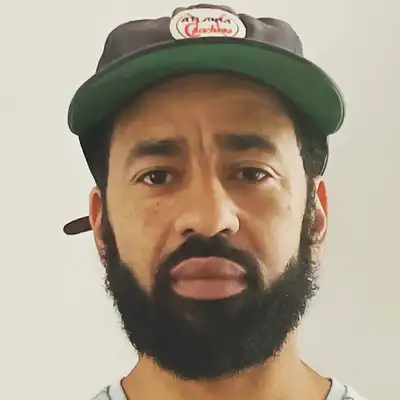
Rob Lee: Absolutely, also love the hat man, I gotta admit this. Oh yeah man, thank you man. I'm like, look my brother gives me crap, he's like yo you can't wear a Yankee hat and every time I see like a really tight Yankee hat or New York hat, I'm like, alright he might be right but also I'm gonna probably get that hat.
Esteban Whiteside : Yeah, I'm not like a that hard Yankee fan, my wife is Yankee fan and I just bought like a black Yankees hat, like a Negro League hat and then also I was like man this one's cool too so I wouldn't got that one but not really. I just like the, I like hats that look nice so never really like wearing like my favorite teams or anything.
Rob Lee: Well, since we're doing this, you're North Carolinian, right? What are your teams? Cause that's a thing, you guys are in a weird spot.
Esteban Whiteside : It was not, we are. So like growing up it was like you had to choose either in football you had to choose between like the Falcons because that was the closest or Washington or everybody that I knew was either like Washington fan, Falcons fan or just a Cowboys fan because everybody loved the Cowboys. So I was a Washington fan, you know, most of my life and then, you know, now that I've moved here I'm like, you know, I'll go for the Panthers just because I'm not that invested in the NFL. And then basketball, I'm a Piston fan and I like the Hornets but more of a Piston fan and then we'll steal the sport.
Rob Lee: We'll steal the, what am I leaving? Baseball don't count for y'all. It's unfortunate. Yeah, yeah, baseball, I've been, I was a brave fan growing up. So, you know, that tracks. I mean, you said Pistons, I was just like, for some reason that makes sense to me.
Esteban Whiteside : The reason I was Piston fan was like my brothers and my dad, they were like, they all cheered for the same teams and my mom would always cheer for like, like if my dad, like Jordan and my mom liked the Pistons.
I was always on my mom's side. So that made me a Piston fan. And my dad and my brother is like Carolina. So I like Duke to me and my mom like Duke.
Rob Lee: So I love this. Just having civil wars in the crib and just like, nah, that's the wrong blue.
Esteban Whiteside : Yeah. I was like, if my mom is the only one on that side, then I'm gonna go, I'm gonna go over there.
Rob Lee: Yeah. I was always sort of in the sports. Like I always go with the home teams and they said Baltimore. More so, you know, and a Baltimore and says gotta be that.
But when it comes to those sort of outside of the local situation, I'm going to go with something that has a story component. So like I tend to support the New Orleans teams. You know, I love the Saints.
And always had a thing for the spurs from Tim Duncan, even now with Wimby there. And now this is the thing before I get into the sort of introductory question. This is the thing where, you know, early on, I was like, after like Super Bowl, like 96 or something, so I'm 11.
Right. And I was like, man, I think the Patriots in that Super Bowl. And I was like, I'm a Patriots fan, mostly because of Thai law, you know, 24. And I was like, that's the number I like.
So, you know, go see using years and years. I'm working in a call center in like the DC metropolitan area. And most of the people there are from New York. And this is the year where the Patriots were trying to go undefeated and they lost in the Super Bowl to the Giants. So I'm, they were undefeated.
I'm like kind of fake bragged. I'm the only Patriots fan man. And I was like, oh, you, you jumped to a good team because your team stinks.
And then they lost. I dealt with it for a full year. Okay. I'm able to jersey on. They were like, oh, look at let's you right there. Because like, you know, you get nicknamed. I was like, I'm not going to be able to live this one down. And I chose wrong. Yeah.
Esteban Whiteside : Yeah. I remember that Super Bowl. Well, yes.
Rob Lee: So, you know, to start off with, and this introductory, I want to welcome you back. And, you know, to go into this first question, it's been a little while, a couple years, actually, since you and I talked. So for the folks who perhaps in shame on them missed our first conversation, could you reintroduce yourself in your own words and can you like to control the narrative here? So please reintroduce yourself. Yeah.
Esteban Whiteside : So my name is Esteban White side. I am an artist living in Durham, North Carolina. And, you know, I describe my work as social commentary. And, you know, a long time ago, I was doing my first show in DC and the term like concrete oppression is, came to me. And, you know, I was like, that's how I'm going to start describing my work. So, you know, that's what I say when people ask, you know, what type of work I do. And then, you know, I kind of dive into that.
But yeah, you know, some are summarized it overall. I would just say, you know, I do social commentary and, you know, do sculptures. I do works on canvas, works on wood.
Over the past couple years, been more, more, more works on wood and more sculptures and anything on canvas are kind of gotten away from working on canvas. But yeah, I try to document the times. Yeah.
Rob Lee: And I'm definitely going to dive back into the concrete oppression as a bit more. But, you know, the sort of secondary part to this question, we were touching on those a little bit earlier. But thinking back, you know, in terms of growing up, when you think about growing up, what are some of the images that come to mind? Because image is something that comes to mind when I think of your work and some of the images on the website and some of the images that's on the social. But for you, what are those images that when you think of home and you think of your upbringing, what's those images that come to mind?
Esteban Whiteside : Um, you know, mostly like playing in the neighborhood, like having a ton of friends in the neighborhood, playing sports, you know, nonstop. That's kind of that. That was the constant throughout my whole childhood was just year round sports. And, you know, being close to family, like over the years, everybody's kind of spread out. And, you know, now it's just like me and my brothers and my immediate family. But when I was younger, you know, we I got to see a lot of family a lot more.
And, you know, for a lot of different reasons, you know, that's kind of just kind of been harder and harder to get together. Like we used to, but it used to just it used to happen so often that I definitely took it for granted. So definitely, you know, I think about family and, you know, the things that we used to do just fishing. And even though I never really like shot the guns, I always went hunting with my dad and his brothers. Used to help them like find the beagles and stuff, but wasn't really down to shoot anything. But just that was like a part of growing up was like on the weekend, people were going hunting. I could go, I could stay home, you know. So, yeah, think about that kind of thing.
Rob Lee: Yeah, that's great. It's good to to think back because there's always something and this is a question that, you know, I think of and I've been thinking of a bit more, you know, as we continue because the clock doesn't stop, right? And it's what's the feeling?
This is not even in there, but I'm just curious. What's the feeling that, you know, you think of you think of that sort of past and that sort of experience and, you know, you broke it down a little bit right there. What's the feeling that you miss? Um, when you think of those those times, like, you know, we're like I said, when we were first talking, like we're around the same age, I just find like, we saw looking for these different things and every now and again, we have this nostalgia. You're like, oh man, I remember one night, you know, we're going to start a jacket's came out or whatever the thing is. And it's something that it just can't help but put a smile on your face. And then novelty and that or I was sharing this the other day with a friend.
This is so goofy. But we went to years ago. I think it was maybe toys or us or KBs and we were kind of talking about buying a video game with that notion of going into the toy aisle. That's a great feeling. Exactly. And I'm like, how do we replicate that feeling? Because I feel like, and this definitely leads to a bigger thing, but I feel like we're being sold pieces of that online, but not the real thing. I think that's the new drug in some ways, this nostalgia. So that's sort of the thinking right there. And it just hit me. Yeah.
Esteban Whiteside : And I mean, like, you know, that's another, like, you know, just like the feeling of like buying a CD and, you know, like not being, you know, you didn't even you just you listen to the whole thing and like you didn't, it costs sometimes $16. So you listen to like every track and even if it sucked, you still listen to it and you found something that you appreciated because you spent money. And I feel like that's definitely something that's like going away. You know, it's like, like, I love the fact that like on Instagram, I can see like thousands of pieces of art in a day for free.
And then also I'm like, you know, I remember back in the day when like, you know, you couldn't just listen to whatever song you wanted to listen to, you have to find a way you either had to like buy the album or, you know, later on, somebody could burn it for you. And it just made it like so much more special, you know. Yeah.
Rob Lee: And I think that's worth always looking back and revisiting because I know that there is that shift. I saw the story about Gen Z is looking at buying more iPods and trying to bring those back and dumb phones and cassette tapes and all of that stuff. And I'm like, yo, we were told all of this is dead and it sucks. I was like, I still have my iPod.
I still have two of them. But, you know, it's deprecated and, you know, you're right that you can find you could discover that stuff. It's accessible. But also at that same time, we see that versions are being edited. And I know that that definitely with some of the tone and tenor of the work that you have out there and that you've been associated with in your career, it's just like, no, we got to have the real message here.
And I think when we see stuff being changed in this current regime and so on, you know, it's worth kind of revisiting that and just having that sensibility in mind of, all right, this is not the version of this song. That thing is taken out or, you know. So there's a bit of a tongue in cheek in the description about, you know, removing ambiguity, right? When you call your work concrete oppressionism, what exactly do you mean by that? You touched on the social commentary bit. You touched on sort of just kind of just, I think, being, being wary to paraphrase and being observant and then commenting on that. So for folks who are on debt, what do you mean by concrete oppressionism? So when I first moved to D.C.
Esteban Whiteside : and I started working at a museum, you know, I knew like nothing about art like zero. And I just remember being like, what type of art is this? And a lot of the art in the museum that I was in there were like, you know, this is abstract expressionism. And it's more about the feeling that you get not necessarily like, you know, the composition and all these things. It's more of like, you know, like capturing a feeling. And, and I just remember like a lot of the art, I didn't understand it because it was, you know, it was about a feeling. And I was just like, you know, like, I'm looking at this art one way.
And then when I go through like a tour in the gallery, they're telling me that this is what it's about. And like, I would have never made that connection. And it just seemed like it was like way over my head. And it seemed like, you know, not something I could get into. But then when I saw like Jacob Lawrence and the migration series, I was like, you know, like, you know exactly what you're looking at.
And there's, there's no like taking the easy way out. Like you're looking at like what oppression looks like. And you can't be like, well, this is about nature. And this is about, this is a landscape piece. You know, it's like, no, like there's, there's also the piece that's right in your face. But then there was also like a little plaque under the pieces that told you exactly, exactly what you were looking at. So there's like, like you're forced to like confront these things.
And there was no way out of it. And that was the work that, that opened the door for me to become an artist. So, you know, I just remember being like, well, if this is like abstract expressionism, and it's about like, you know, like it's about a feeling like then, you know, I won't mind to be like very concrete. I don't want people coming up to the work and not understanding what it is. Because I think that kept me away from art for a long time. And I wanted to make the work like, like Jacob Lawrence, the work that like, you know, you know exactly what it is when you see it.
And, you know, I feel like there's a sense of urgency with, with, you know, like right now. And just with like people being oppressed, like we don't have the luxury of like, painting something. And then like hoping years later, people figure out what you're painting. Like when I'm painting something, it's because there's something like fucked up that's going on right now, and it deserves attention right now. So it doesn't need to be abstract. It needs to be concrete. And I don't have time to waste.
Rob Lee: Do you, in that, and this is jumping ahead, but I think it's a really good segue into this part of it and expounding, do you feel a pressure in covering like what's happening right now to be comprehensive, to be timely and like sort of perfectly informed before this is my take or this is my position on that. Because there is this sort of balancing that has to happen, right? Where, you know, everyone needs to have their take immediately, especially online.
And I know that some news outlets have gotten in trouble by, oh, story developing is like, no, here's the definitive blah, blah, blah. And you're making art that's speaking on that. So talk a bit about that.
Esteban Whiteside : Yeah, like there are some things that happen that I see in the news where I'm like, I really want to address this right now. And then there's other things like doing work that was dealing with Israel and Gaza. And before I even made a little bit of that work, I had a feeling to hurry up and respond. But I was like, I don't know what's going on.
And, you know, I did research and I read and I watched videos and I read like, Mark Lamont Hill's book and it helped me understand what was going on. So there are some things that like, I may not know the full story, but I'm going to respond right then. And I'm like open to say like, I don't know everything about this, but this is how I feel right now. And then there's also things that are like, like so heavy, like Israel and Palestine that I know if I just hurry up and put some work out, I'm going to have people coming at me saying like, this is out of your league. Like you don't even understand what's going on. So I try to like make a point to understand what's going on and make sure that I'm ready to defend the work because I was with a gallery that wasn't ready to defend the work and they didn't really respond too well. So that really taught me like, you know, if you're talking about heavy subjects, you know, you need to be, you need to have a better understanding than just an emotional response.
Rob Lee: That's really fair. I think that's, I think that's the mindset of a millennial where we're smart about it. I think that that is, you know, too often, you know, I see and definitely this is a question that's going to come up a little bit later, but social media definitely plays a role in how we're being informed and how we're moving in a direction of activism and so on. And in a world of bots, in a world of AI, you have to go a bit more thorough in what it is while being aware that there's some expediency that's needed. You know, I try to do the same thing. It's something that I remember perhaps from an interview with Obama and I like the way he described, he's saying, my position's evolved on the matter. And I think that that's sort of a thing that we don't get just that approach.
I'm not saying, you know, him per se, but that's who I heard it from. Just we need to, we have records. We all suddenly have records.
So this is where you stand out on this matter. It's just like, all right, I've been, you know, as far as I've been a podcaster since I was 24. If I had the same opinion I had then at 24, you have some evolution and that can happen from week to week. It's like you learn more, you develop, you grow more, maybe once work is reflective of that. I would imagine the tone and tenor of the conversation that you and I are engaged in now, because there's some degree of familiarity, is different than the one we had a couple years ago and how the approach is done.
So that's how that sort of works. And I think when it comes to news and some of those heavier topics, you know, it can't just be definitively outspoken. It's like, ah, this is what I was feeling at that time based on the information that I had in front of me. So thinking about projects and I'm really curious about this, let's say something that's that's major, like a major project, whether it be in terms of the scope of the project or the subject, being a bit maybe daunting or uncomfortable, because it's just like, ah, I'm doing commentary. It's like, ah, this is dark or this is this is tough. How do you handle that at the beginning, like the start of a project that has like a really big scope or that has like really uncomfortable, heavier topics? At what point do you feel comfortable with the work knowing that it's going to be either really big or really heavy?
Esteban Whiteside : So like, I mean, like right now, you know, I'm about to start another series of clocks that I'm doing. I did 10, you know, right at the beginning of February and I'm about to start doing 10 more. And yeah, it's like some of the topics that I'm going to do is like dealing with history and revolutions and that kind of thing. And like a lot of times it is hard to read about history, especially black history, because you end up, you know, going down like, you know, learning about, you know, just more oppression and more horrible things that were done. And I don't know, I guess it just kind of, it helps me to like take the pieces one by one and not think about it as a whole. And also not even have like a predetermined number. Like I just said 10, but I might do five and I might be like, you know, like this is good. But one way that I like kind of balances out, balance it out is like I do do like, you know, like abstract work in between some of this stuff. So, you know, I might work on a subject for a while and you know, feel kind of drained, but then, you know, I may just like go let loose on a piece and not even put it out to anybody, but just, you know, only using the colors that like make me happy. So, and I also think like in the future, like I'm going to start doing more abstract work because like I've, I've real, I've, I've discovered that like taking a break from some of the heavier stuff and just painting and, and, and doing it like I did when I was a kid, it, it helps balance things out and it makes me, puts me in a better place and makes me ready to come back to doing heavy stuff instead of just like constantly, you know, working on heavy subjects.
Rob Lee: So, yeah, breaking it down into two pieces and having sort of a break from it is, it's important. I, and I, and I think I agree as well with that number that you have an aspiration of this is how many I want to do, like even with something like this in the beginning of building this out and having conversations, you know, there's a certain degree of stress and positive, whatever, right? You know, that goes in and if I'm like in past years, probably when the year we did the first interview, I think that was like the big year. That was like the 322 episode year. I think that's the year, right? And I wasn't counting at the time. I just saw the end result. Now it's just like, oh, I set a number and I need to stick to that number and that's kind of how I approached the following year.
And there was a lot of stress in that year. And I've since been like, no, I'm not going to do it that way. I'm going to do what's feel comfortable. Maybe I'll do more because I like to do volume or maybe I'll do less, but feel comfortable in sort of the merit of the conversation. But then the other piece, like this is fun, but also it's work as well because, you know, I'm going over reading, doing research and all of that stuff. So I can have somewhat of a meaningful conversation with because I want to waste your time, you know, and I could be charming and all, but I want to waste anybody's time. And I do switch it up on occasion and I'm like, all right, let me do this movie review podcast.
Let me dive back into that one and I could pop off and talk nonsense. And that's sort of, it's not a, it's still work. It's still producing a podcast. It's still doing the research, but really it's not the, I guess, structure that that's theirs. It's different things that are required.
And I think, you know, what you're describing there of having sort of that breaks to do the more, you know, abstract work and do and work with colors that make you happy. That is something and, you know, me being able to do a podcast is outside of let me research a guest or subject. But let me watch this movie and joke with one of my friends about this movie. That's just inherently fun.
Esteban Whiteside : Yeah, yeah. Like, you know, and I, you know, just like even, you know, with working on clocks, like the clocks are a change from like the normal working on canvas. So just like constantly switching things up keeps like keeps it fresh and, you know, and I think like, you know, doing more abstract work in the future is definitely like kind of my plan because I think it helps.
It helps the, the, the heavier work to take a break from it at times. Why clocks, by the way? Um, the whole thing happened from, so in the morning I draw on a little note card from my daughter, put it in her lunchbox. So I draw a picture every morning. I like went so hard on the first day of school and I really set myself up that now I can't like just do something stupid.
I got like really go in in the morning. So I was like looking through, um, like some, some children's books and I saw a clock and I was like, damn, like that is, that's sick. Like I would, I'd like to just paint a clock. I didn't think actually painting like a real clock and then just sitting me down a rabbit hole.
I was like, well, you know, I wonder like how hard it is to make a clock and, you know, was like researching that and then I was just, you know, and, and also I just turned 40. Um, and there's a lot of like things that I'm thinking about now that I never thought about before. Like, you know, I think about death like a lot. I think about it too much, you know, and I think that has a lot to do with like, you know, my uncle passing and like people that I went to school with that are my age, seeing like more and more people passing. I'm just like realizing like, um, you know, you know, we don't have a lot of time and, you know, I remember this quote from Kobe Bryant, where he's just like the biggest mistake people make is thinking they have more time and I don't know.
I was just like, like a clock is like the best way right now to represent what I'm thinking about, you know, which is like my kids are growing up way too fast. Like I'm pulling muscles left and right. Like I'm getting old. Like it's just like I never, it's just a little time is something I didn't think about so much before and now that I'm 40. I'm like, you know, I really need to do what it is that I am put here to do and I don't have time to like Bullshit around anymore. So that's kind of where the idea came from.
Rob Lee: I was hoping you were going to say something about Flavor Flav and you just disappointed me.
Esteban Whiteside : That's a really well thought out and purposeful answer. Um, Of course Flavor Flav is your reason.
Rob Lee: But I relate to that as I was saying, like, you know, I I see those things that you see just time passes and I think online because my partner she has a 25 seem to be 26 year old son, right and you know, for probably the last three years he thinks he's behind in life. So since 23 putting this sort of pressure on you to have it all figured out have it all done and I try to in my position try to throw a little bit of Nah, it's not that crazy. It's fine and but also knowing that that's who you share that with someone who is thinking ahead and someone who is thinking about and putting things in place and perhaps that advice would be a little bit different for someone who doesn't have it together and doesn't have things in mind but I think there is a pressure to have people figure things out a lot earlier than they should and I think If we're doing stuff, which you're doing, I'm doing you're aware of it and that's that's the thing that's so important and you're aware of it. You're putting action towards it and you know, I think about it as well.
I think about death all the time and you know, it's one of those things of like, all right, let me go to TMZ and doom scroll for a few minutes. Did at what? Oh man, that's rough.
Esteban Whiteside : That's it else man. Do throw in delts sometimes.
Rob Lee: But then you know, you do that comparative thing of like maybe whatever it is that we are doing is So the aspirational thing for someone that's behind us, you know, I also read that sort of our gen like the gen that's behind us They don't really have perhaps that wherewithal or that experience because perhaps they lost like a couple of years with covid and all of that stuff and that in some ways they're looking at us as the guide and comparatively we're probably crushing it compared to maybe the generation ahead of us or maybe two generations or parents generations if you will and just in a different way. So I try to take something out of that and just provide like, you know, do the hard stuff That's the thing that I've really been on in this current administration. Just do the hard stuff, have some stoicism Stop taking the easy way out and not the easy way out like You know, this could be done in a little bit more seamless way. This could be done Um without really putting yourself through a lot, but don't go for the easiest solution because often it's something being sold to you often it's It's BS and it doesn't really work and it's gonna bite your ass later You know, so being able to do that hard stuff gives you that capacity that you could do so much more later case in point You know In the last like three years. I've been doing like a sort of weightlifting fitness regimen and all of that I don't like fitness journey. I don't like it.
Um, but It's that thing. I'll get up do my thing for I mean 5 36 o'clock get up get that stuff in It's hard. It's not easy But ultimately there's perhaps some dividends at the end and I started looking at People who are older like dick van bank is like a hundred.
He works out three days a week Yeah, that's crazy or to go even more specific like my man urin nevel my man used to be you know In dabbling in a few things he still lifts and he's in his 80s And I'm like there's something there versus this sort of couch potato thing and those dudes are Very, you know seasoned So I think about those things. Yeah Yeah, I agree with that So talk about this. There's a balancing that happens. There's a sort of, and I like that it's very concrete and some of the visual components, like how do you balance the use of sort of these childlike, I may say like reductive shapes and bold colors, for example, like the play dumb set that when visually referencing like Venezuela riffs on like Play-Doh or you know the America's web style approach to critique ice, which is a nod to Charlotte's web. When you're sharing sort of those harder things, how do you like balance those two with making something that's digestible, getting across a point, because like I get it right there on the surface and it's done very well. But how do you kind of do that and why is that approach like there, like having something that a kid might say, what's happening here? And that's almost a conversation starter. So talk a bit about that.
Esteban Whiteside : Yeah, I mean, I think like, because, you know, art was something that was never really felt like something I couldn't do until I was like much older. You know, I go back to like kind of when I got off of, you know, loving art when I was little, like I loved I loved painting and I love drawing.
And then at some point in school, you know, I was told like, if you can't do it exactly realistically like it is, then this might not be for you. So I kind of feel like I'm picking back up where I got off back then. And, you know, also like, like looking at something heavy and kind of making light of it, like, that's my personality. Like that's like, you know, like that's who I am. Like I'm like, I'm going to talk about heavy stuff, but I'm also going to be like, try to be funny about it and joke about it. And I think that is like, just the way that I've always like dealt with things. And it just like helps me to not be down and sad about the whole thing. It's like, like flip it around in a way that like, like shames the people that I'm talking about.
And also shames them in a funny way. Because, you know, I try to be funny. Some people say I'm funny. So, you know, that's, that's like, but my art is my personality outside of art as well.
Rob Lee: That tracks. And I like to make these comparisons. I've made the famous comparison or somewhat famous comparison of like, chefs and musicians and so on. And I look at your approach very similar to like comedians when they almost like a George Carlin, when they go into that social part of the set. And you're like, that's absurd. You got a point. And like it hits you see the light bulb go off. So that's intentional really getting that across in your work.
Esteban Whiteside : Yeah, like, you know, I feel like if it was only serious, and there was like nothing light hard about, you know, the way that I approached it, you know, it would push away a lot of people. And I feel like even my personality, if I was like, constantly talking about the subjects I'm talking about, but not making light of it, you know, like at some point people aren't going to want to hear that, but like putting some humor to it makes it digestible. And doesn't push people away as quickly.
Rob Lee: Yeah, it's, and it is good. It's almost as if you had the question that leads me into this personality question, actually. Some artists, and thank you for that point, by the way. Some artists find that personality like opens doors beyond the merits of their work.
It's like, they make okay work. But as a personality, that's an interesting person. Like you go back through history, you look at these great art books, you see someone you're like, it's works fine. It's like, but as a person and contributing to the canon in that way, it's like, yeah, you worked your processes very interesting, the connections and all of that your input and your output was really, really interesting.
But the work was only so so. And so for some people, the personality opened doors for some people with the personality closed doors. How important has personality been for you in your career, perhaps in connecting with other people, perhaps with how the work is received?
Like, you know, let's say you have an opening and you're there and you're able to kind of interface and talk with folks, you know, like talk a bit about that. It's like, who's the person making this work? It's like, Oh, that's him. He was funny in that interaction. That's really cool. Or Wow, he's a deep brother.
Esteban Whiteside : Yeah, I mean, a lot of the times when when I meet people at openings and stuff, they expect somebody is angry or like a little bit more serious. And they're like, damn, like, you're, you're really chill in real life. And I'm like, you know, yeah, like the art is like the therapy. You can't say like, like, you're looking at like me, like the art is me getting those emotions out. So, you know, as long as I'm able to get that out, like you are going to see this type of person, you know what I'm saying? But like, you know, also, I don't like, I don't just take bullshit from people, you know what I'm saying? So like, that part of my work of me, like, talking about the things that I feel are important and not really caring about what may come with that.
That's, that's how I've been, you know, that's how I've been my whole life. So it's just like, I don't know, when I meet people, I feel like it, it makes my art make a lot more sense.
Rob Lee: When, when I encounter people in real life, because you know, I've done a lot of these and, you know, it's as much as I don't like it. And in terms of like, it's mostly me in the conversation in terms of like the amount of words is like, I'm the dominant voice because I'm the host and I do all the interviews. But I think folks have this sort of notion that I know you is that sort of per social thing. And they want to see me at IRL is almost like, they're expecting me to be almost in the midst of an interview. Like, I'm going to approach them like that. I'm like, yo, I might be rolling off of an edible, I might be like, let me hide because it's like, I'm tall, I'm awkward, I'm shy. And I'm probably eating something I shouldn't be eating. It looks like it's a wild visual.
I mean, there was this time where I was coming from a show, and I was like, this is cool. I hadn't eaten. I just got these glasses. I'm old.
So now I have like, progressives. I couldn't really see well. And some, some person came over there, some young lady came over there, and she wanted to engage in conversation with me. And I hadn't eaten anything all day. So I got like salad hanging out of my mouth. I look crazy. I'm making really intense eye contact because I couldn't see. I don't want someone going back like, yo, truth in this art is bugged out.
I think he was muted. So that's that's a that's a thing worthwhile. And I think I'm really good in the sort of one to one thing because I do recognize like, personality is a very important thing in all of this stuff. And it's like, you can make really good stuff. And that's great.
But a lot of people making really good work or really interesting work really timely, really important work, all of the things a lot of people are making podcasts. But you know, he has someone who's like, kind of a drip kind of an asshole, whatever the thing is. It's just like, I don't want to show up to your thing. I don't want to go there at all.
Esteban Whiteside : I mean, like, honestly, like before art, I was I mean, I'm still like, you know, pretty like socially awkward, you know, especially when I'm first meeting people. But before art, like when I would meet new people, like I would I would sweat, you know what I'm saying? And like, I never even wanted to talk to new people. Like I would be like, like, if we would go somewhere, like I would try to like blend in enough to where nobody was trying to talk to me.
But when I first moved up to DC, I was meeting a lot of my wife's friends and stuff. And everybody was like, Oh, what do you do? And, you know, and I would just be like, sweat, like crazy. And then when once I became an artist, like all that went away because I was I was no longer fully, I felt like I wasn't full of shit anymore. Like I was finally like, doing what I was supposed to be doing.
I was proud of it. I can talk about art all day. But that you know, that's why I like that was one of the reasons I knew like artists what I'm supposed to be doing. Because in any other capacity, I was just like, socially awkward and never, never wanted to meet new people, never wanted to get out there like, but art, you know, changed, changed all that.
Rob Lee: So yeah, that that example I was providing definitely was in DC. So I'm relating. And it's like, yeah, so who are you? I'm like, Oh, how am I? And but I do find this and I'm going to move into my last real question. I do find that this happens that I if I go into performance mode, if I don't feel like there's like a heavy investment, I can fake it in a way if people don't know me. So I've done stuff in different cities that have no ties to you probably won't see me for years. Like I'm coming in beyond Sanders 94 mercenary style. You're not going to know who I am. I'm just like, how long can I keep this front up?
How long be personable, be charming, and don't see me later because I'm going to be like, damn, I'm sweating. I really screwed that one up or whatever the thing is. But when it's sort of around people that it's like, yo, I went to high school with you, bro, you weren't this. So yeah, you're right. You're right. You're absolutely. So yeah, the sort of one on one thing or trying to connect with people because I think, you know, that's that's an important thing.
And I think with this last year and change last 15 months, if you will, I think that's been something that's super evident to that. And it's a hard thing, right? Going out there being in community, being personable, making connections with people. Because those forces that are out there that are a servant as fodder for some of the stuff you're documenting in your work, they don't want us around each other. They don't want this notion of the combined forces of just people getting together and being in dialogue with each other and enjoying art or just enjoying each other's company.
They don't really want that. So I've been trying to make more of an effort to do more things in person and acknowledge like this might suck a little bit. Let me give myself, I'm going to do 45 minutes. I'm going to do an hour and, you know, give that parameter so I can kind of balance what I need while also kind of being out there because those things are important and are important. And I find that at about minute 46, and that's when I'm at my most awkward. When I'm at about minute 40, you know, 43 and under, I'm good. And then it starts to ramp up a little bit. Yeah. Yeah.
Esteban Whiteside : And it's been like, you know, like I just started getting out here in Durham and meeting people. So it's just like starting all over again, trying to build a community. Yeah. I mean, it's one of those things. It's like, it's not my favorite thing to do, but you know, it's important for people to know, you know, who, you know, the personality behind the work. Absolutely.
Rob Lee: Especially in the world of AI. Is that a real person making that? For real? Because look, like I said, I've done that, you know, in terms of the 17 years I've been a podcaster, I'm just waiting for someone to just say, look, I'm going to scrape every piece of audio.
It's like, I think I can replicate this guy. And then I'm out of business. Then I'm gone. Then like, you know, I'm going to get Jim Carrey to what have you timely.
I have weird cheekbones. It's going to be crazy. So here's the last real question. I think it's a culmination in a combination of a few things that we've touched on earlier. But social media and cultural expectations can create a pressure that I think artists that delve into the sort of politics or delve into those deeper conversations, you know, have to respond to almost every issue, like almost on demand. I call it activism on demand, frankly, that can push some artists to towards like performative output, or even like guilt driven production.
Like I think of, you know, as soon as someone dies, you see like a, every time, maybe some painting that's like, oh, that's an empty hustle right there. I see. And what do you think about that sort of responsibility when making sort of politically reflective work? And I know we've kind of in this territory before, but I think the activism on demand thing really sticks out.
And I'll add this last piece to it. I think of in the last like two Super Bowls, there's, you know, these halftime shows that had a lot of like white people up in arms, frankly. And, and I just remember seeing from some folks that I know who look like me and you, commenting on the musician, the hitlining musician, not really speaking on a certain social matter, whether it be Gaza, whether it be Venezuela.
And it's the assumption, it's almost like the Chappelle thing of what does Ja think it's almost that. And I so that's kind of where I'm thinking at with this. I just want to get your take on it. Yeah.
Esteban Whiteside : I mean, I think for a long time, I did feel that way. Like, if something happened, not necessarily with like people passing, because I never, I'm never like, someone passes, like, I never feel like, oh, I needed to paint something about them.
But you definitely see that. But, you know, with me, it's like, I tend to want to respond to the things that have affected people that look like me, or people in my family, or that has affected me directly. Because, you know, and there's a lot of, there's a lot of times when, you know, I see something in the news and, you know, I may sketch out an idea, but it never becomes a painting.
It's only the things that really resonate with me. And, you know, either it's happened to me or somebody just like me, or, or I feel like it's something that's not being talked about. Like, if I, if I get online, and I see like, a ton of people making artwork about a specific subject, like, I'm probably less likely to make something about that, because I feel like, you know, like it's already out there, like I need to like, I want to, I want to make artwork about things that like might not necessarily be represented that well in the art world. And so, yeah, like I definitely, when things happen, like I, I immediately like, want to, want to create something, but it's usually the things that are affecting family or myself that I tend to actually turn into artwork.
Rob Lee: Yeah, that makes sense. It's like, what's in that realm? Like, you want to make something, you don't have to comment on everything, you don't have to touch everything. There are some people who perhaps are more qualified because they can relate to it, it affects them the way, same way that you're describing it. There are some things that you feel that calling and that, you know, being compelled to do it and make something for it. And I just think, you know, I think we have to change what that expectation is, because it turns into almost the sort of full time thing. And it's not to diminish someone who's doing that, because if they're doing it with sort of merit and intent, and they want to do it, and they really care about it, you should, you should absolutely do it.
And the reason I say that is this, doing this, doing this podcast, you know, and it Trump says some goofy shit about Baltimore, I didn't like, and I was just like, I need to disprove that. And that's what the driver was from the get go. So the city was over rats, and that was kind of it.
It's a shit old city, whatever the thing is. I'm like, all right, I got to disprove that through conversation. That's what I thought and talk to people that aren't the good people, or, you know, the people that look like me, or aren't the people that are that these are the people that come from these places that are deemed as shit holes that are deemed as bad places that are deemed as disposable and that their stories don't matter. That's the thing that is in alliance with my why. And that's why I can get back up and say, Oh, let me do that each time I have a bad episode of bad conversation, what have you, I can keep doing it because that well is pretty, pretty deep. But if I'm doing something that feels like it's superficial or performative, I just like, okay, I've had enough of this.
I don't want to really delve too further into that one. But when it comes to these things that are just right there that are close, that have a, that feel almost precious, you have to comment on, I think that speaks for itself. Yeah.
Esteban Whiteside : Yeah. And then there's, there's like, there are sometimes when, you know, there's like something that happened that I'm like, if I was to make a piece about this a year from now, it wouldn't make any sense. Like now is the time, you know, and that doesn't really happen that often. But yeah, every now and then there are pieces where I'm like, I have to do something right now, because if I do it a year later, like, first off, it might not even the situation might be completely different. But it's just like, it's going to have the greatest impact right now. If I do something right now, sometimes I do respond that way. Makes sense.
Rob Lee: And I think that that's where we can end with the real questions. And now I have three rapid fire questions for you. And then we got the sage like advice question at the end. So the rapid fire questions, you don't want to overthink these whatever the closest one word shortest answer you've got, that's what we're looking for. All right, so here's the first one. Something you said earlier, I added this question, because it wasn't there at first, so you did this to yourself. So what are the colors that make you happy?
Esteban Whiteside : Brilliant blue. Probably the most I that's like my go to yellow, for sure. And then like a bright like emerald green. Okay.
Rob Lee: Yeah, those those colors, pretty some pretty bold colors there. Yeah. There it goes. This may be a yes or no, you can add a copy out to it if you like, but are we spending enough time appreciating art? And I think your point earlier around music has something to do with this, but what's your take on that one?
Esteban Whiteside : I think no, we're not. Um, and I don't and I just don't think we're spending enough time appreciating anything, you know, like, when albums used to come out, like, people used to be like, you know, used to they used to hang around for a long time. It's like now a classic album could come out.
And no one might not be talking about it a week from now, you know, or like, at least nobody that I know of. But so like when we were coming up, if like a classic album came out, like it meant something like it was, you know, people were talking about it. I can remember AT aliens coming out. And I remember like going from one brother's car to my other brother's car, it was in it.
And then they had the same CD in there and we and then going to one of their friends, friends cars, and they were listening to AT aliens and just being like, like, this is what this is it right now. Like this is the best the best thing out right now. And it was the best thing out for like, you know, six months, that's all anybody was listening to around me. And nowadays, I just feel like, like I posted a reel the other day.
And it was showing like the average time that people were listening that was watching the reel was 11 seconds. And I was like, you know, that that's about as much as I'm going to get, you know, nowadays and like, I don't blame anybody. It's just like, we've all been conditioned to all right, that's cool. Like what's next, you know, and before, when you didn't have access to all that, you just you appreciate it more, you set with things longer. And personally, I want to get back to how things were in the 90s.
Rob Lee: I agree. I'll add this to it. And you helped me germinate this when you were describing that. I think technology plays a role in it, where when you had a tape, whether it's a VHS, whether it's a cassette tape, you didn't have to skip button, you had to like try to be tactical and find that next song. So it encourages you to listen and just kind of see because you're missing something. And, you know, I think that affects the artistry sort of in the back end of I need to make something that's this, I need to make something that does this. And this is why you have sort of these, perhaps, relegations on how rap music fits on the top charts.
And so on. It's like they're kind of less presence there. And it's like, who's actually making music, what music is coming out, what films are actually hitting. And we have this sort of expectation that it needs to make X amount of dollars.
And it needs to do that in the fastest way possible. Movies used to be out for months, albums used to be out, you know, like this is bumping as you were touching on my partner will mention, she's a little older than me. She's like, yeah, I remember back in, you know, you know, back at Spellman, you know, when, you know, when 12 play, he's redacted, but when 12 play came out, that was the, you know, the album for the summer. I was like, run that back three months for an album. And now you might get like, you know, three days now, we're on to the next thing. Like, you know, Jake Cole's album just came out.
I mean, had a chance to listen to it, but he was like, all right, moving on to the next thing. Right. And they're putting months, years, you know, especially ones that are doing it, let's just say with merit, they're putting months and years of time into these things, artfully done. And then it's just this sort of quick consumption. We fast food commodify these things. Yeah. Yeah.
Esteban Whiteside : I mean, I, you know, like, I wish that I was like making enough money with art to where like, I wouldn't even put stuff on Instagram. And it would be like, you know, few times a year, you know, like, unless you're going to one of my shows, or you're like, you know, like seeing a print drop or something like that, you're not really going to be able to just see it all the time. You know what I'm saying? Like I wanted to be like, like it used to be like, I remember like, you know, a lot of times like I would go to the mall and buy three single CDs for $9.99.
Oh yeah. I would play the hell out of those singles. And, you know, and then until I was able to earn enough money to get the album, I was just listening to the single over and over again. And it was like, everything was just so hard to get to. And like, in a way like I, you know, I wish that I was in a position where I could make the art that way, not necessarily like I want, don't want people to be able to see it. But, you know, I wanted to, to mean more, you know what I'm saying?
Rob Lee: The artist in nature has to come back to it. It's like, it's accessible, but it's if you want, it's almost accessible in the wrong way. I think like we've had the people who don't have taste in it earlier telling us that we should use their tools to make our stuff more accessible.
And somewhere we lost the message, somewhere we lost the script. And also, I'm sure you would also do them with those, those, those single CDs. They have the instrumentals on there. I feel like there were some ciphers happening. It's just like, you know, wrap it to this beat or do it.
Esteban Whiteside : Like a different versions of the single, like you might get a single CD and have like the same song three different ways. And like, yeah, you just, you just appreciate whatever you got from an artist.
Rob Lee: Yeah. Yeah, like the purple ribbon cut, you have the dungeon family cut. It's just like I don't have the feature that no one else knew about. Yeah, I hear you. I hear. Yeah.
So here's the last rapid fire one. What is the strangest thing you've used as a paintbrush? I'm very curious about that. Hmm. Because I know that some people it's like, yo, I don't have a brush. Yeah, I'm going to try something different. Like I get really MacGyver like when it comes to like microphones writing, like I've got questions that are written in crayon and I feel real weird looking at them. I say, how old am I?
Esteban Whiteside : I mean, whenever, so whenever I learned about Matisse, whenever he was sick, he like had like these bamboo sticks and he had the brush, like painted on, I mean, like taped on the end of it. He was in his bed, he'll paint and I did that before, not from my bed, but just got like a, just went down the road and grabbed some bamboo and then cut it and then put a brush on the end and did it that way.
And that was cool. I don't know, like I've, there's been times so like I used to write, I used to write a lot of text on my work, but I wanted it to, to not be too clean. So I would write it like left handed, I would write it upside down. That's part of the strangest stuff. And I still do that. Like I feel like sometimes now, like when I write it the regular way, I'm like, that looks like too clean. And I'll just like put the canvas upside down and write it upside down and then flip it back over and be like, yeah, looks like
Rob Lee: it's close to that is the painter equivalent of giving oneself a stranger. Don't look it up. So thank you for, thank you for indulging me in that area. And that's that's tight.
So here's the last, last thing is the, the one more thing, the sage like advice. So curious relief here, a lot of artists wait for the perfect story, timing or context before finishing or even release and work. Sometimes that perfectionism is really avoidance procrastination. What practical advice do you have for artists who are stuck waiting? Are there rules or habits you recommend to move from planning to making to, to releasing work?
Esteban Whiteside : I just, you know, it's always in my head, like you could die tomorrow. You don't have time, man. You don't have time to like sit on this stuff. Like what do you want to be remembered for? Like, like, why are you an artist, you know, and like, there's a lot of artists friends of mine who, they make way better art than I do, but they don't really put it out and they're not really, and I feel like, you know, just ignorance being bliss, like coming into the art world, not knowing anything about the art world has really helped me because, you know, I want everybody to see the work. Like I, it's, it is, I'm not one to like want to hold back. Like I open, I had an open studio about a week ago and just invited everyone in the neighborhood and everyone that I came across, you know, to my studio to see it because, you know, like, yeah, like you could, you could, you could die tomorrow. So whatever you're trying to do, like go ahead and do it. Yeah.
Rob Lee: I think that's the realest, most practical advice. And thank you for that. Momentum Mori, as it were.
Esteban Whiteside : It's not the most positive way to think about it, but, you know, especially being black, like you, you know, like anything could happen. You get pulled over by the wrong cop, you know, so you don't have time to sit on what you're doing, like get it out now. It's good.
Rob Lee: So, so that's actually it for today. I appreciate the time and the conversation and there's two things I want to do as we wrap up here. One, thank you for, for spending the time being engaged and just, just having a lot of fun here today. And two, I want to invite and encourage you to share anything that, you know, you have coming up social media, website, anything that's, that's you think pressing to mention in these final moments. And this shows a shameless plug, if you will. So, or is yours?
Esteban Whiteside : So I'm about to put out 10 more clocks in about, I would say, three weeks. And the name of the series is Time is Illmatic. And there's no like, there's no specific theme to it. It's just kind of like what comes to me.
And also, like, I think about different times in my life and things that impacted me. So that's what's going to be on the clock. So be on the lookout for that. And then I'm going to have some work at Outsider Art Fair coming up in the end of this month up in New York. And I love the Outsider Art Fair. It's like my favorite art fair.
So happy to have some paper pieces into that. And then I'll also be posted up outside of the Outsider Art Fair. I'm going to bring a table to New York. And have a suitcase full of small work. And I'm going to get all that crowd that comes out of the Outsider Art Fair. And hopefully the crowd that goes in there too, and going to be selling some, some brand new work.
Yeah. And I have a show coming up in DC in the fall. It's a two-part person show. So, yeah, just, you know, be on the lookout for that. And yeah, that's about it.
And where can he follow you? Oh, yeah. So my IG is just at the bottom white side. And then my website is at the bottom white side.com.
And if you subscribe on there, then you'll get like updates on all this stuff that's going on. And I have work that is priced pretty high. And I have work that is, you know, very affordable. So something for everybody. So, yeah.
Rob Lee: And there you have it, folks. I want to again thank Esteban White Side for coming back onto The Truth and This Art to continue the conversation and sharing more of his story with us. And for Esteban, I am Rob Lee saying that there's art, culture, and community. And in a round jerk neck of the woods, you just have to look for it.
Hey, guys, Rob Lee here. And I'm glad you checked out this new episode of The Truth and This Art. Well, it's not new now. You've completed it. So thank you for that. But I wanted to give you guys a quick reminder to share, subscribe, like, review all of those good things.
Engagement is the name of the game. So follow us on Truth and This Art on Instagram. Follow us on The Truth and This Art, the website. You can subscribe there. All of those great places to check out the podcast.
Leave a comment, review on Apple, Spotify, YouTube, or all of those different places. And every bit of engagement, every bit of support helps. And thank you so much for your continued support. Until next time, yeah.