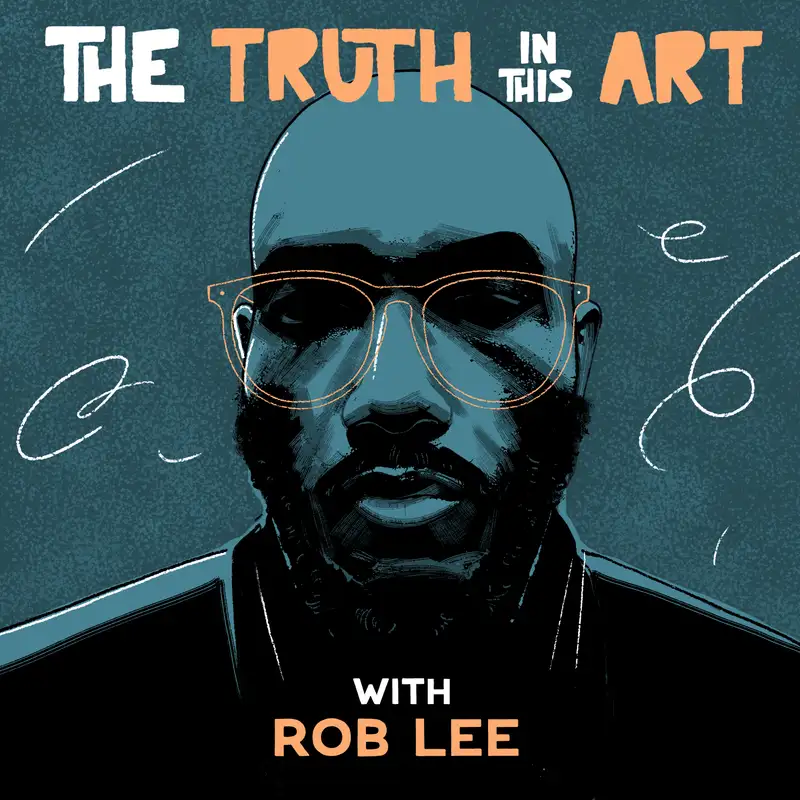
Rob Lee: Welcome to The Truth In The Dark, your source for conversations connecting arts, culture, and community. These are stories that matter, and I am your host, Rob Lee, except no substitutes. Today, I am thrilled to welcome my next guest onto the podcast, a Baltimore-based and Dominican Republic-born comics and prose writer whose work bridges indie and traditional publishing.
From being one of the creators behind the Eisner-nominated series, The Cardboard Kingdom, to multiple projects coming out in 2026, including her next graphic novel, The Library of Memories. So please welcome to the program Barbara Perez Marquez. Welcome to the podcast. Thanks for having me.
So Barbara Perez Marquez, so I appreciate you spending the time and also because I keep these themes going as a thing that people look for when they listen to this pod. Thank you for wearing your glasses.
Barbara Perez Marquez: Of course, you know, we have to be ready. And we also have the headphones, which is an added difficulty, you know, like we have to make the headphones and the glasses look good.
Rob Lee: I think if someone were to draw me, I just want to be like a brown circle with glasses and headphones on. I just want that. Yes.
Barbara Perez Marquez: And when they shorthand the glasses and it's just like round circles, and it's like there's no eyes in there, which makes us look extra mysterious. Yes.
Rob Lee: Yes. See, for a second, I thought you were doing that passive like jab. My partner, she always makes fun of my eyes are small when I take my glasses off. It's like when you take your glasses off, your eyes disappear. I feel like you're drawing me. I feel like this is a bit and I'll share it with you after we wrap, but she does a comic. And it's an upcoming issue that's about a cat version of me.
I will share this with you. I think you'll get out of it. You know, enough of me trying to do my intro banter. I want to just open it up in this sort of introductory question to this pod. I think often we get these, I get these bios from folks, these brief biographies, sometimes they are really onto the point. Sometimes they're a little short, but I want to give you the space to really share who you are creatively, who you are as a person.
I find a lot of times these bios are fully captured in essence of who a person is. I want to give you the space to share who you are in your own words. Sure.
Barbara Perez Marquez: Absolutely. Well, my name is Barbara Perez Marquez. As you know, I'm a writer. I always sort of struggle saying author, you know, I think writer lends itself a little more versatile to all the little bits I do. You know, in my work, I write mostly for middle grade and young adult audiences, which means I create books for younger voices that are mostly inspired by the fact that I wanted to write stories that I didn't have when I was a kid.
You know, I write stories that I wanted to see on shelves. And so I'm trying to give that back there. I'm originally from the Dominican Republic. So I was born and bred there. And then I moved to the United States where I sort of work and make my living here now. And I do a little bit of everything, you know, I have an MFA in creative writing that allowed me to explore anywhere from how to make a good story, all the way to how to print a book, how to sell a book. Very briefly, I consider being an agent is maybe like the one thing in the business that I haven't done. But yeah, so that's kind of me, I write a full-time writer since 2019, which is really interesting and fun to be able to do that in basically 2025. But yeah, so.
Rob Lee: So actually, if you were, could you talk a bit about that sort of like being, you know, a full-time writer for the last six going into now seven years? Yeah. And what that's been like sort of that transition and sort of taking some for some people, it's taking the leap to go into that full creative endeavor for others. It's just like I'm already doing it all the time. So it's just turned this novel a little bit left.
Barbara Perez Marquez: Absolutely. And that was kind of me, right? I was already writing. I worked in higher education right out of college. And I thought that was going to be it. I was going to work in administration.
It was sort of more disciplined side that I didn't have to sort of carry home, right? Like you show up to the office, you do your work. And then after hours, I was the writer and I was like, cookety-clacking away. And that allowed me to sort of really right test out the water of like, do I really want to do this? And around 2019, like the half of 2019, I was like, you know what, the writing is sort of hitting a point to where like, there's only so many hours of the day, right? And I was like, how do I do this?
And you have to take that leap of faith, right? We think about the freelance idea and you're like, well, I'm going into business by myself. And I was like, I don't want to open my own business and we can talk about this perhaps later in the aspect of like, I'm going to become my own entity and like sell myself. And it was like, we can do that. But I need somebody on my corner, right? So I looked at my partner and I was like, listen, I have six months of savings, we're already living together.
Give me a year. I'm going to get an agent and I'm going to sell a book, right? And that's kind of what I did. And then, you know, other things happened. Lockdown happened. We were home for eight months. So I got like eight months free, you know, like, I was like, the clock is technically not going now somehow.
But you know, like, I don't want to say that was lucky, but it was like one of those things that like, right, I didn't know that we were going to go on lockdown in March when I decided October 2019 that I was quitting my job, right? I was like, three months into that and being like, okay, we're going to catch steam. And then now we're like, now we got to figure this out. But since then, it's been nice to sort of explore.
I think like I stayed on both worlds, right? I came from the this indie side where I was sort of doing this a second job, where I was sort of like exploring what does it look like. And then I went sort of really traditional publishing and what we consider that to be sort of, you know, the agent, the big sort of publisher name, the, you know, cooking up a pitch and then being like, now we have to go sell this to an editor. But in the last five to six years, I've just kind of found my way staying in both, flourishing in both very luckily, but also putting in a lot of hard work, you know, like, I'm still not necessarily like a business owner, you know, I work, my agents and I are like working in tandem to find that success. And I'm still sort of very creative in the sense that like, I get to make my own schedule, but I still also have to worry about the bills, you know, like, like writing doesn't pay like that. I still have to think about, okay, like, am I good until June, you know, and sometimes it feels a little like that, like the clock is still ticking for that year of like, well, if the road ends, like, where, where do we start paving kind of thing?
Rob Lee: No, I hear that. And I want to go back and comment on a couple of things before moving into the sort of next question that goes backwards a little bit. But yeah, I feel you when it comes to, you know, I've been been 2019 mark me doing this for about doing podcasting for about 10 years. And I was just thinking like, you know, I'm not, I'm not always like looking for what's the next big thing, but I'm like, I need to find some motion, some traction and action, because you don't want to feel like am I just putting the time, the money and the energy while still doing that the day job. And that that question of, could I make that leap?
You know, that's another question that was there. And I found sort of what worked for me was trying to strike a better balance because, you know, healthcare is important, for instance. And look, I, I enjoy my organic blueberries. And those don't pay for themselves. Podcasting doesn't buy me blueberries.
So, so finding that balance. But in 2019, I started this podcast, because it meant something to me in that this notion of the bad city, the bad people, and it all sparked off from, you know, the person that's in the office that spun the block, saying really, really ill things about the city and sort of this sentiment about, which I don't think was about the streets, the landmarks, or those about the people. And the best way was to talk with the people and the best way to talk to the people was a sort of cross section that kind of hits off of color, race, you know, class and so on. I'm saying, let's talk to artists, I've talked to folks who are creative and get their take and what their lives are. And really, it's rooted in this notion of these people are here and this quote, unquote, bad city. So all of the talent and all this creativity, all this life and dare I say vibrancy is right here. And that's where I was often, it just gave me the juice to continue and continue doing it, where I'm not heard of episodes in but that 2020, this is where they were that Blip Curry was at.
It's just folks are home. And, you know, I was live streaming the podcast, because I was home as well, and really being able to grow it and trying to connect and really figure some things out because in that back half of 2019, this was I started this in July of 2019, I may have had 20 interviews that year, you know, that back half. But once 2020 hit, it's like, Oh, it's blowing up, people are available and I'm able to connect. So it was a sign that you're moving in the right direction.
Barbara Perez Marquez: Yeah, absolutely. And I think that those things go hand in hand too, you know, like, I think that we can look at that momentum and understand that it's not always being like the next big thing. It's about being like, how do you continue doing what you set out to do without maybe like boring yourself or like feeling stagnant? Because I think creatively, that's right, that's, that's the flame.
How do you keep the flame alive? Like 10 years in, how do I feel like my writing is doing? Am I challenging myself? Or am I looking for new opportunities that sort of speak both on what I set out to do, but also offer something new without necessarily being like, and now suddenly I'm going to write, you know, like, super like literary biographies, like, you know, like, I don't think I'm going to become a biographer anytime soon.
Rob Lee: And it's the thing where, because we see it all the time now, right, where when something doesn't go right, you know, for someone, and it's sort of, I see it a lot in podcasts, when just you can tell that people aren't in it, you know, it's just like, oh, let me do this pivot. Oh, so you weren't really rooted in the thing that you claim to love. And now it's a complete tone shift. Yeah.
Barbara Perez Marquez: Really. So you're exactly, and you're, you know, we can all reinvent ourselves however many, however many times we need to, like, you know, no, no shape there. But that, that speaks on that. That's like, you're still searching for something. Go and look for it.
Like, absolutely. Take your time. Go and find it. But when we find it, like it's worth, right, like that fight for it, that, like, speak on it, that like, how do I make this work? Even if it doesn't have the secret ticket of like, the same thing, like, you know, you want to buy the organic blueberries, it's like, how do you make the organic blueberries work?
And the creative bit, you know, for me and my writing, it's about those stories that I said, it's like the stories of, like, if I was 12 again, like, what would I want to see? You know, without also being like, well, you know, I got to pay these many bills. Like, what does that look like in eight months? Am I going to like, kill this, like, dream of the 12 year old voice just to buy the blueberry or like, whatever? And you want to be in the middle, you know,
Rob Lee: I'm going to start like quantifying my podcast and any grants or funding that I get in terms of blueberries. So this podcast is worth this many. Yes.
Barbara Perez Marquez: This podcast is worth like the Japanese fruit. Are you familiar with the fancy Japanese fruit? Yes, I am. Yeah, exactly. So I think we, we start our regular blueberries and then organic Japanese fruit.
Rob Lee: You can tell me anything. Y'all talking about green M &Ms in your rider. I got Japanese blueberries. I don't want to hit anything. Nothing. So I want to go back a little bit just to kind of like add a little bit more foundation to one of the questions I asked. So talk a bit about your background and growing up, you know, in the DR and then coming here and then sort of your MFA and sort of that those experiences coming together. How did it help perhaps shape your voice and some of the themes that you're curious of exploring and your writing?
Barbara Perez Marquez: Yeah, I mean, you know, you were talking about finding that voice of the street, right? The culture, like, where's that at? And I think I carry that in myself by the way that I've found myself in life. So I was born, you know, middle class. I was, I was in the closet for like very many years, you know, I was a queer kid in a Catholic country, right? And I'm not talking like I was a big fish in a small pond.
Like, that's not DR rich artistic culture. But it didn't, there was something about the wavelength that that was in that didn't never fit for me. So I knew very early on that I was like, this isn't it, like, I don't know what that means for me.
It just means I have to pack my bags and go somewhere else and find it, right? And, you know, I've always been sort of a creative kid in terms of like enjoying a lot of creative media. I wasn't particularly like artistic in the sense of like, I was drawing doodles in my in the corners of my notebook, like, no, I was kind of like the quiet kid that was like watching a lot of TV, playing a lot of video games. And eventually in their books and comics sort of came into the mix. But I knew there was like a creative part of it all that was sort of part of my personality.
So yeah, so I grew up there. And when it came time to sort of think about it's like, okay, you're about to graduate high school, you have to do something with your life. By that point, I already knew I wanted to be a writer, I didn't know how much money I was going to make with it. I didn't know, you know, like how it's going to make it happen. But I knew I had to go study it. You know, I've always been a big proponent of wanting to do something right. And by that, I mean, like, gather all the information you need. So you can try it. You know, and for me, that meant that I had to go and get a, you know, a silly piece of paper saying that I can write a story, right? Like, there are other ways to achieve that. So, you know, I remember very, very, very I had to prove to my mom that I was going to go not waste money in New York, basically.
Because, you know, she was a single mom racing me and my little sister, like, she was like, I could pay just as much to keep you home, right? And like, get a real degree, right? Like these creative arts are not welcomed when I could have been a lawyer or a doctor or an engineer.
So I was like, no, no, no, look, I made I run the numbers with the scholarships and me working during college, we're going to pay the same amount and I get to go be a writer. Yeah, so I moved to New York, I lived on campus. So again, I didn't necessarily in like the like I had a family in the Bronx. So whenever I wasn't on campus, I was either in the Bronx or in New Jersey. So I got to sort of experience what American life was like through the lens of like my cousins and my aunts and uncles that sort of opened the door for me. But I was also getting this like very different culture by living on campus, right?
Like we talk about like the college experience and all of that. And that sort of exploded in my world, right? Like I was like stuck on this idea of like, I'm never going to fit in anywhere, like this wavelengths don't fit right quite right for me. And then my university was like very sort of small liberal arts focus. So I got to just kind of play in my own play, you know, like make my own playground, choose my own classes as long as I was making my requirements. And I just, you know, kind of went wild from there. I was like, okay, I'm going to stay for the MFA while I'm at it. And then one thing or another took me to Baltimore, but that was never sort of the trajectory. I've just kind of been, you know, I keep making those presentations again, like I presented to my mom that I have to come to New York.
I presented to my partner that I needed a year to sell a book. And I'm sure I'm going to have to make a presentation sometime soon for the next thing.
Rob Lee: I mean, see, here's the thing part of this, thank you for that part of this, this podcast could be part of that presentation. It's like, yeah, I said this, how great my arc was and my story here's verifiable. You saw that part when the guy talking to me left. Yes, that's proof that I'm in the right direction.
Barbara Perez Marquez: Yeah, Rob and I made the scale. So I just have to be in it.
Rob Lee: Yeah, you know, I had a, you know, coming out of, you know, school here, I didn't have that, that culture shock at it. Well, not even culture shock to sort of shift, but it, it felt like you did it right, you know, being able to have various forms of, of education and do it with this sort of, this openness in terms of curriculum and be able to really figure it out and grow and being a culturally rich area like that sort of New York and Jersey and all of that, that's a really cool like setting to develop and grow scholastically and creatively and sort of the writing space. And then coming down here where I think it's under the radar underdog, but there's a lot of creativity.
Barbara Perez Marquez: It is so understated. Yeah, like the, the one thing that amazed me, you know, I, you know, I did the same thing. I was like, I'm going to move a year to Baltimore and like what's the worst that can happen, you know, if we break, if my partner and I break up, whatever it may be. But what I really loved about Baltimore was like, it felt like the perfect combination of the two wavelengths that just come out of, you know, we are sort of a waterfront property, right? Like in terms of the city, right? We have the inner harbor.
So I, I grew up driving next to the sea every morning when I was going to school, right? Like in DR. So coming back to that sort of like slowness almost felt really refreshing after I'd been like for like six years, I was like, no, like Manhattan's where it's at.
I need to be there because that's where publishing is, right? Like I had this rigidity of like, this is what's expected. And every time I've been so lucky to find myself in a spot where that is sort of challenged by something new that has sort of been like such a blessing to sort of find myself here. And then, you know, it's been now 10 years, like this year was 10 years in Baltimore. I was like, I would never turn back. I don't even know what I would have done if I would have actually been in New York, you know?
Rob Lee: That's great to hear. And I wonder if you got your, you get a crab pin once you've been here for like 10 years. I don't know if you got it in the mail.
Barbara Perez Marquez: Oh man, I got to write the mayor's office about that.
Rob Lee: So I want to shift a little bit into sort of specific works. And I want to start off with your work. You were involved. You're part of the like group of creators behind the Eisner nominated graphic novel series, the cardboard kingdom. So for those who are unfamiliar, could you tell folks what the series is about and how did the collaboration come together? Absolutely.
Barbara Perez Marquez: So the Carver Kingdom series, the short and bursty bit is that it's a series about a group of kids playing cardboard and creating fantastic stories. The collaboration came about, you know, the books have chat cell on the front cover. He's the illustrator.
He is the sort of mastermind that got us all together. The Carver Kingdom is a three books or trilogy completed. We made these three standalone books that all are in conversation with each other, but aren't dependent on each other.
And, you know, we sort of set out to create, again, this like repeating idea of like, what were the stories that you wanted to see in the shelf when you were a kid? And so chat has sort of put out this call, you know, and this is where sort of like the serentipity of it all kind of comes in. You're like, you're out there hustling and like figuring out what you're going to do with your life. And sometimes you find a random post on the internet and you just go down that path. So chat had put out this, this call, you know, looking for stories.
He was like, he's like, I'm an artist. I want to tell some stories. I need some collaborators.
Give me a breast shot. And by that point, you know, I was in like, like, transitioning from college to like graduate school. And I had these stories about this like young Dominican girl that I was like, this is right, that's what I'm going to set out to do.
That's what I'd set out to do. I was like, this is the voice that I want to explore. And I was like, you know what?
Yeah, like that's cool. I read comics, like I can probably write a comic. And so I sort of morphed this sort of Dominican girl voice that I'd been working on and this like sort of like very classically middle grade prose novels and adapted it for the short story. And I was like, let's go see what happens. And you know, one thing led to another, I was selected to it was me and 10 others that we sort of created this like tank tank, like writer's room. And we were like, okay, like, you know, you're going to be working with Chad one on one and your story and your character. And then we would all come together and it's like, okay, my character needs like three other kids. Who's got a kid that would sort of fit the fit the vibe for the story and things like that.
You know, and then from there, we sort of like, right, shift the gears, we were like, do we do a crowdfunding campaign or like do it ourselves. And at the time, you know, things happened, how they happened, Chad had an agent. So for him, it was easier to sort of like springboard it to that agent. And then, you know, we were picked up with random graphics, which is which was a blast. And we had the opportunity to sort of keep creating, you know, we had that first book and we were like, Oh, no, no, we have to come up with a second one. But you know, but that thing sort of they evolved from that same collaboration, we very quickly realized that the first book took place in the summer.
We were like, what's the next best thing? It's Halloween. You know, another third book and something in the winter, right? And so we end up with this like, beautiful symphony of like, it's the same characters that all live in the same neighborhood. You know, they they're telling these stories and growing with each other.
And you get to see them basically for like a year of their life. Like that was just like super beautiful. And it was such a first, like such an amazing first project kind of thing. Because, you know, again, I was telling stories and like anthologies, I was writing poetry, I was working on like, my coursework, I was sort of trying to decide if I wanted to sort of go again, like this administration path of like, the work life of it all, if I wanted to go into like editorial. But seeing the way that we were able to craft this world, I was like, this is it, like this is kind of like what I'd been looking for.
Rob Lee: Love that. I love that. And that's great to hear about the collaboration and sort of having that initial with that earlier project, just work out. I mean, there are some folks who will talk about this was a horror story. I couldn't believe it. Right. Then, you know, another folks will say, oh, that was something wasn't that big, but it sounds it sounded like just things kind of worked out. But you put in the work and you were at the right place at the right time, you know, just serendipity.
Barbara Perez Marquez: Yeah, and like building from that, right? Like I think that, you know, a lot of a lot of horror stories could have come to collaboration like this big, right? Like, it was the idea of like, there was right 11 of us, like, like, everybody could have had a very different approach to the thing. But we were able to sort of understand that we were working on this, like, very like, we had found ourselves at this very specific basket.
And finding the ways in which we could all push kind of like what each of us wanted to see in it, while also harmoniously sort of pushing the wagon forward, right? Like, I think that, you know, when you think about for myself, again, like, I was like, I want this like Dominican immigrant story in this book. And we ended up right, Amanda has this like great relationship with a lot of her like, sort of neighbors and the people and the sort of kids in the cast that she sort of hangs out with.
And they're all from very different walks of life. And, you know, towards the end of it, of the trilogy, I got to create a secondary, a second character that was also Dominican. And one of the other writers like jumped on because he wanted to see like more of like an engineer side, because Amanda's more like the science side of like, how do you get kids into science?
But we wanted this engineer character. And I was like, why don't we make it another Dominican girl? But she's, you know, she's only half Dominican. And she has this other sort of mirror to the Dominican experience, right? Amanda grew up in the Dominican Republic like me, she was kind of born there and sort of moves to the United States. Whereas Isabella is like, she was born here, she's half Dominican. And there's these two Dominican girls serve in the neighborhood of like other kids from other sort of walks of life. And getting to see to explore that and just say like, Hey, like, these are all okay, right? Like, whatever path you're finding yourself in, or like whatever kind of mix up your sort of building your life out of. Yeah.
Rob Lee: And I think I was going to joke there for a second, like, I just just want a story with kind of like a really tall, but kind of give them 64 and really tall and kind of bald podcasters, like you keep every character you suggest, Rob is just the same character.
Barbara Perez Marquez: Of course, one of them is going to hit.
Rob Lee: So always, it's like, I'm always going to push for this. But it is sort of this thing of we play with this notion of sort of, you know, I guess, around like tokenism and then also sort of like representation.
And I think representation is very key. You know, I naturally, you know, we would I know this bit popped up and maybe stranger things season two, maybe why's the black kid got to be Winston from the Ghostbusters. It's kind of bad. It's like if you had more than one black person to the Ghostbusters or this sort of representation or let alone a girl in the Ghostbusters. But it's like this thing where we try to do multiple, but it's just like there are so many different stories and sort of different experiences that are baked in. And it can't be captured with one or two or even five different. I get into arguments about, you know, who's your favorite Ninja Turtle? And you know, turtles, you know, different color bandanas. So let alone someone sort of, you know, experience culturally or from a race standpoint.
Barbara Perez Marquez: Yeah, absolutely. And it gets tricky to write like for a very long time, you know, while I was sort of studying and like getting my legs on like the writer side of it all, right, we hear this like, write what you know, right? It's like, stay in your box. And I was like, wait, wait, wait, wait, wait, like, I don't, I want to write these sort of like charming Dominican girls and like finding their voice. But you also got to let me write like the gritty like superhero, like whatever, what up, right? Like these two things can live in one creative person.
Rob Lee: I've heard a, I think it was Austin Cleon that said, you know, it was maybe Austin Cleon, but it was sort of this thing of right which you know, but I think he also touched on this notion of right which you like. When you write what you like, you have that much more passion and energy around it. It's also considering if you're going to put the energy into it, right?
Barbara Perez Marquez: It's all about research. And there's like so many other ways in which collaboration makes that possible too, right? Like if I was really buying something totally foreign from my own personal experience, that's when you get a like a cultural consultant of whatever it is, whatever that point is. That's when you get an editor that's like, hey, you know, I'm, you know, I'm not Chinese, but my editor is Chinese, right? Like there's these different layers that we can like put in the work basically.
Rob Lee: I'll share this before moving to the next question that I have for you. I was watching a movie, a horror movie the other day. It was, and it falls into this description. It was, I think the remake or the sequel of I know what you did last summer.
Oh, yes. I was like, are there any 20 year olds in the writer's room? Did they talk to anyone that's of the, I was like, what year was this? It's like, is that in 2025? I was like, really?
No one's on Instagram right now? It was all of these different things that was going through my mind. I was like, this movie was, they wrote this 30 years ago and they said, look, we can release it now.
Barbara Perez Marquez: We can, we can make it now. Yeah, we have the money.
Rob Lee: But it speaks to it. It's just like there was not someone that's of this or the folks that are making this are perhaps so far removed from the subjects in which they're writing about or describing that it just doesn't quite ring true. And that's just, you know, an age piece, right?
Then when we get down to sort of the other cultural dynamics, it's just like, there was not one black person involved in this or there was not Dominican person involved in it.
Barbara Perez Marquez: And that's that research, right? And that's that like, you got to start, you got to stay informed. You got to stay researching because, yeah, I mean, I'm not a 12 year old girl anymore. And you know, I have kids in my life that I'm like, just kind of like quietly observing and like listening. But right, like it's like, for the most part, you're you're you're working amongst your peers and I'm like, who like, how do I write a seven year old? But that's part of that work to like hone the skill, right? And hone the like craft of it all. Yeah.
Rob Lee: And it's like this thing where when I'm talking to folks like yourself, we're talking to you know, inside baseball, we met briefly. You know, talking to folks, it's just like, oh, I don't go out into the city at all. It's like, are you around any artist to get a sense of what's happening? So this is sort of a follow up to that last question. And I'm definitely want to move into 2026.
You know, a big 2026 coming for you. So, you know, you've you've you've worked in, you know, literary journals, anthologies amongst, you know, sort of the the Carpeur kingdom. And with this wide range, even in as being an editor, translator, sensitivity reader, talk about the appeal of comics, like sort of your love for comics, like, where does that come from? Where does it continue to come from?
Barbara Perez Marquez: Yeah. So, you know, like I said, I was kind of like very like media intake when I was young. But for the most part, I was mostly I was mostly I was just blanked on that English word. Wow. Exposed. There you go.
This is why it's so. I was exposed to mostly European comics, which are very different than like what Americans are used to and then what would then become what we know of the graphic novel field now. So yeah, so I knew they existed and, you know, I enjoyed them growing up. But for the most part, they sort of like bleeped out of my mind. I was like, oh, these are storytelling things that I've enjoyed and have in my repertoire, but never considered it. And it wasn't until much later while I was finishing up my my degree that I was like, there was like a class that was like, oh, yeah, we're going to read graphic novels.
Now it's like, that sounds fun. I'm tired of reading letters. And, you know, one of my mentors in grad school was like, you have like a very sort of familiar voice to what we see in comics.
Excuse me. And she sort of challenged me to sort of like, think about that, you know, like go and read some comics or go and read some graphic novels. And I remember I read Fun Home by Alison Bechdel. Like amazing cartoonist, like national treasure. And I was at the time working in a lot of nonfiction work. I was I was like very interested in creative nonfiction, like memoir approach to writing about my life and writing about my childhood. I sort of was like, oh, like that's interesting. There's a lot of people writing graphic novels.
Like what are they doing? And, you know, I wasn't about to be like, I'm going to suddenly become a cartoonist. Like Alison Bechdel. I was like, I think I'm a few years behind on that train for myself. And one thing sort of led to another where I was like, wait, some of these have two names on them. So somebody must be writing. And it was that slow realization of like, how do they do it?
And so, you know, it's like one of those things where like one thing leads to another, I was like, oh my God, there's these writers, people collaborate. I love my friends. You know, and I had a lot of artists friends. I had a lot of like illustrators that were making their own careers of their own merit that I was just like a cheerleader for because I was like, I love your art. Let me put it on my wall. And now, you know, perhaps they regret it because now I'm like, I love your art.
Please draw my comic. But, you know, it's like one of those things that I was like, OK, like, you know, this could be a way to, there was a little bit of like the enchantment of like how fast that was, right? Like with writing projects, sometimes you're like, you know, a novel is like hundreds of pages, a comic script much shorter, even if it's going to be hundreds of pages of comic. So there was, of course, that allure of like, oh my God, I could produce so much more writing, even if I didn't have an artist in mind, even if I didn't like had anybody that I was like, I want to collaborate with them. And then the Carburentino opportunity sort of came about.
And that's when they really clicked. Like, it wasn't that I was like producing hundreds of, you know, comic pages suddenly or whatever. It was the fact that I could talk to someone and we could work on this world and come up with these ideas. And my job was essentially to distill those conversations and put them into the page and they could then take that sort of like cook script and then cook it again.
You know, it's like a chef on like another, like on top of another chef. Because, you know, a great comic is old, like it's good from its distillations, right? It's like, it's good because the writer wrote it. It's good because then the artist sort of edited on top of that writing because so artistic decisions they might make. It's good because the editor is like looking out for both of them. And even for a cartoonist that sort of like, right, the two in one, the like holy grail of it all, that they can do it all, even they are going through iterations, right? Like that's just part of the artistic process.
We go through different drafts. But really what just like really enchanted me at the end of the day was that it's like, I could work with other people for the rest of my life, like just like finding new people, make new bridges, you know, like, I didn't know Chad before we worked on the Carver Kingdom, like he was basically a stranger on the Internet. And now we're like lifelong colleagues, right?
Like you create these like bonds that it's like, it doesn't feel quite like anything else. I mean, I think in music, probably it's like very similar to like that collaboration aspect. But when it came to being an author, right? Like writing can be such a solitary profession where it's like, it's me on the screen and like good luck for the rest of the world. So so there was there was that that sort of finding that and finding that sort of like heart of it, like really just sparked it all.
Rob Lee: I definitely feel that with sort of the independent sort of like comic scene. And when I've gone to CXC, FPX, any of those, I just always feel like it's reunion in many ways. I've gone to several, but sort of folks feel accessible and, you know, not for nothing I've interviewed a fair amount of people who, but it's sort of that. And I don't feel like it's just sort of rarefied or I don't belong. It's just like you do this, but you fit in in this level. And dear, I say it's like building and making friends. So I think that helps in something like this is like, oh, what outlet are you from? It's like, I'm independent. Oh, that doesn't really matter, you know, for some folks, but when it's really, really big folks, but when it's folks that are sort of we're all doing this and we're figuring it out and they're like, oh, yeah, I would love to come on.
Kind of like such as yourself. Like I saw you up there speaking and doing your, your, your talk piece and hosting at graphic novel says, and I was just like, I got to talk to her. I got to have a talk with her. You were like, yeah, so it's sort of that. And it's, at least from my perspective, and I'm going to move into this next question, at least from my perspective, you know, this is a collaborative project that I think it's not a one off, you know, like some people may feel like it's that they come on, they do an interview and they move on.
This is part of a living archive. Yeah. I'm treating it with that same care and attention, you know, because what happens, I see it all the time when, when folks just act like it doesn't exist after it comes out and then someone that they want to impress will say, Hey, I heard about you on this podcast. They're like, Rob, can you send me the, oh yeah, sure.
Because it's public and you know, it's about the culture and documenting sort of this, this community and sort of the broader community. Yeah. You know, and that's, that's one of the things that I got out of sort of 2025, just sort of going back to community. And I think that that is important in going into 2026. So speaking of 2026, let's talk about your 2026. You have a lot of stuff coming out.
So could you give us the run through? I see that there are four like projects that you're working on, including the library of memories. That's the first one I see here. The Curious Society, a game of code to all the boys I've loved before. It's all a lot of the different stuff. And so please just.
Barbara Perez Marquez: Yeah. So, you know, we talked about sort of that first year of selling that book. This is sort of the culmination. You know, it's really interesting to think about like these four books were born in some way, shape or form since dad day in 2019, deciding to quit my job, you know, library of memories is the first book I sold of these four that are coming out. But yeah, let me start at the beginning. So in March, the Curious Society game of code comes out.
That is why it is STEM action, like secret society, wonderfulness out of MIT, press and the EEP. In that project was such a bomb to the soul that year that I was writing that script. I was visiting the Dominican Republic for the very first time in many years. And I had the opportunity to go back to the book fair, which is the book fair I grew up going to and being like, wow, look at all these books. And like, I love reading.
But to go back as a speaker, I was like, oh my God, like I'm doing it. Right. So that comes out in March. And then in May, I had the wonderful, amazing opportunity to adapt Jenny Hans to all the boys I've loved before, which is like the YA novel of a generation. Right.
It's like novel Netflix. Same and fortune. And then there's me. No, but it was such an exciting project. That is also YA. It is romance, which is a genre that I'd always wanted to be in, you know, Carver Kingdom, middle grade.
It is fun and amazing and like such a jumping board for kids. But when I was sort of like being like, what do I want to be an author or whatever? I was like, I would love to write YA romance. And to all the boys is that opportunity. And I'm super excited to sort of be part of this like legacy of it all.
And then in July, to Dance the Moon and Star comes out. It is a romantic YA graphic novel. That is with Tassie IMS. She is a powerhouse of an illustrator. So I had the wonderful opportunity to sort of come on board and sort of collaborate on this like amazing world build that she's sort of come up with. And it has a lot of Southeast Asian representation and sort of like of completely original mythology sort of based on like Hindu and Muslim myths. Like it is just like so, so wonderful.
And on top of that to sort of like get to do it with romanticity, it's like it's just like so tasty. And then, yeah, like and then, you know, the, you know, I love all my children, all my book children's the same. But the Library of Memories is like the Holy Grail of 2026 comes out in August. It is sort of my homecoming into middle grade that feels sort of like the culmination of it all, like the culmination to this point of it all.
Right. It's like this is like where Carbworking them brought me, which is so lovely to get to think about my projects and that connectivity that we've been talking about here today. It is middle grade fantasy, completely original graphic novel with Lissy Marlin, who I grew up with. So it is this like perfect combination of things. We grew up in the Dominican Republic, like being creative and like thinking up of opportunities and like talking about anime. And it's just like so lovely to get to create this. This is sort of also like a perfect example of like I continue to be a Dominican creator, even if my book doesn't have a lick of Platanos or like it doesn't have a single like Guira.
I mean, technically it has a Guira. But you know what I'm saying? I'm talking today about that culture idea. It's like, does it have to have like every single Dominican touch point to be Dominican? I'm like, no, there's two creative Dominicans like behind it. It is automatically Dominican, even if it's this like high fantasy concept that has nothing to do with perhaps being Dominican, right?
Rob Lee: And that's one of the things like it's a movie. And thank you, because that's a really good point to key in on. There's this movie that came out, American Fiction, a couple of years ago. And that's a thing that stuck out about the sort of categorization of where his work was at. It's like, I'm not categorized like that.
And I know folks, I know artists who are African American, who've been told that your work is not black enough or we can't tell that you're a black artist. And he's like, what do I need to have in there? And he kind of went off. He's like, oh, I need to have struggle and some plight or something to is a shortcut. But the point that you're getting at is just like, well, this comes from the, you know, Dominican sensibility, Dominican people will have you that are the makers here. So inherently it is that.
Barbara Perez Marquez: Yeah. Yeah. So so yeah, so it's going to be a very wonderful year of like all of these parts of my creative process that feels just like, you know, it I don't want to like I keep saying, that's like, this is where the where it's leading. This is the victory lap. I'm like, I'm not done.
There's more books coming out. But, you know, it's sort of such a nice touch point. I guess that's kind of it.
Like it's a touch point. Twenty twenty six is like the before and after of it all. That is just like really exciting and wonderful.
And like I can't wait for people to like hear more about them specifically for the library memories because you were asking about that. The plot revolves around a 12 year old girl whose name is Copenhagen. And she's stuck in the library of memories, but she doesn't have any memories of her own.
So she's trying to crack what's going on there. So it is like this like lovely exploration about like memory and like how do we share moments with each other and what do those mean and how they shape us as people? So it's very complex, but it's for kids, right?
And I think that that's that's also inherently what I've been sort of getting at with my work. It's like we don't have to like write down to kids. We don't have to create down to kids like I write on the same level. I'm like, I know you can understand these concepts.
And also I can make it fun and exciting for you. Right. So yeah, so I'm excited for that. But I'm also excited for the other three books that are coming out in like different and like awesome ways.
Rob Lee: Yeah, I mean, you're going to have like a really busy period. Like it's concentrated. You got two in the spring, two in the summer. And you know, I get it. It's like, I'm with the warm temperature.
I'll be out there for the press and all for that. But talk a bit about sort of perhaps, you know, I guess if you were to combine because this is the better part of like a 10 year arc of work that's come together. How have you seen like from where you're at now to perhaps when you started the process through ideation and such where your creative process is at now compared to when you maybe first started? Like here's the first initial idea first note that you got it down to where you're at now.
Barbara Perez Marquez: I think most of the growth has been about sort of like believing in my voice. And that sounds, you know, perhaps maybe like very mystical, but it's like, you know, when we set out to sort of do these creative endeavors, I think, right, there is that there's there's a lot of fear attached to it, right? Like, are we going to be successful? Is anybody going to care about it? All these questions.
And what I found the most especially like coming out of like 2025 and going into 2026 is that I've began to sort of shed that fear. I was like, you know what? I don't care if anybody doesn't like it.
I want to make it happen. And I think that that's not dissimilar to the same thing I was doing when I first took that first leap, right? It was like, I don't care what happens.
Let's see what let's see what happens actually. But if you know, so it feels very similar, but very different. And I think it's because, you know, as I've had these opportunities as I've had this like searches and sort of like working away at my craft as a writer, it's it's become much more distilled. I think that there's a distillation as like time goes on that we do that, you know, maybe I might have reinvented myself three or five times along the way, but it was still building. It's like those building blocks. It's like seeing that foundation that you're building, like finally be like, oh, I stood on the foundation and it didn't shake a leg at all.
Rob Lee: Like, were you at times working on it? And I think I know the answer, but were you working on things concurrently? Was it one of those things where I need to put a couple hours towards this book versus all right, I'm a little behind on this one. I need to spend some more time there. And I say that because I know, you know, I was recently looking at an interview with Charlie Rose, he was being interviewed. And I get a lot of inspiration from how he conducts interviews.
And one of the things that he said that stuck out was sort of research, you know, being making sure that you could so many people go into an interview, don't know who the person is, what who they're talking to. And at times when I'm doing too many interviews in a week at a point, you know, 300 plus interviews one year. So there's a lot that, you know, condensed that certain things might overlap or and I hate it, but sometimes I might recycle questions. I'll tweak them naturally, but it's just like I want a new and fresh thought. And part of it is I was perhaps doing too much at a time and I was kind of bleeding into each other.
So I try to have space and gaps between whether or not doing too many interviews in a day, for instance. So for you, we're there, you know, it's ambitious. It's ambitious 2026. You know, let's get started. So what did that look like for you and some of those perhaps like maybe challenges and like producing and working through four different distinct projects?
Barbara Perez Marquez: Yeah, I will start by saying it was not intentional. I think honestly, when we set out, we were like, no, it's going to be like two books a year max. But you know, those are like the beautiful, wonderful, best intentions that we have whenever we set out to do anything creative. And you're like, oh, that's like a way different timeline than I expected. So there's, there's absolutely that aspect. And there's absolutely the aspect of like, huh, like my two different editors who do not know about each other are both expecting my finished scripts for each of their projects at the same day. And I just have to, you know, put my, my big boy creative pants and do it.
Right. And that's where that sort of discipline of like setting out to do what you want to do comes in. But in terms of the creative aspect of it, I'm usually working on like two projects at once at any given time. And the sort of luxury of being perhaps a comics writer is that oftentimes when we get to this point where the book is about to come out, my work has been done for about like the bulk of our work has been done for about two years. Depending on the project, you know, with to all the boys, that is pretty unique. Actually, my work has been done for about a year. So that one was like very condensed for the most, but for the most part, I get to sort of work in a project, let it go and, and like see it cook, right? Like before my eyes, when the artist gets to it. And I get, you know, I come back in into the sort of like pipeline of it all, right?
When we get to revisions and things like that. But those, those are more sort of cyclical that I'm able to sort of like pick it up, drop it, pick it up, drop it. And like we keep it moving.
But in terms of like the first step, the like, what is this next story I'm going to tell? I'm usually like juggling to that helps to like. Keep the brain interested, I think it's a creative. It's a nice way to sort of like, okay, I'm not really feeling this like gritty, like noir comic I'm thinking of. I'm going to go back to like this fun superhero comedy one or whatever it is.
Rob Lee: So, so what you're saying is you're an overachiever. You can get a lot done. I love it.
Barbara Perez Marquez: You know, we, we got to stay humble, right? That's part of it.
Rob Lee: Oh, this posh. Oh, no. So I want to kind of end the main part of the pod there and go into the rapid fire questions and the sage advice. I moved one of the questions into the sage advice. I think it fits a little bit better there. All right. But, um, so these are rapid fire. Here's, here's sort of the role.
But, you know, they're going to be embarrassing. Uh, please answer in one word or just a sentence, a brief sentence. Don't overthink it. You know, so this is a preference thing. You mentioned it earlier. I was listening and I kind of, I kind of let you know earlier where my background comes from dangly earring. Remember that. So plantains, plantain, or to stone is.
Barbara Perez Marquez: Oh, Maduras for sure. Okay.
Rob Lee: Okay. We're still friends now. We're still friends. If you would have said, I was like, Oh, look, look, I have some last week.
Barbara Perez Marquez: There's more questions. There's more questions. Um, so you've, you've worked in an
Rob Lee: indie capacity and a traditional publishing publishing capacity. If you were to describe them, uh, how would you, what, what, what word or maybe sentence would you use to describe how they differ from each other or how they're similar?
Barbara Perez Marquez: Hmm. I think I would say indie is more of a jack of all trades approach, whereas traditional publishing, it's more like court jester. I think those are both almost the same, but not the same. And I think that once you, you know, when we can stop and have a longer conversation about that, you'll see that's like, there's a lot of the same. And they're just pretending like they're not.
Rob Lee: Uh, we're, we're gonna say, all right. So this, this one is the more artsy goofy question. Uh, so I'm looking for two to three. What colors, um, show your mood today? What, what, what moves are related to your, what colors are related to your current mood or your mood for the day?
Barbara Perez Marquez: Ooh, I would say probably like, uh, perhaps like contradicting, but like, uh, like a vibrant maroon, you know, when you could tell the maroon is red. Yeah. Um, maybe like, uh, Icy blue, you know, with the brisk temperatures we've been having here, I'm like in that winter Elsa moment. And, you know, a golden rod, I think like golden rod is always there. Is that like shining light of like, let's do this. Let's make this happen.
Rob Lee: It's very positive of you. I was going to turn the maroon into the, the ox. I usually see ox blood instead of maroon, you know, the blood of my enemies.
Barbara Perez Marquez: Okay. Okay.
Rob Lee: That's ridiculous. Um, here's the last one and thank you for indulging me. You know, you were on the same page, you know, um, so here's the last one. Here's the last question. This is bringing it back to some degree of seriousness, but also sort of, you know, kind of closing things down.
This is more than an open topic as we close out. So I first discovered you in person at the most recent graphic novel festival. Um, so when I think of that, I think of workshops, I think of community, I think of mentorship, collaboration. Um, where, you know, what advice in terms of that collaboration and that community? And, you know, I echoed that earlier with the CXC and XBX as well. Talk a bit about sort of the importance of community and connecting you, having those friends for emerging creatives. Yeah.
Barbara Perez Marquez: How much time we got? I would love to talk about this for days. Um, you know, I think it's first of all, it's like extremely crucial to find your people. I think that in the traditional comics, creative, whatever you're doing, you got to find the people that are coming up with you.
Um, because you have to build that sort of like group of like cheerleaders. Um, but I think it's also crucial for us to like intermingle with each other because otherwise it silos out. And it's almost like kind of like going back to that idea of like the lonely author thing that I was talking about. It's like you are creating, you know, even if you have a one collaborator situation, unless you open it up, you're creating in a vacuum. So to prevent that, which you could, I guess you could make a really great. Story in a vacuum and then people would love it. But nine times out of 10, if you want to stay on it, if you want to keep creating, if you want to like keep growing as a creator, you're going to have to find those spaces. So, you know, being part of that, taking, taking sort of ownership of like, how do I show up?
And also how can I show up for other people? Um, has been sort of very pivotal, not just from like, oh, well, you know, I left New York and that's sort of for all my contacts where whatever it may be, like all my friends. Um, so not just from like a building community standpoint, but also for growth. Um, because yeah, you know, like I could sort of like bang my chest. I'd be like, I have four releases next year, but it's like, but I would much rather talk to you about how like all the friends that and colleagues that have made along the way shaped those stories.
And like, in what ways do I see that this could help the next cartoonist like coming out of Baltimore City? Um, and also again, I can only talk to so many Rob's on my computer. Like at one point Rob and I just have to go catch like a cup of tea and like talk. Um, so, so yeah, so that's sort of where that lives for me. It's like, you just have to get out there. Um, and sometimes that's scary, of course, but I think that there is like opportunities to create those spaces in a way that you can just find, you know, find your wavelength, find the one that's at your speed, find the one that is going to leave you enough room to challenge yourself to go to the hard one next time.
Rob Lee: That's great. That's a great spot where we'll close. I like how you, you went back full circle to the wavelength thing.
Barbara Perez Marquez: The wavelength thing goes great. I was like, oh yeah.
Rob Lee: Okay, right. I see you every now and again, I'll work a pun into what I'm doing, but you masterfully wrapped it up. Um, so there's two things I want to do as we close out here. One, I want to thank you really, truly for coming on and spending some time with me. This has been a great conversation. Great chat. And two, I would like to invite you to share with the listeners where they can follow you, stay up to date on all things happening. You're super busy marathon like 2026. Um, the floor is yours.
Barbara Perez Marquez: Uh, sure. Yeah. It's been my pleasure to be here today. Uh, my name is Barbara Perez Marquez. The other great Marquez author is unfortunately passed away. So, uh, you can find me, uh, by searching dad, but you can also find me at mustashbabs, uh, Instagram, blue sky. Uh, I'm on Facebook, mostly for my mom. Uh, but also my website is mustashbabs.com. And for the library of memories, if you know, any of what you heard about that today here, uh, the library of memories.com is going to have all sorts of like fun goodies, uh, to find out more as we sort of keep on wrapping that sort of really wonderful books.
Rob Lee: And there you have it folks. I want to again thank Barbara Perez Marquez for coming on to the podcast and spending some time with me and getting us up to date with a big 2026 and, uh, several projects coming out. So look out for those. And for Barbara, I am Rob Lee saying that there's art, culture and community. And in a round your neck of the woods, you just have to look for it.