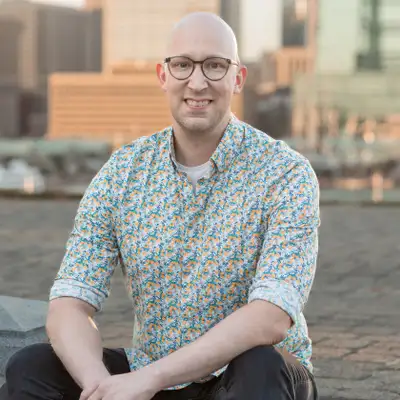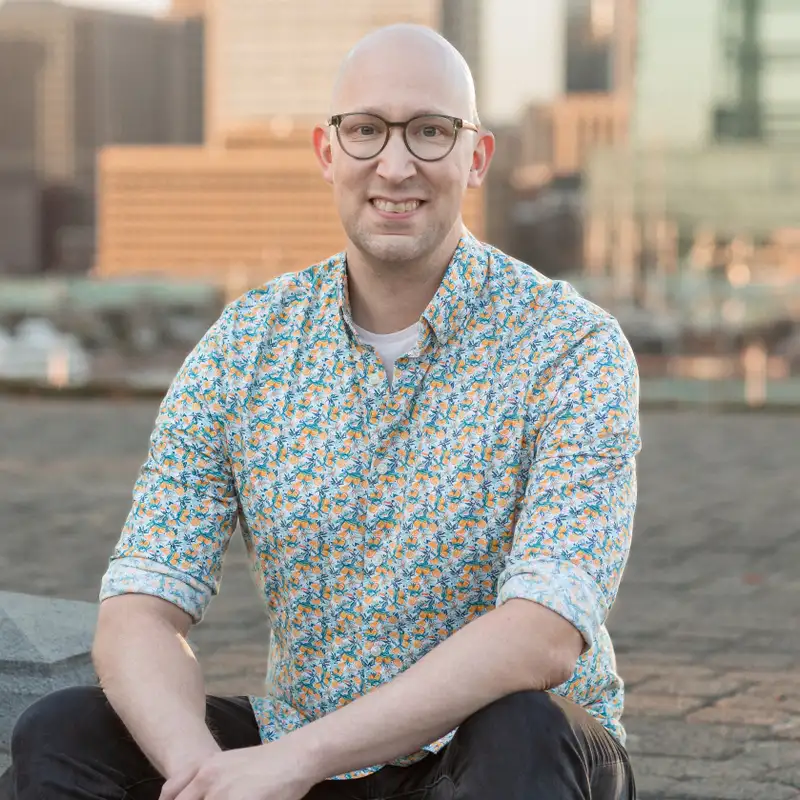
Barry Wright III
Download MP3Rob Lee: Welcome to the Truth in This Art, your source for conversations connecting arts, culture, and community. These are stories that matter, and I am your host Rob Lee. Today, I am thrilled to welcome back a returning guest, an improviser, teacher, and technology professional who is a co-founder and the current president of the board at Highwire Improv. With a wealth of experience in improv since 2017, he performs with various ensembles and is known for his engaging coaching style. We'll be covering some of his insights on improv and his continued work at Highwire Improv. So please welcome back to the program, Barry Wright III. Welcome to the podcast.
BW3. So thank you for coming back on and how was your day going since for the intro? Every day is a delight. You know what? That's the first time I've heard that. The first time I've heard that, you'll have some people say, ah, today it's a slog, others are like, this is fine. And you're like, it's a delight. So today is a delight. Can we go back a little bit?
The I think not to a worse time. I think so stories are the heartbeat of this podcast and I'd love it for you to share yours. Could you introduce yourself and your story as it relates to improv and Highwire and all of that? Sure.
Barry Wright III: So I think I always tell people my first love was teaching. I have a real distinct memory of being on my school bus in elementary school. I was in like first or second grade and one of the older kids who was purportedly cool was like struggling with math, math, like their multiplication tables. And I remember like helping them and being like, oh, I can do that. This is nice.
This feels good. And that was kind of like an underlying thread for the first, you know, 20, 25 years of my life. I went to Duke and I made a lot of friends in Maryland as a result of that. And you know, I was kind of one of those 17 year olds who was like, oh, I know exactly what I'm going to do. I'm going to go to college. I'm going to become a physics professor. I'm going to work in a lab. And then you like, of course, face the real world. And you know, you learn that you're the only person in class who can't do the lab experiments. We did like measure the speed of light and I got twice the speed of light. Everyone else was like within 1%. So I switched to math and found that was best for me. And I got really engaged in teaching and tutoring on campus and kind of found myself going down this path of, you know, I'm going to be a freshman professor of my kind of dream job and teach, teach all these 18 year olds calculus. And everyone listening is like, this guy's on the art podcast.
What's going on? And it really means a lot to me because, you know, other than doing marching band in high school, I really didn't participate in the arts in a meaningful way until my late twenties. You know, I went to college. I got my math degree. I started working in tech because I didn't want to get a PhD.
The research part was not my friend. The teaching part was my friend. I started at a company doing textbook editing and like the math online courseware. And that sent me down like a long path of working in tech jobs in Baltimore.
Got very burned out working like 90 hours a week as our company filed for bankruptcy. And I was put in charge of that for some reason, which is a whole other story. And so it was at that point, my wife, Kristen, who had been doing improv for about two years. And I was hanging out with her and her friends, seeing some of their shows. They would practice in our apartment building basement.
And I would be the one audience member while they practiced. And they finally collectively convinced me to give it a shot. And I was like, this is great.
I'll have some reason to leave the office at six thirty on a Tuesday and do something else. And I didn't know them, but it was a complete pivot point for my life. And, you know, if math and teaching and tech were like the first big circle in my kind of storybook, this was about to be the second.
And I was going to spend the next 10 years finding the Venn diagram overlap of those two things, which is kind of where I find myself now, bringing arts and the left brain part of my identity into what I do day to day. Wow.
Rob Lee: And thank you for that. That really sets the stage and gives us that sort of context. Because I'm seeing like, you know, the sort of decade of experience now, you know, in the space and, you know, how you got started in it. So taking that basis in teaching, that interest in teaching, which is very, very interesting because I see that alignment that the Venn diagram you're describing. So what if there is one that you rely on, you know, just, you know, thinking like, hey, this really aligns with me. What personality traits like have made you good or really interested or however you quantify it, but in improvisation or being an improviser?
Barry Wright III: Yes. I think the ones that come to mind are openness, curiosity and positivity. And we heard the positivity at the beginning. You know, improv is fundamentally a team activity. There are technically forms of it that you can do solo, but the vast majority of improv is two to eight people working together to create something that they didn't explicitly plan to do. And you can really only participate in that kind of a generative art form by being open to possibility, be curious about what's next and just generally believing that it's going to go well. If you go into it cynically or if you go into it with tension or with too much concern about how it will go, you struggle.
But if you go into it kind of in a meditative way with an openness to the possibility of what's going to happen and not worrying about controlling that too much, you find that it supports you and your teammates support you and you support them. And so that was always something that I felt I was somebody who really kind of got along with everybody in school. I didn't have like any, I wasn't popular, but nobody hated me. If that makes sense, like everyone knew me and was like, he's all right. And so like that kind of being able to be on the same page with people, be a chameleon and fit into different places, all that kind of comes together in I think being a good steward and a good participant improv.
Rob Lee: That tracks, it makes a lot of sense. I think for me because I've had relationships tangentially with the improvisational community, the improv spaces and I think the curiosity piece of life, I'm trying to be more positive like regularly, but I think you're right in that mindset. If I go into, let's say, an interview thinking like, I'm going to bomb this, my energy is going to be off and it's going to be, you know, just not as good.
And I'm also aware that this is performance in many ways. And also I find the ones that I enjoy the most is with at least two people myself being included. So I saw the sort of overlaps and one of the things that I think where we had our last conversation, it was a big improv and I had my 10 year anniversary in podcasting there back in 2019. And I'm looking at all the people that have been on and I was doing like a different podcast at the time that it's this notion of being quick, always having like being able to risk and, you know, having a focus, having a goal, but taking, let's say, I had a podcast called Master Montaigne's Robcast.
And I was very like, open, let's get loose in, let's do all of this different stuff. Right. And we had a segment that was called New Challenger.
And it was definitely a play on Street Fighter New Challenger thing. But infectively, what I would do is to my co-host, throw out a word that's in the title and to see if he would find like the worst story. And we would go, it's going to be something innocuous like, man, he's like, I'll take that man is an easy word.
Man is mauled by werewolves. He's like, come on. So I found that there were some overlaps and sort of the understanding that I've had being around sort of improv and having bad adoration for but not actually engaging in it.
Barry Wright III: Yeah. And it's funny that you put it that way because I think a lot of people think of improv as like capital I improv, whose line does any way or insert your reference here, drop out, wilden out, whatever it is. But there are elements of improv in almost every art form.
In some art forms, they're part of the process, right? In theater, you generally aren't improvising in the final performance, but you may absolutely be improvising your way through rehearsals. In music, obviously, tons of improv. But even things like painting, you know, most people are figuring aspects of this work out as they go. And so the principle of improv, the willingness to start without knowing what the end will be, we all experience in some way. It just so happens that, you know, a lot of us in improv use it to make jokes on stage.
Rob Lee: Right. And reading, you know, I may have read this somewhere, but, you know, improv is the world's most inclusive and accessible art form. What makes it that in your view is that literally what you were touching on there is there's something you would want to add to that with that sort of softballing, if you will.
Barry Wright III: Yeah, thank you. Please let me quote you in my future grant applications. You know, I really believe it. And we say this all the time at Highwire Improv because, you know, improv can be done with absolutely no materials. You truly only need other human beings and space. Chairs are optional.
Like absolutely nothing is needed. You can do it anywhere from sitting next to your friend on the bus to in a park to on a 20,000 person stage. And we all have at least some internal experience with it, even if we haven't had formal training in it. And because of that, you know, we find people can become capable of doing this for the rest of their lives with an hour to two hours of training, which is remarkable. You know, and it's not to say that you would be a master. It's an art form that you could invest in for your whole life. But with just a little bit of direction, you can play improv games.
You can act in an improv mindset with very, very little training. And so the starting costs are super low. And the logistical costs of getting improv into the community can be super low if you invest in it. We have a program called Improv in Every Neighborhood. And our goal is exactly what it says, to bring improv workshops, free programming to every neighborhood, Baltimore, of which there are many, depending on who you ask, anywhere between 60 and 100. And that's a very feasible goal in a way that, you know, pottery may not be.
Kill everywhere. Like, obviously, people are creative and find ways to do it, but there's really a lot of ease in getting people started with this art form, which I think is really exciting.
Rob Lee: Some of us, like a politician there, an improv in every pod, a chicken in every, on every page, I guess. I don't know if that works. I don't. Yeah. And we're going to go back into to Highwire much more.
So definitely thanks for queuing that up a touch. But I want to go back to one other thing about sort of the sort of a two-part thing. Take us back to, what was it like your first time that you did an improv show, like in, like in earnest? I know, you know, they're sort of that practice component and sort of being there for the first time. But that first time where you really denote like this is the starting point for me being on a stage or being in a space.
What was that that like? Because I've called, I've called the stage that I've been on, right? That same example of me doing my 10th anniversary show at big, that black wall back there. I was like, this is the wall of terror because I came out and I think it was going to be people there. No one was there yet. I came out too early. It threw me completely off. I was like, this is a live show that I fully produced. This is not good. So I'm very curious about sort of what was your first time and what was it like? Yeah.
Barry Wright III: So my first ever improv show was a class showcase for the level one class I took. I think we had it at a single care at theater. Great, great spot over on Howard Street. And I tell people all the time, like the level one improv showcase is the most forgiving audience in all of entertainment. It is friends and family of people you have asked to be there for free who know that you've only done this for six weeks.
And you get laughs, even if you don't always deserve them. But it was amazing. There was there was, you know, 40, 50 people there, you know, as a 12 person class, everyone brought a few friends and family. And I remember driving over and saying to myself, like, like almost a module, like this doesn't matter. And I was still in this mindset of like, you know, is this a hobby?
Is this just something I'm doing to, you know, combat my own workaholism? And just reminding myself that it wasn't that important, I think made it easier to do. And then I remember going through the experience of playing the improv games, getting the laughs, getting the kind of applause at the end. And having a moment of realizing that I don't have to have perfection to be good at this.
And that for somebody who grew up with a math degree and like getting, you know, you know, very much a regimented, rigorous life in my work life. That was a really big revelation. And it really opened my eyes to the importance of improv for me personally. You know, somebody who grew up with anxiety, workaholism, all of those things like, oh, this is actually something maybe I've needed for a while.
Rob Lee: Yeah, that again, that that tracks and I relate to it as well. I put in the extra hours that do all the really a lot of work and sometimes that extra pressure and, you know, sort of this this round of doing these interviews. I have goals and I have aspirations and things of that nature. But, you know, I do a version of it where it's like no one is no one's asking me for this. I'm committed to having folks on who want to be on.
But I find like I have these conversations that feel like influencer mode and I don't like those. And some of the connections and, you know, some go back to last week and even the week before where it just wasn't in alignment. And I had to check in with myself and being that person that's let's say 2022, you know, I did almost an interview a day. Being discerning, but also I was very focused on getting things done.
Whereas since then I had this revelation of not anyone's like not asking me as much as I'm what what matters to me in doing these interviews and how can I parse that down to do something. Has a bit more meaning, a bit more depth. And it's not to say that that stuff didn't have those things, but it was wearing on me. It takes more from me. So what I got to last week and being in this sort of spot of when there are too many cooks in the kitchen, we were talking about, yeah, two day people.
I had an 11 person email that I was on and no one knew who was on first. And I'm like, what are we doing? And I had a point. It just came came to like, this is kind of raggedy. I don't know if this is a line with what I'm doing. And it's that it's being more open and being curious and wanting to do the things, but being more open to say, where's there?
Where is there a fit? You know, it's like, it doesn't matter in this way of, so it'll be on my permanent record, you know, teacher and thinking of that. And that took a lot of extra weight off of me, I think. That's fantastic.
Barry Wright III: Yeah, I think, I think a lot of us go through that transition of realizing that we're the ones who could decide to decide what matters. Yeah, it takes us some of us longer than others. Yeah.
Rob Lee: And, you know, when it comes to certain things, especially in like the job situation or even sometimes a school back in a day, I used to have this vibe. Or this idea that I would call like, I have the nuclear option.
I can just not do it. And there's always something that resets it. Like, or do you want to apply the nuclear option here? You can only use it like once.
Right. And so that's the thing that I've learned in doing this and being really responsible to myself and to a degree that the people I'm inviting on. So in that same vein, considering the revelation that you shared and the revelation that I shared, I'm curious around the full scope of not just being on stage, but everything that goes along with it, the training, the coaching.
How do you denote, if you would, if you would denote this scenario, good improv from a developmental opportunity or even bad improv? I know what a bad podcast is. And I know what a good podcast is. Wouldn't my sad be a good podcast? But how do you denote those? Yeah.
Barry Wright III: So I think, I think like in a lot of forms of art, there is, you can break things into the craft and technique and then the artistry and the purpose. You know, as I mentioned, you can learn the craft pretty quickly. And of course, it's endlessly deep and intricate and something that you can tinker with your whole life. But Kristen, you know, who is also a co-founder of of Highwire with me and Brian and Jeff really boils it down to, are you listening? Are you agreeing?
And are you adding? And I think from a craft point of view, yes, there are specific techniques that we could go, you know, into our curriculum documents and talk about very detailed things. But at its core, good improv is when you're listening to your scene partners, you're building a world together and you're each contributing to that world. And bad improv is me and selfish, ignorant or purposeless. And, you know, people fall into different versions of that for various reasons, often fear, often lack of experience. And then beyond the craft, it's, you know, it's, it's, it's taste, but it's, you know, are you, are you doing something with this art form?
Or are you just doing this because you enjoy it? Right. And in a way that I'm glad we have recreational sports leagues and I'm glad we have professional sports leagues that I like to watch.
Right. And I do think improv sometimes forgets the value of the rec league. Like improv as a hobby, as an, as an artistic pursuit for its own enrichment purposes is highly useful to people.
It's highly beneficial to people that's health and social benefits. But there's also an opportunity for us to make improv art. We even have a shirt that says improv is art. And it came up because sometimes we'll submit events to like those event aggregator sites and they'll come back and say, this was most, should have categorized this as entertainment, not art. And we're like, I don't know about that.
Rob Lee: Right. If I can't be both. Literally. And, you know, I run into that you touched on the grantees earlier and I think of the same thing where it's like, Hey, you're, you're doing art criticism. I was like, no, not and, or, you know, it's like, is it journalism or is it art?
And you're applied for one then it's somehow the other. And I'm like, I don't think it's either of those. I, you know, if I were to be really rudimentary about it, it's like, look, I think it's a storytelling thing. And I like having conversations with folks and really getting the story behind it. And if I want to be really, you know, having some smoke around it, it's like, I'm picking up for where other publications, perhaps they're kind of missing the mark and are covering it. You know, like arts and culture related journalism, as you probably know, has started to disappear as being.
Some of the biggest, biggest papers that are out there. So this is a opportunity to give a person an hour to come on, talk about your stuff and frame it in something that gets eyes and ears on what is what one is doing in their insights. And, and I think, you know, we've, we've hit on a few things.
I love that piece that improv is art. You know, I think I've been around it. You know, seeing folks, I've seen folks after, after shows sometimes and things don't go the way that they think they're going. And it's the same as the show didn't work out.
This piece didn't work out. Or even the thing you compared to like music, you know, so the improvisational component of music, I think of jazz immediately. It's just like, oh, you coming in? How are we playing off of this?
And the last thing before I move into my question around HiWire, it is being involved in a few shows that sort of hoping come up with some ideas, I suppose, and really inviting folks out. I'm like, I now see it because it's time, time between those two opportunities. Being the subject of some like improv, I was like, wow, this is definitely a skill. These people are quick. These people are open. These, these people are really committed to driving home a point and kind of showing off a little bit too, if I'm being honest.
Barry Wright III: Yeah, we let that happen from time to time. And it's, it's, it's interesting too. Like it's like a lot of other art forms. You know, improv is a relatively young art form.
You know, when you talk about painting, we talk about 48 different disciplines and styles and eras of painting. And we're barely at three for improv, right? And so there's a lot more to discover there.
And you know, there's, there's showboating improv and there's grounded two act play improv. We can talk a little bit about that if you want. But that's kind of what I mean about, you know, what are you doing with this?
Are you, what are you trying to say with it? It's not just go up and make jokes necessarily. And even if it is, you know, stand up hours, have a theme or a purpose or a point they're making often, especially nowadays. And so we should be challenging ourselves to do the same with improv. That's a good point.
Rob Lee: So, yeah, quickly enlighten us on sort of those, he said there's maybe, maybe three. So tell us a little bit about the, the, the types and sort of, you know, distinguish and quality of those. And I want to ask you about a high wire. Sure.
Barry Wright III: So there are, I'm sure, many people who argue with me in the comments. I hope that. And for your popularity, exactly. But there is short form improv, which is, you know, short structured games like you might see on who's lines. And it's anyway, there's long form improv, which is a series of scenes, sometimes with a structure to it that maybe looks and feels a little bit more like a sitcom.
That just happens to be made up on the spot. And then musical improv, which is exactly what it sounds like. The same kind of thing could be shorter or long form, but all with musical accompaniment and singing. And those are kind of your big buckets these days. Of course, we talk to people who are in the know, they're going to talk about the 47 subgenres of each of those things, just like, you know, with electronic music, for example. And everyone will say, in response to that at your family dinner, can you do that stand up for us? And we'll say, well, actually it's a little bit different than that. Right.
Rob Lee: That's good. That's good. Thank you for that. So let's move into high wire. Could you, you know, introduce us to Tyrone? High wire improv, like sort of what's the story? Because here's the thing, you know, I walk a lot, right? Like last year, last year I got a six million steps in.
That was like my number in this about 16,000 steps a day. And I usually go over there in that Highland town areas. So I was very cognizant.
I go to dreamers and make believers alive. Oh yeah. I happened to go down a little bit. I was like, hmm, what's happening in this building? And then a few weeks ago, but I was like, hi wire. So now guess what? Let's give me the skinny, please.
Barry Wright III: Or I'll give you the origin story up till today. Interrupt me if you have questions. You know, so we have four co-founders of Highwire myself, Kristen McKenzie, Brian Shea and Jeff Taylor. We had all met and trained at Baltimore improv group, you know, between 2015 and 2020. And in the summer of 2020, you know, amidst COVID lockdown, Baltimore improv group temporarily shut down. And the world was reckoning with a lot of things from COVID to George Floyd, to, you know, individual institutions of all shapes and sizes, kind of dealing with the ramifications of those things. And we didn't know what was going to happen in Baltimore.
And so the four of us decided, well, we can't just wait and find out. And, you know, use the opportunity to, especially if being home and not being able to go out to think hard about what we wanted an improv theater look like. We had some community meetings with other folks who were still doing improv online at the time and in September of 2020 launched Highwire improv. And by November, we had gotten the brand website, YouTube channel.
Up and everything. And we launched our first season of programming with 55 teams from across the world, from California to India, running shows seven nights a week for a year and a half, all online. And so it was a really wild time. Obviously people were craving connection and creativity in that way. We got to make amazing connections across the improv world. And we'll always be able to say for at least a year we were the most prolific improv theater in the world, which is a nice little thing to point at. And then, you know, but we did that with an eye towards eventually opening back up to in-person events as the world allowed, which it did in 2021, and kind of one step at a time.
We were improvising, running an improv theater under very unusual conditions. With in Baltimore, as you know, we kind of reopened and then re-closed. And so we kind of dealt with both those things. And we were just rooted in our core values, safety, community, transparency, and action.
And just like, let's keep trying stuff based on what people want to do. And that led us to running events at at least 40 different venues in Baltimore between 2021 and 2025. From church basements to bar second floors to everything in between, some incredible partners and supporters for that. But in 2025, we applied for a project restore grant, which is run by the Maryland Department of Housing and Community Development. Major block grant program that allocated like $11 million to main streets and arts districts across the state to rehab commercial vacancies. And so that building you walked by used to be Hones Bakery for almost 100 years, but had been closed since late 2021. And we were one of 85 businesses who applied to open that space back up. And through a long grant application, many meetings and some real trust on the part of both Highland Town Main Street and the landlord. They were willing to put a bunch of money in a five year lease in front of a nonprofit arts organization, which is really, really cool.
Yeah, wow, that's correct. And so over the summer, we did the renovations. We opened up that building in September, had a nice grand opening in October, and have been living with a home now in Highland Town for about the last six months.
Rob Lee: That is amazing. That is one of my favorite places. And I spent a fair amount of time. It's not too far out of my neck of the woods. Like pretty much I'll be between, you know, sort of station north and Highland Town. And that's kind of what it is. So seeing, you know, Highwire sort of open up and I was just like, let me reach out to Barry. Let's chop it up and just catch up on it. And so in that sort of six months, how has it been? And I know it's still so fresh, but how has it been in the time and having the space there and some of the perhaps developments that you have on the horizon with Highwire?
Barry Wright III: Yeah, it's been pretty remarkable. You know, we've had some really great support from the community. One of the benefits of being in an arts district is you have all that structure and support. And I'm biased, but I think Highland Town's infrastructure is one of the best. They do a lot of really great work in that community. And, you know, the people have been, you know, really excited to see something new on a corner that has been vacant for four years. You know, we've had people come up to us at the art walks and say, I wish the donuts were still here, but we're glad you're here too. And which is great.
I'll take that. And, you know, having our own space that we control 24-7 has allowed us to more than triple the amount of programming we do, both classes and shows. It's given us an opportunity to host a wide range of community events that would have been logistically difficult to do otherwise. And the response we've had both from kind of people in the community, but also the local businesses has really, really been special and really supported. And, you know, a lot of our focus for this year is living up to the grant application, like living up to, you know, being a community resource and hub for this neighborhood and for Baltimore at large. And giving that back to folks in exchange for, you know, an incredible place to be.
Rob Lee: That makes sense. And it's, I think, you know, it naturally brings me to this conversation around collaboration and being part of the community. I hear the term community used a lot, especially in the podcast space. It's like, I feel like this is a subscription. I feel like this is me signing up. And then there's these other instances where, you know, I've tried to get folks to come out to events and shows and so on.
And it is tough flooding. And I just find that, you know, there are certain things that work and get over and then you're happy when folks, you know, as you're touching on kind of living up to the grant or living up to more macro-ly speaking, the promise of being involved in the community. And I'm an idea person and I put out there different things. There's one place that I've had a few conversations with folks and, you know, I didn't really go anywhere. But the notion was if you have a really cool restaurant and venues where live events are happening, why don't you do dinner and a show and really help each other, your neighbors. Just do that. So from your perspective and having, I think, this sort of foundation and it's sort of rooted in being a good neighbor and how do you, like, what approaches do you find to be effective in building sort of this arts organization in this climate where people aren't going outside? It's decreased federal funding and, you know, when it comes to institutional donations, I know my funding got cut. So talk about that.
Barry Wright III: Yeah, tons to hit on there. So I'll start with the kind of community development aspect of it. One of the things we do at Hiwire Improv and Improv in general is, right, you know, we try things and we adjust based on feedback. Funny you mentioned dinner and a show because we tried dinner and a show for Valentine's weekend just a few days ago as a disrecording at least. And probably we'll be doing other similar events. But, you know, we catered from Francesca's Empanadas Cafe just down the street and put on a workshop and show for singles and for couples on the 13th and 14th of February.
And it was a great event. Probably try more of those. And we want to really be active in bringing those opportunities to folks. We also did an interview based show with our neighbor on Conclean at Harp Vision. One of the other businesses, we got the project free store grant and we interviewed them and did a comedy show based off that.
And then they opened up their store for late night hours after the show and hopefully sold some things. And so that is, you know, there's no playbook, right? There's no specific set of answers that are going to work for anyone in the community or neighborhood. And so our approach has been to try things and then also be open to people's ideas when they bring them to us. You know, I think zooming out a little bit to developing that community engagement. You know, one of the strategies we took from the beginning of High Wire was rather than try to build a system where people have to learn, take classes, audition and then earn a spot on a house team, which is probably the predominant model for improv theaters globally.
We have no High Wire teams. We provide the infrastructure for independent performing ensembles to put their shows up and we organize all the stuff around that to make good content and good experiences for everybody. And that flows into education too, where we're not just teaching people how to improvise, we're teaching people how to develop improvised art and improvised ensembles, right? We're giving them the tools to take these, this art form and do art, right? And having that embedded from the beginning creates people who are invested in developing the community and doing some of the work that is, you know, the unfun stuff like posting on social media, unless that's your job and you enjoy that, and figuring out what's going to work. And so it's been part of the ethos, I think, from the beginning of a wider base of support than maybe your average arts organization. And then the last thing I'll jump to is the funding aspect of things.
Improvise is unique in that it's one of the only art forms that I'm aware of that has the cachet in the corporate world to be connected to leadership development and training. I think there was an article in a major newspaper about that recently. I can't remember if it was the Washington Post or the New York Times or some other newspaper I'm disappointed with in some way, but was happy for the coverage. And so we've been able to set up our organization with a more diverse set of revenue streams than the average arts organization. We have applied to improv workshops. We have grants. We have donations. We have classes.
We have shows. And now with our space, we have space rentals and being able to give that space back to the community that was able to give us space when we were coming up. And so being able to have all those puzzle pieces to move around and kind of improvise the business model as we are growing and expanding has been really important, especially in the last 18 months as the federal art funding and the donations have really been impacted and rightly so. So always keeping our eye on do things need to change and being open to changing things in response to what the community needs.
Rob Lee: That's so great to hear. It's very refreshing because I try to change this up every season, right? Not like drastic changes, but as I was saying earlier, I have a question later that is a new type of question, a new segment, or even how I'm going about it. I could just say, look, I'm going to do 10 years and I'm just going to have interviews with the same people every year. Keep it everyone on point. Like, yeah, last year you said this.
How did that change? But no, trying to reach out and have deeper, different, more interesting and broader conversations and still being loose. Not being too taught like a stretched rubber band, but being more like that untaught rubber band, having some flexibility that can go here and there, but not so rigid that it will eventually pop. I really worked hard on that one. That was improvised. I didn't write that down for. So that's sort of the thinking that's there.
Barry Wright III: It's so fascinating to be, I think, both of us working in these forms of art and expression where mastery doesn't look like doing one thing 100,000 times and becoming the absolute best woodcarver, right?
Or the best painter or whatever it is. Growth and effectiveness in this work is being changeable and willing to go with where society and culture and people are. And it's harder to kind of exactly see that as it's going, which is interesting. For sure.
Rob Lee: So one last real question. I want to run by you. So with the mini hats, you're not wearing one. I'm not wearing one either. But, you know, high wire producer shows, classes, workshops, community events and corporate training, the name of it. I'm sure there's all these other things that are sub-genres as we were touching on. And you have your own day life, day job, all of the real things. How do you keep it all together with your leadership role being a player, being an improviser? How do you keep all of those things together? Yeah. Yeah. Yeah.
Barry Wright III: I mean, we first of all, we have an incredible amount of support, right? We've had, you know, from the beginning, we had four co-founders. Now we have, you know, eight board members. We've got a deep bench of, you know, 30 or so instructors that have gone through our instructor training program.
We've got volunteers. And so I wear a lot of hats, but I don't have to wear 100% of them all the time, right? And so I draw a lot from my, that other circle from the Venn diagram, the tech world. I've been a, you know, team leader and manager in my day job for a long time. And so I've been able to bring that administrative leadership to the table as high wires grown and expanded. I'm usually the one writing like the yearly strategy document and putting together like the community meeting slides and that communication, that transparency, getting all that information out to dozens and now hundreds of people.
Makes it easier for people to contribute and keep this larger and larger thing going in a smooth way. That said, I'm very busy. And I wouldn't, I wouldn't be busy if I didn't love it.
Rob Lee: That attracts. So I'll just add this pin. What I heard there was sometimes you wear fedora, sometimes you wear visor. And other times you're wearing this sort of 10 gallon Stetson.
Barry Wright III: Whatever hat is needed, I will put on.
Rob Lee: I wear headbands and that's about it. That's all I got. That's all I got for you. So, yeah, thank you for that. Just really giving a sort of, what I've been describing these conversations like recently is the director commentary.
Yeah. So I want to go into my rapid fire portion of questions and you know, you've technically been on here before. So you don't want to overthink these.
I'll just remind you don't overthink these. Whatever's the first thing that comes to my first word or a short sentence. That's what we'll work with. Yeah. All right.
So here's the first one. What is a word that you hate hearing? Maybe. Okay. All right. All right. After this. I don't know if I like it. I don't know if I like it. Flag on a plate.
Barry Wright III: Before about the, I'd rather have a yes or a no than a maybe.
Rob Lee: I hear you. I hear you. I thought you were going to say like moist. I don't like the word moist. I was waiting for that. Here's the next one. What is your hidden talent? You know, go hit a reveal if you will, but hidden talent.
Barry Wright III: I am really good at learning the first 80% of something. Okay.
Rob Lee: So chronically, like, I'll do the B student amount.
Barry Wright III: Well, now don't put the words in my mouth. Like, I was definitely like annoying, like trying to get all A's kind of person. But I would say like, I can get good at things quickly. The converse is I find it difficult to pursue a single thing to mastery and, you know, I crave novelty. So I like to do a lot of things a little bit well.
Rob Lee: I've been using this terminology in my full loss of identity. I sit somewhere between novelty and nostalgia. Oh, I like that. Oh, yeah. Feel free to use it. Just credit me. It's fine. You got it.
So this is one that was originally in the main set, but I'm looking for a shorter answer on this one. So where does comedy and improv overlap and where do they diverge? Because I've had conversations with folks who are improvisers and they go out of their way to say it's not just comedy. It's not comedy or what have you. So give us sort of the distinction from your perspective.
Barry Wright III: Yeah, I mean, I think improv is a team activity where creativity and communication are applied to a goal. That could be making a ton of laughs. That could be making you cry. That could be working on a project in your day job. There's a lot of work on comedy. And it's getting increasingly interesting what the comedic landscape looks like from stand up to clowning, to improv, to sketch. We're a part of the puzzle.
Rob Lee: Yeah, I've asked this question previously of what's allowed to be funny these days. It's like, tastes are shifting. And yeah, this culture war in the background is very, very interesting. Here's the last one. This is one I was very proud of. And then we'll go into the sage advice, which will be the kind of conclusion here.
So here's the last rapid fire. If you had to switch your improvisational style to another, let's say, practice that was improvisational in nature, would you most likely move to jazz or freestyle rap?
Barry Wright III: I've done both. Nice. But given my place in the world, I'm going to say jazz. Even though both, I think, are rooted in a racial identity that I do not inhabit, jazz feels more comfortable of the two. And I didn't play clarinet.
Speaker 3: You're a beard guy, so it doesn't work.
Rob Lee: If you just put it off the door, you're a beard guy. I can see you playing the bass. Yeah.
Barry Wright III: Oh yeah. I would love that. I think that's the appropriate level of complexity for me.
Rob Lee: That's great, actually. And I remember at one point, my partner, she was just saying, why don't you just be like the Charles Niggas of podcasting? He's the angriest man in front of us. Yeah, he's really talented, though, but he's doing it also.
He does not suffer fools. I was like, ooh, good point. All right. So thank you for indulging me on the rap of Fire portion. I think we got a little extra detail there.
It's always good to peel onion back and take that curtain back a little bit. So sage advice. This is the last sort of question for the evening. And this is like the insight question.
And it's a lot of texture here. So I listened to a podcast recently and to discuss the distinction between high art, like theater and fine art paintings, and then low art, such as like fan fiction, cosplay, stand up, maybe even improv. The podcast suggests that the market serves as a validator while like high art is like rarefied and it's made for a select audience.
Not everyone can go to see this to the loo for what have you. But low art is democratized, community based and not easily commodified, but it's being deemed as not having a scene or you can't put money behind it. What are your thoughts on the distinction between high art and low art? And how can we make art a bit more participatory? It's a great question.
Barry Wright III: You know, I think the labels of low art and high art come from the high art people. I think that's pretty apparent and purposeful and happens in other industries like fashion, which is of course, art as well. And I think that's why I'm so excited about improv as a community based art form. It is so much harder to control than something like the music industry, the theater industry, that have these big institutions, that have these kind of larger gatekeepers. There's an interesting evolution that's happening in the improv world right now where UCB and Second City, some of these larger, you know, long standing improv organizations in New York, Chicago, etc. have been bought by venture capital firms. The Dodgers own an improv theater, which is strange. And it's going to be interesting to see how that plays out, whether that is a model that works.
And I think there's so much value in getting people together to participate in art and that participation has such a low barrier to entry for improv, even just showing up to an improv show, you might get asked for a word, you might say flute, and then see the most amazing comedy you've seen all month and feel like you were part of it. It couldn't have happened without you. And it's true. That never happens on Broadway. That doesn't happen when you pick up your favorite album. You know, maybe there's an element of that if you go to a punk show and, you know, the bassist jumps down to the pit and you, you know, give him a high five, whatever. But it's so cool to be able to blur that line between the people on stage and the people in the audience. And for everyone in the room to feel like I could be up there doing that, even if they think I would never do that. They see themselves up there.
They see their community, their local references reflected there. That's really hard to replicate at scale. You can't have a national improv show in that way. And that's not to say there haven't been commercial versions of improv, right? There have been televised improv.
There's improv on Netflix now. We're seeing an entire company with Dropout become, you know, a competitor in the streaming space. But it still feels like it's been art that's been created for the people who enjoy that world. We've not been told this is the good thing. We've not been told this is what you should value. And we also haven't been told to spend $800 for a ticket for it. And I think that's really exciting. I hope it stays that way.
Rob Lee: I like that a lot. I think that's a really good point. When I was looking at last year and this year, you know, sort of, I had, you know, say two years ago, had the most funding that I ever had, which was really great. And sort of back to back years of having a fully funded project. And then the last two years, you know, very, very meager, very, very small. And, you know, it didn't really change too much for me and what I was doing in my desire other than perhaps maybe keeping the same merit and same energy, but bringing it down a bit in terms of volume.
I've had not like the audible volume because podcasts just, you know, sounds, but the volume of interviews and sort of the different places I was going with interviews and so on. And, you know, there are different offers that are out there. It's like, I don't want to be sponsored by scam, dole or what are these things?
I don't do that. Everything is a sponsored podcast. And for the last two years, I've been in the education space teaching sort of the next generation of podcasters of doing something that feels that you care about, that has merit, that works for you. And, you know, being able to share that, I don't think I'm able to do that if I'm, or do that in a way that I feel that it has merit because, because there's an independent nature. I look at what I do as an independent journalist, you know, that I don't want to sell out. There are certain things I'll consider, but I don't want to sell out.
That is just some corporate media venture capital, whatever behind it, because it loses its originality. I've had conversations with folks that said I was too black or that I wasn't black enough. And I don't like those conversations. I rather not engage in those conversations.
And I think having this independence and being on this sort of community level, I can talk to who I want to, for how long I want to, and about what I want to. I don't really necessarily need notes from anyone that doesn't have taste. You know, and I don't want the podcast to be activated and have some backing behind it in that way. I don't want it to become an artificial vibe, another one of my philosophy for terms.
Barry Wright III: Yeah, I mean, it's fascinating both of us living in this kind of reflection of this even broader cultural conversation of, you know, what can the people do for themselves? You know, how can we, in our case, make improv a financially accessible art form for people to enjoy, but also a financially sustainable form for practitioners and teachers?
And do that without becoming beholden to billionaire tech platforms, right? I think a lot of people, Baltimore is kind of birthing scene for worker-owned cooperatives. We're really big into these community art forms, and it's really cool to see people in a number of different disciplines taking steps to own the work and, you know, make this low art a high calling. I think is really important.
Rob Lee: I think that's where we're closed there. That was a really good sign-off there. So there's two things I want to do as we close out here. One, I want to thank you for coming on, Barry. This has been a treat and a really good way to sort of wrap up the day for me. And secondly, I want to invite and encourage you to share with the listeners where they can follow you, high wire, the whole thing. Give it to folks. This is Shane with PlugPorsche. Of course.
Barry Wright III: Of course. Yes, thank you so much. This is a treat for me as well. I really love talking about this stuff with people who care, and you certainly do. You can find everything that we're up to at HiWireImprov.com or HiWireImprov on all the social media sites that matter.
We got the handle on all of them. You can sign up for our newsletter. You can follow us on Eventbrite and come see us at the HiWire Center, 400 South Conklin Street in Baltimore in the Highland Town neighborhood. We're doing stuff all the time. Shows are Fridays and Saturdays at least. We've got free drop-ins on Thursdays and classes all the time. You can do this. Please try it. It's fun. You'll meet great people.
Rob Lee: There you have it, folks. I want to again thank Barry Wright from HiWireImprov for coming back on to the truth in this art. And for Barry Wright, I'm Rob Lee saying that there's art, culture, and community. In and around your neck of the woods, you just have to look for it. HiWireImprov.com
Creators and Guests