Bernard Feinsod on 17 Years in Post-Production: From Vice Media to Independent Creative Work
Download MP3Music
Rob Lee: Welcome to the Truth in this art your source of conversations connecting art, culture and community. These are stories that matter and I am your host Rob Lee, except no substitutes. Today, and this has been a long time into making, I'm thrilled to welcome my next guest on to the program, a humorous, passionate, creative editor and producer, writer and director, a sound designer and voice actor with over 15 years of experience supporting leaders in comedy, documentary, news, variety entertainment and live events from platforms ranging from television and film to new media. So joining me today is Bernard Feinsod. Welcome to the Truth in this Art
Bernard Feinsod: Thank you for coming on. And this is a quirk that I like to add into these conversations before I go into this first question for you. Thank you for wearing your glasses. You know, I appreciate when my fellow four-eyed individuals put on the spectacles in a world of lasik and contacts. Yes, much appreciated.
I wouldn't have it any other way. So thank you for coming on to the pod and this is a long time coming. Like we've been kind of talking chit chatting back and forth and we had a nice little conversation before, you know, hitting this record button in earnest. So for starters, I would like to set the stage. Tell me about who you are in your own words. I have a second part to the question, but I at least want to start off there.
Bernard Feinsod: Well, I am a sort of Baltimore raised in Brooklyn based creative producer editor. I've worked in post production for a long time and supported a lot of projects for different networks and shows and different roles from creative advertising to making the shows themselves to, you know, whatever comes along at a big, that sort of a more pipeline based company like the agency sort of style in house sort of role.
And then also as a freelancer, so I kind of I came up as in a sort of like a media worker from the ground up like mail room to where I'm at now. And it's been kind of like a 17 year journey, something like that. And now I'm just sort of at a phase where I'm no longer a staffer after spending 10 years at Vice or I'm sorry, eight years at Vice. It's been 10 years since I started there.
And it's sort of the last couple of years has been navigating the waters more and more as an independent content sort of maker for brands and other, you know, small businesses and independent artists.
Rob Lee: Thank you. 17 years. You know, we're we're running the same loops. I've been a podcaster for 17 years. So shout out to you.
Bernard Feinsod: 17 is a good number, man. Don't don't join that club. But the 27th. Yeah, you know, like the 17 is like, you know, I'll stay young forever if I can, you know, keep navigating. Yeah.
Rob Lee: And it's sort of this is really good point where you can remember sort of the before times before the landscape is what it is now. And I'm thinking specifically from from my lane, the podcasting lane of, hey, I remember when it was a butt of a joke of, I have a podcast. It's still a little bit of that, but it's now the landscape has changed to everything as a video because it's really just for advertising.
Bernard Feinsod: Yeah. And when from I have a podcast, I have a podcast, I have a podcast. So I have a podcast. Like now it's kind of like it's bad. Like I have a podcast and that is the whole other loaded thing. I think it's politics changes everything. But but yeah, the ad system, I mean, Netflix added podcasts. Maybe you'll get picked up. I don't know.
Rob Lee: We'll see. We'll see. You know, maybe maybe me and just Hemsworth just working on the thing together because, you know, he's bucketed away there.
Bernard Feinsod: Just me and it's changed a lot, but at least they can't. They won't force you to make your audio vertical, you know, they'll be like, can you make this audio nine by 16?
Rob Lee: Actually, you know, so I can pinpoint because it's so fresh. And I think being close to two decades in, but under two decades, you can still remember sort of that motivator. So for me, the motivator for me to get started in podcasting was shamelessly like I was a Kevin Smith fan and I remember listening to smogcast early on and it said, just I was using podcasting as a way to keep up with my friends because you start to grow apart. And that was a motivator for why I started podcasting and earnest and why I started doing this podcast, The Truth in This Art was listening to for years and then very specifically leader of the country. And I say that in inverted commas, just talking about how, you know, basically Baltimore is a bad city.
Baltimore is just a city filled with rats and that was a motivator. It's those inflection points. So for you, what was the moment or the series of decisions that steered you into the creative work that you're doing? Because there's so many different roles as I keep looking over the titles you have.
Bernard Feinsod: I just wanted to go from one city filled with rats to an even bigger city filled with even more rats. You know. I don't know, Manly, it's hard for me to pinpoint that I have had a lot of things in life over, you know, times since I started to develop more of a personal identity as a teenager to now that have brought me back to this sort of stuff. And I think sort of nudged me towards it at different sort of stages in life.
Like I like developmentally, I feel like I first realized like what it felt like to sort of fail or not be cut out for something when my knee started to go bad when I was in high school and I was a really in my own head. I was my identity was very centered around basketball. And and I was like, oh, like, you know, you're having two knee surgeries in high school is a lot. And so at that point, I was starting to realize and cope with needing to find other interests, because at least in the long term is like, you know, I'm not going to play competitive college basketball if I just have like my legs not holding up or, you know, and I couldn't train consistently. So I was falling behind, getting in worse shape, things like that. And I was, you know, part of what my recovery from a knee injury was, was kind of sometimes you just sitting around. And I was watching a lot of comedy and a lot of TV and a lot of films, documentaries, stuff like that. And that had always kind of been like a kind of touchstone, even from an early age. I watched just like a lot of television, you know, my mom was had a handicap and she was injured and my dad would work a lot and had his own dental practice.
And they're awesome. But I also, after, especially kind of after my older brother went away to college, six years older than me, from the age of like 12 to 18, I was the only one in the house on a consistent basis. So I was, you know, entertaining myself and all sorts of ways as healthy as unhealthy as they could be. And you know, according to North Baltimore, like Pikesville, Mount Washington, right in central North Baltimore. Yeah. And, and I think that that was like point one, you know, I was in the theater and I always loved, you know, sort of, so I sort of threw myself more in that direction, little by little, and just sort of like, I was interested in everything. So documentaries were like, a license to learn about kind of like whatever. And, you know, through life ups and downs kind of nudge me back in that direction. But for the, you know, the more career side, that's like personal, more career side of things. I think that I kind of like got my first chance to do a TV job when I was 21. And I, you know, wrote some letters and talked to some, had phone calls and got passed between different people until I got an interview for this internship that was pretty prestigious that I don't think I even fully understood how prestigious it was until I was there. And then, and then like, like that, that would put me at the NBC Today show when I was 21, as like a kind of like an intern, not a page, but like, you know, role sort of similar to that. And just at that point, you're like an understudy for everyone and whatever your interests are, you've got to run in all those directions as fast and you can for as long as you can and meet everybody. And, you know, so I was working in the mailroom and also like the control room, you know, five a.m. in the control room, because the today shows early health and morning television is so competitive.
It's very like there's no room for error here. This is like Mariah Carey's agent or like whatever. And so like, you know, it's it's it's NBC like at headquarters, right? And it's like, it's like living inside of a TV show, like, like, like 30 Rock almost like and I wanted to work on 30 Rock, but I was working at the today show. And so like, but I'm seeing things like my coworker who wound up becoming like an investigative reporter in Seattle.
She's coming off the elevator with these doll houses connected to too many balloons to fit on the elevator and she can't navigate the building with these like giant sort of props. And like, this sort of stuff is just kind of like every day, you know, so I kind of caught like the TV bug there, but I don't think I was really like with my tribe necessarily. And morning television and wanted to really hone and learn from the like the variety TV angle, because that's really just late night for a different audience.
You know what I mean? So I was kind of like, all right, let's let's let's rock with this. I spent six months there and then like came back to goucher and I was like, but what I can't like, there's a TV program here, you know, so I kind of like made my own course of study at that point. Nice.
Rob Lee: That's interesting. Like kind of having just exposure to multiple areas and figuring out where you want to go at and having that pressure. It's learning at a very advanced rate. And I would imagine you not only learn sort of the skills of how to run certain things and do certain things within TV because it's so competitive, so high pressure, but also you kind of develop maybe a thicker skin, kind of develop maybe a sense of humor and really see if and do I really want this, you know, those questions though, is this for me?
Bernard Feinsod: So talk a bit about, you know, that that passion and that humor and how sort of that first experience, like that first getting your feet wet in a in the professional setting kind of was kind of was established because,
Rob Lee: you know, like we learn things and we're like so far at times of where we're at, but I think those foundational things, you know, it's something that we carry on. So talk about the passion piece and talk about the that sense of humor that comes from the work environment that started in that first opportunity.
Bernard Feinsod: Well, I think in terms of passion, I was like in proximity to like, you know, A-list stuff, right? So even though I was like, kind of a very assistant level, and then got these opportunities to like, oh, like, create a producer thing with this producer and then be in it or like do whatever it takes to get it done, right? Like, and I was kind of like telling them like, I'm into comedy. So, you know, I want to work on like your today's show, Stik, more than I want to cover like the balloon boy that's that flew away, you know, like, yolks or whatever, right?
That happened while I was there. And so like those experiences really shaped me, though, like being in a live control room, breaking news, coupled with, you know, a four hour show that also is just interviewing entertainers and doing Stik. The passion for me was like, it was connected enough that I could be like, oh, this might be a path like I feel more at home. Little by little, I was always nervous. You're always nervous now.
But like, you kind of like, lead feet on that a little bit, and the passion and the nerves are interconnected. And I think that like, in a place like that, you know, I was just realized like, oh, this is a place where I could thrive after so many months there of kind of like, waffling and being like, I served beer, like, and then by the end kind of being like, little home here, but and they offer me a job. But then found out I had to go back to college to finish school.
And they're like, Oh, well, we only hire people with degrees. So I kind of like reached the end of the road. And it was like, yeah, hit us up when you graduate kind of thing.
And obviously, the industry moves entertainment industry at that level moves at like, million miles an hour. So it's like, by that time, it's like, do you even have can you email that person?
Rob Lee: Yeah, you know, blocked left on red. NBC was bought by Comcast right around then, you know, like, it was like the sort of stuff that was happening is reminiscent of what we see now, but it's like faster now. And on the on the, what was your other part of the question was the content level or the actual fun for the skills? The the, I guess it is the humor point. And I think that that's just baked in with with you naturally out of your interest. So I think, you know, having just sort of that those early experiences, I think kind of preparing you and you really touched on that. And I think if there was something from a maybe maybe not taking things so seriously, maybe kind of seeing like sort of the the humor in that day to day, because like, Hey, we're making TV shows, we're having this fun whimsical Oh, snap. This is terrible, kind of things are really hardcore.
Bernard Feinsod: Yes, not it's not as whimsical and fun as you know, like, the intensity of what morning TV culture was, I think me being me, I just I was all I had to turn on and just kind of like never turn off and kind of like be able to operate with this sort of grace that in my day to day life, I probably do not have I could you're not going to be 100% straight honest with everyone. You're working with people in this way where in that environment, you're wondering if your future is in this industry.
And then they're holding it over you. And so you know, like, we this is the type of thing where I was paying my college for credit, and working for NBC as an unpaid and working, you know, 60 or more hours a week. And like, and like, as much as I could, because I wanted to be there, you know, and if I could get time in the edit day with somebody, or if I could help do more prep on a segment, if I got some great stuff that would be in prompter, like, or, you know, whatever it was. So if you're, you know, I got to play a lot of roles and learn what lots of jobs were by sort of assisting or doing them for short runs, and then moving on to the next thing. And that that kind of stuff showed me, you know, I liked operating at that speed. It can be kind of invigorating. But it was dead serious. Very serious business making more intelligence. You know, it's like Jennifer Aniston on the Apple series.
I was waiting for that. It's like serious man. And at the end of the day, like, there is a lot of humor there. It's entertainment industry. It's like the peak of major multimedia, you know, and I love NBC. Like, I hope to work with that network in the future. And at the same time, it's kind of an open secret that this is like the hardcore, weird world of a different type of television, and not even a secret anymore, you know. And so like, like that just that that kind of showed me what it took, because it's different. It's crazy ambition. People who are willing to, you know, if you're out late, you're still up early, you're it's always going.
And it's always sort of this thing where someone else is also just as good as you or better, and is also going that hard or harder. You know, and so I think when I when I returned to college, I was like in a different mindset. It changed me as a person.
Rob Lee: And thank you. The commercialization and the I'm gonna think of fake word of the business thing of creative work, I think happens instead of deepens the work. You know, I was joking earlier about, it's just, you know, podcasting is just a means for advertising.
It's just like, how do we get to you opening your wallet and hitting that QR code? So how do you keep, you know, sort of the creative, the artistic credibility or just the reason you're why, if you will, and that love while maintaining a livelihood, because there, there, you know, there is a thing and it's we're in that sort of mass conversation in sort of with time, remove retrospectively. How do you marry those two or consider those those different areas?
Bernard Feinsod: It's I mean, it's tough. You can burn out on anything that you love, even if you love it a lot. And you know, it's you if you're just doing it all the time. But I don't you know, I don't know if I have so much artistic integrity, like, I probably sacrificed that from the jump to just sort of like seek TV opportunities. And then I was, you know, I think that there's like, I'll find my way back to art.
Rob Lee: I'm like, sort of like thinking my headroom like, yeah, the great TV is art. But this is, this is, this is, you know, this is the slo-drip that we, you know, there's everything in between. And you kind of, you kind of wind up in that
Bernard Feinsod: stew of, you know, and there are different people with different ethics, even within that. And it's really a huge spectrum. But I think that I had to care more about money and livelihood when I moved to a more extensive city. And Baltimore, I was living in a row house with a bunch of my buddies. And my rent was like $300 a month the last time I was in a row. You know, like I had like a bedroom in a seven bedroom row house with eight of people living in it or something like that. And we were having a great time.
And it wasn't a big strain to like, we're at rent coming from this month. And, you know, I think that up here, I wound up really making a decision to do for money so that I was spending my time doing the thing I wanted to get better at. So it was like, we talked about this a little the other day, we were chatting, but like being what you, spending your time doing what you want to do is a good way to become that thing because you're building those skills, you're practicing. And this sort of like saying of like what a success.
Well, it's a blend of luck and preparation and timing and practice and all of this. And so in my head, it was just a matter of like, just keep going. The only way to guarantee I shouldn't do this or can't do this is the stopping. And in keeping going, maybe I won't succeed, but I won't have stopped.
So I'll have a chance. And so that kind of has always been this persistent thing that I've carried with me. And I think that it lit a fire under my ass to like try to reach beyond my means and stretch and that forced me to grow more and more.
And but that started in Beemore. And I think that that's like, that's the sort of thing where you always have your own projects and always, you know, throw yourself into whatever you're doing with, you know, with as much sort of sense of purpose and intention as you can. And hopefully, it won't feel like the sort of thing that you don't want to be a part of or that dampens your sort of love of doing the work.
Anything you do, work is work and it's going to be tiring, but like anything you do that you genuinely want to do, if you find out you don't want to be doing it through doing it, then that's a lesson too. So, you know, yeah, yeah,
Rob Lee: that's, you know, and it's funny, the next two questions that tie with both of these things, it ties back to the Baltimore-Brooklyn connection and sort of, you know, this Robert Townsend question I have, but I definitely want to touch on that where, you know, I'm coming up on a thousand episodes of this podcast and, you know, it's a lot, it's a lot. And at different points when I share with people what I do, because there, you know, there's no shame in it or anything along those lines. And I use terms like, I'm a daywalker, you know, like, you know, credibility, no, I don't have to worry about that at all. But there is a certain degree of consideration that I make. There are certain things that I won't do, but also, you know, it's never anything that I think, you know, I'm not going to be proud of later, but it may be certain interviews that I don't take because I think there is less merit in it or I'm not as interested. Or sometimes it just feel like I may not be the person for it or ready for it. But sometimes I, you know, there's a limiting belief that's there of, why are you the one that should do this? So I have to catch those.
Those are the ones I look at. And it's like, let me do this thing. Let me build capacity or even when I look at really, really, really busy years of the podcast, I always have this thought in the back of my head that, ah, this is just disposable. Nobody listens. Nobody cares. And then I get that feedback from people. It's like, no, I'm, this is great.
This is fantastic. Or I get some satisfaction out of, that was a really good interview. That's a really good conversation. And I almost don't even want to post it because I felt like it was that special.
This was just the cool conversation. But I think it does up capacity. I think that that's the thing that I get from it at times. And by doing so much volume and not every episode has come out there, some that I'm like, I don't know if I can use that one as I was telling you about earlier. Or, you know, like, oh, I'm really excited about this one. And I love it more than perhaps the algorithms or the listeners like it.
But I feel like I'm moving that, you know, ahead a bit. Like I joke about it. I say, how about qualified to talk to this person? It's like, wow, it's like, I must be all right at this or whatever the case is. And it just builds confidence. And it just is that consistent reminder of you're doing the thing that you should be doing. You're enjoying it. You're good at it.
And you haven't run out of steam for it yet. Even when as you touched on work is work. There is work coming up with questions, being the booker, being the producer, all of that different stuff. And sometimes these, these artist types, calendars, I give all that work to Claude, man.
Bernard Feinsod: I don't think I've met Claude yet. No, no, I, I did close. Nice. I did it. I did it in one year, though, have a, I had an assistant, right? And I find that maybe this is just me being a raging control freak. But, you know, I found that the things when I hire someone, I end up doing it a bit better than what they're able to produce, whether it be from the marketing or whether it be from the support side of it. And it's not that they're not trained and they're not good at it. I think the key thing is they don't love it. It's purely work. I love it and its work.
Bernard Feinsod: Oh, that's what I mean. 100% talking about this with every one of my favorite collaborators. And, you know, like it's the really good stuff. The people who are doing it love it. And they're passionate about doing it and they want to be doing it. Like if you're trying to make a film, say a short documentary or something like, and your team, like your editor isn't, doesn't care.
Like the product is going to reflect that. And if your editor is like pouring over the footage and spending all the time in the world trying to figure out how to make the most meaning out of a genuine interaction and really sort of like distill it to its most purest, you know, representation where you only have two minutes for that segment and you're trying to fit it into a 40 minute thing or something. Like that's, that's deliberation.
And then to deliberate and sort of struggle over an idea like that is it nobody who doesn't care will sit there deliberating. Most people will be like, Oh, use that shot. And I mean, but that shot, nothing's going on in it.
What, you know, it doesn't tell a story maybe. So like, I think that like people who are really intention, like I said, intentional about it, there's a lot and that that ethic, talk about your, because you're talking about journalism, that's the other side of what I've spent my time doing and like sort of connecting journalism and comedy to or at least just like allowing journalism to have some snark and not just deference. But like, you know, like the credibility of an artist or the ability to keep going as a journalist, I had to sort of check myself and make sure that what I was doing both fit into the ecosystem where I was, and also that I'm following some sort of real code about how I present what I'm presenting and what is honest and like where the truth is and isn't and which truths are okay to accentuate with a sound effect and which ones aren't, you know, and then when you're, when you're in that, in that world, it's a real tightrope walk. So I think that like, you know, essentially like with, with respect to, you know, spending the time or, you know, really caring, having passion about what you do, it kind of, it kind of is everything.
And the folks I know who my buddies who are working maybe a day job that isn't connected to the hustle are, they have the same struggle and inverted in a way. It's this, how can I spend my time on the thing? I have to be at the coffee shop at five in the morning to open and I'm going to be exhausted for band practice or, you know, like, then it becomes finding your way back to the thing. And so that also is like, and like, maybe making all the time in the world for that thing and going to do the other job and being like, I don't care. Or, you know, I really feed off of dealing with people. So, and I know people who are like that. So like working in service and stuff like that, like if you're in a bar, there's this sort of liveliness to it and stuff like that. It can keep you engaged. But like, you know, I just, I wasn't born to be like, in a spreadsheet all the time, unless the spreadsheet has to do with like the production plan. You know what I mean?
Like, tracking deliverables or something for, you know, a rollout. I think that you just like, you got to leave room for yourself to pursue the passion projects. And you've got to, you got to cover all your bases and make a living. And it's getting increasingly hard to negotiate all of that in today's climate and business environment.
But the key for anybody is to just basically find a way to give yourself a license to do what you're trying to do. Right? Like, and that comes from within. And then whatever sort of roadmap you are able to draw for that, it is, that's your vision of how you can do that. And so like, you know, as long as there's an intention and kind of like, you know, a balance you're striking of your own, maybe you work chipping away at something for 10 years.
And maybe you write a whole thing in a weekend just because that's when you were free. And I think that like, it could go either way. And I just, I respect people who, as long as you're staying connected to the things that you're interested in, and, you know, putting yourself into it, if that passion is what I look for in every that is what we connected on to begin with. Yeah. Absolutely.
Rob Lee: Absolutely. Because I think it was one of those is always interesting. Like, sometimes I make a lot of connections through the through Instagram, what have you. And, you know, I'm like, here's the card or what have you, and I do a magic trick with the card, I'll tell you about that one day. But there is sort of this dynamic in this vibe when the there's the LinkedIn, because I think we got connected initially on LinkedIn. And then there's a certain different energy through the LinkedIn is just like, Oh, yeah, yeah, definitely down to network. And I find in this goes into this next question, I find it, you know, I was sharing with you, you earlier that, you know, I'm about a week removed from at this recording time, a week removed from being in the art fairs in New York and in Chelsea specifically.
And, you know, just a lot of networking, a lot of connections. And, you know, my experience and being outside of sort of this, the scene here in Baltimore, it's almost concentrated connection. It's like people know me, there's a familiarity suppose here, but there it's a novelty, whether it be New York, whether it be Philadelphia, but using New York as the most recent reference point. And each of these places, let's use Brooklyn and Baltimore specifically, they have their own different energies. Baltimore has this sort of DIY energy. Brooklyn has his own energy and New York is one of those creative hubs more macroly speaking. But I feel like Baltimore is constantly on this sort of like come up, but it's up to a certain point.
And then it kind of hangs out there for a bit. And it's called a Renaissance and then all of these different things. So kind of talk about what that experience looks like having those ties to Baltimore and, you know, being in Brooklyn and kind of it has his own thing, whereas he or it's more accessible, I suppose.
But it seems like there's a cap or maybe a ceiling of, you know, what that looks like, even if I'm in that tribe as well. Because it knows another thing you've been touching on.
Bernard Feinsod: Well, it's interesting. The last couple of years have been more of like a return to freelancing for me. So there's been a lot more like DIY, for lack of a better term or things like, excuse me, for lack of a better term, a lot of what I've done in the last couple of years has been DIY in the sense that I'm freelancing again and you work with different companies. But I mean, like, to be honest, my edit day has been my main room in my apartment since the beginning of COVID. So for six years, I haven't been brought into an office, you know, and that's even working with Sony or Field and Stream in Yangling or Hockberry and Workshare for Dirt or like whatever it's been, you know, when I edited Brett's, Brett Raybold's comedy special, we just, we did that work in this room right here. And this is kind of like, it's like this writer's room is my living room is my post suite is my kitchen is my bathroom, you know, I don't not right here.
No, I would hope not. The bathroom's around the corner, you know, I got a jar. But, but yeah, I mean, like, it kind of is for me, like, it's all DIY, like in Baltimore, like, when I started, I was doing two things. There was the Today Show, and then there was when I got back to Baltimore, and I was making music videos and trespassing, a Shaguntha brewery that was condemned, which is now like condos or something. And like, you know, it was like anything it takes to do anything. And that was like college cameras, wasn't even our equipment. They're like, where are you taking this stuff? We're like, isn't this video we made?
Rob Lee: You're like, this is our only camera. It's 20 years old. And so like, I think that like that, that mentality needs to stay for I've worked for huge companies going through chapter 11 bankruptcy, that you're DIY whether you're in house or not, you know what I mean? Like, you're solving problems that you didn't even know was part of your job, because you're it is now, if someone got laid off, and you know, and that's that's surviving in a in any job. But then there's also the element of like, all right, you do that, take away the studio and do that out of your house.
Bernard Feinsod: And now you really start to figure out your own value of what you have to bring to a project and team. And so for me, like, affirmation maybe felt like it was coming from an external source, which would be like a career, a way to explain a career path, like a company, like a resume or something. But the real affirmation started to at that point start in COVID on another level, like reinventing myself from that DIY, even though I was working for a big company, and kind of being like, no, you're, you got to stay scrappy.
And you basically are just going to be indispensable until they dispense you, you know, like, and and that that kind of it was my own little little burden. I mean, you had mentioned Robert Townsend, and we were talking about the day, like, you know, night, yeah, the 1000 hour 1000 episodes and 10,000 hours and things like that. And, you know, like, I didn't, I didn't like, move here and get a coffee shop job, because that would have been an awesome move on retrospect. But I started working night shift. I like, I did the night shift was in my field.
I was just a pace in just guy. And, and, and then I did other really rough jobs that, like, you know, I was just an editing is awesome, you get to see the whole project come in from production. And then and through through post, you can see the whole project with 2020 hindsight.
And so that was my like approach at the fork in the road of production or post. $120 a day for 14 hours of work, either way or whatever, what are you going to choose? And so like, post offered me maybe like slightly more consistent stable hours for the same flat rate. And then also all nighters. And I was like, Well, I'm a little bit of a night owl anyway, I think I handle it. I kind of got tangled up in that for a couple years.
And, and then through that, I started doing other weird freelance things like, like, I have you ever heard of studio satellite tours? No, no. So this is some old cable. This is some TV, some local access. This is how TV the real house is made.
Are you ready? This every, you know, you have like the today shows, a national show. And if someone's going to promote something on that show, it's highly sought after you better, you better, you know, this is like an A list show.
So if you're jewelry or whatever is getting sold in the shows, it's high end. So in terms of sponsored media on a cable, infotainment entertainment setting, that's also news that happens on the local level as well. So like, you know, there's a local news channel in Baltimore, WJZ 13.
There's one in, you know, there is, you know, in Phoenix, in every small town has their own, like, kind of, you know, anchors in their own station. And a satellite media tour is like, you know, say someone has edited like the idiot's guide to the Mediterranean diet or like whatever, right? And they're promoting this book, but it's not high profile enough for their representation to get them on the national show. They might book what's called a satellite media tour, where they do the kitchen segment remotely from a kitchen studio in New York and beam into local markets one after the other for the entire sliding time, you know, time zone scale for, you know, several hours until they've aired in 30 cities in five out four or five hours. And what that means is that this kitchen segment with the part, you know, with the sort of the guest in question is hosting the same kitchen segment 20, 30 times in a row.
Yeah. With different local anchors one after the other. So we're satelliteing into LA. And as the morning gets later, you're going further and further to the West Coast.
Yeah. So you're just doing it on a time zone scale. So they're hitting all the local markets they can where maybe the today show is not airing, where they have local morning show of their own. And they're doing the same bit over and over and over. And the food samples are getting crappier looking aggressively. And they've eaten one nibble off of too many olives. And they're like, I got to refresh the food, but we only have 30 seconds to win the next market because it's alive. Yeah. It's a slight delay, satellite live feed. And I'm on my headphones trying not to fall asleep while I shoot the wide shot where you barely even move the camera to like, you know what I mean? And this was such, it was like being in a TV show and realizing that I was the character who needed to change his life. You know what I mean?
That's it. And so those sorts of odd jobbing happen in the industry too and not just outside. And so that DIY mentality hit me right then too. I was like, do you want to be doing this yourself? No.
Yeah. And I kind of moved through that one pretty quick, but like every, I still draw inspiration from that even though it was like a horrible experience. But like every, every, every time I listened to like a Bill Hader interview, I remember that he was an assistant editor on like competition food cooking shows before he was on SNL. And I'm not saying I'm going to be on SNL, but I'm saying that that is also a thing I did while I was kind of working towards whatever I was working towards. And so there's this proximity effects where I guess understanding the big and understanding the small, it all comes together to allow me to operate how I need to wherever I am. And I'm developing an attitude at that over years and just bugging away trying to do my thing and find my place. And if I could pick something up from any of that, no matter how ridiculous it is to shoot the same food segment 30 times in a row, you know, and hear the same anchor saying, well, better watch out because my belt's going to get tightened if I lose anymore.
You know, like even like three bankers back to back, you know what I mean? And some of that is syndicated, you know, script writing and the modern sort of syndication. And local news, so not a journalism. Yeah, like, but it's like, it's pretty vapid. So yeah, I mean, to find my way through that to something that was meaningful became the mission.
And then, you know, whatever, whatever you can glean meaning from a lot more, the more vapid, but you were just making less, you know, like it's easier to get, forgive me, meaning in a project after working on a project that feels that vapid, like it's like by comparison, it's worlds apart.
Rob Lee: 100%. I think working morning satellite.
Bernard Feinsod: When I have some of these sessions when I'm doing like a gig for someone that it's not quite me running my own thing, right? And I'm like, oh, that's a, you guys are doing it this way? And I was like, I'm going to learn something from this and learn what not to do or learn what not to take. But I'm still going to have this experience because I'm going to inevitably get something from it. So I get that whether it be a lesson of this thing or but it's almost, I used to say this a lot.
I've not said it as much, but it's mostly ingrained. I'm an Aquarius. It's like, I'm riding the wave.
I'm just riding that wave. And I think that that's really important for me in terms of growing it because I don't like to constantly just do the same thing, have the same interview and, you know, not doing the syndicated shtick as I was talking about earlier. So even when like I have certain guests on, they will tell me, it's like, yeah, I've done a lot of interviews. This is, this is one of those ones that it just feels unique. It feels interesting. It feels something like this is a conversation I want to have versus I'm doing the work and going to the doldrums.
Bernard Feinsod: Those kinds of, I'm sorry to cut you off, but like those kinds of gigs are examples. I want to make it clear of kind of like how over saturated the New York market kind of can be. But at the same time, you have everything has the independent, in equal concentration, right? So it's like the sort of like the, yes, huge city, big industries, also way more independent artists in a smaller amount of space, all at the same time as that. And so kind of I've been bouncing back and forth in between and finding, you know, that more and more.
Rob Lee: No, that makes sense. You know, and I think that's where I was kind of getting to just being up there. Like, I just feel sort of that energy is like, oh, we can collaborate.
And it's not a weird sort of like barrier, but also there's a limit to how far I could really go in certain regards because it's just like, well, this is for this. This is like a big company that has all of this and you're not part of that. However, there are a bunch of other people who are in a very similar, I'm not part of that larger system. And you're able to access them on that sort of almost, I think of like an indie comic level of like, I can talk with you and perhaps we can work on something right there because it's so much that because it's so saturated or oversaturated. And, you know, I can just go to experiences that I've had, I suppose, where, you know, I go to an art fair or I go to some situation is not a lot of show me your credentials.
It's just like, Hey, you do this. Cool. I would love to be on it. And it's not much extra extra work. I can go there and book like seven or eight, like interviews in like 40 minutes. I was like, damn, I've done like a month's worth of work in like a like less than an hour.
It's amazing. So that just, that just feels good. I think sometimes it's being around, around those hubs that are like, it's kind of like fully dipped, but there is that distinction that you're describing.
Bernard Feinsod: So people are ready to, ready to get into it, you know, and that helps. I like that. I mean, to me, though, I'm still like a Baltimore guy, you know, like that's sort of like who I am and what I draw the salt from. I was thinking of pecker where the New York high society art audience comes down to Baltimore and they're like,
Rob Lee: whoa, get back on the bus and go back up to New York. Um, I'm kind of like, you know, I think I'm more like pecker than the people on the bus. But, but I'm, you know, I'm still no pecker. All right. Um, so thank you.
And, um, what I want to move into now is the dreaded part. So many people get caught up on this rapid fire portion of the pod, but I think, I think you're going to have some good answers here. You know, you're unprepared for these answers. That's the other thing. I like to keep them like, you know, you know, you
Bernard Feinsod: preppers, you know, close out all this stuff that I had and all my notes.
Rob Lee: I like to have the anxiety level high for my guests because, you know, it's like, Hey, we're friends. We are not. It was always like, here's the, here's the term.
Bernard Feinsod: It's a learning experience. I don't do a lot of speaking engagements.
Rob Lee: You know, so I got three of them for you. Um, and the thing with rapid fire, you don't want to overthink these. You listen to the pod. So you know how this goes.
Um, so here's the first one. I, I'm a, I'm a notepad guy. I always either, I don't like that.
I don't like the phone, you know, but I'm a notepad guy. I like to have that. You see. So what are you more likely to have a note on after a long night on a napkin or on a notepad?
Bernard Feinsod: Yeah. Sticking out to my phone. Oh, you wanted those guys? Yeah. I'll write a whole screenplay in there if you let me. But, um, you know, if the subway ride is long enough, cause I can't keep my hand steady in the moving vehicle. But, uh, but I mean, if it's like a note that I wrote by hand and I was at a bar, I don't always have a pad with me. So it's napkin for sure all the way.
Rob Lee: Not, I like that. Um, if it was something I think I was looking at, like, August Wilson, he would write his stuff on like just napkins. He would write his like plays on napkins. And I was just like, I wish I could do that. But, you know, I'm more inclined to have it on a business card. I know that that's a recent thing that I've been doing. I was right now, like this person sucked and here are some insults for them and it's all there.
Bernard Feinsod: I was, I used to do like the inside of my arm because it's easier than the hand. And it doesn't get rubbed off as fast, you know, okay. Sleddy and stuff. So I would, I would, I was occasionally right there, like, like a little, but the benefit of not having any tattoos is that I can treat my body as a, uh, work as a work surface. Yes.
Rob Lee: It's like, I'm a dry erase board of a person. And yeah, exactly.
Bernard Feinsod: Uh, so here's the next one. Here's the next one. Um, so what is your go to drink spare? No expense. What would be the drink that you would have? We're talking an adult beverage here.
Bernard Feinsod: Alcohol specifically. Yeah. Oh, okay. Um, that's not that that's the drink. I was understanding the assignment. Any kind. Um, I don't know. I, I really, I've always liked like a good, a really nice, like bourbon or rye bourbon on the rocks kind of thing. But I think if I was like, I had the benefit of like, any day I want, the cost is not an object and we're talking mixed drinks or whatever.
I'd probably go for some sort of, you know, like a Manhattan or something. I'm the grony. But like, yeah, I like the gronies. I like Manhattan. I think the grony I had, I had young, you know, I was in Italy as a, as a teenager. And, um, I had a negroni there when I was young and it was, it was pretty good.
Rob Lee: I've gotten into, I'm a Bermuth guy now. So yeah, when you say the grony, I was like, look, we, we here, we're here. Yeah. They were in for a ride. Um, so yeah, that's a, that's good. You tell a lot about the drink someone chooses when like there's no, it's like, yes, yes, I have your Louis the 14th, the collectors edition with this person on that $48 for a shot or something like that. Yeah.
Bernard Feinsod: I was the really nice, the big beers and like champagne that's not really like for me, like I don't like carbonate, like a champagne, like I'll drink a spritz or like whatever, but I don't drink like champagne or sparkling white wine or any of that. And so it's, it's really beers and more of like a pretty down home direction. I mean, Maddie Bow, like I still like, I now I'll opt for a beer that's not even that heavy. Like I used to drink like micro brews and all sorts of stuff. And like I got a friend with a brewery, 13th moon out in Portland and I love his beer, but it's all like, I have to have the right amount of not having food in my stomach. You have a little food, but like enough that you have room for calories that are like meal level calories.
It's a hard, hard balance to strike. So I still go with like pretty watery beers and stuff now. Now that my metabolism is that of a 38 year old and, and, and I do like alcohol, but like, yeah, I guess the old school, like New York cocktail sort of stuff really, I resonate for me. I first moved here. I went to this mixology bar with my roommate and he was like, this place is awesome. And it was like $30 a drink. And it was like, they were like, you know, smoking the glasses first and doing whatever. And it was just so in over the top. I was like, the novelty was really cool. And I could taste the stuff that they did.
Like I got, I got understood, but I was also kind of like, all right. So like the next bar is like, we're going to have some jacates or something. You know what I mean? Like, and I'm kind of like, you know, there's a time for like, oh, the fanciest thing I can imagine, but if you miss less than my own devices and choices, I'll probably just stick to some classics.
Rob Lee: So here's the last rapid fire question I got for you. Every now and again, we have this, sometimes we want to make something that we've seen as like, damn, I wish I had a shot at making that. Damn, he did a really good job. What was the last project that you've seen or that you've experienced that you're like, I'm a little jealous.
Bernard Feinsod: Little jealous of that. I wish I made that. I get so jealous. So often there's so much great stuff out there. Like the truth though, like, you know, every time I was a kid, I've been like, oh, I've been cool to work on that, you know, or I think, um, lately. The rehearsal is like really stands out to me as a piece of insanely good doc making. And, you know, I've always wanted, I love the tribute documentaries when someone's like kind of lifetime achievement era comes up and like Mel Brooks, 99 year old man.
I really love that the jet app. It's out two part, but all these, I like the comedy, the biography, like comedy retrospectives of like people's life achievements. They always like make me cry. So I'm always like, I would have loved to have been editing on this because those moments just hit me and I to create them would be so easy because I'm already sitting there like weaving in just like admiration. But some of those, some of those sort of like, just funniest people to ever walk the earth kind of folks. Um, but yeah, I think, I think it's kind of that, that, that rehearsal lane of really unique sort of blend of comedy and documentary. Um, also, I don't know, like bird man, they made me feel that way.
You know, Michael Keaton movie, yeah, in your E2 directed. Um, I think, uh, I think it just comes when it comes, whenever I see anything really good, I'm like, I wish I could have somehow helped that to be what it is, but they didn't need me. You know what I mean? Like, I think that's, that's like, it's like, it's just, it's just more sort of fodder to find my own thing to chase. And sometimes it's like, oh, like, um, like I really wish I could have made that one. But it's now in the, like it's the, the tools and the choices they made to make it are now like, you know, they've been downloaded into this sort of like catalogue of methodology in my head. And, um, feeling like I learned from seeing something in that sense and saw it really connect. Those are the ones where I'm like videotaping my television. Like also, I'm like, oh, I got an Instagram this 16, this, this vertical version of a, of a TV reflecting the lamp light at three AM.
I got to show everybody how, how, uh, how insightful this moment was. So, you know, stuff like that. I think, uh, common side effects, um, the animated show that one would just want to pee, that one did it for me.
That's about a guy who finds a mushroom that can hear any ill in like, you know, sort of like Caribbean mountains or something. Yeah. And big pharma is after him. And it's like a conspiracy show. It's animated. Um, that show. Oh man, it's so insightful about society in so many ways, but also it's such a wonderful sort of like mess of kind of just like floppy, uh, like kind of like, I don't know, sort of like progressive culture, kind of like, like, that sort of like hippie progressive libertarian intersection of like wanting to be free minded and not knowing how and not knowing how to break free from the grid or like today's society. Like that sort of common side effects dealt with a lot of issues that I'm interested in. And I think that that's part of what does it. It's when something's insightful about the stuff that really moves me. Rick and Morty. I mean, that these animated shows that tackle big issues, Bojack Horseman.
Um, like, yeah. So I, it's all beverage is I'll say all the adult animation out there makes me super jealous and that's my, that's my, my, my dreams and goals are sort of headed in that direction. Um, but in the meantime, I mean, I just think there's so many amazing formats and approaches to telling meaningful stories and trying to find answers to questions we have, um, that I, you know, if being a part of any of them is, it's awesome. And I, I like, I, I just look for more opportunities to, um, be a part of selling an unconventional, a story in an unconventional way or an interesting story that's quirky, things like that. So I'd welcome people to reach out if they're like, I have an idea. Cause, cause hearing ideas is fun and chopping it up is like, I, I always wanted to joke around with my friends for a living or just find people that didn't want to go to bed because they just were having too much fun having a conversation late at night about all the shit.
Right. And that's kind of like, for me, the arts in a nutshell is like where I fuel my, my flame is fueled by, um, by just this sort of like admiration for, for great films and television and this desire to contribute to that legacy of, you know, sort of like, um, late stage capitalism, Western, like, you know, Western premium media offerings during this kind of like cascading deterioration, uh, you know, that we're seeing is like, there's still shows like that. They get me to South Park guys.
I'm so, that's, that's another one of the, the last couple of seasons is the films they made during the pandemic. Um, I mean, it's, it's to me, uh, on another level, the fact that they could lock in, uh, wildly lucrative settling contract after major, like major controversy while their properties changed hands and to come out ahead and then turn right around and land based the same network for its politics. It's, um, it's like, Hey, you just made us billionaires.
Now we're going to talk about your contributions to the world. And I'm like, that, that boldness to me is, um, it's like, what, what's the difference between art and corporate? Like that lives within the same, but there's this minimal, this margin. And you just root for the one voice who has the opportunity to be that person. Cause you know, it's such a rare position to be in that like, that's not really part of your star chart, but like it is, it is, it is reassuring when someone is there who has something of substance to offer and can really form the thoughts and speak, be the, what is it? Um, Batman's not the hero we need.
He's the hero we deserve. That sort of thing. And it's like those South Park dudes, Stephen Colbert, there's a, there are a lot of them out there and they've really tapped in and what happens when, you know, when late night is done and I would have also, I'm jealous of a lot of stuff they do on late night.
You know, I see, I see, um, great directors over there, you know, specifically on his show. And, um, I don't know, man, like I'll look for more to get jealous about, but hopefully I can, I can find something. If I ever have an idea that makes me jealous of myself, although I have one.
Rob Lee: I like that. I like that. Um, yeah, let's see, you know, we've, we've played in this room of, uh, being philosophical, just having a really deep and thought out and, you know, you, you may not want to hear this, but charismatic answers. Oh, so, so I want to go towards the, the sort of final piece of business that we have here is sort of really two final pieces, but one that's, um, the same advice.
That's, that's the question that I'm going to leave you with before we close out here. Um, so I've noticed that things that we're told not to do, right. As folks who are creative, creative, adjacent arts, arts adjacent, you know, we're told not to do mistakes. You can't make a mistake. You can't have accidents.
You can't make the wrong choices. Everything has to be perfect. Everything has to be completely polished. Um, and the most interesting things I think, you know, are those mistakes.
They're part of that process. Why are mistakes, the things that creatives quote unquote, aren't allowed to make while they're important in the creative process, whether it be from an editing standpoint, having those other takes, whether it be from the draft and a writing standpoint, talk a bit about the importance of mistakes. And those things that we're aren't given the allowance to make as creative. So everything has to be clean and polished with his own IG.
Bernard Feinsod: Insofar as mistakes are, they definitely are important to the creative process. I think a lot of the times we call stuff mistakes that kind of are just part of the process and then some things are mistakes that have a real impact. And, um, and I just explained a few of the mistakes I made that had a real impact.
Uh, but also, you know, some stuff just happens along the way. You have static in your audio recording. I went to shoot a show and my, you know, main, main PCB and my camera blew out so the audio input died and I was running a mic to that input.
So that mic, but, you know, that went down. And, um, and so like things that happen in the course of, you know, in the course of action, you know, in the heat of battle, you just got to figure out also, what can I do to recover? You stay flexible and, um, you got to be kind of versatile and, and, and, and creative about coming up with solutions.
Um, but a lot of those obstacles that come up like that, like a mistake, quote unquote, can also be opportunities to be uniquely creative. And so one of the creative directors I worked with, uh, that was kind of his philosophy, um, this guy gave, and I think he was always awesome at recovering from a tough situation. And, um, and that's why he is who he is.
And he's a phenomenal creative director. And it, it, I learned a lot about having grace and recovering and dealing with any scenario with this sort of open bind that says like, okay, well, what now? You know what I mean? Instead of getting caught up on the mistake, moving forward, like not the memory of a goldfish necessarily, but the ability to just kind of pivot and keep going, you know, like it's, it's, it's, it's kind of like poetry in motion. If you're making something, the process might dictate the product.
So your ability to adapt in that scenario is tantamount to your ability to keep things, you know, going. And you get tricks for certain, certain mistakes happen all the time. And it's just little blips and stuff that you, in post, you get tricks to cover stuff up. It's nice, but I, I don't want to see that like a glaring.
The audience shouldn't be like, yeah, that Starbucks cup in the game. I was like, that's tough. That's like, to me, that's like, ah, that hurt. Cause I was like, I've QC stuff. And you're like, man, how did a thousand people, stakeholders, all, everybody missed this, they saw it ahead. I wonder if the journalists saw episode like pre-vis, didn't even, they just held it, kept it themselves.
Like, no, nobody, nobody, nobody caught that. We're also desensitized to the period piece now lives across time and space. Um, you know, it's might as well have the Starbucks and West arrows. Yeah.
Rob Lee: So in any final moments, and thank you, this has really been a, um, it's been a treat. It seems to just like we're just old buddies just catching up and, um,
Bernard Feinsod: yeah, we could do this periodically, man. It feels healthy.
Rob Lee: But there's two things I want to do here. Um, one, I want to thank you for coming on to the podcast and it's been some time with me. This is then, as you, you touched on earlier, you know, we've been chit-chat and kind of trying to make this happen for a little bit of time. And now we, we're here and we've, we've gotten this. And this is just part one. I feel like we have a whole second interview to do at a later date.
Bernard Feinsod: Um, tell me about it, man. Well, thank you for having me, dude.
Rob Lee: I really. And, and here's the other part of it. This is the other part I want to, I want to offer up. Um, and the final moments, um, anything that you want to share, tell folks where to, to check you out, see any of your, the work that you've put out there, social media, website, any of that stuff and any final thoughts, shout out anything that you want to share in these final moments. The floor is yours.
Bernard Feinsod: Oh, word. Thank you. I got like maybe a few things, but not too many. Um, I am in a new phase of my sort of life and creative life, right? Like you kind of lived many less lifetimes. And now I'm, I'm working on having this self-starting sort of approach towards more projects than I did when I was like a staffer. I would, you know, it's easy to get complacent when you have like a day job that's holding you down so well. And, um, and so now I'm, I'm, I've been stepping out the last couple of years doing a lot more freelancing, a lot more sort of project based work. And, um, I gotta say thank you to everyone who has brought me on in the last two years, um, since, you know, the mass, the mass exodus of my sort of generation from vice, cause there's like a whole family tree there.
That's dysfunctional. Um, and I loved it there, man. Like it was still the best job I ever had.
And I don't, I don't, you know, I wish everybody just nothing but the best. But, um, as far as since then, you know, um, heads ain't ready and Alex and Jake brought me on for a Sony project to do ads for the new, um, noise canceling headphones that they have, the WH-1000XM6. And that was really an amazing project. Um, on and wilder taught me to help out with some music videos, stuff. I was really appreciative for that. And he's always just like kind of a constant source of, of hope in the, in the, uh, in the arts fields, in my opinion, that's somebody you should talk to.
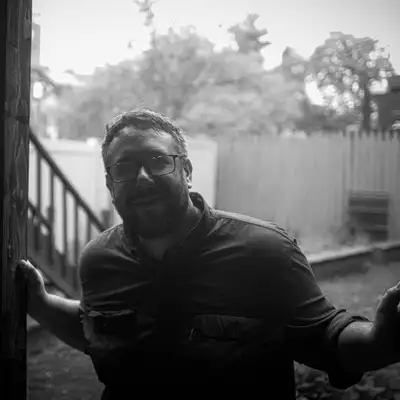
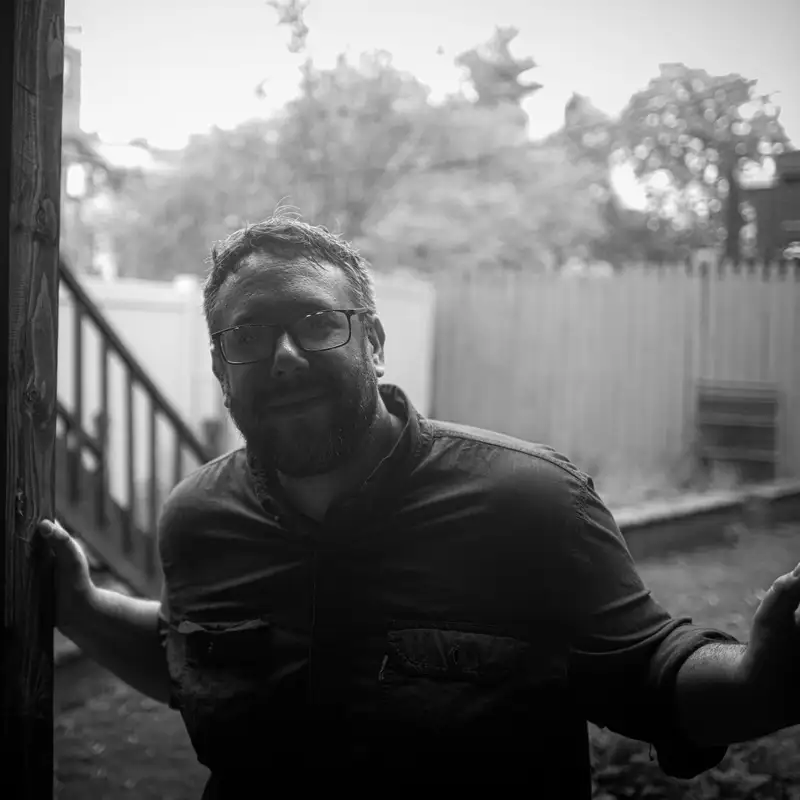
And he's from Baltimore too. Um, he's a member of the Van Yee fair and now as a solo artist under his own name, Anand Wilder, I'll tell you his info. And, um, I think that, you know, that's just someone who has like just such a good energy and five in the arts world. And some people just cut through the, you know, everything like butter in terms of just having a sensibility about how to live and persevere as an artist in today's world, you know, um, and, uh, some of the comedians that I've been spending time with, um, at the guy's comedy is just a backroom show up here. I've really been inspiring to me too, especially Brett Raveld and Pranab Bahari, Brett, I helped with his, uh, I edited his library special with Lisa Ann. Um, and, um, man, you know, like there's people every step of the way at every stage of my career, like Daniel St. Ars had a huge impact on me when I was younger and now we're reconnecting in New York and it was nice enough to take the photos that, uh, you know, that I sent you for the promo packet or whatever. And I mean, that dude is just like, he's an amazing shooter and cinematographer and just like kind of again, like a wellspring of passion.
Like he loves what he does. That's another Baltimore dude who'd be worth talking to. And, um, you know, my, my, my friends and colleagues at the work shirt and the Huckberry, David and Wade, uh, um, brought me on to work with on dirt, the Huckberry show. And that's just, those guys are amazing DIY filmmakers and, um, working with them was like a long time dream that actually got to happen. And, um, I think that anybody who works with them is going to get something that also is just filled with that love that changes what a thing is. Um, and so, you know, those guys and Matt, every and Avery Fox, who link, every who links me up with Matt, every for the Yingling projects, um, field and stream put out, uh, sort of profiling a fisherman who lost his home, um, in a, in a hurricane tragically, um, and continues to leave fishing guide trips and just live in his lifestyle on the water, uh, all the same ever since. And the neighborhood clean up down there in Keaton Beach. That was a, sort of a moving project about kind of like perseverance. And, um, so all of the stuff you can find on my website, uh, is Bernhard find side.com. It should be live by the time this episode releases, unless you edit it tonight and release it tomorrow.
Rob Lee: I'll hold that against you forever. Um, but, uh, you know, and, uh, I'm on Instagram, uh, you can find me. They call me Bernie green grass there. It's just the translation of my name from sort of a Polish heist medic, right? Like, um, fine sod.
Bernard Feinsod: Uh, and, um, Bernie is just me changing my name as a holdover of, uh, you know, just sort of in memory of the Bernie Sanders presidency that could have been. Um, but also, you know, Barney green grass has great smoked fish in New York. And there are a lot of famous directors who went by the name green grass. Um, you know, all green grass, for instance, but, um, yeah, uh, find me there. And, uh, you know, if you like stuff, reach out. If you don't reach out, I need more criticism than just what comes from my own head. So the last thing I'll say is that kind of like connects with the sage advice thing, but also is just the world we live in. Um, I think that if you're going to be in the arts today of any kind, and I wouldn't necessarily call myself an artist again, I'm like an aspiring artist. Um, it's, it's, you got to adjust the way things change and they are. I think a lot of us are now like there's AI, there's, you know, social media, devalued a lot of stuff. Everybody's got an online store.
Everybody's got, um, you know, everybody and their mama has got, uh, a vitamin supplement to sell you or whatever. Um, and I think that, you know, the DIY thing is about separating yourself from being totally dependent on whatever the thing is in that moment and understanding at the same time how to play that game. Sure. So like take note and try to understand where things are headed, but also like, whether you're in-house at a major company or just doing it on your own, everything has to get done. Try not to make any superlative judgments about the whole industry at large. Nothing is the same as another thing. Like there may be a lot of trends and a lot of decisions being made that are disturbing, but like they're, you know, not everything has some universal rule.
And this is the kind of thing where like it's like a lightning strike sort of thing. If you want to get noticed at a given craft or art, I think consistency and passion are like the most important things above all. Um, if you want to get money for stuff, just, you know, figure out how you can tie your art in with bugging us, Osempic or Fandall or like, but like, like, if you don't want to get money for your project that you want to make anyway, whether you have money or not, or you wish you could right lie about why it's connected to Osempic and Fandall. Um, it just, it's just kind of a moment where we're, we're, we're in the wild west again. And I think that it's important to be truthful and have ethics, but it's okay to play the game and manipulate things a little bit so that you have a chance.
Um, and I think that if, if that's, if the game is getting, you know, kind of rigged and stacked and the deck is becoming, you know, it's, it loses its integrity to deck of cards. And we don't, we're not out here. Like it's clear that there are a few companies have, have an outside size impact in all multimedia dissemination. And so we're not here at like where they're even pretending to have like multiple decks in the same shuffle. And like it, like the house does win, but allowing that to happen a little bit might be a window to getting, you know, kind of winning a little bit yourself. And so I think that it's okay to give, you know, a little slack or tighten the rope of how connected you are to the mainstream, depending on what you want. Uh, and, and how you view it all. But the most important thing is to be constantly thinking about how things are changing and how you can update yourself and your, your approach to whatever your art is so that they, it finds its own identity within that. And it doesn't have to go along with the trend or it necessarily, it doesn't have to, it doesn't have to swim up river or down river. There are currents at play and like it's okay to sort of like find a way to live in the current, but paddle to direct yourself whichever direction you want. And I think that's what most people are trying to do is sort of survive and kind of like navigate the waters and do what they can with what they have. And I think that's the most important sort of, whether you're a DIY or not, your own resourcefulness and your ability to be creative in the face of obstacles and not get so run down or emotionally sort of beat up by challenges.
It's important to stay resilient. Like, I remember a long time ago, you had Brian living on your podcast and he said something like, like, like this is the last thing I'll say, I'm sorry. I remember a long time ago, you had Brian living on your podcast and he said something like sales is going out and receiving no for an answer over and over again and art is, is kind of sales.
So he was drawing that parallel as a filmmaker who was seeking funding. And I think that that's really true. But the one place that you don't want to always hear no is in your own head. So like, like, while the world may be saying no, try to trust yourself and find your yeses internally. And that'll kind of steer you towards something that that you could believe in and not get, not, not have that experience of a project you really believed in becomes hopefully becomes let's see you sour on it or something like we were talking about earlier. The things like that is just if you if you go with what you believe in a little bit, that you'll be you'll have more of a connection to the project and you'll want to see it through hopefully all that much more. And and I hope that everyone sees their projects through because that's that's really, you know, whether you're whether your final product is intended for release or not, the process of making it is going to enrich life somehow. I guarantee that.
Rob Lee: Well, I think that's something that a lot of folks need to hear, including myself. So I thank you for that. That's that's really good. And yeah, it's just a thought that we have to engage in and be a part of and be aware of. And just as a good dose of motivation there and sort of also a space to give yourself sort of grace when you're making stuff that may not be something that goes up by sort of having that faith in it. So yeah, it's good. It's good stuff.
And they have it folks. I'm going to again, thank Bernard Feinsawe for coming on to the truth in his art and sharing a bit of his story with us. Definitely a long time into making and I'm really happy we made this conversation happen.
And for Bernard, I am Rob Lee, Santa Fe's art, culture and community in and around your neck of the woods. You just have to look for it.