Currie Lee
Download MP3Rob Lee: Welcome to The Truth in His Art, your source for conversations connecting arts, culture, and community. These are stories that matter, and I am your host, Rob Lee, except no substitutes.
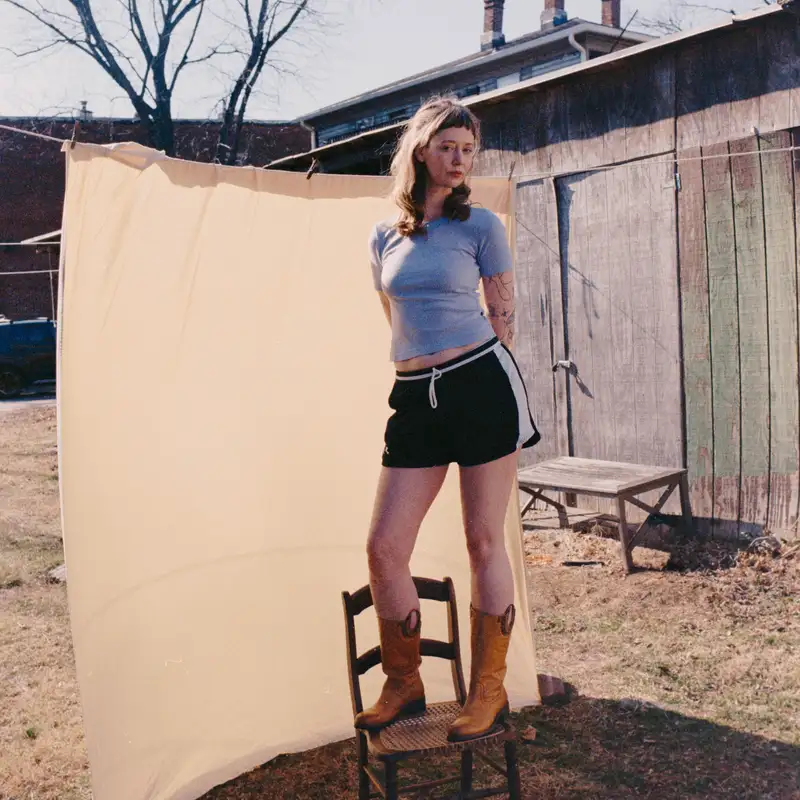
Today, I am thrilled to welcome my next guest onto the podcast. They are a photographer, stylist, and a filmmaker based in Baltimore, Maryland. Her work examines disillusionment with the female identity, using aesthetics as a language to question and redefine personal and cultural narratives. Please welcome to the podcast, Keri Lee. Welcome to the podcast. Thanks for having me. Thank you for coming on. Thank you for making this happen. It is, I'm sure, super windy where you're at. Everything is blowing over here.
Currie Lee: Oh yeah. Definitely kind of blew over a little bit on my way home from my studio.
Rob Lee: When I got back to the studio, I just got here not long ago because I'm a professional. I think someone was donating clothes and the bag blew open, so it's just clothes just blowing around the streets in front of my house.
Currie Lee: You know what? That could easily be me. That actually happened to me the other day. I like home alone, like the bag of clothes. They all just kind of bottomed out. Then at the same time, this is real. The wind blew off my hat into the traffic.
This is the Towson Circle. Oh no. I really like that hat, so I had to hold the clothes, hold them in on the clothes, wait for the traffic to clear, run in the middle of the street, grab my hat, gather up all of the clothes.
Rob Lee: That sounds terrifying, but also comical.
Currie Lee: Yeah, it's the kind of thing that's fun to laugh at after, but in the moment, you're just full alarm bells, kind of full adrenaline signal, not what to do, and also just really embarrassed because everyone's watching this happen as they're driving by.
Rob Lee: Yeah, I mean, it's one of the things where at times, and I'm going to go into this intro question in a second, but at times when I get noticed in the street, I don't get noticed this Rob, I get noticed this, you know, that's truth in this art right here. So I'm like, people are watching and I'm always very mindful of what I'm doing. I cross the street weirdly sometimes and then because I walk a lot, I run and all of that stuff for fitness and up and I'm like, it's going to be one time someone gets my attention. I'm looking the wrong way. My hat blows off literally a version and then just like I'm all screwed over and then I get clipped by a car and I go down like a horse because I have such long legs.
Currie Lee: Yeah, exactly. I am also tall and it does often feel like the wind is a particular challenge for us.
Rob Lee: Scott's just going down, just got your fingers going down. So since that was a detail, I didn't notice. So that goes in so tall. I'll add that to the bio, the dossier, if you will.
Yeah, yeah. So since brief bios often focus only on a career, can fully capture the subject, making the word is subject to some of this podcast. I want to remedy that by giving you the sort of space and the opportunity to introduce yourself in your own words. So if you will, who are you? Great.
Currie Lee: I'm Curry. I am a Baltimorean artist. I would say kind of a multidisciplinary artist. I work in filmmaking, photography, and I also have my own vintage clothing business where it's kind of great. It is sort of a vessel for a lot of those things I get to kind of like explore a lot of my art practice in, you know, in the process of building a business.
So that's kind of who I am professionally. Yeah, I was born here in Baltimore, but I also grew up in Florida, like Southwest Florida, in this little town called kind of Florida. It's kind of near Fort Myers, like on the Gulf Coast. And I lived there, like lived here from about ages born, like, you know, zero, seven, and then moved down to Florida and was there until I was about 17. So most of my schooling and then my family and I moved back up here when I was in the middle of high school. And so I've been here mostly since then, but I did live in LA for about four years in, you know, the interim. But yeah, so I consider myself a Baltimorean in a way. I have a bit different of a history with the city than other people. But yeah, and Florida also does very much kind of influence me in a lot of ways. I would say kind of one thing that for my childhood that I really take with me and it being kind of related to looking at Florida is in Florida and actually, especially in the town I grew up in. It has the town I grew up in, her, by the percentage, it has the largest retirement community in America.
Oh, wow. So there are a lot of old people. And I also, so like all my neighbors for, you know, 60, 70, 80, pretty much, it's really it's just kind of like 80% old people. Yeah, our elders, you know, and I also shared a bedroom for a short while with my grandmother, who is much older than me. She was 45 when she had my dad. So she was 90 when I was 10.
And we were sharing a bedroom. And a lot of that, those like formative experiences being around a lot of older people, people over the age of 70, people in their 90s, I think gave me like not only a perspective, but also just like a kind of specific sensibility that I think has sort of led me into being interested in a lot of the things I am both like aesthetically and thematically. So, you know, that's kind of just a background a little bit of who I am.
Rob Lee: No, thank you. That's that's really good. And I think it's something really interesting about stepping in back into the past, whether it be through connection conversation, I believe that there's a certain sensibility that's different. Like if you're only around people who are of your age, you're like, I already know what this is to a degree, the way that folks maybe go about things, the vapidity that's there, the sort of way that folks go about stuff. And I see that through the time capsule that is media and to a degree is kind of baked into what I'm doing here, I suppose, in this podcast. Someone goes back 10 years from now and listen to maybe this interview and say, oh, yeah, that's a moment in time or that's the sensibility that's not around right now.
I think there's something to be taken from it. I've recently gone back and listened to a lot of the old CBS catalogs with old radio like dramas from like the 40s.
Currie Lee: That's super cool.
Rob Lee: And I was like, oh, man, I want to start talking in this old antiquated jargon.
Currie Lee: Like, yeah, yeah, totally. I wish I could pull off the tree and take action, but I don't know if I can do that.
Rob Lee: Literally, you see the similarities like right now, most people will say, instead of thank you, it's no worries. So then say something like, oh, no, not at all. I was like, ah, yeah, yeah, exactly. But it's something in it and something about the way that things were done. Like these are 26 minute noir detective things and then just playing with, because I like media. I play with media as far as a critic of it.
It's like, there's always been this person that's the specific thing I'm listening to, this person that is using their wits. You know, we've seen it in Colombo. We've seen it in Murder Sheaver. We've seen it in Monk. We've seen it in Mentalist. So it's always saying that's there, but it's not looking at like for the last 90 years or longer.
This has been a thing. And how do we from that time then do that same thing now? What's the difference there? Still someone using their wits to solve something, but how are they getting there?
Currie Lee: That's exactly why I enjoy history so much. And like 20th century history in particular is because. Excuse me, because you really can kind of look back at what was being done.
And losing my train of thought for a second. Yeah, you can really kind of look back on to what they were creating 80 years ago and kind of see the similarities and almost use that as like a control to sort of see how we as a society have sort of changed and developed. It's super fascinating, just like kind of the cycles thinking about the way things cycle in and out trends reasons why things kind of cycle in and out.
I kind of have this like working theory that a way to not only like predict trends, but also to kind of put meaning to trends and what they say about us as what we're currently valuing as a society. And I think you really can kind of come up with like all of these different like binaries like one I can kind of think of for instance is like sometimes as a society, our media is interested in media that surrounds like New York. And sometimes like there's a spike in New York content. And sometimes we're in a moment where we're more interested in like LA content.
That's just one binary out of all of them. And I feel like right now we're in like a New York moment. I mean, already supreme, I just saw that movie. Very, very New York in a lot of ways. And I think that those binaries kind of happen. They sort of reflect the current moments like values, like what we're interested in. And then if you have, you know, like hundreds of different binaries that are sort of reflecting the current moment, you can almost sort of like kind of you come up with your own unique kind of moment instead of things people talk about like the 20 year trend cycle. And I think things are way too complex to even go by that metric anymore.
And so, yeah, I don't know. I just think things are constantly shifting and it's always really interesting to see how stuff changes and what stays the same and what that says about us as a society. Yeah.
Rob Lee: And I think in looking at the sort of timing, technology is always the thing, right? That we'll say kind of what you're at. But I think, and I was talking about this this past weekend, like, you know, if you have something that's a good story, you know, a good story, and you're telling a story there, that's the thing that will unify all of it. Like sort of at the root of it.
This is this. Now, how do we add these other things to make it maybe contemporary or to make it up to date? Or to make it if we're doing something that's sort of a moment in time? How do we strip these things away? Like there's always this bit of how do we tell this story without an iPhone?
You know what I mean? How do we remove technology to make this story grounded at a certain time? And so I use that just sort of to illustrate sort of that passage of time. And I know that there's a tree of interest and curiosity you were just touching on there. But storytelling connects your work in multiple ways, the various areas that you're just navigating and excelling in. So, you know, storytelling is a piece. So I want to ask the question, what is the story creatively? What was your start? And how did you find your voice creatively?
Currie Lee: Oh, that is, yeah, that's a big question.
Rob Lee: See, I'm coming with the hard hitters, hard hitting questions all the time.
Currie Lee: How did I come to the story? I think I've always been a bit of a storyteller as I was kind of talking about my childhood being, you know, sharing space with my grandmother. That's just I've always been kind of interested in what came before me and always kind of ask questions and and express a lot, a lot of curiosity as the kid towards my parents lives before us, before my brothers and I. And I think that that like telling stories was kind of my coping in a way to make sense of things that were complex. And yeah, it's just kind of always and I probably a bit of like maladaptive daydreaming as well as a kid too. It's just like full ADHD is not paying attention and making up stories of things in my head as a kid. So like storytelling is just kind of my natural mode. That's just kind of how we're at all times. Can you can you repeat the question so I can move on to the next?
Rob Lee: Yeah. And the second part is sort of sort of makes makes sense. So it's always been an interest. Storytelling has always been an interest for you and just sort of how you you've navigated. So how did you find your voice creatively?
Currie Lee: Yeah, so that I I would say didn't necessarily come all at once. I did. I went to Micah for undergrad. I went to I studied video and film and I am now a filmmaker, but I really kind of took time away from filmmaking probably for about like a decade. I would do stuff here and there, but I really kind of ended up focusing more on my photography and like vintage related business things. And I think I reached a certain point as we cut maybe all did for during the pandemic.
And I was turning 30 during the pandemic too. So it was kind of a lot to sort of reevaluate. There's a lot prompting me to reevaluate. I think I kind of realized or slowly realized that like kind of the way I was existing then and like maybe not expressing myself to like I wasn't living up to what I had to say. I wasn't saying the things that I had to say and I wasn't I was feeling very unfulfilled. That was the slight kind of I was feeling unhappy.
And I think that that is what it was. And at the time I lived in LA and it's just a very tough place to live. I think it's hard. I think it's easier if you're from there, if you have family there, or if you go there with like a group of friends, like if you go there with a community kind of already built in. But LA is a very kind of isolating city.
I did make a lot of great friends living there. But I think I was just feeling kind of burdened by just survival in a lot of ways. And that it kind of sucked up all of my energy to even be able to create. So I decided about year into the pandemic, I decided, you know, I don't see this. I don't see this getting really any better.
So let me just kind of preemptively change course a little bit. And I moved back to Baltimore where I have family and a more established support system. And where it's a little bit easier to live, the cost of living is like a third of what it is in LA. And that gave me and but at the same time, truly no regrets for any of the kind of dwelling or like kind of active living, not making art that I did, because I truly think that, you know, kind of that my 20s really were sort of a space for me to like make mistakes, take part in things in my own life that kind of inform what it is that I have to say as a storyteller. And yeah, I think so eventually once I moved back here, I was feeling a little bit burnt out and kind of lost. And once I started up my vintage clothing business, I, you know, kind of I had done I've been a kind of been in the into the vintage scene in LA, like worked in it a little bit and was a buyer at Buffalo Exchange for a little while. And that was like really fun for me. And I learned a lot there. And so when I moved back here and I started going to like be more free and things like that, I had had a vintage at sea in the past. And I was like, you know what, I should start this back up. And I did. And from there, I think it just kind of made me realize that like, oh, you absolutely can make a living and like fund yourself through it takes a lot of work. But like, there is a way to make a creative professional life work. I just kind of had to like make some adjustments.
And one of those was moving back to Baltimore. And then, yeah, kind of from there, I think, just like slowly through projects related to my clothing business and their projects collaborating with others. I regained the confidence to, you know, get back into filmmaking and and all that stuff. And just kind of realizing like, oh, I actually kind of threw a lot of trials and errors. So I realized I like Europe, like telling myself, you're upset and unhappy because you're not the one making the art. And like that you just need to be doing that.
Rob Lee: That tracks. And, you know, I think a lot of times I do this bit with my partner. We talk about like, when someone is super critical of like somebody's work, we do this thing of like, so where's yours? And I run into that myself. And, you know, I had this sort of self esteem. Thanks to some people have like, I don't know if I'm a good interviewer. I was like, I hope they think I'm interesting.
I hope this is a fun conversation. But when I see something that doesn't work or sort of slightly unfulfilled and I'm like, why did not do that interview? Why did not interview that person? I should have did that. And it's a similar vibe of, hmm, I should have did this. I feel bad that I didn't do this. I feel like I'm lacking and I didn't put this out there because I would have did a better job, I guess.
Currie Lee: Yeah, I think I it's funny that you say that thing about being like hyper critical because I really feel like I can check myself when I'm feeling kind of critical of other people. I can just be like, I think you're just like kind of projecting your own happiness on. And it's like you actually like, if you actually spent the energy to like make your own work, you wouldn't have the time or the interest in even worrying about what the other person is doing.
Rob Lee: Because of, you know, one of the things that was, and I struggle with it because I don't frame this as a arts capital A podcast. It's just like it's our culture is storytelling is conversation. A lot of different things.
It's not just one silo thing, which I kind of prefer. But I was, you know, it was suggested that, hey, you should do more criticism. I was like, I'm not an art critic. I can maybe engage in this course or ask folks sort of maybe meaningful questions about their work. But so your color grading is terrible. And this is why I can't, it's not my interview.
Currie Lee: It's not my vibe. Yeah. And it's like, though, it's like this thing I remember from a advanced English class, it was like a right. The teacher was talking about writing, writing, writing critics. And it's just like those who cannot do critique. And I was just like, well, I'm doing this stuff.
So I don't have time to critique going back to that previous point. I think. Yeah, that's such a good question. I think just, you know, I've spent a lot of, you know, a decade of my career, both freelance and more like in-house stuff, doing things for other people, which was a great way to like hone the kind of formal skills, I guess.
Sure. But then, you know, I guess a lot of my work is really kind of like focused on aesthetics. And that's just something really, that's something I really value in my own life and, you know, in my art. And I think that kind of channeling those, I kind of channeling my own sensibilities really kind of helps me see, kind of marry the. Storytelling aspects that feels more abstract and then sort of the more tactile like elements, like aesthetic-wise. And just kind of realizing that you can marry those two. And all of the different, all of the many things that I've learned over the course of my, you know, artistic practice and my career can kind of all like come together. And that's really kind of it. Yeah. You just kind of have to do it.
Rob Lee: So it brings me to this question where sort of the, and it's always more than just what's listed, but of the sort of three main mediums, the same photography, filmmaking and fashion as a, whether to be in styling, aesthetics, and that sort of splinters out. But how is it using three, three sort of mediums that have connection overlap, but also they can be distinct in their own ways? How is it using each of those as storytelling tools? Yeah.
Currie Lee: So I can talk kind of specifically about my short film that you watched. It's called The Haze. Yes. It's a psychological horror film about a toxic relationship between a man and a woman. I definitely was intending to evoke Adam and Eve a bit with the way that I chose to frame the setting and everything. The Haze really was the kind of thing where all of the elements were sort of woven together in order to tell the story because with a short film you have such limited time.
And I wanted to get something really complex across in under 10 minutes. And the way that I chose to do that was through editing choices and cinematography choices and sort of the language of cinema in a lot of ways. And that definitely is kind of informed by my experiences with photographer, just compositions and things like that.
And then also with kind of the physical elements like the set design, the art direction and the costuming was all very intentional choices that we made in order to express the story, express the meaning behind the story. I would say I'm kind of intending The Haze to be a bit of an allegory for either like a co-dependent relationship or like kind of a narcissistic dynamic. And I'm really interested in exploring what like a female narcissist, what that is. And I think like currently in our culture right now, well, let me back up for a second. I also am interested, I've kind of honed this in over the last year or two as I've gotten more serious with my filmmaking is that I'm intending to make art about a kind of specific intersection of white femininity and how it's sort of a disconnect with a heteronormative society that we live in. And I think right now in our cultural moment, I think that there's a lot of pressure to perform a more like traditional box in types of femininity. And like there's a lot of discomfort in that for a lot of people, and especially within like a heterodynamic, there's just seems to be an uptick of gendered, like it seems like we've gone back to using a lot of gendered language surrounding different roles and relationships and all of that. So I was really kind of interested in exploring, you know, a feminine and masculine relationship and sort of reflecting the current frustration that I think a lot of myself included feeling about like romance these days. And I think sort of the in the haze, there's a lot of softness.
There's, we had like a, like the color black, I was banned from from any, like we did not include any. And I wanted it to feel really soft and like not by contrast. I wanted it like there's a lot of, you know, delicate floral prints and a lot of like delicate lace, the main characters wearing, she's wearing kind of a lace camisole.
And then also just so to kind of reflect this, like, performed femininity in a way. And, and then also to the characters, the fact that they're wearing basically their pajamas, the whole, the whole movie is sort of about it's meant to quickly signal that this is an intimate, really, this is a really relationship where there's a certain amount of intimacy and comfort between the two people. So it's like shorthand in a way for like, okay, they know each other. And like, you're very quickly gathering that their exes and they don't have to like say it out loud. They don't have to like explain it. You can kind of let the, all the elements come together sort of explain it for you.
Rob Lee: Yeah, I think in using the choices that are there, like, because I think I watched it initially and then I rewatched it because I was like, let me just dive into this. Oh yeah, just immediately track their exes there. There's going to be some challenges here. What is what's coming from their relationship that's in this story?
How are we getting there? Let's see. And I'm just saying, I was like, that's it. I was like, where's the rest of it? And my understanding is there's a larger version that's in development, right?
Currie Lee: Yeah. Yeah, I am currently writing it and getting together kind of all of the materials I need for finding financing. But yeah, there's definitely more to it. It's meant to kind of be a proof of concept. And this was, it was great to do because it did kind of help me find the story, like find like the beef of the story. I, when I had set out to make a proof of concept, I had written a script that was like four times as long and like just way more complex.
There was a third character. And then, you know, when I was just like realizing I was trying to get a grant when I didn't get that grant, rejection is redirection. Like really, it's so true.
That's a good one. When I didn't get the grant, it was, I was honestly a little relieved. And it kind of forced me to like just really kind of take a look.
I was doing way too much about a script. It just really kind of, it helped me find the meat of what I was actually trying to say. And it helped me get to that very short shortened version, but it is. But, and then I think from there, it's going to be great to be able to like expand upon it when I'm currently writing the script now. So.
Rob Lee: So what is the experience? Because I see what is it? New Next Film Festival? I just went to Beth Ware Premiered. And I worked with New Next a couple of years ago for the shorts. I was the interviewer for the filmmakers for the shorts and I was nervous.
I was nervous, but I was like, oh, so many people in Israel. That experience like premiering the film and sort of that, well, actually a step back. What was the process in writing and directing, you know, sort of the filmmaking process and then the process of releasing it, having it out there in the world? Like walk us through what that experience was like, especially considering what you were talking about earlier, having that time away from filmmaking.
Currie Lee: Yeah, I had like when I set out to write when I decided to do the short film version of the Hayes, I was honestly kind of in like a bad place in my life. I had kind of was going through like a lot of grief. And so it really was a place for me to sort of channel a lot of that. And really like grief and anger are great fuels for creativity. And it's great to be able to have the privilege to like transmute that into something that's like bigger than yourself.
Yeah, in short, I guess, or maybe in long, I don't know, I may ramble. Kind of I slowly started sort of gathering my team and people I was like interested in working with. I'm such a fan of collaborating with people and like kind of figuring out how other people work. And like there's a there's a like strategy to it of like just being a good leader and figuring out what other people need. And that was going to a big sort of trial, I guess, with this was kind of putting that to practice, I guess. So yeah, I had slowly kind of gathered people. And so I, my, my friend may produce it and she helps me find a lot of the crew members, which was wonderful. I feel like I met so many amazingly talented and hardworking and just really generous people through doing this. But it was like a little intimidating in a way because I was feeling the.
The imposter syndrome for sure of like, oh my God, all these like talented people, some of them are donating their time. Like I'm not paying him and have come. They're all, I shot it in my house. So they're all in my house and I have to tell them what to do. It was like, it was a lot. It's a lot. It's a big responsibility and kind of, you know, as a woman, we're kind of like conditioned to like, be, have like a certain like gentleness or whatever. Like, and maybe conditioned sometimes that like the things we're asking for are like unreasonable. So there was like a lot of that, honestly, for me to kind of like work through. But I think it was like a nice, healthy way for me to like, kind of move past that a little bit. I think sometimes I have also like, sometimes like we can, I'm afraid of like coming across like bossy.
But you really just got to like trust that the people you're working with are like, there to support you and like that you can kind of like bossing around for a second. And it's totally okay. Like that's why they're there. They're there to like, and just like realizing that and like feeling very like, this is very humbling in a lot of ways, just like everyone being chill. I don't know.
Rob Lee: It makes sense. Like I think when it's something that like this is sort of my idea, this is sort of my home, you know, I'm craft services. So this vibe and you want to show, at least from my perspective, and maybe I'm wrong, but this sort of, I want to make sure that the trust that they put in me to be on here, to invest their time, their energy and their effort is worthwhile.
I don't want to leave them astray and leave them in the wrong direction. So when I'm doing this, for instance, at a minimum, I need to have confidence in my own question, my own work ethic, because if I just came through like, well, maybe if we have this, oh, sorry. And I just came off like I didn't have a degree of confidence as the subject in this scenario. How can I expect to get, it's an energy thing.
How can I expect to get like sort of a good or interesting interview if the concept doesn't seem like I have a direction we're going in? And I would imagine this is something from a director.
Currie Lee: It's very true. It's very true. I think, but I, yes, so true. And I do looking back on it, like once I got in the edit, because I edited it myself, once I got in the edit, I realized that like, you know, I had spent all that time away from filmmaking, but I realized that maybe there were a few instances where I maybe could have like asserted what it was that I wanted a little bit. But that's all just kind of part of the learning lesson, I guess. But yeah, one thing I really kind of learned. Like, or once kind of strategy I took with making the haze was kind of knowing the effects that I wanted and kind of asking the cinematographer, Danny Siebenhardt, asking the cinematographer, like, okay, what is it going to look like if we do it like this versus what is it going to look like if we do it like this?
And then being like, okay, I want it like that. So kind of still sort of striking that balance of like, in quality, like, including other people and their expertise, because like, I asked, you know, Danny to be my cinematographer, because I he's talented. And so I don't I want to hear like his opinion, and I want to hear what he thinks is going to be best or how he thinks it's going to look. And then, but then from there, like, ultimately making the decision of what, which direction to go. And just like finding that balance is really important.
Rob Lee: Yeah, the in those instances, I was talking about a little bit early before we got started, the documentary that I'm working on, because I'm very much a producer, a host, I kind of know the direction I'm going, I sort of plainly and directly just told like the person that is filming the thing, I was like, direct me, I can take direction, just tell me what to do. What do you want to capture?
I'm not performing because the goal is to get something that feels authentic. But also just like, here's your license to boss me around. Tell me what to do. Oh, do this again.
You got it boss and making it happen. And there is this sort of inclination, because when I talk to folks in the sort of podcast space, I tell them all of the things that I do. And they're like, you know, that's a whole staff, right? I say, oh, no, I just I run the board. I do all of this stuff.
And it's definitely back to back. We only, but it's so many things in there. So in it, it's just like you're running a you're running your full ship. But when you're able to pass off a thing like early on, I used to edit all the podcasts. I have an editor, you know, so I send that over and I give them the notes. So there's a an executive producer, sort of directive thing there. And it's still a piece of work, but it's like physically I can save the time of editing that and put that towards another interview for sake of argument.
So being able to delegate and hand part it at off. And so the end result is when I put this out there in the world, I'm hoping it goes well, but I've already kind of done all those stuff that I can do. And so when someone listens to and they check it out, oh, that was really good. Or this is a good one. Oh, I like this part about it. That's always a plus. But a lot of times it's like I've already done.
I've already kind of moved on to the next thing. So for you, when you had the haste premiere, what was that experience like, you know, was it just like, oh my God, we're here.
Currie Lee: Yeah, it was it was definitely kind of vulnerable for sure. It was it was a wonderful experience going to a new next I had done the previous year as well. But I was just like blown away by the programming for the whole festival this year. I saw so many great movies and it was just like very fun and energizing to be in a space with so many other hundreds of other maybe not.
I'm not sure. I'm not sure the number, but many, many other filmmakers and like, you know, talking to people that I admire and making connections with people who are making awesome work and and being included in that space was very cool, very honoring. It was a great personal experience watching my film. I my actor, Peter McNally, he hadn't seen it yet. I like offered for him to see it, but he hadn't seen it yet. So we sat next to one another during the actual first screening of it. And that was good for me because I think I was able to kind of like instead of get really anxious about like a room of 200 people watching my film. And so a weird like I was not expecting this to feel vulnerable, but like 200 people looking at my house was weird, too.
Yeah, but being able to kind of experience it through Peter's sort of like first viewing really kind of helps soften that experience a little bit. And yeah, you are so right about like the Q &A, the Q &A stuff. Like it is nerve wracking being up there. I it's it's you know, because you're just like standing up there. I don't know where to look.
I don't know where to put my hands. I'm like kind of just like anxiously darting around the room, seeing faces that look familiar. And there was one moment somebody asked a question during the Q &A, somebody in the audience. Remember, it kind of asked an open ended question to Q &A. And it was the kind of well, somebody answered and I kind of in somebody answered in sort of a one liner sort of way and kind of gave space to that. A little bit and everybody was sort of responding to that. And then I just realized like I was speaking before I had even like made the choice to speak.
And like I kind of like came to me very suddenly. Oh, you're talking out loud to this huge group of people. OK, cool. Let's wrap this up and just kind of like looking around. And I had two friends who were sitting in the front row and they were like kind of huddled together and like smiling. And so I just kind of looked down at them for emotional support, like in the midst of trying to like form a coherent thought. And I did. And then like a bunch of people were just staring at me like clapping. And I'm like, who even knows what I.
Rob Lee: And that's the thing like. Who even knows. When I think I may have done. I think it was either I forget what year it was. Maybe it was the first year and I did the the intro for the shorts and the Q &A afterwards. And initially it was just going to be an intro. And I was like, I don't know what I said as intro. I hope it was good.
And I'm looking out there and I just see people yawning and like get off the stage. All right. See some short film.
I like who we can keep it moving. And the extra layer that was there, there was a film that was being premiered first time it was the carpet Cowboys movie. And I had interviewed the filmmakers from that. I just like reached out and I got the interview and they were there. And I was like, oh, I'm meeting the people that I interviewed in real life. And I think that week the giant bill LED board went up and they were like, Rob, do you run the city because we see you in a board?
You're hosting this stuff here. I was like, I'm going to disappoint them so much today. And I happened to be dressed like somebody from the movie. I didn't see the movie yet. Somewhere in which a cowboy hat and all denim. I was like, I look like an asshole.
Currie Lee: You were on team.
Rob Lee: And then, you know, one of the things that I think it was, I think it was Melanie wanted to fill, she was just like, oh, you're dressed just like a lead guy. And I was like, I had no idea. So it just, yes, definitely on theme.
Currie Lee: Yeah, it's that environment. Like the, yeah, I can feel very sort of like. New Next Film Festival felt a little bit like summer camp in a way. It was like, it's even though it's at the Tarle Theatre, which I go to all the time, it's like its own world in there. And it's a really lovely feeling, for sure. But it also feels like it like raises the stakes in a way too. It's like anything I say, I feel like it's sort of like there's more power put in anything that I do here.
Rob Lee: And I really love the experience and love being a part of it and really fortunate to do it. And yes, you definitely, at least from my perspective, definitely see like, I've seen this person at several film festivals. This person knows film.
I don't want to look like a buffoon in front of them. So 100%. But 100%. I have one sort of follow up question I want to ask you. And it's a very simple one. Why horror for this, for the haze?
Currie Lee: Oh, yes. Yeah, I'm not particularly horror driven. It's not necessarily a genre that I plan to continually revisit. I see genre as a means of using familiarity to explore new topics. One could say horror is often about what is like a tension point, you know, horror is kind of about what people are feeling anxious about.
And I think the, I kind of brushed the past that a little bit earlier when I was talking about it. But I think I kind of chose horror because I wanted to make you know, something about our current sort of romantic culture. And you know what, it's quite horrific.
And toxic relationships, a horror of their own. So it really, the genre really kind of lends itself to the topics that I wanted to explore. And I find it very freeing and sort of a contradictory way. I find it very freeing to work within genre because you have sort of the language that you're going to use, the cinematic language you're going to use. And I use, I actually use a lot of different genres to inspire my choices that I made with the Hayes, but I, a big inspiration point was Hitchcock and using kind of that language as a framework is honestly like a shortcut in a way. It's kind of a shortcut for both me, the creator and for the audience. The tracks.
Rob Lee: There was a, in watching it, it was sort of the what's going to happen next, where are we going? I was literally in what, just 10 minutes, 12 minutes, something like that.
I'm sort of at the edge of my seat and it had a little bit of what I get from Ari Aster in terms of maybe the cinematography. And I'm like, what's going to happen here? What am I going to see?
Is there something wrong? It's going to happen. I was just thinking like that. And I was like, this kid goes really, really left. But then it's, it's sort of this thing where it's just like, oh, no, there's a familiarity here too. And I'm just like, like I said, like I said, like I said, like I said, like earlier, just eager to see more and where that goes. So I'm looking for, I'll be, I'll be following. I'll be following along. Okay.
Currie Lee: Yeah. I love that. I love that. I have, I have an Instagram for the Hayes. I don't post on there a lot, but I do occasionally. I actually, one thing I did to kind of prep for like my own sort of homework, I guess, to prep for making the Hayes was I posted to my Instagram. I like picked a movie that I felt like was going to influence it. And I picked like my 20 favorite shots from each movie.
And that was like great homework, honestly, for figuring out what I'm drawn to and what a frame says and, you know, what a single frame says the story you can tell just based off of opposition only. Yeah. Yeah.
So that's on there. And I hope to maybe, well, things never slow down. I keep saying when things slow down, I don't, I don't think that's going to happen. When things slow down, I was going to add more, more screenshots. So definitely follow along because I intend to kind of use that Instagram as like a sketchbook and for develop the next phase of developing this project.
Rob Lee: I like that. I signed up. This is on the back end of it, but I signed up for, actually it was a gift last year. I got like the a 24 triple eight membership. So I get the sort of like small zines or have you that basically just have, this is how we make this movie.
I was like, yes, this is what it was one of the things and I used to be a big DVD collector in that DVD culture. What's all the bonuses? What's the extra stuff? How did you make it? Show me your breadcrumbs. So using sort of the IG for the haze as a like sort of the breadcrumbs, the sketch board, the sketch pad. I think that's really interesting to do is the process and showing what's the thinking, what's the behind the scenes and really mapping that out. I think it's really cool.
Currie Lee: Yeah. Yeah. Totally. Totally.
Rob Lee: So I'm going to ask about it's another short film, the drop off. Can we talk about that a little bit? The drop off. Yeah. Courage.
Currie Lee: Oh, the drop off.
Rob Lee: I'm out here. I'm out here. I'm looking at. Yeah.
Currie Lee: Sometimes I do a little short films for my, that was so funny. I was like, the truck. That was like such a last minute title choice.
Rob Lee: There was something else initially.
Currie Lee: Like in my head, that's just called the same innovation video.
Rob Lee: So the same innovation video.
Currie Lee: That was, that was quite a feat to pull off just getting all of those like fun characters. My friend and I decided to collaborate on that together and we kind of just like, yeah, asked all of our friends. We had this idea of just like making it sort of this.
I really, I enjoy sort of like kind of French new wave film and that like aesthetic. And so I was kind of like leaning into that. Wanted to make it something feel sort of like heisty.
Really was just kind of like a fun way to generate content for my, my business and kind of like have, you know, like just like a fun way to kind of like express ourselves. Yeah.
Rob Lee: I like it. I think, um, here's the thing. And this is like sort of the second conversation I've had today, but I noticed this other piece in there of just doing cool stuff, just doing something for fun. And I think that that's important.
It's not as disposable. You know what I mean? Like, oh, you shouldn't do it for fun.
It has to be for commerce. It's like, it can also be fun. It can serve this person, but it can be fun. It can be part of the reps, if you will, of like your business side of things, but you're able to make some fun content and pull it off.
And I would imagine that builds our capacity for another project or another thing that you're doing in that sort of film realm or in that collaborative realm. You're like, oh, I did this in like three hours. I didn't do that. I had this fun.
Currie Lee: Yeah. You're actually so right about it, building your capacity. That's like such a great way to put it. I felt like through doing that and then I recently did another film that didn't have as much of a narrative with my friend, Amelia, but it was kind of similar sort of vibes. And yeah, they're kind of, I see them as ways to sort of like tool around.
Like let's just like try these things out. It's low stakes because like it's, you know, the audience is like low expectation. Like they weren't expecting you to drop a film.
Like they're going to be great with what it's just like very kind of low stakes. So it's a great way to kind of just figure it out. Different things figure out how to work with one another, figure out how you don't want to work with one another.
Yeah. Because collaboration is, it's like kind of half the battle in a lot of ways. Like figuring out how to communicate with one another, figuring out kind of how I was talking earlier about just like realizing that you're the one in charge and like you kind of have to like just take responsibility for boxing people around that's what's needed. And all of that, you can't know how to do that unless if you practice and a great, yeah, sometimes you just got to do it. And like doing it for fun is the best way to do it. Absolutely.
Rob Lee: So that's sort of the crux of the real question. So now it's time to get weird. It's time to go to the rapid fire questions. OK, I'm ready. If I like to do the rapid fire questions, you don't want to overthink these.
I'm looking for sort of the quick answer, the sort of one word or the one sentence answer. And it's not super weird, actually. These are kind of tame. So here's the first one. What is something that you're not good at, but you love doing? The facial expression said a lot. That's like, what?
Currie Lee: My mind went in a lot of different directions. I love I've been more like open about the fact that I do this. I love singing. I have been trying to get my friend is like a super talented musician and songwriter. And we've been sort of like dreaming up doing some duets together. We're both women.
So like kind of harmonizing duets together. And so that's something that I am. I am not as good at to put it in public yet, but I love doing it. And I love seeing the progress of my voice as I practice.
And I love expressing myself in that way, because it's great to use your body to express yourself sometimes. It's very somatic. So, yeah, that's not really a rapid fire answer.
Rob Lee: It's a lot of context. It's fine. I appreciate the context. I can I can see it almost at a later date that, you know, when the haze redo comes out, you're just singing on the outro, some outro tune that you're singing, you're like, yeah, you know what?
Currie Lee: Yeah. That may be a thing. Yeah. Who knows?
Rob Lee: Here's the next one for you. Um, since you're in that vintage, like sort of community, advantage, clothing community, shout out to be more fled. Definitely interview Patrick. Um, what is a vintage item that you think like more people should have? Like just around like, I know that fast fashion, people don't like fast fashion. It's a lot of weird leggings floating around. So on that counter side to that, what is like a vintage item you just wish more people had?
Currie Lee: Ooh, um, my first, okay, rapid fire opera coats.
Rob Lee: That was very specific. I appreciate that. Now, look, it gives you, here's the thing about rapid fire. It was people sort of, what the hell's opera coat? Now you can go look for it and remember, Kerry, thank you.
Currie Lee: If you, if it, yeah, a beautiful evening wear, outer wear, it probably won't keep you very warm, but if you're just going from your car to, to your, um, event or your destination, it's fine. And I just, I'm, that's all on my mind because I have one in my inventory right now and my friend, who I just photographed was wearing one when I photographed her. And, and then I ran into somebody else who was wearing an opera coat and I'm like, people should be wearing these more.
They're great. Basically just a long, like the one I have is from, I think the thirties. I dated it. Um, and it's basically just a floor length jacket. Um, and it's usually velvet. Um, and it kind of buttons up at the top, like more of like an on pier style.
And so, um, you can still kind of see your evening wear underneath, but, um, you don't have to wear it with evening wear. You can, you can be a baddie in real life and go to the grocery store and an opera coat.
Rob Lee: So you're saying that even me, Rob Lee at six foot four and 240 pounds can be a baddie in real life if I get an opera. No, okay.
Currie Lee: Yeah. I was, I, I wonder if you'd be able to find, like, I'm wondering if they'd be able to find one of your size. Maybe you'd have to have one custom made.
Rob Lee: Look, I want to, I want to make.
Currie Lee: Yeah, you could wear, I feel like, yeah, they're very like vampiric. I think they're really.
Rob Lee: That's a goal of five. I'm going to grow my nails out so I can just go full Naseratu core. I'm with it. Uh, yeah. Yeah. I just now think of the Naseratu means is like really inappropriate. Um, all right. So here's the last one. It's a little bit of a play on the first one, the last rapid fire question. What's something that you're good at, but you don't like doing.
Currie Lee: Oh, so easy. I like knew it right away, but I was like not wanting to say it. Um, I hate it, but I'm so good at it. I like that. Both of my parents are accountants. I've been known how to do spreadsheets since I was like eight years old. And I, I sometimes I can kind of get in the flow and get really into building, building a spreadsheet. But I do also just stay really behind on my paperwork because I hate doing it. Same.
Rob Lee: It's sort of that last month. I was like, oh man, what's the money on? And you got to relive like some of your choices throughout the year.
Currie Lee: Oh, oh, I know. That's the worst. Yeah.
Rob Lee: Why don't I have my new same from our, from our spending. We can't, we can't be shameful over our spending, but that's a, that's a lifelong journey for me. When I go through and I look at those different spreadsheets and like, I drink way too much coffee. It's just like coffee today, coffee today, coffee today. That was three coffee that day. Yeah. But at the end of the day, yeah, that refund comes in like, this is great.
Currie Lee: That's, that's my, that's my vice coffee. Yeah.
Rob Lee: You get it. You get it. So this is the last one. I'm definitely going to judge your coffee choice. I will ask you that in a moment. Cause I think it's funny. I asked you now, I'll ask you right now, go to coffee. Is this just regular coffee? Is it an espresso? What's your go to coffee drink?
Currie Lee: If I'm taking it to go, it's a latte without milk. Okay. If I'm drinking it there, it's a cappuccino. Okay.
Rob Lee: All right. I respect it. Yeah. I'm a cortado guy, triple cortado. Okay. Yeah. Just jet fuel with a little milk. Yeah. And I have two choices.
Currie Lee: If I make it at home, I do a pour over.
Rob Lee: All right. You know, I'm a French press with a mocha press. Oh, anyway. So, so here's the last, that's awesome. Here's the last sort of question and it's a sage, sage advice question. This is when I was queuing up a little earlier. Oh yeah. First got started. So someone working across film, photography, styling fashion, all these different elements. What's one practice that keeps you sort of grounded, you know, within, within story, within storytelling, what a practice that keeps, you know, you kind of in that, that zone of having that proper zone, something concrete that maybe someone who is inspired by this conversation or wants to kind of like follow up some of the, the footsteps that you put out there. What is something that maybe a listener could try that, that you do to keep yourself grounded in storytelling within the various mediums you're working in? Yeah.
Currie Lee: Um, I think, well, I kind of said earlier, you know, rejection is redirection. And I, I really do try to, um, hold onto that truth because making art and feel really, um, it can feel like, you know, there's rejection every day and putting yourself out there. There's lots of no's in the world. There's lots of, um, things that ultimately probably like aren't meant for you. Um, and like if you're showing up as, you know, your authentic self or using your authentic voice and you're not being let into a room, then just kind of know that that's not really a space that's for you or even in that moment, it may be later. Um, and that like in that kind of, if, you know, kind of lead with authenticity and, and are trying your best, like kind of everything sort of happens over it's folks too, um, in, in a lot of ways, just kind of like keep trucking, keep trucking away, adjusts when you're getting the feedback, adjust your scope. If you don't get the funding that you need, adjusts and through, like, you know, as I was saying how I had to like kind of whittle down my 22 page script to a seven page script, um, in that process, it, it got me to a better people, like work, um, than I had had before.
And just kind of like letting the universe, whatever, letting the circumstances sort of like, um, you know, not being so rigid on how something is supposed to play out, let things kind of play out how they're going to and like just kind of keep working at it. And that's kind of all you can do. You can't control an outcome. You can't control how other people are going to receive your work. Um, yeah, that's good.
Rob Lee: That's really good. I think it's very, um, important to apply that practice because it is a cycle of rejection, but I think it's taking the rejection in the right way. It gives you the opportunity to tweak this past season of the truth in this art.
I wanted to do a hundred plus episodes and only interview folks that have been on before and due to sort of that budget limitation and that sort of change. I don't like the word pivot because it seems a little too dude, bro. The way that is used these days, but I think being able
Currie Lee: to, yeah, it's definitely been like corporate size.
Rob Lee: Yeah. But to monitor and adjust what it is, gets you to the root of it, which you learned with, you know, sort of adapting the haze and it's, it's, it's adapting. It's, it's figuring out what really matters here. And it's like, I know that I can expand and blow this up to what the full vision is, but at its root, this is the vision and this is where the story is at. And as you touched on earlier, proof of concept to build out. So that's really important. And I think something that folks can learn from because disappointment. And when you don't quite get the thing that you want, it can stop being your tracks. So yeah.
Currie Lee: Yeah. There's definitely like nuance for that conversation too. Cause like a lot of the times like we are being gate kept, like we are receiving rejection through just like gatekeeping. So like that can be really discharging in a way because, um, but again, like I just kind of have to tell myself, like, do I want to be in a room that doesn't want me, do I want to be in a room that needs my voice to come across a certain way? Like it may not actually serve me to be there. So yeah.
Rob Lee: That's a good point. And I think that's where we can stop for today. We got it. I thank you for spending some time with me, but there's, there's two things we want to do as we close out here. One, I'm going to really express my appreciation for you coming on, spending some time on the pod today, getting up your evening to spend some time with me. It's been a treat. And, uh, secondly.
Currie Lee: Yeah, I feel so honored.
Rob Lee: And secondly, I would invite and encourage you to share with the listeners where they can follow you, your work, the haze, the social media, the Instagram, any of those things you want to share where folks can follow you and your work floor is yours. Sure.
Currie Lee: Yeah. Um, my name is Curry Lee. You can follow me on my Instagram, which is my name, but it's a V instead of a U. So it's C V R R I E L E E. And, um, my vintage Instagram is standing ovation vintage and my haze Instagram, which I occasionally post on is the haze film. All those are Instagram. That's kind of the really only, uh, social media space I really occupy.
Rob Lee: So they have it folks. I want to again, thank Curry Lee for coming onto the podcast and spending some time with me and for Curry Lee. I am Rob Lee saying that it's our culture and community in and around your neck of the woods. You just have to look forward.
Creators and Guests