"i wanted to figure out a way where i could just work forever": Dana Robinson, Brooklyn-Based Artist, on Making Art, The Last Resort Artist Retreat & SPRING/BREAK Art Show
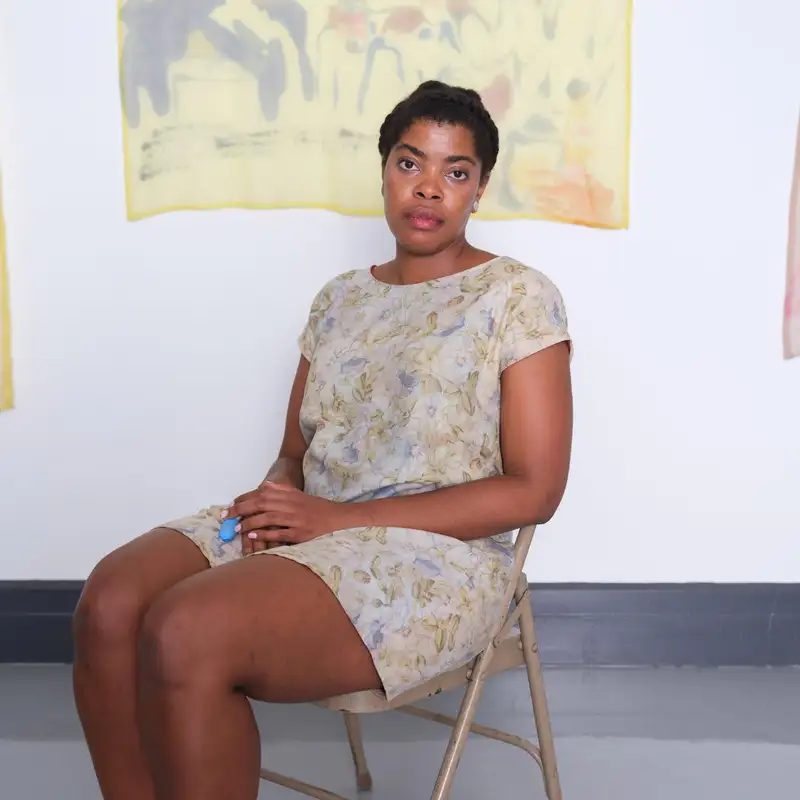
Download MP3Rob Lee: Welcome to the Truth in its Art, your source for conversations connecting art, culture, and community. These are stories that matter, and I am your host, Rob Lee. Accept no substitutes. Today I'm thrilled to welcome my next guest on to the program, a Brooklyn-based multidisciplinary artist whose practice combines, reproduces, and deconstructs vintage materials, found objects and paint to explore youth, black female identity, ownership, and nostalgia. Her work has been featured in Vulture, Vice and Ain't Bad, and has been exhibited through virtual reality and gallery platforms. Joining me today is Dana Robinson. Welcome to the Truth in a Art.
So uh So Dana, tell me a story. Uh what was it like growing up in Florida? Uh because that's that's uh you know, upon the research, you know, I'm thinking, you know, Brooklyn Baby were
Dana Robinson: really just like Floridian, and I had that confirmed again. Florida maybe.
Rob Lee: Yeah.
Dana Robinson: Florida baby with New York parents. Um it was great. I loved it. It was like like truly like I grow I grew up in um in Seminole, which is like a little bit outside of St. Petersburg, and like it kind of felt like growing up in Mr. Rogers' neighborhood. Like everybody was like really sweet, really helpful, just like really like I don't know, um I don't know, like willing to like kind of like bend over backwards a little bit, but like not in like a corny way.
Rob Lee: True.
Dana Robinson: Like I I like went back to like my old neighborhood like a little while ago, and I needed double sided tape for something. And I went into the gas station looking for it, and like, of course it wasn't there, but like the like everybody in the gas station was like, oh yeah, like I think I have some in my glove compartment. Oh, you know, like I I I think I like the person that lives next door, they might have it, like everybody was kind of like coming together to like help me find like tape, and I was like, this is incredible. Like this is like this is where I came
Rob Lee: from and this is like something that like makes a lot of sense to me and just like makes a lot of sense for like
Dana Robinson: who I am and um like the things that I'm drawn to, I'd say. Yeah, it was great. And also the colors in Florida are so wacky. Like, and just like Florida, being tacky is really incredible. Like I didn't understand that like people that have money can also have good tastes until funny enough, I went to Pittsburgh of all FIFOs.
Rob Lee: Yeah. So so hold on, hold on. So there it's a Mr. Rogers neighborhood. You have like really helpful, charming people that are popping up with two-sided tape, sort of support and potential like h help right there.
Dana Robinson: So that's a that's a good thing. And then the tackiness and I know that colors are a thing. I always think of Miami when I think of Florida for a multitude of reasons.
Rob Lee: So and and we'll go back into the the Pittsburgh sort of piece there, because I want to hear a little bit about that. But what are some of the the images or maybe the sounds that that stick with you growing up? Um was it like maybe you know, I think of like oceans and waves and water or sort of those bright images or maybe even palm trees or have you. What what sticks with you?
Dana Robinson: Um you know, so I grew up near an Ag Farm. Um, and they had peacocks. And so the sound of peacocks calling is is very is very like, you know, cemented in my mind. Like they have like a really wild call.
Um and then also just like crickets and frogs and just like just like the sounds of just um like m like nature when humans aren't around to like disrupt it. Um yeah. Yeah. So that's I would say that's kind of those are like the sounds that definitely come through. Um and then also it's like Florida kind of like gets destroyed by hurricanes pretty like consistently. And so um and then like, you know, like the way that the buildings are made. It's like they're made out of styrofoam and like, you know, stucco and whatever. So it's just like interesting to live in a place where um like in contrast to like, you know, like Brooklyn where I live now, where things are kind of built to kind of like maybe disappear in ten years.
Rob Lee: Sure.
Dana Robinson: Like things don't necessarily last in like the same kind of way that um things up north like last. So I find that like interesting.
Rob Lee: So there's uh I think I guess different styles of impermanence. It's like there's the impermanence due to the sort of perhaps weather component and then there's sort of the impermanence due to maybe the venture capitalist component.
Dana Robinson: Right. That yeah We
Rob Lee: want something new here.
Dana Robinson: It's like all right, cool, who funded it, yeah. There's somebody, there's always somebody up there. So it's
Rob Lee: so
Dana Robinson: I feel like those are like definitely something. Yeah.
Rob Lee: So then so and and I have two more sort of like introductory questions as it relates to to R about I don't want to leave that Pittsburgh piece hanging because that's on my short list of places to visit potentially. So
Dana Robinson: really yeah
Rob Lee: yeah the August Wilson thing there.
Dana Robinson: Okay. Um tell me more about what is this August August Wilson.
Rob Lee: So August
Dana Robinson: Wilson was from there. There's uh babes from there and um there's the August Wilson museum so I'm like alright I'm just I'm curious and you know I'm in the midst of prepping um and Baltimore's in that sort of um August Wilson cycle a lot of the different playhouses here are do our productions from his uh cadre of uh of plays and such so it's that the August Wilson Philadelphia to Baltimore connection so
Rob Lee: wanna explore a little bit.
Dana Robinson: I see yes okay yeah that's exciting yeah um I mean what was I doing in Pittsburgh? Um hmm I think I might have been it's like I don't really go there very often but when I went there I don't know I just like noticed like different um I guess I had it been in like maybe a suburb up north. I think maybe that was
Rob Lee: it.
Dana Robinson: And I think I was driving through Pittsburgh to drive to Minnesota to drop my car off before I started grad school. Yeah. Yeah. So it was a like it was a long time ago but I had some friends that lived there and so I was visiting them on the way. Yeah. And um and I wanted to go there because Pittsburgh has this like really cool DIY scene.
Rob Lee: Yeah.
Dana Robinson: And so I kind of wanted to just like see what it was about and like you know just see Pittsburgh and like just get the feel of
Rob Lee: it. DIY
Dana Robinson: there's another through line to play with but I'm gonna move into this next question because here DIY it's like you're in Baltimore right now and you know but um I
Rob Lee: know yeah so how were you uh initially exposed exposed to art? I'm always curious where maybe in early moment or for some where the story sort of starts for them. How were you initially or first exposed to art?
Dana Robinson: Um I my mom so it's like both of my parents are doctors but my mom is really creative and she's a really good painter and drawer and sculptor and so um there was some of her paintings around the house and she also had books of um impressionist artists so I would look through that and I feel like that kind of like lends like that kind of style lends itself to the monoprints that I create in a way.
I didn't really like think about that too much but I think there's like some sort of like connection with me just like going through these books constantly and just like the style of art that I'm kind of a little bit more drawn to um and then also my mom so she grew up in in New York and she told me the story about how her mom took her to the Guggenheim and she was like Dana you wouldn't believe what they had on display there. They had the chair of fat like I don't understand what this mess is about like why would somebody do this like the Googleheim of all places like art is crazy. And when she told me that story I was like whoa that's so cool like somebody could just like put a chair of fat in a museum and people are gonna just go and pay money to look at it.
Like that's wild. So I was like I'm very intrigued and then later on I figured out that um after going to uh to Dia Beacon I figured out that the chair of that was uh Joseph Boy's so it was probably during his bullet exhibit at the Guggenheim. So that was like I was like oh wow like I know who
Rob Lee: this person is now like all these different connections, you know, these things coming together.
Dana Robinson: So I like uh um I was yeah just yeah figuring out like R2B anything. I was like that's what I want to do.
Rob Lee: It's like freedom so was the the freedom the draw and and and and I ask because again those sort of early things where you know I've I've talked to people and i they all share sort of you know if you're going into art it's not a quote unquote traditional sort of setup I remember the I wanted to be a illustrator. That was what I wanted to do and our parents were like business is a future there. Drawing not as not not really sure and you know I
Dana Robinson: eventually
Rob Lee: went back and always kind of got interested in doing something creative um whether it be doing this nearly twenty years used to write film things of that nature um but something creative is always sort of a calling for me um and the draw was I think similarly freedom. I love my independence. I love being able to talk to the people I want to talk to so what was the draw for you to pursue art making I
Dana Robinson: mean I I feel like I usually say I'm not I just wasn't good at anything else. But I mean I don't think that's the I don't think that's exactly true. But um it's really the only thing that I was interested in.
Rob Lee: Um is like looking at my parents growing up
Dana Robinson: it's like they were both workaholics. And you know like which is like it makes sense like it's like they were doctors. They had to there was a lot that needed to be done. So um so looking at them I was like okay I could do something like this or I could figure out a way where I could just work forever. Like I wanted to figure out a way for me to be able to like um find something that I enjoy enough that I wouldn't want to retire.
And that's like also another thing. Retiring never quite made sense to me. I so I think that also choosing art I was like okay yeah I could just like keep on going, keeping keep on exploring. Keep on, you know, finding way different ways of accessing different kinds of art, different people, different places it's just like a way for me to navigate the world, understand the world, find people that are also interested in art. Um I mean I really just like love I just love art. I I love talking about it. I love looking at it. I love making it like I'm just into it. I don't know. It's exciting. I
Rob Lee: love
Dana Robinson: it. And it's also just uh a way of um exploring so many different aspects about um culture like you know locally globally and history so
Rob Lee: it it's a way and and this is I'm I'm hearing it like I'm I'm I'm picking up what you're laying down like this the sort of um this this means maybe to explore to satisfy like that curiosity being able to engage with it in the making of it and the just this discourse around it the exploration of it. It's just like I need to be fully dead. This is a full plate and this notion of of not r retiring there's another interview I'm gonna send you away that it came up because the guests I had on she's um creating in various ways is uh Victoria Rowell and she was like I'll never retire she she's like in her you know sixties what have you and long story career in TV and theater, dance, all of these different things. And she's like I had no interest in retiring. And I was like I love hearing that, you know Yeah.
Dana Robinson: Retire retire from what, you know? Like even though yeah it's like you retire if I were to retire it's like I wouldn't be making art anymore. Like that doesn't make any sense. It's like how would I continue to interact with the world if I stop making art I don't know.
Rob Lee: And in some ways it makes it makes the world smaller too like in doing this is I'm coming up on like a thousand interviews right and you know it it I keep
Dana Robinson: mentioning it in my head because of the reality I'm like that's a big ass number and I start thinking about it.
Rob Lee: And um gotta have a party about it.
Dana Robinson: You
Rob Lee: don't want to see me dance. But um but it's it's
Dana Robinson: one of those things where
Rob Lee: in doing it the the podcast started here in Baltimore and I've been able to interview people in France and in Japan and and so on, not all in person. The international ones are a little bit trickier but you know being able to connect and considering you know um time zones and all of this and I I did an interview with um with a a curator and she just reminded me like your podcast is international. And I'm like right and
Dana Robinson: my exploration is ext extended out of just my community and my neighborhood to be inclusive of that but to broaden it
Rob Lee: and that all comes from this curiosity and this desire to talk about art and the stories behind it and the the people making
Dana Robinson: it
Rob Lee: so
Dana Robinson: speaking of people making it let's talk about you and your practice. Let's talk about your your practice and what are the themes that you're you're drawn drawn to. We we we touched on it a very little bit, but I wanna, you know, open up this piece this piece of the conversation to go a little bit further in that direction. Um I'm I right now I feel like I'm a lot um more drawn to colors and textures and like the feelings that these things give off um the content that I work with a lot right now is ebony magazines and I create prints from them. I um like load them up and paint them with ink. I just started painting um painting like the different images like the different advertisements on silk screens like just directly on the screen.
Um I'm I'm like really I'm really interested in exploring the different materials and trying to figure out um like different ways of like reproducing these images and different ways of kind of communicating this like certain aura that they give off um It's I feel like it's it's hard to explain hm so throwing everything at the wall and trying to see like what exactly sticks. And things are sticking and it's
Rob Lee: nice.
Dana Robinson: Yeah.
Rob Lee: Yeah things are sticking.
Dana Robinson: Absolutely
Rob Lee: Things are definitely sticking. And I mean I'm also working with the these like ideas around femininity and
Dana Robinson: it's like I feel like I'm kind of asking the same questions over and over again throughout my life and trying to figure out like different ways of answering them. So like um dealing with like femininity in the way that uh um there's like femininity in general like what does that mean? How does it manifest who is allowed to be a f be feminine who's not um like making fun of like these standards that like for whatever reason we've like all kind of like agreed to and like you know like silently like just like understand as like the the ways that women should be like should manifest in the world. It's just it's just interesting.
Um so like playing around with like hegemonic ideas of these like these like concepts yeah and wondering kind of playing around with like with why is this the world that we live in why is this something that we accept what are the other options.
Rob Lee: The the the major questions the you know 'cause it goes to sort of playing with with history and when you you mentioned sort of the the magazines you said uh ebony right and
Dana Robinson: um
Rob Lee: i is there a particular era of like ebony because I've read something about the seventies was the part uh but
Dana Robinson: yeah yeah so I'm working a lot with like uh the ebony magazines between the sixties and seventies mostly because it's like this very specific time capsule where it's this very vintage era in the way that um I feel like people universally understand it and universally connect to it. It was this time of uh you know the two and a half kids and White Picket fence and um like a very prosperous time a very um like uh like a time when um I guess things felt more stable yeah in a way that that things don't necessarily feel stable now. So I feel like working with this time frame people look at my work even if the magazine isn't very like specifically present in the work, just the colors alone I
Rob Lee: feel like communicate this certain time frame that brings a sense of comfort to people.
Dana Robinson: And so like working from that place of comfort I'm able to talk about other ideas because already it's like people feel connected, people feel um uh like they can relate to the content. Hmm.
Rob Lee: Yeah. Yeah it it makes sense. Like, you know, in g in going backwards at at times and, you know, when I do a Google search sometimes, right? I'm like, all right, I need to put a specific time frame on there because perhaps it's not sullied by the the stuff that's contemporary in terms of how we talk about things, how we discuss things, or even the visual language. And that's that's what I'm hearing there, and that you know, uh a certain time frame that, you know, sixties and seventies, the the visual language, the the the wording, just how things were depicted were a bit more optimistic, uh obviously than now. Um, but also it's um potential that that's sitting there and you know, like I don't know, I think like also when I'm consuming media from decades before, right? It's
it's almost like it's simpler and I can use maybe my current eye to say, all right, this isn't great, you know, for whatever reason against the sort of uh current morays and and norms, but also it's just like but I but I like this aspect of it as well because it's a simpler story of like good versus bad or you know, this is kind of
Dana Robinson: what we were doing, or have you as sort of black people for sake of argument. Mm-hmm. Yeah. Yeah, exactly.
Rob Lee: So I'm I'm very curious in the the sourcing. Because how does that have because look, you know, I remember I I come from a home, I got two black parents, right? And we had, you know, Jet, we had Ebony, we had all the magazines. My mom still got them in our basement, by the way, right? And she would hold on.
Dana Robinson: Yeah, I mean it's got a lot.
Rob Lee: She would hold on to those.
Dana Robinson: I'm like, yo, it's a different vibe, but the hair choices were different, let's just put it that way. Yeah.
Rob Lee: Definitely. It's a lot of Duke ads. I used to have Duke in my hair when I had hair.
Dana Robinson: Um Ray. Yeah.
Rob Lee: What would what is it like for the sourcing materials, uh especially that in some instances are are sixty years old. And you're talking like the 60s and we're in the back end of the 2020s.
Dana Robinson: Yeah. It's interesting. Um, so I started working with boxing magazines. That was like the first time I used like um like a vintage magazine. And people can't I mean, I was interested in it because it's these freeze frames of these moments of violence. And
I thought that was really interesting, and working with that was really uh fun. Um but it's hard to relate to and so I wanted to um try to find a publication that uh where like women were present. Um and I was like, oh, Ebony magazine is perfect. Um
so I started buying those online, just like off of eBay, these like WAPs. And um I real I noticed that uh gosh, I guess it's like between like the fifties and like early eighties, it's like a larger format magazine. So I was really interested in that. But I noticed that the magazines from the 50s, the paper was so fragile that I wasn't actually able to really work with it at all. So that was something that was interesting, just kind of capturing this material at a certain point, like right before it's it really like can't necessarily be handled anymore. Um so that's like an interesting thing to think about because the quack is picking.
Rob Lee: And I don't I don't know what's gonna happen to these magazines, uh, you know, like ten years from now or whatever.
Dana Robinson: I mean, I've been scanning a lot of them in, but I just really appreciate the the texture of the paper. Like even just like the like satiny finish to the paper, just like lends like a really incredible element to the work, um, to the to like the collages that I create. So yeah.
Rob Lee: Yeah, I I think through when I get like, you know, I can sometimes like I I this is this is unrelated but it connects to Brooklyn where you're where you're based.
Dana Robinson: So you're you might so
Rob Lee: I had this thing where I did a um I did a a small film with um the son of one of the guests I had on. So I was in the son's film or have you, and it was about a comic book. And it was just like that was that was his first film, and I'm in it, and I'm like, yo, this is wild. And I'm wearing my boycott Sal's hoodie from like do the right thing. So I got that going on,
Dana Robinson: and the the crux of the story is a short story about like this super rare comic. And um, and the first thing that pops in my head as a person that enjoys comics and has some like old vintage comics, I was like, That's comic, but not being this condition that you find it in a dollar box is gonna be in in wrap at all of this 'cause the paper will not survive. So that's
immediately what I thought of. The delicate nature of these my uncle actually had comic books and it there was disintegrated. I mean, not completely, but like, you know, maybe they those things are not meant to last, you know.
Rob Lee: The the stock is different and w and looking at it and going through so you're you're you've worked most mostly with um materials in like sixties and seventies. Have you gone to something that's a bit more contemporary and notice maybe a more durability? Um obviously age is consideration, but more durability and how they maybe color the the images or color the pages and things of that nature?
Dana Robinson: Um that's a good question. Um I wouldn't say so. I wouldn't say that there's much of a difference.
Rob Lee: Okay.
Dana Robinson: Like um in like the 70s, uh, like the seventies and then the early eighties, there is a difference, like a little bit when the format of the magazine got smaller. It got like a little bit glossier. Um yeah. But the but the larger, like the larger, I think it's like, I don't know, like twelve by fourteen or something size. It's it can say it's pretty consistent. Yeah. And
Rob Lee: y and do you have a a size that you prefer to to to work with? Um Because I almost assume off top, like, yeah, it's gotta be the bigger ones, right? You got more flexibility and so on there. It's just
like, nah. What do what is what is your preference in terms of you know, what what's available, you know, is it that larger format and why is it the sort of larger, maybe older format, or is it something that's a maybe smaller format that feels maybe a little bit more I don't know, like i is there a preference on sort of the age of the or in in the d the depiction in the images that you want to work with?
Dana Robinson: I I definitely like the larger format and I definitely like the the the larger uh advertisements, that's really fun to work with. But a lot of the times more recently, I scan in the images and then like when I'm remaking them, it's like I'm projecting it onto something. So it
can really be any size. And then the collages are the only thing where I'm really like working directly with the material and like cutting it up and um like directly applying it onto something else. And the collages are pretty small. I have made collages that are about 18 by 24, but more recently I've been playing around with smaller um like family photo size frames. So I really like working with paper. And so
I making a lot of paintings on paper and then putting them in those like, you know, those like brass like, you know, like those brass frames, they're a little, you know, like it I just like have that like look.
Rob Lee: So so author Jeff Goings writes, and and this is it's this book, I'm blanking on the name of it, but it's in my audible, and I wrote down this whole piece. Uh creativity is not about being original. It's about learning to rearrange what's already been in a way that brings fresh insight to sort of older material. That idea is stayed with me, because you know, I have so many ideas, I have so many interests, I'm always trying to recreate and make something new, but maybe it's about taking from here, there and wherever else, and then formatting it. The references are what makes it sort of new and unique. That's my my take on it. Does that concept sort of resonate with you of creativity not necessarily being an original?
Dana Robinson: Yeah, creativity has a lot more with like novelty and experimentation than um bringing together things that are new. I mean, something new. I'm like, I don't even know exactly like what that would be.
Rob Lee: Um but because it's like I feel like the more the more well the more I make art, the more
Dana Robinson: I'm feeling like everything is painting or everything is collage. Everything is just like putting these things together. And um and it's you like you like you were saying, just like putting things together in like a different way.
Rob Lee: Yeah, the
Dana Robinson: the the sort of
Rob Lee: the
Dana Robinson: sort of like
Rob Lee: the the the recalibration of things, like you know w what I'm what I'm referencing there, right? I go through and I maybe will will listen to something. It's not necessarily new, right? It's it
is it's not necessarily something that's an original thought, but perhaps this is the way I look at it. Do you do you like fragrances? Do you like like cologne or or stuff like that?
Dana Robinson: I don't shockingly
Rob Lee: no but I do like I do like a nice smell. I do like the smell of like cookies.
Dana Robinson: We can do a We can do a whole p cookie podcast. I'm gonna ask you what your favorite cookie is anyway. Um it's something that I learned though about like fragrances.
Rob Lee: Like you I I enjoy cologne, I enjoy like buying fragrances like good smells and stuff like that, but I notice that someone that maybe of a certain body chemistry their their sort of interpretation of a smell is different than if the same scent was on my body. It's like oh this is lilac, well this is gonna be different here. And it's like well I might layer it with this.
Dana Robinson: Yeah. Now you're reshaping it and changing it and all of that, but at the root of it it's all the same thing. So
Rob Lee: if we give someone
Dana Robinson: who
Rob Lee: does a certain style of art the same references and the same sort of materials, what are they gonna make? And that's that's sort of what I start thinking at.
Dana Robinson: Exactly you never know.
Rob Lee: Yeah. Yeah.
Dana Robinson: It's like people are playing around with pain all the time and it's like all these changes are so different but it's like literally the same materials. Um yeah there's something my friend once said something about like uh like having like a wealth uh it's like you know we're working with we're all working with these same colors to make these paintings. We're working with the same colors to make everything in the world and it's you know these colors in somebody's hands is like a wealth. It's millions of colors, it's millions of opportunities and possibilities.
Rob Lee: Yeah but I think it's when when people are very sort of like upfront about maybe where their references come from like a lot of times I I think of it in terms of like film. I've worked with a lot of the different film festivals and such and I remember one year I'm like interviewing a panel for a a film festival here in Baltimore and there were like ten different filmmakers I'm doing this long panel interview with and I was like this is a nightmare 'cause I like to be doing a one on one right and I'm doing my best.
Dana Robinson: I'm asking the questions and one guy who obviously had references to someone else's famous work and his style I was like some influences. He's like I don't have any influences. He was audibly booed. What?
Rob Lee: Literally
Dana Robinson: Yes.
Rob Lee: I'm a singular talent I've never been
Dana Robinson: in. I mean it's like nobody could nobody could say that they've never been influenced, you know? It's like we don't we don't live in a vacuum. We're literally all like on the this little tiny ball like everything that's on this earth is will be on this earth and it's just like you know we're we're all circulating through the same shit like what no influences. I don't know.
Rob Lee: Just the same no one has ever done what I've done and the thing about me, you know I was I 'cause
Dana Robinson: yeah 'cause
Rob Lee: as an aquarius, right? I I like to go full troll and full heel at times.
Dana Robinson: I'm like, hmm I'm hooked on what you just said, bro. Like I wanna dive in on that one. But I was like, not my job. Not my job in this scenario. that's a good opportunity to be curious. Yeah.
Rob Lee: Say more, brother.
Dana Robinson: Yeah. But I mean, I don't know, I I yeah I think it's I think it's interesting. I mean, I don't know this guy's um whatever thing.
Rob Lee: But I think it's um I when I make work, I have the goal of trying to create something that I haven't seen before.
Dana Robinson: That's if I if I make something that I haven't seen and I'm like, you know, ask people like, oh I've re seen anybody do this, this, that other and people are like, oh that's really interesting. I'm like, okay, like I did something there. It's like it's nice to kind of like try to like get off the beaten task.
Rob Lee: often
Dana Robinson: So um like so often it's it's like we're just like doing the same things, accepting the same things over and over again. Like like yeah we drink out of cups. Um you know we use our phones to like call people or whatever or um you know we have to lock our doors at night or I don't I don't even know. Just like there's these things that we just do without thinking um or we do with like a very specific set of like consequences or possibilities in mind. And I feel like through like the process of creativity, the process of creating work, the process of just like being silly it's like we're try we're giving ourselves the possibility of creating something else. Something that's not necessarily um aligned with the ways that um we've learned to see the world. So I think like art, you know, art can be really serious, but I think art that's like really fun that has the possibility for people to kind of like relax is really nice. 'Cause I think it gives people the possibility of like getting outside of that loop of um a thoughts. Yeah.
Rob Lee: I w one of the things before I move into this next question that I try to aim for in in these conversations, especially over the time, like early on, you know, lacking confidence. This is a new thing. I'm
not the person with an arts background or what have you, and I'll talk with folks and they're nervous about talking about their work and then their energy is off and then I'm like, oh you hate me, I must be a bad interviewer and and it's sort of this weird, weird dynamic. And I used to get really
Dana Robinson: like you know, really like, damn, I suck, you know, when it came to it. It's like they're great, but I suck.
Rob Lee: And now in in and over the you know, maybe the first year or so of doing it and you know, at with more reps, I got into the spot of being able to identify when someone is maybe a bit cagey, maybe a bit nervous or or what have you and doing that pre-talk before actually, all right, time to dance, you know, is a way to kind of throw that and bring it down that it helps with my nervousness because you and I we're meeting for the first time and we've changed a few emails, but you don't know me.
Dana Robinson: And you know, then it's someone talking about in a lot of these instances something that is very vulnerable, very important, you know, to them and it's and this is important to me. So it's sort of this thing
of how do you diffuse that? How do you make it fun? And if I can find a way to make the person laugh about something stupid. Usually it's really silly. It's like, oh, we're here now. We we've activated, we're now in a common and and that's how it is supposed to go and I find it's like if I can crack a person then we've disarmed it and we can a we're able to speak to these things in a very fun and relaxed and sort of serious but not taking oneself too serious sort of way.
Rob Lee: That's my kind of exactly I yeah.
Dana Robinson: Yeah that's like that's great. I come yeah that's I love that. I think that's so important. 'Cause it's like really not that serious. It doesn't have to be like so hard. Like especially in New York sometimes I feel that the art world is like really serious and in some ways it is because people's livelihood is dependent on it sometimes. And so that's serious. But like for example, before I came to um the residency, I had this Bushwick's next top dog model event which was super fun and super silly.
Rob Lee: I may I may have seen the clearly It was incredible.
Dana Robinson: But it's like so silly in a way where like I'm like how's anybody gonna take my art seriously again but also I'm like this is really important. This is what people need. They need they need to go to a store that has a step and repeat for like Bushwick's expop dog model and take a picture with a woman wearing a hot dog costume eating hot dogs.
Rob Lee: Ridiculous
Dana Robinson: like that's what that's what you know it's like so silly and like so ridiculous that it's just like it's just so it's just fun. Like it's like let's just have a good time.
Rob Lee: Yeah.
Dana Robinson: I mean it's important to talk about like other things but it's you know
Rob Lee: it is important to to make these things fun and I do have some New York and and residency questions that's gonna come up. 'Cause you know, and before I go into that there's one last observation I'll I'll make and it's a thought I've had I've had two sort of goofy podcasts that I want to do under this banner because I think they'd be fun and I think they'd be silly. One, I've never done
Dana Robinson: this. I
Rob Lee: want to interview a mime just to see if people will get the bit.
Dana Robinson: Ooh.
Rob Lee: And I think that's a really silly idea for an audio audio production to interview a mime.
Dana Robinson: Yeah, how would that work? Well I mean I guess like mimes like don't always have to be silent
Rob Lee: but it's just a lot of data. dead air throughout.
Dana Robinson: And the the other um the other was it's like a somewhat infamous graffiti artist, quote unquote here in Baltimore that um I want to um bring on a friend I have to do the podcast as them in an effort to draw this person out because no one knows who this person is. And it's just like I'm gonna have you come on as the person. It's like stolen valor Really? Play with it. And part of that design both of those instances come from
Rob Lee: you know, uh my visiting New York actually. Just and interfacing with a few of the artists at spring break in the last couple of years. And um, you know, that's where the sort of thinking came from. So like how do we broaden this a little bit? It's just like I'm an independent creator
Dana Robinson: podcaster and I make my own and I have my own. And it's just something about just doing something that's silly but for the sake of doing it. Yeah.
Rob Lee: Yeah.
Dana Robinson: Also it's like it kind of like makes people think, you know. It's like it's silly, but then also I'm like, you're interviewing a mom. Like, what does like what like what what made you do that? Like how do how do momes interact? It's like is my like how like what's
the best way to communicate with the minds? Also it's like mimes in general, like everybody hates mimes. But like honestly though, I think that I think that the human sculptures are so much worse than mine. Like I feel like mime's memes are heckly, but like I think that the human sculptures are more heckly
Rob Lee: and like I
Dana Robinson: don't know. Just like I don't I I yeah.
Rob Lee: It's
Dana Robinson: I don't I mean, there's a lot there's a lot to get into. There's a lot of layers, also just like, you know, conceptually, culturally that you could like explore with this. Yeah.
Rob Lee: And it's sort of like and and I think the thing that would be really great about doing something that at the root of it is something that's that's silly. Um and it and it ties into actually one of the artists that I met at um at uh spring break and I subsequently interviewed dude named David Milleschi. It's just like you do these really like fire paintings and then you have like bananas in them and this is like you're this is this is ridiculous. This is very funny. But then the paintings are done very well.
Dana Robinson: Yeah.
Rob Lee: So I became aware of your work there actually at Spring Break when I talked to Hannah and then uh Hannah Sudnik and then, you know, going to to Desiree a moisturizer and um you're in Baltimore right now, so we're you know, not crossing crossing paths or crossing ships, but it's just like I was up there, became aware of you, now I'm talking to you. We're in the same city right now.
Dana Robinson: Yeah.
Rob Lee: So could
Dana Robinson: you
Rob Lee: could you reflect? Could you reflect a bit on the work that um that you um had at Moisturizer at um Spring Break, um, because girlhood studies is what I was reading. So tell me a bit about that, the thinking that was there and sort of the work that you contributed to uh moisturizer for spring break.
Dana Robinson: So I've known Desiree um since I since I lived in Gainesville. So I knew Desiree and Gainesville. Desiree had moisturizer gallery there. I was always like I always loved Desiree's work. because it was always like really funny and like really funny in a way where I was like, nobody else is doing this. Like I don't see this, like this is
wild. Like I I I was like obsessed with her. Like I feel like I ended up I feel like the first time I met her, it was just like out in the world, and I was like, Oh my god, are you desire?
Rob Lee: Like, I love your work. And she was like, Uh like who are you? Like, oh thank But, you know, you know, we like ended up like, you know, we're probably friends or whatever.
Dana Robinson: But um but I was at the one five I was showing at the one five four fair and um she was able to come through and she was talking to me about this girlhood studies idea. I don't think she like um sent in
an application to spring break yet, but she was like talking about it. We were just kind of like getting into it and I was like, oh yeah, that's like a really interesting concept that I haven't really thought about, even though I work a lot with like these different images of women and these sorry, these like ideal um images of women and um I hadn't really thought about like that middle period, those like awkward times in that transition. So I started thinking about it and I was working with um I like made work specifically for that show. And I made paintings of um my cousin and my sister because um, you know, those are like they're older than me. They're like I guess like the people that like I would be looking up to or I was looking up to um as like some sort of example for like what I should be doing next. And so um yeah, I created those and
I really this interesting creating work of your family. It feels really different. Yeah. It felt like I was like conjuring something when I was making those. Um and yeah, I was like, these are the work.
Rob Lee: Desiree, like let's do it. Where, you know, she was like into the work. She like really liked them.
Dana Robinson: And they also actually went up, um, one of them went up up to date. She said gallery it's de facto, too. Yeah.
Rob Lee: Nice. But
Dana Robinson: it was a really um a really like interesting concept that I feel like Desiree was the perfect person to kind of curate a show around. Yeah.
Rob Lee: Oh yeah. That is um Yeah.
Dana Robinson: I feel like she's very like
Rob Lee: it it's it's it's funny because um being that I I did did the interview with with Hannah and she mentioned Ipso Facto, that that ties, and then I just did the the interview with Desiree.
Dana Robinson: It's a small world.
Rob Lee: And um when I was when I was there in spring break, um, you know, I I talked to Hannah for a bit and he she talked of an artist and she's like, you know, you really need to know, you need to know Desiree, and just walked me over there, and the first person Desiree mentioned was
Dana Robinson: you.
Rob Lee: And I was just like,
Dana Robinson: Oh, alright, let me write this name down. And um and now we're here.
Rob Lee: And now we're here.
Dana Robinson: I love that. You know, it's like we're it's a little village. This art world. And
Rob Lee: yeah, it's
Dana Robinson: um it's great to to have those sort of connections and I can
Rob Lee: like I I get a lot of different people who reach out, hey I want to be on your pod, and so on. But when it's that sort of referral thing. And it's based off like an interaction, it's like, oh no, no, no, no, this is gonna be good. This is gonna
Dana Robinson: be different.
Rob Lee: Yes. Yeah.
Dana Robinson: I feel like Desiree, Hannah, and um uh uh Carlson. Cason at Ipso
Rob Lee: Facto
Dana Robinson: are all people that love art. They're like they do they love our they love artists. And um I feel like we all love art and artists in like a similar way,
Rob Lee: where it's like we're really trying to
Dana Robinson: like make something and like grow very specific ideas and also just explore together, which I really appreciate. Like I feel like they're really open to like having these very um out there conversations about life and art and the world in general that I don't necessarily get from you know, I don't get that from everybody. So I think that they're doing something really special.
Rob Lee: That tracks. And um Yeah, you know, in in both of those conversations, the uh a recording time, Desiree's is not out yet, but in both of those, I laughed a lot more than I thought I was going to go into it. I was like, I am laughing way too much.
Dana Robinson: They know how to keep it real, you know, like they're just like who they are, which is another thing I just like appreciate. They're just like, here I am, like, what's up, like and that's like another reason why I'm like Desiree was a great person for this girlhood study show, because it's just like she's just like, here I am, like this is yeah, what it is. Girlhood, yeah.
Rob Lee: It's a thing at times like you know, the a sense of humor and a sense of sort of revelry around the the work being made that's left out of the conversations, like this is at the utmost seriousness and and so on. And I think at one point, you know,
as far as I gave like just two observations before I move into this the actual last question about the retreat. Um when I'm speaking with Desiree, it's just like, yeah, so you know, it feels like, you know, the way that the the room with the booth was set up, it felt like alright, man, this is like my older sister's room. I shouldn't be able to go in there. And then when you go in there, you see these giant panties.
Dana Robinson: And I was like, all right, so I'm getting somebody's draws. Like what do we what are you talking about? I love panties for everything.
Rob Lee: And it was a it was a good uh way to kind of illustrate what was there, what the visuals were, and it it spoke to sort of the the thematic component of it, but also the way it was arranged and sort of the curation of it, and you know, it just got me thinking and it got me more curious to do that interview and have that conversation. Um because there is sometimes this I met this person, we'll see if we're able to make it happen. And then it's just like, no, no, I'm still curious about this because this we did this interview last week, a few weeks removed from you know uh spring break. So I was just like, no, no, this is gonna be exciting. I'm looking forward to this, you know, and and looking forward to to to chatting with you as well because you know sometimes they start to stack up. But the closer we are to those points is like hey saw the work, dug the work, now researching the person, dug the person, now time to talk. Right.
Dana Robinson: Yes. You know, keep it moving. Yeah. Uh another thing that I I just thought of about um the girlhood study
Rob Lee: show
Dana Robinson: is that I feel like the the big panties it's it was like a roadside attraction. You know like it just had that like really like special kind of like American road trip
Rob Lee: like mythology sort
Dana Robinson: of aura about them which I think is not something that I get a lot from um from like shows. like Um like I'm thinking even uh this is you know not necessarily the greatest comparison but the Nick Cave show um there was a Nick Cave show at um at Jack Shaman in this huge um like converted bank and when you walk in there's like this huge like monumental sculpture uh of this like you know torso made of flowers essentially and it's like it was incredible. It was like you know it was like a reverent piece of work but it wasn't it i i it wasn't like I guess maybe it just like didn't connect me to like um like a life that I was familiar with in the same kind of way. Like it didn't connect necessarily to like the
outside in the same way. I mean it was it was it was absolutely incredible but it was um yeah it wasn't a tourist attraction I just want going for that I'm sure but you know I it was just uh yeah yeah I think that what what those panties were doing it was something special and I was I'm really I'm really grateful for them.
Rob Lee: Yeah no that's um but yeah I like you know if I if I think what I want there and before like I said I I was hanging out the room like all right you know i is the is the artist ready I had that sort of vibe of like I'm gonna knock you know on the wall sort
Dana Robinson: of and y I I believe and again it's a it's a couple weeks at this point removed but
Rob Lee: I think it was a definitely a focus on like no that's Dana's work right there. Take a look at Dana's work and you should interview her. And I was like oh okay I got you I hear you're right.
Dana Robinson: So there's one one last real question. And I got a couple rapid fire ones. You you earned a new rapid fire question because you said something earlier that I need to absolutely know and I'm gonna hold you to answering this question. Um but lastly you know could you tell me about your experience uh in in the third cohort right at the less
Rob Lee: resort artist retreat like what
Dana Robinson: are
Rob Lee: yeah
Dana Robinson: what are the um ideas or or insights that
Rob Lee: you're like kind of bubbling up because we're we're talking at a time where it's just like so many new ideas working on my craft working working working retreat. So talk a bit about that experience.
Dana Robinson: Uh it's been really uh fantastic to be able to have the time and space to to create work. Um like when we first got here they were like all you have to do is rest. That's all you have to do and I was like I heard that and I was kind of like really?
Rob Lee: It's and which is like nice. It's like great but um it was really um wonderful just to be able to
Dana Robinson: like sit and like meditate on the work and collect new materials and finally try using different materials with my work. Um I I wouldn't say you know it wasn't dramatic like a dramatic shift in my work but I think that being here I've been able to kind of crack away at some things that um I've been meaning to explore.
Rob Lee: So it's been like little little steps in directions. Um so it's been it's been really been really wonderful. And then also spending time with the people here is nice. Like I really enjoy living with people so living with like a like a new group of people is is fun. And
Dana Robinson: then being in Baltimore in general is really fantastic too So I've had like a really good time here.
Rob Lee: That'll be the part we clip living in Baltimore is great.
Dana Robinson: Here tourism board take that I like it I like it.
Rob Lee: It's like people are really sweet here. It's like everybody's really nice. I love going to the farmers market. I go to the farmers market every Saturday so I feel like I'm having like my little like retirement before retirement life out here. Okay, we got we got that we got some things pinned together. Um so I think we can move into the rapid fire portion of the podcast. And the way the way the rapid fire
works. You know, you you've listened to a pause, so you know how it goes. Um I got like three questions for you. And um yeah, you don't want to overthink these. So here's the first one. What is a
let's say nineteen seventies style. Then you may have seen in a magazine or a style or detail that you're like, I need to bring that back. When I'm in power, I'm bringing this back immediately. Hmm.
Dana Robinson: I mean, the thing is is that there's so many different styles from the seventies that have carried on. I would say the mini cigarette. Um but it's I it's like the styles from the seventies, you see them repeated over and over again
Rob Lee: in in modern
Dana Robinson: styles. So like personally, I want skinny jeans to come back, give me my skinny jeans back. I I miss those. All these baggy jeans, no, I can't deal with it. I don't love them. I'm I I'm ready for my skinny juice, please and thank you.
Rob Lee: So um like
Dana Robinson: what like Bell Voters, but like no. I do like I do like the big collars. I do like a big collar on a shirt. I'll say that. I don't see that very often. Um hmm. fur. I like fur. Bring fur back. I mean very unethical.
Speaker 1: Maybe don't bring fur back. Maybe don't. Maybe let's leave the animals alone. But I do not like baked fur. I don't play around with baked fur.
Dana Robinson: But I I have some fur, but it's vintage. Okay, so nobody come for me. This it's not it's not like, you know, what were do you remember hearing about that whole thing with like the people in China um like uh making coats out of dogs?
Rob Lee: No.
Dana Robinson: I don't know if this is true. I don't know if this is true. You gotta get the the fur from someplace,
Rob Lee: why not? But um
Dana Robinson: you know, I don't know. I mean yeah.
Rob Lee: I want I want the big collars. I I wanna have a 130% authentic like squirrel mink. I want that to be a thing. You know, I want to have
Dana Robinson: that as a best with the big with the big lapels.
Rob Lee: Yeah, it's my goal.
Dana Robinson: Yeah. That sounds great. Exactly. You know, you get it.
Rob Lee: Few ship. Just fecha color. Like it compliments the mid brown I got.
Dana Robinson: I got. Fuchsia's nice. Yeah.
Rob Lee: Let's not
Dana Robinson: start trading off of each other.
Rob Lee: You know?
Dana Robinson: We'll start trading off of each other. Honestly, America American apparel. the close they were, they had style.
Rob Lee: I don't know. You get it, you get it.
Dana Robinson: I mean, uh yeah. I mean, I don't uh I don't know. I I feel like we're we're going in a bad direction with fashion sometimes 'cause it's like I really like strip shops, but that I go into thrift shops and I'm seeing Shein.
Rob Lee: I'm like, why why are we doing though? Oof.
Dana Robinson: Yeah, exactly.
Rob Lee: Can't
Dana Robinson: say it's out here. So clothing was an ethical back then too, but it's unethical now in a different way where the clothes are falling apart faster.
Rob Lee: So Yeah, let me get that stitching right.
Dana Robinson: Like if I want to take the
Rob Lee: the cost of wearing, you know, something that's in uh you know, unethical or what have you, at least make it you know, not fall apart. It's like look, I need to I better get rid of this one day. Exactly.
Dana Robinson: Yeah. Also it's like people like put a lot of labor into this and it's like for it to just fall apart. Like what a what a nightmare. It's like talk about Sisyphus rolling the the rock up the hill.
Rob Lee: Like it's the equivalent and when you have a nice
Dana Robinson: burger and the tomato immediately falls out. It's like why why is this the
Rob Lee: last
Dana Robinson: life? Yeah. Yeah. Exactly. Yeah. Exactly.
Rob Lee: So I got two more rapid fire ones. One is g is gonna bring back this Baltimore love thing we were talking about a second ago with your your time at the resort. Uh so what, the retreat rather. So you the what's the best thing you've eaten while you've been in Baltimore?
Dana Robinson: I mean, I feel like it's Ekiben. That chicken is really good.
Rob Lee: I really like EkiVed. Um I'm trying to think of something else. I honestly don't really eat out very much when I'm here because
Dana Robinson: my s like when my sister's here, she cooks a lot. I'm I cook a lot. It's like I just don't have like the habit of like cooking here or um eating out here, I
Rob Lee: mean.
Dana Robinson: Um so yeah, it's like I ate out of Ecubed a few times. That was great. Um Oh, I so the two restaurants that I really like that I usually end up going to um at some point if I'm in Baltimore is Duke, the Ethiopian restaurant.
Rob Lee: Yeah.
Dana Robinson: And uh the Golden West Um over in Hamden. Yeah. Okay.
Rob Lee: Yeah, I like this.
Dana Robinson: This is Acuband's friends of the show. So they're friends of the podcast, so good stuff. Are they really? I love that.
Rob Lee: Anybody, yes.
Dana Robinson: Steve Yeah, Steve Steve and Steve has been on, yes, both both of the uh owners have been on, so that's been fantastic. Well, I used to look with those interviews.
Rob Lee: It's deep in the archive. That's like a 2022 interview, I think. Okay.
Dana Robinson: I'll dig.
Rob Lee: So this is the one that you earned over something you said earlier. So I gotta ask. And there's there is a right answer here, by the
Dana Robinson: way.
Rob Lee: Okay. I take this
Dana Robinson: particular topic very seriously.
Rob Lee: What is your favorite cookie?
Dana Robinson: Um, jeez, that's that's a hard one. I'm not a huge cookie fan.
Rob Lee: Okay.
Dana Robinson: I'm not a hu I'm not a huge cookie fan, but I did have this cookie, I think it was called like a cowboy cookie.
Rob Lee: Oh.
Dana Robinson: One of one of my friends stole it from Whole Foods, and I was like, it's it's like a cookie with some um, uh with like with pretzels in
Rob Lee: it
Dana Robinson: and um I think cranberries and chocolate chips, maybe. It was it was it was surprisingly good. It was really good. Yeah. And maybe I'll buy them one day.
Rob Lee: Um I've had this cookie before, I know what this cookie is.
Dana Robinson: Yeah, right. Yeah, it's pretty good. Um cookies. Yeah, you know, I that's all I got. That's all I got.
Rob Lee: Okay. That's that's
Dana Robinson: what's your favorite cookie.
Rob Lee: See, uh here's the thing. Robley. Smoke daddy Robley, now I'm gonna send my uh cauliflower tower. Uh it's a chocolate chip
Dana Robinson: walnut cookie.
Rob Lee: Um I like the Levain joints, I get those.
Dana Robinson: I have those shipped down specifically from New York. I can go down to DC and get myself a six pack if you will, you know, when I pop the top. But I prefer to have them shipped down. I'll pay the extra money to have it shipped from New York because I'm that bougie about my damn cookie choices. Wow.
Rob Lee: I love that. Wait, Levane? Yeah.
Dana Robinson: How do you spell those? I need to get these.
Rob Lee: I'm sure I'm mispronouncing it. It's uh L E V A I N.
Dana Robinson: Okay. I'll
Rob Lee: I'll have to try these cookies out. They're delicious.
Dana Robinson: It's like I like a I'd like a good cookie, but it's like I'm not gonna eat any cookie. Like I'll eat any hot dog. I don't care. It could be cold, like it
could be straight from the hot dog water. I don't eat any hot dog. But when it comes to cookies, like I'm like, it's like sometimes I'll pass. But a good cookie, I'm obsessed with a good cookie. Okay.
Rob Lee: Okay.
Dana Robinson: I I look I uh I have a I have a hot hot dog take for you after we wrap this pot up because I got some notes for you, my friend. Um which sounds ridiculous. Um so we got we
got the cookie. The cookie you mentioned is acceptable, so we can continue being friends here Because for a second, okay. I was like, we can wrap this podcast up right now. It's a cookie with personality. Yeah, exactly.
Rob Lee: So here's here's the last
Dana Robinson: question.
Rob Lee: Um so you know, we have a little fun and we bring it back to something that's advice oriented. Um so going back to the themes that we've we've talked about in this conversation and what pops up is sort of that that the that uh that seventies piece, that sort of period of optimism and and potential that's baked into some of the images and and how things were in um ebony in the seventies. Given the times that we're in the
Dana Robinson: relentless news
Rob Lee: cycle. The the relentless news cycle, the challenges around affordability and the difficulty of sustaining like you know, an artist as a you know, uh a living as an artist. You know I was talking about to talking about this to someone earlier of you know, I definitely feel it when I know I'm running to my own f funding stuff and when I talk to artists and they're like, I haven't sold a painting or I haven't sold any work where I missed out on this opportunity. What advice would you share with artists on a hold on to this sense of optimism and just curiosity and possibility amidst the news cycle, and it's the affordability stuff and the sustainability stuff.
Dana Robinson: Um as far as the news cycle goes, I've gotten into the way of thinking where it's been before. It you know, it's gotten better. It'll be bad again. And it's like when you're in it, it feels like it's never going to end. It feels like a depression, but it it's been
bad and we've gotten through it. So I think that for the most part the news thrives from us giving it attention, like thinking too hard about it. It's especially a lot of the times with the way that the news is now, I feel like it doesn't really present us with information as much as presents us with the opinions that we're supposed to have about what's happening in the world. And I think that's a hard thing. Um yeah, we need more critical thinking skills. Where is that? Where are those critical thinking skills?
I mean, the world is terrible. Um, you know, people are dying, you know, there's uh, you know, a genocide, like it's it's bad. It's bad, but um we'll like we'll we'll figure it out, we'll get through it. Yeah. So my sister my sister actually said something
to me, and it was from this person, um, this this this lady that she knew in the neighborhood that that had recently passed, and she said that when birds are flying, you know when like birds are flying in those like huge flops. The ways that the birds stay coordinated in like their like formation is that they're looking at the birds that are closest to them. They don't need to know everything that's happening, like with like the the, you know, all the other birds, the hundreds of birds that are like around them. It's like they just need to know they just
need to be able to care about the birds that are in there that they could see the birds the birds in their little in their little neighborhood. And that's something that sucks me. Because sometimes everything feels like so overwhelming that like you know, how are we how am I possibly gonna save the world? But it's like I don't. I just need to like pick up trash in
my neighborhood and you know, say good morning to people and be generous and you know, help out wherever I can. So I think that's that's like another good thing just to like, you know, try to remember that we don't have to like take on everything. It's like we we're all it takes all of us. It's gonna take all of us. And then it's
with the affordability, I guess I've been thinking about this a lot because I mean I haven't really been selling a lot of paintings either. Um I I say I have so many materials already that I don't really need to buy more stuff. And generally the way that I work is I'm using a lot of sound materials. So I guess getting creative with like what's around you is nice. Also in a scenario where people aren't buying your work, it's also um a nice opportunity to make like whatever it is that you want. Because sometimes, you know, I've been in like a scenario where it's like I have a show and the curator's like, yeah, we want these specific kinds of work. And you know, that's great and all, you know, like I love that, whatever, but it's not necessarily the kind of work that I want to like necessarily explore right now. Um or the work that I do want to explore right now isn't like necessarily sellable work. So it's kind of nice to maybe like, you know, it's just like not making money, but like taking an opportunity to kind of think about um like other ways of exploring creativity.
Rob Lee: It makes a lot of sense. Um You know, kind of it's it's it's almost in in some ways I'm here in it with my Aquarius mindset of, oh let me just detach. I can just do that. I don't have to worry about nothing, let me just pull out. Uh I can clean up, you know, around my neighborhood
Dana Robinson: and be nice to people, but detach from from the from the from that that rat race. And I think in some ways
Rob Lee: more and more people I see my my feed is essentially now, uh folks who are in many ways kind of set up and vocalizing their sort of degree of being set up um with a lot of these things. Uh you know, with the the AI, the social, all of that stuff, and but then there's an
Dana Robinson: awakening of realizing how to use it, how to get creative and how to accept what's there and work within it to maybe work themselves out of it, I guess. And um I saw a comedian talking about this earlier. He's like, I hate social media, it's literally me doing this to get you to come to see me do a show live. And he's like, some people are just on here to you
Rob Lee: know, let you see their new jokes. He's like, I want you to come see me in in person. And he's like, This is a necessary evil for me to get that, because I don't have a marketing budget. And it was just a very interesting way of
Dana Robinson: trying being transparent about it.
Rob Lee: So
Dana Robinson: Yeah. Yeah.
Rob Lee: So that's um that's it for for today. Um we covered a lot. We laughed. I
Dana Robinson: laughed.
Rob Lee: I laughed. I I had a lot of
Dana Robinson: I left too.
Rob Lee: I had a lot of laughs. It was great. I had a lot of trouble over here. Um so there's two things I want to do as we we close out here, Dana. Um one, I want to thank you for for coming on and spending some time with me. Um dedicating you offering up your time for rest and creation and spending some time with me. And um, and two, I'm gonna
Dana Robinson: invite and two, I want to invite and encourage you to to share with the listeners where they can follow you, social media website, any of those things where folks can uh check out your work and perhaps engage with you. The floor is yours. All right. My Instagram is alphabet underscore party. Um,
you know, social media. We don't love it, but it's it is a
way of connecting, and that is nice. Um and then my website is Dana Robinson Studio.com. So that's how you can find me. I also have um some shows coming up. I have a solo show at Duchess Community College in Poughkeepsie, and uh four-person show at Underdunk in Chinatown in New York. And then I have some work in the winter wonderland show at Wisaic at the Wispaic Project upstate. And then I'm showing some work with uh Ruby Dakota in Miami in December. So there's a lot happening. It's very exciting times. Yeah.
Rob Lee: And there you have it, folks. I want to again thank Dana Robinson for coming on to the truth in the start and sharing a bit of her story with us today. And for Dana, I am Rob Lee, Santa Dare's art, culture, and community. And around your neck of the woods, you just have to look for it.
Creators and Guests