"The More Voices In The Room, The Better The Conversation Is": Dessarae Bassil, Artist & Co-Founder of Moisturizer Gallery, on Curation & SPRING/BREAK Art Show
Download MP3Speaker 1: On I think
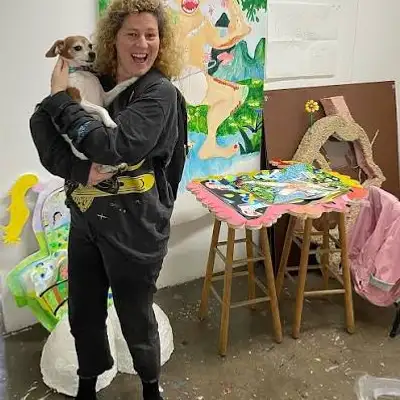
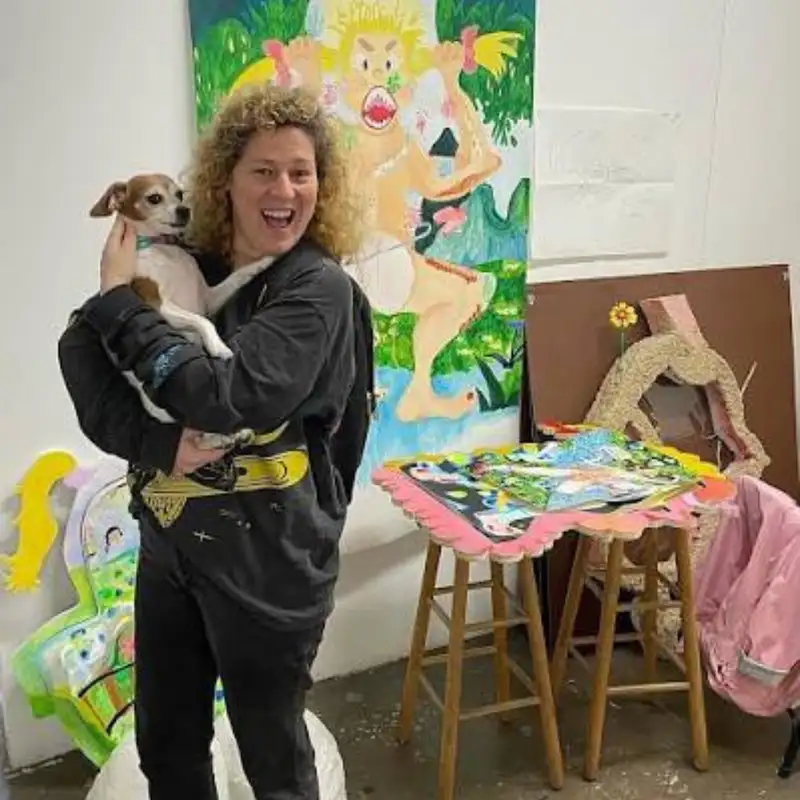
Rob Lee: uh welcome to Truth and His art, your source of conversations connecting art, culture, and community. These are stories that matter, and I am your host, Rob Lee, accept no substitutes. Today I am thrilled to continue my my journey back into New York and speak with the contemporary artist, curator, and educator who serves as the co-founder, director, and hit curator of Moisturizer Gallery. She is a champion of democratic curation.
She is committed to ensuring that all exhibitions feature fifty percent or higher marginalized voices to keep her shows discursive. Please welcome to the program, Dessarae Bassil Welcome to the Truth and His Art.
Dessarae Bassil: Thank you. Happy to be here.
Rob Lee: Thank you for coming on. Thank you for making it. We'd like to go right into it. We'd like to go right into the conversation because we're already having a conversation.
Dessarae Bassil: Yeah, let's do it. We're already chatting.
Rob Lee: And I like this um this background. It's not for the people uh listening because this is an audio experience, but uh I love this like blue sofa, this blue leather behind you.
Dessarae Bassil: Yeah, I'm at I'm in the space where the the new moisturizer show is, which is in um it's called one eyed studio, it's like a huge studio space.
Rob Lee: Yeah.
Dessarae Bassil: I'm I'm in the lobby. So people might walk by um Hey, what are you doing?
Rob Lee: Like I'm in the middle of a podcast.
Dessarae Bassil: Yeah. Yeah, people might walk by, but hopefully it's been pretty quiet for the most part.
Rob Lee: Yeah, yeah. And um and before I go to this first question, I'll do the thing that's become customary for this podcast. I will thank you for wearing your glasses. You know, I have a few I have a few quirks, but when folks wear their glasses, uh in a world of LASIK and contacts, when people put on their spectacles, I'm super appreciative of it.
Dessarae Bassil: Yeah, these are my uh dollar store readers.
Rob Lee: I these are my only eyes. My my partner says your eyes disappear when you take your glasses off. And I've had several friends agree with her recently, and I was like, this won't work.
Dessarae Bassil: Yeah, you become Mr. Magoo.
Rob Lee: Okay,
Dessarae Bassil: now you're another one on the list. Yeah, I just I can't see up close, like at all. So right for now I have these readers, but one one day
Rob Lee: one day I'll I'll I'll be in the probably what are they called? Like Provision, something or other. Oh yeah, yeah, yeah. Yeah. So I'm gonna I'm gonna go over this first question and um you know it's more of an invitation. Thank you for coming on today before we get into the the big pieces of the conversation. I would love it for you to introduce yourself in your own words. Let's get into the lore. Who are you?
Dessarae Bassil: I'm Desiree Basil. Uh I'm uh an artist, I'm an educator, and I am a curator slash uh gallerist. So um I taught on the collegiate level for the past four years.
Um I taught as a grad student and then I continued after that. Um and I'm an artist. I make my own work. And um and then on top of all of that, I run a gallery and I have for almost nine years. Um and so curation, my curation practice and my art practice are very much uh they're symbiotic.
Rob Lee: Yeah. Yeah.
Dessarae Bassil: Um is that a good introduction?
Rob Lee: No, it's it's a good introduction because um it's one of two ways this usually goes. Either I had one recently where I was like, yeah, tell me who you are, and the guests talk for 27 minutes.
Straight. And I was like, I can just turn the mic off for me. And then there's some that is what you did, I think, gave space for the other questions to come in, like this this next one. Um your MFA thesis exhibition. You want to talk about that a little bit, uh, normal sensations. Where does that fit into your story and it how did it shape who you are as an artist and a curator? See, we have a trajectory here.
Dessarae Bassil: Yeah, yeah. Yeah. Um so yeah, normal sensations. Uh like you said, it was my my MFA thesis show. So it was the culmination of three years of you know, honing honing research and uh having to uh constantly explain myself which is what high school is for um for fine arts. But uh yeah so normal sensations is kind of a facetious title it's about the whole show is kind of about like femme abjection and the like the bodily abject experience of being in a femme body and that that is normalized uh
Rob Lee: socially
Dessarae Bassil: um so I don't think it is inherently normal at all but I think um little girls um and little boys I think like as children we're sort of enculturated in it into that being normalized into like our roles being
Rob Lee: normalized into
Dessarae Bassil: into um certain positionalities right like um especially when you're thinking about abjection so like that your body is sort of on display that your body is um maybe not quite your own in a social context.
Rob Lee: Yeah
Dessarae Bassil: um that things that your body does um like bleeds or lactates um is gross right
Rob Lee: like in quotes I'm saying it in quotes I don't think it's gross.
Dessarae Bassil: Um but there's it's just an abject it's just ab like it just is it is just an abject thing and it has to do with your body. And I think all bodies are abject but I I'm I'm speaking 'cause I am you know born female, I identify as female and I'm speaking from that positionality.
Rob Lee: Yeah.
Dessarae Bassil: So I I I don't know if that answers the question.
Rob Lee: No it it doesn't. It I mean sorry it does. It does and with that but with that extra extra layer and and I think it ties to one of the later questions. So how does that sort of shape how you approach art as an artist and as a curator Yeah.
Dessarae Bassil: Um so I have specific taste like I think everybody does um and I like I like the abject. I like the grotesque. I like leaning into those things because I I think you can use them. Um there's a writer she's actually kind of like the big writer who who wrote like the bit the the big text on the on the abject is called Powers of Horror and her name is Julia Christeva. She's a French semi semiotician um and in that book she writes about and I'm I'm sure I'm saying this wrong so so sorry to all the people out there. Um
is Joissance Joissance and affect and she writes about how there is a joy or like a humor in abjection. Um and I think the easiest way to to explain that is like laughing at a heart um
Rob Lee: prove that it works.
Dessarae Bassil: Yeah yeah so I think there's ways to use the grotesque and use objection that's like really um where you can like connect like strong more strongly to people because it is bodily or it is funny in a way.
Rob Lee: It is like there's so many layers.
Dessarae Bassil: And it's not it's not for the the shock and awe of it either it's
Rob Lee: no it it's it's perhaps for um maybe an invitation maybe that is the it's it's it's the it's the hook to say perhaps it's the hook to say something deeper than just the thing that's on the surface that ooh this is gross. It's like no this is the thing that's happening and it is normal.
Dessarae Bassil: Yeah, normal. Normal sensation. Yeah actually I had a studio visit with an an artist I really admire. Her name is Jiha Moon um and she was looking at my art and she said you bring people in and then you punch um and I think that that's something that uh That the abject in the grotesque does especially if you couple it if you couple it with different things. Like if you can couple it with like humor if
Rob Lee: you can couple it with like beauty or you can couple it with cuteness or you can couple it with with things.
Dessarae Bassil: So yeah it's an entry point.
Rob Lee: Yeah. I
Dessarae Bassil: think it's an entry point. And I think there's also there's a an immediacy there's something like really it's like she said like it you punch. Like there's something that hits in that and those uh modalities.
Rob Lee: It it it's also and I and I don't know I I don't come from an artist background who's doing on his podcast. But but but there there is sort of this and I've been playing with this a little bit r recently of the power of let's say uh medium or or some sort of stimulat medium or what have you that makes you do something involuntary. So if something makes you laugh, you're like, oh I need to investigate that. If something makes you uh you you're repulsed by it, you start to ask the question why and as you were touching on if you couple it with something that makes you laugh. It's just like oh you you're you really got me now. You got me with it, but now I'm laughing or you know I'm now not not titillated but I'm now enthralled if it's something that's beautiful or or something that's making me do these things as the the viewer, the beholder if you will
Dessarae Bassil: to engage in a different way. Yeah and an i and engagement. It's a technique almost to engage. Yeah. I mean there's a lot of different ways to engage and I think yeah I think that for me those those are my how those are how I like to engage.
Rob Lee: And I and I got a little bit about I got a little bit of that um when when we met at uh Spring break which we're gonna go into a bit later and I was just like hmm there's some things going on here in in the booth that I see and I was just like hmm then doing the research. I was like there are more things. This
is an interesting character to to dive into a bit. Um so I sounded like I knew I was talking about there for a second. So you touched on this a bit earlier and this is sort of the context the moisturizer gallery, right? Um let's let's talk about it, you know, uh approaching ten years. I always like to ground up a little bit 'cause you know I'm approaching a thousand.
Dessarae Bassil: It's nine something, but it's a thousand. Um approaching ten years. So what does moisturizer do as a gallery and what is that journey nearly a decade in look like Okay. well it's a long that's a long time really um it really is. Ten years is a long time. I mean
sure a thousand episodes it's just it's a lot of work. It's a lot of labor um and it's it's a lot of different artists and different shows but Moisturizer started out as a very I mean and it still is it still has the same ethos but it started out as a very DIY punk space um in Gainesville, Florida and uh me and my friend Christian started it Chris Costus. Christian Cosses um and we both had a studio in kind of like a big space like this like the one I'm in right now. Like it had a bunch of studios and it had a big empty front space and we just decided to kind of take it over 'cause nobody used it.
Rob Lee: And we're gonna take this Yeah.
Dessarae Bassil: So we we just wanted to do one show. Um and our very first show was just two emojis. It was a water it was the water emoji and then a high heel shoe um and it was sort of about visual language or or like showing you like our our visual language.
Rob Lee: Sure.
Dessarae Bassil: Um and uh yeah we just did that one show and it went well and it was fun to do and then Chris actually shout out to Chris he's the one who made our Instagram he's the one who set up like a Gmail account 'cause I w I probably wouldn't have done that.
Rob Lee: It's like me nah no that's gonna happen.
Dessarae Bassil: Yeah. I wasn't taking like he kind of took it more seriously I guess um before I started to but then he ended up getting a job in um Salt Lake City in Utah so he moved after just like a few months and then I started doing it on my own. Um and when I took over doing it on my own I started adding bands in.
Rob Lee: Okay. So
Dessarae Bassil: for every opening bands would play and every closing bands would play and we started doing like fundraisers for like um you know various things that were going on um it just became more communic community oriented instead of it just being like oh we just show art.
Rob Lee: Right.
Dessarae Bassil: It was like we show we do we want to connect in every possible way. Um and I also think you know like we've had readings, we've had like poetry readings, we've had we did a show with a skate shop where all of the sculptures were
Rob Lee: skateable
Dessarae Bassil: um
Rob Lee: pretty tight
Dessarae Bassil: yeah So uh yeah it just became more and more about how to how to connect with Gainesville with like as many people as we could in as many places in Gainesville and like how many things are art. Like music is art. Uh writing is art. Skateboarding. I think skateboarding is art. Um there's you know or film or whatever, right? Like there's so many other things.
Rob Lee: There there's a reshaping that that happens. Um I I was having this conversation earlier with um with with a friend who who makes art 'cause he's kinda he's kind of lost the uh I guess feeling of calling himself an artist. So I'm like you're a person that makes art that you know because that's that's the context in which I know him and we were talking about uh comedians. And you know because I'm
a not a novice in in this but I I don't like I said earlier I don't have that that arts background right and I find that not having or being beholden to any specific set of rules it opens it up a bit. So the conversation we were having we were talking about comedians. And you know it's just like so comedians are not considered artists but there is an artistic element there. It's performance.
Dessarae Bassil: There's writing Right, but it's it's sort of 'cause we th that's where the conversation was coming from of like, you know what comedians are doing and it's like this is sort of maybe that last area to really engage with and maybe look at like did this get an involuntary response out of you like I was saying earlier. You're you're laughing at it makes you feel something where we see more and more people especially Let's say certain musicians, like like rappers or what have you. It's just like this is the commercial thing or
Rob Lee: what I'm doing it feels more and more commercial and less connected to the source but for some reason comedy is supposed to
Dessarae Bassil: do a certain thing. We're breaking up I think
Rob Lee: we're still are you still here?
Dessarae Bassil: I'm still here, sorry you c you cut off for a
Rob Lee: second. Yeah
Dessarae Bassil: connection is very weird. Um but yeah it is it just it's this sort of notion that
Rob Lee: comedy is in the crosshair for using this as an example it's in the crosshairs just for what it does. They're people who say things that are popular that are kind of fundamentally wrong but
Dessarae Bassil: also that's part of the whole artist's conversation at times as well. Yeah I do think too I mean humor humor like when you laugh with somebody there's literally like chemicals that are released in our in our brains that make us feel like I'm like oh this person is good you know what I mean?
Rob Lee: Like or yeah like it it creates an open an openness.
Dessarae Bassil: Um and I do think a lot of comedians like I would I would say Dave Chappelle did maybe like the most in the last like I don't know fifty years for talking about race relations in the United States.
Rob Lee: Yeah.
Dessarae Bassil: Then maybe anyone else um with like the Chappelle show and his stand up um but he's done it in these really I think like br brilliant ways.
Rob Lee: Yeah.
Dessarae Bassil: Um I know not everybody loves Dave Chappelle I
Rob Lee: do
Dessarae Bassil: but
Rob Lee: in a this this is one example.
Dessarae Bassil: There's a lot of other comedians that I think talk about things that are difficult to talk about.
Rob Lee: Yeah.
Dessarae Bassil: Um but they use the they they have this special positionality to do it because they're funny because they can you know they make us connect to it. They make us open up. They make us listen they make us have involuntary reactions.
Rob Lee: Well what was the thing earlier you mentioned um you're pulled in and then you're punched that's a it's a punch line, right?
Dessarae Bassil: No
Rob Lee: Yeah. Absolutely yeah it's visceral, right? Like you feel it in your body makes your body move. Yeah. So we were did that was just an aside and and and
Dessarae Bassil: we're going back into sort of the the the the moisturizer story.
Rob Lee: So where we le where we left off was previously on moisturizer gallery. So we meant in the context of sort of you in New York are so what is that that's that status. Is it is it nomadic is it based in in in in Florida still is it in New York what is that sort of
Dessarae Bassil: location we're in New York we're a New York based gallery but we're a nomadic New York based gallery which being nomadic just means that we don't have like a brick and mortar building um so we have to like kind of hop from all of the shows the all of it is hard but the the biggest challenge is um space finding.
Rob Lee: Yeah. When
Dessarae Bassil: you're nomadic um and right now we're at um shout out to Rockella Space and Rast. Um they gave us a two month um residency.
Rob Lee: Nice.
Dessarae Bassil: So as a as a nomadic gallery, that's like pretty special to be able to have a space where we can have a show up for five weeks. You know, because otherwise it's like three weeks here, three you know, they're like little kinda or they're um part of things, like part of a fair,
Rob Lee: right?
Dessarae Bassil: Like spring break, or like we did upstate art weekend, which is just it's a four day long thing, it's it's the weekend. You know, so it's either like you have to c like get along into something someone else's thing, or you have to find your own space.
Rob Lee: Let me hitch my wagon to this one.
Dessarae Bassil: I'm part of this It's like being part of a festival or something. Yes, yeah, that's really that's kinda what it is.
Rob Lee: So yeah,
Dessarae Bassil: so we're nomadic.
Rob Lee: So nomadic and you know, uh and that that touches on sort of one of the next questions that's coming up. But but still in that trajectory, like, you know, there's a democratizing component to your curation as well, right? And there's, you know, sort of amplifying marginalized voices or what have you, that's baked in as well. So talk a bit more about that as far as your philosophy and sort of moisturizer in that regard.
Dessarae Bassil: Yeah. Um so when we started to do it when I when I started when Chris and I started doing this more seriously and then he left and then I was doing it seriously on my own, I wrote like a you know, what like a statement thing.
Rob Lee: Like like so you're supposed to write when you have a business.
Dessarae Bassil: Um and in it I wrote that we show more established artists and like completely unknown. Like a lot of artists have never been in a show before, like they're undergrads or something.
Rob Lee: Sure.
Dessarae Bassil: And they've been and they've been in you know, we've had a ton of um moisturizer shows, um, because I think and and then also having lots of different as many different voices as you can, right, in the room, because if you're talking if typically like with um curating a show, right, it the it's underneath a theme or an idea. And if say everyone in that room is a white guy, that's not very dis discursive.
Rob Lee: Sure.
Dessarae Bassil: So there's no discussion there's no discussion between that work. I mean there could be on certain levels, like um formal, on formal levels. But there isn't it just gets juicier, like the more people that are in the room, the juicier the conversation gets. Um and I think it's boring and um and pointless sort of to have to just have every voice in the room be this be the same or very similar. Um so that that's what that's why I curate like that. Um and I think it's also it's like 2026. It seems like insane to
Rob Lee: not cute to not consider those things and a not like care
Dessarae Bassil: and to not do that,
Rob Lee: like we we like juicy conversations firstly. We like a juicy conversation.
Dessarae Bassil: It's it's full, is it's good.
Rob Lee: And you know I in doing this and you know sort of just the the way that you and I sort of came together for this this conversation is sort of baked in a similar thing. But one thing I I will say uh which I really appreciate by the way from you, you know, you mentioned you were writing down um like the statement. I was like, you write down everything because you wrote me a handwritten list of people and I was just like, shout out to her. She's she's a good one. She she she took the time
to write down this exhaustive list of folks and it i is great. And and I but I think in it um just having different people like, you know, there have been times uh doing this, well, why don't you just interviewing this type of artist or this type of art personality? And I was like, i it's gonna sound gauche, but maybe they don't interest me in the same way that you might interest you.
Dessarae Bassil: Maybe having something that's more of a juicier conversation for the larger scope of things, that's what I'm more interested in.
Rob Lee: It seems like the same for for your approach.
Dessarae Bassil: Yeah, yeah, I think like I said, I mean the more the more voices in the room, the the better the better the conversation is. And as far as I'm concerned, like art is a conversation. The history of art is a conversation um and it's it's a long one and it's a juicy one and it's still going and it changes, it's it's changes supposed to change. That's what it's that's what it does. And then also as a curator, when I'm hanging stuff, like kind of like that puzzle of hanging all the work, it that's to me it it feels like a conversation. Like how does this work speak to this work? And on lots of different levels. I think in terms of like the the context of the work or the concept,
Rob Lee: the conceptual aspect of the work and then also the the formal aspects of the work.
Dessarae Bassil: Um yeah. Yeah.
Rob Lee: And it moving a bit into spring break with a little bit more depth here. We we met there and you know, we had like a nice l literally when I was there and I was reminded of this recently, I only talked to two people when I was there. It was you and Hannah, literally as two people I talked to. I was like, everyone else move out of the way. Talent's coming through. That's that's what I did. And I had a cape on. You remember me.
Dessarae Bassil: I had a giant cape on 'cause I'm super tall. Um but but your your booth had like a it's booth sounds weird because it was more of a room. I felt like I was stepping into someone's bedroom and for multiple for multiple reasons, but it was a strong roster of like what, sixteen artists I read. Um and you and you're you're there as a representative showing showing the work of spring break and in fact as I said you hand wrote, you know, a list of artists to check out. So can you can you talk about that that overall experience? Um 'cause this was my second spring break and last year I got a bunch of artists that I interviewed, which was great. This year I'm working through my list of
folks. So what was your experience like? Um well that's my first that was my first time doing spring break. Um and I've actually never even gone to it before. I like physically. I followed them I followed
them online for years and I've always really admired what they do. Um as an art fair. Um they started off really li it seems like they have the same ethos as me, like that kind of punk punky DIY scrappy ethos.
Rob Lee: Yeah.
Dessarae Bassil: Or it's like let's just f let's just do it. Like there they always do shows in like weird abandoned spaces. Like this was in the old um CBS studios.
Rob Lee: Yeah. Yeah.
Dessarae Bassil: Um so the spaces are weird and interesting. Um yeah, and I think also uh spring break has grown in a pretty a ma like an incredible way. Like they're the biggest little art fair or the biggest in like uh you know, like they're not like the big they're not like uh freeze or whatever but they're they're big. They're they're like well known. Um so I was really I was super happy to be able to participate. It was a good experience. I'm glad we met met some good people.
Rob Lee: Oh
Dessarae Bassil: yeah. I
Rob Lee: was able to get a a bit of a spectrum. So like last year I got um it was it was a referral really during during a podcast, I was interviewing a guy who'd been on before and he was like, You going to New York next week? I was like, I am and he was like, You need to go to spring break. And I was like, Why is that? And he's just like, I think they're your people. And I was like, All right. And you he was right and I went up there. That was last year's sort of precursor, and uh I I think in the hour, forty minutes to an hour I was there, I was able to book seven interviews, I think.
Dessarae Bassil: Um and
Rob Lee: it and it was great. It was great, um coming up there and and just doing my approach. I'm very, you know, strategic in it. And this year I I had that similar thing, but the difference was, you know, the date changed, but the difference was I was between spring break and armory shows, so I'm getting a special. spectrum.
Dessarae Bassil: Yeah, Armory. That's what I was uh not freeze armory. Yeah.
Rob Lee: So having having that spectrum of like this was big and I was like, this is a lot.
Dessarae Bassil: And I approached it the same way and I was like, this is a r this is an away game. You gotta do this a little bit different, brother. So and I think exactly 'cause I got over there to spring break too early. So I didn't even get the appetizer of going to the smaller joint in spring break. I ended up going to armory and I went at first and went back to spring break as like dessert. And I was like, Oh, this is much more my pace. This is much more my speed. Yeah, yeah. Uh yeah, I know uh I listened to your interview with uh Boni Ramirez.
Rob Lee: Yeah.
Dessarae Bassil: Who had a big I know he had a big thing at uh the armory show this year. Good good for him. I was excited. I really love uh love their work a lot.
Rob Lee: That's who invited me up actually.
Dessarae Bassil: Oh really?
Rob Lee: Yeah.
Dessarae Bassil: We he he still owes me he still owes me Dominican spaghetti. He he's messing up. I I don't know. I I I'm gonna get him on a horn, I'm like, Oh my man, what what are we doing?
Rob Lee: Um so going back into it, uh this is a really curious kind of question. Um and this is sort of our mutual here, kind of in in sort of this context. Um can you talk about personas? Is that as I'm curious there, like, you know,
a trait that sticks out, like w I find like a lot of times at these fairs, these shows, it's not a it's not a being fake, it's not that that, but it's just like for me to get through this and me to be personal and for me to have a person hang out a little bit, I gotta put I gotta elevate certain elements of my personality.
Dessarae Bassil: And
Rob Lee: I talked a bit about this with with Hannah, uh a stud dig who from from Ruby Dakota who connected us
Dessarae Bassil: and we were talking about it, and the way she popped up to me is like, why are you here so early? That was the first thing she said to me.
Rob Lee: And I was like, it's noon. And uh and I was just like, All right, you have me here, like I said, I talked to two people and one of them started off with that. Yeah.
Dessarae Bassil: So I'm curious about how you approach that, and um because you know, the two of you stuck out amidst all of the different works, all the different personalities there. How do you go into it from a
Rob Lee: you know, personal personality standpoint, or is that even a consideration?
Dessarae Bassil: Uh that's I think that's a great question. Um talking I was actually talking to my partner and I was like I was like, Man, I'm really bad at I'm really bad at this. I was like, I gotta sell this art, but what do I do? And my partner was like, just tell a story. Like t like start like t talking about the work like a story.
Rob Lee: Yeah.
Dessarae Bassil: And I was like, I was like, God damn it, he's right. Because before I was like, I don't know what to do. Like I'm just kinda I I don't want to hover over people. I think that makes people really uncomfortable. Um I don't you know, it's there's something inherently awkward. I think. Like going into those booths or the rooms or whatever, like the gallery sitters.
Rob Lee: Yeah.
Dessarae Bassil: It's weird. You're like lurking about you know while people are looking at the art
Rob Lee: and want them
Dessarae Bassil: to Yeah, you you want them to stay, you want to engage with them. But yeah, I just started I would just go into like a spiel. I'd be like, our booth has has sixteen artists. All of the work deals with themes, conceptions, personal experiences, uh surrounding girlhood.
Rob Lee: Yeah.
Dessarae Bassil: Blah blah blah. And then a lot of there was a a really giant pair of underwear.
Rob Lee: There
Dessarae Bassil: was.
Rob Lee: And there's a really giant pair of underwear in our booth that was
Dessarae Bassil: um it's the artist's name is uh Manuela Vera Gallo. Um and she's Chilean. So I would just start kind of going into her about her and about the underwear. Um because the underwear are 26 years old. Um and they've been they've been shown around the world, uh da. And also uh Manuela really wants people to like take pictures with the underwear, get in them, or like exp like play with the underwear. Experience the underwear and aware, perform them, perform the underwear.
Rob Lee: Hold on, hold on, hold on. This is a bit. It's like you try to get in my drawings, trying to get my panties. Essentially what was happening artistically.
Dessarae Bassil: Yeah, yeah. I think I think there's probably a lot happening. And it depends on who gets in them, what they do with them. But yeah, there's something interesting happening there for short. But that was a good entry point. The underwear was such a good entry point because I I kinda hate to use the word novel, but there was but they're just 'cause they were so big. Um they just yeah, they just stood out and they became a good entry point or talking point. Um so thank you, Manuela.
Rob Lee: But but I think it but I think also if if I were to maybe connect a dot here, it it ties back into perhaps in uh maybe the choices there, how it was sort of this arranged and displayed, goes back to one of the things uh that is of an interest of yours of like the the in a what is it, uh abject, right?
Dessarae Bassil: And sort of like, oh, those are some giant panties. What do we have here? And and then it's like, hey, stay in here, enter the room, because if I remember correctly, like I was just kinda like hanging outside of the of the room a bit because I was like, this feels like I need to be invited in because this reminds me of a room. And it's like, oh, come in, take a look. Yeah. Yeah, yeah. You know, a lot of people, it's funny
you said that you're you're not the only one. A lot of people said it felt like a bedroom, like someone's bedroom. Which I think goes well with the girlhood theme, and I was I'm I was glad to hear that.
Rob Lee: So talk more about about girlhood studies because that that's the theme you you've you've referenced and it's a nice segue into sort of these these questions that I have around that. Like what is girlhood studies? W you know, wh why are we exploring it now? Why are why are you ch uh why is that a focus right now? Yeah.
Dessarae Bassil: Um well for me, like so I I think I said this earlier, but if I didn't I'll I'm gonna say it again, sorry. But um
Rob Lee: Consistency.
Dessarae Bassil: So the c moisturizer, the the curation of moisturizer is very it's tangential to my own interests and my own research. So whatever the theme is of the show or whatever, it's always something that I also that I like or that I'm like exploring or that I have re done a lot of research on. Which it's also that's another thing too, like thinking about that kind of discursive curation, like getting the most voices. That helps me too, and like because I'm it's something I'm interested. So seeing how so many different people approach the same
thing that I like to approach is good. It's good for it's good. It's like a good it's good for your brain. It's good for like understanding and learning and thinking. But uh anyway, that was
Rob Lee: No, that's
Dessarae Bassil: good. But so I'm really interested, like I said in the in the the beginning of the interview, um, and like abjection and fe specifically femme abjection and the experience of that. And I and I believe that those are things that start in childhood. Um And so girlhood I think is defined as like
the ages between like eight and eighteen or something, 'cause I think before that you're like you're like a little you're like a little kid, you're like not quite a girl yet. Uh and yeah, I guess just thinking about those like the experience of it. Like thinking about my own experience of it and other what what are other people's experiences. So I do think there's a lot of shared experiences that are kind that are kind of dark and not that cool.
Rob Lee: Yeah.
Dessarae Bassil: Um but then I think they're also coupled with like moments that were really like fun or like silly or like that it was like fun to be a girl. But then it was also like really disturbing to be a girl.
Rob Lee: Yeah.
Dessarae Bassil: Um right? Like there's a both a boseness. I use that word. Uh and I think that's that's what I was kind of trying to get at in that curation.
Rob Lee: Yeah.
Dessarae Bassil: And that's what I'm trying to kind of understand or explore in the girlhood studies. I mean it sorry, go.
Rob Lee: No, no, please.
Dessarae Bassil: You were uh it's just it's it's like a literal actual thing. Like you can there are college classes on girlhood studies and stuff, and there are texts or like dense texts. Um and there's lots and lots of writing on on it. Actually our takeaway in the booth was a reading list.
Rob Lee: Yeah.
Dessarae Bassil: The reading list on all texts on girlhoods. Um, which got bigger. It got bigger through that because people kept adding to it, which is really nice.
Rob Lee: Um it plays with the the community uh reference you were making. It's just like, hey, we're we're growing out this list and it is happening organically, it's happening naturally. It's um and in and
Dessarae Bassil: again, go to that the hook of it all, it's just
Rob Lee: like having sort of the something that is attention grabbing like Manuela's work while sort of bringing in folks to explore the rest of the work and then get sort of a peek behind the curtain in that sort of research aspect with the reading list. Mm-hmm.
Dessarae Bassil: Yeah, yeah, very much so. Yeah, and I think too, like the reading list gro is growing from actual like interaction too, you know what I mean? So there's that there seems to be a theme. And the way that I guess I run moisturizer. Um I I guess I'm really interested in that.
Rob Lee: No, no, no, you you happen to be. I mean, I I think there's uh there's an expansion, if you will. I'm I'm playing with words.
Dessarae Bassil: I'm playing with words right now.
Rob Lee: Uh we are so uh so it's a new show coming up called uh girlhood studies in the expanded field. So can you tell us about that? Is it bigger and bad or it's like okay, we got you know, we found a way to make fifty-two foot tall. You know, Tell me about it.
Dessarae Bassil: Um yeah, so there's like a little bit of a play on words because it it is literally a bigger version. So it is literally like an expanded version of the show at Spring Break. Um it's also important to me that because spring break costs money. Um this show is free. So I like that I'm doing
sort of this iterative version that people can like anyone can just come to it if they'd like. Um and also because of the space it's in, I can do events. Um so for the opening we had three bands played on the opening was last Friday. And then on November 8th, we're having a reading. There are it's nine or ten people are gonna all read different things on on girlhood.
Rob Lee: Yeah.
Dessarae Bassil: Um and then there will be one more event before it closes. I'm not sure what I'm not sure what that is yet. But uh yeah, but yeah, it's it's an expanded version. So um the expanded field is an art term. Um so there's like photography in the expanded field, painting and the expanded field, sculpture and the expanded field, and it basically means like how far can you push something and it's still a painting.
Rob Lee: So,
Dessarae Bassil: like, say you're painting with light, is it still a painting or is that like a light installation? Like how do you and what way would you use that to ensure that it still stays within the realm of painting? Yeah,
Rob Lee: it's it's kind of this thing where you you there's certain hmm rules are kind of hard, but maybe standards. Um my partner talks about this. He's smarter than I am. I talk about all of them. And you know, in a very pandering, patronizing sort of way. Uh I'm just being accurate. And and and and sort of
she w reference something, this is so low tier, but it connects, I think. It's like w what are the rules for Spider-Man for sake of argument? It's like it needs to be in New York, is one of the things that needs to have that in there.
Dessarae Bassil: And it it's kind of that. It's just like, what are the rules for this? If we're gonna do this is sort of expanded field no sh narrative or notion, then what are the rules that make this that? What are the rules that make a painting a painting for
saying? You know what? Spider-Man is a really smart analogy because the Spider-Verse, right? And the Spider-Verse, the Spider-Verse is wildly expansive. But certain things are always there. It's always in New York. It's got this he's got the
suit, the spider the spidey suit. Like there are certain things that may that maintain it as diverse as the Spider-Verse, but it gets to keep like morphing and changing and being malleable.
Rob Lee: Yeah.
Dessarae Bassil: And that's and that is actually such a good analogy for what the expanded field means. It really is. Like that's really smart. Um whenever I get to teach again, I'm going to say that to my students.
Rob Lee: It's fantastic.
Dessarae Bassil: It and I think like it it adds to it to play with what we talked about earlier.
Rob Lee: It adds to the the juiciness of of it.
Dessarae Bassil: Because I think if we just in this sort of spider-verse scenario, if the spider-verse is just made up of twenty-six,
Rob Lee: you know, white dudes of the same age, the same background. Could be interesting. Probably not. We need at least one dude that's from India, we need a black Spider-Man, we
Dessarae Bassil: need
Rob Lee: you know, we need a girl,
Dessarae Bassil: Doc Ock we need we need some something to kind of make things a little bit more unexpected, thus, I think interesting. Yeah, yeah, exactly. And I mean it again, like expansive, it's that's the word. Um the word of the day. But yeah, so the the new one, the new the girlhood studies in the expanded
Rob Lee: field
Dessarae Bassil: is the same, like it's the same as the one from spring break, so it's all um inclusive, critical looks at themes, experiences, and socially constructed con conceptions of girlhood. But um the work plays with or breaks apart those socially constructed conceptions. Um I hope in a lot of different ways, which also
would expand the field. Right? Like like breaking like breaking things, like breaking like the same thing in humor, like where you break expectation or you break you uh you know, you don't do what you're supposed to do.
Rob Lee: It's like is there I think using that, right? It's what's the work that was done is sort of like um I I joke with people. I was like, I'm a six foot four black guy that doesn't do a sports podcast. It's so unique and interesting because that's what's expected at times, and it's like I could do that, but it's not really of interest, Or I I have a a friend who he's a bald white guy. He has a certain aesthetic to him. And some of his humor starts to go in a direction. I'm like, I don't know if that's gonna be received great.
Dessarae Bassil: Yeah, yeah. But but on Joe Rogan a
Rob Lee: little But we we we had a conversation which I thought was kind of kinda funny where I was just like you could play with this whole area. You could do all of this lead up to make it seem like you're gonna do some weird racially coded thing. And it's just
Dessarae Bassil: like
Rob Lee: I was like my issue here and I'm and I kind of wrote the joke for him. I was like my issue here is these lantern bugs. These are the people that are crossing the borders that don't belong here. And he was just like that's really funny. I was like, yeah, 'cause more work is done than you trying to get off some weird kind of racial humor.
Dessarae Bassil: I was like if you turn it to something that's almost surreal, you already got people responding
Rob Lee: in a way
Dessarae Bassil: of like, I know this white guy's gonna say this terrible thing. Terrible thing, but wait, no, he's not
Rob Lee: and then it's just now it's now it's surreal.
Dessarae Bassil: Now it's like, oh, did you personify l lantern bugs?
Rob Lee: Or land
Dessarae Bassil: lanternflies?
Rob Lee: Yeah
Dessarae Bassil: and you're talking about invasive species instead of whatever yeah. Um but uh yeah there's it's a thing in humor. It's actually like it's it's how a joke works. It's called expect it's called expectation violation.
Rob Lee: Right.
Dessarae Bassil: Um so it's you set something up and then you do the other and then you do the opposite. Yeah and you Yeah, it's the same thing I was saying earlier where it's like you get that reaction. I mean that's like kinda where the reaction comes from is you're like oh
Rob Lee: like
Dessarae Bassil: work you did
Rob Lee: that damn y'all didn't expect that exactly.
Dessarae Bassil: Yeah.
Rob Lee: And and I think that there's this notion perhaps in being very passionate and figured it out and that's that's another thing that's that's there that plays into it the the technical component, right? Like you know, when you think about uh girlhood studies in the expanded field, is there a a story, an artist or or some sort of like technical mastery that comes to mind when you think about sort of the show. Hmm.
Dessarae Bassil: Um I think for me it's about ideas. It's about like how how ideas come across although I do think there's a lot of like pretty incredible like craftsmanship and mastery in the show like specifically Cynthia Chang made these flowers that are like genitals and they're like ceramic and they're epoxy clay class and they're just really well they're like wonderfully um and the use of material is really like really great. Um there's a painter in the show, Allie Sutton and her painting is pretty I mean in terms of like being good painting or being like a you know like quote good painting like paint it really well or painted impressively. It's an it's an impressive painting. Like she is a very good painter. But I think it's more like it's like the it's the idea. It's really about what all the pieces are saying
Rob Lee: and what the artists are doing with the work and how the pieces come together. That makes sense. The
Dessarae Bassil: Yeah like
Rob Lee: I I I like ideas. Again it goes back to you know I've seen in and and that's sort of like the the last actual real question I got a couple rapid fire questions for you. Um but there there is this sort of thing where I've talked
to folks and they would talk about something that is a let's say a painting for sake of argument. It's like wow that is technically supreme. There's this is amazing but it lacks soul. It lacks
Dessarae Bassil: magic
Rob Lee: what are
Dessarae Bassil: the ideas that's
Rob Lee: there and that's like the two oh one class you know of
Dessarae Bassil: appreciating it's the Yeah.
Rob Lee: And I I I feel that and you know I I start uh framing questions like what's the merit or what's the degree of difficulty what are the ideas but I think the ideas are always I'm gonna give more favor to the ideas than you know something can be done really well. Everyone does work great, right?
Dessarae Bassil: To to speak in those terms but what are the ideas behind it and that's at the root of what I do and even the selection process for having folks come on.
Rob Lee: Like if this gonna be an interesting conversation what's the story?
Dessarae Bassil: What is the ideas under it? Yeah, yeah, yeah. I I agree I mean with what you're saying like I there's some there's a lot of art that I have looked at in my life that I I didn't I didn't feel a thing when I looked at it. It was technically it was technically a great thing. You know, it was like well made, it was well done. But like you said, I think, you know, like they teach you how to draw realistically and you know, like your f the first class you take in an undergrad. You know, th those are skills. Um but really like I think really great art is combining like materiality, skill and concept. And it and they all they they all like work together. To to do
Rob Lee: XYZ.
Dessarae Bassil: Right. Yeah. Um I feel like that that what I just said could be like a that's like a book, like that could be that's like a really short, simple way of saying that, but um yeah, I guess I'm looking I'm looking for I have then also just specific I have I have specific taste of specific positionality and I like certain things. Um like like all curators and gallerists do.
Rob Lee: Yeah it kind of speaks to me. Yeah, and I and I and I think that's I think that's a good spot for us to close on the main main portion of the pod. I was just like, all right, That was a little bit of a mic drop right there. I like the way that I came out, by the way. The last two pieces of business I have is three. Count them three rapid fire questions for you, and then one sage advice question.
Dessarae Bassil: So
Rob Lee: the way the rapid fire works, you've listened to a pod, so you know how it goes. Um you don't want to overthink these. And one, this is the one I kind of teased early, early on. Because, you know, I may have looked at some some cartoons, may have looked at some nick tunes, maybe looked at a few different things. Who knows? Uh so I realize you're a fan of cartoons, right?
Dessarae Bassil: Oh, the love cartoons.
Rob Lee: So if you're hired to curate a two-hour block, let's say for Cartoon Network for sake of argument. Um, what are three cartoons that you're like, look, this is what I have for two hours. This is my blog. This is the Desiree block of cartoons. What are the cartoons? What are the three cartoons?
Dessarae Bassil: Um Ren and Stenpey, for sure.
Rob Lee: That tracks.
Dessarae Bassil: Um I would play there's a sh her name's Suzanne Pitt, Suzanne Pitt, and it's the cartoon is called Aspagus.
Rob Lee: Okay.
Dessarae Bassil: It's a piece of art, but it's it is technically a cartoon. Um probably some bugs bunny loony tune. I love bugs bunnies.
Rob Lee: Also tracks.
Dessarae Bassil: I would say I was about to get like Yeah, so which voice was it? Was it you know, Mary Melody's or was it Looney Tunes?
Rob Lee: That's that's another thing that me and that my my partner get in debates about 'cause she she's she's older than me. And she's like, I remember what was this. I was like, you're I I don't know what you're talking about. I just look at her real crazy because uh that she was born in the 70s, I was born in the eighties. I was like, I don't talk about
Dessarae Bassil: Yeah.
Rob Lee: Did he have colored television those days? She's like, shut the hell
Dessarae Bassil: up.
Rob Lee: We have fun.
Dessarae Bassil: Yeah, it's
Rob Lee: good. Uh
Dessarae Bassil: you gotta pick on each other a little.
Rob Lee: It is usually one-sided.
Dessarae Bassil: Uh um so here's the next one. What is something? It can be ridiculous because we we talked about farts earlier, which is still ridiculous. Uh what is something that without fail makes you laugh. Oh my god. Without fail. You know, okay, this is like stup stupid stuff. I like
stuff I am not gonna try to pretend like I'm like some kind of an intellectual like the dumbest shit. Just someone like someone just saying something weird or fall or falling. Oh y you know, like just like dumb.
Rob Lee: Yeah.
Dessarae Bassil: Like just a dumb thing. There's actually this it's a so you know it floods in New York.
Rob Lee: Yeah.
Dessarae Bassil: Like it floods pretty bad and there's a video, it's a woman, it's a bunch of people getting off the bus, and this woman just gets swept.
Rob Lee: She's like,
Dessarae Bassil: whoa.
Rob Lee: Like
Dessarae Bassil: that I like that that lives in my head, like rent-free or whatever people say. Like I think every time I think about that I laugh.
Rob Lee: That's I
Dessarae Bassil: hope she's alright
Rob Lee: though.
Dessarae Bassil: So sometimes it i sometimes I laugh at stuff that I said in my old podcast because it's so stupid. Um I laugh at yourself.
Rob Lee: I remember like I bought saying Kentucky and I just called it Kentuckis. So for the last like eight years I just call it Kentuckis. It sounds ridiculous.
Dessarae Bassil: No, that's great. I love that.
Rob Lee: So yeah, it it it works. It's super effective. Um and here here's the last one, uh, the last rapid fire one. Uh everyone collects something. Um people it's all cruxes, some people it's hearts. Who knows? But I like the weirder things. What is something that you cur collect that might be super weird?
Dessarae Bassil: Hmm. I
Rob Lee: threw a Harry Potter reference in there. I don't even know what the movies is. I said Horcruck sounds cool, right?
Dessarae Bassil: Uh I used to so I I'm from Florida. I'm uh I wasn't born there, but I was raised there and I've whether I like it or not, I am a Floridian.
Rob Lee: Oof.
Dessarae Bassil: I I went through a phase where I was really into collecting like shell stuff.
Rob Lee: Okay.
Dessarae Bassil: Like kitschy Florida souvenir, like shell stuff. I had so much of it at one I just had so much. Like it got insane, the collection got insane and I had to get rid of it because it was like I was like nobody needs this this many shells, nobody needs like you know regard like a shell chandelier and a shell curtain and a shell like you know, I had like a b all the like everything was a shell. Everything had a shell on it, like shell stuff in the bathroom,
Rob Lee: shell. So
Dessarae Bassil: that I don't actually collect that anymore, but that was a big collection. I I went through a phase where I collected um a fortune cookie.
Rob Lee: Okay.
Dessarae Bassil: Fortune. I used to have a ton of those.
Rob Lee: Yeah.
Dessarae Bassil: Um but I I hate to be boring, but I don't think I c I currently collect anything.
Rob Lee: See, I was waiting, right? There's there's two things to come to mind. Maybe because I used to do a comedy podcast, but two things that come to mind. The movie Demolition Man. Looking at the city.
Dessarae Bassil: Oh, my God.
Rob Lee: So you get the reference. Michelle, three shells. Yeah. You get the
Dessarae Bassil: right thing.
Rob Lee: And I can just see it now. Does everybody baseball the uh my weird addiction is just shell chandeliers. They're taking over, it's just so many of them.
Dessarae Bassil: I still have a couple. I kept a couple.
Rob Lee: Of course you did.
Dessarae Bassil: But I you can't it's it got it got out of control. It really did.
Rob Lee: Yeah, mine's was the uh the skulls of my enemies, uh that's what I was collecting.
Dessarae Bassil: Um I wish I wish I thought of something cool like that today.
Rob Lee: I just I'm just playing a persona. It's all great. Um So so thank you for indulging the uh rapid fire portion and now we we'll close out the the podcast with the last real question. There's a little depth to this one. Um by depth I mean I'm too verbose. Uh Sage is the way
that this works is it's almost like paying something forward but using sort of your unique background is bespoke but it's something that folks listening can carry. Um you've organized with artists, curators, bands, fundraisers. You've talked about many of the different collaborations. You talked about the music piece, talk about different artists, performers, poets, venues, skate shops, city officials. The list goes on and on, and even institutions and organizations like the
satellite art show, Goodyear Arts, and Spring Break, as we talked about. Um might call that uh I guess broadness unfocused, right? But as the curator, you have a vision as you've touched on earlier, and you kinda understand how things connect. That's your job. Um I try to do the same with this podcast. I have on folks from different walks of light, different backgrounds and getting to the root of something, diverse range of people. What advice would you give to someone who maybe heard the what you're doing is unfocused. I don't see the through line. It's so scattered and broad.
Dessarae Bassil: Hmm. Um I would say do you
Rob Lee: um Am I be the shortest answer?
Dessarae Bassil: Yeah, do you. I'm up because I made y'all on the flip.
Rob Lee: No,
Dessarae Bassil: I mean I think it's important. I mean, I think like a big a big thing we've talked about tonight is is connecting connection, like art, you know, this like it's something that I was actually said to me and I think and it's something I say to my students, I'm like, if you just want to make art for yourself, you don't have to go to school. You can just stay in your bedroom and do and make whatever it is you want by yourself. Making that choice to step out of your house and have people engage with what you make is it's you're you're stepping into the world into community. And that's what art is. It is all about like building your artist networks. It's about like and uh an artist networks doesn't just mean an artist. It doesn't mean like being friends with other artists. It means being friends with other gallerists, being friends. God, that I need to make more friends with more people in the
art world, seriously. Um because it's about it it really is. It's that's what it is at the end of the day. Is connecting as much as possible. And the more you can organize with different people and connect with different people, like the the broader your kind of the the broader your shit gets.
Rob Lee: I would like I was gonna say something poetic to go with the Spider-Man. The broader your web is. Yeah, the broader your shit is.
Dessarae Bassil: I used to be a poet back then. It's fine. You've been you've been at this for a long time. You know what you're doing. Yeah, exactly. Yes. The broader your web is. Much much more beautifully stated.
Rob Lee: Yours is more real, though. Yeah, you know, you had your shit out there, it's a bit wider. It's like you sure?
Dessarae Bassil: Then you just got more shit, and the more shit is better.
Rob Lee: That's great. That's great.
Dessarae Bassil: But but I and I and I think that you can add
Rob Lee: to that list of all the different um people you've worked with and types of people. You can add podcaster there as well, my friend.
Dessarae Bassil: Ah, yes, I would love to. I'm gonna add it in there. Oh, I will say though too, is you want to maintain like as much as I worked with all those different people, they're always their moisturizer shows. They're my they're my curation and my idea, or me and my collaborator if I have one. Don't let like other pe what other people are doing move move you around too much. Just use use the connection and have it be mutually beneficial and move through it. And you and use it, utilize it. Yeah.
Rob Lee: That's a good point. And um that's where we were close for today. Um so there's there's two things I'm gonna do as we close out. One, thank you so much for making the time to come on this podcast.
Dessarae Bassil: Thank you. I hope I did a good job.
Rob Lee: Hope I made sense. You were great, you made sense. And um and secondly, I'm gonna in these sort of uh final moments, I'd like to do the shameless plugs. So tell folks where they can follow you and check out the website and run that um uh the up the current show. Run that information yet one more time for the folks listening.
Dessarae Bassil: So okay, um our Instagram is moisturizer dot gallery. Our website is moisturizer dot gallery. And if you want to send an email, it's also moisturizer.gallery at gmail.com. So that makes it really easy. Um the current show, Girlhood Studies in
the Expanded Field is at one eyed studios in Ridgewood, New York. And give me one second and I'll tell you the address. All right, it's sixteen thirty-nine Center Street. And yeah, come by. We have gallery hours Thursday through Sunday, one p.m. to six p.m.
Rob Lee: And there you have it, folks. I'm gonna again thank Desiree Basil for coming on to the truth of this art from Moisturizer Gallery. And for Desiree, I am Rob Lee, fan of their art, culture, and
community. In and around your neck of the woods, you just have to look for it.
Creators and Guests