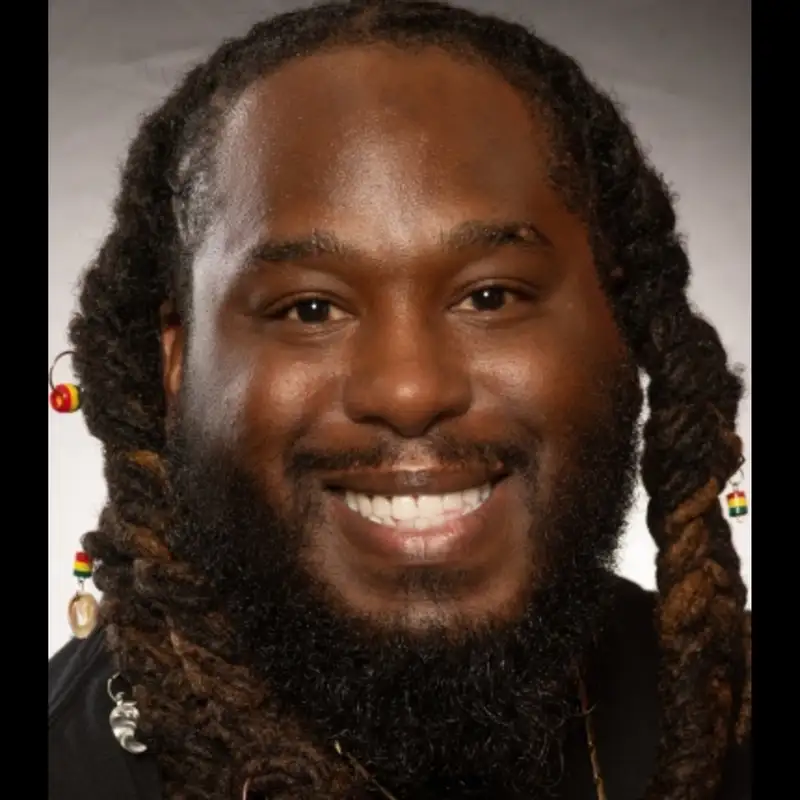
Dr. David O. Fakunle II on Art, Storytelling, Health Equity, and the Power of Narrative
Download MP3Music
Rob Lee: Welcome to the truth in its art, your source of conversations connecting arts, culture, and community. These are stories that matter and I am your host Rob Lee, except no substitutes. Today, I am thrilled to welcome back my next guest on to the program, a Baltimore native, academic and a mercenary for change who is working across public health, the arts, and community liberation. So please welcome back to the program, Dr. David O. Fakunle II. Welcome back to the truth in its art.
David Fakunle: Rob, it's a pleasure to be back. Thank you for that, Remy.
Rob Lee: Absolutely. It's like a treat. I'm glad we were able to, you know, kind of chat a little bit before we got started because I was like, all right, I got to bring myself back down because I just go into full like, I got to cut a promo now, you know.
Right. But since we like last talked, you know, starting off, you know, let's go back actually, starting off, could you reintroduce yourself to the listeners that perhaps missed your first one or maybe want to hear you do your intro again just to keep you honest of like, who are you and what are you doing these days? But if you will, the floor is yours, please give us that intro. Got you. So greetings on.
Speaker 3: It's a pleasure to be back. I am Dr. David Falkley II and I describe myself and have hopefully verified that I am a mercenary for change and now a celestial body for change.
And I'll explain that later on. My main gig is as an assistant professor at Morgan State University in the School of Community Health and Policy, specifically the Department of Public and Allied Health. I'm also at the Johns Hopkins Bloomberg School of Public Health in their mental health department as associate faculty. I have affiliations with a bunch of entities, notably the National Great Blacks and Blacks Museum, where I am the director of the Teach Division, which stands for Transforming Equity through Arts, Culture and Health. And that is reflective of my field. I operate very intentionally at the intersection of arts, culture and health, the intentional use of creativity to address health circumstances, health dynamics and health outcomes. So there's my intro. Glad to be back. I love it.
Rob Lee: Glad to have you on here. I was about to say, I was like, so you affiliated, you know?
Speaker 3: Yeah, a lot of affiliations. I try to keep track of them, but I usually just kind of circle around on the main ones, even the ones that pay me the most or the ones that meet the most in terms of their value and impact in my life. And certainly that would be the National Great Blacks and Blacks Museum for the latter. And Morgan and Hopkins for the former, although I do have a lot of love for Morgan because it's in my blood.
Rob Lee: Same. And that's definitely a thing that's going to come up later in this conversation. So in the, let's put a couple of years. That hasn't been like, you know, as long because this is, once I hit July, this will be 70 years of the doing this podcast and getting closer and closer to a thousand episodes, which I don't believe it, but we're here. How in the last few years, how has your work changed? You know, how has it changed you and what's changed within your work? You know, that's that sort of the thing I want to start off with.
Speaker 3: So my work has continued to expand gratefully. And I think how it's changed is that I'm finding myself in more positions to imagine or reimagine a culture in a system. I've always said that's that's the work that really needs to be done.
I often say that through the lens of policy, we have to change the rules, the rules, the guidelines, the frameworks. And I think because of this journey I'm on, I get to do that increasingly. And so I'm very happy, obviously, and grateful. It's a it's a lot of work. It's a big responsibility. And yet it's where I need to be someone who needs to be in order to to bring so many of the issues that we navigate in this world.
Right. So many ideologies and principles and realities and mechanisms. You know, all of that shows up in our work and in our lives. How much of that is showing up in the policies, for example, the rules. But again, those systems and institutions that are dictating a lot of this. And so being at the table, whatever that table looks like, being able to share my voice, which I do with the best intent of representing as many voices as I can, because I understand the responsibility, the necessity of being a representative.
Sure. Yeah, it's it's it's an obligation that I take seriously as an obligation that I do with with again, gratitude and reverence, because I know how special it is. And I think in the simplest terms, I don't want to screw that up.
Rob Lee: Yes, that's super important. It's legit. Like when you see the importance and the the value and sort of the gravity of perhaps the spaces you're in, the work that you're doing, the work that you are having access to, the people that potentially you have impact in or can serve as a conduit to bring more attention to what's happening. You have to take it super seriously.
You have to have this intent of screw this one up now. And I think, you know, I relate to that in doing this. Like, you know, I tried not to feel like what I'm doing is trivial and I really get caught on, I don't want it to feel disposable and I've had more sort of attention around the stuff that I do and it being coupled with your content creator. And I push back on it a bit of like I'm a person that perhaps creates content. But what I do has a journalistic intent, has a storytelling intent, it has an archival intent, is all of these other things that are sort of way beyond that because of the gravity of which I feel like I'm working at. And I think that sort of same thing applies there when we really look at the work that we're doing, when you have a title like Mercenary for Change and, you know, celestial being, you know, it's it's not just something that said tongue in cheek is something that has meaning and gravity to it. And we don't just call us all these things, you know. Yeah.
Speaker 3: And it's something that's I mean, from a practical standpoint, because I do so much, I had to find a way to describe it because I can't go down the list of all the, you know, official roles and official affiliations and, you know, organizations. It's like if I had to synthesize and give you the core of what this is all about. Yeah.
Mercenary is that term that just made the most sense and now celestial body does. Because yeah, I will still show up. People reach out to me and say, hey, we need you to say this. We need you to be here. I want you to link your insights there.
I'm like, what time is it not? They're great opportunities. Like they make sense. They don't go against my principles. They don't go against my goals in this work. So yeah, I'm going to do them.
Yeah. Because there's there's a at this point, certainly there's a recognition that people want to hear what I have to say, right? People want my insights related to their work or to their efforts. And I, I honor that more than anything.
I appreciate the fact that you think I make sense. So I show up and the celestial body part is that I think I've been around, you know, talking about, you know, yeah, we've been in the game for a little bit now. You know, we we attract people to us.
Right. We attract people to the work that we do. We have reputations, right? I still wrestle with the fact that I have a reputation.
I hope it is a pretty good one. Right. It's like it's a it's a reputation to be proud of. But it's just the reality that I've been around long enough and have done the work long enough that there is a body of evidence to suggest, oh, this guy. Yeah, he's someone you need to listen to.
Right. He's someone that you want again as a part of your efforts. And for me, I always feel like I'm still figuring things out. And at the same time, I guess I do have some things figured out to the point where people will believe me when I say it and I say it with confidence and with certainty.
You know, because it's been developed and and, you know, demonstrated and, you know, studied and understood to the best of my abilities and people have bought into it. It resonates, right? It doesn't just make sense to me. It makes sense to other people to the point where they're looking at what they do differently because of how much what I say or have done or presented or offered. Because I always look at storytelling as an offering. Make sense to them. And I put in the part that blows my mind so much and why I find myself asking more and more people, does this make sense to you?
David Fakunle: Because it's so crystal clear to me.
Speaker 3: It's so obvious that I always want to make sure that. I, you know, again, I'm not the only one. It's it's been so helpful and revealing and and clarifying and affirming like all these things that I think people are clamoring for this. This thing we call storytelling offers a pathway by which they can achieve it.
Rob Lee: And it's been around forever. So so in that and I'm going to go into storytelling with a bit more depth. But I have this question of sort of this follow up as to literally the territory you're covering. So I find just in conversation sort of being the person that I recognize patterns. I do these these different things. I find that I bump up against this notion of wanting to explain something. Having it understood.
You're saying it feels it looks something looks crystal clear to you, right? And then trying to get it over to the other person. And they're perhaps not really receiving it and that you get these sort of like hollow stare or what have you. I wonder and I don't know how often you encounter that, but I encounter a fair amount that I almost feel like I'm bugging Ryan is like, no, I'm not because it's so clear. I wonder that because we've been ingrained with this approach of being overly succinct, using hashtags to get across a meaning and let that be the sort of for the last however many years that instead of us explaining it with depth, what I find that when there's something that's complicated, life is complicated, social systems, all these different things. I always say, yeah, put a little bit more words in there. You got to put a little bit more effort there to get across your point. But because we're so aligned with this almost inefficient brevity, I coined that by the way, I'm just saying, put it out there. You know, happy, right?
Right, right. I find that it's a it's a banging your head against a wall to get across something that seems simple, that seems sort of a matter of fact. And just it's almost missing people that you're like, we're in the same page on a lot of stuff because, you know, sometimes you may not be the audience. But it's just like, why is this not firing for you?
Why is it not really clicking? Like explaining perhaps race or explaining certain social things and making it plain that, hey, there are differences, but let's make it more universal that we can at least start there. People, you know, should be happy for sake of argument. Well, yeah. Yeah.
Speaker 3: No, I agree with you. And I think the perspective that I'm navigating is more so again, this, this ancient methodology, this as long as humans have been around, it's been some form of storytelling. So it's nothing new, quite the contrary. It's been around as long as we have. And I relish the fact that I'm not complicating it.
I'm trying to break it down in this simplest term so that people understand how much they are already engaging with it. Right. I'm telling people, you're already a storyteller, just being intentional.
One, right? Rob, you're an intentional storyteller. I'm an intentional storyteller. And that's where the power lies. And so in more and more spaces, so I talk about these, these institutions, I guess I'll name drop a little bit just to kind of emphasize the point, right?
I just did two days at the National Academy of Medicine in DC for this national level initiative around building trust between the people, right? They say community. I say the people and health science. So we're talking about public health. We're talking about medicine, the researchers, the practitioners, the, the, the institutions, right? This is a seismic shift type work that they, they are asking this collaborative to do. And it's people from all over the country. It's people of different backgrounds and expertise, bases of knowledge. And I'm there too.
Right. And I feel like the broken record, because at this point, if I show up, you know what I'm about to say, it's all over the internet. You can read it, hear it, see it, demonstrate it. You know what I'm going to say. And yet it comes off as so transformative to people. Right.
And I think that's where not my doubt, but like you say, like, not so much. I'm bugging this. Like, was it really supposed to be me that broke this news to you? Right. Like no one else throughout your lifetime, like broke this down to you, to where you clearly understand how necessary, how like omniscient, omnipresent this thing is called storytelling. But the moment I say it and the context is important, I say it. Right. It gets through to you. Yeah. I spent most of my time doing that. It's like me.
Rob Lee: I feel you on that where, you know, I have perhaps a unique approach to doing interviews and asking questions and, you know, I'll hear from you. I never thought about it that way. It's like, I don't even know you like that, bro. Like we just met like, you know, an hour ago and I've delved into your soul. You know, and sort of that part. Yeah. And it's like, you know, I'm all right at what I do.
It's like, I'm not that good. And, but, but it is a thing where maybe that is the case. Like, um, because it happens, it happens a lot. And maybe it's just sort of this over, over interest in it, or maybe because kind of the thing I was touching on earlier, there is this sort of depth and it's like, oh, I'm, I'm researching.
I'm looking into what you're doing. Um, and so I'll, I'll, I'll weave this next question into it because I think it relates. The sort of data and the storytelling there, you know, people look at them as opposites for some reason, they're not, they're just different languages. I think like when I told folks, I'm a data analyst and you know, I hate data, data analysts, data analyst and you know, and I do this and I've been doing this, but almost both concurrently, almost at the same time. And you know, it's, I'm looked at like, how, where did they serve each other? I was like, they wash each other's hands. They're, you know, one side does this and one side does that.
They're together. Cool. And it just informs the thing. Like if I just have cold data, that really good data, but I don't have a compelling story to get the data across that it's palatable, then what do I have? And on the other side, I just have numbers and the other side of it. When I have a really good, like, uh, a lot of sizzle in the data is the stake.
And it's just nothing backing that up. So someone's like, so what's your analytics? What is your reach? What's this? What's that? I can't go in. If I don't know the data, what do I have? Where is it? What's informing it?
Speaker 3: So, uh, it's, it's important to, to make clear to people stories are data. Yeah. They are stories are data. So it's not a question of stories versus data or stories or data. It's quantitative data or qualitative data.
That's it. You either looking at statistics or you're looking at stories, which one is it? And ultimately, if you want to paint the, the most vivid picture of a circumstance and we certainly do this in public health or try to, you need both.
Right. Quantitative data, answer certain questions and qualitative data, answer certain questions. What I will say is what I've noticed, particularly in my field, and I look no further than my students. I asked them, what is the question that you most want to answer in this field?
I kid you not, except for maybe one student and I have a 16 person class just to master on qualitative research in public health. All of their questions either started with how or why in the world of quantitative versus qualitative by my estimation based on my experience as it relates to public health, right? As it relates to people. Quantitative data can answer the questions who, what, where, when.
Qualitative data, answer the questions, how and the most important question that we as human beings ever ask in our existence. Why? Right. It's the question for us. Why?
Right. So it is no surprise to me that the top question that my students, right, these budding MPH students, you know, graduates and DRP students, you know, graduates have why, right? They want to understand why.
Rob Lee: It's one of the earliest questions to like when you have a kid, you're like, why, why?
David Fakunle: It's the first question we ask. Why? So that's the whole point is connecting. It's connecting what has always been true. Yeah. We don't ask who when we're kids. We don't ask what. Why? Because we want meaning.
Right. So it's, it's, it's taking the, the existential questions and just showing how it shows up at everything else. So if we ask why about our lives, is it really that much of a stress that we ask? Why about everything else?
No, absolutely. Because we want to understand the meaning. We want to understand the rationale.
We want to understand. So my, my job or my responsibility, I won't say it's my job, but I take it as my responsibility is to alleviate any unnecessary stress that students who work with me have about how best to answer their questions. So I tell them, if your question start with who, what, where, when quantitative data is probably going to serve you better. If your question answers how asks starts with how, why you don't have a choice, but to use qualitative data and qualitative research, because when it comes to human beings, and this is the point because, you know, public health is people health.
For it is all about people. There's no way and no one has, has given me a counter argument. They didn't have any tries. So that kind of proves my point. There is no way that a human being can explain this thing called life through anything else, through any other data than through their stories. Now we can talk about how the story is presented. That's called art. That's called culture.
So there's an infinite number of ways by which people can present it, but it's not numbers, the stories. And so embracing this. So it's, it's for me, it's embracing it, right? It's telling my colleagues in the academy, my colleagues in public health, sometimes even medicine, right? And all these associated fields, even in G. We're talking about policy, right? We're talking about leadership and systems design. Embrace the stories. I'll be right. Not just accept them. Don't tolerate them. Embrace them. Because in the stories are your answers.
Rob Lee: I'll be remiss if I don't, if I don't mention, I peeped something and I looked it up while you were talking, because I was like, I can't resist. You know, you mentioned this thing called life. And I was like, is today's Prince anniversary tomorrow is.
So I peeped that. It's tomorrow. It's 10 year anniversary. It doesn't pass. I was like, okay. I was like, this is what we're doing right now. I was like, my man's cooking. And he just threw in a Prince reference on the universe.
David Fakunle: You know, and it's, you know, we out here. So I want to, you know, delve in a bit deeper, you know, but talking specifically about this contribution you made. I was reading life as we tell it, a revolution through narratives and creative expression. You know, it's a paper about, about narrative as a determinant of health is what I, you know. Um, how's your relationship with data and story sort of shifted over this time? And I, you know, considering this, I consider sort of AI as being a resource and that's led to some muddiness and some, not obviously with sort of this, this work, but sort of your relationship with data. How is that kind of maybe changed with the consideration of AI and a consideration of perhaps not real scrutiny.
Rob Lee: You just sort of like, I think when we have AI, we can throw out anything, all of it's fake. And it's like, no, I'm an expert in this field. I've researched this field.
Talk a bit about what that looks like in a world where we have more AI, I think sort of like muddying things and more things to try to take away from the perhaps credibility of the researchers of data and of sort of sort of papers and sort of research around perhaps, you know, these different areas that people want a certain narrative to be prevalent. Yeah. I know there's a lot to digest there.
Speaker 3: That is a lot. Yeah. I would say. And it's certainly through the context of what I have to teach again, these budding public health professionals, because yeah, they're thinking about, you know, how they can start their careers, build their careers, change their careers with all the things that are so volatile. And certainly AI is a very important piece of that, that volatility.
Let's just, you know, keep it real. What I tell them is that AI cannot replicate context. The example that I gave, you know, we actually actively did this exercise. We went to chat GPT and we asked it, put together an executive summary for a health disparities intervention, I think in Chicago, right? And, you know, it did the same bill, but and we read it, we went through it and said, okay, let's see what it says. It sounded good.
Look professional. Right. It was even able to find some statistics, right? You know, this data to find some justification. You know, there was, there was no language that seemed out of place, but it couldn't convey in the writing what those statistics meant.
It didn't tell you about the circumstances of Chicago that not so much justified, but explain the statistics. Only a human can do that. It's the whole and the, the, the circumstance that we find ourselves in is one that I think has been around for so long. Critical thinking.
All right. We're, we're seeing, and I'm sure you see it plenty online, whereas like, you know, they worried about us having calculators, you know, always around us, right? Cause we, you know, lose the ability of, you know, doing big math functions and, you know, we definitely spend on that to where we are now, where we have this technology that in many ways can replicate life or the, the projection of life. I'll say that it can't replicate life, but the projection of life or the presentation of life. But it's only, it's only generating what data are given to it. That's why we have all these data sensors that are popping up all around the country because it needs the, it needs the sources of these, of this information to try to make sense of it, but it, it can only make sense of it to an extent. Right. And that's the part that I want my students to take comfort in, but also take the responsibility, you know, to, to reinforce this is why humans are always needed to truly make sense and to bring context and the circumstances around any bit of information.
Right. So the ability to truly investigate the ability to truly research and all these words in the grand scheme are synonyms. What's the difference between gathering information and research? The word is the same premise, right? We're not talking about the, the methodologies that you use to gather the information, we're just talking about what is the premise of information, of research, right? It's gathering information and making sense of information, whether we call it research or fact finding investigation, exploration. It's, it's all the same thing. But as it pertains to again, the, the circumstances of, of human beings, only human beings understand that. And, and as good as AI has gotten, and of course I can't think, I can't help but to think of the, the, the generated video of Will Smith eating spaghetti. Yeah.
Right. And how weird it looked, you know, at first with his eyes, but doing all this and like all that. And then a couple of years later it's clean.
Like it actually, you know, looks like Will Smith eating spaghetti. So yes, it has evolved very, very quickly, faster than us, quite honestly. And many, many ways. And that's the scary part about it. We're not used to seeing evolution this quickly in front of our eyes, much like in not the same thing, apples and oranges in the truest sense. COVID was an evolution every single day. And, and that idea that things can change so quickly.
Yes. Overwhelmed us understandably. We're not even talking about the damage that it did as a, as a public health pandemic, but just the fact that yes, every day information changed.
Oftentimes dramatically, significantly. And that was true. Right.
Yeah. What was true yesterday is not true today in a very profound way. And I think a lot of people, clearly a lot of people were not comfortable with that.
Right. Where we're not comfortable with that being the, the case. And so the ways that we can teach people to parse out what I can admit is becoming increasingly difficult to parse out still remains the fundamental learning opportunity and experience we have to have. And it doesn't just happen in educational spaces. It happens everywhere. But, but how can you, how can you separate what's real from what's not when it's becoming more and more intentional, obscuring what's real versus what's not. Oh, what's just that obscure, right? Not that it isn't true, but it's not the full truth.
Rob Lee: And that's, and that's a good, good word. I keep always missing that word. It definitely obscures it. It muddies it. It makes it a bit more opaque, unnecessary. It makes it more opaque, but for specific and goal. And I use going back to, and I think you, you said that very, very, very well, this sort of the house and that side of things versus the, the sort of what's in all of that. And I think, you know, when I look back at this podcast, you know, and folks are throughout their data and I could like, like sort of crime stats for sake of argument about Baltimore, right? Just to really sort of paint that, that narrative in a certain way. And I'm like, you're not providing context with this.
And I started just kind of quick picking it apart, just not only from the lived experience and being here and seeing these, these different things, but just also like critical thinking as a thing here. What's your, how are you, you know, you're just showing me a percentage based on what not even is it per 100,000? Is it, you know, what, what is this? All these different things. And it's sort of comparing sort of a number to an exact number. It doesn't quite work. It's like, well, you guys have this population and this is how many, you know, the percentage of murders you're having.
I was like, what scale is this? What is this all based on? And, but going with this notion of kind of doing their attempt of storytelling.
Well, this city must be bad because of these different stats that we cherry picked to put together sort of a, an algorithm, uh, if you will. And I was like, I think we can speak for ourselves so we can speak on how we got here, why these things are the way they are, how people are actually living. And all of the, that's what I'm trying to accomplish in, in doing this because the what part of it, I suppose is this is the information.
These are the numbers. It's like, I think it's a little bit more scrutiny there. I think we should be looking at this a little bit harder. Let's actually talk to the people that are selling all the drugs and making all of the murders. Oh, they have paint brushes and they're making music and they're doing all these things that they, they're real people with lives. They're not just, just numbers without context, isn't it? When I was whole. Oh, okay.
Speaker 3: Yes. Exactly. And we don't have to act like that started with, uh, this advent of, of technology. You know, people have been doing that with history the entire time. For sure. For sure. Right. Deciding what becomes the core narrative about them, they're everything.
Right. And oftentimes it's, it's to their benefit, uh, what the core narrative. So context, everything is within a context. That's, that's the part that I urge people to be reminded of, right?
Cause again, it's just kind of taking that moment like sit down, let's be silent and just remember. Yeah. And it doesn't take long. It's like, yeah. Right. So I tell people, you can apologize for your context.
Right. I'm not apologizing for being born in Baltimore, right? In the late eighties growing up in the nineties and 2000s, right?
Becoming an adult in the 20s and 2020s. Like I'm not apologizing for that. It's my context. I had nothing to do with it. Right.
That's the simple fact. I didn't have anything to do with this. The crapshoot. Right. You know what I mean? Um, to a certain point, yes. Right. So, and that's always the thing when we think about it in, in public health terms, like the life course, yes, typically from the ages of birth to arbitrary, but we'll say 18, you, you don't have, you know, you have increasingly increasing agency over your context, but it's still within these kind of very strong parameters. I eat typically parents, guardians, just an adult. Right.
And adults. And then you get to a certain point where it is determined that you can dictate your own context, right? You have more agency autonomy over that, but you're still existing within parameters.
Right. The parameters of where you live, right? The parameters of the larger, uh, space, right?
In the larger space to the parameters of time itself, right? All these things play a role. That's ecological systems theory or social ecological model. We are living in a concurrent ecosystems every step of our lives. Right. And, and they play a role. They, they determine the context by which we live our lives.
That is fact. Um, now what that context is, well, many of us, right? Spend our lives trying to figure that out, whether personally or professionally. Right. And, and I've certainly done both from the personal and professional, uh, since the personal is what informed the professional.
Quite honestly, right? As things I noticed, uh, about my context in such close juxtaposition to other people's contexts. So, so we talk about location, location is an easy one, right? You can think about the people in your immediate neighborhood or in your community. And you may or may not know certain things about them, right? You don't necessarily have full disclosure of their lives, but you may have those moments where you can compare what you're doing to what other people are doing.
I thought about that when I was a kid, right? The, the schools I went to versus where the kids in my neighborhood typically went to the things I did in my free time versus what the kids in my neighborhood did in their free time and time went on and you're seeing certain things play out. Here's where I'm going and here's where the kids now, teens now adults in my neighborhood, here's where they are. And it's, it's a recollection of, of yet qualitative experiential data to say how that go right and they went left. Right.
Right. And what public health has, has helped me to do is to understand it through a scientific lens is like, okay, this is not by a happenstance, right? There is a design to it, right? And we explore the extent to which that design is yes, unfair, unjust. And to whom it's unfair and unjust, right?
And most importantly, how do we stop it? The damage and then hopefully undo some of said damage, right? But, but yes, context, the whole point is that context is defined in large part by the past, right? All of us have a past, right? That's before our existence. That's later groundwork in which we are, are existing. And the opportunity that we have is to do the same for a future generation, right? Most times we typically think about it, if our children, right? Those in our family who are of the subsequent generation. And from our perspective, we can see how we can shape the path that we're taking.
Right? That's, that's, so we have our opportunities to shape our own context, but to shape other people's context as, as well. And the more you understand that, again, the more you understand the responsibility around that, because it can be so consequential.
Rob Lee: That's that. So it brings me to this next thing. It's almost like a segue. Um, but I'll comment on that before moving into that segue is that, you know, I've been getting more opportunities to do the education thing.
I don't have any kids. So the students or these sort of young minds, um, have the opportunity to make, make sure I have the time, you know, in the last month, I've done three different sort of, not even the teaching thing, because that's coming up for me the summer. Um, but I will talk to these young folks of like, Hey, you know, I want to get into podcasting. I want to get into storytelling. I was putting together a picture earlier about why independent storytelling matters, making the case for it, not just following this goofy trend because it's money and monetizing. Don't worry about that.
Just do something that you think has merit and that matters for you. And, um, and then you build off of that. And I think as we perhaps we'll be shifting in the next however many years, who knows when we get past this sort of air of inauthenticity, but more towards people being back out in the same spaces and people being around each other.
We're going to be looking for that real. So now is the sort of a really good time to figure out how do you want to go about it and what matters to you. And doing this, you know, comes from it, you know, doing this for as long as I have comes from it.
And one of the other things that comes from doing this is to connection with people in the community, making it a point to get up and get out. And we reconnected, you know, recently, you know, sort of, sort of in, in, within the last maybe four to six months, I can say that we've seen each other. IRL, because we've never seen each other.
IRL, you know, it's just all been video. And it is, it's one of those things where, you know, like I'm an Morgan alum and I happen to be home in the, you know, in the crib one day. And I think it was a dean from the school. We just knocked on the door and just invited me over and I have this rule. If I get a personal invite, not any of this goofy, Hey, bro, we're doing this event tickets of this much.
I was like, that's not an invite at all. But if someone knocks on the door, that's informational. This is an infomercial, my text message. Someone knocks on my door and I get hit with a sort of like, let me, let me show up, let me make it a point.
I really feel that intently. And I was like, let me show up. And I go there. I see you. I see, uh, meet Jess who I interviewed recently and, you know, meet the doctor, Dr. Brown or a heavy, you know, just like, Oh, we got this going. Both of them have been interviews.
You're the third of this triumphant, by the way. Um, and while they're having that opportunity to play Dr. Brown's like urban cipher game. So did you have a chance to play it?
Speaker 3: Yeah, I played a little bit. I actually, I was, this is going back to my postdoc at Morgan. Yeah. He and I and another guy were working on what eventually became the, the urban cipher game. We called it, I still have all the emails.
Uh, we called it the game of appreciation. Right. But it's the same premise, right?
It's like monopoly, but you don't all start off at the same place and you see how the inequities are built into the game. So yeah, we, we tried our best to get across the finish line, but I'm glad, I'm glad he did it. Like it was, it was mostly his idea.
Rob Lee: Well, I'll throw this in, I'll throw this in. So, you know, having that context, right? And, and playing that I'm, I'm, you know, running my bits because, um, you know, I'm doing very well in it and I'm in a well off group. I'm like, this is amazing. And then it gets to this sort of kind of this, this almost sad sort of, oh, this is, this is what's happening.
And, you know, getting the information about sort of the history and the components of how, in many ways, this city was designed. And I'm doing the sort of good partner thing whenever, um, the, uh, sort of the, the game moves into where my partner's actual neighborhood is at. I was like, I'm not going to put swamp gas there because, you know, I got a, even in this fictional situation, but then when it gets to putting said swamp gas literally at my house, I was like, I don't care about my neighborhood. That's cool. I move where she's at. I'm well off.
I got six figures. It was, it was crazy. And I think it gave me so much context and gave me so much more awareness and done in a way that I thought was very clever and effective. So sort of maybe reformatting how we're getting information. You can, or getting, getting this sort of data, you can get that information from that game, but playing that game and going through it and having discourse after it, I think it sets in a bit heavier. So maybe situating and changing how one presents something. How does maybe reformatting, how you relay messaging or relay sort of, sort of data, how does that affect how you go about, you know, maybe the research or maybe revealing data sort of that using that as a game as an example, are you trying to perhaps show data in different ways similar to how that game is depicting this data in this sort of narrative?
Speaker 3: Well, I would say yes, because that is definitely a very impactful form of storytelling that Dr. Brown has created. It generates the feeling, right? So, you know, you can walk away from the game, right? You can go back to your life, but in that moment, right, you embody even a snippet of the feeling of operating within an equitable system.
That's the point, right? It's almost like, I would say, definitely a more accessible form of, like, scared straight, right? The whole point of scared straight was, like, let's give you the experience of incarceration so that you don't want to do it, you know, and it has various levels of, I don't think I was that successful when they've done the research on it. But anyway, the whole premise of creating the experience is something that is, again, a tried and true method for people buying into a message. And certainly for me, I think it's the, the synthesis of what is most important in life that tends to be my approach. So you talk about everybody deserves a chance to be happy.
Yeah. Very simple truths, right? They aren't assigned to any particular dogma. I think these are quite universal and from that core base of understanding, right? Like you said, if we can at least agree on this, then we can proceed to the next step about discussing X, Y and Z.
And so for me, I've called that the existential deterrents of health because I truly believe they are existential. This is all that we as human beings want. And I've listed them as five virtues, right? All humans want to be acknowledged. All humans want to be appreciated. All humans want to be respected. All humans want to be understood.
And all humans want to be loved. I've made it my mission, my little experiment to ask that question to pretty much any human being I get a chance to when I'm when I'm talking or when I'm presenting. No one has ever said no.
No one. And I've talked to people of various levels of wealth and education, power, location, ethnicity, race, sex, gender, sexual orientation. It doesn't matter. Mm hmm. There's something that's something so affirming about this being true for everybody.
Right. Just like everybody breathes, right? Everybody bleeds, everybody pees and poops, you know, all that kind of stuff, like biological functions. We all do that. But this is something about the essence of our of our being, our humanity. That's also true.
Like now more than ever where everything seems so divided, right? Intentionally and unintentionally. True. This we all can agree with. Yeah. Right. You can you can give me somebody who's diametrically opposed to me, right?
In every way, ideologically, you know, politically, whatever the case may be, I promise you we could agree on this. Mm hmm. Right. And so I see that as a guaranteed strategy to at least get to the next step of dealing with the issues and addressing the challenges, however they may show up.
No guarantee that we'll actually address the issues. But at least we can say that we have this common accord, right? We have this common understanding of what is truly, truly important in life. And again, that idea of truth, right? What is true, right? So many people seem to be lying to us or, you know, trying to obscure because they want us to believe a certain thing, a certain idea, a certain set of circumstances. But this, I believe cuts through all of it. Right.
Right. And then we can elaborate on, okay, what does it mean to be acknowledged for you? What does it mean to be appreciated, respected, understood and loved? Because the next part for me is, are you trying to achieve all those things at the cost of somebody else's chance of achieving those things? Right.
And notice, right? I'm not using any public health terms, right? You don't have to have a degree to understand this. We agree to these are what you want. Do you feel that you're getting them at the cost of somebody else? Do you think you have to, right? Or start there?
Do you think you have to, like in order for you to get these things, does somebody else have to have them taken away? Right. Is that not the essence of oppression? Right. Right.
Is that not the essence of what many of us, like unless you are a 1% cis white, heteronormative man, white man, like everybody is dealing with it in some form of a fashion, if you're not that. Right. So we can relate to that. And it's just about finding the language that, again, we all can resonate with. And in these spaces, like the spaces I talked about, the spaces I could have never imagined ever being in like the National Academy of Science, right?
Looking at, again, the paintings on the walls and definitely nobody looks like me. Right? No spaces, right? I know it wasn't built for me, but yet I'm walking in there, right? As my black ass self. That's one thing.
But my black ass self, who got there fundamentally because of storytelling, My knowledge of public health, but my desire and I think commitment to reminding people of their own humanity. Yes. That's my strategy. And I tell people this, like again, the whole in my bugging thing, like we talked about, like I'm going to give you, I'm giving you my strategy. I'll give you the spoilers to this whole thing. Like you can cut bait now if you want to know whatever cuts bait, right?
They want it. So it's like this can get very cosmic very fast. And I think that's kind of what we've been like dancing around a little bit. Like we could be both are navigating like this. The way that we are giving what seems like makes so much sense to people and is resonated so strongly.
What is it about us? Right. And yeah, I think I've resigned to the fact that maybe there's something cosmic about it. All right. There's something, there's something beyond me about it because it wouldn't make sense otherwise.
Rob Lee: It's, it's like sort of, um, you think of like a valve, perhaps the first thing that comes in my head is just like, well, it was the valve term doing because there's always water there. And, you know, when I have these conversations with people, when I'm trying to engage with people, I can tell either very quickly, like this is going to be received or this might be worth putting in more effort to get it across. Or even this notion of, I don't need to have like a secret sauce to what I do because I don't know if it's really replicated. I have something intrinsic that's in me and how I want to go about things. Um, and I'm always sort of tweaking and always having a different energy. And then I even go with this before moving to this next question, because this is so out of pocket.
I have, um, I got old hard drives in my, um, in my studio right now from old computers and trying to like find some old rap songs that I did. Don't ask about them. They're so ridiculous. But, um, I remember one time I was sitting with a friend and I'm not a good free seller. I wasn't at the time and I just went into a free style and I just remember her looking at me as if I was possessed. And it was something in that vein of the creativity was just coming out of me in that particular moment. And I find that at times when I'm doing podcasts or I'm doing something that's live, that's a bit more of a stretch and I'm connecting with someone and I'm really doing really well. I don't remember the crux of what I'm doing because I'm just kind of, I guess some people say flow state, but it's just something that's outside of me. That's just hitting it and it's working and it's effective. And I find that when I overthink it and I'm trying to like really let, oh, let me do the interview thing. It falls flat. I have to just stop, like do the no mind thing and just be like, just be back on it.
I don't know. It's just something that clicked there for me. And she's like, yeah, that's something that's not just, Hey, you're doing an interview. It's like, I'm interviewing. Mm hmm. Yeah.
Speaker 3: I'm with you. That, that this is why I like stuff being recorded because it's certainly when I, when I speak, right? And that's, that's the main thing I do. I think it being honest, like I speak, I talk people.
Rob Lee: I'd be talking. You have to don as you will. Right.
Speaker 3: Yeah. And if because of that flow state that you talk about, right? That, that vibe, just you're on it. Yeah. You know, like they say, the ancestors, the speaking, I mean, it's conceptualized so many different ways that if it wasn't recorded, I wouldn't have believed what I said, right? I wouldn't remember what I said, right?
All right. And I've done that at times where, where, you know, there's some talk I did here or there and it's on YouTube or somewhere else. And I literally listen to it. I'm like, man, I think a lot of stuff.
David Fakunle: Right. It's like, man, I'm good at this. I'm listening to this guy. You know what? That makes sense. You know what? I get it. You looking at yourself.
David Fakunle: I get it. That makes sense.
Speaker 3: Because, you know, the, the key notes that I've done, right? The presentations that I've done, you know, I'll be, you know, finally sat down or got a bottle of water, even in my car after I left and like,
David Fakunle: what the hell did I just say?
Speaker 3: Cause I genuinely can't remember, you know, all like, I know the gist. Like I know my core message. Like I get that part. But the specific words, the specific, I think connection that I have with my audience is all unique is in that moment.
And I think in many cases it's left in that moment. And I kind of like that too. It's like, yeah, that's just for y'all. That was just me and you. We'll have that. We'll always have that memory.
Rob Lee: And I'm, and I love two months when it comes to that. Like, I think, I don't, you ever watched the show, the get down? No. So it was, it was showed us on Netflix. I heard about it, but I didn't have a watch. And one of the things they do in there, they represent sort of the early stages of hip hop and they talk about, I think it was like cool.
And it was something around like, you know, cool. Herc don't have tapes of the shows because you don't record them. You the were there, you experienced it. And I was just like, yeah. And now we're in this era of, yeah, I was able to film every angle of it, every piece of it. And it's just like everything is a documentary. And it's just like, maybe that was a moment between you and that person.
Maybe it was, it's good to get the game tape, right? Of like, all right, I said this, this is fire. But sometimes it's just like, if you weren't there, we experienced that, you know, you, you missed it.
You should have came out or have you just should have been for you. Maybe you'll be there for the next one. And, you know, it, it, it makes me think again, that this notion of the experiential and sort of being there in a place like, you know, getting people to show up and, you know, I was remarking on earlier showing up for that event. Do not, I showed up reconnected you had no idea. I was like, Oh, Dave, is that what happened?
Let me go over. It was just like, no, it's just like having to see you. And actually you noticed me before I noticed you. I was like, Oh, okay. A person speaking to me IRL, cause people look at me real weird. It's like, who is that Rob? I don't know.
Speaker 3: Um, well, I'm sure I had that brief moment because again, it's always different. You know, seeing the screen, right? The box, seeing the person moving around like, wow, yeah, they are real.
Rob Lee: People think I'm short too. That's the other thing. Um, but it's like, see that part, I was like, I don't know. Don't look the frame confusion. You know, it's not just two kids in a trench coat. Just trying to sneak into something. Um, but getting people to show up is what I've been noticing is has become a bigger and bigger hurdle where in an abusive relationship with our screams, you know, we have these art walks. We have these cultural events, pop ups and the turnout is up and down. And I keep pushing for it because I know that there's an energy that cannot be replicated when folks are in the same room. Like I love going to something like a revival movie night or something.
Seeing folks that are connected on the same wavelength. You're not saying, Hey, do this thing right now. Like, you know, tonight is going to be the Roth or Rosamania. Right. That is something that WWE cannot put their fingers on.
That's a cultural thing that the audience dictates it because it's always hot. You know, you got the soccer chance. You got all of this sort of like energy that's there. And I just think it's something about being in a room and just would like minded folks and it's just like a good time and we're agreeing on that and having that experience. So from your perspective, like being able to do all of these different things, arts and culture and sort of those things that are sitting there. What makes people actually want to be in a room and enjoying arts and culture and join events with like folks from their community. And it's sort of a communal way. I just want to get your insight in that area.
Speaker 3: Well, it is, it is the connection. And like with anything, it's a, it's a muscle. Right. So if you don't use it, you lose it, right? Use it or lose it. And so, yeah, you're right. You know, I heard it's on modern family about parenting. And I think it's just true with a lot of things more and more like half the battle of being a good parent is just showing up. And I've always stuck with that because as busy as I am, I try to be my best to show up for my kids. Um, I think based on their assessment, as I do a solid job, I'll work with that.
Just being a solid debt is enough. But I think so much of it is that effort of, of connecting, right? The, the going to the walk, right?
But once you're there, certainly if it's, if it's curated with that in mind, to me, the, the energy starts to generate, right? Um, you know, you think about going back to, to the mixers and the, the sixth grade dances, the eighth grade dances, like it takes that one person to start dancing. And then it's almost contagious.
Right. Uh, so we all had those examples of how instantaneous connection can be. And how it, it, I think it allows you to express parts of you that can be dormant for, for many reasons. Uh, so it's, you know, sports is a great example. I know it's all about arts and culture, but sports captures that essence. Like any other, you know, we were talking about wrestling, right?
Right. Uh, we go to the, the best wrestling matches of all time. I'm just like, yes, the moves can be great.
Yes. Obviously there's the storytelling between the performers, but often an important element is the audience. The audience makes it a great match.
Right. And so audience that is living on every move and every advancement in the match, they are exuding something greater than themselves in that moment. It's almost the, the purest expression of, of passion, of energy, of connection. And so I think that's just one of those human technologies that we have. Right. And that is, is that ability to, uh, make a moment greater than it would be otherwise because there are other heinous there and, and they are in that moment. And because they are in that moment, they're contributing to that moment for other people.
Yeah. Technology, technology has, has, has had its effects on creating those spaces where that can happen. And I think certainly with the subsequent generations, perhaps, um, there, there is, uh, maybe a push to, to get back to simpler times, quote unquote, right. And that simplicity can be as, as simple as connecting with another person in person, because yes, as many meetings as I've had with people on the screen, right?
In front of this laptop here, but then doing it in person, just like the thing I did at an NDC, the National Academy of Madison, that was the, the, the, the, the was our in person meeting and trying to, it was different because there's something about being around another human being in person that just does something for you. Right. Again, can't quantify that.
There's no statistic to explain it, but you can, you can share the story of how there's just something inside you. You feel different. You think different. You, you are different, at least in that moment, because someone else is there. Yeah.
Rob Lee: It's, it's a, it's a heavier connection. And I find that the connection is a bit more solid. Like I know for myself, the one on one thing and majority of these are one on one, but when I do that one on one thing, like in a space, I'm like, Hey, you want to get coffee after this? And then we're talking and it's almost like I have material for a whole another podcast and it's not like, because it never feels like it's, it's really work sort of the, the structuring of it of I have four to six interviews in a given week.
All right. That's a little, this, this feels like work in that regard of the onset of like, I have an agenda, but the actual doing of it feels great. And it's like, I block out my time in a way for those deeper connections and for those deeper conversations that when folks come back and give me their experience of interacting with sort of the work, what have you, they're like, yeah, man, you see, like, get a homie with this person. I was like, yeah, because I'm trying to, you know, connect with them and trying to build some sort of rapport, if not friendship in it. And, um, it's transferable. So like even when, when I travel, right? You know, I'm from here, like, like, even though people to get in, they don't think I'm from here.
I'm he's Baltimore gang, gang, gang. You know, but when I travel, I walk through the communities and I don't walk with this sort of sense of, oh man, I don't know. I'm looking to get something that feels authentic, that feels real. I see these cracks of culture, you know, underneath what we're told is the approve upon, uh, um, tourist sort of version of a place. It's like, you put some wallpaper on it.
It looks cool. I'm looking for the real stuff in the middle. Where's the fish fry place? You know, that sort of vibe. And I think gentrification suppresses the authentic vibe of a place.
So how do we, how do we turn these like small cracks into fissures and those fissures into openings? Cause I see some of it here in Baltimore. Um, cause I see this sort of shift towards this touristy-esque thing. And it's at the expense of the real stuff.
I'll be a buck when I say this. Club music has always been a part of Baltimore and certain institutions suddenly, hey, we want to include club music and all of these things. I was like, oh, the Orioles have club music now. Really? Huh. Get there, getting these jobs and these gigs, but it seems like you guys just realize this.
Speaker 3: Right. Yeah. I was, I was thinking about that too. Not too long ago, like, where did the club music go? I'm like, I know, you know, recipes with, I know that had a lot to deal with it because she was the club queen. Yeah. But it just kind of like disappeared. Right. You know, there wasn't a stop, but it's, you know, yeah.
And I know there's many reasons for that. I mean, certainly club music was a product of this generation of this time, right? Can't, not am I any bass that, yeah, there's a certain time period that, that I think allowed for the creation of these, these unique styles.
But yeah, club music is so Baltimore. Like, where did it go? I feel like just bringing that back with you. Yeah. I think it's like, it's a language, right? It was a language that we spoke that was uniquely Baltimore. Right. And, and you talk about energy, right? You talk about connection.
Rob Lee: I think the thing is, but I think the thing is it's, it's here in smaller pockets, you know, interview some, some of the different folks that are carrying that torch or have been, been doing it. I think it has been sort of lessened in a way in terms of the exposure because of some of the sort of cultural places that were the, the Havens for it have closed or owned by slumlords or whatever the case is. It makes it really hard to gather in those capacities. But when I look at some of these bigger things, like, what was it last year? Right. When the Orioles did the city connect thing and I'm like, oh, you're playing club music now as if it hasn't always been a thing.
You played, thank God, I'm a country boy all the time. Like that work there for a while. But it's sort of like now let's show you guys this thing. And it's almost like our culture is good to show off, but there are some people who don't believe in value or culture is good enough. So we rather have someone outside come in and put their stuff over top of ours.
As if ours isn't good enough. That, that's sort of where I'm going at with that, which might be a little bit more spicy than one intends, but I think that's what I'm noticing. And it just feels like it's this touristy energy. When what we have here is attractive and magnet magnetizing enough that people will come here for it, appreciate it, love it. And they want that real Baltimore thing.
It's always, you know, what's the old song? I'm going to go harder than Baltimore. It's just like, yo, Baltimore feels like authentic. And we just for some reason keep trying to cover it up the real thing.
And I think club music extension of that. And it's just like, it's good enough. It's already here. We don't need you to put your New York stamp of approval on it. What we have already is good enough. Yeah. Getting spicy.
Speaker 3: Yeah, that's the essence of Baltimore. I was just telling my not too long ago, you know, Baltimore has an inferiority complex. That's just us. Right. That's what we're good at. Right. DC is 30, 40 miles to the south.
Right. We got a Philly 90 minutes away. We got New York three hours away. These are the three major cities on the East coast.
And I ended this Baltimore. So yes, we are, we are used to being an afterthought in the minds of the greater collective. Right.
And I think we spend a lot of our lives, right? Showing that this we're good. Right. It is so much context, right? There's so much, like you said, there's so much realness, authenticity to a Baltimore. And I think there are people, you know, who, who have their moments to realize that it's like, this is like, again, there's a reason it's called charm city, right? The charm is the authenticity, you know what I'm saying? And there are cities where that authenticity is so palpable, right?
New Orleans, for example. Right. Yes, it has its touristy. Of course.
But even within that touristiness, you get some of the authenticity. Right. Yeah.
I was like, yeah, you know, the white folks in the business. Yeah, though, you know, they'll give us a few dollars to do it, but it's still what we would do regardless. You know, I'm still going to do it. Y'all just get to experiencing when y'all show up, but it's here. Right. It's us. So I think.
You know, thinking about it, you know, one thing I've always appreciate is like the organization around it. Right. It's always big. Right.
It's always undeniable. And certainly, yeah, that takes a lot of coordination and a lot of collective movement. Right.
Not in Baltimore can do the same thing. There's always a question of who is going to be that that coalescing force. Right.
And talk about any movement, like any movement, none just have to be a cultural movement, but any movement towards progress, towards justice, liberation, freedom, whatever the case may be. Yeah. That's always one of the most important questions is who's going to be the coalescing force? A lot of getting the work that I'm doing kind of bring it full circle. Right.
The spaces that I'm in, I think they are interested in being the coalescing force that and or I'm telling them they need to be the coalescing force. Right. Because yeah, when they talk, people listen. Right. When they say stuff, people believe it. Now the opportunity we have is to change what they're saying so that people believe in this now. Right.
Or considering this now, right? Because that's the power that they have. And I think sometimes shocker, you know, institutions in the blue side of that. Like, do you not know how powerful you are? Right.
Do you not know what you can do? If you move this way, people will move this way or move that way. So again, the reminders, right? The reminders of the context.
And that's what storytellers do. They preserve context. They uplift context when it needs to be uplifted. But they are the reminders of context and just the importance of context in and of itself, right? Not just given the specific context, but like this is the this is the, you know, however you want to put it, the magic sauce, the elixir, the fairy dust, whatever you want to call it. Like, yeah, that's all context. And that's what helps to again, explain things that seem unexplainable. Yeah.
Rob Lee: That's, um, I think that I think we, I think we pinned it all together really well in the back in there. I think that works. And, um, so, so thank you for this. That's the real, that's the real part. It's a real part of the podcast. We're done with the real questions. So I got some rapid fire questions for you. And I got one sort of sage advice questions. As we sort of wind down on this episode, I think like, you know, pinning all of that together towards the end, I think it was done very expertly.
So shout out to you storyteller, fellow storyteller. Yeah. Absolutely. So, so we're all very busy. And I know this is sort of a busy part of the year as we getting close to like commencement and all of that stuff for AIDS.
Do you know, I know the system. What is a practice that perhaps you've adapted and applied to relax? And reset, especially when it's super busy and around these times, like early, early, early in the show, um, in this conversation, I mentioned sort of, I use watching old wrestling videos as a restorative practice. It just gives me some solace and puts a smile on my face that when it's hard and busy, um, you know, it's a little bit better. And, you know, so what's it restorative or reset sort of practice that you have or relaxing practice that you have?
Speaker 3: Oh, that's doing nothing. Right. Now, that's one of my favorite things to do is nothing because it, it obviously allows me to rest. And it's not just resting my body, but rest my brain. Schedule nothingness. So that's, that's the part of my body that tends to hurt the most is my brain, right?
So that's the one I'm using. And like this has been a prime example of that kind of day. I'm dreading my Wednesday. So for everybody, April 22nd, all right, is the day that I'm dreading just because of how busy that day is going to be and how much my brain is going to be.
Utilize one, one said day. So I'm like you, I love watching, you know, videos around wrestling. I realized I like watching people play video games. I just don't like playing them myself, but I'll watch you do.
Rob Lee: Go you. Wow. Don't go in that room.
Speaker 3: Exactly. I like, cause that's, I realized again, my age is like, it's become work. Like it's too much thinking with video game. Like no, I do enough thinking in my job.
I don't want to think more and I get it. The best video games of storytelling. So I appreciate, you know, that that premise, the best video games are the best stories. That's, that's what we look for. That being said, I think because I know that I don't want to put that happening.
I want somebody else, you know, experience the story for themselves. I've always loved cartoons that has not changed since I've grown up. You know, I love dumb animated shows.
Like I said, they did. They make me laugh. They make me smile. Um, you know, sometimes the dumbest, the better, because like, oh, I really don't even, I don't have to even try to think when I, when I watch this.
Like I can just look at it and be good. Uh, when I get the chance fishing, uh, I do love fishing. I don't do it enough because it, yeah, I love catching, you know, I love catching fish. I love eating what I catch. There's something about, you know, that whole, you know, proper teaching man to fish. I can eat for a lifetime because I know how to fish. And the process is just throwing out your rod and waiting.
Wait, right? And being, it's a practice of patience. You know what I mean? And, and because more times than not, you're the place where the fish aren't hitting immediately, like you'll have some time to sit, relax, decompress, be in the moment, uh, you buy the water, which is good for you.
You know what I mean? Sometimes just the ambiance is, is what you get out of it. And yeah, if you're lucky, you catch some fish too. You know what I mean? So I really do love fishing and I love being around water. That, that too as well. Like I just water is very, uh, rejuvenating for me, very calming for me.
Rob Lee: This is going to be a cheeky thing. Um, but I think it was funny. The notion of throwing out your rod and wait, that's what the dating scene is for some people. Yeah. It's a much like fishing. You got to be patient.
Speaker 3: You got to be patient. Yeah. And, and know the right time to, to pull it in, right? Uh, because yes, there may be something on the, there may be something on the end of the line that's just nibbling, right? Very great analogy for, for this is working. Nibbling, you try to pull it in and it's gone. Yeah.
All right. You pulled it in a little bit, but then it's like, and then you lose it. And then eventually, if you're lucky, you actually reel it all the way.
Rob Lee: I mean, if you make too much noise, then you're like big stoke and you don't have any. See, look, look, we can do this all day. We can do this all day.
David Fakunle: Let me hit you with the last one. Let me hit you with the last one. We can do this all day.
Rob Lee: So, so at 41 years old, right? I know that I'll never be a baller. Like, you know, I've accepted this as a truth. So in that vein, what is a truth that you've had to accept recently about yourself? Wow. Yeah. That's the one I said that was going to be the good one.
Speaker 3: What is the truth that I've accepted that I am not?
Rob Lee: And it could be something like, look, I've accepted that this is who I am. It's just like at this age, I'm either accepting like, I ain't gonna have that 40 inch vertical. That's not happening.
Speaker 3: I know it's like, oh, well, I guess I've accepted that I'll never dunk. Although I was really, really close in high school. I'm like, I could have done it, but I was, oh, I'm just missing a few inches. What else? That's great. But I have accepted who I am and I've accepted that I just need to walk. There's so much that I don't have figured out. I think I've accepted the fact that I'm not supposed to have it figured out.
I've accepted that I'm supposed to keep doing what I'm doing. And I think my faith has become certainty in a lot of ways, because like you said, it's happened too many times for it to be we're past coincidence, right? We're past reasonable doubt, right? We're not even past preponderance of the evidence, right? I think it's true at this point.
And I think for me, I can admit I always kind of have that healthy skepticism, a healthy doubt that the shoe's going to drop and people are going to call BS and all this and just everything's going to collapse. Helpfully, you know, but I think more healthily, the gratitude. Right?
I'm grateful that in this context, right? Of this world at this time, for someone that looks like me, that I can be an example and confirmation that yes, it is possible. I won't say how probable or likely it is for you, but it is possible to be your genuine self and the world love you for it. And if I was talking to myself as a teenager and, you know, currently is telling, you know, then me that I wouldn't have believed them, but I'd like to think that the certainty of my words now would resonate with me then, where maybe a little bit of me then would believe me now. It's like, like, dude, it's true.
Are you right? You're like, yeah, I hear you. And you used to think you had to be everybody else, anything but yourself. Right? Like I understand. But once you, once you embrace who you were, everything changed.
Rob Lee: It's like that, that clip and I'm going to move into sage advice next, but it's a clip that I saw from a couple of years back with Andrew Garfield, where he's just in the interview and he's like, I like me. I'm 40 now. You know, I like me. And so that's a maturity and a confidence that you get at a certain stage. And it's like, I just accept this is who I am. And, you know, accepting that perhaps maybe I want to stay in this way or maybe I want to constantly progress or whatever the thing is, but whatever it is I'm doing is good enough and I like it. And I think in that same vein, if I were to go back to cornrow Rob from city college in 2003, I would say, yo, you should keep your cornrows, but also you're good, you're at your own point and, you know, doing that sort of ghost parenting thing that I tend to do with folks. Um, so sage like advice, this is the last segment for this, this conversation here.
I want to throw at you. So after 25 years, 20 plus years, 25 years of using art and storytelling for liberation, what do you know now? And it's kind of as a similar vein, but what do you know now that you wish it known at the beginning and what would you tell someone? And certainly yourself in a situation, but someone else who wants to sort of carry that, that same sort of notion, that same sort of work, um, fourth, which we've been touching on sort of that impact of the generation following us. So, you know, what's something that you wish you learned, you know, early on, like you, that you didn't know in the beginning and what's something that you would share with someone who wants to carry this work moving forward?
Speaker 3: Oh, definitely the, the latter is easier for me to answer than the former. So I'll start there. These things take time. There's no, there's no replication for time. There's no, that's always the greatest variable in all of this is time. And, you know, there's no different than what elders have been saying when they say time is the best teacher. Yeah, they're right.
They're absolutely right. I think that's, that's, that's how wisdom, that's the how wisdom happens. It's like you learn in your, and your due time. And I think the opportunity to hopefully shorten that time for somebody else is why we have proverbs, right? Why we have words of wisdom is like, I'm telling you now, start to, start to embrace it now. And that will shorten the process by which you have greater clarity about yourself. But what I would tell someone who is, well, what I wish I knew then, I feel like it's so cliche, but it's kind of true.
So I'm going to go with the cliche. I wouldn't change anything. I think everything had to happen the way that it did in order for me to be who I am now. So again, it kind of like the time is the best teachers. It's like, yeah, there are certain things that I at 17 wasn't supposed to get. There are things I was 27, 37, I'm at 39 now.
So two years younger than you. Like there's just stuff that I get now that even if I, even if I went back and told myself that then, you know, it's like, okay, I'm hearing you, but how much is it being internalized? And then to me, that the part that makes it real is time itself. So I tell people, I grew up in the rooms in our colleagues and on this, right? And supported my aunt's recovery.
I was a child in any meetings listening to women, primarily black women talk about their navigations of addiction and recovery. Definitely hearing stuff that I wasn't supposed to hear because yeah, they weren't menting words. They wouldn't, they were telling their raw truth. And they were also providing words of wisdom, right? They're, they're living experience that yes, you talked to nine and 10 year old David, he's not necessarily recalling the actual words, but the, the lessons in them were being internalized. And now that I'm decades removed from that, I'm like, oh, yeah, time was going to be the only thing that was going to make that make sense for me. So I don't discount all the stories of my life.
The ones I remember at this point and all that they contributed to who I am now. It's like almost like the butterfly effect. You take one of those things out.
It could possibly change the whole trajectory. So that's why I'm like, I can't. My, my life is, is too good. Grateful. Too good for me to say, oh, I wish I could.
No, everything played out the way it did. I'm grateful. I'm grateful.
Let's not go back. And so, but yeah, just listen more. I just, I'm sure there's more I could have listened to and more I could have internalized. So I'd say that listen more than I tell people that listen more, right? Two years, one month listening is, listening is not just good for you. It's great strategy.
Right. And I think that that's the other thing that I've learned is, yes, being a good person, you should be a good person. Just for the sake of being a good person. Like you can get to the point where you, yes, train yourself. Cause I'll say that too.
A lot of the virtues that I practice now have been practiced. Right. They weren't natural. They are now because I practiced them long enough to this, it's become my nature. And it's such a great strategy now more than ever to be genuine, to be authentic, to be real and to be nice. It's, it's a part of my, it's part of my strategy, right?
Storytelling, public health, being genuine, being nice. This is where I am, where I am. So I think what is simple is what is necessary now more than ever. I think the world is reminding us of those simple truths and those ways that we can be impactful in such a healthy way with, yes, our intentionality, but yeah, the intentionality within the little things, you know, the little things add up.
Yeah, they do. The little things add up. And, and I, yeah, focus on the little things. I tell myself that back then, you know, the little things matter too. Right. Yes, there's going to be those big memories, those big recollections, but the little things play their roles too. Even if you can't recall them all, they, they are the, the groundwork of, of who you have been and who you are and who you will be. And so, yeah, I'd say I wish I'd listened even more than I did then.
Rob Lee: It's really good. Just got stuff to, um, incremental. It's building blocks. It's Legos. I, Legos of kindness in some ways. Uh, yeah. Um, so that's, that's kind of it for the conversation. I think we got it.
Uh, so there's, there's. Two things I want to do as we close out here. Um, one, I want to thank you for coming back on. This is truly been a treat. It's like, it's like when you get like a nice drink and it's like, here's a side car, I got the side card.
It's a little delayed, but I got the side cars that were good there. And, um, secondly, I want to invite and encourage you to share with the listeners where they can follow you, your work, social media website, any of that stuff you want to share in these final moments, the floor is yours.
Speaker 3: Yeah, yeah, yeah. I would say, uh, certainly you can follow me on Instagram at this company, recover me, I will actually put something on there once in a while. Um, I'll say honestly, LinkedIn is probably the, the, the better place, uh, to see more, uh, consistent updates on, on what's going on. But again, the way that my life is, has, uh, played out. I'll show up soon and then later. Yeah. You'll see me.
Rob Lee: I like that. I like it. Like you'll see me. You will smell my cologne.
David Fakunle: You'll see me. Yeah. You'll know I'm there.
Speaker 3: Uh, you know, that's, yeah, it's, it's good not having to put everything on social media is good, you know, um, people have been their stories. It's almost like I put it this way. I trust the storytellers, uh, of my narrative. I give it away openly willingly, you know, yeah, it's, it's, it's vulnerability because yeah, I guess if somebody wanted to use it against me, they could.
Right. I'm not watching them 24 seven, uh, but more people have again, uh, I'm embraced it, appreciated it and, and shared it with, with other people. And so, uh, to anyone out there, if you want the opportunity to connect with me, uh, I'm here, Rob's got my information. So support the podcast, you know, they do that first, right? For the podcast. And, uh, if there's anything that you feel I can do for you, um, I am not hard to find.
Rob Lee: And they have it folks. I want to again thank Dr. David O. Fakulei, the second for coming back onto the truth in his art and catching up with me, giving us some up to date insights on his work and his story. And for Dr. David, I am Rob Lee, saying that there's art, culture and community in and around your neck of the woods. You just have to look for it.
Creators and Guests