Farrah Skeiky on Photography, Grief, and Staying Connected to People
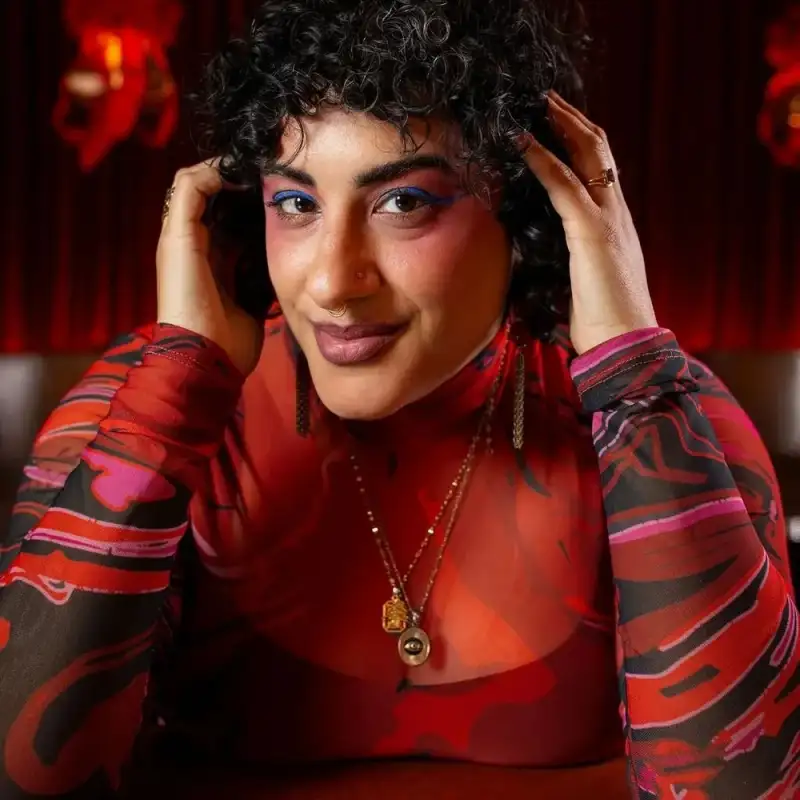
Download MP3Rob Lee: And welcome to the Truth in this art, your source of conversations connecting arts, culture, and community. These are stories that matter, and I am your host, Rob Lee. Accept no substitutes. Today I'm excited to welcome back my next guest, an Arab American photojournalist, commercial photographer, living and working in the Washington, DC area. Her work is representative of DC itself, a confluence of culture and count culture with a focus on heritage, identity, and community. So joining me once again is Faro Sky. Welcome to the Truth in its art.
Farrah Skeiky: Thank you for having me. Glad to be back.
Rob Lee: There is so much for us to catch up on. And I would like to start off with a reset for the listeners who shamefully perhaps didn't go back into the archive, listen to your first conversations a couple years ago.
But you know, we gotta like do that reset. So can you tell us about yourself, who you are, what you do, and what's important for the listeners to know about you. I just want to set the stage there. Floor is yours. Yeah.
Farrah Skeiky: Well, my name is Farres Feki. I am a DC area-based photographic artist. Uh I've been photographer for about 15 years. Um I've been excited about photography way longer than that, but about 15 years ago is when I started taking myself seriously as a photographer. Um it's important to like know when to take yourself seriously and when to have fun, and I feel like the you get the best results when you can find the right balance between the two. Uh, but I focus quite a bit on music and underground scenes that includes music subcultures like hardcore punk, that includes things like the alternative drag scene and DC.
Um my commercial work is more in restaurants and hospitality. Uh for the past couple years I've been working on uh long-term project about grief. So we're getting real real heavy, but really connected to our fellow human while we're doing that. Um everything I do is in pursuit of connection.
Uh I especially since COVID lockdown era, I think we're already getting pretty disconnected from each other, but I think that made some lasting changes, not for the better, uh, with how we relate to each other and even just how we relate to ourselves. So my goal is always just like I know it's a little cliche, but to uh um I want a photo to be a mirror but also a window. Or sometimes you need a mirror and sometimes you need a window. And I I think we can connect better with ourselves than each uh uh then we it is easier to connect better with each other, and we're sorely missing that. We live in a society, etc.
Rob Lee: Thank you. It's um it's funny. It's in that I had like a second question right after it, and then as soon as you went to the description, I was like, oh, she's gonna answer the second question already. I was like, hell yeah.
Farrah Skeiky: It's all connected. It's all connected.
Rob Lee: This is the talent that's there. This is the talent that's there. This is what I like it. When folks are sharing their story without any weird expectations and boundaries, it's just like, yes, and here's the gold. Here's more of the gold.
Farrah Skeiky: Try my best. I mean, you can call it talent, I call it a tangent, but you know, tomato tomato. Thank you for upgrading it.
Rob Lee: Tomatoes are in season right now as we're recording, I think, or they're wrapping up the season.
Farrah Skeiky: They are they're wrapping up the season. It was kind of disappointing last year's tomato season, so I I this year's been a little better. Yeah. It's been marginally better.
Rob Lee: See, I have tangents as well. Um so in in connection the mirror window. So how often in looking at you you said uh like 15 plus years um at this juncture. What or how often are you going back, sort of reviewing earlier work, earlier, like just earlier images that you've taken, earlier projects that you've worked on, and like learning from it, like going back, perhaps, because right now I think there's a lot of stuff that has happened, and we see a lot of stuff that's like coming in. We're consuming a lot of different things, and I think that that has an affect, you know, or effect possibly to the negative of like, all right, this is everyone's doing the same thing.
It's some homogenistic. I'd rather go back into my old stuff just to make sure I'm kind of like staying true to why I was doing what I was doing or learning perhaps something from it. Just recently, I was going back into old questions, and it's like, hey, this is when it was a bit simpler versus that art jargon talk that somehow slides in the conversations. So talk about maybe reviewing some of your earlier work and perhaps what you're learning from maybe going back and checking it out.
Farrah Skeiky: Um I can definitely say I don't look at my earlier work as often as I could. I was gonna say should, but I I try to avoid that word because it doesn't really serve anybody. Your idea of what you should or shouldn't be doing usually has everything to do with what someone else was doing.
Um and it's all pretty arbitrary. So uh I probably could look back on my earlier work a little more often. I put out a photo book, my work in the DC punk scene in 2020, so that was about five years of photography that went into that book. Um I was photographing, you know, my local scene. I I didn't have the intention of making a book, but it it just kind of worked out.
I had enough materials. So that was, you know, a significant, you know, time where I was reviewing earlier work to try to maybe if I can if I have to choose one photo of a band to include in this book. What's the one photo of this band? Um other instances will be things like applying to competitions, right? The Abbey Road uh music photography competition is going on right now. Um I made it into the short list round uh in the special category they had, it was like 50 years of punk. And I remember I'm like, I have uh specifically I I know I have photos that I feel like would go hard for this category for sure. Um I'm also remembering when I'm looking at this old work, how hard I was on myself at the time.
And I can remember how often I was comparing myself to my peers. And I'm really sad because a lot of this is really great work. Um it it's kind of a bummer that it took this much time for me to have a little more understanding um of my past self and where I was at at the time.
But I look back at some of this work, I'm like, wow, this these are really great photos, and I really just kind of skimmed over them. Um today, you know, punk icon um Chicana Punk icon, Alice Fag in LA, you know, put an announcement on her Instagram that you know her Alice Bag band has two more shows left, and then they're calling it. And I was really surprised that she used a photo, a portrait I took of her after a show in 2018 in DC. And you know, I love this photo. I think it lives on like the portrait page of my website, my portfolio, but I haven't looked at it in ages, and I was, you know, it was pleasantly surprised to see that that's the photo she chose to kind of make this announcement. And I've always loved it because it's you know, I I I made it in a moment where it wasn't like the ideal time to take a portrait of somebody's after the show. She's definitely sweaty, her hair is a little limper, her clothes are sticking to her for sure.
And she looks a little tired, but like satisfied. And I and I I like the photo, but I'm like, man, like I I really wait for like anniversaries um of specific events to revisit a gig. Like, oh, I remember that show was like, you know, a few years ago on Fourth of July, like maybe that's a good like TBT to post or things like that. Um sometimes I I will revisit when I'm photographing somebody, a band, a person, et cetera, that I have photographed before. And especially when it's, you know, for example, I'm part of a drag and performance art house in DC called House of Bambi. Um, I've been photographing these folks all for a few years now, and being able to look at, you know, some of the recurring events we have on an annual basis, looking back and like, wow, the first time I photographed the House Awards, you know, this is what my photos looks like, and I really liked them and you know, or oh I've seen how much I've grown since the first time I photographed, you know, maybe a certain band in like 2010.
I just got to photograph Metric. They've been an all-time favorite band since I was uh like 13. I remember hearing their song Combat Baby on the radio.
Um shout out to KXP in Seattle for giving me cool music to listen to. But um the last time I photographed them was at like Strathmore and 20 13, 14, somewhere along those lines of like looking at these photos, like I have improved a lot. Like I can see where I've grown as a photographer dealing with low light settings, limited time in the pit, things like that. So um I could probably do with revisiting not just at the urgency of like social media, because that's where a lot of it comes from is social media, specific anniversaries, filling out this IG posting schedule, which I'm horrible at.
I have every good intention and not a lot of fall through there. Um but you know, your question is a good uh like nudge to not just wait for uh a social media need or a competition to take a look at the word.
Rob Lee: But I but I and thank you. I think that was a really well thought. Well, obviously, I mean, just even the so since we've been talking, I'm like, oh, that's a great answer. I was not expecting that answer to that.
That's amazing. Um yeah, seeing sort of what the growth is, um uh looking back, and I think it's uh sort of you you touched on um House of Bambi a bit, so I've definitely wanna wanna want to talk about that and sort of maybe the theme of this next question. Um, You know, so it's one thing that comes to mind. Um I've observed good interviews, I've observed actually let me go let me say one thing real quick before I go into that. Um in going back and and sort of seeing perhaps when something is being used. Um a lot of times this podcast is like the first time someone's actually talked about their work and it had like it's an archive and this is something that lives in when someone looks up, all right.
What does this person say about their work? They're probably gonna find my podcast. I'm like, oh I hope I asked them good questions.
I hope the editing was good. And it just so happens, like the other day, someone I interviewed back in I think 2020, maybe early 2021. That's years removed, was like, hey man, someone just checked out my interview and they were in the UK and they they heard about me through your podcast. And I was like, hell yeah. I I hope it was good. Yeah.
Farrah Skeiky: Yeah, absolutely. It's a satisfying moment for sure.
Rob Lee: Oh, 100%. And you know, it's definitely one of those things, especially in going back and revisiting. I maybe it's in this sort of way, like once I'm done with it, I I'll go back and I'll listen to some of them, but I don't like spend too much time with them after I've already done them. It's just like because I'm still in it. It's like I remember what I asked, I remember the conversation very well, and I remember that that moment is a little coogler in that of I don't know if I need to revisit that again, guys.
I think we're all set, but I want to continue the conversation, I suppose. So I I've observed like good interviews where guests feels like where it feels like natural and a guest personality shines through. And then there's others while they're pretty informative and interesting, but it's just like, uh I know that this is the real person under this sort of well-constructed conversation. And when you're capturing a subject, you're capturing a scene.
I'm really curious about that, because I I think it's these conversations are snapshot in time, audibly speaking. So how do you you know create space to capture the subject, capture the environment, capture the sort of flow of things? Like, how do you keep that? How do you make sure that that comes through, like in in the photography that you're doing?
Farrah Skeiky: Well, there's kind of two parts of it. There's the documentation piece, and then there's the portraiture piece. The documentation piece, I really try not to go into a space to make preconceived notions of what I think is going to happen. Because I found that that's always to my detriment when I do. Um and it actually goes for both, whether I'm making a portrait for this grief practice project I'm working on, which I can share more about, or when I'm where I'm documenting an event, like a drag performance or concert or a anything. Um yeah, you generally want to know what you're walking into, but when it's something that can be really personal, like why somebody chose the song for the number they're performing, or what they might be wearing, or what their motivations might be. Like um, I also have the best results when I say as open as possible and just try to listen. Try to really listen to what that person is is saying and doing and what they're conveying through again, the song toys, the outfits, the tone, everything. Um be open to it because I think when you come in with your own narrative, you that can that can kind of um uh accidentally supersede what the person is trying to tell you. Um in a way, it's like you know, being a good observer, being a good listener, um, and being flexible.
Yeah. Um I think one of the one of the detriments of social media, while I think it has many pros, like one of the cons to me is that I think we can construct an idea in our head of what it is we want to be the final result for when we post, you know. Um, Oh, I can't wait to have a photo like that to share. Um letting go of that is one of the best things you can do for yourself. Not worrying about what the grid looks like, not worrying, not building up an image in your head, like and I do know the satisfaction of, you know, I just had some I was just working with my friend Grace, who's also part of part of the House of Bambi in my studio yesterday. And there are a few specific, you know, ideas I had for photo that I I wanted to try to get, and you know, we got one of them, and it was great. Like so satisfying when the image in your head um actually comes to life.
It's really satisfying. And and um it felt really aligned and really good with the you know story we're trying to sell, tell, sorry, not sell. But also, you know, my favorite images for the session were the ones that just came to us in the moment. You know, I watched how she was moving her arms in this sort of way. I was like, hold on, can we do that again?
I want to try something with the um longer exposure and let's try to do something. And and um didn't expect it at all. And I'm happy I was open to it, you know, because we had just stopped it when I got the shot, like the idea I had in my head, we wouldn't have gotten to that really beautiful image that I think of like the narrative you created in your head. And I think we do it a lot. I think we do it with um all kinds of things that we engage with. I think we do it with restaurants we're excited to go to. I think we do it with you know, a date that we're going on, you know, you go on one really good date, and you're like, you know, I know some people I've been guilty of this in the past, like writing your whole story already before you even get there, you know.
It's really easy to kind of uh like therapy term, like forecast what it's gonna be, what you think it might look like. But um yeah, staying open and staying flexible is really the the one of my biggest strengths, I would say. Uh being able to pivot and not looking at that pivot as some kind of like personal shortcoming or failure, like oh, you didn't get the shot you wanted to get. If you get hung up over that, you're gonna miss out on what is happening. You're gonna miss out on like what this person is trying to tell you. Um don't miss out on that.
Rob Lee: Yeah, that that that makes a lot of sense. The the flexibility, I I think of the improvisational nature of some of these conversations at times. Like, hey, I'm gonna go in there, I gotta ask this, this, and this.
And if I don't get that, then I fell short of it. And it's just like I need them to talk about this. And I find that some of the best conversations I've had when it just goes into free jazz. I'm like, oh, okay, yeah, yeah, you got it. Yeah, I wasn't even expecting you to bring that up. Or I I remember super early on in the podcast story was a chef that I'm you know pretty tight with. Um he's a good friend of mine. This is very early, and it turned out he was a fan of the other podcast that I did that I was like, oh, tell me more. And he's like, Yeah, you know, back when I was doing drugs, I was like, I had no idea of any of this. And he just starts floating out there these sort of personal things, and I, you know, had this sort of this this notion of like, all right, don't you know, be don't use the personal use their sort of authenticity in them sharing their story, but also let them cook to the degree in which they they want to cook figuratively and literally. And um and I just felt like I got much more out of it, and that the I guess description that folks have said about this show and things that I've been involved with that it's like hanging out with the homie because it's it's natural and it feels like it's a flow, not this is scripted, we need to stick to this. That wasn't 58 minutes and 59 seconds.
Farrah Skeiky: Yeah, exactly. I mean, I've I've I enjoy being in the role of interviewer, moderator, uh things like that. I've like done that on panel conversations or been in conversation with other photographers or um things like that.
I really enjoy it. But um the first time I went in doing something like that, I had a list of questions, and I feel like it was probably pretty boring for me to like they they'd give me a great answer, but instead of hey, tell me more about that, or oh, I didn't expect that. Like, how did you find X or whatever? I instead was just going down my list of questions. And um, I you know, when I do that now, maybe I have a couple of questions that I like I'm just really curious, like I really want to know this, or I think this is really important to touch on. But the rest of it is just like I just have a couple notes, and I just kind of want to see where the conversation goes, and the the questions are more there as like insurance in case the conversation doesn't flow as easily in case it's a little stiff, which I I haven't really had to do. But I think the best interviews are conversations.
I think it is talking to the homies like my favorite podcasts. I don't even know what minute mark they get into the actual meat and potatoes of the conversation. Um and that's fine with me because I do enjoy hearing them chat. I do enjoy the banter at the beginning of the episode. Um I do end to also enjoy when they're like getting down to business right away, and like, that's great, good for you.
Uh this one is the banter is important. You learn a lot about people in the unscripted and unexpected moments. So it's the same thing, it's just being um just being open. So I have a lot of respect for people who are like tenacious and like a singular vision that they have and they can see what they craft. I'm like, that's really cool, but um I I don't know, it's just not me. I feel like I'm the meme of like, you know, when you when you try to be uh uh when you when you wanted to be cool and mysterious for your ADHD had other plans for you at the party. Like I feel like I'm that very much so. So it's and I think that shows up in my approach.
Rob Lee: That's funny. that's funny.
Farrah Skeiky: I want to be cool, and I just can't, I just can't. I have I have too many Gemini placements.
Speaker 3: Oh, that's right. You are oh okay, yep.
Farrah Skeiky: So he's like, Well, the interview is done. No, no, it's we gotta leave this lady crazy.
Rob Lee: No, it it it tracks, it tracks the Gemini placements and all of that inner that that air sign energy is there as a McQuarius. We we relate to our people, we relate to our fellows.
Air signs and such. So you you touched on it um uh a couple of times, so let's let's let's actually pivot into like the the project you're working. You know, you touched on this this grief project. Can you talk tell us more about that and sort of what brought it about and you know what you're willing to share about it, just like this is new, and this is me improvising, like we were just talking about.
Farrah Skeiky: Great, awesome. Yeah, yeah. I I this is this has kind of been a um a journey for me and like deciding how close how close mysterious I want to be, how close do I want to hold my cards to my chest. Um and, uh, I'm at the point now where I'm like, I think I'm ready to start sharing a little bit more about it.
Um let's go back to I don't know, June, July 2020. Uh I'm turning 30. I am not turning 30 uh in Mexico City with my friends, debt free.
I am turning 30 in June of 2020, uh, with a broken foot and a sprained ankle and a boot on my foot, uh living in a friend's basement apartment with no job because COVID locked up. Um And life is very different, and I'm trying to keep myself sane by being all out of Zooms. I was in there, I was in those Zooms. I had the zoomies, you might say, but I was just like bored and I was trying my best and as limited in mobility.
So I couldn't even be like outside when people protesting. I have a boot on my foot, I had crutches, like I could not walk and I couldn't even walk my dog. He was on like a month-long staycation with his friend because I, you know, get babysat by a friend because I couldn't even walk my dog.
It really was really a difficult time and not great for my mental health. So to kind of keep saying I was in, you know, all of these Zooms for like a yoga zoom or let's do like a writing session zoom or something. And people, I had never heard people say the word practice so much in my life. You know, people are introducing their art practice, their therapy practice, their writing practice, their artistic practice.
And um, I I understand. Are we talking about, you know, like having very specific formal fancy art words that we use for things? And that was not a word that I used because I wasn't considering myself to be an artist. I was like, I am a photographer, and I feel like there's a difference between a photographer and a photographic artist.
Uh, we can get into that another day. I think even the work that I do with the commercial still has artistic merit to it and artistic knowledge to it. But for me, there's a difference between, you know, like creating artful commercial work or documentation and you know, like very intentionally like creating a scene that you're not just documenting. Um and I was so I'm hearing everybody talk about practicing this, practicing that, and very sarcastically to myself, as I'm often very sarcastic. So like the only thing I've been practicing lately is grief.
There's a lot of grief. There is um our lives change very rapidly. Uh things that we came to know as like stable entities were no longer stable. Um certain industries were just completely fucked. Uh another way to say, I'm sure there's a better way to say, but just that's that's it. It was just very different. You know, I had a really what I thought was a really stable job as a creative director at a hotel in DC, and you know, it was one of the first things they needed to let go of was that, you know, like what was a creative reactor going to do during it's COVID outside.
Like we're not having events, we're not, you know, we it it wasn't seen as a priority. And I took a certain extent, I understood um that they maybe wanted to focus more on the operational side of things. Um but there was a lot of grieved. There was grief and just like the fear of being close to each other and people grieving just a physical touch, closeness to their people. Um, a lot of people reevaluating friendships, relationships, parts of their life, life decisions during that time, um, were grieving loss of life with COVID and related things, um, leaving loss of life and this kind of like peak awareness and engagement with Black Lives Matter, um, and completely unjust police killings in this country. So there's like a lot of different kinds of grief. So there's grief on an individual level, grief on a community level, grief on a national level, grief on a global level. Um, and I kept saying this, kind of mulling this over in my brain and grief practice. This is something.
I think this is something, but I don't quite know what it is. And I also, as I started to see people's work that they made during COVID emerge and kind of be, you know, even if they didn't want it to be, it would be slapped at this label of COVID project. And I was like, no, no, no. I think this is I think this is bigger than that, so I'm gonna wait.
So I started kind of putting to the get together the idea for this in early 2024. Was that the uh um outwind portrait competition uh to uh the National Portrait Gallery was an ass for that year. This is uh for those unfamiliar, it's like the biggest portrait or competition in the country. It is for any medium of portraiture, um, including installation art, photography, uh, sculpture, anything that you would consider a portrait of sorts.
Um that's open to the whole country and US territories, and it's every three years. Um and the finalists are you know in the exhibition in the Smithsonian Portrait Gallery, which is pretty amazing. So I saw this devline, I said, you know what, I really want to get started on this project. And even if it doesn't go anywhere, even if like I want I want to have a photo to submit, I have an idea for an image. And even if it doesn't go anywhere if I don't make it to the next round or anything like that, at least it would have started the project. Um and the in the first image that I make actually made it to the semifinalist round. Um the immigrant parent in my head said, only top two percent, why not top one percent?
Um, but that was kind of the the incentive I needed to compete going. Um and the image I made was of um a few of my friends were all Palestinian folks involved in like the punk scene in the DMV area. Um my friend Maha Shani, who sings in the band No Man, who is an iconic DC punk photographer, like old photos of minor threat, bad brains, stuff like that, like DC OG for sure. If you've seen photos of those bands, he probably took them and he's still around photographing all the time.
Um, and then my friend Lila, who makes uh you know leather and kink accessories out of Baltimore uh through Leather Shop, uh also just an icon. So, you know, these are three Palestinian folks who are all involved in another community and just happy to be brought together because of you know, engaging in punk, engaging in activism in their communities. Um and it was kind of a take on the family photo uh kind of a mirror to families in uh Gaza, like gender roles and Gaza, because this is about four months into the genocide at that point. So um it was a pretty heavy image. Uh I'm looking at it right now, and I'm really proud of it. That was kind of the kick in the pants, but at the same time, you know, grieving, actively grieving, my family is Lebanese.
We are very intimately familiar um with this dynamic in that part of the world. Um and uh I took a little break, and strangely enough, the thing that brought me back to the project was uh being diagnosed with breast cancer in um uh oh my gosh, October 2024, yeah, October 2024. So um I underwent a bilateral mastectomy in February 2025 and I've been cancer free ever since. But um it's really the first time I've done self-portra of myself that wasn't like a headshot. Um and I didn't know why I felt like it was important at the time to document myself during the healing process and like the initial healing period like on paper is like four to six weeks. But um I photographed myself like once a week for that first month in different ways, and um I kind of said like I don't I don't really know why this setup is calling to me. I don't know why using this little round circular mirror is calling to me. I don't know why this particular composition is calling to me, whatever it case may be. Um but it I feel like it means something.
And even if I never display these photos, I think I could get something out of this. And it was a time I felt really disconnected from my body. Um, you know, it's very grateful to be cancer free of us grieving my body as grieving in a relationship with like uh to be completely candid, if you had asked me if I could wave a magic wand and change one part of my body, it was not gonna be that. So like I didn't really want to do it, you know.
Um, but I you know, I have family history of breast cancer and it's like, all right, I guess this is this is the smartest way to go. And you know, I was very grateful that I caught it at an extremely early stage. I didn't even know stage zero was a thing. Um stage zero means it is cancer, but it hasn't started spreading yet. And they caught it right before it started spreading.
So, you know, any later it would have been stage one and it would have started spreading. So um that's when I was like, all right, I really need to get back into this project because I I am I am seeing how powerful it has been to process my grief and my healing process. Um and it was just kind of reminder that like I if I'm getting something out of this and it's just me, like I really hope other people can. So, you know, um basically the processes, I work with folks. I we start off with a conversation about their grief. Um, you know, it's not it's not therapy.
I disclose that at the top uh immediately. Um, but I do hope that it can be cathartic for the person who I'm working with to even you know, the the experience of of talking about it and also the experience of creating an image together. I hope I I'm hoping for some catharsis and again for connection. Um a lot of us really disconnected from our grief.
There's not a lot of space for it, you know. You you there's an idea of like, oh, I should be over. And um and and we're not really encouraged societally to really engage with our grief and in like an outward way and share, but I think we are still really collectively grieving so many different things again in a in an in an individual and family level level and a community level, a national level and and global level too. So um I think it's necessary and and I want us as people to be connected to ourselves again so that we can also get that connection um with each other. Um so it's it's heavy, but I think it also just has the potential to um bring folks a bit closer together, and and I feel like that hasn't quite gone back to normal since since COVID lockdown era. So that's that's the goal here is just connection. It's all in pursuit of uh of connection.
Rob Lee: Thank you. And thank you for being um so so candid about it. Thank you for being just sharing like that piece, and thank you for engaging in sort of that work because the other piece of it, I think, and what I've been aware of. I uh uh the last three years I've um been teaching a podcasting class at a college here in Baltimore. And um the the first the first year um, you know, I was uh talking with my students about the just the process of being vulnerable and sharing and being open in a conversational happy, just apply my style, right? And um and what I referenced um was a conversation I had literally in a podcast with um a actor who did a TED talk about how they process grief.
It was through dance. And it's a topic that we well, not topic, an experience that we all share different versions of and um you know, I in this year, just to be completely um transparent. It's been uh it's been not good. And you know, just folks have passed uh that are close to me unexpectedly and in succession. Sorry to hear that. Yeah. And one of the ways in doing it and trying to figure out what is the roadmap, what is the means to sort of cope and all of that different stuff.
It's it's I just think it's a thing that's not discussed or not engaged with enough to even have some sort of some sort of like pathway, some sort of roadmap um because that's what we're looking at, and that's what we're told to approach, and we gotta move on with the next stage, and you don't have time to grieve, you gotta make the donuts or whatever the donut is. And you know, I've been able to can kind of compartmentalize continually do my thing, but having um those those periods of that time to spend with it that uh practice of engaging and writing and trying to document where I'm at at a given time, that's been very helpful, literally as from that catharsis as you were describing to to kind of go through a part and go through that journey and not just pocket it away. I think that that's been super helpful. So having it documented and having that as a shared thing. Um and having people like like check in, you know, with it in having someone who's like, hey, I've encountered this and this is all of these different things that we've all experienced in this sort of monoculture sort of way. We should talk about this, right? You wanna, you know, have a conversation, and maybe we we document it in this way. Um I think that that's um something that is missed, and I'm glad to hear that you were were doing that, especially with the experiences that that you've had um over the last few years.
Farrah Skeiky: Yeah, absolutely. And I it is another instance where you need to be open because you know, some of the people photographing are friends or acquaintances, and um you know, I remember that one of the first people I I talked to after kind of my hiatus, uh was my friend who's legendary drag king, King Molasses. Um I came I I was thinking like, oh, I bet they're gonna talk about this topic based on what I know about them.
Wrong, completely wrong, opposite. Like and I remember the first five or ten minutes after they were getting into things, I I I realized I was really getting stuck on like, but but they're not gonna talk about that thing because I I I was trying to come up with some really cool ideas for that thing. No. And I really would have betrayed them if I had just tried to cling to this idea that I have, and that's not what they were grieving. That's not what they wanted to talk about, you know. That that's that's not the point, you know. Again, the point isn't for me to make this like perfect image I I see in my brain. And the the point is to help this person have it gives us a person the opportunity to process their grief um through a photograph, like you know, honor their grief in a photograph. And sometimes that looks like a portrait, sometimes it looks like a still life. I've got a few still lifes that we're working on as well because we kind of turn physical items into manifestations and reviews, they turn into symbols, talis and you know, they you don't it's unintentional, and sometimes it is intentional, it happens um inevitably.
Um I think a lot of us have that random thing that we'll like hold on to for what some reason you're like you're not quite sure why it felt important to hold on to this random thing in your home, but but you did and it means something to you and it's attached to a specific time or moment or energy or something, but um I'm I'm really grateful to get to do this work. Um I've been doing a lot of it right now at um Hamiltonian artists in DCM studio resident right now, but that ends at the end of of September. It's been really cool to like have a studio for the first time. It's just an option, like it doesn't all happen here, and and this work is gonna continue after outside of that um uh the studio residency, you know, like well past this September, this is a long-term project. And um, I think I said this earlier, but if I didn't, you know, and goal is a photo show book, and I can see it just continuing for a while because uh we got a lot of shit to process and uh we we were missing a lot of connections. So uh I'm I'm really grateful for anybody who takes the time. Uh and you know, we we've had um had one uh uh the place where my studios they'll do like an open studios event, you know, every quarter or so, get people just the opportunity to come and check out what people are working on. Um and I noticed somebody, you know, like I I noticed a few people on that open studios day a few months ago, like walk by my studio door and kind of peek in and and kind of be like, oh this is kind of heavy, this is kind of sad.
I didn't say anything, but the face kind of said it all. And just catch going. And I I don't judge those folks either because it isn't encouraged, you know. Um if you gotta make donuts, you gotta make the donuts. And and it can be really hard to go and do your job and support your family, support your people and support yourself when everything is more expensive than it's ever been, and things cost money and your energy is you know more limited than it's ever been.
So you you kind of have to you're forced to compartmentalize these things that really do not need to be car compartmentalizing, they need to breathe, they need to be out um to kind of work through them. So um yeah, I I uh really hope that this lands and connects with people. I hope that they feel like their grief has been honored and they feel seen and um the goals is not to make people sad, because you know, this is heavy subject matter at times is is you know maybe really striking and and and um more solemn imagery w once in a while, not all of them, but some of them. Um but I want people to have that feeling of of looking at these photos and and relating to something, like the c you know, the having that moment where you uh you read a line in a book and it gives you language for a feeling you've had but haven't been able to put words to before. Yeah. Like having that moment with a feeling like seeing something going, I got this this I feel connected to this. I don't know why, or or you know, are connected, you know, maybe not quite in the way that this person's experiencing grief, but like that look on their face or the way they're carrying themselves or something like that, or like this colour that's really like blends with me for some reason, and um again, mirror and window. Yeah. We we need we need both, and that's what I'm trying to do.
Rob Lee: Again, thank you, and uh I'll echo that before moving into this this next question. This it's just just this notion of the the folks that I've talked to that I felt comfortable enough to to sharing their stuff that was was happening, sort of being able to be open.
It's like I'm the person with the questions, I'm the interviewer, I do all of this stuff, and I always have an answer or what have you. And really being in a spot and trying to just uh maybe understand things in a in a different way. Um sort of that the notion of giving grief space, giving grief time, honor and grief and and and things of that sort, or even how one defines it because you know I'm I come uh I'm a I'm a 41 year old man and uh the ideas are are goofy of oh you you you don't feel fain, you're never sad and and all of these different things. You know, grieve things and then feeling an intense sort of how do I do this, how do I go about this, what's the right thing to do, and just in a sense learning, I suppose giving that grief uh space to stretch his legs, so I eventually feel bigger than it versus it being contained and carried with me as an anchor in a way. That's what I've tried to learn and what I've tried to impart to my family and friends who are engaged in it in in a very similar fashion in their own way, and perhaps they're not gonna look at it at it in that way and encounter it in that way and actually maybe quote unquote do the work to use another one of those things or have a grief practice, but um, but I think in maybe the way that I've gone about it, I can help them contextualize it that they can find a pathway to sort through and be with their grief.
Um and I think that that's what I try to offer, but at least uh having space to talk about it and acknowledge its existence. I think that's what I'm getting at there. So switching gears a bit from from from grief to which feels a really weird transition, but from grief to sort of DC in some ways, I guess that's a different version of grief. Um so DC has gone through these different cultural shifts, especially since um 2025. I think it's already been sitting there, but since 2025, and for context, and I've said on this podcast a number of times, my birthday is anaugation day. So it's fun.
and you know, uh intentionally, um I so I turned 40 uh 2025, so intentionally I was going down to DC every week at that point just to not make it normal, not make what I was seeing normal and trying to find those glimmers and glimpses of okay, there's still something there. It's a lot of these ops, is what I'll call them. They're ops. Um just just floating there. It's still culture there to still something worth um capturing in how I do my interviews. I do um interviews with guests down there in person intentionally just to capture sort of the real thing. So what what you're doing with the work that you're uh you know, what we're here to discussing in in part, um, you know, capturing like images and capturing scenes and capturing people visually.
How do you approach our top and capturing memories while documenting those ephemeral like DC moments under this sort of current regime and this sort of current shift and where we're at in 2026?
Farrah Skeiky: I I know I'm not the first one to say this. I probably said it before. I wouldn't even be surprised if I said them last time I was sitting in this chair look talking to you. But um, you know, there's there's a Washington and there's a DC, and they're usually different places. And so I feel like I engage with DC and not Washington way more.
Once in a while there's a bit of an overlap, but usually I'm on the DC side of things. And that hasn't stopped through any ops, any administration. There have been attempts. They have been unsuccessful thus far.
Um, I'm very stubborn. The first thing I did when to drake Kendrick beef was underway. I was literally in a bus in the desert in Morocco. And when I got Wi-Fi, I Googled Kendrick Lamar astrological chart and it's a Gemini Sun, Pisces Moon. And I said, Me too, made me too.
So very stubborn and petty and sensitive. And uh it's why you've never seen this in the same place. Um also very appropriate that uh Kendrick's birthday is the day after Tupac's birthday. It makes a lot of sense to me. Um but um I appreciate my capacity to feel very deeply, and I'm very good at making meaning of things, and sometimes there is a lot of meaning there, and sometimes there's not, and you're just overdoing it. So I'm very grateful that I get to work with a lot of people who are doing very meaningful work. I get to document the meaningful work they're doing, I get to document their resilience, um, their stories, their interpretations of what is happening, and sometimes I am just a vessel for communicating that, and just like this is the medium that we are using to communicate that thing.
And I'm very grateful for that. Um I also, you know, like right now, my studio is on U Street. U Street has changed. I remember in my 20s, like, this is where we go out.
This is where we would, you know, this is the Metro station I I would get off at to go have fun with my friends and go out and experience the city. Um, and it's very different. It's very different.
It's very surreal to see, you know, National Guard walking around in this neighborhood at like two o'clock in the afternoon on a Wednesday, where like nothing is happening. Right. They must be very bored.
Uh that is that is the that is all I will say about that because nothing's happening. Um but I love this place, you know. My family moved to to the East Coast in um 22 years ago, and I was bored out of my skull in suburban Montgomery County, and then the more time I started spending in DC, the less I started, you know, the less I I thought like I'm gonna leave this place as soon as I can. Like I'm I really love the city. I really love the people here. Um I love that, you know, uh every single time I meet a new person, like there's a there's a story about DC I haven't heard yet.
Yeah, you just want to just when you thought you've heard it all. Um, you know, I recently worked with uh humanities DC on this project called Hometown DC. It's like um it's been so far like a there's one installation in each ward of the city and all one of each in each eight wards.
Um and I think on the 16th of September they're all gonna be on display at the MLK library downtown. And and I photographed 18 or 19 people like individually portraits, and I think the youngest participant was 21, and the oldest participant was like approaching 80. So just all different walks of life in DC, all different experiences and and just stories, and some people are lifers and some people got came here for college, and it's it's pretty amazing. So I try not to have a set narrative of what the city is in my head. I like I try to allow the city to tell me what it is and what is happening here because again, you know, I think those can be really limiting narratives. Um and I already see that narrative being pushed nationally, you know, people act like there's not I forget how many people live in DC. It's a big number. People act like there's not actual people who live here that have nothing to do with the federal government on a regular basis, and that's very intentional. You know, it's it's it's a very intentional misunderstanding um of what happens in this city, who lives here, and what makes this place special. So um I don't really care to contribute to that. Um things shift, you know.
I've I've I I think especially after the COVID lockdown, you know, like there's still definitely a punk, like you know, punk music happening here, but a lot of folks moved to Baltimore affiliate or Richmond because DC just got too expensive, and a lot of the jobs, like day jobs of pumps would have didn't really work during COVID. Um, you know, you're not walking dogs, people are home to walk their own dogs. You're not, you know, working at a restaurant as a server.
Um the restaurants are all on doing delivery and and uh contactless pickup right now. So um things shifted. Um, and and I love that that you know Baltimore is a little bit more of that center for a little bit.
Shout out to End It. Um, lots of other amazing bands in uh in Baltimore as well, Chroma Fix. Um, I'm spacing on bands right now. Oh my gosh, please forgive me.
I'm sleepy, the Celsius is wearing off. But I think they're gonna change, you know, even things like I haven't really been photographing as many hardcore shows since COVID lockdown, but also there's so many new photographers. I want to see what they have to say. Um people already know what I have to say, what I have to bring. Like I want to see what the new kids are doing. I'm always more interested in what the youth are doing because a lot of what I'm working around it with is youth culture. And I'm not saying you can't enjoy and appreciate it at you know, 36 as I am. Um, but it's different. It's different when you're taking photos of your peers versus you know you're I have a camera taking photos of the kids. Um now that it doesn't have merit, but it's different. It's just different when it's your peers, and um, and that's fine. Um communities change, scenes change, things ebb and flow, that's okay. Um contribute what you can while you're there, and don't get too hung up on what it's gonna mean long term, you know. Um what you do will speak for itself if you focus on um making meaning of every single thing I think you can get in your own way. You can overthink it for sure. Um sometimes just like let yourself experience it for what it is.
Rob Lee: That's good, it's well said. And it's funny, I I had two other sort of follow-up questions with it, but you you hit them. You hit all of them. Again, you're you're an overachiever. And that's that's the thing. Like, you know, I want to be I want to be like, yeah, this is great. This is so amazing, but I like to hear myself talk more, and you took that from me. I apologize. So unfortunate. Um It's my Capricorn placements. Now look, I'm a cusp acquires Capricorn, so that's
Farrah Skeiky: and that's why your pre-interview info sheet looks the way it does, my friend, and nothing but the Capricorns.
Speaker 4: I looked at that and I said, I want to know where that placement is.
Rob Lee: That's great. That's great. So I want to move into um sort of the last portion, last pieces of business here we got, and this is this has just been great. It's it's gone in directions where I wasn't expecting it, but in such a it's gone in really great directions, I think, and it's been a very fruitful conversation. So thank you for being a part of it and helping and allow me to help facilitate it, I suppose.
This is really been you're doing a heavy lifting here. Um so what I want to go into is rapid fire, and then the sage like advice. So rapid fire. Um, so you've been on here before, you know how rapid fire goes, but just as a quick refresher, whatever's the first thing that pops in your head. Um so what is your mantra? And I haven't sense of it. What is your mantra for the rest of 2026?
Farrah Skeiky: I want to know what you think mine is going to be. Might be fucking. I want to hear what you have to say. I mean, yeah, fuck AI, fuck it to death, but that's that's not me, that's Hudson Williams. Maybe good rivalry season two. I'll see you there. Um, I think it's that's the mantra now. Uh uh, you know, I'm looking at like a little post-it note I have next to my studio door, and it says in pursuit of connection, and I think that's the mantra.
Rob Lee: It's good. It's good. And um as as I'm uh prepping up for this next season and writing down the different themes, I just keep coming back to connection, keep coming back to what's real and all of that.
And probably the one for me, it's one that I uh tend to revisit. Um, but it's what's real. I see so much noise, so much fake stuff that's out there. And I'm like, I don't know if that's real.
I'm gonna look into that a little bit deeper. It's like it's not. Uh so gotta ask you this as gauche, but what is a recent image that you just can't stop thinking about? It could be you know, uh portrait that that you take, or something that you've seen, or something like, wow, that's really strike. That's really striking, it really works. But what's an image that you can't stop thinking about?
Farrah Skeiky: Um, yeah, I've got I've got one. Actually, it's related to AI. Um my friend uh Jared Torres is one of the finalists in the Outwind portrait competition. Um I believe he placed in the top three, I believe he was one of the prize winners. The the image he has in there is beautiful portrait. Um and I feel horrible.
I've forgotten the name of the of the subject, but I I believe the title is misidentified by AI as a portrait of a a a uh um a man in black man who was misidentified by AI and was uh accused of a crime he didn't commit. Wow. Um and if you if you look up Jared's name in Outwin, I'm sure you'll find it. Um but it's it's a beautiful image and it is really striking. It's a little bit haunting as well. Um and I think it's it's quite the opposite of I it's an extremely human image. And I I when I see it, I'm like, that's why it's top three.
This is this is it. So um I I went to that exhibition months ago, and I'm still it's it's still sticking with me as I see these headlines about AI and the troubles of bringing to people's lives in variety of ways. I keep going back to that image. And it's really just the antithesis of what I see AI is standing for. Yeah.
Rob Lee: Um I'll look this up. This is this is good. And um the last one I got is a little bit lighter. Um the last rapid fire one. Uh so uh commercial work, I want to touch on that a little bit in this next question. And you know, in you know, food photography, culinary photography.
Have you gleamed anything from sort of like taking these images, get capturing these images, and it's like I'm gonna apply that plating technique to something I'm gonna make, or any different sort of things that you've picked up for maybe how something is presented that you apply to maybe meals that you're making. Absolutely.
Farrah Skeiky: I mean, I I'm a firm believer of like it is worth it to give take a few extra minutes or seconds to make something nice for yourself if you have the time. Um I'm uh you know, my my partner and I are definitely meal prep people. We both usually generally prep our breakfasts and lunch at the beginning of the week, and dinner is a little more on the fly, but especially like weekend mornings in the house, like you know, trying to make sure we have like a hot breakfast that isn't just coming out of the Tupperware, uh at least on the weekends, and um I love painting it really nice, you know. I'm gonna and uh in a Lebanese household, and you know, you don't just put the hummus on the plate, you create a little like divot for the oil, you put some like chickpeas on top, maybe somec, uh maybe you cut a few sprays of parsley to make it look pretty, use the fork to make a certain imprint or things like that. You know, you you're not just throwing it on a plate.
You the presentation is it's it's part of the love. And um, you know, I I I am over here looking at my uh macros like a dork, uh looking at my protein and my fiber intake and trying to hit those numbers for sure. And um somebody on the internet was like, yeah, when you're eating healthy, sometimes it just looks like some of you would feed your dog, and yes, guilty, unfortunately. But uh, as a person who enjoys good food, it doesn't have to be fancy food, it doesn't need bougie food.
I I love that too, don't get me wrong. I absolutely do a good place in my heart for you know, like a very fancy tasting menu kind of vibe or a omakase kind of thing, right? Um but I think there's a lot of kindness you can do to yourself to just like take a few extra minutes to make something look nice.
Yeah, why not? You know, like if uh if you're not wasting food to do it, I I think it's worth it to just like do I I see it as doing it yourself a kindness, like reminding yourself like you're worth the extra couple minutes to, you know, um I don't know, if you're having like some oatmeal or something, like you know, make think about that tumbler photo you saw of that oatmeal or that parfait one time, like make those blueberries and it look nice. You're worth it.
Just give two seconds look at something pretty, even if it's just how you plated up your oatmeal for the day, even if it's you know, how you arrange something on the plate, like do something nice for yourself. Why not? We are all moving very quickly, and a lot of things are very surface level. I can tell you how many times I plate something up for myself in like kind of like a little bit of a nice way, maybe I take an extra five minutes and and nobody sees it but me or maybe my partner, you know, but that's fine, it doesn't have to be for anybody else, it's just for for you. And if it's just oatmeal, that's fine. Do it, you're worth it. Yeah.
Rob Lee: That that actually might be the mantra right there. Um the yeah, it it it it gives me that context where my my partner and I will do the we'll do a fet at the end of the year, and we try to do the entertaining and all of that.
We just did one where we invited my dad and brother over and we did a bushel of crabs, and she made strawberry shortcake from scratch and she overdid it. I was like, I've got nothing to contribute. I look like a noob. She's like, you can go get the crabs. I was like, yes, ma'am, let's I I got you.
She's like, go, go, that's man stuff. Get this bag of crabs and whatever. So I float over there and got the crabs and we turned it into like a presentation and we had the mallets and we made it seem like it was something that's experiential, right? And but when we do the holiday fet, which is her thing, it's like a week or so before Christmas. And the reason I had to be aware of it, I would always do the charcuterie board. And it's always some really out of pocket, you know, spending a hundred and fifty dollars on cheese. That's just more.
Speaker 4: Well, you don't have to do that, go to all the we're bougier than that.
Rob Lee: But yes.
Speaker 4: I'm sorry, I'm not. We're super bougie. That's the preview section is very nice. The cheese selection is very good. I I hear you though. Like I'm worth it. I guess you're not going to be able to do that. Exactly.
Rob Lee: But but in it, the reason I I pay so much attention to it because I'll go there and I'm cutting and I'm doing all of the different stuff. It's like, yeah, I got these really good Spanish almonds and I got some grapes and I got this, and I and we get the um the what is it, the sultano oranges with the stem on there from like what and so it's all of that segments on air, and our guests will come there, they're taking pictures.
They're like, who put the charcuterie to board together? So it couldn't have been a robbed. And I was like, it was me. It was, you know, the big wave.
They're like, oh, well. Of course. So yeah, it's um, but that's that's just the importance of it, and it just makes for a just a good experience.
And those people are seeing it, but I'm really doing it because I think it's cool to look at something visually arresting and then enjoying it. So that's you know. Absolutely.
Speaker 4: I mean, I and I and you know, when you go to a a a fancy restaurant, or it doesn't have to be fancy, but you just see somebody who's gonna get a restaurant that feels like they took an extra step, like, you know, you you could you feel oh wow, they the these people care into what they do.
They're putting a lot of care into what they're doing. Why not do that for yourself? Why don't that for a person you love or your friends who are coming over? Like making it nice is fun. Yeah. Like agonizing over a silly little detail when you've had a really you maybe you've had a tough week, or maybe the person from here has a tough week, and they guess look at something pretty for a few seconds, like have a little bit of beauty of where they didn't expect it. Like, why not? I love that. You get into doing like the pepperoni roses and stuff like that.
Rob Lee: Not quite there, but you're giving me an eye, you give me ideas. You give me ideas for the future. Yeah, come and say, Pepperoni.
Speaker 4: We don't do that in this in the small household, but we do but we will do with other ingredients.
Rob Lee: All right. So here's the last thing I got, and this is the sage advice question, and it's in the and I think I have a direction for, but it's the sage advice question is very quick. Um So in this sort of state, and we we've been kind of touching around it.
How do you build and maintain trust in sort of your work and visual storytelling over time, especially with perfectionism? Oh, that's AI. It has to be.
It's so great. It has to be yeah, yeah, it has to be fake, or fast deadlines, or just folks not, I think sort of, I guess what's being rewarded and what's being pushed is not that you know, spending time with as we're talking about with that great visual presentation around food, but folks aren't spending time with it, they're not being timely. There's AI, there's this notion of perfectionism, it's this churning, this just rush to get things out there.
Like all of that stuff, I think is noise and it gets in the way. What advice, I guess, would you share with someone with the listener who's trying to do something, whether it be visual, whether it be photography, if you were talking about the sort of young folks that are engaged in it. Like, what would you say amidst all of these different things that's noise on a surface and tangential to it?
Farrah Skeiky: Hmm. Most of the urgency you're feeling is not real, is manufactured, and a lot of it is for the sake of content. Um having a long-term project I started working on in 2024 and then returned to you in 2025, and I'm returned
Speaker 4: to it in 2026, and probably won't see the light of day until 2027. Um And it's been very gradual. It's been a really good reminder that there isn't a timeline for this. Uh the work the work is going to take the time that it takes. And doing making that project for yourself where you can take as much time as you want. People don't even know it exists yet.
So for maybe the people you're photographing, it is delicious. It is great, and it really has helped me push back against that urgency. Um if your work is doing what you want it to do, it will stand the test of time. It will still hit if you share
Farrah Skeiky: it years later, months later, days later, whatever. Um, it's kind of competitive with other photographers, you know, uh making like documenting the like parkour funk in DC uh when I was starting, and I'm you know going home and editing immediately, so I could post first thing in the morning, and uh, I take my time a little bit more now. Um it's one thing you're getting hired by an artist, the publication, things like that.
Yeah, there's deadlines, they've got they've got a schedule of schedule, things like that, sure. But um, you know, especially like during the first at least the first year of the the genocide and Postline, I just like I was photographing concerts, but it just didn't feel like why am I sharing this right now? Like, I don't want to share this right now.
It feels really gauche, you know, and um being a dread the concert, it was a nice little reprieve, but I'm I'm really grieving, I'm really feeling it right now. Um, some of those photos I'm just posting now. I'm just now posting them, like two years later. I posted photos like a crumb concert two years later. Um, you know, the uh Laura Lee just followed me on Instagram from it and they shared it. Like it was really cool to see, like, oh wow, like this person, I photographed this moment of them on stage like almost two years ago in DC, and they appreciate it right now. It doesn't matter if it's two years old, you know. It's it's if if your work if what you're putting out there is like really it, it is really that world, it will hit no matter when you share it.
Um separate that the social media schedule from it, separate the urgency, ask yourself where is this urgency coming from? Why, why do I why who is lighting this fire under my ass? You know, light the fire under your ass to create. But when it comes to just creating for the sake of putting something out there, I don't I don't think it's worth it.
I think it creates a lot of stress, a lot of overthink, and you get detached from the work, you get detached from like why you want to do it in the first place. Um the way Instagram is going, Mark Zuckerberg. Uh I this decide eyes are very strong over here. Um I don't know, imagine one day that shit was gone. Yeah. Is your work on a stand on its own? Where you still feel the same way about work you made just for the sake of posting and content, you know. I I think there's a lot of really beautiful things about social media and the things that it's it's it's brought to our lives, the connection it has the potential to create.
It's kind of discoveries sometimes. Um but uh working on working on um a body of work that the goal is a show in a physical gallery, the goal is a book. I want that shit to hit. I want it to be the best it can be. And I'm I'm not trying to rush it.
Speaker 4: It'll just gonna take the time that it takes, and sometimes you gotta let it come to you, especially when you're working on feelings that develop, like grief. It's not static. It takes time. So give yourself the time. Give yourself the time. Don't rush things. Don't compare yourself to anybody on the 30 under 30 list. Any of that shit. The urgency is manufactured. It's not real. Try your best to push back against it.
Farrah Skeiky: And actually ask yourself like, does that serve what I'm actually trying to make? Like what's at the heart of what I'm trying to make, and do I really need to give a fuck about what Instagram is going to say about it?
Rob Lee: That's a great mic drop right there, my friend. Thank you so much for being a part. Um last things. Um tell folks where to follow you. Website, social media, anything you want them to just check out and engage with what you're putting out there. Absolutely.
Farrah Skeiky: You can follow me at Really Farah. It's been my username since Zega. Oh my god. Really far? Yeah, exactly. Exactly. Thank you very much. Um my website is my first name and last name.com. And um send me an email.
I hate DMs, don't DM me and shoot me an email. And uh if you are curious about what I'm working on, I have an email newsletter that I remember maybe four times a year. So I I think there's one coming.
Uh I'm saying it out loud so that I will be accountable to actually put someone one out at some point. Uh when's this coming out? I don't know. I will make sure that there's something coming out shortly after. That's what I have to ask. But something is coming because there's actually a reason that I want to put a new newsletter out, not just for the sake of putting a newsletter out. Very important, as I just said, ignore the urgency. It's not real. Um, but yeah, I'm very on the internet, and uh you can find me there.
Rob Lee: And there you have it, folks. I'm gonna again thank Farrus Skyke for coming back on to the truth in his heart and catching us up on her ongoing project. Um and different things in her world right now. It's really great to get that insight and catch up. And for Farah, I am Rob Lee saying that there's art, culture, and community in and around your neck of the woods. You just have to look for it.
Creators and Guests