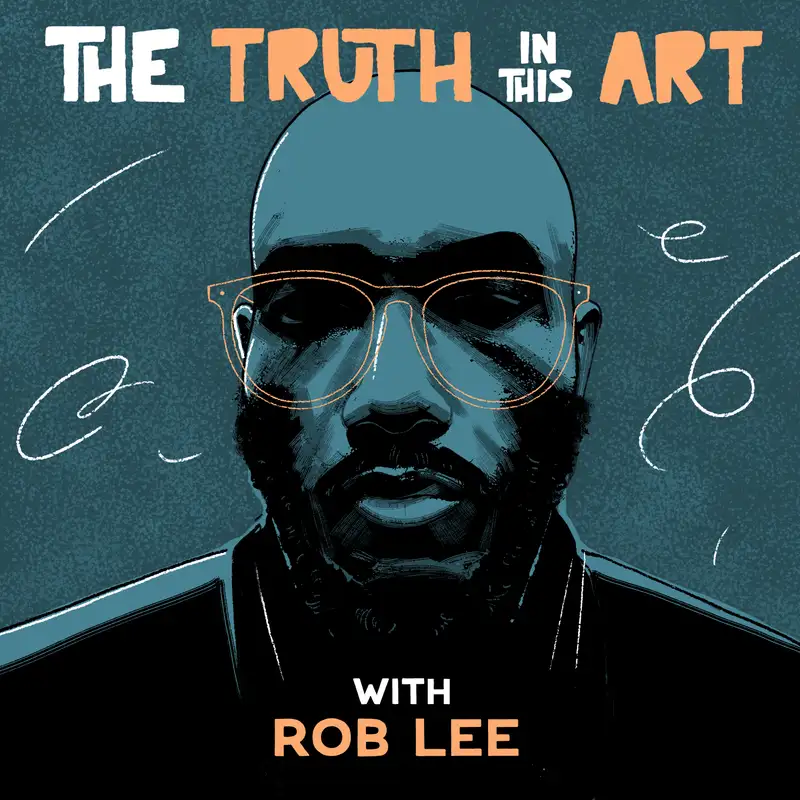
Rob Lee: Welcome to The Truth In His Heart, your source of conversations connecting arts, culture, and community. These are stories that matter, and I am your host, Rob Lee, except no substitutes.
Today, I'm thrilled to welcome my next guest on to the podcast. She is an entertainment correspondent and lifestyle host and reporter. She is guided by the mantra, Look is what happens when preparation meets opportunity. She brings a vibrant energy to storytelling and entertainment news, culinary arts, and travel. Please welcome to the podcast, Gianna Brooke. Welcome to the podcast.
gianna brooke: Thank you so much for having me.
Rob Lee: Thank you for coming on and making the time. It's like getting someone, as they're moving up the ladder, that's really, really good. I'm feeling really fortunate to have you on up in following you on the socials and following you on television and going through a bit of your portfolio and all. So, I'm really looking forward to actually talking to the young legend. That's how I feel like it's happening, talking to a young legend.
gianna brooke: You're too kind. Honestly, I'm privileged to be here talking to you right now. So, thank you for this opportunity. And yeah, definitely kind of in that mid-zone of I'm not at the bottom barrel anymore, but definitely not all the way up by there. So, yeah, I'm curious to see what the future has to hold for me.
Rob Lee: Yes, it's going to be great. And to start off, as I'm one to do, I like to ask folks to introduce themselves in their own words. I find that a lot of times we get these really splashy, well-written, and sometimes now AI-written.
Rob Lee: You may not be that well-written.
Rob Lee: So, I would invite you to introduce yourself in your own words and share a little quirky and interesting detail about yourself in that intro.
gianna brooke: Absolutely. So, I never once thought that I was going to be somebody that was immersed in the entertainment industry. I always was a very practical kid of like, what's going to make me the most money?
What's going to be a high-end demand job? And it wasn't until I got into high school where I was with like my best friend. We were attached at the hip and somehow we kind of got this opportunity offered to us about doing the morning announcements. And we were, it was like such a troll, like, let's make fun of the school kind of thing without really them knowing.
And it would be like an inside joke. And we, at least I didn't realize like how passionate and how much I actually really enjoyed it. And it wasn't until like that point in time where I kind of realized that like this is something that I'm really passionate about. But for college, I was going to be an accountant. I was going to get my CPA.
I was going to make six figures coming out of college and do something super easy that came natural to me. And it wasn't until I got to Temple University where I was in such a bigger field of so, like it was like the land of opportunity and people were going to like roam for things. And it really opened my eyes that like there was so much more out there that my small itty-bitty town could not show me. And I was like, wow, like I actually could make my dreams a reality and could make a living off of it. Maybe not as much money in the beginning, but yeah. So that's kind of when I went down this rabbit hole and that's why I'm in it today. And I definitely would not go back and change it for the world. Like I think everything happened the way it was supposed to.
Rob Lee: So thank you. Let's go back a little bit. So you mentioned Temple. So there's a Philly connection. You're based in Baltimore currently. And I know we talked about this a little off Mike. Jersey incident. So what's that small town in Jersey you're from?
gianna brooke: The small town in Jersey is a like Jersey Shore town. It's called Burke Township. If any new Jerseyans out there know it, I'm sure you do. It's in between Pointe, Pueblo and Seaside. So we definitely have the good parties and like the good bars to go growing up. But like any small town, I think it has that black hole kind of feel to it where once you once you're in it, nobody leaves. And it makes me sad because you cannot grow your environment. You can't outgrow a place that you were raised in. It's just it's not going to happen.
And especially in a town where it's not major, it's not much that goes on. Like, yeah, you guys got to go. It's so yeah, I am. I'm thankful I got out. It's a great place to vacation and frequent, but I definitely about growing my environment.
Rob Lee: That makes sense. And being able to shift. I know folks that I've interviewed over the years will say, especially media folks, I've been sort of in this state, in this city, in this market and kind of making the boost to build up that reputation in that background. And one of the things you touched on was sort of the morning announcements.
That's right. And I remember, you know, for me, my career before going into this, and I've been podcasting nearly 17 years before going into this, I wanted to be an engineer. So essentially that's saying, this is going to make a lot of money. I get to be full nerd.
It's going to be great. And, you know, and sort of getting that that nudge from the parents. And eventually I kind of settled on doing the business school route.
And a lot of that stuff still shows up. But from a sort of entrepreneurial and my, I have a storytelling interest. I naturally found doing this in 2009. So let's talk a little bit about like, when did that sort of like serious interest, maybe post college, maybe looking for opportunities? When did that, I think media, I think entertainment, I think journalism is going to be the career career.
gianna brooke: It was right. Or it's like funny you say, because I think everyone's brains kind of develop like right around that like 22, 23 year old, we're like, okay, I need to get realistic about what I'm doing for the rest of my life.
And what's going to make me happy. And it was like, basically senior in college, did an internship in a news station, which is the one that I actually work at right now. And it definitely, I was like, I said, you know, I think in college, everybody is so afraid of that nine to five and like the 40 hour work, which you're like, oh my God, I was like that, let me sound torturous.
How the hell am I going to do that? Like, it's really not that bad for everyone listening out there that is in college and is in high school and has not done the full time job yet. It really is not that bad, I promise. But when I was in that internship, I really kind of realized like, this is something that I could do day in and day out five days a week and not want to like actually cry going to and from work, you know what I'm saying? So that's, that's definitely what I realized it. And the fact of that it was something different every day. That was what really like attracted me into the industry was that it wasn't going to be the same work day in and day out, something different, something new, something fresh and also it's just fun to like keep up with current events internationally, you know, nationally. And once I got into the news station, that's what I really started to kind of explore that lifestyle route. And that was really with the bread and butter for me.
Rob Lee: So, yeah. Give it to us that since it's still a little, you know, it's fresher than it is for me. Because my first day recording and figuring it out, like, how do I plug this in with a microphone? Literally, I have a question with the microphone. What was your your first day like in a newsroom or your first day like working, you know, that job? Like, what was that like?
gianna brooke: Oh, my God, fully overwhelming, fully and over my head. I remember watching my other coworkers do like the daily duties and just being like, yeah, I could like, I'm not going to be able to do that. Like it's going to take me months, if not years to get to like where that where they're at.
And like, I guess that's okay. And it's one of those things where you don't believe in yourself until you actually start doing it and you see yourself like you're doing a damn thing. You're like, okay, wait, maybe I actually can do this. So I was so overwhelmed and I felt so in over my head and I felt like, oh my God, what did I get myself into? And just like the caliber of things that were how fast things were happening and the turnover on stories. It just, I never experienced that in college. It was obviously a lot more laxadaisy.
So it was just very intimidating. But when I tell you it's like three, four months of just doing it five days a week, eight hours a day, you really get the hang of it so fast. So don't ever doubt yourself. I feel like you really sometimes throwing yourself in the mix and like throwing yourself to the lions, the pressure turns you into a diamond. So that's kind of what happened to me.
Rob Lee: It's like, thank you. It's it is a pace and a shift. I think two things to stick out there and maybe it's sports related. I see the jumpfits. I see the bicep curls. But it's the reps. I think getting those, the time and the time and an experience, you know, like, I know some folks really spend a lot of time in turn. And a lot of folks will spend time shadowing things of that nature. But the pace thing that you mentioned reminds me of when I listen to athletes talk about that sort of transition from I was doing it in college.
I was the man or I was the girl. Now it's just like, ooh, I'm not as good as the rest of these people. I'm a little slow off the pitch.
gianna brooke: You're not the big fish in the little pond anymore. You have a small fish in the big pond.
Rob Lee: Absolutely. Where you're at now, give us a little bit of what a, what your day looks like now. Trying to paint this sort of from then to now, like, let's say yesterday, since, you know, today is your Sunday as we're recording.
But let's say your most recent day at work or day that sticks out. What does that day look like? If I know all days on typical news is, you know, it's in flux.
gianna brooke: It really, like you said, depends on the day. For example, the last day versus Tuesday. So Tuesday was like a heavy weather day. And it's really just about focusing on finding the newest, most relevant piece to the region.
So for the Baltimore region, it would be that, you know, the weather was going to be super, super cold for the next couple of days and we're going to have rain coming on Thursday. So finding what's relevant and pushing that to the viewers is obviously top priority. And then everything else trickles underneath it of what's the relevant stories around the region, what's the relevant stories around the US, what's the relevant stories around the international that's going to impact the US. So as a producer, I'm responsible for one hour shows. It, and I do the nine o'clock show, which is a little bit earlier in the morning. So for me, I find the most up to date things in the seven o'clock hour and in the eight o'clock hour to kind of make it the most relevant and up to date. Also being in the nine o'clock hour means that I can kind of incorporate more light and airy news, which is a true treat because I really do enjoy that.
Obviously my bread and butter. So I try to find light and everything's just, you know, a nice, light way to end the morning, our shows end at 10 o'clock. Well, our morning shows end at 10 o'clock. So yeah. That's, that's good.
Rob Lee: And I think it's, you know, I've seen some of the, some of my friends, I've seen some of my friends on that dead nine AM show folks that I've interviewed over the years.
So it's good to see that correlation that's there. And those considerations, like, you know, I was thinking about this and talking through this yesterday where, you know, at times certain outlets have this appeal that is always something, always something breaking. There's a sense of urgency, but having something that's a little bit lighter, a little bit, hey, let's have a little conversation, some discourse around it. You know, what's something that's affecting perhaps the region and the world, like at large, but also like, all right, what's the hot topics of today? You know, what are the sort of lighter, more lifestyle and socially oriented things that also matter, but it doesn't have that sense of urgency around it? Cause the sense of urgency, it's just the quarters all are so high all the time. Yes.
gianna brooke: Yes. And that is like, I think just kind of like the running theme when it comes like a regular news task. But I think like the way that we're seeing things go in today, especially with like media, we're just, we're changing it and it's, we got to like go with the trends. That is why I try to lean into those nice light airy stories, not only that, but also obviously the state of the world. It's, we already all have to deal with so much and, you know, face a lot of negativity.
So if I could definitely ease that and talk about a popular new Baltimore restaurant that's opening up or talk about National Lawful Day, something to just take that load off like, I love that. I really do. Life is not meant to be taken so seriously, I think. Absolutely.
Rob Lee: Um, love, you know, don't get me started talking about food now because we'll be on a whole different podcast.
gianna brooke: I'm a little fashion foodie over here. So if you'll need to.
Rob Lee: So I want to move into this piece specific around like, like stories, like I'm framing this as press release, story pitch, but what makes perhaps like a story interesting enough for you to pursue or you maybe to really like, like push for, like I want to really cover this like this, I think fits for today. I think this is something that's really good for our viewership or what have you. Absolutely.
gianna brooke: So I think it's three major things that fall into it. The first factor is relevance. How relevant is it in like the outside world? Second of all, are people going to actually care about what is happening in the story? Third and most important is the source that you're seeing this from Lee Jitt.
Cause if it's not, and you're getting it off of social media or something that's not a legit source, you have no story. So that is, yeah, that is definitely it. And I think today it is so easy to see something on Tik Tok and Instagram and automatically think, oh my God, that's true. And it's just, it's literally someone just trolling you on the internet.
Rob Lee: 100%. And you know, we, we, we both have a little history of trolling you earlier on me more so now I troll my, my guests with rapid fire questions. Beware.
Rob Lee: I love it. I'm ready.
Rob Lee: But I think you're, you're touching on a really good point that I've asked several folks in media and I definitely will, will lobby it over to you as well in that same vein and they, in a realm of sort of like speed, right? And getting something out there, making sure it's relevant, making sure it hits those, those key factors. Like how do you marry that with, I think this needs to go out. I want to get this out like quickly before, you know, it's just like not relevant or it's kind of stale. How do you, how do you, what are those considerations? What does that look like?
gianna brooke: It's so hard because in those moments, you have to take your emotions out of the story. If you could be so excited or like be really angry, you want people to know about it or feel really sad and you know, whatever the case may be, but it is so important to make sure that all of those check boxes are, you know, checked off before you go ahead and send it out there. Because obviously we all know once it's out there, it's not coming back and out there for good. Yeah.
Rob Lee: Yeah. And I'll even add this piece to it, which is, I think, um, a little bit further, but I think it's a good time to talk about it because you mentioned tech talk, you mentioned sort of social happening, a piece in it. And you know, I've been a podcaster for pretty long time and I'm actually a educator in the space as well. And I approach what I do with some sense of like a journalistic journalistic, journalistic ethics. And I try to teach on that. I was like, don't just, if you're doing something that feels like it's requiring research, you should probably research it.
You should probably fact check it. Otherwise, what are we really doing? We're just, just adding noise into the scene. So what's that consideration of folks getting, you know, news from podcasts and social media. Um, and I think those lack that, you know, traditional editorial excrutiny. Like how do you see the role of a journalist, whether it be the, the lighter topics or even the heavier topics, what's the role of a journalist today?
gianna brooke: I think in the role of a journalist today, biggest one, I think it's liability. And like we just kind of said, double checking those facts, making sure what you're saying and what you're pushing out onto your social media and your brands is accurate and true. And then I think secondary and I guess second most important is staying authentic to yourself. Cause I feel like a lot of people will go with whatever the main, you know, whatever the majority or whatever. Normation society is saying.
And if that is not truly your authentic belief, your faith, whatever the case may be, you don't have to disagree. You don't have to even say anything. You literally don't have to say anything. And I do that a lot on my social media, you know, sometimes just saying nothing is just better than either saying, putting yourself on one of those sides. So I think as a journalist today, it's really important to stay neutral when you need to and stay authentic to yourself.
And again, do not get caught up in that fast, you know, okay, I found myself in this, let's take it and run with it. One of the biggest pieces of advice or skills that I learned going, you know, injured on some school is if you're not sure if something on a source is true, go search it on another source that, you know, is liable and, you know, reliable. And if you're not seeing it match up, go check another source that, you know, is reliable. And if it's not all saying the same things, chances are that the story either a, isn't fully true. There's missing pieces to it. So yeah.
Rob Lee: That's, that's a really good point. And you know, I think for, for all of us to do day to day, like double check it, triple check it, what have you and sort of have those sources that feel like a source of truth.
Um, I'll share this before moving into that next question. So, you know, one of my, one of my favorite movie series is about the, you know, fictional Italian boxer Rocky Balboa. And, and, um, I remember when a call, weather's passed away, you know, Paul Creed, right? And I was on, um, ESPN, the dates were wrong.
Like the movie came out and the reason I had that date burned in my head is that's probably my favorite installment of the series, but also it was the year I was born. So I'm like, this is not accurate. And I'd started second guessing myself, maybe I could be wrong. And then I went everywhere, including Stallone site. I was like, this is actually the source of truth from the dude that's in the movie.
gianna brooke: That's crazy. That's like a huge, like something like that. It's just like, how did it go through all of these apartments? Like, how did it fall through all the cracks? I don't know, but unfortunately these mistakes happened.
I almost got bamboozled the other day on social media. It was like right after John Harbaugh, um, you know, former Baltimore Ravens coach got fired. I saw something on social media talking about how Lamar Jackson decided to like up and sign with the Steelers. And I like literally, I was like, oh my God, what? Like I was so shocked. And then I like went to start looking into like, you know, CNN and Associated Press and nobody else. And I was like, oh my God, I almost got trolled on social media.
Rob Lee: I'm really almost self-victim.
Rob Lee: That's one of the, it says, you know, and I'll move to the next topic. But it's one of those when it comes to anything that's like celebrity, let's be dark, a little dark with it.
If it's like celebrity death, it's like, I'm going to TMC to verify this first, you know, and because I literally, and because I've seen it. And, you know, when I started podcasting, I had a podcast called Master Mon Teams, Robcast. And in 2009, some of the stories that came out from Michael Jackson's death to, um, Tiger Woods and all of his Tiger Wood thing of that era.
Yeah. You know, I think I was very curious about that stuff and really having the debate and discourse around it, but also I was like 24 and I didn't really know anything. So now when I'm looking at something, well, I don't do a news program per se, I do an interview series. But what I try to do is make sure I have my stuff straight, especially when I'm interviewing someone. You don't want to get certain too small to, to, to a big scheme of things. It doesn't really affect the conversation, but making sure you get those details right about how the person describes themselves, how the person will introduce themselves, what are their pronouns and things of that nature. Just so everyone feels comfortable and also you appear competent. Yes.
gianna brooke: That is very, very good points on either side of the aisle. Totally agree with you.
Rob Lee: So for you, you know, in those instances where you're in an interview setting or you're interviewing someone, how do you prepare? Like, what is your sort of like, all right, I got this checklist. I got this bio.
I got all of this. Like I got up a picture of the person like on my board and I was like, all right, research, go through every interview they've done.
Rob Lee: Honestly, it's actually, I found a very great like system or I guess you could say strategy to doing it is before the interview, just kind of talks to them, get to know them, have the questions lined up and like already asked them the questions that you want to be answered. So you kind of know how to feed them that question. And, you know, say, for example, we're talking to you about your taco business and there's a special that you're having on the weekend for your grand opening, whatever the case may be. And I really want to, and people want to know, you know, what's the, what's your specialty saying that everyone, you know, you're going to be known for? I would start the initial conversation off before recording, making sure the person is comfortable and making sure that they have an idea of how the conversation is going to go.
We're going to, you know, kind of like go little like road map it. Once they give me all the answers, I already know then essentially how they're going to answer it. So I already know what to say prior because I already asked you the question. And it's just like, you're basically just like feeding them the questions and then they're feeding the answers. Very, you know, very seamless, especially for the people who are nervous. It's like, it's just a conversation. We're just here. We're just hanging out.
Rob Lee: It sounds very familiar when I'm talking to folks. It's like, yeah, you know, we're just having a conversation or, hey, I'm going to let you cook. You're steering the ship right now.
gianna brooke: We're like, why Jesus take the wheel? No. You're like, it's okay. I swear.
Rob Lee: But I will say this though, because I like to send the questions over for folks just too, because I had, I'm going to say last year, I fell into it and, you know, luckily I've done this so long that I know how to adapt and improvise, but I was interviewing a person on site and in his restaurant. And two different, it was his background, same name, same spelling, certain thing, biographical stuff, coalesced with someone else who's a musician. So those things were combined. So it was questions like, oh man, you were a musician at first, and then you moved into this. And I just threw that out there before we started recording.
And he's like, I've never played music in my life. And I was like, I got to scrap everything. I just dumped everything out of my mind and went off of my experience and was able to get, and he was super nervous going into it. I was able to adapt and go with that.
But I think what you're touching on is similar to the way I approach it. Are you making the person feel comfortable? Are you comfortable? Are you competent in what you're doing and what the aim is?
So, you know, when I have those instances that, because I send the questions over beforehand, if it feels a little too scripted or the person has answered like three because they just do a spiel, the person's done like answer three of my questions in one. I'm like, all right, improvise. You got to free jazz. You got to bring it out.
gianna brooke: No, I hate that. I literally hate that when someone like literally rapid fires and you're like, well, there goes half of the interview. And you're like, okay, but do I have had those instances where someone's super, super nervous, the information's not for right.
And now it's like, okay, the 30 questions that I have got knocked down to 10 questions and you're super awkward. You're answering in three sentences. We need to get three minutes of content.
We're only at 30 seconds right now. Like, like your mind literally starts to like feel like a dumpster fire. But I think it's so important and I'm sure you totally understand with experience. You just, you learn to go down different avenues and have different questions kind of lined up as the interview is happening.
So you kind of make sure that there aren't any dead ends. But no, I have definitely interviewed some super, duper awkward people and it's, yeah, it's not the best, but it's, it's great like learning and great, you know, skill building for you as the interviewer.
Rob Lee: Oh, for sure. And you know, when folks give me that feedback, which feels really cool, it's like, man, it's like listening to you talk to the homie. It's like, you know, you're having a conversation that as the audience, we're privy to and it's just like almost a private, but then profile and it works in that way. And I was like, it's through those reps, it's through that repetition. So with this, these are the next two questions are somewhat related.
So I'm going to go with this first one. Because like I said, I was going through your, your portfolio, looking at sort of the trajectory and then seeing you on like TV, how did you get comfortable in front of the camera for context? I'm six four, I take up a lot of space and I'm like, I don't know what to do with my arms sometimes. So how did you get comfortable being on camera?
gianna brooke: Definitely started off doing social media and that was like a huge way of understanding that you're going to be imperfect in front of the camera and just not caring. Not worrying about, okay, do I need to turn three angles to the left, three angles to the right, when you suck in more, like just being yourself and not an understanding that viewers are not looking at the things that you think they're looking at.
They're actually just listening to you talk and actually probably listening to the conversation. So starting off on social media was a great segue into like just honestly not caring. Like it really is the art of just not caring. And that really helped me just gain a great sense of myself and my confidence in front of the camera.
And after doing that for about three, four months, I kind of just again, not cared. And a big piece of advice I want to give young people out there is it's not about being qualified. It's about having the audacity to apply to the job because like nine times out of 10, the person that gets the job, they're not even qualified. They just went ahead and applied.
And essentially that's kind of what I did. I went to my boss and I expressed my interest for lifestyle and like how I really kind of wanted to be a contributor for the lifestyle show. I showed her some of my work on social media to prove that I do have a, in front of the camera presence. She definitely liked what she saw. She said I was a natural.
It took a little bit of practicing and polishing, but I actually was able to get on the show. And now whenever they need me, I still end and I love it. It's a ball.
Rob Lee: It's great. It's great to hear that. And again, it's the reps and being able to do it. And I like the piece you said about having the audacity. I record using a tool called audacity, but having the audacity to know what you're capable of, know what you're curious about, and know what you can do. It's big. And I've had a few times where I've been on camera and I'm so focused on whatever I'm doing in the conversation that I don't even realize.
And when I watch the game footage again, going to the sports scenario, I'm like, wow, you're bigger than everyone else on this stage. We got to do this camera. Here's some notes to the editor for next time.
gianna brooke: I was like, hey, maybe just like tighten up the shot a little bit.
Rob Lee: That's funny. It's like, yo, can we have them sit on a riser or something? Because it's just like a giant statue is talking to someone at 5'1". Yeah.
gianna brooke: I totally, I have been there and I will like say it all the time to like my friends or like my sister. I'm like, oh my God, I look like a beluga whale. Like why were the angles like that?
Like why was the camera like that? And my sister, she really put it into perspective to me. She was like, I guarantee you people are probably actually focused on the topic of the conversation, not what, how big your arms look or the little puds sticking out of like your stomach. And I just was like, damn, you actually have a point.
Rob Lee: I did a series of video podcasting when I was really curious about that area and one day, because you know, I like to peacock a little bit, just a skosh. And I was sure that the sleeves were so short and it's just like my bicep kept sticking out. I was like, yeah, yeah, yeah, I see it.
Yeah, I see it. I did not have good questions that day. I was so focused on the bicep. And I was, I think last year I was profiled for an interview in a magazine in DC. And there was a video profile and I, you know, I've lost some weight over the last like couple of years. So some of my clothes are a bit more comfortable and they have a little bit too much flesh hanging out. And I had on like the four inch, five inch, in theme shorts and I'm sitting there and I'm really getting into my things, sharing the story. And I see them posted the producers and I was like, this is great, man. And I'm starting to read the comments. Someone's like, all right, Hootie Daddy, what's up with your thighs? Can you put your thighs away? And I thought it was hilarious. So I was like, well, listen to what I said. Don't judge me by my looks.
gianna brooke: Yeah, seriously. Come on now. You always get one of those trolls that are just judging based off the super officials, but it also adds engagement. Honestly, whenever I get like a negative comment or a hate comment, I'm like, thanks for engaging me, Hootie Daddy.
Rob Lee: That's good. So this other piece, this is the other side of it. So back in 2022 in this sort of podcast, this is year seven of doing this, this particular podcast. I did almost an interview per day. That's what I put out on almost per day.
It was 322. Thank you. And I wrapped up the year with a talk at Creative Mornings and she was saying like, wow, you did so much and it's a profile on me and I'm doing all of this. And I'm fielding questions from the audience. And one question was like, when are you going to take a break? It's like, you see that you've done so much. Eventually you're going to burn yourself out. And I've made a conscious effort to really combat that and have sort of these boundaries.
It's like, I want to have these stories. I want to work. I enjoy working, but you got to have those gaps in that period. How do you manage sort of potential burnout or boundaries in sort of an ongoing news cycle, especially with entertainment because it has to be entertaining.
gianna brooke: Oh yeah, absolutely. Definitely listening to your body and when you are starting to feel that like fatigue, you need to pour back into yourself. So if that, you know, and whatever that may look like for you, if that's taking a day off of work, if that's treating yourself to a spa day or, you know, maybe sleeping in instead of going to the gym. I say like listen to your body because I think that a lot of people don't and they keep pushing and then it turns into this like huge big burnout where you really feel like you have nothing left in the tank. So I, once I start to feel like 20% of the tank, I sort of need to pour back into myself.
And again, that's a book when they bunch of different things. It really depends on, I guess, my mental health, how I'm feeling, you know, whatever the case may be. And also just making sure on a day to day weekly, having balance. So like, you know, making sure, for example, for today, I, you know, I'm doing this podcast. I'm going to be creating content later in the day after this. But in the morning, I went and got a coffee and then I scrolled on social media. So it was really finding that balance of, okay, I'm going to enjoy myself during the day and unwind and relax. But then I also am going to then work and pour back into my own projects because I don't employ for my whole life. I don't want to have a boss.
Rob Lee: No, no, not I said the fly. Not I.
Rob Lee: I like that a lot. I think, you know, ambition is super key. You know, I'm a pretty ambitious individual. I'm here and at all of you, you know, luck is what happens when preparation needs opportunity. All of that good stuff. So that's really big. And I think sometimes people like seeing the journey up and seeing all of the effort that goes in. But doesn't understand like what goes on in the background. Like when like, you know, for me, oh man, I was not recording that. Or maybe it's like I didn't put out the best piece of content or I needed to take some time off because I was just needed to be away from it for a bit. So I think being ambitious and having that as a consistent sort of through line coupled with perhaps curiosity just kind of keeps it going. When is those periods of burnout and you need to have those boundaries?
gianna brooke: No, I agree with you and kind of like what you were saying where feeling yourself out and making sure that you don't is so key really is.
Rob Lee: And I think so many people don't. I think a lot of people
gianna brooke: don't know how to listen to their bodies. They kind of feel like guilty and like, oh, I can't. But it's like, no, you really should because there will be times where like social media, I noticed a lot like last year and I'm going to try to avoid it. But I was like going and going and going on social media and then like I literally became sick of it. And I like really would post anything for like 10 days and I'm like, well, that's counteractive. Like now that's not, no, like that's not what we're trying to do. So yeah, it's not half balance consistently, but not like hating and dreading it.
Rob Lee: So this is the last real question that I have for you. And then I got these rapid fire questions I've added to.
Rob Lee: So this one, it kind of relates to that mantra I mentioned a moment ago, but people say luck, hustle and contortionist like flexibility in relationship building are key in media and growing and being ambitious and following that ambition. Do you agree with that formula or what do you attribute to your success thus far?
gianna brooke: I think the biggest thing in this industry is all about networking and connection making. I really do think that is like the foundation. I think that's probably the foundation on almost everything in the industry, but especially the entertainment and like communications industry. It's all about who you know, not really what you know, but obviously experiences also, you know, it helps too, but definitely that connection making and keeping yourself relevant. Obviously the entertainment industry is all about what's fresh, what's new, what's hot, what's trending. So keeping yourself relevant and keeping yourself, you know, trendy and knowledgeable. I think we'll take you really far and also keeping your self authentic because I think a lot of people kind of like so before go doing things that you just want, like you think people want to see and you actually aren't enjoying doing it. You actually don't have a passion to do it. You're going to end up hating what you're doing.
For a while I was doing a series called what to watch Wednesdays and I was talking about all these new TV shows that was coming out and new movies that were coming out. And at first I kind of liked it and then it started to become a chore and it literally just got to a point where like I was hating doing this. I was hating researching the shows. I was hating recording it. I was hating editing it. Like and I just kind of was like, okay, no one's really watching this. I'm not enjoying this. You need to you need to follow the trends and like this isn't picking up.
So let's see what else is picking up sort of thing. And I think that's the biggest thing to like staying successful in this career. It's learning how to be adaptable and a lot of people I think like to stay comfortable and don't know how to do that. But learning to be adaptable will get you so far in life, especially this industry.
Rob Lee: That makes a lot of sense. Like, you know, the I'm very much an independent sort of individual and you know, I see certain people and there's no shots, but I see certain people. It's like, I have a better portfolio than you and you know, but it's they they have perhaps the the contact or the connection or they may have been in a room. And part of it is I just keep plugging away and trying to keep what I'm doing authentic, as you touched on earlier, keep what I'm doing like relevant and keep what I'm doing sort of like like interesting at a minimum for myself. So whether that be in the curation of who am I interested in talking to, I could have the same conversation or I could have the same guest on and do a different conversation that's equally meridus or interesting. But how do I stretch out my boundaries so I don't get bored with it as you were touching on with what the watch went safe.
And you know, because there is a fair amount of work that goes into these things, you know, there's a couple hours of research. It's just not, you know, little cotton candy questions I'm asking people. I'm not sure exactly.
gianna brooke: Yeah, no, you sort of get it and kind of touches on it. But talking about like, I think the discouragement because I think a lot of people can get like burnt out because your first, second, third, fourth video didn't go viral. I read something. It was so beautiful and really resonated with me. If somebody told you after every hundred knows you get one yes, you would be so excited when you hear that rejection. You'd be so excited when you get that no, because you know, you just be one step closer to a yes. No. Not in stasis. I love it.
Rob Lee: And it's, you know, it's the thing that I hear all the time, which is when that opportunity presents itself, will you be ready? Will you have sort of the portfolio and sort of that background? Like it's a lot of people who, you know, going, going to artificial, I see a lot of artificial virality. It's like, oh man, this person went viral. I was like, there are three likes on this picture.
What do you think? And then I looked for sort of that that substance because I've been around for so long in this sort of space. So being able to read it and not, I think I got as a piece of advice from D Watkins, like last season, you had to run your own race. And that's the thing that really stuck with me.
gianna brooke: No, I can imagine you doing this in 2009. I'm sure you have probably seen like the industry change so drastically. Yeah. That's really cool though. I definitely about to think your brain about that sometime because I feel like when the 2020 white podcast hit, you probably were like, Hey, like, this is my idea.
Rob Lee: Like what the hell? I'm off my Lullipads.
Rob Lee: You're not wrong. So in an interest of time, let's go into these rapid fire questions. I think we got the good stuff out of the way. We've established a rapport here. Now it's time for me to burn the whole bridge down because we're falling.
Rob Lee: Burn it. Burn it to the ground, babe.
Rob Lee: So our prep is this. I'm looking for short answers. You don't want to overthink these. Whatever's the first thing that kind of comes to mind. Okay.
gianna brooke: It might be unserious. So whatever comes to my mind is what I will be saying. Or maybe it won't be. I don't know.
Rob Lee: And I've been looking at a lot of different places. Some of it is the socials. Some of it is old interviews. So here we go. So you're a gym girl. What's your favorite thing to do in the gym?
Rob Lee: Oh, leg day. Leg day for days. That's why I got body arms.
Rob Lee: That's right. Upper body, typical dude. It's like, oh man, what's this bro split I'm doing?
gianna brooke: Literally. It's literally. It's so funny. It's like opposite for guys and girls.
Rob Lee: What is the best style of chicken wing?
Rob Lee: Classic buffalo with blue cheese.
Rob Lee: Period. You've maintained this friendship we're developing here. I'm a blue cheese fan. Because if you said ranch, I'm like, all right, this interview is over. No ending. We're done.
gianna brooke: If you said garlic palm, I would have hung up on you.
Rob Lee: I like buffalo, but like chef style. Okay.
Rob Lee: I can respect it. I can swing that way.
Rob Lee: Now here's the one that I think I did a little diggy. Between stage and screen, how many times would you wager you've seen Wicked?
gianna brooke: I would say probably more than a Baker's dozen. Okay. It's like, you know, the comfort movies.
Rob Lee: I love to hear it. I love to hear it. I mean, I've not seen any movie more than 10 times or any play more than 10 times.
Rob Lee: So I'm sensing some judgments.
Rob Lee: A little bit. Just a skosh. Just a skosh.
Rob Lee: Honestly, I would judge me too. So valid.
Rob Lee: I think I'm at nine for Rocky Four though. So, you know, what's something that you're not good at, but you love to do?
gianna brooke: Saying, saying I can't sing to save my life, but in the shower, I'm Beyonce baby.
Rob Lee: That's been a common answer that people like, oh, saying for sure. Not good at it, but I do it.
gianna brooke: Yeah, definitely not. Yeah. I wish I could. I never shut up.
Rob Lee: Here's the last one. That's a great answer. Um, what do you, because you said coffee initially this had three options, but you said coffee is I'm going to go with your coffee drinker. What do you enjoy having a company your coffee?
gianna brooke: If carbs and calories didn't exist, a delicious toast to Dominic croissant. I can eat one of those every day, but obviously because your girl needs to maintain a figure, I would probably then go with something like really, really lame like macadamia nuts, walnuts, walnuts and macadamia nuts. They're such a great healthy fat and great brain food. We want to be good to our brain.
Rob Lee: Notice these are, these are good choices. I also would go with the, the almond croissant as well. I do a triple quartado first thing in the morning, splash coconut syrup and serving of shelled pistachios unsalted.
gianna brooke: I think he just became best friends. I don't think I've ever found another person that likes coconut. Why is coconut such a hand flavor?
Rob Lee: It's delicious. I like, I got super into it on a cruise and the coffee on the cruise was not good, but with that splash of coconut syrup in there, just elevated it.
And recently I was in New York and I have a friend who went to a, you know, Puerto Rican coffee shop and they were like, we have coconut cream here. So it hit, it was amazing.
Rob Lee: Oh, that sounds dreamy. I like, I like it. While we go to some fairs on cats, I butcher that name sometime. Not again. All right.
Rob Lee: Here's the last, last question for the whole podcast. This is the sage advice question. This is sort of that, that industry relevant specific sort of peeling that curtain back a little bit. And I think you were touching on it, but let's get a little bit deeper into the traits. What should someone look for in a news source in, in 2026, considering we have the trolls as you talked to touch on earlier, we have the AI, the deep fakes, the, the sort of rush to get something out there that may not be fact checked. If someone is, you know, looking for a new source and they're like, Hey, where do I verify it? What are the traits that you would share with someone who should check out a new source?
gianna brooke: I love this question. And I hope people really stick around to listen to this because it's so important. So I'm going to be so honest. There's probably about three or four sources that I would truly like. Okay. This is actually real. No BS TMZ. Think it's pretty, I'd say for like your entertainment news that is definitely like, yeah, like if it's happening on TMZ, it's, it's, it's legit the associated press that is for entertainment and for political news across the board in America. This might come as a shock to people, but like CNN and Fox, they are less than right wing kind of companies. So they might be pushing a narrative that sponsors paid for that might not be your opinion and your, you know, ideas. So going on to the BBC, which is a British, I love the BBC. Like I'm not joking you. I know, I know like Dachronin's not great, but it is so, so relevant because it's a British, it's a British outlet.
So like they have no, they have no reason to sway a certain way in American politics or, you know, whatever the case may be. So that is another one that I really, really love. I would say those three are kind of like the main ones.
CNN, News Source, The New York Post, not, not bad. I would say those are like good secondary options that I kind of would like, okay, I saw it on this one. Let's check this guy. But yeah, I would say those, those three are your solid, you know, that it's accurate information.
Rob Lee: That's great. And I think the, the, the point around all of them, especially as the BBC, that's what it's called the BBC.
gianna brooke: I know like, it's like the British something, something.
Rob Lee: British broadcasting channel, I believe.
gianna brooke: I think he might be right. It's been a hot minute since I was on the BBC.
Rob Lee: But it's the neutrality of it. It's like, this is neutral. Yeah. They're just like, here's the news.
gianna brooke: Exactly. Like that is what I find so beautiful about it. It's like literally, this is just the news. This is it. So yeah, the more you know.
Rob Lee: Yeah. And we've covered a lot and I think we got it. So I want to do two things as we close out here. One, I want to thank you so much for coming on and making the time today. And secondly, I want to invite and encourage you to share with the listeners, the social media. This is the shameless plug stuff, website, social media, all that good stuff. The floor is yours.
gianna brooke: Thank you. Well, first of all, thank you for having me seriously. I enjoy our time and I enjoy our conversation. And if anybody wants to find me on the socials, it's going to be Gianna Brooke TV across all the platforms. That's going to be Instagram, Facebook, YouTube, even Snapchat, if you guys have that. Don't find me anything weird on there, though. I just like to vlog. But yeah, Gianna Brooke TV across all the platforms. That's what you can find me.
Rob Lee: And there you have it, folks. I want to again thank Gianna Brooke for coming on to the truth in this art to let us know a bit about her story and insights on journalism, media and entertainment.
And for Gianna Brooke, I am Rob Lee saying that there's art, culture and community. In and around your neck of the woods, you just have to look for it.