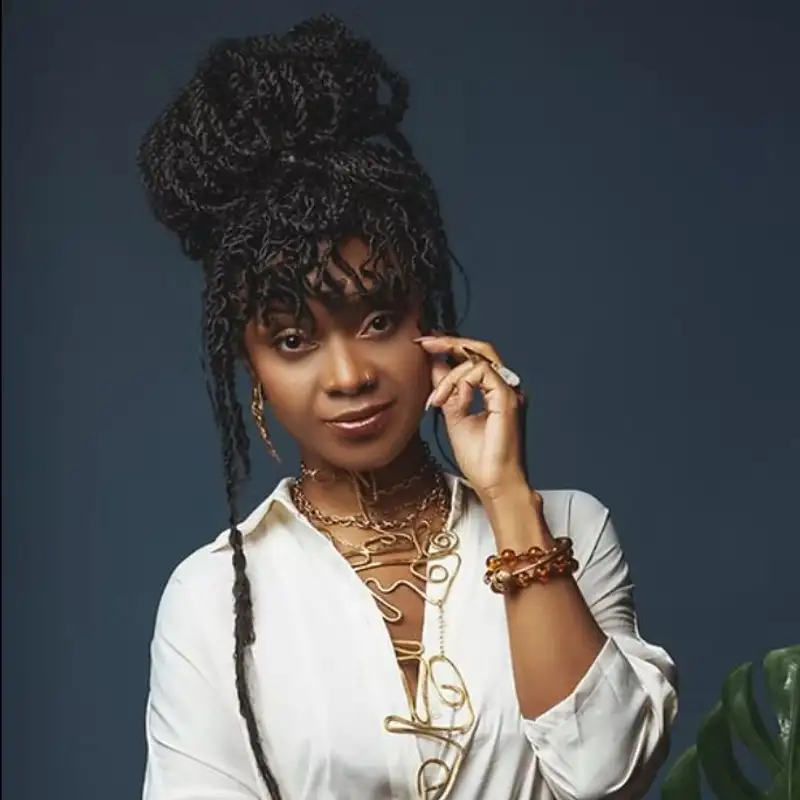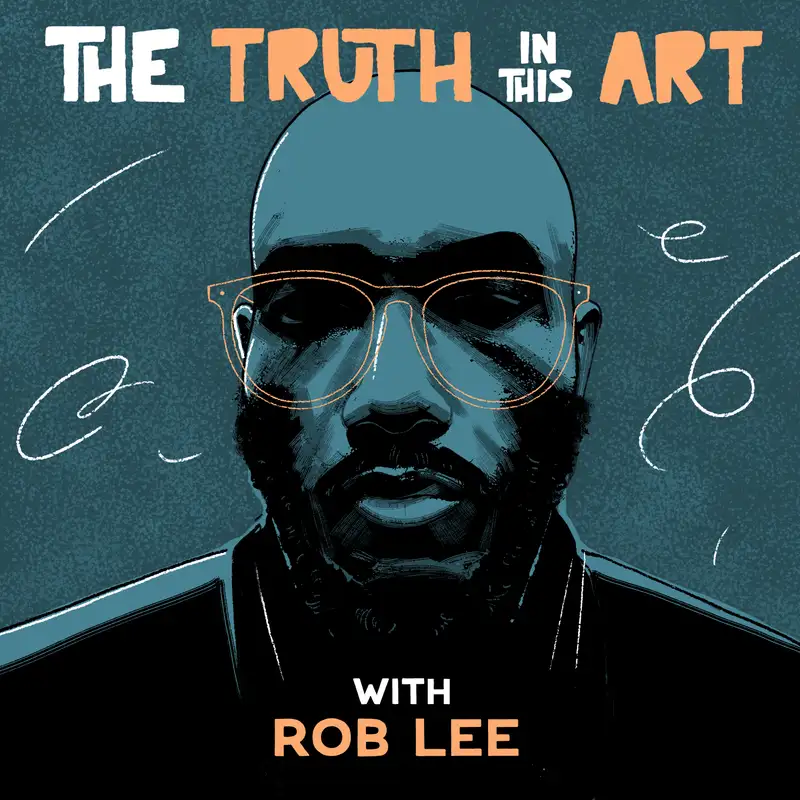
Interview with Douriean Fletcher: "Douriean Fletcher: Jewelry of the Afrofuture" at Walters Art Museum
Download MP3Music Welcome to
Rob Lee: the Truth in Its Art, your source for conversations connecting arts, culture, and community. These are stories that matter and I am your host, Rob Lee, except no substitutes. Today I am thrilled to welcome my next guest on to the program. My guest is an acclaimed jewelry designer and artisan whose visionary work bridges the realms of adornment and storytelling. My guest's work has been featured in major films including Black Panther and Black Panther Wakanda Forever We'll be discussing her exhibition at the Walters Art Museum in Baltimore. Please welcome to the program Douriean Fletcher. Welcome to the Truth in Its Art.
Douriean fLetcher: Hi, Rob. Thank you for having me. I appreciate this. I'm excited to talk with you.
Rob Lee: Yes, thank you. I'm glad I was able to pop over and I'm going to bury the lead a little bit, but pop over to the sort of preview opening night situation yesterday and we'll put in little tees there. But before we go into like the main crux of the conversation today, I'd like to start off when I'm meeting someone for the first time.
I'd like to get the who are you? What is that formative moment that kind of shapes your relationship with art and making? You know, we go right into it here.
Douriean fLetcher: Yeah, let's do it. Who am I? I am a woman born and raised in Tacadena, California, which especially now means a lot to me. I love dance and culture. I love food.
Oh my goodness. Love food. And those things, I enjoy feeling good.
And that's intentional to really understand like feeling good is an enjoyable thing. And that partially informs my art. The things that I create are wearable objects. Some may call them jewelry. I started a call when I first started, I didn't want to call it jewelry. I called it wearable art. But I enjoy creating wearable objects and the reason why has changed and shifted throughout life.
I want to go back to your question. Who am I? I'm an I love math and I enjoy sciences. I enjoy a lot of different things. And I know that all of that influences and informs my work.
I was born of the Seventh Adventist faith and was curious as a child or a young adult as far as what existed outside of that belief system. And I will say that that is the beginning of my creative journey of utilizing anything I made because I am self-taught. So anything I made was informed by that is how do I express spiritual beliefs through my work? Initially I studied a little bit of like Buddhism.
I had a curiosity about what voodoo was and these technologies, metaphysics, things of that nature. And I started making started making art 16 years ago. I saw women making some wire wrapped rings and I was interested in it. It seemed quite easy to me and I was curious like how did she do this? I went on YouTube and started creating and at first I did it because it was exciting. It was just exciting to me. And I became curious of what else I could make. And as I started experimenting more and exploring more of how to make these wire wrapped rings, how to make my own chains, it went from wire wrapped rings to how do I make my own chains. How do I create Africa out of some wire and a pair of pliers? And I did it with just looking at a picture and I have no background in art.
I am obsessed with or was math, mathematics, social justice, calculus was my favorite subject in high school. Yeah. But as I started forming and creating this continent, it was like oh wait, this is really, really fun and this is evolving into something else. During this time I moved to New Orleans and met some phenomenal artists and some phenomenal people.
And as I started selling my work at festivals and art markets and street fairs, I remember one of the first time I spoke in public I was on Frenchman and I took a sheet and I laid it out in front of a cafe and just laid my things out and sold some pieces. And at that moment and moving forward, I realized like people really resonated when I was working with. They really, really enjoyed it. It brought joy.
It brought them happiness and I remember one woman, her name is Lauren and this was like 10 years ago. She bought a piece. It was like a brass wire wrapped ring with red jasper and she emailed me because I didn't know why I purchased this specific ring but it called to me and my father just passed two weeks ago and the stone that I chose, the metaphysical properties are about being able to process death and mourning and grieving. So at that moment I knew like oh wait, this has more significance and purpose than just a pretty appealing, aesthetically pleasing piece of wearable art. Wow.
Rob Lee: That might be one of the best sort of introductory sort of like volleys that I've ever had because it's one, you accomplish one. Thank you for sharing that sort of like introductory piece because it covers multiple elements of sort of the conversation that we're going to have moving forward and it also teases different pieces of it. So you make my job a little bit easier. So thank you for that. You're working overtime.
You're not only here in Baltimore but you're working overtime. So thank you for the effort. You're welcome. And one of the things I like to do because I have my quirks and I do have a comment I'll share with you but I have my quirks and one of the quirks I always have out there when, in a world of contacts and when people wear their glasses in an interview, I have minds on you have yours. So thank you for wearing your glasses because a lot of times people it be front.
Douriean fLetcher: And I put them on for even though you are very close in proximity to my eyes, I still put them on. I've been wearing glasses since I was seven. I've been wearing glasses since I was three.
Rob Lee: Oh, okay. Yeah. I was super cute. The glasses were huge and yeah, it was something and I haven't been able to find that type of glasses again because I want to just you know, go back. But one of the things that I was hearing was sort of this curiosity, this interest in just something that was not art and being self-taught. You know, I'm self-taught and I have a business degree, you know, and I have an art background. I always joke. I was a failed artist.
I was a muralist and you know, stuff like that as a kid and I worked on a comic and I suppose storytelling was a thing for me and sort of a moment that I got to early on in this particular series. It's coming up on seven years. It'll be seven years since I started this show and you know, it was the summer of 2019. I interviewed an artist and I was trying to deal with this notion of Baltimore where we're, you know, chatting through and where your exhibition is at that quote unquote, it's a bad city and I got tired of that narrative.
I got tired of it. Like I went through a school and I would hear, oh, you're from Baltimore. And all of these these different things and I was like, I think there's space to try to have folks through the lens of arts and culture and community talk about what's really happening here because we're the ones that are qualified to talk about it. And I had some of those early interviews and people just sharing their thoughts and they're really authentic and unfiltered way and in a real way. And I was like, this is the show.
This is what we're going to do. This is the direction and it was coming from someone else much like when you were describing that situation with, I believe it was a ring, right? And sort of those properties connected with the person that got it from you.
Douriean fLetcher: I find that really interesting. I was talking to a community member when I first got to, when I first arrived and she was sharing with me the things that Baltimore needed when it came to the fashion community here. And one thing that I, and this ties into what you were saying as far as the outer perspective or perception of Baltimore, sharing with her, I was like, well, that's what people do when they lack resources. We create, we were innovative.
We create beauty. So I'm sure that yes, I mean, unfortunately, the only thing, one of the few things I know about Baltimore is that TV show. I know, but with that understanding, it would make sense that there's like incredible talent here and there's incredible innovation and art and creativity and community here. I would think that that is a good assumption and accurate assumption to make.
Rob Lee: Yeah. I think so. And it definitely ties, and I'm going to move into this next question, but it ties to the sort of New Orleans connectivity we have going here, right? So I did an interview with one of the producers on, I believe, on The Wire. And one of my teachers in high school was a writer for it.
So I kind of have that piece of connection for it. But I interviewed the producer, one of the producers on there, and I've interviewed her son. And I go to New Orleans and I talked to Jan Ramsey, who has Offbeat Magazine, like one of the oldest, like jazz magazines. And she shared the story of when that whole crew was down there filming Trimmé. And she's like, oh, the Baltimore thing is real. She's like, oh, you're from Baltimore?
And I started sharing it. She's Nina Noble and the producer on The Wire and all these different people, they were kind of just hanging out with us. And she's given me all of these different details that are, you're from the scene that show up in the Trimmé show, just as a person that's covering sort of jazz music and that scene down there. And she's kind of like almost in the director commentary sort of way. And I was like, this is a great conversation. These are dots connecting. Yeah.
Douriean fLetcher: That's cool. Yeah. I love that connection. Yeah. New Orleans, my experience with New Orleans, I'll say that, was deeply rooted in the creative artists that existed there. So I was able to talk and really build dope relationships with people like I.O. Scott. Tang from Tang of the Bing is her first time performing live was the first time and it was at I.O. Scott's event called Cast it On.
It was my first time selling in a public space. So yeah. Yeah. And I love how her her career has just elevated and evolved into this phenomenal, she's just a phenomenal artist. But that's been my experience is like really connecting, building, having conversations with artists and creatives and the creatives that were like similar to me coming into the city. And I felt like I was incredibly supported within that community.
My first time, like I saw that jazz, the jazz, jazz fest, yeah, it's in the Congo Square space. And actually, this ring I'm wearing right now is not mine. It's by a jeweler. His name is Dr. Foots. He passed, I believe, last year, the older man and he's made jewelry for Stevie Wonder.
And and Alina Jolie, Eric Boddew, if you've seen those like huge fans out, I think they're called like Osiris earrings. He created these things and he so he was like a legend in the city. And he gave me this ring because he likes my art. And he thought, you know, there was something there.
And this was maybe like within the first five years of me creating. And he like invited me to his home to show me his artwork and his workspace. And so I've had access to just incredible humans there that were real, that were incredibly real down to earth. And I always remember that and take that with me wherever I go. Just people who wanted to share their version of New Orleans. And I take that with me everywhere I go.
Rob Lee: That's that's great. And, you know, it's seen, seeing sort of elements of your story has a regionality, a community sense to it. You touched on Pasadena being a pal. What's the word? Is it Pasadenaite is what's the word like we're Baltimoreans here. I put you on a spot there, but Pasadena native
Douriean fLetcher: Pasadena native Pasadena native Pasadena, actually, well, I like it.
Rob Lee: You saved it. You saved it there. Your story spans Pasadena, New Orleans, South Africa. So let's let's break it to to Baltimore. I read just in sort of the research There's an ancient Egyptian ring at the Walters Art Museum that helped kind of shape your art making styles. Is that true? Did that misread that? That's correct.
Douriean fLetcher: So, hmm, when there was a time, it was around the time that the, that brass and red jasper ring around that time when I realized that there was more to my work than just, you know, just making jewelry. I started looking and I was, I was realizing like there's something here. There's some, something of greater value than I expected. So I started looking for different artists that were making similar work that I was making and that I wanted to make.
So I found like Alexander Calder, who's also in the, his work is in the show and Art Smith, whose work is in the show as well, which is phenomenal. And I saw this ring online and I thought that this ring told a story, didn't know what the story read because I don't read hieroglyphics. I'm wanting to learn now, but it told, for me, it told a story of an ancient civilization that had a connection to their religious beliefs.
And their culture and tradition. And it was very similar to what I was making. And in that moment, I knew like, oh, there it is.
Like that's, that's it. I want to be able to do that with my work. And so I saved that on my computer, on my laptop. That laptop has been gone for years.
But I guess Google, Google photos, it's just been saved on my devices for that long. And that was, what was that? It had to be 10 years ago that I saw that.
And I've just kept that with me. So when we started developing the curation of the exhibition, the curator from Museum of Art and Design, Barbara Gifford, she asked me, we were just talking, going through like my inspirations and I showed her that picture. I didn't know it belonged to the Walters Art Museum. Oh, wow. I didn't. But she found it. And it just so happened to be that piece that was an identifier for me of what I wanted to do and really expanded that vision of what I could do. It came from the Walters Art Museum.
Rob Lee: That is, so you see, it's sort of these connections, these dots that are coming together. I like that. And so no need to, you know, further for me to bury the lead here. We can move into talking about the exhibition. The, so talk to me about Dorian Fletcher, jewelry of the Afro future at the Walters Art Museum. You know, the show frames jewelry as power, identity, visual storytelling. When someone steps into the exhibit, what is the story you're inviting them to, into? And what do you hope folks are seeing? Just give us sort of that, that background on the show. Sure.
Douriean fLetcher: So I'll say during the development of the show, what was the most intriguing was my story. How did this young African American woman who self taught work on Oscar award winning shows? And as we started discussing this and exploring that and seeing the underlying connectivity of the desire to create something of value, the desire to make wire wrap jewelry, but make it gold.
Why? And we started exploring that. So within Dorian Fletcher, jewelry of the Afro future, you will find my narrative, this story from the very beginning of what informed me of identity.
What are the things that influenced my identity that supported and the building blocks of who I came to be, of what informed me of who I was and how I navigated that. And that's what you'll find. It was curated. It's been curated so beautifully.
I'm still processing it. But you'll find that. So the beginning of my formative years, the music, the religious influences, the musical influences, the texts that helped me and supported my desire to know more about myself. You'll find that there. You'll find my early works that I used to sell in New Orleans at festivals.
You'll find that. And how that art began to evolve and how it evolved into works that made sense for Black Panther and Wakanda forever. This idea of having something that is deeply connected to being of the African diaspora or African diaspora.
But it takes it a step further while exploring identity. And what does that mean to take that further and how to make something that is inspired by Egyptian jewelry, of something that stands a test of time? Those pieces in that exhibition are, some of them are thousands of years old. And I love that the Walters Art Museum has been able to, we've been able to make that connection between the past and the Afrofuture.
Rob Lee: I like it. I like it. I like it. I like when you do that. I keep it. No, that's.
Douriean fLetcher: But this is the reimagining of art, the reimagining of what does it look like when you take those ancient objects and still want to maintain the integrity of telling a story of who people are. And what that story for me is, how do I expand tribal art and tribal jewelry as an African descendant and Native American descendant in America? How do I express myself and how do I make, explore the design and creation of something that reflects spiritual values or some tie or something that's tied to beliefs or spiritual beliefs or my desire? One of the things that I haven't spoken about much is some of the pieces in the show, they can look, they look like masks.
Yes. But they aren't masks and I don't create masks and there's a reason for that. I feel like personally masks from specific cultures are very unique to them. They have a direct connection to them. They are ritualistic.
They mean something to how they navigate the world, similar to how in certain native tongues there are words that they cannot translate into English. That's how my personal feeling is to certain objects that come from indigenous people. And so what I've done with my work is create my version of a mask, my version of what connects me to the unseen world, what connects me to the spiritual world. And that is part of what I create.
And you see that in the exhibition. And that connection to like the, I wrote it down, the doggone sculptures and this connection to the desire to have sacred objects present now.
Rob Lee: One of the things, and thank you, because I have so many follow-ups. It's like the rest of the whole conversation is just follow-ups at this point. But I will say what I went in there initially in having the preview. I was like, oh, this is like biographical as well. I was like, oh, this is going to make me rewrite all of my questions. I was like, thanks, Dorian. Appreciate you.
I'm kidding. But I just remember, I think maybe, you know, early on going in and really trying to pace myself, but also not trying to, because I'm going to go back and see it more than once, obviously. But one of the things that really stuck and hit when I see sort of, you know, African American culture sort of like represented those authentic stories, those elements. I was like, is that main entail right there? I was like, yeah. I was like, all right, sis, I see you. And my partner was like, she's saying like the jingle for one of the other hair products there.
I was like, I've committed to this bald thing. So I don't know what that means. Yeah. She literally started saying it just for me.
And I was like, I'm bald. I don't know. But, you know, it's so with that sort of touch, I think a lot of times when I go through and I'm talking to people about art exhibitions, because I do this, right? And folks will come to me and feeling like it's rarefied, but then seeing something that you can connect to offer something very just simple, but also sort of prevalent.
It's just like, oh, yeah. Now what's the story with it? I'm always looking for the story. And that's the thing that really hit me. It clicked. And I was like, all right. I was like, she's going to be fun. I'm not going to be nervous about this now. You helped in multiple ways.
Douriean fLetcher: Amazing. Good. Yeah. So main entail. So funny. The connection is my grandmother who's in the show a few times. She, when it first, I will say when it first, but when it came to Los Angeles as a hair product, she was supportive of it. She, similar to like Mary Kay was supporting getting it out into the community and letting people know that it is a hair product for our hair and not just something for horses. And, you know, the benefits and ever since then until college, I would use it and I loved it.
I loved it. It did so good for my hair. Like Mrs. before, like, you know, Carol's daughter and the other products out there in the can to, but the conditioner. I didn't use a shampoo much, but I use that conditioner. And, you know, that was a highlight of caring for my hair on my wash day was using that. And it's always good when you can find a good hair product.
It is. You want to hold on to that as long as you can. And so it was when talking about, you know, my experience, the black experience hair is something that we have to discuss.
And so that's why that's there is my my introduction to it through my grandmother, who was one of my favorite people on the planet and probably will be for lifetimes and forever more. But also the joy of using that conditioner and how much ease it brought to my life, which is actually quite an opposite story from the relaxer. That I was natural up until high school and I was on the swim team. And it was challenging doing my hair every day after swimming two and a half hours.
And so I talked to my hairdresser and the solution for swimming in chlorine on a daily basis was a relaxer in retrospect, not the best choice. Right. So gone with braids, but which you will see there are packs of braids that there are.
Rob Lee: Yes. Yes. But that portion of in that segment of the exhibition is my reflection of my hair journey of having to opt in or thinking I had to opt in to straighten my hair so that things could be easier. And I know that that's a conversation. I had that conversation with like my mom friends about how to care for their daughter's hair and sometimes the pain that goes with creating beautiful protective hairstyles for children.
Douriean fLetcher: And sometimes the opt in and the easy route is for that relaxer. You know, yeah. Yeah. I got I'm glad you guys connected with it. Oh, that's the point.
Rob Lee: And I think that's that's one of the signs of sort of those good exhibitions, sort of curation that makes sense and sort of that involvement of the subject of the person that's sort of like making the work and having the word. It's just like, you know, something as simple as that or something that could be as easily overlooked is that it's like, again, I look for the story. And that's that was the thing I was like stamp. And I was like, I don't even have hair, but I remember being in a Dominican barbershop.
That's where I was going because the blades are nice. My the do was just like, yo, use this in your beard. I was like, got you and I had a really big beard at the time.
And that's what I was using. I still have a bottle in the crib. No hair.
Still have a bottle. So I want to move into one of the couple of the pieces that are in the show that really, really stick out. It's the Black Panther pieces, right? And, you know, so I want to get your your insight and sort of your experience. And I'm sure you've talked about this a million times, but she didn't talk to me about it. So a little different. What was it like creating wearable art for these like, like large, huge properties and like, how did it change like your career? Like years since that that first film, because that's coming up on 10 years ago at this point. Mm hmm.
Douriean fLetcher: So I will say that how did it feel? What was it like initially to be honest? It was frightening. It was frightening before that I had done some work with Ruth Carter on roots.
And that was my first introduction into creating for. I will say that time was so fun. It was fun. The content was challenging and it was emotionally, there was a lot to emotionally process, creating wearable items and objects for enslaved people.
That connection was a lot to get through, but it was so exhilarating to, especially where I was at in my career at the time to be able to have fun and create things and be able to support this storyline. Black Panther though, and also there was already an established, like it's historical, right? So there's established looks and we get to be creative and reimagine some established items and objects and history. However Black Panther was being imagined. It was creatively being imagined beautifully by Ryan Coogler and Hannah Beakler and Ruth, but initially it was frightening. I knew I could do it. I had to think that in order to keep the job, but I would say with frightening and then as I started building that trust with Ruth and being able to show her references of Alexander Calder and Art Smith and the things that I knew I could bring to the table.
And these were things that I really wanted to create anyway, but I hadn't had the time and the capacity to. So I was able to bring that to the table and say, hey, these are the things that I think that would be a great reflection of this innovative, wealthy, highly creative and proud nation. Sure.
Yeah. And so because of that and because of that trust that was built, it started to become an immense, fun challenge. I had to bring my A game and what you'll see in the show is that was my first time making something of that scale.
I did the Dora Milaje armor that multi and there's a process piece as well that multi layered Dora Milaje Black Panther belt buckle. But it was fun. It was fun to work with Ruth.
It was fun to be part of a team and a crew that was really dedicated to create something that had never been seen before. And how did it change my career? How did it change my trajectory? I won't say it changed my trajectory.
I do believe that, you know, I mean, it's naturally it's part of my trajectory, but how it changed what journey I thought I was on. Number one, working with highly like creative like masters in their work. It forced me to quickly level up and understand what it means to work within community and work on a team, which I learned so much. I spoke to so much information of how to build things differently, how to ask for help, how to identify gifts and skills and other people that I mean, I have and be able to build things like that armor. It's there are some things I really have a desire to create. And like I said, I just didn't have the capacity to build and I was given the opportunity to build those things. And again, do it in a way like explore more of my my creativity and and help envision like what the necklaces of the dormalage and this is these really strong warriors. What does that look like?
What items reflect that pride and that purpose of their identity? So, you know, the shift. The shift was incredible. I was able to imagine more for myself. Yeah, it definitely expanded my imagination. It also helped me understand where my work another place where my work can be a service as well. Yeah, I mean, thank you.
Rob Lee: And listening to it and listening to the conversation as far as just its imagination, its ambition, it's like having the confidence of knowing you can do it, whatever the thing is, right? Being self taught, I think it gives you that that confidence to experiment and just like really be able to build but also have be rooted in this notion of I want to do right and I want to do right in these ways, whether it be related to the historical context, whether it being of service and seeing like where you can actually take it. But I keep hearing like this sort of notion of creativity, this notion of I want to really see where my imagination takes me here.
Douriean fLetcher: Yeah, the way I've been I've been trying to find another way to describe it, but I would say that it still exists to an extent now, but at that time I felt like from my knowledge, the Phoenix, like the Phoenix, Jane Gray as the Phoenix, having so much power and trying to understand how to utilize it, how to hone it in, how to focus it.
From my understanding of the Phoenix. You're not that, you're not that. Is that okay at some point? Yeah, yeah.
Okay. Based upon when I watched it as a kid, so excellent as a child. But I just remember sometimes she was just out of control and she was harmful, but at the same time, she was able to like, she was a powerful being. And so that's how I looked at my creativity at that time, like there's so much that I can do. How do I focus it in this direction to be able to create something that has meaning, that connects people, like that has an aesthetic that connects people to like this identity of Wakanda.
Rob Lee: I'll raise you one nerdy or reference that aligns with the Jane Gray of it all before moving into this next question. Go ahead. It's as almost as if you have to have that Cyclops level visor to bring it in focus, because his power one is not tapped in, very destructive. Yes. Yes. We working in tandem here.
Douriean fLetcher: I like it. I like it. I like, I like, we took that.
Rob Lee: That's dope. Yes. I was a former marketing guy. So one of the things I read is that you hand selected a dozen plus like pieces at the Walters Art Museum. So what, what guided, you know, sort of your, your picks, your, your decision was it craft, or unit, symbolism, creative intuition? How does that work? And I want this, this, this, like is it grocery list? How does that work for you?
Douriean fLetcher: I love the tour of the Walters Museums collection. It was so fun and really inspiring. It was exciting. And so I do encourage everyone to take, take time to go look through it. What guided my choices were my excitement, like having the emotional reaction of intuitively, would it be intuitive, my curiosity about some of the pieces? And then there were parallels with some of the objects in my exhibition to their collection. One in particular, it's the, I think it's ISIS, it's a sculpture of ISIS in Horus. And I felt that there was, I was fascinated by the sculpture because it looked very similar to the Dogon sculpture in the section with Wakanda Forever that would, that inspired the Ramonda, I call it the flood dress, but the Ramonda dress with the breastplate. Yes.
Dogon sculptures on them. So I was really fascinated with this reference to motherhood. And so I included that.
And there were, I think, a few others. There was a process piece, that's a ring that I enjoyed because I enjoy process. And you'll see some of the process pieces I have in my show. And I wanted to show that parallel of having, especially with my idea of Egypt, Egypt arts, Egyptian art, it's, to me, kind of fantastical. It's, I just would love to just travel back in time and explore jewelry makers and how they created their work and how they presented it to the royal families or to, you know, the pharaoh or how that, like, how did they do that? And so to see that process piece was really intriguing to me, like, because everything looks so polished and so complete. But to have a piece in the collection that's not completed is really, like, I just wonder, like, how did they get this piece?
Where did it come from? Why didn't he, they, I don't know, but why did they finish it? And so I just find the parallel in between just having unfinished pieces and being in the middle of a process. So those are some details of the pieces, but it was, there were a multitude of reasons, like the parallels, my curiosity about wanting to know more. There's a piece that's totally outside of my genre. It is from, well, I think it's the medieval collection, but it's still the, it's a belt buckle and it has, I don't want to tell too much. I want people to look at the brochure, but it, the details of it, I was curious about the people and how did they appreciate and honor the animals and their natural environments. And I was curious because of that piece, like, how did they honor and respect and represent their natural resources and environment? That's all I'll say.
Rob Lee: See, I like that. You, you know, you're there teasing. I like it. You're doing the trailer version. So I like it. I dig it. Let's see. I got one last, I call them real questions. You know, it's the real questions.
Then I got the rapid fire and then I got the sage. Yeah. Yeah. Cause some people call the rapid fire questions the BS questions. And I was like, I think they're fun. And I was like, I want some questions.
So here's the last sort of real question I have for you. So I've also read that you created work specifically for your exhibition at the Walters. What did the museum like ask of you that? What did the, what does the museum space ask of you that like a film set or a private collection like doesn't like talk a bit about that?
Douriean fLetcher: They asked if there were additional pieces that I wanted to include in my contemporary section. Yeah. And I appreciated that because there were a few pieces that I wanted to include one in particular being a necklace in the necklace. I was so excited about this piece because of the beauty of the stones.
There's raw ruby from West Africa. That was, I think most of those items were acquired or gifted to me in that one piece. So I have like a hercimer diamond that's from New York. I have a piece of Malachi that I purchased in South Africa. There is a fire opal that was gifted to me from an owner of a Kenyan mine. A piece from Tanzania, which was a reflection and my memory of going to Tanzania for my 30th birthday. What else?
The fire opal, the Tanzanite. What am I missing? You can go check it out. But that piece is a direct reflection of the last season of my life. And it's created to express, it's beautiful. It's gold plated. It's got a lot of beautiful things in it.
But that piece is very raw. And for film, I'm telling another story. For film, I'm lending my creativity, there's the word again, to support building this world through wearable arts, which is such an intimate thing that someone wears and tells a lot about their personal, their personal stories, their aesthetic, how they want to express themselves, whether it's similar to their past and their family, or if they're trying to break the mold, like it tells a lot about a person. You asked me, you said museum, film, and there was another like a private collector or something.
Rob Lee: Private collector, private collector. I, there's a certain level of like perfection that I'm wanting to deliver. This piece, you got to closely though. I'm able to tell my own story. It's beautiful, it's plated. But there are intentional imperfections in there. And even with all of the beautiful things that you see in the show, this piece and the other piece too, I wanted to speak and reflect on my life. And when they all write a book, or do a documentary about that one piece, where I made it, how I made it, why I felt like it was, there was a need to put it in the museum. But that was an opportunity for me, and quietly, to be able to put my, my own story in there. Yeah, and make it personal. So it's a personal piece. I like it.
Rob Lee: And, you know, I'll be looking for that, that invite to interview you about the book when it comes out. And so that's the sort of remainder. I think that's a good spot for us to sort of close on to real questions. And because you've been fantastic, you've now given me three more, no, sorry, two more rapid fire questions to ask you. They're short, they're short answers. They're short answers. Don't overthink these, give you the sort of precursor. But one that just stuck out that thought was really, really cool about sort of your piece about just sort of wearable art being an extension of who the person is showing their personality to a piece. So there's artists here that I interviewed early in the podcast. And it's one of the things that always find funny.
Say when I talk to someone, and then I find out we're the same sign, it's even more interesting that I find out we have the same birthday just through the conversation. So there's a dude in Baltimore named Reed Beemore. He does a lot of street art, but he wire is what he uses. So I was like, dude, can you make me a two finger ring of the Hokusai wave? And that's what I have. That's one of the pieces I have in the crib. And I used to wear that all the time to I'm going to a gallery. I got my two finger ring. So I just wanted to just share that before going into the the wrath of fire portion. Yeah.
Douriean fLetcher: Amazing. Yeah. Self expression. I feel like the easiest way aside from one's hair is yeah. Yep. I don't have any. Any type of hair that they own on their head.
Rob Lee: Look, I'm going to start walking around like L. O. Cool J. No facial hair, no beard. I'll shave my brows. I just want to look like a circle. I'll be ridiculous. I want it's full poker face. I don't want anybody knowing anything. You got to keep them honest. Keep them guessing.
Douriean fLetcher: Because that says a lot too. It does. Because someone's going to ask like, why did you make that decision? And there's going to be an answer. And that says something about you. It does. It peaks into your soul a Yeah. I love that you you acquired that and you commissioned that because it tells why did you pick two finger rings? I don't know many. Yes. Hip hop.
Rob Lee: Yeah. Hip hop. Just you know, and I had this thing where every so often as a means of celebrating hitting these milestones, I would just get different rings. And I was like, I'm at this weird number. I'm just going to make sure the next one is just two finger.
I want to do something that's a little bit different, unique, and this is sort of be a statement piece. And I used to just pose and just have the rings out like Thanos will move on. Everything is going to go back to Marvel somehow. So let me hit you with these rapid fire ones really quick. And then we got that sage advice. So what's the what's your favorite place that you've traveled that's been especially fulfilling for you feeding you as an artist? Mm.
Douriean fLetcher: Pardon me. What's the say Sedona, Arizona? I like New York. I've been spend a lot of time in New York. So when I am there, the speed, the pace, the people, the diversity, the amazing food. Again, food.
I'm a tourist. We like food. So those things feed my soul. They feed my soul.
It takes me out of my pace of life and puts me drops me into something new. Um, somewhere that really inspired me was Johannesburg. I remember what was going on. I was downtown Johannesburg at a restaurant and outside these cars just pulled up. They started blasting this house music and all these kids started getting like jumping on the cars and they look so fly and they start jumping on the cars and dancing. I know that happens other places, but that was the first time I had seen anything like that. And seeing that also being exposed to like traditional culture there and traditional foods, having access to that culture in that very moment was incredibly inspiring of this, this, this evolution and innovation that you've to.
And it was, that was really inspiring. I'm sure there's other places I might have to just email them to you, but I would say that being back home in Pasadena, I have a list and there's like, I think everywhere I land or go, there's something inspiring about it. I love the mountains. I love Mount Wilson in Pasadena. If I say it's like the base to my song of life, like I love, I stare at those mountains every single day. I've loved them since I was a kid and just seeing something so momentous and so large and so beautiful every single day and having a better appreciation of them after the fires in El Fadena. It's inspired, it's beautiful and there's, it's remarkable. So I love being inspired and culture and people inspire me, but also natural spaces and I can keep talking about all the places I've gone that inspired me or like Paris the first time I went to Paris coming from New Orleans. This is a long, this is not a rapid fire question or answer, but I'll say the first time going to Paris, I came from New Orleans.
I did a fashion show there and seeing the architecture, like New Orleans architecture, but on a wide scale that inspired me to start wanting to make larger, huge or more like heftier pieces that actually shifted my aesthetic going to Paris. Wow. It's off of architecture, yeah.
Rob Lee: Yes, unexpected. I mean, in those instances where I'm able to travel, I get, it's the art of noticing, right? I get so much inspiration, whether it be for questions, whether it be from perspective, whether it be for, I should reach us to this person and do an interview and see if they'd be interested just from just looking at things. I remember I was in Austin, Texas one time and I was just walking, first time I'd ever been there, first time I've ever done interviews outside of Baltimore for this podcast and I was paid to do it. I saw a bumper sticker that gave me three questions, just the insight and the sort of, it sparked something that made me think and then those turned into three questions that showed up in multiple podcasts later. And I was just like, wow. And it's, you know, something that I'm not expecting, but being in a different place and I don't know, it's something about your, your tapped in your wires slightly differently when you have to pay a bit more attention. Yeah.
So I got two, well, actually just one really before I move into the sage advice. And this one is goofy, but I'd be remiss if I didn't add it. So you got to be honest. I need you to be completely honest.
We've made some connectivity here. So be honest. Did Marvel let you leave with any vibranium?
I mean, I'm just, I'm asking for a friend because, you know, I hear it's really expensive to get that vibranium. Of course not. That was what I, when I, as soon as, as soon as I knew I was going to do this interview, I was like, this is the first question I have. That's the first question I wrote.
Yes. I'm a nerd. I am sorry. So I want to move into the sage advice. Thank you for endearing, endearing and going through and during the rapid fire portion of the pod.
Douriean fLetcher: Thanks for that. Thank you. That took me off guard. Yeah.
Rob Lee: So here's the phase like advice question. So before we wrap, I want to go and go inward for a moment. Could you share a moment when you forgot that like, you felt like you forgot who you were as an artist and what brought you back into alignment? Oh, yeah.
Douriean fLetcher: I love my child so much. And I will say that motherhood was the moment having giving birth and motherhood was the moment in which I forgot who I was as an artist because I had to take upon the role, the incredible role as a mother.
And we had a probably a more so invested time during the first few months than the average or a healthy birth. And so all of my time, and this was what a year after Black Panther came out. Was it a year?
No. This was nine months after the film came out. And I had to learn a new skill.
And I would say that, yeah, I forgot. I feel like all of my creativity had to be fully invested in motherhood, how to take care of a human and pour love into them and care for them. And what brought me back into alignment?
A few things. I think working on Coming to America helped. Being able to reimagine these next pieces started getting me back into alignment. Another thing that got me back into alignment was years later when my son told me he was maybe four when this happened.
He told me, mommy, they're going to start making Black Panther three. So you need to start working now. Like, you just start working now so they can just choose what they want from you, like start. So that really, I had to take a break.
Motherhood was, it's a big job. And so that helped me realize that he's watching Intently. Intensely, he's watching everything. And he's aware of what I've done and what I do. And I want to also show him about, you know, what it means from my perspective of what it means to be an artist and to continue to just lean forward and to progress, to progress.
I'll say those are two things that stand out. That brought me back into alignment like that awareness that I have a child who's watching and he's an incredibly talented human being. And I want to make sure that he sees even the challenging times that he sees the process. So it's time to get back to work. So I would say it was him, him coming here and him existing and growing and observing. That's awesome.
Rob Lee: Thank you so much for that and sharing that experience and that story.
Douriean fLetcher: I do want to say something else about that though, because during like artist talks and yeah, talking to other women, I've had women come up to me during artist talks and tell me like, I just had a baby, how do you do this? And it's really hard. And I think that those conversations need to be discussed more and there needs to be more conversations, which is why vision and voices, which is also in the show, is important to gather as many women as possible to have these discussions about challenges of womanhood, what their vision is and how to move through that together. Because I noticed that there are a lot of their encountered a lot of women who are artists that just did not know how to find the time or the space or just needed the real support to be able to balance or navigate both of them in tandem. So I think that these are conversations that we need to have more as far as motherhood and being a working artist.
Rob Lee: That's super important. I did an interview recently and I'll send it to you. I think you may find it interesting because the back end of it, literally that's what the podcast turned into the conversation because it's definitely a key topic and a key consideration and conversation of doing both, maintaining the identity, but also really giving the cure, the attention, and all that's needed to be in a mother and being a parent there. So I'll send it your way. Yes, please.
Yes, please. And we're going to close out here. I think that's all the questions that I have. So if there are any final thoughts, anything you want to share, social media, all of that good stuff, because we do the shameless plugs there. We like the shameless plugs, but sure, the floor is yours. Anything you want to share, any final moments?
Douriean fLetcher: You can follow me on Instagram. My Instagram handle is my name. Make sure you have all the vowels. It's D-O-U-R-I-E-A-N. Do not include what. Please come to the exhibition at the Walters Art Museum. It is here until August 9th. Thank you. It's incredible so far, the seeing the emotional, which that's important to me, the emotional reaction, the feedback has been phenomenal. And so I encourage everyone to come bring your children, bring your nieces, your nephews, your cousins to come check it out. Sign up for my newsletter on my website, which is my name, Douriean.com, to stay in touch and be informed on the upcoming projects. There will be a vision and voices here in Baltimore. I just moved from Atlanta. So that was the first thing that was on my mind. But here in Baltimore, so I think there are any other plugs. That's it.
Rob Lee: And there you have it, folks. I want to again thank Douriean Fletcher for coming on to the Truth in His Art and sharing a bit of her story and letting us know about her exhibition at the Walters Art Museum in Baltimore. And that exhibition is Jewelry of the Afrofuture. And for Douriean I am probably saying that there's art, culture, and community in and around your neck of the woods. You just have to look forward.
Creators and Guests