Jess Owens-Young
Download MP3Music
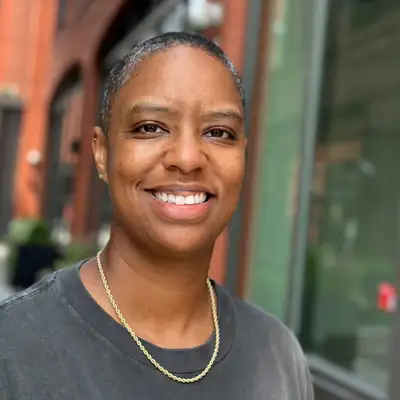
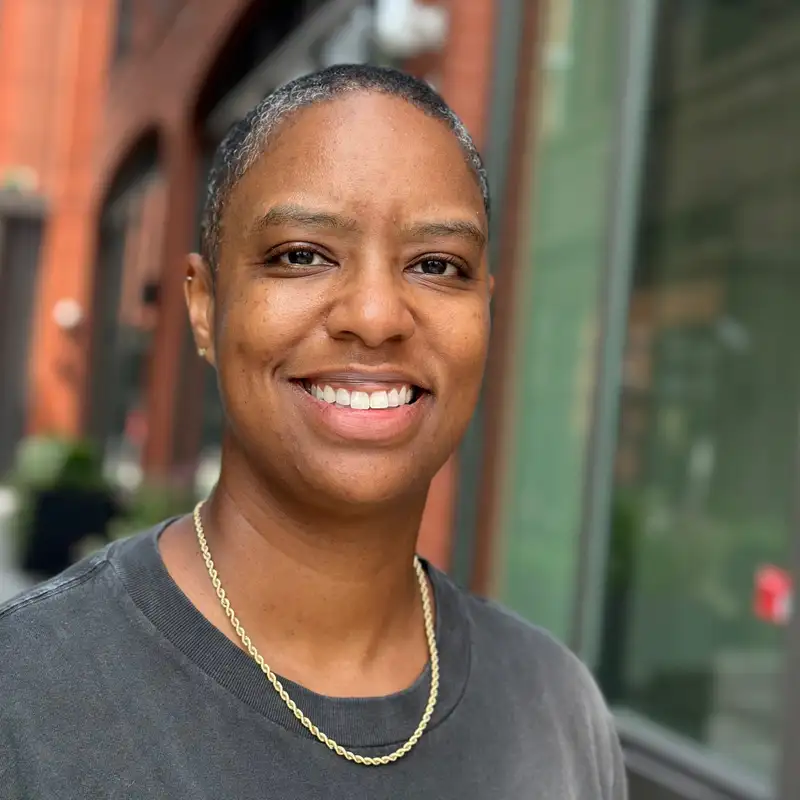
Rob Lee: And welcome back to the Truth in Us Art, your source for conversations connecting arts, culture and community. These are stories that matter and I am your host, Rob Lee, except no substitutes. Today I am thrilled to welcome my next guest, a collage and mixed media artist whose work is informed by her experiences as a black woman, professor, mother and a former athlete. Her work explores the joy and melancholy of living while black in the United States.
My guest works primarily with vintage magazines, acrylics, oil pastels, oil pigment sticks and acrylic inks on paper. So please welcome to the program Jess Owens Young. Welcome to the Truth in Us Art.
Jess Owens-Young: Hey, thanks for having me here.
Rob Lee: Thank you for coming on, making the time and it's, I like when the opportunity to do the IRL, the in real life thing comes together. We met a couple months ago at this point in person so I'm really happy to have you on this platform to have this discussion and to start off this discussion, I think really the discussion to share in a story. So the beginning of a good story is someone introducing themselves. So in your own words, could you introduce yourself to the audience who may not be familiar with you and aware of your work?
Jess Owens-Young: Sure, sure. So I am Jess Owens Young. In my day job, I am a professor at Morgan State University and I focus on public health, especially maternal health. When I'm not being a researcher or a teacher, I am a mixed media and collage artist. And what I like to say, especially lately, is that I use sports and our everyday experiences as storytelling vehicles to share our stories about joy, hopes and dreams.
Rob Lee: Thank you. Thank you. It has been out there. You've been going through it, putting it out there. So I like that. And I definitely in the last two, maybe even longer, but definitely in the last two years have played with that correlation between athletics and art. Because I think about it in terms of repetition and progressively getting better, those incremental changes. So going back, if you will, tell us the story about your first experience with, one of your earlier experiences with art, like those art memories. I go back to a mural or using the whole, I don't know if you remember, Wizard Magazine, the comic magazine. I used to draw from that. And because at once upon a time, I wanted to be an illustrator. So that sticks out for me. So how about you?
Jess Owens-Young: Huh. Early as art memories, I mean, it's pretty similar with kids in general. You know, when we're younger and we get those really cheap art sets, that's like the dried up markers and the watercolors that don't work. But I remember getting those as a kid and just drawing. So two distinct memories that I have about art as a child. One is that I wrote and illustrated a book called The Fat Cat.
And you know, I just took printer paper, folded it, stapled it. And I just wrote about this cat that was really fat. I can't remember the details, but I remember drawing this really large cat and just writing about it. And I think that was when I was in like the first or second grade. And also around that time, I did like a family portrait or like a drawing of my family. And I actually came across this drawing recently.
I think my parents gave it to me not long ago. But in it, you can see like an interior scene. And my dad is on one side watching TV on the couch. My mom's on the other side in the kitchen washing dishes and I'm in the middle. Like my arms are like, you know, stick to your arms, but they're reaching out to both my parents. And I have that somewhere.
I might have to share it on IG soon. But those are my earliest memories. And then, you know, going through middle school, high school and taking art classes. I did that, but didn't really take it too seriously at that time because at a point in my childhood, I had to make a decision between playing soccer and doing art. Yeah. And I went the soccer route. So I didn't really get back to art until about 2018. Oh, wow.
Rob Lee: Yeah, because that's, um, we're in the same age group. So that makes that makes sense. And, you know, being able to return and go back to something that had an interest. There's, I think a parallel universe is sometimes, you know, going back to the was that the fat cat comic will have you. I feel like there's a version of a version of it where, you know, we're talking about you as an illustrator about this sort of cat. So, yeah, going back to the cat comic, were you influenced by Garfield in any way? I just feel like that's a thing, but we're not in that life.
We're not in that lifetime. And so one of the things I'm also very curious about, you touched on being an athlete, soccer, you know, I kind of chose sort of the different route, you know, the opposite sort of you've, you've saw me in person. I'm a rather large individual. So it's like, oh, you played football.
Right? I did not. I wrote poetry and yes, the Bard, Rob Lee is here. And I used to have this term I used to call, I used to say I'm a sports illiterate. That's what I used to say.
Just big for nothing. So talk, if you will, about that transition from athlete and the mindset and the rigor that goes into that to, you know, being an artist. How did that happen? And what did you love most about athletics that you carried into a creative life?
Jess Owens-Young: Yeah, those are great questions. Let's see. So I mean, I'll start with the transition in 2018. So I stopped playing soccer. I played all through college. I played semi pro soccer. And then I was playing like rec league soccer for fun until my body was just like, we're done with this. And my wife and my mom were like, you need to do something else.
Because I have a lot of energy and it needs to be channeled somewhere. And, you know, they both were like, you like to draw and doodle and you like art as a kid. So why don't you go back to that?
And I did. So I started out with taking a intro to oil painting class at Columbia Art Center. So like a community based art center. And, you know, it does remind me of going to play soccer for the first time or like joining that first, you know, rec league team where, you know, everybody has an interest, you know, we're all learning, you know, just having fun with it. And, you know, that having fun with it, and I'll say I'm still having fun with it, but that having fun with it in the beginning led to a more disciplined approach. So just like in soccer, you know, you go from rec league to travel league to like super travel league in the college, right?
You level up and at those different levels, there are different demands and discipline definitely increases through those levels. And so as I found myself, you know, getting more and more into my art practice, building a community online, learning from folks. And I haven't taken many classes like formal classes, but I learned a lot from my peers. I also saw the discipline that they had, you know, and some of my peers are like major artists, right?
Like capital A. Like people you think of, when you think of museums and things like that. And just seeing the level of discipline that it took for them to move through those levels, it really reminds me of the work that I did and like the coaching I had to get, the networking, the people I had to meet and build relationships with as an athlete. It's really similar. Yeah. Yeah. You know, as an artist, but also that self discipline, you know, so as an athlete, you spend a lot of time alone practicing the mundane skills. Yes.
Right. And I often go back to just the basic skills, especially now as more of a collage artist. So I'm looking more at like shapes and their relationships to each other, playing around more with color, you know, just the basic understandings of these principles really reminds me of, you know, all the hours that I spent in my backyard just hitting the ball against the brick wall over and over and over again.
Rob Lee: That's cool. And these two early on in the podcast journey, my first, like three or four years of podcasting, the woman I was dating, she was a soccer player and she was playing in high school and into college. So she would use me because of my size. She was just like, you know, put these gloves on.
You're going to be a goalie. I was like, what, what are we doing? I was like, I don't think I signed up for this.
I was like, all right, that came kind of fast. Like, what are we doing? But it definitely, you mentioned sort of the reps or the wall at this point, I suppose. But getting those in and, you know, I applied perhaps a bit of that repetition that just the simple things out when you were describing it.
I thought of just someone shooting free throws and then playing basketball and you hate when it's like, oh man, a free throw is easy. Do it with some pressure. Do it with, you know, sort of the mindset that's there and apply that to something that's creative. Like I know folks who are working on a deadline or they're working with a bunch of different things going on in the background that could interfere with it. And sometimes you just need to get something done. So doing something that perhaps feels mundane. It's just like, yeah, but can you do it right now? Yep. Can you do it under these circumstances?
Can you do it under duress? Recently, and I'll move into this next question. Recently, I was, I'm pretty familiar with my equipment and, and I have different equipment. It's almost like when I'm teaching, I would share with my students in the podcast space, having the right tool for the job. So if you are doing a one to one person, like two people in an interview, you don't need something and has a bunch of different channels. You don't need an eight channel mixer. You don't need a bunch of extra microphones. You can travel in the skinny. That's what I like to do.
And if you do have more people, you may want to make sure you have enough microphones, headphones and all of that to get the best possible audio. Right. So I had a situation not too long ago where I was serving as an engineer for a pod. I thought I was hosting it initially.
So right there, because usually I'm hired to host. Yeah. It's just like, oh, no, we need you as an engineer. It's like, all right, cool. Well, I can just play tech guy, which I'm accustomed to. And I have the glasses for a reason.
I'm the guy that's in the movie. It's like, yeah, I can hack into that. And so I'm playing that, doing all of my setup.
And I get there about an hour early and just the mundane going through my stuff. Let me check the levels. Let me make sure I untangle the cables. Make sure everything is comfortable. Check the thermostat in the recording space, right? All of that stuff. Make sure there's water.
Make sure it's like room temperature. All of that, right? So we get down to it, the guests come in, there's students in there. I'm like, I didn't know that there were going to be students in an audience here. And turns out we need an additional microphone because one person who was a sponsor wanted to also be on and I packed two because I was told specifically just two mics. So I was able to use sort of, hey, you just split this channel, that background and that knowledge of making sure you have a good mic, a good setup and good placement. All of that different stuff that I did leading into it, prepared me for this small, but somewhat significant change.
Right. So I touched on the, you know, my teaching thing and I apply some of that stuff. I just said to teaching, you're a professor. So let's talk a bit about that and how the, I guess, approach as a professor aligns, perhaps with, you know, your work as an artist and how perhaps your work as an artist aligns with your work as a professor. Like how do they kind of serve each other?
Jess Owens-Young: Yeah, they definitely feed each other. I've been thinking about this more and more lately, especially because, you know, my position at Morgan State is relatively new. You know, I joined Morgan in August 2025 and I was at American University for nine years prior to that. And, you know, I have grown as a professor throughout that time.
And I've been thinking about how my transitions through the different stages as a professor kind of correlates with my transitions with my artwork and like the themes that I explore, for example. And so for folks that aren't familiar with the field of public health, it's a broad field. It's interdisciplinary.
It covers a lot of issues and concerns ranging from, you know, the individual level to society. And I'm finding that those similar themes kind of shape my work. So for example, if you look at my work, I usually have an individual or like a solitary person or figure in my work.
But if you look at the other elements that I include in my work, they reference themes that are kind of universal, that are kind of social, right? So like ideas about like faith and how that might relate to the story I'm trying to tell. The role sports play in our lives, the roles that flowers and nature play, you know, in our lives and shaping our environment and how we feel in our environments, things like that. And so I think the way that I think about public health and that both the individual and the social aspects really come out in my art. And I'll also say that the way that I teach, I teach now, lately, I teach more process-based courses rather than, you know, theory or just broad concepts.
So for example, last fall I taught social marketing and that's a process, right? When I approach my art, there is a process. There's a way that I go into the studio. There is a way that I pick up my tools. There's a way that I cut paper. There's a way that I paint the papers that I cut, things like that, right? And I'm a very process-oriented kind of person. And so that's another example of how these two worlds kind of merge.
Rob Lee: That's great. It's great to hear that. And, you know, thank you for breaking that down and showing that sort of connection because, you know, I see it in describing this like I'm a data analyst, you know, day job. And you know, people ask me, so you left brain or right brain? I say, I got a brain, I guess.
I don't know. And, you know, but when I get into the sort of mindset and started thinking through it, the process is there, you know, I'm checking all of this stuff. Like when I'm going into a sequel to do my stuff, I have sort of some really like warm up stretches, if you will, on how I'm going to go about it and pull in the different tables and all of that stuff I need to do.
And the same thing kind of applies here. Let me make sure I have the questions. Let me do a mic check. All of that stuff here is a process to set the stage. But the other thing that has a little bit more depth to it is the storytelling component. So, you know, often and we definitely will be talking about this a bit later when I'm approaching folks for funding or opportunities, I have to not only have the the fizzle, but I need to have a stake and the stake is the data. So it's like, oh, how many downloads you got?
How much money are you looking for? Things of that nature. So if I can have a really good, creative, you know, documentary sort of thing here in this podcast, but I don't have anything to reinforce it to lift it up to show like data and stats, then, you know, some potential funders will pull out. And the same thing applies in the day job where if I just have numbers and just show it to someone, it's like, what does this mean? Well, here's here's me consulting now.
And it's like I can use the storytelling component from doing this to improve how I'm delivering that information in vice versa. Yep. Yeah, that's just me on here. Yeah, but I got to put these things together sometimes.
Jess Owens-Young: No, but I see it too. You know, similarly, you know, being a professor, working with data, also hustling for grants, you know, for funding, right? You got to be able to translate that raw information into the knowledge that like we can use to tell a particular story.
And I don't know. You got me thinking now about like how storytelling and my own artwork has shifted and how that has also shaped how I teach. Well, and how I tell stories and like grant applications or even how now how I'm approaching, you know, my research articles and what I'm writing.
And the avenues where I want to disseminate research findings and build community and things like that. And so like my storytelling in the beginning was really like, look at this painting I did of my dad, right? And it's a nice painting, you know, but it was not to say it was just of my dad, but I was literally just painting the picture of my dad. It wasn't much storytelling. There wasn't many like symbols or things like that. But over time, like I have learned that, you know, just like in public health, you just don't want to give the data like that painting I did of my dad in 2019. I love it is hanging on my wall. But when I look at it, it's kind of like just giving the data.
My paint strokes, the color, things like that. It wasn't there's a motion behind it, but it's not much of a story to dig into. Right.
He actually looks half asleep. So that could be a story. But now I use a lot more elements and I try to tap into the psychology of my audience and also the emotions of my audience to tell a bigger story.
Rob Lee: Do and we're going to talk about sort of certain materials in a moment, but I think we're in a good spot to actually add this question. And this is off the top. But do you have this sort of like when you're perhaps sharing their story or articulating it and really considering it? Do you feel that at times you may give a lot or not give enough? You're like, I really want them to get this. And I think when I'm when I'm doing this, right, I'm like, they should get it. They should understand what I'm doing. And sometimes you have to spoon feed it. How do you work within that? Because your art is your art. Your story is the story and how you want to depict it is how you want to depict it. But sometimes when people are like, I don't get art. Yeah.
Jess Owens-Young: Well, I think, you know, either I'm lucky or I don't remember. I think that I haven't really had to go too deep. And to telling stories. And in fact, I think the way that that my work positions itself, it allows the viewer to interpret their own story because of the themes that that I use are like the universality that you can find within my artwork. I think that for folks who have been there, who have been OGs since, you know, the early Instagram days, they have seen the evolution. And I think they don't need that kind of explanation. But folks who just find me, they, they say that they're initially attracted because the colors are like something stirred in them and they can't quite articulate it.
So sometimes I'm in DMs, you know, talking back and forth with a person and just asking them questions or allowing them to kind of process instead of me just saying, oh, this is exactly that. Right. But when I do artwork. So for example, I have a Negro League baseball series. Right. And when I share that artwork, I do provide a little bit of history.
Right. Just enough to get people curious because I want them to go Google or read a book. Watch a YouTube document or something. Right. To follow their own curiosities instead of me saying, this is what you should know about this team. And that's it. Right.
Go learn more about like the Detroit stars of, you know, the Baltimore, Eli giants. Right. Go learn more. I try to give people just enough to spark something in them and then they can go explore on their own. But when there are questions, like very specific questions, so for example, a few days ago, a new follower asked why I chose basketball and golf. Yeah.
As some of my sports that I referenced. And I don't know if you're going to ask that later. That's coming out. That's coming up. All right. So I'm going to say that.
Rob Lee: Yes. Put a pen in that one. Yeah. I'm going to put a pen in this one. You were, you were going through my, my list. Like back in high school, I had like all of the hats from those Negro League teams. I was like, yeah, yeah. She's going to say Atlanta black crackers. Do that one.
Jess Owens-Young: I am going to get there. The goal is to get to all of them. It's just going to take time as good things do. Yeah.
Rob Lee: Um, but yeah, I think really getting it across and sharing it and it's to be interpreted and I, and I like what you were touching on there where it's very uncommon now since we live online so much that, oh, I want you to go. I want you to enjoy the art and appreciate that I'd have questions, curiosity, but I want you to go off site as well. Read a book, get, get sort of the context.
Now it's just like, oh, well, once you leave an Instagram, everything you need is right here. And I think you, you don't gather. Like I do, I do a movie review podcast outside of this. And, you know, I tell folks like, look, you should watch this movie. You don't listen to me, you know, listen to me and then watch the movie or listen to me after you watch the movie, but you should watch the movie and come up with your own thoughts and ideas. And I think the same applies when there's a, a reference to a few of the things we're going to talk about later, specifically golf and, and, and basketball. Kind of understand what those references come from. Look for similar artists and then come back and add that and just really have a better understanding.
Be fully dipped. I guess is what I'm looking at. Yeah. So let's, let's, let's talk specifically into the work now. So now close look at the work itself. Um, what draws you to the materials? I see vintage magazines, printed paper, acrylics, oil pastels, oil, pigment sticks, acrylic inks on paper. What draws you there and like, how do you choose like what to work with?
Jess Owens-Young: Yeah, I don't know. That's some magic of it. I will say that I've had an affinity for paper like all my life. My mom also loves paper and like growing up, um, you know, she has subscriptions to different magazines and I would flip through them. Um, and it's kind of nostalgic, you know, to find these, uh, vintage ebony magazines. I typically use, um, I have some essences.
I have some jet and then like good house key bait or golf magazine, like random other magazines for imagery. Um, but it's, it's something about like holding those magazines, um, the yellowing of the pages, um, reading those articles. Like what folks were talking about back in the sixties, seventies, eighties and how we're still talking about some of the things.
She's how it might have changed over time or not. Um, it's very interesting to me and that helps inform, um, my work as well. And in terms of like the other, you know, mediums like paint, well, I love the way that paint feels. I love how it feels when I use paint brushes or foam brushes or whatever I'm using to, um, paint or to create the papers.
Um, I also use hymnal papers in my work. Um, that is a reflection, you know, of my faith and also the faith of my family members and thinking about the strength of my, um, mothers, my grandmothers and my great-grandmothers faith that, um, I grew up in and around. Um, and also just, you know, spirituality in general. Like the, the human spirit is fascinating to me. Um, and the inks, they're fun.
They're running. You know, they're kind of unpredictable and like, oh no, in my work, you kind of see a balance between unpredictability and predictability. So like some of my earlier paintings, um, you know, the backgrounds are more just me making strokes and playing with textures and things like that. And then the collages, you know, there's, um, differences in each piece that I cut. Like you can see the different strokes. You can see where I threw some ink or things like that, but it's a precise cut at the same time.
Right. You can see the pieces. You can see exactly where one piece ends and another piece begins. You can see how I layered them, things like that. Um, and so like that balance kind of shapes also the materials that I choose. So usually every piece starts with a sketch, either like a physical sketch or it's in my head.
I can see it. And that sketch kind of dictates what I want it to be. So sometimes I'll sketch something and I'll even put in my IG stories sometimes like, should this be a painting or a collage? Because usually it's, it's clear to me which direction it should go.
Um, but sometimes I, uh, it's not clear and I just have to do it, you know, just make a commitment and do it one way or then come back to it. Um, in another way. But, oh, you mentioned oil pastels too. I like oil pastels because they can be so vibrant and then they get all your fingers. You can smear them like it. I don't know the texture of it as a contrast to like a smooth ink. Like I like to play with contrast as well. Um, I don't know it's Thursdays like a kind of feeling that I can't describe yet in me.
Rob Lee: Yeah, I'm hearing like it's a tactile nature to it. I'm hearing it's a, it's like what Austin Cleon would say is like, you know, you have the digital stuff and you have analog stuff. He's like, you got to do stuff with your hands. You got to do stuff with it. And you know, this is small and simple and I'm moving to this, this next question.
But, you know, I was looking at, I have a actually right there on the floor. I had this book, I had no idea it's final and I was just going through for, for quotes and it gives me a lot of inspiration. I could easily just pull out the laptop and start writing down my questions. But I rather write them down in a notepad.
I have, I have maybe 15 notepads that I'm currently using. I'm a bad person in that way, but I go through and then I sort of transcribe them into something that turns into questions. Several of which have gone into this, this, this conversation we're having. And it's something about doing it that way versus the perfectionism. I have to be involved in that way. And that's why I get so annoyed sometimes with their auto correctness there or the AI of it all. It's just like, I want my errors. I want the way that I talk in these questions, not just this is a really polished, perfect question because I find often the guest is like, what are you talking about?
I don't know, bro. You know, I was just like, you know, process and, you know, art words and then art words is a thing. It's going to be a whole, a whole series I'm doing next year on art words, things that I don't know what the hell I'm talking about. But yeah, I, you know, I think that in what you were describing, you know, with some of the process that's there reminded me of this period where I was painting, you know, I got paint. So I'm in my creative space in my studio and with the exception of two paintings that I did, I did, uh, I think, you know, look at it. It's I think 10 paintings I did in a year just kind of like messing around with it.
And painting was the thing that I used to do when I was younger. And I look at these and I was like, they're not great. There's crudeness.
I'm not going to, but it's a, I've had these over 10 years at this point. And the ones that are not in my creative space, the ones that are in here have a lot of emotion attached to it. Right. Of what I was thinking and what motivated it. But the ones that are outside of here, like I have one that's right there in my living room. So right there, anyone that's coming here is like, you probably this one, ain't you?
I was like, I am. And then I have another in my bathroom, which is this, I was just having fun. And it's probably my best one where I was doing a really bad interpretation of some Bosque out of stuff. And, but it's, it's, it's like a street art thing. And it's the Aquarius like glyphs. And I was just like, yeah, I'm an Aquarius is going to be in the room. And, and I have that in there. And I love those two, but I have an emotional response for the other ones that are in my studio. Yeah. Yeah.
So let's talk about how your work is progressing. And that's all you want to grab. I see different things happening.
Yes. So for example, with the Oak Bluffs golf club that series and the hoop dreams never die series, what directions or themes are you planning to explore next and talk about those, those two things as well to the degree in which you want to talk about them?
Jess Owens-Young: Yeah, two of my favorite series that I'm working on. And I'll talk about the golf series first. Sure. So I started the Oak Bluffs golf club series in 2024, not long after my daughter was born. And, you know, I, I am fascinated by the game of golf has been for a long time, had a friend in high school who was on the golf team, the only girl on the golf team, you know. And I think about golf often as like leisure, you know. So like when you think about, especially folks who have money, hey, and those in wealthier circles, their game of choice, golf, tennis, you know, things like that.
But being the, the nerve that I am, I also had a minor in history and in undergrad. I started to learn more and more about the history of golf, which, you know, led me to, well, what's black history of golf, right? And then that led to a broader question about, nd that brought me to Oak Bluffs and learning about how that is a haven for rest and leisure, especially in the summertime for black folks. So I started learning more about the history of Oak Bluffs and then went from the textual history to a visual history and looking through all those vintage pictures to pictures of folks going now, right?
Because it's still a space for black folks. And I was just imagining a golf club that existed from the beginning because there is a golf club up there that I think was founded in the late 60s and 70s called Farm Neck Golf Club. Right? And that exists, but I wanted to think of a golf club that existed from the very beginning. And so if you look at this series, you'll see the figures are wearing a patch on their shirt. This is 1912. And that was the founding really of Oak Bluffs and the opening of the first hotel for black folks up there.
And for folks who are familiar, Oak Bluffs is in Martha's Vineyard. So that can give a frame of reference to what I'm talking about. And so, yeah, I just started imagining, okay, there's a golf club that existed since 1912. What were the stories there? And these figures all have different stories from like getting a hole in one and getting a varsity jacket. There's a piece that I have called Varsity Blues that tells that story. There's also another piece in there that is like a sub series that I'm going to be working on about like celebrities that visited the golf club. And so the first one that supposedly visited Oak Bluffs golf club is Samuel L. Jackson. And like the story behind that one is like, there's a legend that he did visit the golf club, but you know, the old days are the ones telling the story and nobody believes them. So nobody's really sure.
Rob Lee: I don't know if he was here or not. Yeah, maybe. Maybe.
Jess Owens-Young: So that story, you know, though, Obama's may make an appearance at the club, you know, other folks may show up at the club as well as I've worked through this series. But you know, the bigger story is that we've been in these sports and that there is a history that is often erased or ignored in these sports, right? There's more black folks involved in golf than Tiger. Right. And that's changing even more so now, but even before him, you know, there were folks playing a major tournament, you know, and I want people to understand that our involvement in sports like golf is not new.
Right. And so that's the bigger story behind the OPLUS golf club, along with, you know, things that come out of my imagination that I like to share. And hoop dreams never die is a relatively new series. I think I started it last so 2025. And this one is about sports as a container for our joy, hopes and dreams. And it's informed by my own experience as a soccer player, also trying out for professional soccer teams and that experience and thinking about, oh man, what if, you know, or dreaming of playing on the national team, right? And still carrying those dreams forward as we age. Right.
So, you know, almost 40. And I still dream about being a pro soccer player or pro athlete, but those dreams also feed into other kinds of dreams that I have outside of sports, right? Or being involved in sports in a different way as I get older. So I also think about like folks that I see at the gym who are still hooping, you know, and I chose basketball because, well, one, I think soccer is a little too close to me right now.
So sometimes it's a little hard to create something that is really, really close to you. But also when I was a kid, I wanted to be a basketball player. I wanted to learn how to play basketball. And I always shied away from basketball because I just thought I didn't have the coordination and I knew I wasn't going to grow that tall, you know, but I wanted to learn the game. So I really love basketball culture. I love how it influences broader culture as well and learning more and more about the history of the sport and how art is infused with basketball and vice versa, like how, for example, basketball has influenced fashion. I remember being in middle school and, you know, when the Jordan 13s came out, you know, my folks didn't buy me Jordan. So being, you know, a little bit jealous of not having Jordan's, but fun fact, I just bought some 13s, the ones that just came out. That's what we did. So a little guess.
Rob Lee: I can get them now.
Jess Owens-Young: A little guess is very happy that she can build her own collection of Jordans now. But yeah, it's about our shared joys, hopes and dreams that are personified through sport really. And so looking forward to building more in that collection too. Yeah.
Rob Lee: And thank you. And even going back a little bit and I think it connects to sort of these perhaps erased or these sort of under discussed contributions that folks that look like me and you are doing, whether it be in sports or even the contribution to my journalism documenting our stories, whether it be in Ebony or Jet magazine. And I remember back in the day, I'm like, yo, that jet beauty of the week. Like, what we, oh, whoa, what year?
What year is this? I was talking to my partner about this. She was just like, yeah, back in the nineties. I was like, word.
Whoa. And, you know, as you're also mentioning, sort of going back through as a time capsule and reading some of that stuff and seeing what people valued and what people took joy out of and what people kind of, I guess, what their experiences were like. And I think like we, something about going back to this sort of analog or these sort of almost not forgotten, but perhaps suppressed histories that are very much ours. And, you know, I had this, this quote, because, you know, sometimes I have to be neutral, but sometimes I, it slips through and I was just like, we're giving it away.
Yeah. You know, and I had a few people reach out to me just like maybe feeling that the thing is often I'm ignored, but when I put that out there, folks are like, what do you mean by that? And I was like, I'm talking culturally. Yeah. And it's not to say that people shouldn't be involved, but, you know, the notion that we should get rid of print magazines, they should be gone.
And that was one of the ways that our stuff was out there or no one is watching TV. It's just like all of these different things. They're towards a specific goal and sort of going back to it. What I'm hearing from your work in which you're interested in is sort of, let me revisit this through my work because it's of importance and really showing our stories. And when I went to the oak bluffs, like, sir, to what have you, I saw like just Obama with the wild leg kick.
I was like, this is, this is great. And, and I think even the, maybe I'm wrong, but I think like the oak bluffs joint had maybe polo. They had a polo thing a couple years back. Yes.
They did. And I remember like every booge I knew was like, yeah, I got to get that oak bluffs. I was like, oh, big golf person. I see. Yeah. I was sidelined.
I'm like, don't, don't go with Jordan's to make it full circle. So I want to, I want to talk a bit about, um, you know, you're talking about sort of your professor work, your, your, your work outside of the studio, but also you, you mentioned a moment ago, motherhood. So can you tell us a bit about how your art practices evolved, um, since becoming a mother and how do you balance, you know, the time in the studio with like parenting responsibilities? Yeah.
Jess Owens-Young: Um, it's definitely been a shift. There were times, especially during COVID, you know, when we were all online and teaching online, I didn't have, you know, a three hour commute every day. Um, that time turned into studio time. So I used to have like four or five hours block of time to just go in there, paint, do whatever. Now I have maybe 20 minutes, 30 minutes, you know, I, I call, um, that I create in the cracks of time. And so now I, I find, um, you know, times where I otherwise would have spent like scrolling Instagram or doing something like that. I'm like, Oh, I have 15 minutes before I have to go get the baby or you know, something like that.
Let me cut out some shapes. And so I have found that my work has become even more process based, um, then just sitting around waiting for inspiration. You've arrived. Right. And I find that I am more, um, focused and intentional with my time when I'm in the studio and, and folks should know, at least for now, I'm working on, you know, a different studio space, but at least for now, my studio is in my laundry room in the basement. Right. And so if I am waiting for a load of laundry to finish, like it has five more minutes, you know, I might, you know, um, take out some paint and make papers.
Yeah. I, I've figured out ways to make those little pockets of time productive. And so that when I do have like an hour or two, um, everything's ready.
I can get at it. Um, like for example, this morning I, I finished, um, going down a large collage, um, because I have spent time in the previous days preparing, um, in those cracks of time. Um, so yeah, but now that she, she just turned two, um, she's getting older and she's, um, showing interest and mimicking me or, you know, wanting to, to also create, she really enjoys painting. And so I can give her, you know, her paints and put her on the floor for a little bit and I'll keep her occupied and I can do my, my things too. And so I think as she gets older, um, she'll give me a little bit more time to um, to actually spend blocks of time creating.
But I will say it in addition to like making me more focused and making me more intentional with the time that I do have, um, themes of motherhood is starting to come true as well. Um, thinking about, you know, how are we nurtured? Now, um, what does motherhood look like different life stages?
What does it mean to be an elder, millennial mother, you know, like having a toddler at 40, you know, like what, what does that mean? Um, and how can I, you know, express that through my art? Um, I am finding myself leaning. Uh, I've created works with, you know, girls or female presenting characters, but I'm finding myself starting to shift more. Um, into that direction too. Um, but yeah, it has made me very much more focused.
I'm less productive and I'm putting air quotes up because like in COVID times and before, um, having her, like I would be making stuff like one a day, like really producing now it takes me a little bit longer, but I find that what I do create when it's done, there's a lot of intentionality behind it.
Rob Lee: That's, that's big. That's important. It's great to hear that your, your daughter's taking an entrance. That's, that's also cool. And that you're finding those, um, those cracks in time, um, to be able to create, um, you know, as a person that's always busy myself, I'm rare that I'm going to pop out and go to a thing. Cause I got to be really intentional with it and I don't have any kids, you know, that I know of, and, uh, no, that's not me. Um, but I don't have any kids, but I do have sort of different responsibilities and sort of best time shifts. Um, just have to be very intentional and very, and I almost hate the word intentional because I think people use it too much, but you have to be very specific and considerate as to how you're using that time when other things are more, you know, priority. So I know for instance, and I've got two more real questions left, but I know for instance, when I go up to Philadelphia or go down to DC, I know that that's pretty much a static ride, you know, so notepad, let's get something in.
Let's do some research. And I like how you were describing sort of having everything laid out. So it's process oriented. It's like, I got an hour here. It took me an hour to sort of cut this paper to help me an hour to sort of form this collage and these different elements for it. And I got 20 minutes. I can put this down to 20 minutes and you don't have time to really mess around, you know, but also it's not, I think, uh, uh, selling yourself short when it comes to the creativity and the exploration of it, because you don't want it to feel like it's work because it's fun.
Jess Owens-Young: It is fun. Yeah. And I do find that a lot of exploration comes like when I'm driving, like, you know, you're describing, um, that kind of time allows me to process and to, um, kind of imagine and think. And so I'm not going to the studio to sit and process and think.
Right. And I, I also think about, man, if I was this focused back in COVID times or before having my daughter, like, man, what could I have produced? But, you know, there's no use in thinking that way because what I produced back then led me to where I am now. And it provided me with the skills, um, and the ways of thinking that have shaped me to the artist I am now.
Rob Lee: That's that, that last piece is going to definitely connect to my last question. So put another pen, we got pens, but here's the, uh, the pen ultimate question. If you will, you recently had a sold out show in LA. So can you tell us about that experience and how, you know, black owned galleries support emerging artists like yourself? Cause you know, I like, I like when people are looking out, I like when those connections are happening. So talk about that experience a bit. Yeah.
Jess Owens-Young: So there was a global open call for art that, um, art melanated, um, in collaboration with band of vices, which is the gallery in LA. Um, they held and I entered, you know, say, yeah, you know, why not?
Right. Um, and was one of think 11 artists that were selected to participate in this show. And the funny thing is, um, I had made a list in December, like early December of cities where I wanted to show in 2026 and LA was one of those, those cities. And it happened, you know, I kind of like to think I planted the seed, you know, to pursue this, this opportunity and making it happen.
And let me tell you, like that experience of, you know, taking my family, you know, across the country to go see a show that I was in and to have all my work, um, sell before the show even opened. Like, you know, you're not supposed to be chasing metrics or anything like that, but it is an affirmation in a way. And I like to look for like little winks from God or the universe, right?
That you're on the right path. And I will say, and I didn't talk about this earlier, but I will say that I struggled with my artist identity and my style for a long time. Because like when you think of fine art, like you think of, uh, realism, right? You think of certain types of skills and techniques that are used that make something quote unquote fine art.
And like my art is kind of cartoony in a way, you know, like, um, so it took a long time for me to accept that, Hey, this is my style. This is what I have to offer. This is my expression of, of my truth and my experiences. And, um, and that's okay. And people like it, you know, and so, um, participating in that show and meeting the other artists, another one who was also based in Baltimore.
And we thought that we lived like a mile from each other. That was really cool. Um, to experience, uh, but seeing their work, um, learning about their journeys and their processes, um, was fantastic. And the fact that, you know, Vanda Vices, the Black owned gallery, like we need these spaces, we need folks who aren't going to act like traditional quote unquote gatekeepers.
Rob Lee: No foreshadowing there.
Jess Owens-Young: To, um, like people building their, their art collections, um, you know, they, they understand us in a different way. You know, I can't quite articulate it, but I felt taken care of. I felt seen.
I felt rooted for, um, and to see other black artists working across all disciplines from sculpture to traditional painting, to mixed media and collage, like I do, like it's cool to see like the range that we have. Yeah. Absolutely.
Rob Lee: And you know, uh, I'm not sure if he's still there. Oh, has it, has it on there? Uh, Terrell, you met Terrell there, right? He's, he's been on the truth in this art twice and it was on that short list. And you mentioned, um, places, you know, that you wanted to have your work seen and shown and all of that good stuff. I had LA on there. I had a bunch of different places.
I was like, yo, I got like about 10 people I need to see in LA. What am I doing? Yeah. And you know, it's, it's one of those things that have those, those short goals and, but just those important goals too, to just really feel like there's a connection, feel like there's community, feel like there's, you know, you want that, I know I do, but you want that sort of like feedback. You know, see like, where am I at? How do I fit here?
It's just, you know, because, you know, athletes, competition, um, you know, it's just like, where do I fit? And it's the, uh, artist equivalent of a AU game or something. Yeah.
It's like, yeah, yeah. So who are you? You from where? Cool. Cool. Okay.
You're going to have those jerseys. I got you. Um, yeah. It's, um, I think in having those opportunities to, in that same thing, what I would like to do, I think this is where it relates, be able to do my work in other places. So I've had that opportunity.
I've done interviews in New Orleans, like on site, did like seven of them, gotten in trouble with the partner. She was like, it's your birthday. Why are you working? I was like, I'm always working.
She's like, you should stop a little bit. And, uh, or even the first time, which was very risky, because I wasn't sure where I fit, you know, you get those rejections, you get those sort of not so kind comments, the emails are sometimes really weird. The rejections are really weird. And, um, you know, you're not really sure where you fit. And the first, I guess, dive into that was visiting Austin, Texas.
I wouldn't go to Austin now based on some of the stuff that's happening there with the podcast space. But when I went was in 2022 when I had that doing almost an episode a day sort of year and I went down there and did what I felt was good work, but also I think it was very exploratory work. It was this increasing the intensity to use the, um, the, the weightlifting sort of parlance or, you know, progressive overloading.
I was doing something out of this outside of my norm. I could do interviews in the studio all day. Sometimes I have done them all day, but doing them on location and having to navigate all these different things. I didn't find out what to eat because sometimes you go to different cities.
They're like, what are we eating? Yeah. Huh?
What here? So being able to do that and get through it, it just builds up that capacity to do other things. So having your work shown in other places and shown, you know, amongst other people and having that Baltimore connection because I'm banned advice that talks about it. I got a few referrals, um, from Tyrell for, um, some local artists that were into my radar, you know, like Tommy Mitchell was one, uh, Monica Kegler was another. And I was just like, cool, appreciate you. You know more about my city than I do. I have no excuses. Um, at least at the time now I'm a little bit more tapped in. Yeah.
Speaker 3: So, yeah.
Rob Lee: Fessy, I got this one last real question. Yeah. And I think you're going to have something to say about this one. So lastly, uh, what is a common belief behavior idea in the art world? So sort of, you know, some people say, I'm not in the art world. Some people say I'm in a very local, very specific art world.
So however that may, may work for you. What is the common, uh, behavior, belief or idea in the art world that you would like to see changed? I would like that side was great. You don't say.
Jess Owens-Young: Well, I've been thinking about this, um, more intensely over the last few days, um, just in general, not because, you know, we were going to have this conversation, but just in general.
Rob Lee: Oh, we just took the mic. So we weren't even supposed to be doing it. And I'm kidding.
Jess Owens-Young: Um, this is idea of that there has to be gatekeepers. Mm hmm. Um, good art that it has to be kept on these pristine white walls and in this gallery that, you know, all the walls are glass or something, you know, or that, you know, people look at you funny when you walk in to look at the art. Right. And I've been thinking about this more intensely lately because I've been, um, more active on threads and I haven't seen Spike Lee just rolling up the people on their threads and it's like, how much spike, you know, like collecting art straight off of social media.
You know, that's, that's happened to me before. Right. But it's, it's more so around like us common folks, right? But to see someone like Spike Lee, who does have an expansive art collection, yeah, going directly to the artist and building that relationship, um, with the artist is something that I want to see more of. I, I appreciate the roles that, um, you know, gallerist play and curators play for sure.
Like I have folks on my team that do that role for me, right? But they do it in a different way. That's not like exclusive, um, in terms of like, Oh, you have to know somebody who knows somebody in order to get connected to us.
You know, like they don't do it like that. Um, and so like, I want to see this idea of, you know, fine art must be, you know, kept behind, you know, a gate in order to access it and that, you know, if you are accessible, then you're not a fine artist. Like that kind of thinking as well. You know, I could talk about this for a really long time.
But yeah, like, um, this idea of exclusivity in terms of who gets to access the art, who gets to engage with artists, who gets to be called a fine artist, um, is something that I would like to see change.
Rob Lee: That's, that's good. And, you know, we'll, we can have one more pen to put in that one. Cause that might be an essay's advice question that we might be talking about that again.
Um, and I, and I think before moving into the rapid fire, I got two rapid fire questions for you. I think mentioning Spike Lee as a person who, you know, it kind of has that. We got to talk about these black stories, um, and his work. He's had that sort of, I'm not independently wealthy.
I have to raise money to get my creative expression out there. And it's always met with a certain degree of, but you're Spike Lee. And it's like, yeah, and I still need to get this funded. And seeing that in a way of sort of like paying it forward out there.
Like, let me go directly to the maker, to the artists and buy from them. You know, I'm gonna have to put my boycott styles hoodie back on. I, you know, I was wearing it too, too small for it now, but I was wearing it for a while. I'm in two movies with that same hoodie on, by the way. Yeah. It's a plan Rob shocker.
Um, but yeah, it's, uh, it's really cool. I'm going to move into these two rapid fire questions. Okay.
You know this podcast, you don't, you need to overthink these. Yeah. Um, so this is the first one I was, I felt really, I double checked. Cause I felt really good about it. Okay. So your initials create the word joy. Yes. What's been a new source for joy for you? Oh, my baby. Oh yeah. Easy one.
Jess Owens-Young: Um, yeah. She's just a bright light in my life and, and yeah, just being able to be one of her parents is such a joy in my life. Fantastic.
Rob Lee: Uh, babies, babies have that effect. Uh, yeah. Yeah. I got a, uh, technically a grandfather. Don't talk about the math. Don't you want to understand the math? But, um, I think in, uh, not too long before we met in person, we were on a cruise and I think the, the baby, uh, he just turned like maybe eight months and I have this rule. I was like, yeah, I don't pick up babies until they have certain size. And then I picked them up. I was like, I don't like this. And then he's like my guy now. I was like, the big P he's like grabbing at the beard.
I say, Hey man, gentle. And then he was born two days after my 40th birthday. So it's just like, I got to look out for this guy. He's, you know, I got teaching the ways of the Aquarius.
Yes. Otherwise he won't be all flutter. He's gonna know what he's going to be doing. So, you know, that's, you know, and this sort of, I don't even use the grandpa thing. I'm like, I'm the cool uncle. I'm like, cool Rob. That's actually the title, official title, cool Rob. I like that. So in this sort of last rapid fire question, I was sharing earlier this experience that I had of the servaness and engineer for a mobile podcast situation.
And I like to get his gorilla and utilitarian as possible. I had most of my gear in a fanny pack. That's how small I was down. So thinking about it from, from that standpoint, utilitarian, you know, traveling light in two to three items, what's the bare minimum you need to make work? Like, you know, you can make something like what, like, what do you need?
Jess Owens-Young: There's paper glue. Boom. See?
Rob Lee: Not much work there. Not much work there. So like, look, I got this here's some art. Enjoy.
Jess Owens-Young: And it could be paper you found on the ground. It could be paper that you make. You know, you can always find some paper. So where?
Rob Lee: I mean, you know, going back to one of the things you said earlier about that, uh, that copy paper or what have you there, printer paper. It used to be currency back in the day when, when, when I did my comics, I was one of the things that I did a comic when I was in middle school and I used to slide in there like, yo, I want that construction paper. Let me get that printer paper.
Yup. And I remember the teacher was just like, I'm taking this because I was, you know, I was like not doing my, my test. I was like quickly going through the test, get that B so I could just draw. And she's just like, this is what my paper's been going.
I'll say, Oh yeah, absolutely. Don't worry about it. It's fine. It's fine.
It's fine. So here's the sage advice question. Thank you for indulging me with the rapid fire. You're very, you're very quick on those.
I like that. So the sage advice, let's, let's go back to the journey a little bit, revisiting gatekeepers, but also I'm going to add roadblocks and guardrails. All of these parts can limit our, our work. We run into these different things. You either someone is just blocking you, you run into this sort of thing of your little gunshot, your little self conscious.
And it's just like, I'm going to put these guardrails up. Maybe I shouldn't make this work. And then you run into just these roadblocks. That is just, I can't go any further here.
Maybe I should change. I remember doing a, um, a live podcast thing with a young artist and we were, don't, we were screening a documentary film with his. No one showed up. And you know, at like 22, that's a lot. I was trying to talk him off the ledge because I felt responsible and just not that people didn't show up, but just like, Hey, I invited you and I provided this sort of platform and just sometimes just those things happen. And he shifted to a completely different medium.
Like that day he's like, yeah, I'm done with film. And I was like, wow, this is, this is a lot. So, you know, sort of, it's a roadblocks. You got to go somewhere else.
You still want to create, but you got to go somewhere else. So with that in mind, uh, what practical advice would you, you, would someone listening to this conversation, would you want to share to someone listening to this conversation that to get around those gatekeepers, those roadblocks, those guardrails?
Jess Owens-Young: So I would say two things. One work on your mindset. Because mindset is key. Like I talked earlier about how I didn't, um, kind of value my style or like how it took me a long time to accept my style as it is and that it's beautiful the way that, that it is. Um, that took a lot of mindset work, right? And you're going to get rejected all the time, you know. Um, and if you don't have a strong mindset, you're going to take those rejections personal and when often, you know, more times than not, they, they aren't personal and a rejection of you and your work. The second thing I would say is to keep sharing your work. And, you know, just like with my Spike Lee example earlier, and I've also shared this on my own threads, like you never know who is looking at your work or who might see it, you know, come across their social media fee or who might share it.
You just never know. So keep sharing the work, keep making the work because if you don't, it's going to get bottled up. It's going to come out in a, not so nice way, but yeah. So they keep sharing and to keep creating would be my advice.
Rob Lee: I guess really well said. And, um, I think one to carry on. So that's kind of it for us for today. I thank you for spending some time with me and, uh, sharing that really insightful and I think very like actionable piece of sage advice. So with that being said, there's two things I would like to do as we close out. One, I want to thank you for coming on to the podcast and spending some time with me. This has been a joy.
See what they're there. And, um, and two, I'd like to invite and encourage you to share with the listeners where they can find you, follow your work, social media website, anything that you want to plug in these final moments, the floor is yours.
Jess Owens-Young: Thanks, Rob. This was really a pleasure. Um, my Instagram is at truth of strength and I'm pretty active on there and also on threads, same username. And my website is coming. It is just Owens young.com. You know, it's under construction, but if you go there now, you can sign up for my newsletter, which I'll also be devoting some more time to, um, over the year. And so yeah, and that's, that's what I got for you.
Rob Lee: And there you have it folks. I want to again thank Jess Owens young for coming on to the truth in this art and informing us a bit about her story and sharing some really interesting insights with us today. And for Jess, I am Rob Lee saying that there's art, culture and community in and around your neck of the woods. You just have to look forward.