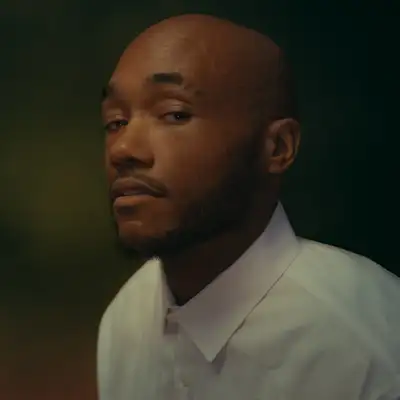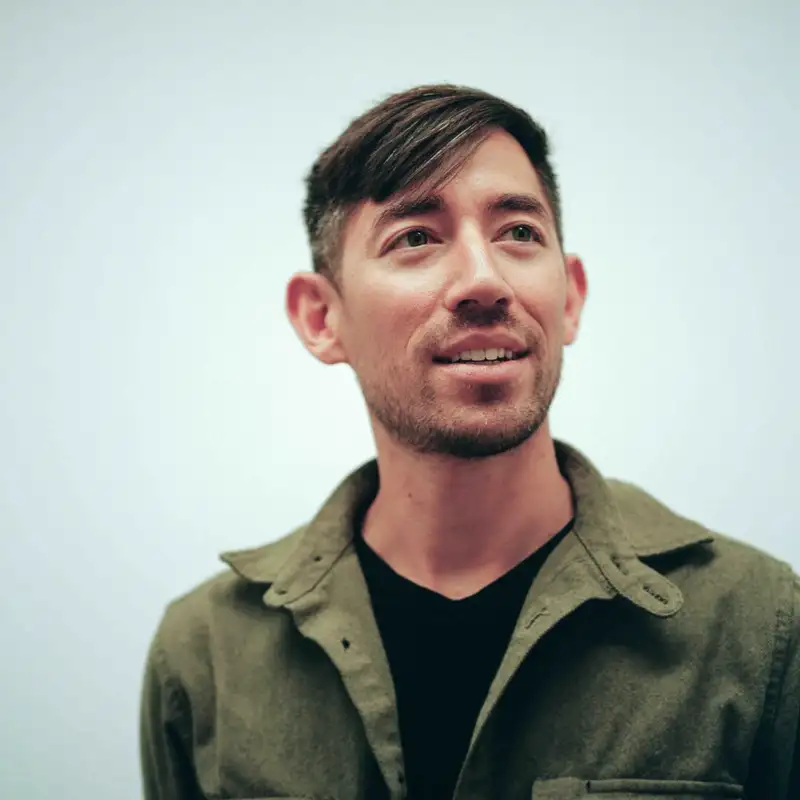
Speaker 1: Welcome to The Truth In This Art, your source for conversations connecting arts, culture, and community. These are stories that matter, and I am your host, Rob Lee, except no substitutes. Today I'm excited to welcome my next guest onto the podcast, a Miami and Salt Lake City based filmmaker who was born in Japan and celebrated for his impactful storytelling and award winning features.
We'll be discussing his latest film, Mouse, which is part of the 2026 Maryland Film Festival. Please welcome to the program Kenny Riches. Welcome to the podcast.
Yeah, thanks for having me. So we were doing a little bit of the talky talk and getting to know each other very briefly before going into the conversation. So one of the things I like to do as I start off, one of the hallmarks I think of any great story is getting an idea of the setting, the stage, and the subject. And in this instance, you're the subject of this conversation, so I'd love to start with you introducing yourself in your own words.
I think a lot of times folks don't get that opportunity. It's something well written, maybe chat GPT, maybe AI written. So I want to give you a space and opportunity to introduce yourself in your own words. Yeah, my name is Kenny Riches and I'm a filmmaker that is based in both Miami, Florida and Salt Lake City, Utah, which is my hometown. And I have made films in both Utah and Florida, I think two films, each two features in each state. But yeah, I just split my time and try to find stories in those two regions, which are very different from one another. Okay, okay.
I like that almost foreshadowing that if you have the questions already, which brings me to my next question. So you know, Japan is in your background as well, Salt Lake City, Miami, and each of these places have a different energy. They have a creative identity.
And so how do those aspects show up or those aspects of those places and experiences you've had in those places show up in your work? Yeah, you mentioned Japan. I was born in Japan. My mom's Japanese. But I didn't grow up in Japan, you know, taking trips there is about it. But, you know, in America, it's very expensive to have a baby in the hospital.
So my mom had both me and my sister in Japan, which I don't know if you're really supposed to fly that late in your pregnancy, but hopefully it didn't do much damage. Yeah. So between Salt Lake and Miami, you know, they're just so different regionally, like almost the exact opposite, where one is a conservative religious city with the Mormons here, and then Miami is like party central and, you know, has much more of a different racial background. You know, you have people from everywhere, the Caribbean, South America, Europeans moved there. I mean, it kind of has everything. And then Utah's pretty, pretty damn white and clean.
It's a clean city. Yeah. But yeah, you know, it's just I mean, Salt Lake is in the mountains. Miami is at sea level. Yeah.
But yeah, I think in almost every way, it's opposite. Miami has no winter. Utah has a long winter. I mean, I go by the sports teams.
I mean, you got the jazz versus the heat. I mean, four letter words and then the less, but I always go with where would I want to play? I'm six, four.
I have some height to me, right? So it's like, where would I want to play? Long career in Utah, right?
Short career in Miami, because as you said, partying probably because it's part of the movie. Although, you know, it's harder to run in with the elevation, you know, don't kill my dreams. Can you come on? You know, you can. Yeah. I'll have to just have a whole different lifestyle.
Just beat Miami Rob. That is a whole background and a whole story. And I've talked about it in many episodes, but we won't talk about it today. So, you know, having been in different places and kind of having some influence. That's there, whether it be baked into the subject matter.
I'll give you an example of what I'm getting out here. So I'm based in Baltimore. I do, you know, podcast, I do interviews in different cities. I spend time in Philadelphia, DC, kind of that mid-Atlantic, that northeast mid-Atlantic. And then when I go to New Orleans, it's a whole different, you know, sort of situation as the three places I've done the most interviews in.
And that's what I look like, you know, I just something comes through. Like, I find that the conversations are a little bit different. Maybe the pace is a little slower. Maybe what we're talking about is slightly different.
It's still rooted in curiosity. So between, you know, having that those sort of two, perhaps different, like background and creative, like backgrounds from the locations. What is the theme between the two or sort of the curiosity that you have between those sort of two places that show up in your work?
You were touching on before we got started that, you know, the four films that you've done to have been in each of those locations. Yeah, I think it's interesting because I grew up in Salt Lake City. And so I think the films that have shot in Utah are less, I mean, mouse takes place much more in, I mean, Salt Lake is much more of a character in mouse than it is, you know, in my other film. But yeah, I think because I grew up here, the place of Utah is less of a character than in my Florida films because I just, as soon as I got there, I was so fascinated by how weird Florida is. And, you know, Miami is such a special place and there's a story on every street you walk down. And yeah, I think it, I just, I think I look at Miami through a different lens than Utah because I've been looking at Utah for a lot of my life. And so yeah, I think, you know, the two features that shot in Florida are much more like Florida-centric.
I got obsessed with like weird aspects of Florida that, you know, really come through in those films. But, you know, I think it's healthy. I think it's a good, you know, I think it's good for filmmakers to go out and see some different stuff and find new stories in different places. I think that's probably healthy.
Not, I think so. I think being able to see it with sort of a different set of eyes. And it's almost space to have those, those end jokes in there too. It's like, all right, this is very specific. This is inside baseball, Kenny.
Like, what are we doing here? Oh yeah, you know, that guy on this Boulevard in Miami. Like, yes, I included that in my film.
Exactly. So read earlier that in, you know, your creative interest early on was drawing and painting, you know, you earned a BFA in drawing and painting. So what, how did filmmaking come along? Was that a natural progression and how does drawing and painting sort of translate into being a filmmaker? Yeah, I think I, I mean, I grew up in creative always, you know, my, my parents, especially my dad was very encouraging, you know, for me to write and draw and paint and make things, build things, take everything in the house apart.
Well, I guess he wasn't encouraging on that one, but I did it anyways. So yeah, at the time, so I was going to college in the early 2000s. And at that time, the digital revolution hadn't happened. And, you know, you were still making films on 16 millimeter and editing on flatbeds at the university here in Salt Lake.
So, so it was, it was still very expensive to make a black and white non-sync student film, you know, and I didn't have that kind of money, you know, $5,000 for a, and which sounds like nothing today, but $5,000 to make a, $6,000 millimeter film that was probably going to be trash. And so, yeah, I stuck with painting and drawing, but I was also heavy into skateboarding at that time, and we were making skateboard videos. So, you know, we all had camcorders, we all had, you know, little three chip cameras. And so we first started making skate videos, and then it turned into making videos of us being dumb and getting in trouble. And then it, next thing you know, we're making short films. And, yeah, I grew up with, with an actor named Patrick Fugit. And so I started going to his film sets and kind of seeing behind the scenes, like, oh, wow, this is really crazy. This is how it's all done.
This, this is movie making. And it was really inspiring. And, you know, he was, he was always pushing us to, to do interesting stuff. And his childhood best friend became a close friend of mine. And we just kind of started our own film program in a way where we would push each other to write short scripts and things like that.
And so it all just kind of happened very, very seamlessly. And I just transitioned out of painting. I just don't think I, even though every time I see a good painting, I'm always like, oh, man, I should start painting again. But then as soon as I start painting, I'm so, I don't have patience for it, which is crazy because to make a movie, it takes years and years. And I can stick to it and a painting that takes, you know, a few weeks.
I, it's like miserable. So that's a pretty good sign that I should probably, you know, shift focus. So yeah, I, I'm shot my first feature film in 2011, I think. And just kept with it.
Yeah. That's, um, so one of the things I'm hearing is sort of the, you know, the, the, the skate background and having that, you know, always having a creative interest. Um, you know, for me, podcasting didn't exist in the, like, like we discussed earlier, we're around the same age. So podcasting didn't exist when I was a kid and I was in the illustration, doing, trying to do my own comics and all of that different stuff. And some ideas that I was going to go to school for it.
And that's when Miami came up. I wanted to go into engineering, specifically robotics coming out of high school. And I chose something safer, you know, away from the sort of, uh, arts because you need something that pays money and not like in exposure, even then. And I got a business degree, but always the creative thing came calling. So at about 24, you know, I, I've shared this story before, but at about 24, you know, I went across the street, um, from the job I had went to a Best Buy, picked up some recording equipment, didn't know what the hell I was buying, you know, kind of that same sort of like, that's a drop in the bucket now. It's like, I spent my last $500 on this and just started messing around. I got a fast track pro, some microphones and headphones.
And I would ask my friends, Hey, I got a goofy idea. You want to record with me? And at this point, I had a reputation through like high school and then partially in college of any recording. It was me rapping. It was an attempt for me to say, Hey man, listen to my rhymes. And they were like, is this a, is this a diss track? Are we rapping? I said, no, we're going to do something different.
A podcast we're going to make believe. And, um, for the last 17 years, that's what I've been doing. But I started off just kind of shooting a breeze with friends, talking about, you know, news stories, current events, weird news, and started molding it up. So for the last six years, doing something that's a bit more polished and refined and approaching this podcasting thing as a journalistic endeavor and doing interviews with people such as yourself. Yeah. You were pre pre podcast, proto pod. Yes. Absolutely. Pretty much invented this thing. Look, you said it.
Speaker 2: You said, I'm going to put that together in an episode, you know?
Speaker 1: So you, you, you touched on it. I'm glad we teased it a little bit. You touched on it earlier. You're at your fourth film. The award winning mouse is being screened as part of the Maryland film festival for 2026. So could you tell us about the film?
Um, like sort of, this is more of an open ended piece, but you know, in that, what are three things folks should know about going into it? Uh, yeah. So we, you know, uh, during the pandemic, you know, I had nothing else to do, but write scripts. So I started writing stuff and this kind of came out of that. And it was the idea was, how can I make a film? A very small film, small budget film while, you know, we're just sitting around. And, you know, the thing is, once you start writing, you just write what you think it is interesting for the film and you kind of write, write for the film and, and not for the budget. And so pretty soon it became a film that there's no way we could shoot it during the pandemic.
I mean, the amount of locations and stuff. So we held it off and then once everything got lifted, we went into production and, and, but we stuck with the original plan, which was for me to act and even though I'm not an actor, I don't come from this. And my mom, uh, also a non-actor and she, it was like pulling teeth, getting her to be in the film. So we stuck with that. So I guess the first thing is, is that I'm in it. That's the first thing that the audience can, can look forward to, I guess.
I don't know if that's, I'll leave that to them to see the judge of that. Uh, and, you know, we did shoot in Salt Lake. So it's, it is a much more, I know I just said I, I Utah is less a character in my films, but this one is a bit more. I mean, because it talks a little bit about what it's like to grow up in Utah as a non-LBS person, uh, character is kind of a lonesome, a lonesome first generation person growing up in a super white religious place.
Uh, so that they can audiences look forward to. Third one. I hope it's a, I hope it's a fun ride. You know, I mean, it's kind of a thriller and you know, it's about, it's about scamming, you know, it's about, about being a petty thief and about scamming and people get scammed and manipulated and it's hopefully interesting and a little funny, little thrilling. So yeah, I think that's, no, that's, that's, um, that's, here's the thing. Here's the thing with it.
Like I'd be remiss if I didn't ask. So what was, what was it about sort of those themes? Because I see loneliness also as a theme, sort of lonesome individual scamming is a piece of it and sort of in that era of that, that 2020 period, you know, like I go back to this podcast, kind of really blew blew up relatively. Um, but I was getting sort of more interviews and more conversations with folks during that time. It's like folks had an opportunity to sit and work on stuff.
And as you were touching on, I can write, I can work on things. I don't know if I want to be in this one. Okay. I'm in this one. Why am I acting in this one? Why am I directing this one? Why am I, why am I also starting?
Why am I doing all of these things? So talk about like some of the themes and sort of the thinking that was going on during that time and the iterative period to the actual production for the film. Yeah. You know, I don't, I don't, I don't know if the pandemic experience really, I mean, I didn't consciously put it into the film, but I think loneliness is something that, I mean, it's something that's been around forever. People have always felt lonesome, but in the film takes place in the early 2000s, kind of pre social media, but the thing that we realized with, I mean, the pandemic, but also social media and all these things is that we can only get more lonesome. Like social media didn't fix that connectivity. You know, people are more lonely now than ever before, even though the world is at their fingertips on their phone.
And so I don't know. I just feel like I, I empathize with, with that. And I think that finding those like real true deep friendships that takes work. And as you say, during the pandemic is like one of the few times people had a moment to just slow down and try to connect with other people, you know, do podcasts, do whatever they got to do.
Yeah. And so I just think that, you know, you turn on the news and loneliness is a plague, but I think that it's just something that's always been here with us. And we think we can invent tools to fix it, but I just think that it's, it's really not that, that easy to, to fix. I think that what we need is more of this. You know, you got to have talks, people. You got to find, find connections and find similarities. And you got to empathize with people. That's, that's one of the things. That's a good point. I have a follow up to that.
But yeah, going back to that, that time in that era, right? Where? I'm going to talk about the conversation. I kind of took it back because you touched on the sort of scamming, being a theme. So I'm always sort of somewhat like, why am I responding to this person? But I was like, this is an attempt at human connection. And we're all sort of facing this thing.
And he was in Spain. I was one of those early spaces that was hit pretty, pretty hard at the beginning of the pandemic. And starting to see this connection thing and how important it is over the last five, six years, especially in doing this and talking with people. Sometimes this is a highlight for some folks. I know it's a highlight for me in the week of being able to connect with someone new. It creates novelty.
And at the same time creates nostalgia of like, oh, remember social clubs? We were talking to people. Oh, let's do that. And even something like this, this notion of seeing a film at a festival. So talk a bit about, because this is where we are in the sort of festival circuit for the film.
Where are we at in that? Like coming up on Maryland Film Festival, but where are we at? How many festivals has it been and what has that experience been like thus far? Yeah, we premiered at the Brooklyn Film Festival and won the best film and also the grand jury prize there. And then kind of bounced around to a lot of film festivals and a lot of Asian film festivals, which has been awesome to like have community embrace the film. And we did a film festival in Knoxville that I highly recommend. It's called Film Fest Knox.
And we won the best film prize there, which was a Penn City theatrical deal with Regal cinemas because they're headquartered there. And now we have, well, I actually can't talk about this except for Maryland, but the other festivals haven't been announced, but we have six more festivals coming up. Yeah, Sidewalk Film Festival was really fun.
You know, there's a lot of these regional festivals throughout the U.S. that are so fun to attend. And they're very filmmaker forward. And you get to meet a lot of other filmmakers and, you know, your peers there.
So it's pretty great. But after, so these, there are these film festivals happen between now and May. And then after May, we are kind of hunkering down and building our distribution plan so the film will come out in the fall. And then after that, we'll see what happens. I mean, hopefully I can make another movie. Hopefully. Well, no, no, no, hopefully. It's number five is coming.
It's just going to be a social media post with your hand like this. I was like, oh, Richard has number five coming out. That's really tight. And I'm always curious when folks are doing making the rounds. Like I enjoy film festivals.
I enjoy the independent like both festivals. It's sort of September is that part of the year for me where I go there. I'm either a moderator or I'm interviewing people or what have you. And it's like maybe three in a month, but I'm just a guest. I'm not like I have work that I'm showing. I'm like, I'm getting work, but I'm showing work.
So always curious to what that looks like. But I find that when I'm around folks that are in that sort of film space or in, you know, that accessible sort of creative space, that sense of community is there kind of poking that and cracking through some of that isolation that I think we feel sometimes. Yeah, I think so too. You know, there's a filmmaker friend of mine that I actually just kind of plays into the whole. I mean, actually this film was originally supposed to be co-written by this filmmaker, but you know, at film festivals, you meet a lot of filmmakers and this particular filmmaker, I didn't meet at a festival. He just hit me up and he had seen my films at my first feature at Sinequest. And then his friends saw my second feature at Sundance and hit him up and was like, hey, you got to watch this movie. And then he was like, oh, I know this filmmaker's name.
I've seen his other film. So he decided I'm just going to reach out. I'm going to find Kenny and just reach out. And then we became super close friends on the telephone. And he has no social media presence at all. And so I had no idea what he looked like for years.
And originally when I talked to him about mouse, we were talking about, oh, maybe we can make this thing together. It's the pandemic. I'll shoot my half on this side. You shoot your half where you live and then we'll cut the film together.
You know, it would have been a totally different movie and probably not that great because it would just have been us in our houses wandering around or something. But, you know, the whole time my girlfriend has always thought, oh, is this guy a real person? A scammer on the phone. And this whole thing is this elaborate setup. And pretty soon we're going to be, you know, giving him our bank account or something. And so that kind of informed the pen pal scam part of mouse was this friendship with the filmmaker. But, you know, so to your point, having that connection and meeting people at festivals and then figuring out like how to work together or at least have dialogue with each other can be super inspiring. And even a film like Mouse can come out of it.
That's really great. So I got two more real questions that I want to run by you. And the first one you touched on earlier. So you cast your mom, you know, and she plays Danny's mom because I want to call you Danny because you're Danny, you know Danny. But how was it directing your mom? You know, because I've worked with family members and doing this podcast. And I remember sitting down doing an episode of my movie review podcast with my dad.
We were talking about Double Impact, the old Van Damme movie. I was like, you know, watching this growing up, the notion of having an ex-marine sitting next to you nervous because a microphone is on was one of the funniest but also cherished moments that I had. But definitely I was like, I'm really putting on my working moves. I'm doing everything.
I'm playing two parts in this podcast. How was it working with your mom? Yeah, so my mom, she really did not want to do the film. But I knew she would do it because I'm her son. She has to do it. I mean, you know. But so the whole time leading up, it was she kept asking, oh, have you found an actor?
I'm not going to do it. And I would just keep telling her, oh, we're working on it. We're going to find someone. But I wasn't looking. I knew she would do it. But the problem with that is that we weren't prepping for the movie because she was in such denial about doing the movie that we weren't rehearsing together.
We weren't doing any of the stuff we should have been doing. So eventually a week before production, you know, I was like, well, it's definitely going to be so much cheaper if you just do the part. And she was like, oh, yeah, that makes sense.
Like that was the thing that made sense. Like, oh, yeah, we can save some money if I do this movie. So she came on board and we started production. And it wasn't for me. It wasn't a challenge working with her. I mean, she's the best.
She's like my person. But the difficult part was that, you know, a lot of this film is in, I mean, the dialogue between us is in Japanese and my Japanese is not great. But I definitely did not know how bad it was because, you know, growing up around the house when we speak Japanese, she was always like, oh, yeah, that's so good. Like you're doing your Japanese is so good.
You're doing great. And then as soon as we stepped on set, I would say my line and just she would just shut it down. Oh, that's not how you say that. What do you mean? You've been saying that's how it said my whole life.
You said it's doing good. No, yeah, but it's not how we say it in Japan. It's pronounced like this. Yeah, because the in Japanese, the inflection is so important. You know, you have to put the emphasis in the right so long the word and it just has to. It there's not very much flair in Japanese, you know, and so which is different than English, which is very emotive and and has, I mean, it's it's a bit more. I don't know, maybe because it's Latin roots or something.
It's a bit more, more sing songy than your Japanese Japanese is just more straightforward. And so, yeah, that was difficult. I mean, it took many takes for me. So it wasn't her. It was me. It was I have to nail this.
So people will at least think that I'm speaking at a third grade level in my movie. But working with her was fantastic. And, you know, during the pandemic, she was in a car accident that almost killed her and she had to have surgery where they cut your skull opens or, you know, because she was bleeding. Her brain was bleeding.
She almost died. It was crazy. And so it's like doing something together was was it felt at that time extremely important. Like now she was healed. She was good, but it still felt like, oh man, this is like such precious time and it still feels that we obviously, you know, I love going up and seeing her.
But at that time, especially it was like, oh my God, that was so close to the end. Now I get to like do something fun and creative and awesome with her. It was great. Thank you. Thank you for sharing that. I'm glad that your mom is doing better.
I'm glad you had that opportunity. Yeah. Before moving to this last question, like the last I've been doing the duo lingo right for the last like 900 days. And I started off with just Japanese. I have a buddy who also named Rob Japanese American dude. And I thought I had some some new Japanese stuff and he's just like, not quite.
I was like, all right, back to the old drawing board. Hard language. It's like, has shares nothing with English. The alphabets are totally different. Everything about it is different. It's a hard language.
I was like Rob does. He's like, not quite good at Japan. It's like all the signs are in Japanese.
I mean, it's either constantly using Google translate like it's like help me out. It's awesome. It's a hard one.
Come on, help me out. So the last question that I have is about collaboration. Films are collaborative in nature and I think it's a good follow up. So talk to me about collaboration and sort of your philosophy as a filmmaker, as an artist, as a partner because it's a production company as well.
So talk to me a bit about how collaboration works, your philosophy around it and what makes collaboration works best for you. Yeah, I think it's one of the most collaborative mediums in art. And for me, I really love that aspect. I love that, you know, it, it, I get to bring all of my friends together to make something.
It's like the best type of play, you know, it really does feel like you're going back to like summer camp or something like that. But, you know, you, it's fascinating how much each role plays in shaping the, not just the success as in when we've done, but, but how the film is made. You know, so when you're casting your actors, you have to, you know, there's, there's a, there's a quote that says that, you know, 90% of directing is casting or something like that. And I think that that's very true. Like finding those people, finding your players, that is the biggest part of the job because if one person doesn't have the right delivery or look or whatever, your film just doesn't work.
It, it's some sort of magic where everything comes together in just the right way. And, you know, being on set, for me, I always try to run a pretty fun set. I am a pretty relaxed person. I don't, I don't, I feel like the energy you bring to set affects everyone's mood.
And so most of my sets are pretty silly. Everyone's having a good time and joking around. And, and I think that that's kind of how that collaboration can be successful. And, you know, pre-production leads into this. My cinematographer, this is the first time I've worked with him on a film.
And, you know, he, he comes from the commercial side and this is his first feature and the film looks amazing. And it was really just, you know, how much conversation can we have, how much pre-production can we put in planning all of these shots? There's a lot of camera movement and things like that. And so, yeah, I mean, collaboration is just, it's just such a huge part of it. Everyone has to be on the same page and kind of speaking the same cinematic language for its work. But, yeah, it's the best.
Filmmaking is so fun. That's great. That's great.
I look at this as a collaborative project. I've said it before and I'll say it again. It's only as good as the dance partner that I have for this conversation.
And we've done the tango here, sir. So before we go into sort of the last portion, these rapid-fire questions and the stage-like advice, I want to cue you to the rapid-fire and stage-like advice. Here's the first, you know, sort of question and way to think that rapid-fire works is that you don't want to overthink these. You know, what is the first thing that comes to mind?
You know, short answers, maybe a sentence or so, but don't go too into the weeds with it. You may have heard this one before. What is the best ice cream flavor? Well, common fudge. Okay, same thing. That was a softball for you.
Yeah. What is your... So I'm a notepad guy. I always like to keep something written.
I don't really like the phone. I think it's good to maybe edit, but it's not good to capture the initial idea. What is your favorite way to capture ideas? For films specifically, it's the Notes app on the phone. I used to do the notepad, but I just realized I'm doing the work twice. But otherwise, little sketches and stuff for sure in the random sheets of, you know, drawing paper here. Okay.
So it's the digital analog loop that Austin Cleon talks about, so that's pretty tight there. Now, you were talking about this in collaboration a moment ago, so I must ask, if there were one thing that you could put your finger on, what makes for the most relaxed creative environment? That's hard. I think it's really just figuring out a routine that works and a space that works. It doesn't have to be the same space all the time, but as we talked about before the show, coffee is crucial. So wherever there's coffee and, you know, a computer, that's a good place to work. I think, you know, and you can shut off the noise for a minute and get a little bit of work done writing-wise at least.
Yeah, that's good. Now, here's the last, because I added a fourth one because I couldn't resist because we share this. So I must ask, what is your favorite Japanese word? The response is great. I'll say this because it's my mom telling me completely, obviously now I know she's been lying to me the whole time, but Jozoo is good. Like, oh, you're doing a good job.
So I would always hear like, oh, if I said anything, oh, Jozoo, oh, Jozoo. And then I realized, oh, not good actually. I'm not good.
Not Jozoo. I like it. I like it. Now, so thank you for indulging me with the rapid fire.
I always like to troll a little bit on that back end. This is like, what do we got? What do we got?
So here's the last question. This is the sage advice question. So considering what you know now as far as being a filmmaker, having four films under your belt, I would imagine you as you go across your learning and you're developing your building, what would you share with someone who's embarking on film number one? Like, what's the piece of advice you would share with someone who's about to do their first film based on you doing four?
Oh, man, there's so many things. Boy, I mean, planning, pre-production is so crucial. You know, I think that everyone, especially your first film and when you're young, you're like, you have to, you've set a goal for yourself. I have to make my first feature before I'm 25 or whatever. And those numbers don't mean anything, first of all, like no one is no one is going to look back and be like, oh, they made their first film and they were 25. No one cares.
So that doesn't matter. So planning and pre-production will save your life. And if you can spend more time writing and the writing part is free. That's the best part about writing is it doesn't cost any money.
You can do it for as long as you want. Spend your time making your script, your shooting draft of your script as good as possible. Give it to people that have made seek mentors mentorship.
Give it to people that have made films before so they can tell you, oh, this doesn't land or this isn't funny or this is a weird transition or. Why does the character wake up every day? You don't need to show them getting out of bed. Like all these things like that every filmmaker starting out for whatever reason, everyone kind of almost falls to the same tropes. And if you don't have someone to check you on it, you're going to waste a lot of time filming all that stuff and then cut it out later. So spend lots of time on the script and get feedback, not just from your friends, but from filmmakers.
And, you know, that just takes going to film festivals and meeting people and, you know, finding indie film directors that you like or Hollywood film directors, whoever it is. But yeah, I think planning is is my number one advice. That is very sage like advice. So thank you for that. Yeah, I'm applying that to what I'm doing. So shout out to you.
I took a note there. I'm like, all right, just can't on that part. You know that part.
So that's kind of it for the pod. So there's two things I want to do as we close out here. One, I want to thank you for coming on and spending part of your afternoon with me. This has truly been a pleasure and can't wait to can't wait for the festival can't wait for the Maryland Film Festival. And secondly, I want to invite and encourage you to share with the listeners where they can follow you stay up to date with your work social media website. Anything you want to share in a shameless plug sort of portion.
The floor is yours. Yeah, you can follow me on Instagram at Kenny riches. The film mouse you can find at either dear Danny dot com or you can follow the or I mean find the production company, which is dualist. And they have an Instagram too.
Yeah, I don't check my Facebook that much, but I should every once in a while. And there you have it folks. I want to again thank Kenny riches for coming on to the podcast and sharing a bit of his insight and telling us about the film mouse. And for Kenny riches, I am Rob Lee saying that there's art, culture and community in and around your neck of the woods. You just have to look forward.