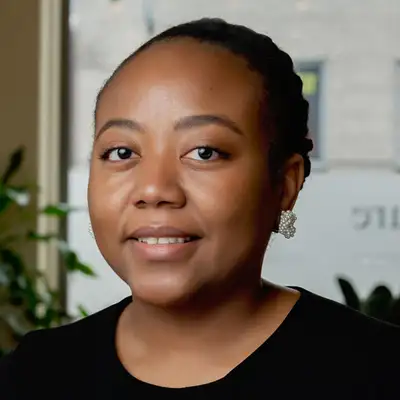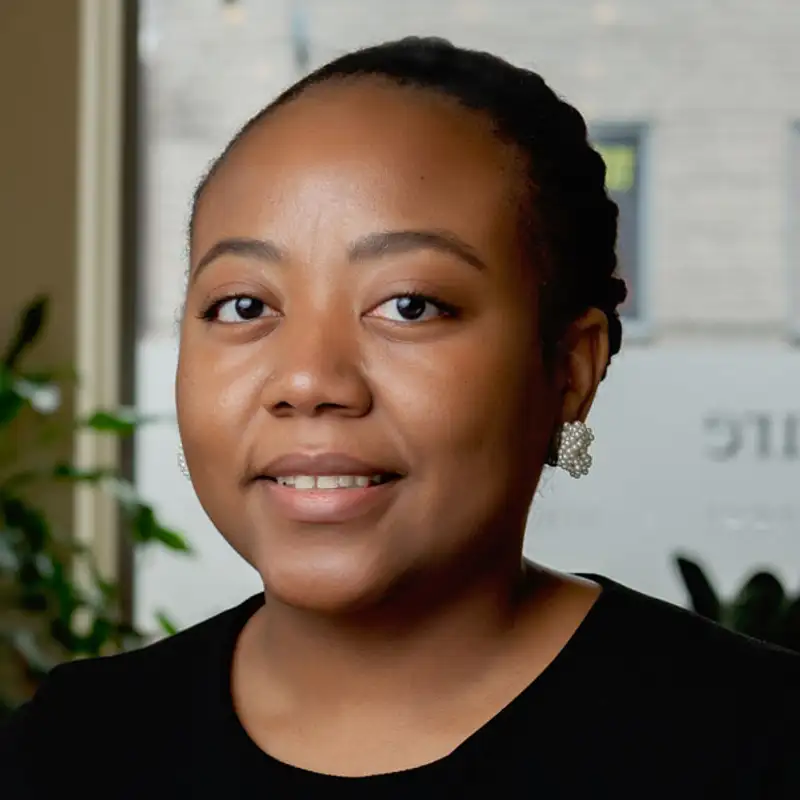
Rob Lee: Welcome to the Truth and the Thorps. Your source for conversations connecting art, culture, and community. These are stories that matter. And I am your host, Rob Lee. Except no substitute. Today, I am thrilled to welcome our next guest on to the program. She is a PhD student at the University of Maryland, Baltimore County, and also serves as the director of programs at Maryland Humanities, where she works to make the humanities accessible and engaging. Her doctoral research explores how Haiti's social transformation affects culinary traditions and eating practices within Haitian communities. Joining me today is Alexandra Cenatus
Welcome to the Truth and the Sart. Yes, that's so um this is really a treat. Like we we've crossed paths in a number of ways. We may be on boards together a few different things, well, inside baseball. But um really happy to to have you here today. I think the last time we saw each other was July. I believe that was July.
Alexandra Cenatus: Yes, at the Maryland Arts Summit, yes. That's correct. Noah, that was at the adult conference, centering humanity's voices. Boom. So that's when we met, yes, in July.
Rob Lee: Yes, and where you expertly, you know, paneled, you know, moderated this panel that I was a part of. And I was just like, oh, okay, yeah, yeah, you're you're good, you're good. You should host the podcast one day. We'll we'll talk about that later.
Alexandra Cenatus: But um to start things off, um, I'm gonna go a little bit into the lore as I touched on we we've crossed paths. So for the folks who are unfamiliar and your your name pops up in a lot of different places, could you introduce yourself and tell us a bit your about yourself, your work, just give us that introduction.
Sure, definitely. So as you mentioned, I'm Alexandra Sinatus, and I am the director of program at Maryland Humanities, where actually provide strategic vision um to our programming that the organization has. I'm not gonna delve too much about Maryland Humanities because I think after later on we're gonna talk a little bit more about Maryland Humanities and what it entails. I am also a commissioner, so I am I serve as a commissioner at the MD250 Commission. Um I am a PhD student. We're currently at University of Maryland, Baltimore County, where I am on my third year. Um and I am part of the language literature program where I'm actually exploring um Haitian food.
Um I think that's the easy way to describe it because there's a kind of like a term I'm probably gonna delve into that as well. Um and I'm also someone who serves a lot. So I currently um serve on as like part of the civic, I will say community engagement at Creative Baltimore. I'm also on the board of Haitian Studies, but at the same time I actually like I think I'm someone that like to be um like to serve overall, and I think I get this particular um experience growing up in Port-au-Prince, Haiti, um, but mostly being influenced by my family.
So I come from a family that has been civically engaged. Um one of my earliest memory of my grandfathers, um, grandmother and grandfather on my mom's side is that in their hometown which is located in the southern part of Haiti, they call them our father and our mother. I think especially um for someone that people in your town call you our mother and our father, it's very huge. Um I think it's also is a testament of their character and the love they have for the community and also building their community. But more specifically knowing um that community building foster relationships are very important. And I think um I think there is kind of like a um Haitian proverb, very known Haitian proverbs that is like everybody is a human being, training people as a human being, and I think part of it has been part of the values. I would say serve as one of the values um that my parents instill in me and also observing it it as well through my um to my grandparents, where I saw the time, labor, and the love they pour into their community and also the way by pulling that love in time and labor that the community has also poured back on them.
So through that needs, who does names. So I think overall, I think this is who I am. And well, and I probably think I'll probably wear probably many hats and continue to wear many hats.
But I think yeah, so these are the different roles I would say that I serve overall. And I'm also a an auntie. So I have to kind of give that shout out to my nephew and my niece.
Rob Lee: full like like you said multiple hats multiple roles and yeah And hearing about the just the importance of sort of uh serving the community and inheriting sort of that just through the the familiar and seeing the importance of it. And yeah, having that notoriety as you were describing with your your grandparents of like having that like you you're like the unofficial, you're but you're looking over, you're our people, you know. That's that's that's huge. And it's also a a responsibility, and you you have to, you know, walk that walk that talk, you know, you know, walk that walk and talk that talk.
And one of the things I'm gonna step back on, I I think is very interesting. When we hear, especially now, like what you were describing is how I look at community, like the importance of community. Often now we hear community and it's just like, what like, oh, this is a membership.
There's a cost attached to this. It's it's it's almost like fabricated in a way of you want these things that come from community, uh, fellowship, people looking out, connection, things to that nature. Um, and we're at least from the podcast lens and you know, some of the the arts lens, and we'll we'll go, you know, into this sort of next question in a moment. I just find that we're so the illusion of community, but what you're describing and what's in her to you is the real true sense of community.
Alexandra Cenatus: Um I will say yes and no, but because I don't think there, I think everybody gonna say I know what community looks like. Because I think, and I think for me, I usually put communities actually through my experiences and interaction with a lot of I think women, women in my life, black women in my life, um, overall. Um one of them, I think Deedra, um Dr.
Adra Howchan, she always mentioned to me community is always flural. So um, because there's different ways that even within the community, there's subcommunity communities and things like that. But I do think um from what you're mentioning, there is that sense of reciprocity. Um there is that sense of that I'm gonna be there for you and when when you don't need me, and also I'm gonna be there for you when you need me, right?
So I think there's also that sense, but at the same time, as well, one of the things that I think I observe, especially watching the women's in my life, right? So for instance, when we talk about like for instance, my family coming, a lot of the time they will mention my grandpa, my grandfather. I think he was kind of like one of the face of the community, and they will, and I think he was a businessman, so my grandpa was a businessman. So I think there is a way that it's very tangible in thinking about community overall, because he was able to, for instance, okay, a school needs to be built, I'm gonna put money aside to help build that particular school, or think someone cannot pay this, I'm gonna do this, or someone cannot afford this, I'm gonna do this, um, and things like that. Whereas one of the things that I've learned, especially by watching the woman, it was the invisible labor. That oftentimes that need to that help maintain the community that we don't pay attention to.
And I think that's kind of like what you drawing, like you're kind of like delving into because it takes the time, right? Like knowing, like for instance, I will watch my grandmother knowing, oh, this person didn't come to church today. I need to send this person to check on them to know are they okay, right? Or like, oh, in conversation with another woman in the community, she will learn that, oh, this person is going through a hard time. Let me set us up some plate aside for her. Like when we cooked, so we're gonna make additional food.
Yeah. Even though we may not do have a lot, where it's like, okay, we're gonna set aside, right? So I think it's all of those things that the per like someone knew, like the person got me, and it didn't even have to ask, right? And knowing, so there is that like that labor, I will say, that is part of community building.
I think that sometimes is overlooked. Like, yes, we want community, we want to find it, and I think a lot of people, we're currently in salvation for it. And I think there are different spaces that allow us to get those particular type of connection, whether it's feeding your intellectual curiosity. And I think podcasts and other spaces um help people feel connected in that way. But there's also the tangible in a sense and the tangible means that okay we have this space. We get to see one another but at the same time maintaining the space but then also knowing when to be there for one another.
Rob Lee: Yeah like w what I'm hearing is often especially with the sort of maybe unappreciated or invisible like like labor that's there, that's the glue that keeps things strong. And a lot of times we have you know and I think you know I think what I was getting at is sort of we've we've moved from it and we're using the term community in some of these pockets since the the podcast thing as a placeholder because community we desire it however it's m manifest, right? But hey, you know, join my truth in this our community for $50 a month is like no that's community brother. And you're getting something out of it but it's I'm not really there for you. And I think this should be f be free and all of that stuff and it serves in that that way as far as documenting these stories here.
So that's the way I look at sort of what I'm doing. But I think a lot of times with that um I think people don't recognize that un uh that unregarded or that that sort of unnoticed that invisible labor until it goes away. It's like did anybody check on that person?
Nah I thought you were gonna do it. And having someone that that does it and make sure that the community is strong that people are sort of taking care of and whether it is okay so who's gonna like chase down um this civic leader to get this place built. Who's gonna get this pothole filled these these different elements it takes someone that's doing it and strengthens the sort of overall
Alexandra Cenatus: yeah and I think what you're also mentioning is that there are maybe different paths to communities and I think now within today's context so we have try to fill that gaps in different ways. So there is I think the need to like hey I need have that space in the space of connecting um getting learning from another I think there's that part but there's also the space where I think you're feeding into your curiosity and I think having spaces like that that allows them such as your podcast allows people to know hey I know these are some things that I'm interested in there are content there are things that I'm learning. I think maybe the question the much larger questions might be how can we basically in terms of I think I kinda I like to think about the collective imagination that Rua Benjamin tend to talk about like how can we make sure through our collective ac um imagination that all these spaces can exist and we can and they can be able to sustain themselves overall.
Rob Lee: I like it so going into the sort of next question like why does the work of bringing people together honoring traditions and and creating space like sort of like same territory but why are these elements like you know bringing folks together honoring traditions creating spaces for celebration feel especially important um right now I I have a direction where I think this could go but why is that important right now I
Alexandra Cenatus: um I think there are different things I think there are different factors um I think especially in today's context that are important. I think the first one is I think we don't really talk to one another um I think there's also that particular aspect because I think in encountering people in talking to people you learn but you I think one thing I would say you learn by doing so by l um encountering people and talking to them there's a lot of things that you actually um tend to discover things that you didn't know about so I think that's one of the things I think at the same time too um there's also the space of learning because um because through because you also can get challenged you can say oh I didn't know about this and you get to learn because you hear people talk about certain things they're like oh I even know disco actually that existed or things like that. So I think there's also that particular aspect um I think there's also anger um so there's a lot of anger as well um um that we have not unpacked so I think there's also that particular aspect too um I think um I think yeah I think also going back to curiosity I think is also help where people can feel like they can be curious and I think sometimes through like people's journey that curiosity don't get said I will say um and I think overall I think this is why these are things are very important but also I think in terms of bringing the humanities lens there's also the questions of you learn about your past, right?
You learn about your past. He helps you understand the patterns, social patterns are going to be happening, understand the present, but also discussing with another how we can find solutions and how we can actually envision something um differently um and things like that. So I think all of those elements are very important. And also honoring too um as we were discussing earlier in terms of the people that were doing the time in labor and that helping us um getting these conversations. So I think it's all of them all together I would say.
Rob Lee: I agree. I I think you know we get these I guess shadows or these illusions of hey we're online we're so connected but then we're not actually talking to each other and I think having folks I was thinking about this this earlier today like the the people that I feel the strongest connection with there was an in-person meeting. There was an in-person get together and there was ideas exchanged, you know, person to person not like, oh yeah I pinged you I hit you with in the DMs or I uh shot you a message and it's sort of that impersonal thing but something that is you know together like hey we're having a coffee we're having a meal we'll be talking about food later but we're doing you know something together I feel like I'm getting to know this person in a way that a lot of times the weight of this online thing it has potential for great reach but it's it's kind of an illusion I find like I'm a person famously I don't like talking on the phone.
I hate talking on the phone. It's just like if we're gonna talk on the phone we might as well just meet somewhere you know what I mean? It's either texting or we're meeting somewhere. It's no phone calls. I'm I'm that kind of guy and I'm the opposite.
Alexandra Cenatus: Oh you're you're a phone person, you're a phone call.
Alexandra Cenatus: I am a phone person, yes. I feel like well for context for my because I travel a lot um because I attend a lot of community events. So I tend and especially across the state so I tend to drive um to go in different parts of the state. So obviously texting is that's gonna be the best way for me to connect. So one of the ways that I'm able to connect with people is actually through phone calls where people call me and I'm able to learn so much about them through stories or stories or personal stories.
I feel like text doesn't really provide you as much I think on my end but I do agree in terms of the um in-person connection. There's no like do you always get these in terms of learning about someone through those particular in-person connections.
Rob Lee: There's a bit from to this next question where I've had I've have a friend I've had for like ten years. They're like yo I've only talked to you on the phone three times in ten years. I'm like, I don't it's like I I hear your voice in a podcast I know how to talk but sometimes like the time you call me you sound different than on a podcast.
I just need to hear the real you and I was like you hear the real me in person. We can just do the you should I come over you know um but yeah I I think also the the honoring traditions part um it's this this sort of like uh idea I think it's an archival component right where it's just like if we're not honoring these traditions you'll see and I'm thinking of social media as I think of this you'll see some goofy video and it's like oh I've discovered this this lineage of Baltimore culture from the eighties I was like because we're not meeting and sharing this history and honoring these these things and passing these things along um like I think of like twenty twenty when you know we brought in sort of more tension around Juneteenth and I have relatives who live in a part of Texas where it's like well this is always been a thing here and it is kind of that it's just like they're already doing their way of honoring it and it has this rich culture and tradition there and just because it got the sign off in the higher sort of sphere for other reasons um now it's sort of a part of what we're doing and it's just like knowing that context and having that history.
Alexandra Cenatus: Yes is yeah definitely it's very important.
Rob Lee: So let's talk about um the humanities I said like that because I thought it was cool. I thought it was cool I wanted to float it out there like that. Uh so for the listeners who are not familiar with Maryland humanities, what is this mission and and and how does your work contribute to to it?
Alexandra Cenatus: Sure I will say I think I want to provide some context first, you know, like where the lineage, since we're talking about history, so where our lineage, where we're coming from, and also what do we do. And then I think I'm gonna cover how my work actually connects to um what we do. I think for context is that I think since the early 70s, um, the National Endowment for Humanities, which is known like the as the NEH, I think they have funded and worked with partner institutions in each of the 50 states in several territory US territories. So I think in total we are probably around like 56. Um, don't quote me on this, but I think that's kind of like around that's what we have.
Um and they support everything. So we I think we mostly are mended is to do public humanities. And when people ask, like, what is public humanities? So it's really about like public lecture, um, things around like public policy, um historical performances, books festival, um, literary training, ALBA education, um, things related to civic engagement. So I think that's one of the things that overall, in terms of thinking about the NEH, and the NEH pretty much provide funding to all those particular humanities councils. Um, so that's one of the things in terms of context, how we exist, um, and why we exist um overall. And from there, you actually have us, which will be Maryland Humanities.
So each state has their own humanities councils, and for us, it's Maryland Humanities. And one of the things, one of our missions is to actually create and support bold experiences that explore and elevate our shared stories to connect people, enhance lives, and here's communities. So I think that's one of the things overall, that's kind of like the mission of the organization. The way we envision this is basically it's central to people's Marylanders' everyday life.
Um so connecting them to the past, making them understand the present, and kind of like envisioning what the future could actually be. So my job as a director of program is to manage all of this programming that we actually have at Maryland Humanities, and I can kind of like talk a little bit more about some of those particular programs that we actually have. So one of them is Maryland History Day. The best way I can explain Maryland Story Day is think about the science for everybody for history. So you so you have everything history where students come, they usually have a team, and then um students come and they do different types of presentation, and that can be a documentaries, that can be um, for instance, a performance.
Um that can actually be writing an essay, there's like posters, so and you name it, so that's one of the things, and you also have judges, and usually the judges or um humanities um folks, um, and that will be professors, librarians that come in, um, and anybody that actually had a humanities background, they come in and judge those particular work, and usually the students are um participating or in middle school in high school. And then we actually have the Shine Grant where we actually provide general operating funds to a smaller humanities organization. Um we provide around $5,000 um to organization, and and one of the things is the one of a kind, one of its kind. And the reason it's one of its kind is the fact that a lot of time funding tends to be project-based, and then our funding is um operation-based, so you get to decide how you want to apply it. And we trust our grantee in applying the way they see fit.
And based on what we have seen in terms of patterns, it's usually 50-50 where some will um allocate the funding to cover, for instance, your bill, um, electric bill, pay salary, and so on, and others will be for specific projects that organization, like specific projects that they're currently working on. Then we actually have the regional humanities network. So the regional humanities network, I think think about it as an incubator for humanities organization, and we do it based on regions. So people from different regions can come together and learn about the different um projects.
Um I think now these projects are currently happening in the region, they get to connect, they can get to collaborate with one another, um, and also share resources. Um then we also have the museum on Main Street. So it's a partnership that we have with the Smithsonian and with the museum on Main Street. One of the things that we do is we bring a traveling exhibit to Maryland. Um, we provide technical capacity, um, capacity, a lot of capacity building to smaller humanities organizations, specifically in the rural areas. So that's one of the things that's very unique to that particular program. Out of this program, and based on um requests, demands um that we have seen, We're currently working on the um on a traveling exhibit.
Right now we have one called Freedom of the Press, where um which um where we actually um where you can actually not is only in the rural areas where you can actually bring into the urban areas um and things like that. And then we have one Maryland One Book where we get to pick the book of the year for Maryland, and this year is someone from Balmore, and his name is Lawrence Bernie. Um, and his book is one sense in wishing, no sense is wishing. Um, and we partner with a lot of libraries um in purchasing the book but also distributing the books to our local libraries. Um and at the same time, also we do an author's tour where you get to see and interact with the other, and we're gonna be at the Baltimore Book Festival this weekend. So there's other things that happen um around that particular program. Um, And, yeah, so I think yes, we have a lot of program, and we also have a lot of new initiatives. So, and one of the current initiatives which I will delve into is uh um a civic moonshine projects, which is the MD 250 youth engagement initiative, um, which is really about like city engagement for the youth. Um, and but I think overall, in providing I would say a snapshot of our program is really my job is to provide the strategic direction, um, and also ensuring the program actually matches Melanie Maddie's values or strategic plan um overall, but at the same time too respond to the needs of our communities. So I think that's why I use communities through all because we are a state and the needs are varying, and based on those patterns that we are seeing, how do we tailor some of our programs? So sometimes, for instance, um maybe like someone from the Eastern Shore might be interested, let's say, like more in literature, and then you might find, and that means we provide them more of that, and then you also might find someone, for instance, in um Prince Joseph's county that might be more interested in other topics and things like that, and that's okay. And you just say, how do we make sure we provide in responding to the needs?
And I think Shine Grant is an example of responding to the needs of the humanities ecosystem where we realize there we had a gap, and through that particular gap gap, the shine grant is actually filling that particular gap, I would say.
Rob Lee: That's good. Uh, you know, have it thank you. And having sort of listening to what's needed, where those gaps are at, that definitely plays into this notion of are you listening?
Because a lot of times it's like, yeah, we know exactly what you want. More books or whatever. And it's it's missing sort of, well, we we have that, we have that covered, we really need this.
Well, but we can provide this, and it's just it it is it's a it's a loss of like trust, it's a loss of credibility. But if folks are there listening, then you're engaging specifically. You're engaging with folks, and um, in a sense, doing right for them and the various communities that make up the larger Maryland community. So you see what I did there?
Yes. And I and I and I like I like it. Um, and I think um the way you described it makes a lot of sense. Like there has to be strategy that's there, like what's the rhyme and the reason, and also through you know, the Shine grant also taking into account the the realities of things. Like, you know, I run into it, I've had different grant situations, and folks have no idea what they're talking about in terms of costs, no idea. It's like, hey, you know, you can only use it for this. It's like that is fine. My utilities, for sake of argument, like electric pays for this internet connection, which is how I do the podcast.
No, you gotta use it specifically. It's like, cool, I gotcha. I hear you. But having something that's a bit broader and that trust, that's the main thing that's there. It's like, hey, did you accomplish this? And it's just like it can be accomplished, but it's always, you know, sort of a thing. And the folks awarded the the grant in whatever scenario, they're responsible for achieving their end of the how they get there is how they get there.
It's not um a linear or straight line. It's usually I'm taking a little bit of here, a little bit of there, and we're bringing it together. It's good. We got it. We made it happen. Yes.
Alexandra Cenatus: Yes, you are correct. But I think also this is sort of what programming, I think at its best, aims to be programming and overall, like community programming, right? Really is about listening and is also about responding to the needs at the same time um creating spaces for collective imagination. So listening in the sense that, like, for instance, every community may have like their festival that it's something that is known right that's part of the community and it happens every year right so that's sort of like we're talking about tradition earlier so you're like this is what it is like we always had it and things like that and that means making sure that we give funding to con for it to continue to happen right um so I think that's one of the things but at the same time listening as well in terms of oh we want this.
Right. And we have this gap and we not only listening but responding to these needs. Like okay I we heard you and we gotta make sure or the community might come to you and say we want this I know you what this is what we want. So we and then it's also responding to them and say yes. But at the same time I think there is that gap that not gap does that space where there are things that you're seeing and you're like oh I need to give you some programming some events that can help you think think things through and I think this is sort of like at its best um running programs like doing programming these are the things that all of those factors that you constantly have to think about um in terms of doing a program.
Rob Lee: You you touched on something that I think is really important. And I and I'll sort of I guess synthesize a little bit where from from my observation and sort of doing this like you know maybe the the school that you're you're currently in a role at I teach at we'll talk about that. But you know it's I remember having a conversation um during the during summer about some events for the for the weekend and so on. And it was a major event that was moved into a weekend that conflicted directly with another event that was in the footprint and folks were in the spot of I gotta choose between one or the other because the organizers of said first event just changed it you know to a different date and wasn't really considerate of the history in pretty much it's like who did you guys talk to? No one seems to want this and it's just like it just had signs that there was not that listening tour.
There wasn't that sort of buy-in and it was questions on what the need was and you know there was that bit of maybe that anger and that sort of frustration of you're telling us this is for us but we're saying we don't really want this and it kind of like we should do a podcast about this and keep the out of it. But it was very indicative of sitting there and it was just top of mind for folks you know sort of in this class and I'm gonna teach and it definitely speaks to it but it's it's recognizing sort of what's there and you know and I and I think spending some time with it. Sometimes we move stuff around because this might be more convenient but not thinking about the other communities potentially that it's that's affected.
Alexandra Cenatus: Yes and I think that's where like some tools can be helpful like having a a shared calendar community calendar and knowing and I think that's like understanding your community to know like okay these are the key dates that are very important and we won't do anything around that specific time. But at the same time I think in the um also in terms of planning you always gonna have a bad day. I think sometimes especially in the maybe nonprofit space and we like to uh always like talk about like like the best work. Yes. But I think also we can talk about okay so I had events where you only have three people show up.
Rob Lee: And I know about those yes so you had events where you only have three people show up and and then but I think sometimes donors might say well that was a failure. Yeah to a certain extent depending on how you assessing it and that can be how do you use it how what do you learn from it? And for me I just don't see it like oh it's a failure we won't do it again.
But I'm like okay what are what prevented people from coming? Yeah. Was it the time? Was it the date? You know was it the marketing itself was it the outreach um and maybe trying it again and see how people respond to it. And people might respond differently you might see the next year people show up and there are different factors sometimes that influence how people show up and don't show up. So I think it's always a dance um you're not gonna always have it right but I think it's always about in conversation with your community partners and also paying attention to um you know like the social factors that are happening and also sometimes weather is on the is just not in your favor.
Rob Lee: This is gonna be a goofy side question. You said it was a dance what what dance is it?
Alexandra Cenatus: Because you're not gonna be selling sometimes Oh my God. Okay. If I had to do a dance, which dance is gonna be. Oh my goodness. So put you on the spot there.
Alexandra Cenatus: You putting me on the spot. Um I'm trying to think. I think right now um what is coming to mind is probably gonna be go go.
Rob Lee: That's a very Baltimore what you know what? We're gonna move on from you. We're gonna move on from that. Um that but that's that's that's a good point, Doug, a distinction. And I you know, last thing I'll say before moving to this next question in in regards to that, how you describing it that you know, it might be three people that show there might be a certain number. It's it's all information.
It's all information to take from it and apply that to the next event as you were saying, like, was it the marketing? Was it the weather? Was it this?
Was it that? I look at it the same way of I look at almost any failure, especially in doing like weight training for sake of argument. It's like, oh man, I couldn't lift that. I didn't know until I tried, and now I know that I can do that three times and I failed on that fourth one. So perhaps my aspiration is get to that fourth one but figure out why I failed. Was it too much weight?
Was my form bad? Did I not eat enough, things of that nature, but it's all information and you have to sometimes make that leap, but I think the the challenge at times, especially for some of these smaller organizations or in or individuals, you get that one shot. And if like I need pure success and needs to make a billion dollars, it's like the movie industry. If it didn't do a billion, it failed. And it's just like that's you're not getting information from that.
Yes, that is true. So speaking of, I'm touching on I'm touching on film a little bit. Film is an art form. So where does you know the humanities intersect with the arts? 'Cause
I hear people talking about that, I hear it brought up and it's like specifically this isn't that, and specifically this could be that, and how can it be bold and imaginative but also fit the parameters of the humanities. What is that relationship like? Isn't there a relationship?
Alexandra Cenatus: Oh absolutely. Um for someone who hasn't actually been involved in like films, um, especially um with documentaries. So I do think they're like I do think they are like I think they are two sides of the same coin, the arts and humanities. I think oftentimes um we approach them as like two separate entities. Um and I think that's how we have been treated because you have the national dominance for humanities and you actually also have the national endowment for the art. But I do think they are interconnected um in so many ways because I do think they all medium to express your creativity. And
also um I think both all both of them actually are about like being into social uh social inquiry, um, that is rooted in the human experience. Yeah. So the artists, um, no matter the medium that you're using, they actually providing um a response or showcasing something, and it can be through for the collective or it can be I would say like the everyday, the mundane stuff, right? So
I think that's one of the things that happen. And I think also for the humanities, we we do the same because you will have historians that basically think about like the broader history, um in things like that. You have people studying the the story of the United States, you have Vladimir McIntyre history, um where I'm from, Haitian history and stuff like that, right? Um
and then at the same time you also have people that have like specific topic that they in be into, like micro history that they are basically into and stuff like that. But I do think when they come to and we draw inspiration from one another. Um for instance, artists read work that scholars, humanity scholars have produced. Um
they read like for instance literature book. Um and sometimes the first introduction of someone's um pretty much interaction with the art might be through the libraries. Where you actually it's your it's a side of discovery. Um so I think that's one of the things that happen in terms of thinking about the art. Um and at the same time for me, and even in thinking thinking about the humanities overall, you do get draw inspiration from artists because sometimes like for instance, I go to art exhibits all the time, and I might be going to one and I see an art and I was like, oh my god, I never thought about this this way. Yeah.
And then which influence maybe my next chapter or something I decide to work on, you know, topics I decide to explore, or even citing the artist to as an example of that specific things that I'm currently delving into, right? So I do think they all intersect and I do think we need to have more of that, those conversations. I think e when we do have the conversation about both worlds, I think it makes he makes the learning more deeper and richer.
Rob Lee: It's great. It's um that is technically the first question I wrote when I was doing the research for this interview, first conversation. And um this is another weirdo thing I'm gonna say before I move to this next question. They're both good separately, right? And
this has something to do with what I ate before you got on. They both work together separately, you know, the humanities and the arts, but they're really good when they come together, much like a Reese's cup. Like I had a Reese's card before we got started. And I was like, Yeah, yeah, humanities is like the chocolate, and then the arts, the arts is the peanut butter. I don't know what your take is on either of those, but when they come together, it hits in a way. And it's just like these are great separate. But when they're together, yeah, yeah, yeah. Thinking about it. Thinking about it even more.
Alexandra Cenatus: So in addition to your work with Maryland Humanities, and you you really gave us a nice um, you know, per you know, purview. Because you do everything. That's the other thing. You
do a lot of different stuff. Like, you know, you gave us a succinct one. But you're also like a PhD student that you touched on like like earlier. So could you tell us a bit about your doctoral research? When I saw both, I was like, she's got more than one thing? Well, you have you have like ten things, you know, you touched on them in the intro.
Alexandra Cenatus: Yes, okay. So my I would say my I'm currently doing my PhD um research, my dissertation, and my dissertation is focusing on food ways. So this is sort of like a new terms that pretty much exist, I would say in food studies that basically think about the cultural, social, um, and historical aspect of food overall. And there are different ways, there are different modes of inquiries that allows us to actually take about food in I would say in that particular way. Um we do have a history of different scholars, such as Dr. Psyche Forson, who have thought about you know, black food ways, black food in general, and what does it look like? What
is it what does that mean um in it within itself? Um I know like most recently I've read like the work of Ashen Teresa, who kind of like have this book about gathering and how black people gather together. Um so I think one of the things I'm trying to do is in terms of the food space, we don't know much about Haitian food. And Haitian food itself, well, if we're thinking about the history of Haiti, there's a lot of foods involvement. One is that that was in terms of our colonial history, um, we were one of the most, I would say, famous colonies of actually friends, and we're put producing um um sugar, um, a lot of sugar, um, sugar cane. Um, that's one of the things that we produce. And
our slaves. And at the same time, from that particular history, there's also a lot of I will say um encounter that happened during that particular time. So you also have Haitian history is also the prequel history with terms of before um colonization. So
he's also thinking about this in that way. What food did we eat as as people from the African diaspora? What what were our history, our food history prior to colonization? But
there's also thinking about post-colonization in terms of those particular encounters. Because basically, we are in the Caribbean, we have different fruits, we have different veggies. Um, some of them throughout the African diaspora, we are we are connected, such as rice, we love our rice and things like that. We
love our stews. Um, and also some some vegetables that and also our okra, but in some vegetables as well that um are not as popular, right? So, for instance, in the Caribbean, we eat breadfruit. Bread food is also part of our colonial history, right? Um, so we eat breadfruit um in in from St. Francis
in in Haiti. Um, but at the same time is also talking about the meanings that we have um behind food. Um when we gather, how do we gather? Um, what the things we think about, like for instance, about food. Like,
for instance, you have a Haitian proverbs. Um, we just about like if there is for one, there's for two. So um one most recently I remember like probably like a year ago, there was a Haitian influencer, and that's kind of like was like a controversy, I would say, because she was cooking and it was for her and her partner, and she only had like I would say two pieces of chicken, and our community was like, what do you mean you only have two pieces of chicken? Um what happened to the third party? That there's like a third person that if that person comes to your house, how you're gonna feed them, right? Like what do you mean? Like,
so there's a lot of values that we actually have around like food and criminal sharing, which I think is exist within the African diaspora, um, and also unpacking this and also thinking about food as a method, um, for instance. So, what does he tell us? How does it inform us? Um, for instance, for instance and now I'm being a lot of attention to food menus at restaurants. Um, what do we learn from them? Um,
and also why do we have this menu and why do they offer this food instead of other foods? So I think it's all of those things that I'm currently thinking in my research, I will say.
Rob Lee: That is amazing. I I I love the deep thinking when it comes to something that I think a lot of times folks are just taking for granted in terms of just food macroly and then thinking about the connection that comes from it. It is communal, it is you know, we have a version of it here. I
just did one not too long ago where I had um my dad and brother come by and we just had like a bushel of crabs and we did that communal thing, and my dad pulls it's like here's the way that you do the whole crab breakdown, you gotta take these claws off, pull this part. I'm like, and he was like, You look confused, you never done this before. He's like, How are you from here? And I was like, How am I your son if I don't know how to do this? But
it was just the communal thing and it's certain traditions that have to happen, as you touched on with like, where's the third piece of chicken? My dad's like, where are the beers? Did you get these crabs steamed? They're
they're supposed to come with beer, bro. Like, what are you doing? And it's just like certain elements that culturally it's embedded with how you and it's different version of it, I suppose, where you know, well, some families or some communities may say, as far as this crab scenario, well, we only do Natty Bo. And it's like, well, we're bougie. We only do Yangling or or whatever the thing is, but we have our different norms, but really it's about breaking bread and being together, and then you will always hear some story about, yeah, I remember back in the early 80s, and like, oh, we're d we have a history now. Go on. And you get so much out of it, but really it's something as simple as food or something that is looked at as just simple as food.
Alexandra Cenatus: Yeah, I agree. And I think for me, the way I envision it, especially in thinking about the connection within the African diaspora, it's like thinking of it as a plate and where I can have my way, my things, and I'm like crabs definitely from Maryland's gonna be in it. Definitely jolly frice. Um I'm not gonna debate where exactly because I think that's not true.
Rob Lee: The most the most controversial episode of the truth in a card. Yes. I do not want to have any controversial uh things because I think I can eat all of them. So I'm like, we c if we can have a much bigger plate and you can have multiple plates, right? And then I can have cornbread and I can have some collard greens, but I also can have some Haitian peakies. Okay.
That's like, yes. Um, and also definitely um some jonjon, which is kinda like they call it black rice. I
don't like to call it black fries, but it's like Georgia rice. Um so you you can have multiple things. And I was like, yeah, and that would be like kind of like thinking about my plate. It's like, yeah, multiple things, like dirt chicken, uh everywhere. What? All of them are equally good. They taste so good.
Rob Lee: Look, you you you sold a ticket when you said cornbread. I was like, girl, you don't even know. But before I move into this this next piece, you mentioned stews, so tell me tell me a stew, because I don't know anything about Haitian food, unfortunately. Just what's the stew that it's like you you're having this plate, you've mentioned all of the things. You've gone to all the black places in this plate thus far. I've I've heard it. You're like, no, I'm sure you're a chicken, have a little bit of teak leaves. We have a little bit of everything. What's the stew though? What's that Haitian stew?
Alexandra Cenatus: Well, the Haitian stew, I probably will say we call it Lalo, and it's actually um it's kind of like from the center part of Haiti. Um, so and that's also kind of like a region where my dad is from. So one of the things that I like about this is the fact that it's made with jute leaves. And you basically um there's a way of cooking it. It's and also it's like you need to be knowledgeable. Not
everybody can make it. You have to be very knowledgeable in how to make it, and we usually eat it with right rice. Sometimes you have a variation where you actually have like a bean sauce um that we eat it with. We
call it susqua. So but people have variation of it. So some people eat it with beef. Um because the fact of the stew you you cook it with, like actually with the meat and um with it, some people who are vegan don't put any meat. But
for me, especially where my dad's hometown, they always had crabs. I love it. So it's like this, like a lot of it like this, like um stew made with juple leaves and crabs, and then you eat it and then with right rice. So I was like, Yes, that's that would be something that whenever I see it on a menu, I'm like, okay, I stuck everything. I'm like, can I have it? And give me another one to go.
Rob Lee: Wow, like I'm gonna have this one, but also bag that other one up, thank you.
Alexandra Cenatus: Uh yes, exactly.
Rob Lee: So there's two more real questions I want to hit. Um in 2021, you co-authored the Haitian American Dream Timeline, a digital humanities initiative that chronicles the historical trajectory of Haitian immigration into the US. What was that experience like working on that initiative, co-authoring that initiative? Like talk a bit about that because it seems like it's a major part that's bringing multiple things, your humanities background, your like where where you're from, all of these things together.
Alexandra Cenatus: Yes, definitely. So I think the the thing is for me, that particular project happened prior to COVID, where um I was selected to sort of be the creator. Um so the way okay, so the way it works is that so at the University of Florida, we actually have the libraries, and they already had the Cuban American dream timeline. So which was basically Florida has a huge Cuban population and it also has a huge Haitian population. So Florida has the largest Haitian population um in the United States. So as a state. So that's one of I think it's the I call it the Mecca of Haitian immigrants. So
that's what Florida is. Um so the university wanted to do um, I will say um the Haitian American dream timeline to actually provide um because they have like a lot of information about Latin America, specifically Haiti. So they wanted to sort of showcase and spotlight some of those work that they actually have. So I was in task of doing it. So I think one of the things that that particular project pretty much taught me about was archiving. Um learning about archives, the processes that come into archiving, um, why it matters, why we should also have archives, um, and also sometimes you're like, we're gonna throw away things, it's like, okay, we need to have a conversation before we throw away things because in the future we have we will need it. So to document things, but at the same time it also informed me about the gaps as well. Um because a lot of the time in terms of the archival process, um, we didn't have like the voices of Haitian immigrants, so I had to sort of go outside of that archive to sort of bring the voices, the experiences, the experiences of Haitian immigrants, um, in within that particular timeline overall. And
also I think the other things that it pretty much informed me was about collaboration. I think it was three of us. Um and the person that was in charge, um, I would say Dr. Margarita
uh Verkas Betancore. She was um for me she's the best librarian. Like, hands down I'm pretty sure I'm probably gonna meet other librarians as well. Yeah,
that's a controversy. That's a controversy, but I think for me, she's one of the best librarians because the reason being is the fact that she made that experience, the archival experience, the best for me as a researcher. She will ask me beforehand what I wanted to work on, what folder I wanted to work on. She will make sure um I already have them. So when I arrived, they were ready, they were prepared, and things like that. We
had checking with one another. And then we also had um Ivana that was able to work on the digital humanity side, pretty much uploading what people currently see when they go on the timeline. So I think because each one of us has different had different strengths, it showcased the power of having really good collaborators and tapping into each other's strengths. And I think that's why we're able to do that particular work.
Rob Lee: I love hearing that. I love hearing collaboration at work and bringing the gringing together sort of just a great output and a great process and just something that is just like this person was a great librarian. I can only speak five things about the work and the effort and seeing that their their strengths there. A lot of times folks are and I I had this conversation yesterday about just around collaboration of like, oh, I want to do everything, because it needs to be my specific thing, but I think what I took out of that conversation and what I took out of what you just described, we're better when we're working together. Yes.
Alexandra Cenatus: And understanding each other's strengths too, because I think we had conversations, is that okay, these are the things I'm really good at, and these are the things this person, these are the gaps, and these are the things that um Francis Ivana is great at, and all of us understanding, having that particular shared understanding and working together to produce this. And
I think these are examples in terms of people who are interested in doing digital humanities to know like, okay, these are the things that you need to consider in terms of your collaborators, um, and also assessing each other's strengths and weaknesses and working with that, like um to create this particular um project or initiatives you're into. 100%.
Rob Lee: So uh so I'm gonna modify this last question to touch and um go into this last piece, um, because I've moved this other question to a later part. So we got one last real question, and and I'll frame it like this. If you if you and I think it's a good trajectory based on what we've covered thus far, so looking back and looking forward and looking at the right now, past, present, and future, w what responsibility, that main one, do you did you have earlier in your career in sort of your story and w how do you feel that that maybe responsibility has changed? So uh share from this perspective where I've always felt like early on, as far as doing the truth in his heart, my thing should be telling the truth about Baltimore and maybe it's morphed a little bit of helping facilitate the stories and let that be the truth. So it's still sort of the same route, the same idea, but it's tweaked a little bit to be a bit broader because it's a broader thing versus just one community or one neighborhood or what have you. But
I'm looking for that interconnectivity between Baltimore and seeing those elements I like here in other places. That's what drives it. So you look at your work ho holistically, what's what's that sort of main responsibility and how is it sort of changed over time?
Alexandra Cenatus: Um I would say the I don't think I don't think things have changed because I think for instance my curiosity has pretty much stayed a scene 'cause I'm always l curious to learn. But I think in terms of responsibility, I think when you start doing programming, you are pretty much attached to your local community. So you know exactly like you start doing community events, right? So I started doing um things around my school, right? It was like, okay, the students is like a c student body, it's us, and it's like small members, some membership, and they come to you and they tell you, and especially students are like the toughest crowd. I mean, they come to you and they tell you this program was not great. We gotta
give you zero out of ten. They will let you go. Um so I would say the demand and also um but you also knew exactly what they wanted because the community itself was small. So you're very like a at the beginning when you're doing programming, um you attach to one specific area. So right
now the we have expended. So I'm no longer doing programming in one specific area. I'm doing programming for an entire state. And as you know, the state pretty much has it it's very different. Like each region is interested in different things. So now it requires for me to attend events and driving to um different communities to learn what is important to them. Right. And also having conversations ab um having conversation, um, in terms of like what matters, also while journeys and responding based on a small resources, 'cause it's not like we have a lot of money and especially now we don't have the same amount of funding. So how can
we respond to your needs based on this limited amount of resources that we have and how can we allocate this? So I think that I think this is how you have shifted. Um I would say overall. Thank you.
Rob Lee: That that makes sense hearing that trajectory and just seeing where it goes and where that thinking is at is like not much has changed, just the scope and how I have to go about these things. So I got three rapid fire questions to answer them quickly. We don't we'll we don't want to belabor it. All right. Okay. yeah So you know, we've discussed a few things, IRL, we had a whole side conversation before that before that panel, and you know, we talked about pop culture, we talked about food a little bit. So first question is in that territory. What was the last movie you watched?
Alexandra Cenatus: Um, the watch movie the last movie I watched was the Odyssey. That's the one I went to see. Um that was the last movie that I actually went to see, yes.
Rob Lee: Okay. Uh what is like maybe it's junk food, maybe it's something like that, but what is just like, you I need a snack? What's the snack you're going for? I'm always a protein bar guy. What is the snack that you're like, is it nuts? Is it a bag of chips? Is it some plantains? What what's the situation?
Alexandra Cenatus: You know, you know, I'm coming from the Caribbean. Flint and chips is always gonna have my heart.
Rob Lee: I had to throw it out there. I was risky with it. I was like, actually, no, firstly.
Alexandra Cenatus: Planting chips. Whenever I see that I'm glad you're gonna grab one. Um I think it's flint and chips and probably cool-up water.
Rob Lee: See, look, that that's a combination. It's properly hydrated and it's you know, it's like it's delicious. You get one with the right spice on there with those chips. I get the
knockoff for the Trader Joe's ones, they're super spicy and I was like, these are delicious. And here here's the last one. It's a little bit longer, but it's if you could have if you could create a dream program, You know, like tomorrow. So you got limited time. What's the thing information? Limited time. It's just like, here's all the money you could ever want, but you have to have it tomorrow.
Alexandra Cenatus: Oh, okay. I think I'm gonna talk about the CV engagement um program, which is the Civic Moonshine Grant, because I recently designed it. And I think part of it was pretty much filling that gap, especially in terms of youth engagement and how can we get the youth engaged with the humanities. So we actually have sort of like um I think one of the components in having a program is having funding. So you want
to make sure you have the funding, um, but all um the funding needed in order for you to actually get it done. But the second thing is responding to the needs and how can we get the youth engaged with the humanities. And that particular program has kind of like three components. So the first component is really about providing funding to middle schools to actually do field trips where they can go to a historical site that can be a national port, they can actually any um schools can apply for that particular funding. So I think that's one component to it. The second one is an essay contest for high school students. Yeah, and they
get to write about how do they envision Maryland in the next fifty years. Okay. Um so I think that's one of the things that's um I would say part two. And the part three is really about community colleges. So working with commun with selected community colleges, probably four, where we kinda like do like a civic panels. Um so we aim to do them next month. So if you're like a community college, you know, check our website and that's something that they can actually do. But I think one of the things that I'm interested in is reading the responses from our SA contest, because I do think they can inform my future program because I will see the needs and based on the needs, try to get funding and also maybe use some of the maybe the winner or selected essays. She'll say, What
if we design this? Because they mentioned this is what they they are into and this is how they envision Mel in the next fifty years. So how can high help help it ha make it happen? So I think that's one of the things. Um and also having I think with programming is always about having your dream collaborators. Um having the partners, um, people who are interested, um, who aligns with the same values that you have, um, that allows you to actually do this kind of partnerships overall, I would say.
Rob Lee: Ever the strategic thinker, uh seeing a way that your your brain was working as like, all right, I'm gonna be up all night because I need to have this ready for tomorrow. You know what that let's beef this one up that's right there top of mind and that sounds amazing. So shout out to you. And we're we're almost and um at the end of our time together, so I want to um Oh no.
Alexandra Cenatus: I want to lobby this last question out 'cause we like to do the stage advice and we like to go off with this sort of takeaway this um piece right here. So it kind of touches on one of the things we discussed a little bit earlier, but given the grown availability of date uh digital resources that can make you know our work faster, more efficient. I'm thinking of Chad TPT and think of all these different you know tools. What advice would you give someone trying to balance the use of those tools with prioritizing public station initiatives, a love for community at the center of their work, particularly when the goal is to spark imagination, to center lived experiences with community voices and meet people where there are. Like that's sort of how can you use or ha in which way should you use technology when it's the people at the center of the work.
Alexandra Cenatus: Oh, that's uh you less like the most difficult question.
Rob Lee: It's a can of worms, but it could be something as simple Like use it less. I don't know, but it's um but I think it's definitely pressing now. I I thought about this question. Someone showed me here's an AI flyer. I'm not gonna come to this event. This looks whack. It doesn't feel like it's a community thing. They quickly processed it based on something they saw was a bad application of using technology, but I think the reality is we we we're all gonna use it, but how do we keep like people at the forefront?
Alexandra Cenatus: Sure, I think yes, like you mentioned, I think people gonna use it. Um they're gonna use it for different ways. Some people might use it to, you know, take notes during their meetings. Um, some people might use it to um, you know, like produce um these flyers that maybe I think now there's a conversation happening in terms of like, okay, they all look the same. And we want to
we want it to um look different and I um and things like that. But I think I'm always gonna go back to the humanities. Um as um a humanities person, because I think, you know, like in terms of thinking about what humanities is and what humanities can actually be. Because I think the definition, the traditional definition, especially thinking about it from the NH, the humanities is really about the history, um, thinking about culture, um, and things like that. So I think that's
kinda like the traditional definition. But I think part of the things in terms of thinking about that continuity of the humanities is really about the curiosity and learning, right? And I think fundamentally in terms of when you are thinking about programming um overall, it requires certain skill set and I think they are all interdisciplinary. One of them is
listening. Um one of them is also um writing being in terms of um being able to write um different things and stuff like that, your ideas and stuff like that. But at the same time there's also the people skills. Interacting with people um and things like that. And I think um
so I think that's one of the aspects and being able to bring people things that they are passionate about, right? And I do think we don't really have a formal training for programming, humanities programming. That may be something in terms of dream I I should start thinking what does like a humanities training should look like um curriculum can look like it's really designing humanities programming. But I think in terms of technology, um we're gonna use technology because for instance we have different software management. Like we use um Slack. We have Zoom. That has become very
important. Right now we are like Google Meet. So I think people are gonna use like technology overall but I do think in the context of what you're mentioning in terms of AI I think people are in search of community and content, different content and I think the tools will not be able to provide the the depth that people are looking for. Um and I think
you will only be able to do that from a humanities perspective because knowing the history, knowing what is needed, I think it is that curiosity that the humanity is actually instilling you that will allow you to actually provide it to people and also unpacked it as well. So I think that's one of things probably gonna use it. I think people gonna use it but I think it's gonna vary in how they use it and especially depending on the audience they have. because it's all about your audience. Right. Because some might use it more. Some people might be like, we love this. We love the flyers.
Rob Lee: We love these terrible flyers.
Alexandra Cenatus: We love these and others will say you know what let's work with artists. Um produce these flyers.
Rob Lee: And that's there and I think you know as is and and thank you 'cause I think y that's that's right there on point and it's kinda like you were saying with the younger the younger people, what have you they'll tell you. And I find that younger people, especially in going through graduation and so on and you know commencement in the day job, they're like, yo, we're not damning with this AI thing. So it's like you know people are seeing it and valuing those and and knowing your audience as you touched on and valuing those like elements that that frankly the machine can't reproduce. It's just like what's the real conversation with the actual listening. The robots are listening all the time but they're not actually listening to you. They're actually listening to ways to sell you things. That's that's my take. My two sense that's data analyst.
Alexandra Cenatus: I think That is I think that is true. But I think it's also kinda like thinking about it like 'cause you know we talk about food but gathering like how would you know like knowing your audience what exactly we need to bring and when to bring it, right? So there's a flow and reading your audience kinda like thinking about like you know like there's a flow there's like a way and that's something you cannot get like you can have the script but there's always a way um that information like um will flow and people will feel it and things like that. Um like for instance like okay
you might 'cause let's 'cause I do programming, you may have a run of show and you might decide like on your own or enough show, um the program gonna start at seven. But you also see people talking at the beginning. And there's no way you gonna like you have to know that oh okay I don't think it's the time to start now. Right. Because I want them to have that conversation and then maybe we'll start around seven ten, seven fifteen and then we can slowly bring people in. So there is a way that I think is always all those people skills through those interactions. I think we talk a lot about in person that pretty much tells you and teach you um maybe yeah and then you also can see like oh they are not responding to this the same way. So maybe we could switch to this instead.
So there's a way that I think it requires some I would say like kind of like reading the room in a sense um that's I think you get this especially through your interaction and through knowing people and understanding human being overall and I think these are the strengths that I think humanity is gonna shine. Like think I think that's one of the things that you need um in terms of um helping you support and responding to your audience needs.
Rob Lee: So you double dipped right there I like that uh you gave us a little more so I appreciate that. So that is it. We've covered a lot of ground today and really got into in depth into some of these humanity ideas and concepts and a bit of your work. So you know, I would want to say just thank you for coming on and spending some time with me. And um and secondly, I want to invite and encourage you to share with the listeners where they can follow you, check out Maryland Humanities. Anything that you want to share in these final moments, like to do the shameless plug as we close out. So the floor is yours.
Alexandra Cenatus: Definitely so I will say in terms of Maryland Humanities, I will always recommend um for people to go into our website and our website is mdhumanities.org or they can actually Google Maryland humanities or search Maryland humanities overall and I think when they go they can actually interact with us. They can actually learn about our programs, the grants, the way they can actually support the organization they can subscribe to our newsletter and also they can follow us in um through our different social media channels. So I think that's one of the things
that they they can actually do. And for me, they people can actually follow me and look my name up on LinkedIn. I'm always happy to connect on LinkedIn and um and yes and if we want to talk about anything we I discuss here and also things about food um please and I'm uh yeah and recommendation food recommendation food spot that I need to check out please send me the invites and and also the recommendation I'm always happy to listen and also to to learn overall. I'm always excited to learn.
Rob Lee: And there you have it folks I want to again thank Alexandra Sinatus for coming on to the Truth and its art and sharing a bit of her story with us. And for Alexandra I am Rob Lee saying that there's art culture and community in and around your neck of the woods you just have to look for it.