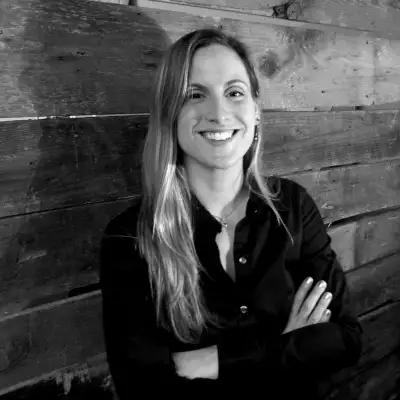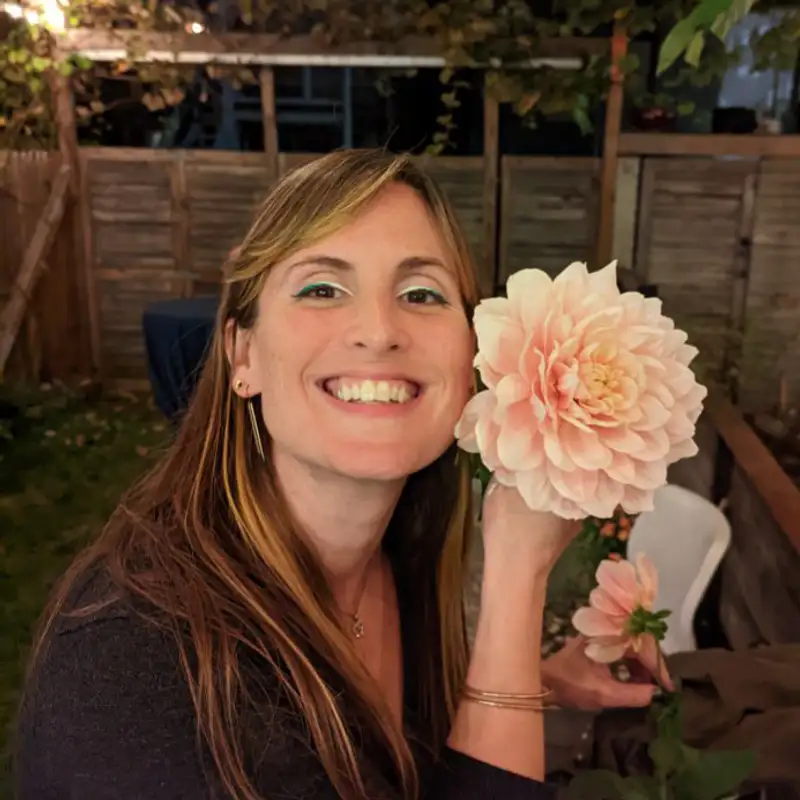
Megan Elcrat of Present Company on Hyper-Local Architecture, Preserving How Spaces Feel, and Place-Making in Station North
Download MP3Music And
Rob Lee: welcome back to the Truth in His Art, your source for conversations connecting arts, culture and community. These are stories that matter and I am your host, Rob Lee, except no substitutes. Today, I am thrilled to welcome a returning guest on to the program. My guest is the founding principal of Present Company, a Baltimore based architecture and design firm where she specializes in urban revitalization, adaptive reuse and creative workspace design. Notably, she co-founded the innovative co-lab Baltimore co-working space. So please welcome back to the program, Megan Elkrat.
Welcome back to the Truth in His Art. So Megan, as we start off. I think one of the things that's really important about these conversations or the way that I like to engage in these conversations is to start off with memory. So could you reintroduce yourself and please tell me about building or structure, you know, from maybe earlier in life that meant a lot to you? Absolutely.
Megan Elcrat: So I am Megan Elcrat and I am the founder of Present Company, which is an architecture firm in Old Goucher. We have a building on Maryland Avenue that we call co-lab. So it's a co-working space that we work out of and we have a little architecture and design focused bookstore in the front that's also called co-lab. So already people are like, what is this place? You know, we're like, yes.
They go, what is it? An architecture firm? It's a bookstore. It's a co-working space. And we just say, yeah, sure.
It's all of those things. So that's who I am. And yeah, I, you know, I was thinking about this.
We've spoken before and I have to assume, I didn't re-listen to it because who wants to hear their own voice. But I had to assume that I talked about this building called the Madnock, which is in Chicago. But that's sort of just like my go-to answer favorite building and I could go on and on about that. But that was a discovery that happened when I was in college. So if I'm thinking about what is my, you know, favorite structure in terms of memory, like if we're really thinking about memory, it starts to be more about fragments. So, you know, I gave this some thought of thinking about the math department, which is a space that I spent time in as a child because my father was a mathematician.
There's a professor at Wichita State University. And I have a very fond and visceral memory of his office. I can picture kind of how it smells. I got a lot of wood, a lot of, you know, high gloss, finished dark woods, these huge, actually, I'm going to say there are huge chalkboards on sliders, you know, multiple chalkboards on these, but like really traditional old fashioned chalkboards. They maybe weren't that huge that I was small, but like this is in my mind, they were so tall, you know, this like pleather green, olive green couch. These rooms with half light, obscured glass doors that led into like little small sort of entryways into four offices in one quad. And the hard, probably, terrazzo floors of these hallways that you could get someone sneaker skidded, you could hear it, you know, feet away, that kind of like really academic building. I was really thinking about that and how formative that was.
And what I think is interesting about it is that then they later built a different math department and everyone was transferred into a new building that was built in, I guess it was probably the 80s and it had none of that charm. And I saw my, because I think when I was younger, I would sort of be babysat by my father's office. I would sleep on this little couch and then I would draw these huge elaborate pictures on his chalkboards, which is why those parts of the space were so memorable to me. And then in the new office, I was probably older in high school. I wasn't going to be hanging out there, but I thought, oh, this is just a room and the windows were all square. It was like a move architecturally. What if everything were square? I just really, you know, so I think I'm now forgetting the exact question.
Rob Lee: No, no, no, no, you're painting the portrait for us. And I think it makes me think of even my, because sometimes when I write a question, like, where would I, you know, why is this hitting me? Why is this interesting?
And the source of that question, I happened to be walking in Philadelphia and I was just like, I was hit with that creative impulse, pulled to the side, started typing into the phone. And, you know, to move into, I guess, my piece and it's interesting because it's being, like it's having construction done there is probably high school. It's probably city college. I went to city college here in Baltimore and I was there prior to being enrolled in as a student. I was there for some arts program as like a younger person. I remember being terrified of it because you're walking up the hill, you're like, does Quasimodo live here?
What am I doing? And then coming back there as a little bit older, you know, like 14, we had your teenager and going there through the full high school experience. That's a building, one of the few buildings. Like when you have that old Rob was here sort of thing, like you put your name in there. My name is in that tower, but I see the construction. I'm like, I hope they don't change it too much. You know, I hope not too much changes that keeps that charm and that sort of like the thing that I remember about it, I guess.
Megan Elcrat: Yeah, no, absolutely. And I think it's really fun to think about spaces like this because of course I ended up becoming an architect. And so then you think, well, at what point was I interested in physical buildings, you know, and there's jokes like, oh, well, they were clues, you know, she played with Barbies by making houses, not, you know, not careers or whatever. But I, but everyone, you know, and this is something that I reference a lot when I'm talking to people, everyone experiences the built environment. They just maybe aren't processing it the same way I am, but we're all creating memories based on spaces, which is why it can become very inspiring to want to make spaces better, you know, you want to make, because you know that like people are living their lives in these buildings and in these spaces, they're people are getting married, people are breaking up, people are, you know, experiencing things in the built environment. So ideally we're paying attention to that and we're making it as pleasant as we can.
Rob Lee: It's good. And it brings me to it. I moved this around because I like to edit as I'm going along this question, because it's very apt on what you just mentioned of those sort of early signs. So me, you know, I enjoy watching old television shows and you might even know where this is going. I would watch old episodes of Science Out where George Cassanzi would, you know, kind of lie about being an architect as a means to like impress women, claiming to design railroads and buildings. And he's architect and architect and it has that sort of mythic idea. I think there's a degree of like chefs have that mythic thing now and it's aspirational, you know, in that sort of that profession. So, you know, go back to when you realized you wanted to work in architecture and design.
Megan Elcrat: I, the funny thing is I don't know that I realized it. I think it might have been realized upon me. Yeah. Actually, now that I think about it, it's not the only story that has that origin. But I was in high school. My mom lived in California.
We'd visit her every summer. I had a guidance counselor that said, you ought to apply for this scholarship. And it was a construction company. So they were providing a scholarship for anyone going into anything building related architecture, engineering, or construction. And I said, you've expressed, you know, architecture, I guess, with some, with the concept of architecture was out there. I think the idea was that I was, I was a creative, I was someone who was interested in creative process, but I also was a bit analytical and interested in mathematics. And so it was like, what is a thing?
What's a profession that kind of, you know, merges these two concepts that's very technical, but also creative. And I was really resistant because I was 18 or whatever. Oh, I never said I wanted to do that. I don't want to do that. I haven't decided yet. I want to keep my options open, you know, so they said, just apply. It's just the scholarship. It's free money. You can take it.
You can go into school. You don't have to. It's, you know, you don't have to stick with it.
Just give it a shot. And so I said, fine. And then there was something about enrollment where because I was in California for the summer, I missed the pre-enrollment. And somehow, based on that modest scholarship, I was pre-enrolled in the architecture department at Kansas State. And I could have gone back and said, no, no, no, put me into a general program, but without a focus.
But again, people were like, why would you do that? Just give it a shot. See what you think. And I was so stubborn when adults in the room would talk about my future profession because I thought, you don't know me. You can't define me. You know, just. I used to write. Like, what do you know? It's all fear, but you know, you think of it in a different term at the moment. And so I went to the first studio class and completely all of that just faded away.
I completely forgot that narrative. I was completely all in, you know, within three hours of doing my first design projects. And I, so it just felt a joke. It was like, of course, this is what I was meant to do. And it was really, it resonated with me and I loved it and it all worked out. And I really enjoyed every second of being in that program.
So yeah, there were never any regrets. There was never any need to like, you know, switch, switch focuses while I was in school. But that was kind of how it came about. And then like I mentioned, you know, then you start realizing that you've always, you know, been interested in this stuff in a certain way.
But once you focus, it becomes, it's always there and it's, it can be a blessing, but it's also a curse. You know, you, I mean, the joke is like, I could say this to another architect. They would totally understand what I mean.
If you go on vacation, you're not off. You're like, oh, look at that building. Why'd they do that? You know, like you can't get a coffee without being like, oh, these seats, these are 20 inches, so they should only be 18. You know, it's just like you're always on. There's always something to observe and learn from.
Rob Lee: Yeah. Yeah. I mean, I relate to that as well. Like never really being off because I'm noticeable, like tall or have you. And it's just like, I have a specific weight. I go about things and I moved through the world, but also just observing, you know, like when I do interviews in other cities, I'm taking down notes that I was saying, like sort of an affiliate, like, let me pull to the side. And it's like, I'm currently working on something. I need to get to this donut place and I'm working like, donuts are leisure. Work is work. What are you doing? And not really being able to turn it off because the brain is always going. It's always sort of curating designing.
It's, I guess, if I were to be a little bit more dark about it, it's scheming through like how I want to go about things. So I want to move a little into the description, if you will, for what adaptive reuse means. To someone without a design or architecture background, like how would you describe it? And what's an example of it?
Megan Elcrat: It's easy peasy. It's just a new use. It's just a really specific term for just a new use. So that's the best way to think of it. It's used in specific relation to older buildings. So if you have a historic building, you know, if you have a theater that was built a hundred years ago and has stopped being a theater, but obviously it's a gorgeous building, what will you do with it? What could be done with that space?
So, you know, not everything lends itself perfectly to any use under the sun, but it's, you know, it's there. So it's like, how can we be clever about how we reuse buildings? And there are like endless examples in Baltimore. It just in terms of, like, say the Baltimore School for the Arts was a hotel. So obviously that transitions nicely into a performative, you know, high school Baltimore design school was a factory. There's so many factories that have become apartment buildings, you know, and again, it's like that's the success to an adaptive reuse project is like what, you know, what's inherent to that building? So a factory filled with windows because it was presumably been built before there was a ton of, you know, overhead light and air conditioning.
So they're using it for light and ventilation, which is what you want in an apartment, you know. So those are some of like the premier examples that are coming to me.
Rob Lee: No, that's really good. You know, when I, again, the sort of noticing, I have this thing. I have a friend, Thomas from Big Emprov. I shared with him a while back that I was like, man, I want to get a church, you know, old church and convert it into like a podcast studio. So every just sends me old buildings that are churches that are available. It's a running thing we have. Some people share memes. He shares real estate or sort of.
Megan Elcrat: I mean, I think maybe now that I think maybe you did mention that to me once. So now I will also be sending you. We should make this happen. You know, there's a lot of churches that are that are going on the market right now. So this is your moment, I think
Rob Lee: I'm here for the church of pod. But I will say also with the traveling piece and going to different places, a fun day for me that I've done on one on one occasion is going into DC and checking out the embassies and looking specifically at the structured architecture and kind of thinking through when was this built?
Is this relative or reflective of sort of the maybe the sensibilities of the culture that is representing this an extension of or even when I go to other cities, I saw this doden that I try to imagine like the top view looking almost like some sort of stamp. So it didn't seem to be a bit more interesting. Maybe right now we're at times. Some of the buildings were less. We're less.
We're more safe creatively, but those older buildings are less set safe creatively. Like they're they're out there. Yeah. I think a brutalist stuff, for instance, how do you balance like preserving sort of the buildings or structures like original like character? You know, could we touch them up a little bit earlier with updating it for more contemporary or adaptive reuse?
Megan Elcrat: Well, it's interesting because I think I think you've touched on it in the question. It's about the character of the building. So, you know, you're identifying aspects of older buildings that I don't even think the original architects would have considered a creative move, but there were certain rules, you know, there was solid being really solid. Of course, brutalism is about being really monumental and that's to convey like power and there's, you know, there's definitely a lot of intention behind that. And in no way do I mean that these architects didn't have intention, but in some respects they're they were, you know, we're all following the patterns of our time.
So I think what we at this point in history find interesting about an older building is that it's evoking this other time. So we're not seeing as much of it. A lot of it's been torn down.
So then these things become more and more unique as their brothers and sisters along the same block, you know, fall away. And so the first thing to do is to identify what is about this building that probably resonates with people. Does it have remarkable towers?
It is a Spanish revival and there's nothing else like it, you know, within 30 miles. Like what really would be a travesty if you, you know, if you omitted that in efforts to modernize something? And usually, you know, the thing is like a podcast space in an old church would be interesting because it would look like an old church. Like you wouldn't attempt to remove that aspect of the architecture or it would just cease to be interesting. And what would be the point of it? You know, like a coffee shop in an old bowling alley is interesting.
If you can see that it in fact used to be an old bowling alley, like that's the conversation piece. So you don't get rid of any of that stuff. I mean, really, for adaptive reuse projects, the being clever is just weaving the new stuff in. And then if you have an addition that you're doing or something that's like fully and separately a new structure, it just needs to be, you know, a good team member to that old building. So it doesn't have to be subservient. It can be really well designed. It can be really modern.
It can be all glass, but it just needs to relate. You need to like acknowledge each other, line things up, think about the proportions. And then it all flows pretty easily. I mean, buildings are kind of fun in that way because you can you can have spaces, you know, again, I mean, it is the point is like if you were to design something as an apartment, you would design it a certain way. If you're starting with a factory and you're turning it into apartments, then you might end up with some weird shape, you know, and that would probably be the unit people would really enjoy because it would be a surprise.
You just have to make it work. What you don't want to do is what I call excuse architecture. So nothing should ever be. Well, the only reason we had to do that was because or the code required that.
And therefore, like you want to be able to step away from the project and have people go visit it and have it all seem interesting and logical without anybody being there, having to explain that there was some sort of compromise thing. Does that translate?
Rob Lee: No, it does. It's so much because I shorthand it like everything that you were saying, I was picking up. So, you know, I was like, oh, this is good. This is good.
Because I feel a little bit more smug about it. I was like, yeah, yeah, that relates. I'm clicking with that. But one of the things and as we start to move in and getting very, very like hyper hyper local because we're both super local as you know, I'll tease and foreshadow.
I have this thing that I've really been on and intentional with in these last several episodes that I've recorded. I have this thing about folks getting together, being in like third spaces or spaces, the notion of spaces bringing people together. It gets people out of their homes away from those screens, whether it's for popups, art walks or even special moments. Can you share some of your insights on the sort of design and architecture side of it and as it's role in like place making? Like talk a bit about that, like the sort of space in the place of bringing people together and how architecture and design plays a role in that. Sure.
Megan Elcrat: Yeah. I think for me, architecture at its heart is fundamentally about experience. So for any client, I'm going to try to learn what experience are they trying to have in the space or facilitate for other people in the case of, you know, public spaces or commercial spaces. So even something as simple as let's say a developer recently said to me, we're going to, we're building houses and we, we own several lots.
So we will not build on for probably six years, 10 years, because it's all very incremental and it's a process. So we want to see that to the community and make outdoor space, which is a beautiful idea. So in that case, what is that outdoor space? It isn't just a park.
It's not just grass, right? Like how do we use parks? Like what is the most successful park that you love going to again and again?
And what does it fundamentally have that other sad unsuccessful parks don't, you know? Yeah. So you have to think about what are people going to do? Do they need a stage, a pavilion? Do they need power? So they can have barbecues.
So they need lights because, you know, it's in a neighborhood where they're going to want to gather outside, even in the fall, even in the winter. So architecture can help solve the problems of what we might need based on a certain experience, you know? Um, we like, I think I might have told you about this pop up we hosted. It was during the place making conference here in Baltimore, which was such a cool experience. That was like, there was so much activity in the city that weekend. It was so cool. We ended up popping up on Artscape Park, which is just, you know, you know, where that is, people are off to south of here and playing this William White video that I'm obsessed with that I loved from college, which is about the success of outdoor plazas. So basically in New York City during the skyscraper boom, they started requiring developers to build outdoor urban spaces as like, I think I won't remember the politics specifically, but I think you could probably go higher if you provided a certain percentage.
And so they went through New York and they took all this stop motion photography to like identify what people liked and didn't like about these outdoor spaces. And it's all at the end of the day, it's all just so human. It's like, it's obvious, but it also took a study to get people to pay attention to it. It has to do with being able to sit in the sun, being able to sit in an organic way, being able to move chairs around like just chairs not being bolted down. It's like a big part of it.
And so anyway, it's kind of in this full circle way. We screened that old black and white documentary film using like the disco silent disco headset, just like our technology. And we rented a popcorn maker and we did it in collaboration with East Wing Architects and we just have this like, what if an architect and another architect got together like for fun? What would we do for fun? Oh, we'd screen the documentary, you know, and it was cool.
People from the community came out, people from the conference came out. But yeah, I think, I think place making can happen anywhere and it can be temporary or permanent. And I think that's an important distinction as well. Like, you know, you started this conversation talking about memory. I think, I think there's a lot of focus about permanence. And I think we sometimes forget how transformative just an experiences one night, you know, like a play that you might see and talk about for weeks. It, you don't have a physical, you know, there's no evidence of it that remains, but it's such a fundamentally important part of being alive to just go out and do a thing for a weekend or a night.
Rob Lee: That's super important, especially now. And I think for a very long time, but it really is heightened now. And, you know, over the last few years, I've really been trying to key in on sort of what feels real, the experiential and even when it comes to like purchase decisions, I'm going to get someone a gift. It might be tickets to an event or it might be, Hey, let's, I'll do some planning, let's organize something and let's do something that's fun. And I have this term that I use called artificial vibes. Like I, I, I hate when someone like says, you know, yeah, we're going to activate the space. And I was like, no, this is just to get butts in seats. And this feels like inherently customers, right? And, you know, I appreciate the reach out, but a lot of times folks will reach out to me with this sort of influence or posture. And it's like, Hey, you know, if you can come here and it's like, you want me to be a carnival barker, I don't do that.
I can interview people. But what do we, what are we actually doing? What's the actual aim here? What is the, the merit here?
Because in my head, it's like bringing folks together. And I'll give you an example of what I enjoy and what I've tried to do. And what I will be having coming up soon, actually, I like a movie night. I like this as an excuse for folks to get together and see a movie that they probably seen a dozen times, but on a big screen and around folks. And there are different iterations of that that I've done. I've done it from comedy clubs to like theaters to like libraries and auditoriums. And each has sort of a different vibe and a different energy, somewhat dependent on the venue that is in.
Megan Elcrat: Irrespective of the movie, right? And, and, and I feel like it's, it's just really important to think about that and really at the root of it, you know, you were saying like sort of easy peasy and describing what adaptive reuse is. I think the sentiment of it is very simple. Like the, the notion of let's just get together, do this in this room. And what does the room have? You start thinking about how to build that out. But with something that, yeah, we're just here and it just feels like it's commerce.
It's like, there's not even an attempt to make this something that's applicable for folks. One thing that I'm looking at coming up pretty, pretty soon, working on some final details for it, but there's a few hotels and I like, you know, especially when I'm visiting, it's like I'm living at this place for a bit. So, you know, I'm doing all of, I'm doing all of my stuff. You're sleeping here.
I'm putting my defenses down, right? So I'm paying attention to a place and I remember going to what I learned later was haunted, a hotel in New Orleans. And I was so many different notes to that took on some of the choices that they made as far as converting old cigarette machines to sell small art, whether it be stickers or small pieces. I love that. Yeah. I was just like, why aren't we bringing this up here? And I was like, let me put together a business case and start pitching it because we have a waste issue. And it's like, how do we, you know, sort of like reuse these things that exist that kind of have a certain aesthetic and they're an attention grabber and you can connect it to art or even this other project, a little bit of a tangent here, but this other project of, you know, those library boxes, the little take a book, leave a book. I wanted to do that, but specific for curated episodes of this podcast because I'm an ego maniac, but have like, let's say in station North, a little bit of a segue here, but station North having episodes that were recorded in station North or featuring artists that or guests and subjects that are based in station North. And it's like, listen to the voices of this particular community, not the full archives, not connected to the internet, but a curing in this thing. You have to stop and be there.
Megan Elcrat: Reminds me of something I saw on the internet where there was a pay phone and they took another pay phone. Did you see this? And they put it in a senior living facility. And then the first one was outside of a bar in a college town. And at one said, uh, phone a boomer and the other one said, foam, a phone, a zoomer.
And if you picked up the receiver and someone happened to be just organically on the other side, they would have a conversation, but they put it in a really public place, a busy like the lobby or the gathering area of the senior center. Anyway, just conceptually, it was really cute. Similar to that. It's like, what could you do with something like an old phone where you could just pick it up and they would just be like, you know, art on the other side of it that you could engage with.
Rob Lee: And it, and it speaks to sort of, you know, we have a tech waste issue. We have a disconnection issue or an over connection issue. And then I really, when I put this pitch together, I was just like, let's get old iPods less than you not have them connected to the internet. And, you know, there's different things to work through, but literally it was sort of that idea of having folks and being very strategic of where was that. So one that I had in mind was put this right down in front of creative alliance, you know, like targeting arts districts.
I was getting really into weeds with it. So speaking of arts districts, boom. Yeah. Yeah, you see that.
You see that right there. So your work has ties heavily to station North, which is a special area for me. This podcast, the city, like this podcast was born in station North at Big Embrough.
So tell us about some recent projects. I see, I call it this and I'm sure someone's going to correct me. I call it why not lot.
I could be completely wrong. Inviting light and sort of also co-lab, you know, with the monthly art walks and so on. Talk a bit about some of the recent developments in station North. Sure.
Megan Elcrat: It, you know, it has evolved very organically, to be honest. So I'll probably, well, I will just back up a bit because. And, you know, I think it's interesting because as you were talking a second ago about authenticity, really at the heart of what you were talking about, you know, fake vibes, kind of like, it's a tough time to be alive, right? Because there's a lot of, there's a lot, there's so much to consume.
And then there's, it becomes ironically more difficult to just make these human connections. So this is not, we didn't sit down and go, you know, let's market. We didn't sit down and go, let's be hyper local. What a crazy concept. As a business plan, very flawed to go, if I can't walk to it, I'm not interested.
When I take business classes, it's the opposite. Expand, expand. But as it happens, that's where we're at right now and it's magical and it's not to say we don't have projects that I have to get in the car to visit. It probably started with our time kitchen, which we were working on during COVID.
I was doing all of that via Zoom initially. I remember this feeling when it was physically built, that because there was a huge pause in my work and in all architecture work during the pandemic, that project coming online physically, I was like, I forgot how nice the feeling is to do a set of drawings and to work really hard on all the details and then have something be done. What a nice, lovely, wonderful feeling.
Those two owners are just incredible people, Kat and Kaya, and we legitimately became friends through the work. That has been happening more and more. We're not being hired by friends. I think almost that can confuse people because they'll see us really spending time with our clients and they're like, oh, they're working together because they're friends. I'm like, well, actually, we worked together and we just liked each other so now we're friends. As that started to happen, we started doing work with the Franciscan Center across the street from the office. We have, of course, CoLab as a coworking space. We have a lot of tenants that are in this space that connect us to other people, but we just started getting more and more connected.
Then it's hard to even talk. I think I'm going to end up rambling a bit, but we started doing some work with Central Baltimore Partnership. You just meet more and more people.
Then as you're at an event, you see something, oh, I know you because your son goes to school with my daughter. Now you work at Rails to Trails and bike more is my tenant. We're all here for bike to work day. It just builds on itself because you're making actual human connections. You mentioned Chris Spolden at sophomore coffee on there constantly and I'm running into other people who are within walking distance of that space. We're working on the same things and it just becomes more and more meaningful. There's a snowstorm and I didn't do the right thing as a business owner and arranged to have someone come and shovel the sidewalks even though I knew it was coming. I walked down here from Hampton to do it myself and who was across the street, but Jamie from the Franciscan Center. It just feels so real.
It's really simple. We're not posting it on Instagram. We're not like, I got out here doing the sidewalk now. But I walk across the street and then we're having a conversation about how there's going to be an old goucher event.
They're going to try to bring us all together. Why would a food pantry be invested in the success of bars and retail establishments in the neighborhood? Normally, I would say they wouldn't. They were just working in different planes, but they are because we all talk to each other so regularly. I think to answer your question, why are we deeply involved? It continues to provide meaning to our lives. It makes sense in a way that it just evolves organically. It is the why not lie.
You're not wrong in that. Inviting Light has five sites around the district and one of them is the future now, the relocated why not lot. Wickerham Alomax created Soft Gym and it's hosted at the why not lot. There's just a lot of information in one physical site. You can call it Soft Gym.
You can call it why not. That was such a cool project to work on. Again, I consider those guys friends and now I run into them at other events. It just grows and it's so rewarding because that's the first time I ever really worked that directly with an artist group. The architecture, I think, informs them of their work.
Their work definitely informs the architecture. We had to really figure out some things. There were so many challenges, but it was like, how are we going to create this space that has these sculptures that are meaningful to your work and also we leave enough room to have events in this space and there's a stage. Could you guys do a takeover of the stage and create an art piece using the stage platform that we need? We had to put it behind a fence so that it could be protected at night or when it's not open.
It's like, how do we create a fence that's transparent as possible that still allows you to see in and isn't a barrier visually? All these things we were working on for years. Just again, it was so cool when it ended up being an inviting light site and it ended up bringing in all these other partners and it just became this whole other thing. It was really fun. It was just fun. It was fun because they were real people acting like real people and we were all working to achieve an objective.
You know what I mean? It wasn't just like a talking piece. It meant something to them that the landscape construction company, SBC, were also just invested in it emotionally. I think that's why it's important to do a one-off and it's not to say, again, we do that. We're in business and we're working in a rural area of Maryland and I probably won't have another project in that rural area of Maryland and it's meaningful in its own ways. To do a one-off and to go somewhere that's not part of your neighborhood, you're never going to have as much information as you do about the people and the places that you see every day.
You're just going to inadvertently be so good at your job if you're working for people you like that you get coffee with that are your neighbors that shovel their sidewalks when you are. It just changes the equation. That's why I think it's important to me. It's just literally organically has grown into this community. It feels like we're living in a small Irish town like 100 years ago and we're all at the same pub.
Rob Lee: Yeah, that's good. I like we have the Baltimore thing and sometimes it feels like, hey, we're not talking even though we're right next to each other and hearing that and seeing those connections. From this vantage point, I have the spot where I try to connect people as much as I can because it's like, hey, you two seem cool. Let me make an introduction or you two should meet each other or whatever the thing is.
Yeah, just fine. Sometimes there's this resistance to it or there's this maybe it's a subtle fear of like, oh man, I'm on a spot or someone's like, I don't know what you do is that great or whatever the case is, but when it works and when it fires and when it builds, it's like, oh, these people are cool. They're friends.
It's like, no, we work together and then we like each other. That's really great. I think that's the thing that comes through in a lot of the interviews that I do. It's not most of them where folks will think like, so you're friends, right? I know each other. It's like, I just met this person before I hit the record button.
Megan Elcrat: It's just maybe a skill or sort of an openness that's there. I want to continue down the district and down the road, if you will. Present Company has a huge project in the district actually.
If you will, tell us about North Avenue Market. What's the vision for the project? What are you excited about?
Yeah, it's a very exciting project. The vision is really a multi-user cultural hub. It has a strong arts focus. It's a big building, but it's currently really just separate.
The history of it is almost from its inception. It ended up being carved into different sections and cut apart. By the time the 70s hit, it was really disconnected to its original architectural intention. The thing that I am the most excited about is reconnecting the north half of the building to the south half of the building and allowing people to walk through these arcades, which are underneath the two towers that you see on North Avenue. This is a building that actually offers storefront on the exterior and the interior of the building. What we currently see now are several slots along North Avenue and out of Maryland Avenue. Those are spaces that a lot of us have been in. Windup space, Nicoshaes, or not Lee and Flynn, sorry. Wrong Irish part.
Did you know what I'm saying? We've seen them transform club, car, mob town, ballroom. This is the North Avenue market that people know and understand today. It's had a lot of really wonderful tenants. It'll continue to have the same type of tenants, but what will really transform it is that through this architectural connection between the south building and the north building, there'll be even more tenants within the space as you come through it. There'll be more storefronts, so studios, nonprofits, food and beverage for people to come. The idea is that the vision is that this is the kind of place that you can go to without a specific plan.
You may know of one studio and go visit it, but you'll immediately be able to very easily discover something that you weren't there to see or expecting. So there's this almost a third space within the third space.
Rob Lee: There's these connector areas down these arcades outside, like in the back. There's a whole space called open structure, which will have a lot of that same organic overlap quality to it. So if you've ever been down there for the holiday market, you see that people will come out for station north. People will fill up the streets for vendors and for markets. And so that will only strengthen when we can have those types of events inside the space.
Absolutely. And it's one of the locations, one of the spots for inviting light as well, I think, is right there. But also, I'll even say when it was still wind up space, that far end, I had a podcast tonight there.
I had one of my podcast festival events there. That was one of the times. This is the only time this is happening because I'll be transparent, the truth in this arc, where for my old podcast, where I got hit with a Hollywood vibe, where the bartender was like, for this space, he's like, oh, you got the talent. You drank for free. And I was like, I'll have a double Jameson. No, it was a double Johnny Walker, actually. And I had a double shot of Johnny Walker. I forgot my introduction.
I'm the host of the show. And I was like, dude, save me. I don't know what the hell I'm about to say. And he was like, yeah, I remember everything I listened to. I was like, cool, thank you.
I'll be, I'll serve up in a second, but I am off right now. And so it created my fear of being on stage. I was like, look, I got, I got enraptured. I got brought in in Hollywood and city-essness. And it was just a double shot of, you know, Johnny Walker.
Megan Elcrat: Yeah. I mean, you know, that's what's interesting about being a human being. I was going to say about being a creative, but no, it touches everyone. You can be off. Like the littlest things can throw us off. And the littlest things can throw us on too. And, you know, I think we just, I won't go down this tangent, but, you know, you mentioned running.
And I told you offline that I had done some running. And I am constantly amazed at how bad it is. I think I am. And how if I have not slept or drank enough water, it's like I can't run a mile, but I've gone significantly further than that on certain days, you know. And it's humbling in a way that I, I think it's teaching me that this is true of everything. I have wonderful creative moments. When you talked about like I'm in Philly, I've been inspired.
I've got to step aside and write it down. I think that we do that because it's very difficult to be on on demand. So you can't always be on even though that's the expectation. So when you have the moments where you truly feel inspired, you have to take it because you're going to have to pull it back in on those times when you're required to be on. And I think that might be one of the most difficult things about being creative is that you're kind of expected to do something brilliant and interesting when it's needed. But what if you're not really inspired in that moment, you know. So you got to be paying attention when you are just like out being relaxed. Like, oh, wait, this is something I could apply to a project in the future.
Rob Lee: It's I try to keep creep those, keep those crib notes. I try to keep those notes to the side because it's like, I got to tap back in. And I remember, so as I'm getting closer to 1000 episodes of this pod, I have a family friend who is slowly filming different pieces of me on the trail. Like, you know, hey, we're going to put together a documentary. I was like, you're going to have a lot of boring stuff.
It is a lot of nothing happening between recording. And I was like, you know, do I have final edit on this? Or do I even care? You know, some of those things because it's like, capture me when I'm at my best. And I'm saying the most witty and interesting and insightful things.
Megan Elcrat: Not when I know, no, that's the most difficult part. Right. You always want to see, well, what are they going to say? Where are they going to put it?
Rob Lee: It's, you know, like just don't capture me when I'm saying like the ill plays, like fart joke or something. I don't need anyone knowing that that's a part of my personality. Never mind. I'm 41.
Everyone. So I want to move into sort of the last like real question that I have. Because one of the other things I read is that you're co-owner of a spot in Station North, the Laverne. And it will be a part of the neon, eon complex. Can you tell us the story behind the project and why it clicked for you?
Megan Elcrat: Sure. Yeah. I could talk about that a lot. You know, the story for me personally, somebody sent me a link to the auction. And I love an old building as we already established. So, you know, I headed down there for the open house.
I ran into Catherine Borg and Ami Dang and other creative people were there that afternoon also. But the three of us really kept the conversation going and we started talking about it. And initially, you know, I think we thought a more established developer would make a, you know, would make a bid on it. And we thought, well, what, you know, what would we do it? What do we think should go here?
And maybe we could have conversations with people and we could get a meeting. So we talked to some people and they were like, no, actually, we're not going to, we're not going to bid on it. Oh, okay. Well, we kept talking about what we thought it should be, right? You know, and I had already been interested in some other property. I just sort of started just conceptually, not financially, looking, thinking, dreaming, right? about a space that could be potentially converted into dance studios, because that was something I had become really interested in in my personal life.
So, you know, obviously this is my club. So there's some, there's some, you know, adjacency there. So it was kind of intriguing to me for that reason.
But we basically, the three of us had these awesome conversations. And then it became, it became obvious that this might be an opportunity that people weren't going to jump on, you know, as, and this is a property not to get too into the weeds or be boring and technical, but there's a zoning here that allows for a much greater density. So you could knock the building down and build an apartment tower, and it would be very close to the train station.
It has all of that as an option by right. So, so from that standpoint alone, this is a building that in some way is is prime for being torn down. And I didn't want to see that happen. It felt really important that this space that people really remembered as an iCloud that people have warm and fond memories of as a club, not go away. You know, so that was another real motivating factor. We wanted to, you know, as a person who works in architectural preservation, I talk a lot about cultural preservation, because we, we do sometimes tend to focus on the facade of buildings and the just the aesthetic look of the building and preserving like the way that masonry was done at a certain time. And it's important to also preserve what happened in the space and how it made people feel. And even though we talked about adaptive reuse and the fact that the use does not always carry through on a building, that doesn't mean that the essence of how people felt to be in it can't be preserved in some capacity. So, so that's my very architectural, you know, standpoint for what motivated me and got me excited.
And everyone else brings a different exciting vision to the project. So, you know, we ended up bidding on it. We ended up winning it. And we are now the proud owners of over 20,000 square feet of nightclub in the heart of Station North. Oh, yeah.
Rob Lee: That's really tight. And I even like the congratulations. And I like the piece of sort of that cultural preservation because I believe, what is this? It's a DJ. I had a ducky dynamo on and we literally talked about it's like, this is a fraud. And I was like, oh, you got to come on. Let's talk about it or what have you. So when I saw it's like, it's kind of this thing. I was like, oh, people that I know came together on sort of let's preserve this because that district and even tying it to this notion of inviting light and all of those different things that are there. It's an area that's had this sort of, I'll call it what it is, it's passive blighting of just like, this thing is open.
This thing may not be open. But then we have really cool creative venues, artistic venues and restaurants. And it's near the train station and all of these different things. But then it's just like, you know, that vibrancy could be there or it's there at sort of different times. It doesn't seem like it's consistently as vibrant as we know it is. And it's had that history of being really cool and really vibrant and being a focal point for the city. So seeing that excellent work is being done there and there are so many things on the horizon that I've learned about in this conversation for one. It's just really great to hear it and really great that people are moving towards it. Because frankly, you know, the live podcast thing, I did most of my live podcast in Darse district. I, this podcast, The Truth in His Art was born there. I said all my giant billboards where people start gassing me up about, hey, Rob, I see you in a billboard, bro. All of that's in that district. So seeing that the health of that district is improving through architecture and through culturally relevant architecture. That's just sounds great.
Megan Elcrat: Yeah, yeah. I'm, you know, I'm really excited about it. I think, you know, when we realize that it was important to us and we understand that, you know, major aspects of this building is the concept of dancing, just going out and dancing, you know. Then you start thinking about, you know, just like in so many ways that kind of physical movement is like the purest version of joy, right?
You just releasing your worries. You're not thinking about like the world being on fire and just moving. And even if, you know, other forms of movement are, it's like just reconnecting with our bodies and being real, being humans that take up space and just having like a place where you can just celebrate and just exist with any people, you know, I mean, that's really what this is about.
It's about bringing people together in like the pure, just the purest way. Like, what do you know, people like going out and dancing. People like going to nightclubs. People like, you know, visiting a place. Hopefully we'll have some places to eat during the day. People want to go and just sort of be surprised, you know.
We're over curated right now. So it's nice to be surprised. And that's what I think we're all hoping, you know, to bring to the table. And as it evolves and as we meet, you know, our future partners that will continue to help us develop the space by opening businesses in the building, you know, that's, that's I think always going to be the fundamental underlier is to just enjoy being in the space. It doesn't have to take itself seriously. It doesn't need to be esoteric. You know, it can just be a place where you can release your worries and just exist.
Rob Lee: And we can cue dance my pain away. So let me. There you go. So, so thank you. That's a good pin that we can put in there. It's a full circle.
Do you close it up really well? Unless there's another podcast before. So let me move into the last like last portion of the pot because that's that was really cool. And I'm not much more to add there. So I got two rapid fire questions and then a sage like advice question and then we're done, you know, you know, if you will.
So the rapid fire. So it was funny was three and then you actually answered one and I was just like, Oh, that's too funny. I was like, that's really good. Would you just bed there?
I liked it. My face may have done a thing, but here's the first question through the lens of place making. Right. We talked about this earlier, you know, quickly, what are three signs of good design? And it comes through that lens of place making. I know I'm putting you on the spot there, but three signs of good design. All right.
Megan Elcrat: You see people there. People will give you the answer, right? But, you know, places to sit down. Mm hmm. And I think, you know, it is rapid fire. So now I feel like I'm, I'm just going to steal my previous answer and say something that surprises you. Something unexpected.
Rob Lee: That's good. I have this thing I've been playing with. What keeps me curious is sitting somewhere between novelty and nostalgia. Yeah.
Megan Elcrat: Yeah. Yeah. Absolutely. Yeah. Cause things shouldn't be overly complicated either. Yeah. And I can reverse answer that like the joke I like to make is if an architecture has failed in some regard, there's a sign. So if there's a sign explaining to you how to use a physical thing, then it's not well designed.
Rob Lee: That's, look, that actually might answer the next one, but I'll still throw you that same. See, you're working ahead. See, it's the, it's the, it's the mind. It's the mind. You don't even have those questions and somehow. I know.
Well, maybe I'm a hack. I don't know, but, but this is good. Though. What's a, and all of those are good, by the way, but what's a overused design trend that you'd like to shelf? If you're like, if I can pull this out of everywhere, I would gray.
Megan Elcrat: Oh, I'm so over it. Please enough with the gray. Sorry. Am I offending it?
Rob Lee: No, that's one of my favorite colors. That's great. Please.
Megan Elcrat: You can have it as a favorite color. It's no, there's no shade on that. It's just the concept of it being a catchall. Yes. And I think that would be the answer for anything. Right.
The idea that this is what's hot right now and therefore this will make this design successful. So we just, we have to be contextual. Everything is different.
It's all relative. There's no one solution, you know, so it's like, I'm just tired of, yeah, I've gotten. The tough thing about gray is that as it became this. Slick this kind of like synonymous with something being slick, people started doing it wrong. You know, there's a lot of bad grays out there, blue grays, cool grays, they're not deep enough, rich enough, you know. Okay. Yeah. That's my quick answer.
Rob Lee: No, no, that's, that's good. And because I have a compulsion in a, in a memory around it, I did an interview years ago with Molly Ricks and we were talking about gentrification gray. And I was like, I'm kind of tired of these gentrification gray and these gray buildings.
I was like, as a person that loves gray, my gray has personality. Right. That's right. The grays that you're describing, not so much. And that's the trend. That's the trend that you say like, let's, let's, you know, fix that one.
Megan Elcrat: Well, I mean, it's like in contrast, anything can be lovely. Like if you think of a gray building with like a warm cedar wood entry, of course, those two contrasts are going to be really lovely. But if we just think we know what's best and then apply it to everything, it just, it kind of ruins it, you know. Exactly.
Rob Lee: So that's the two rabbit fire ones.
Megan Elcrat: Oh, okay. That's good. Oh, I get it. It was just the two. It was just the two. Now here's the phase like advice one and we'll, we'll close out here on this last thing. So I've read that architects frequently have these design quirks ranging from intentional and subtle structural oddities. We were touching on that a little bit earlier, like keeping something there because, and I keep my own quirks and humor into, you know, this, this podcast, you know, as an effort to be authentic, be me and have fun with it.
So what's a piece of advice you would share with a listener with regard to keeping their own personality in their work? Yeah, that's a great question. I mean, I think, yeah, I think it's kind of like what we were saying a second ago, right? I think you have to avoid trends. And I say that as a person who like wears barrel jeans, like, I'm not like saying you can't do a trend, you know, I did just say that I said avoid, let me rephrase that. You have to, I think you have to understand what you like, you know, I think you can, you can absorb trends and reject other trends if you're just reminding yourself what you like.
Anytime you're trying to do what someone else likes, you're going to do a poorly, it's going to feel false and it's going to fall short. So, you know, we, we like to have fun in our work. I'm a big proponent of fun. And that sounds so basic because it's like, well, of course, sure, everybody likes fun. But I think in the world of architecture, you can see why I'm saying that because it's like, you know, sometimes the absence of fun elevate makes something presumably more elevated. And then we sort of go, oh, perhaps that's more creative because it's so serious, you know, I don't have any personal interest in that, you know, I would love for things to be fun.
And so they tend to be, you know, maybe more colorful, but, but, but ultimately, you know, the way to stay true to yourself is to just check in with yourself frequently, right? Do I like this? You know, why am I doing this? What's my motivation here?
We talked about so many things today, but a lot of what we talked about was people we know, people we want to serve, you know, like, how can I help this person? Why am I doing that? Because I like them. I literally, I legitimately like this thing I'm doing, you know, I've had, I think you can probably relate to this, you know, work is a job. I've had moments where I'm like, so, and I'm getting much older.
And so I've been at this for a while. And so I have these moments where I'm like, this is just frustrating. Permitting is frustrating. Budgets are frustrating. Everything's frustrating. Am I not good at this anymore?
Am I not doing what I should be doing? And then I'll go to a meeting. I'll start talking about space and experience and place making it. I'm like, oh, okay, now I'm still an architect. I still love what I do. It's just a grind. Sometimes it's a grind. So, you know, if you, if you can remind yourself why you're doing a thing, then it makes the really shitty, hard stuff bearable. And then you, and that sort of frees you to focus on the part that got you there in the first place.
Rob Lee: That's great. Great, great, great. I relate to it. And that is, I imagine many, many, many people that listen to this podcast feel the same way. And I think we can close out there. That's just amazing. Thank you. This has been, it's been good. It's been a good way to do it Wednesday.
Megan Elcrat: Yeah, no, thank you. Yeah, I might be better in the morning than I am like in the evening. I don't know.
Rob Lee: So real quick, I want to give you the space and opportunity to tell folks where to like, like stay up to date, social media, website, anything you want to share in these final moments. The floor is yours.
Megan Elcrat: Great, awesome. So let's start with CoLab. I'm mostly an Instagram user. That's co underscore lab Baltimore. And you mentioned Art Walk. And I think I didn't really get a chance to touch on that. But as the bookstore likes to participate in station North Art Walk, we're always looking for artists that, that slot in nicely to that, you know, design oriented bookstore. We don't have a lot of wall space, but we like to support people and meet new people through that process. So that's a great way to find us there. And then presentcompany.ltd is the website for the architecture firm. And the Instagram is I have no idea without looking. I was probably just present company, present company Baltimore with underscores all spelled out.
Rob Lee: And there you have it folks. I want to again, thank Megan Elkrat from present company for returning to the truth in this art to catch us up, give us some new insights and just where the story is at for present company and her work. And for Megan, I'm Rob Lee, saying that there's art culture and community in and around your neck of the woods. You just have to look for it.