Miles Johnson - MJ On The Wall: An Engineer's Approach to Storytelling Through Painting
Download MP3Music
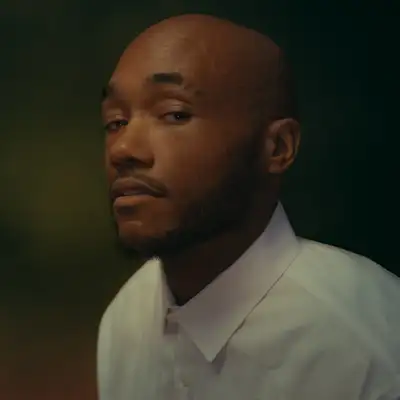
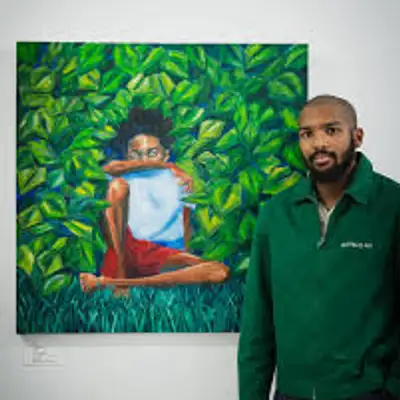
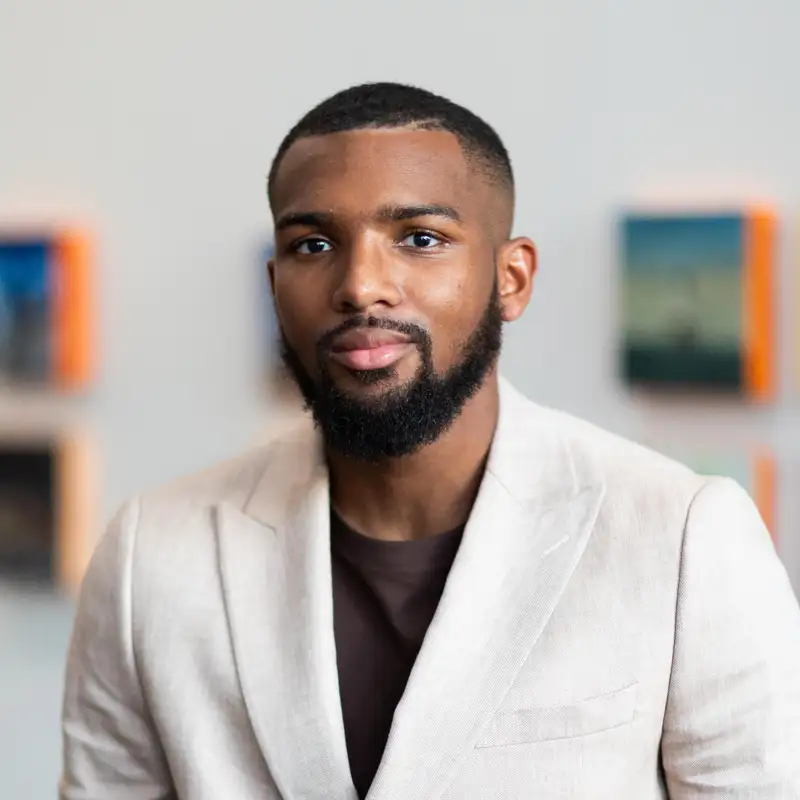
rob lee: Welcome to the truth in this art, your source of conversations connecting arts, culture, and community. These are stories that matter, and I am your host Rob Lee, except no substitutes. Today, I am thrilled to welcome my next guest on to the program, a visual artist and engineer based in the DC, Maryland area. The DMV, whose work honors his grandmother's legacy through bold portraits celebrating black culture across sports, music, and everyday moments. So joining me today is Miles Johnson, MJ on the wall. Welcome to the truth in this art.
Thank you so much. For those who are unfamiliar and undipped with you, could you introduce yourself, tell us about yourself, who you are, what you do. And, you know, another thing I'd like to add in there, what's important for people listening to know about you? Justin.
Miles Johnson: So yeah, my name is Miles Johnson. I am a unclassically untrained oil painter that has been doing it for about 4.5 years now. The first 1.5 years of my art career was dedicated to this my iPad that I decided to come there after I didn't have any more engineering classes and I started to go down that level with past of trying to make some artwork for myself. I am a man of no style. I try a little bit of everything, jack of all trades, massive, absolutely none of them. And I just have a good time just exploring color shapes and linear story telling as much as I can in my artwork.
rob lee: Yeah, that's great. I like it. It's a subtle bit of that deprecation in there. I noticed that. So shout out to you and I relate. I think you're saying language. Thank you.
Yeah. One of the things that came up and I'm always curious how people get to, I guess, where they're at when I am talking with them and having a conversation with them. I share with you a little bit that, you know, outside of doing this, I'm a data analyst and I see in your background what mechanical engineer is in your background and education, you know, so how does the two of those that background and what feels like it's really rigid and really specific in terms of like engineering and education, how does that support your work as an artist? You know, jack of all trades, master of none, that's what a vibe. How does that, how does the engineering piece come into play for your work?
Miles Johnson: I catch a mustard or peanut butter and jelly. Like it's honestly a better of a compliment that I would be. This body nature of the fact that pursuing engineering problem or engineering degree is the act of problem solving, right? And when it comes to artwork, it is the act of like coming with, you know, the freedom to, you know, erase all problems.
You just go, you are just in a space where you're not exactly solving any of your problems. You're just more so throwing anything at the wall because anything can actually work, you know. So it's, I kind of allow my artwork to express that freedom and then my work to provide me that structure.
So when it comes to expressing myself through artwork, even though my mind can go anywhere, I do still like fix a couple of principles to make sure I can arrange it layout the way I want to. When it comes to just my daily nine to five or work-life balance, it's just a good relief. Like it's a pressure relief from all of the college outlook calendar invites and meetings and like their respect for these.
If you hear this message, could you please respond back to the yada, yada, yada. It's a nice, like, it's paintbrush that I can complete control and complete, you know, commands at a point like allows me to, you know, be my refreshment, which is, which is fun, you know.
rob lee: Yeah, you know, when, and I like to see how like those two things, which seem very distinct and very separate serve each other. And I think it only really matters to folks like you, folks like me that's like, you're doing two different things. And it's like, I need to know how they work. I need to know how they operate. And I build a system out of it. And I'll share this when I really been in the sort of data analyst space for a while.
And I remember having a conversation with a coworker and really getting coached up, if you will. And he just told me to make everything into systems. Like, you know, he's like, so how do you, he's like, how do you go about your pro your podcast? Because I was doing a different podcast at the time.
It was probably a baby about a year before this one started. And the thing that he said to me, he's like, making it to a system off, shoot it. He's like, you have a limited amount of hours.
Seems like you're putting a lot of work into this. He's like, what are the things that you're inefficient at? And how can you offload that?
And he's like, you're basically just trading it. And thinking of things in those terms. I was like, all right, I know how to edit, but it's a certain amount of time that goes into editing. So, and I've said this on this pod before, but just as a reminder, context, I put in maybe a couple of hours of research on each guest. And then it's the actual time with the guest. And then the post production. An episode can be anywhere between a full production, anywhere between two hours, if it's real slick, or it could be five hours. So in doing the crazy volume that goes into it, it's just like, it takes five hours to produce an episode from soup to nuts, if you will, to be very busy about it. And at times, if I'm doing six in a week, where's that actually 30 hours coming from that often isn't paid? So what can I, what am I inefficient at? I do all the stuff, I do the book, I do the interviews, I do all of the stuff.
Right. So what can I offload to editing? And so I handed it to a guy that's been with me for a while and we work together really well. So it's taking sort of maybe a project management thing, but really building out of systems and having it done in an efficient manner.
Miles Johnson: That's a great point. I would come there, honestly, because I think the biggest challenge of anybody as an artist is that you're very unstructured. I guess the biggest fairy type of artist is to be very unstructured. And over to loose with how to, you know, streamline the process. And a lot of things for me with engineering is just like, we're breaking things down to simplest steps.
Right. So if I were ever want to get a pain done, I would literally write down bullet points and like, hey, let's just paint everything needs to be green today. Or let's focus on the face today.
Let's focus the handset. And we're just problem solving our way. So we're getting this painting out. It was faster than some artists might be. And no blame to anybody else's process, but maybe just going with the ups and downs emotionally when it comes to making a painting. Because the painting can also be very like, I would say this a little emotional, you know, in terms of like, I really feel like I'm more productive. I feel really good about the painting.
Because I feel bad about the painting. Then I'm like, not making any progress at all. But when it comes to the structure, as you mentioned with cost management, it's like, all right, we're, we're taking out the highs and the lows here. We're just focused on the simple task each day, which I think allows police me and for the past few years to make a lot more pieces of artwork. And I think I would expect it if I wasn't an engineer.
rob lee: It's also, thank you. It's also this incremental component. Day by day brick by brick. And, you know, one of the things I mentioned yesterday in my class, I was sharing with you this podcasting class I teach. I was looking at and I shared this experience. So one of the things that I wanted to identify was what's lacking, what's needed, right? And I find often because I empathize with it, I guess, the sort of emotional component. I could be sensitive, I guess.
And it's, it's just like, I wonder how someone feels when they're getting all of these interviews and all of this sort of like press, perhaps when they have a major art show. But they live outside of that. They may have years between the next time that someone reaches out.
It's almost like you only reach out when you want something. So I think last year what I did was let me go back through some of the guests and just intentionally do return interviews, just checking in. And some of those guests were from 2020, just going back and like, you know, you survived, you back, you know, and really seeing the arc that their life is taken, but also their creative journey is taken as well. And I felt really good and I've learned so much and got even more depth from folks over that time. Yeah.
Miles Johnson: Now I can imagine it's very rewarding, especially for, I mean, artists is naturally going to change, you know, and I can't imagine what seven years, six years can do.
rob lee: You know, Yeah, I'll share one with you after we wrap up here. That was really insightful. And I definitely want to move into this as we're kind of covering a little bit of the, the, the emotional sort of what goes into under that work at times.
I, I had a, I guess I could put it this way. I feel like in doing some of these interviews within that first like chat with the person, because a lot of times these are like blind dates with artists. There's no balloons here, no balloon pops here, but it's like blind dates with artists.
But there is an attempt to connect and really build on it, maybe develop some sense of a friendship, some sense of a kinship, what have you. And I had a guest on early on, really like this stuff. He's a, he's a character. And I was super bummed last year when I learned that he passed. And I saw it and I thought about it and it's maybe just, just me and over my head, thinking of in this way, but I was like, I was able to get an interview with him. I was like, let me forward this over.
This is gear back, right? But I was like, this is one of the things that comes with an archive. It's like, I don't know how many interviews he's done or whether he had done any interviews.
Cause a lot of times this is like the first and maybe only interview someone is done. So like this is a sort of, you know, this, what is it called? Like when you bury something like a time capsule sort of piece, person is no longer here. So I thought about what I'm doing and that sort of responsibility, I suppose, with people coming on one, sharing their work, but also sharing that time with me. Yeah.
Miles Johnson: Yeah. Yeah. No, we are essentially building time castles, especially like as artists, you know, I mean, the act of our paintings is to hopefully all of them be, you know, you know, uh, care, you don't have to relive. I mean, we're going to museums these days and we're just looking at dead artists, dead artists, dead artists, dead artists. This is the second stage of our lives, honestly, second stage of our careers is after we passed.
And I think that's kind of interesting. I wonder if he, the character, the guy who was the character and you said, when he passed, right? Um, I wonder just how it goes for, I guess, his impact afterwards, right? Because I wonder if artists think about their impact like that. And because it's naturally, honestly, the only thing that we know is going to happen after we make these paintings is that these are going to exist after we pass. So, uh, first of all, that's a great thing. You shared it with his close people. Yeah. But yeah, I imagine all of them have their artworks and stuff like that as well. Yeah.
rob lee: Yeah. He was more in the culinary space. Oh, okay. I got you. But I will say though, just in that sort of roll out and sort of the memorializing of his individual, it was just like, oh, let's share this interview. Because this is him and his, you know, him and his element or what have you. His personality, all of that stuff. And, um, it gets it over in some of his takes on food. It was a very, like, entertaining conversation. And it was just such a bummer to, like, find that out. Um, and definitely it has an impact because, you know, I don't just, I'm not just reaching for clips. I'm not just having everyone on. It's just like, I'm interested in the person and there's any connection in it.
Miles Johnson: It's like, damn, the person is gone. Shit, that sucks. Yeah. Yeah. So our people, you know, here.
rob lee: So in that same thing, we have people and I guess this is what I'm getting at. We have people that leave a mark on us, whether it be through this, what I was providing there or just through conversation. And they could be supportive. It's like when folks reach out to me and they're like, hey, man, you know, I really like that episode or if you man, like really whatever, whatever you need, we know how much work you're putting in or even, um, when there's some doubts, like, you know, I do a lot of content.
I've done a lot of content and there's always this question. Is this good? Is this interesting?
Is this worthwhile? And people kind of fuel you in that way. And it's my understanding that you, you had an influential person in your life that, you know, kind of pushed you or nudged you towards art. Could you talk a bit about that? Yeah.
Miles Johnson: Yeah. So, um, so it's Johnson, uh, my grandma. Uh, she passed away just about two days before I graduated. You know, we sit, right? Um, and that was a distinctly difficult moment because on top of the being just from a graduation, it was during COVID 2020. Uh, I didn't even have a graduation walk, you know, uh, and I just remember like at that moment, I was just like, wow, I couldn't even show her any capacity that I made it, you know, because like it's just, there's nothing I could possibly prove in this moment that, uh, I've made it pass. And then granted, this is my fifth year.
I know McCank originally typically takes five years, but knowing I was another, there's a year I could have done beforehand, right? And she was able to see me walk around the stage. It was just a double whammy. Yeah.
Right. So it was a very distinct and profound impact for me just to, um, carry on her legacy or just do something I feel like she would see, you know. Um, and I always remember her painting, uh, when I was young and I thought, uh, it would just be a good, you know, step to go towards doing artwork myself.
I didn't start there. I did have my iPad first because I had to start the painting stuff was going to be too scary at the moment. Uh, but when I got, yeah, well, I got comfortable, um, I got comfortable painting and yeah, it's only honestly until last summer, uh, was the first time I actually painted my grandma.
Uh, and one of my, uh, one of my biggest pieces, uh, I did for my solo show. Yeah. And now it was like a very much a full circle of numbers described. She made like 300 pieces I made up into that point, you know, uh, and it, it, it told you that I was the most too scared. I didn't think I was good enough to get to that point there. Um, so like having that was extremely gratifying and, um, pay respects, but I was, I'm, I ain't done yet. So I, I'm gonna go and keep seeing me before I go see her. I love that.
rob lee: It's, it's, it's great to hear when you, you have someone that you're, you know, close to you that's impactful and that you're, you feel that the responsibility, that duty or that love to kind of carry, carry on, carry that, that flag on if you will. And yeah, I, it's interesting. I, so I graduated long before you did. Uh, I don't do that. I do that. I do that. I do that. What, but you did that.
Miles Johnson: I did. I did. You put four scores in seven years ago on that voice message. I'm 41. I'm 41. Okay. I hear you man. So this is, you know, I'm sorry. I'm sorry. That's the first I've gotten that a lot of way.
rob lee: But I was at, um, the Morgan State University and, um, I graduated, um, 2007 and my grandmother passed at the end of 2006. 2006. So within, you know, six to nine months before walking in, it was, you know, definitely, it's like a before period and after period. Right. Yeah. And you can see that sort of delineation is like right before, um, I think it was like maybe what September of, uh, Yeah. Like right at school started, right. And, and I was just like, man, this is, you know, I got the four years and all of that stuff. But I'll just say this and I've talked about this on this pod and just the conversations I've had.
I have a bag. So I wanted to be, um, an illustrator, comics specifically. Yeah. And I have a bag with all of my old art supplies and old art comics and old like, like just different tools that I used to use. She was, she wanted the skills that she had was the seamstress.
So she took my dad's old bag from like Vietnam and remended it with the bag that he had as a kid that became my art bag that I have in my studio right now.
Miles Johnson: Mmm. That's nice. That's nice. It's a good full circle. I just like, I felt like all this guy is your totem, you know, like he gives you like a sense of power. Yeah. Like I do feel before I did art, there was, I was, I don't know why I'm not going to deprecate myself. I was pretty dope at things.
But what's the opposite of deprecation? I'm going to help me myself a little bit. Yeah. I don't know if I'm going to, but no, I mean, like, but there was nothing else. I was quite like significant, like by far, like with me or like nobody interviewed me with anything else. The impact is that I feel like I got recognition when it came to art or so. But at the same time, I don't think I had that drive to do something like that or be that committed to something until I realized I needed to do it for somebody else to do it.
I felt like I was going to do this with my grandma or like just pursue that dream. But it was just like, that's when it became like a no question. Like there's no procrastination. There's no hesitation. We're down the face first. Yeah. We might be a self-coupled little bit, but we're going to keep going for buddy knows, you know. Yeah. I like it.
rob lee: I like it. You got to thug it out. That's a thing of it. And you know, they talk about it sometimes we want to do it. We're going to do it afraid.
We're going to make it happen. And you know, I think it's something in being self taught. You know, it's the thing that I'm in as far as this audio thing.
And I always find like having those conversations with someone who is, you know, doesn't necessarily have the rules, but learning the rules and figuring out what their roles are and how that kind of comes together. It's like one of the things of like not having a style. It's just like, I build my own style.
I have certain elements of the foundation and there's different tracks. You have some people who do really well with going through the full education component and putting it all in the hours. And you have other people who's like, you know, I'm rolling off a passion and interest. Yeah.
Yeah. So there's another piece that sticks out to me that I want to get your get some insight around. So for me, the National Museum of African American History and Culture, the DC joined Smithsonian, left a mark on me, motivating and reminding me of the importance of documenting Black stories, our stories, our histories. That exposure to museums is so impactful. I think when you're exposed to it, you see things perhaps in a different light. And I've read that museum visits were also impactful to you. So which museum visit or specific work at a Smithsonian or anything that museum wise comes to mind for you?
Miles Johnson: Oh man. So I hope I don't butcher your names here. But so I was in anacostia, right? And if we're talking to DC locals here, you know, for anybody that's not DC locals, that's about three miles from the Smithsonian, right? So for me, that was a nice little run for cross country, right? When I was on a cross country chain. So I used to run down Smithsonian, that'd be my end point.
And one of the great places to kind of catch my breath and then like being something air conditioned because I often ran through the summertime. But another I will like stare at this like the magnitude like old style paintings and seeing the statement to me, I'll remember even back when I was high school with Thomas Cole's voice of life. It's a four part painting where it starts young, young age, middle age and old age. And it's just so the evolution of this one man, right? And that was a trend I just like, I never thought that paintings were like almost like manga panels.
You know, like I didn't think there was a dissinuation, a story here. Like, and then so I do my models, like, oh, this, this painting is back from like 18 something, you know? So I, I just like just the grandiose scale of paintings and the natural. I think it's, I think it's something naturally telling when something is that old and but that big and it's like, it has had significance because somebody had to keep track of over 200 years, right? It's paintings are not just, you know, durable naturally.
Somebody has to care for it is a, is a labor of, of, of, of safekeeping, right? And so that means that the message is important or at least it is important to someone here. And, and I like this, that, that skill that was there in the paintings. So I think that's like, that made it way past their grandkids lives, you know?
rob lee: So I've seen that you've created portraits celebrating like black culture across sports, music, these vibrant and these bold moments. Those are the things that stick out when I look at your work through your website. So walk me through the process from maybe selecting an image to a finished piece and what makes an image, whether from a sporting event or a music performance, like iconic to you that you'd want to capture? Yeah.
Miles Johnson: I just would like to just do my research on this subject first. I don't even want to tackle an image. I want to tackle a story first and foremost. Like so in the past, let me see. I found you, Hammer, just hearing her story about how she born sharecropping end up dying with a foundation that gave a million acres of land across Mississippi. Right? Like, I like the, the circular nature of that story. So that kind of helps build the background and species that she makes helps build the audience that when I like put in surrounding and maybe like a little bit in the foreground and then like just, you know, her flowers or just maybe things that she does.
And like that helps. When I did my tennis players, I wanted, I just like the nature of that. I would think about Serena Williams first time when it comes to any black, one female tennis player, but we don't really think about the gifts and like that.
Or we don't think about the ones that even predicated that as well. And I like just the nature of like, oh, well, they don't really get acknowledged like that. They don't really get the flowers and maybe it'll be great to do like a flower piece on them.
Right? It's like quite literally illustrating the flowers that they should be given. That's the nature of several kinds of messages and I like that message illustrates what the paintings is. Like as I stand now, I didn't watch the Michael Jackson movie, right? Of course you did.
rob lee: Hey, yeah, of course you did. Right? On brand, on brand.
Miles Johnson: But what, I mean, this movie was cool. You know, good playlists, love the Bob to it. I really was strike sorry to spoil. She's not much of a supporter, you know, it's a history. But there was a moment where he was panicking in the bathroom. Right? And I can help, but really find that very fascinating topic to like paint on.
Right? I haven't done anything yet with it, but just more of like the kind of the bigger the personality is, the more niche you have to go with style or with the subject matter because it kind of gets overwritten by the persona itself. When you draw in Martin Luther King, people are not looking at the artist style anymore. They're looking at Martin Luther King, you know, and same thing that goes with Michael Jackson.
But when it comes to like selecting certain stories, like what does this kid that is facing the most fame that anybody has ever possibly imagined at such a young age, how does that look like on a daily basis when he zoom into like that bathroom? How heavy was his breathing, even though he was belting out these incredible ballots with pitch-perfect accuracy, stuff like that? How did Martin Luther King feel, you know, integrating people to a burning home?
You know, or that nature of being like the natural moral compass when you're surrounded by, you know, human like temptations, you know, like my man was out here, you know, he had to go holler at some ladies real quick. That was not, you know, with the wife. And that happened. It happened. It's a story, things are there, right? But I just think I like the fact of grounding or focusing on the nuances of people and portraying that.
rob lee: So the nuances, the nuances, the mundaneness of people as humans, not just figures, not just icons.
Miles Johnson: Yeah, like more so than like, I want you to look at a new angle, right? Yeah, Scott Huss five. Have you heard that book? Yes. Yeah. So, and you know that premise, right? Like at least the one I call Scott Huss five, right? Like to me, like that draws parallel to like the Birmingham bombing, right? Right?
Where is this like, just that image of the third? I wouldn't, I would not even like fire back to you, but like less of nuance and more so, just like getting very specific. I think like the larger the person is, they kind of mystify it so much to a point, mystify it so point to a point. Nobody would be like Michael Jackson is human.
Nobody thinks of Murph of the King as human. Nobody thinks of like these characters or I mean, like these historical events or something that could physically hold your hand or could happen to the person that you know, right? And I kind of want to make our words to make it feel like you knew that person, you know, or at least that's what I'm intending to do now. Yeah.
rob lee: I really get into the minutiae. Like there's a book that was talking about that, that I read on occasion that talks about the daily habits that artists engage in. It's like, oh, I get up at 4am and I make a coffee and then I do this and it's just like, yeah. And then when are we going to get that famous painting that you did? And I was like, no, I care about the other stuff.
I care about the other stuff. And you know, since we have that UMBC connection, I'll share this. I did a digital storytelling course a couple years back and that would lead to the course that I'm teaching because you know, Rob Lee goes to ARC. And I'm in the class, I don't do video, right? And the project was a video class, it was a video thing that we were going to do. We were going to shoot and do all of this stuff.
So I wanted to do something that was on my mind, that had an emotional component. I knew how to talk and people assumed like, oh yeah, you must public speak all the time. I was like, I'm 6'4 and awkward.
I'm trying to hide, you know. I went through an experience that I had having staged right before going out for creative mornings talk. And I did sound dubbing to create this sort of atmospheric. I'm like, going extreme left and extreme right and then having my actual voice in the center. So the extreme right, it's just like I'm trying to channel my father with this sort of stern, make sure he's right. And then I'm trying on the other side channel the childlike curiosity and wonder. But these are all the things that were going on in my head. And I remember in sharing it and presenting it to my peers in that class, they were like, wow, that was intense. I was like, yeah, this is what goes on in my head before I had to get on stage and talk to people for a while.
Miles Johnson: Yeah, that's a perfect thing to feel for yourself and then as artists you're just trying to make sure you can transport that feeling to somebody else. So you have kudos to it.
rob lee: So when you're in a midst of working, I'm very curious in this area, are you documenting or are you keeping a journal? I don't talk a bit about like that thing because I don't know if people are doing that but I'm very curious like, yeah, today I did a lot of green today or I had a bagel, no painting was done.
Miles Johnson: Look, I'm not going to hold you like I think I have about 200 pages of Google Docs about me painting or me talking about the career right now as an artist. Like from the very first moment I was, I'm going to make a sale or start making money off art. I was like, I need to document this and see how this goes. Yeah, so that is very true.
rob lee: Archiving, you got to have it. It's, you know, I think it's a thing that gets missed at times and part of it I kind of understand it. We have this hustle culture, but it's great to hear that, I got this, I'm mapping this. I'm going to have this line and have art sale here. These are the paintings that were done. Art sale here, art show here and all of these different elements.
Miles Johnson: Yeah, yeah. Good amount of rain too. Just like, I remember telling our working for a whole blues and a rain. Like, you know, like I was talking about like, I thought L was going to be a DuPas circle with these nice white sweater tents for the next, you know, I got an old man with a necklace made of forks cursing out another person saying like, no, this is my booth. I've been here for 24 years. So now I'm selling artwork in front of a CVS. Man, I'll tell you, man, I'm losing storage.
I just need to jot it down, especially if I make it, you know, yeah, this is, I feel like this is already making it here, you know, so like, especially if I kick the bucket, you know, like I got some things to really tell people, like, hey, this is what happened. I'm not going to bullshit you. This is a lot.
rob lee: I'm sorry. You're good. You're good. I'm cursing. I'm cursing so much. Yeah. It's like, it's like in case of emergency or if I get attacked by the fork guy or the spoon guy, I don't know how you avoided the spoon guy because he's crazy.
Miles Johnson: Oh, Bob and the weaving. He was scooping. He was trying to scoop. I was trying to get out.
rob lee: He's like trying to spoon. I was like, whoa, whoa.
Miles Johnson: Oh, buddy, buddy, buddy. Yeah. So in that documentary and that document in documenting sort of way, could you walk me through the evolution over the last six, six years, but really over the last, like, three, 2024, 2025 and now 2026, what shifted, what stayed consistent and where are you pushing yourself these days when it comes to your work, when it comes to your career? You know, talk a bit about that.
Miles Johnson: Yeah. Um, so plenty of things have shifted. I would say, all right, start with consistency that on the wall, this, uh, every time I'm showing my artwork, I try to show all the previous artwork that I've done and I've placed it on the wall. And this would, this would got me into posting stuff on Instagram or on social media. Period. It's like, I need that. I needed my audience to have a sense of completion where we're adjourning the third wall growing. So it'll serve an empty wall and then each post will make the wall get bigger and bigger with more artwork and artwork.
Right. And now it's, it's just the less of like, making a journey of completing the art wall to more so that's my backdrop. And I just placed more dope stuff I'm doing. You know, once I had too much artwork that couldn't sit the wall, I moved it over to solo shows, you know, and once I did my own solo show, I moved over to solo shows hosted by other people.
Um, now I'm doing a group show that I'm hosting curated, you know, in about two weeks. Um, and I think with that, I have shifted a little bit. So yes, I have shifted from doing the art wall, generally. Um, but in another way, when I'm also building my website and collecting my database of people, I've definitely shifted from behind the phone to like in front of people, you know, like it's much more important for me to kind of get away from just thinking about getting from just in the internet alone. It's more so this like, can I bring people out? Can I have them all come together for opening? Can I come for a game night or do like a DJ shot or something like that? I just want to keep building community with the art world in general. So yeah.
rob lee: That's dope. Um, I'm on your website. I've just been like scrolling through the website. Um, and you know, I'm definitely on wall three right now and I really like manifest.
Miles Johnson: Oh, thank you. Thank you. Man, that was a crazy one too because I like I started, you know, drama. No. Yeah. So it's a digital marketplace to sell artworks. Uh, right. And, um, got him at RCA. He was one of the founders of it, put me on it from art artwork pointed and I made a manifest piece for a while. It's been sitting there and I don't know where I just get like the thing notification. Like, oh yeah, this piece is like completely sold now. I'm like, this is gone.
This is no longer. It was a moment was like, wait, like that's like, again, that was probably my first piece that sold like, um, at least from that collection itself. And especially I was the one of the first pieces I was sold. I was above like 1500 and anything like that. Like, I think my most recent sell before I, my highest of four hours, probably like 700.
So I was like, wait, am I, are people really think my art is worth that much? Because that's like, I was like, dang, all right. Yeah. Yeah. Yeah.
You're right. Yeah. Yeah. Me. Yeah. Cause that's the thing that people brag about, you know, people put like, I see so many quotes of what people put in the subtitles.
Like, oh, here's how you make, I sell artwork above $1,000 and everybody's putting their chips and how to use and stuff like that. I knew that thing was like, all right, I don't think I'm getting close to that. But when I saw that, I was like, wow. And then yeah, I ain't going to, yeah, it's time to do Mr. Peace. So I understand why it's worth it to somebody else. So yeah.
rob lee: And one other one, Jessica, I don't want to spend all of my time on it because I'm going to. Yeah. It would be, I believe this is on like the first project and this is like almost fan fictionist art is that piece that has Mike Tyson versus Ali. Yeah.
Miles Johnson: That was fun. That was very fun. I just wanted to find each other and that little black goat is a very big inspiration early on for me. You're like, and he had these two characters funny. You can see multiple fish like anime style. I was like, oh, I need to do that. I need to do that. So yeah.
rob lee: I dig it. I dig it. That's such a fire piece. So I want to move into like a really sort of like interesting like project that I see. So talk to me about common people ain't common. I see it's a hundred pieces from 2025 celebrating small moments and also making art affordable for like everyday supporters. Like what motivated this work? Would you learn doing this kind of volume and what was some of the responses?
Miles Johnson: Yeah. So I did my first social the year prior to that. Right. And I was hoping for my, I wrote down my, my, my old journal, right? Saying, Hey, what about city people come out here? Right. I did my promoting, you know, I, you know, I did my thing. I'm not going to deprecate myself.
I was being dope. And then like 200, 250 people came out. I know I sold 250 tickets, but like there was like, why about this time? I did this artist speech.
It was definitely, you felt all 200, right? And I was just like, yo, this is like, y'all didn't really see nothing about flyer and that flyer had no artwork on it. Right. I was showing nothing off at the time.
Like y'all came out here for the strength of this meet. Right. And that's really dope. I'm very grateful. I'm very appreciative. I just wanted the next series of paintings of it to be dedicated to this depth, you know, like celebrating the people that really came out, you know, and supported me in my moment of sign. So I wanted to, you, the ability as an artist is to highlight people's moments, you know, and that was, it was fun for me, especially for the fact that like, as this art thing goes on, I feel very much I'm in like the prologue stage of my career.
Right. I feel like most artists ain't popping off until like their fifties and sixties. And seeing how I am right now in the art market, what I canceled my paintings for, I did want opportunities for people who went to my first show and know me in these stages of life right now to have some piece of investment with me early, you know, where in the trip, where it is when keeping for the rest of their lives or is it something that matriculates over time? And so I just thought it was a really good like handshake that could do because at the same time, like it's a lot easier to sell like pieces that are more affordable, especially to a crowd on opening night, as opposed to like bunch of big pieces at $5,000, $10,000. So yeah, that was, that was kind of just a flu concept back. And there was a later, there's a last part of the question. I don't know if I type over.
rob lee: Yeah, just, I guess that sort of, and I think you may have, but that sort of model, like, what were the responses in it? I think just, you know, folks, was it sort of like, wow, I'm seeing this social media buzz. I see all ties. We're blowing up. We out here.
Miles Johnson: Yeah, I think it's, I think people really love this, especially opening day. Like, I think I saw probably 25 to 30 pieces on the first day alone. And that was just a really dope experience. I mean, my first solo show, I saw absolutely none, right? It, but I saw a bunch of small prints and stuff like that.
I had in the gift shop. So, like, this kind of has that like flip where people just buy a bunch of originals. And I think it with me too. Like the ones that keep with me, like, I go to like, one of the Blackboard art shows or Art Escape by bringing them. And yeah, people, it's always just like a phone with super near. I think it's honestly like a really good start for artists.
I would recommend it if you have a time, you know, for me, I had the greatest opportunity to be unemployed for about like three months there. So I had plenty of time to like work on pieces like that, even though I can hold you 100. Still aggressive, very aggressive. Yes. Well, before we're repeating to that extent again, but ultimately still worth it though. Definitely love the process.
rob lee: So this is sort of the last real question I have. And I think it's a timely follow up, you know, in terms of like that handshake that sort of having folks perhaps on that sort of ground floor to as you're moving up into past the prologue into the main story of this art career, right? How in your opinion, how can and even touching on what we touched on earlier with sort of exposure through museums and so on, how can folks just be more around art? Like going to shows, going to events, things of that nature. Because, you know, I hear all the time, hey, you do an art podcast, tell me about art. I'm like, I don't know, go to an art show and so on. And that's sort of my, you know, or following artists.
What would your maybe two cents be on sort of the accessibility component? And I think you kind of touched that on that with, you know, common people in common, but also sort of like how, what would you say to people like, I don't know anything about art. I don't know what to do. I don't know where to go to meet artists to be around art to experience it. Yeah.
Miles Johnson: First of all, I don't blame them because I didn't admit it. What especially one thing of DC is that artists, the art culture lacks infrastructure. If you have to compare it to parties, right? Like there's, you can probably list five art promoter groups right now. Like sold out days, like anything that's happened to bullpen, like New Percent or something like that. There's like, there's people that are already organizing and promoting like this is where you should be after a weekend. Right.
Which is, you know, great. Go do your thing. Go have the emotion.
Right. But if you want to be in the more of a space where it's a little more quiet, you have a natural icebreaker, which is the art itself. You can bring people from all ages, whether it be young or old and most times that attempt for anybody above age of 21.
Most opening events have free drinks there. You know, like it's systematically, you think of it as an art thing. It's like an easy sell to people. Is this the fact that we don't quite have the strict, though, a regulated promotion group for somebody's focus on promoting art, opening, stuff like that. DC, in New York, there's cultures of first 30 days where there's a whole bunch of opening arts and stuff like that. We're starting to try to do that with DC, DMV culture, this in general, because I know they're very hungry for it. And that is something I do want to focus on, especially the next five to 10 years.
rob lee: Yeah, I'm looking forward to the next stages. You got it already mapped out. You got to see the future.
Miles Johnson: Yeah. No, I'm just telling you, like, come on. The way that we love brunch is the way that people can really love opening nights in some of these art events. It's almost the same thing. We're getting too started. We're at the start of it. I'm telling you, give us five to 10 years, man. I promise you things can come up for me.
rob lee: That might be the clip right there, actually. You fell into my carefully orchestrated trap.
Miles Johnson: God, I believe.
rob lee: That's tight. Thank you so much for that. I think that's where we can close out on the real questions. I got four rapid fire questions for you. You don't want to overthink these.
And then I got one piece of business after which is the sage advice. But I'm going to hit you with the first rapid fire question. You already know what it is because... Name, please. So, MJ on the Wall is a play on Mike Jack's Off the Wall, I would imagine. If that is true, then, and you've already touched on seeing a Mike Jack movie, so what is your favorite Michael Jackson album?
Miles Johnson: Cool. I mean, I like the Off the Wall, but actually, what's the one where Heaven can raise on it? Is that what album is that? Wow. Wow. What's the one that?
Yeah, I'm going to go with that one. The all-white face album and stuff like that. I don't know why I can't believe it, but that has some bangers on it.
rob lee: I think it's invincible. That's the last joint.
Miles Johnson: That's really cool.
rob lee: I think, over top of that, Escape 2. Escape? Like Postpartum? That was actually a real boost Chicago rhythm. Slave to the rhythm. Those were actually, what's the one you did with Justin Timberlake? Justin Timberlake did it with him.
Miles Johnson: Love never felt so good. Yeah, man. That's if you like Ozzy, Neville Cap, especially I know, especially my name is MJ on the Wall, or something like that. I get what I'm about to say is going to be flavor.
But I didn't listen to Michael Jackson's album fully until I listened to Escape. I know. I know. I know. I know. But I did with my mama. I hear you. Yeah.
rob lee: Because there is that gap. I don't want to hear any of Peanut Gallery at age gap. I'm going to go Dangerous. Dangerous. It's a New Jack Swing album. It's just like, I was six and that joint came out and like some of the songs on it are, I was like, yeah, this is definitely a, you want heavy black here. I was like, I liked it. And then he wasn't right. But this was some of these things. I was like, you know, remember the time I was like, we're gonna eat you right now. We're gonna eat you. Yeah. I mean, I listen to that right now. Like, you know, I got to go to it.
Miles Johnson: I got to go to it. I'm not. Because I need to eat it. Bring it up and stuff like that. My big little cat log with the head. Oh, here we go. But I do have this, I do have this, this belief though, like,
rob lee: you know, between Mike Jack and Prince, it was Mike Jack when I was younger, when I became an adult, I was like, hmm, I can be into the field. I was like, there might be some Prince here going on. It's like, oh, just equal measure. It just depends on what your mood is for the day.
Miles Johnson: I need to explore Prince. I'm going to be honest with you. I know Purple Rain, probably know a couple more of his songs. I'll trace the notes. I'll trace the notes. Yeah, yeah, yeah. Yeah, that's cool.
rob lee: So here's the next one. You mentioned this on more than one occasion, little threads of it, little snippets, little stems, if you will, to stick with the whole music thing. Manga or anime? Ooh, anime. And what's the one that you're watching currently? Because I feel like you are watching one. Or something.
Miles Johnson: I don't want this to be representative of my personality right now. But I guess witch hat, a terrier witch hat, right? I'm watching Mob 100. I'm trying to finish up that one. And then there's this new one where there's like a witch hat of a terrier I got. Take the name for it.
But yeah, those are like my goatees right now. Just saying, JJK is not on right now, but JJK season three with this guy here. Just from an animation standpoint, there's so many frames in there that you can just pause it and like, alright, this is great design art, inspo, stuff like that. That's a beautiful reference point. So, I need good off of that. That was, man.
I read the module before it. Like, what they did after... Call of Games art was cool, right?
It wasn't just an incident in my personal opinion as a reading it. But like, seeing Call of Games? Nah, you know. They cook at some different Call of Games. Yeah.
rob lee: Fantastic. So here's the last two I got for you. First one. It's three different options. What has gotten you further in art? Taking the risk, blind faith, or just audacity?
Miles Johnson: What's the difference in taking the risk? I almost argued that you need audacity to take that risk. Okay. Yeah. Does that make it both?
rob lee: I think you're hedging right there, but I think you're right. Taking the risk is just like you might do it scared, but I think in my head, the way I hear audacity is just like, it's going to work out for me. I don't care.
Miles Johnson: Okay. I got to say audacity. I mean, man, I'm a strong woman. I love to throw the ball as far as I can, see if I can catch up. Like, catch up to whatever audacity. Like, I announced my solo show before. I had my pieces done.
I did that back to back times. And yeah, I think there's something great about seeing a very big image in your head and see if you can do it. My 10th painting to date, or my third painting, I think, I mean, I made six paintings my first year. And then my seventh painting was about to be nine feet, five feet, right? And it was going to have 60 individual characters and it was going to have like a nice linear story telling and be reflective and have all these motifs in it. Like, I did that. That was definitely so much exciting. But I'll tell you, right in the mirror, that is a loud ass to think of doing something like that.
rob lee: That's for some people before he got kind of redacted a little bit. That is some easy ass like, I'm going to do this. You know, work? And you know, I think there's a back filling sometimes that happens where, you know, the last few seasons of the podcast, I've been planning out very meticulously how I'm going to do. But the one year when I was just like out of my mind, like you were talking about doing your hundo, you know, which is a lot of work and it's different work, but it's crazy volume. 2022, I did 322 episodes of this podcast. Yeah.
Miles Johnson: I mean, you'll say this is like a back-setting. You back for that job. You made that thing work. And that stuff is dope, man. That's what gets you. And we know that you're really, you're breathing what you say. Anybody can do anything when they're up, you know, when they got momentum and stuff like that. Like, as I've seen, you watched the last dance with Michael Jordan. Oh, yes. Yes. Yeah. Yeah. Yeah.
Yeah. Obviously, I had to part of my performance with this in this, but like, he had that baseball bat and he was swinging. He said, oh, you want to talk shit with your damn, you know, you want to talk shit with your up real quick. No, no, if you really want to talk shit with your damn, I'll tell you what's next real quick. And I was like, I like that. I like that, you know, as I do a trans painting, you know, I can't wait to say no, next week, a masterpiece, yo, I'm on that, you know, you know, sorry, animated. No, 100%.
And here's the thing that watching that, that, that doc, 2020 is a 2020 doc, right? Yeah, it really gave me context of my friend group at the time. And I had several people unsolicited. I was like, watch this show. Who am I based in? And it's like, you're Jordan. I was like, what do you mean? It's like, you take things personally and you're good at it.
And you don't have a problem getting into my ass. I was like, I was like, no, no, no. And I was like, maybe him and he's an aquarium like I am.
Miles Johnson: So I'm a crazy. Dang, gang, gang. Here we go.
rob lee: Here we go. Yeah, there we go. See, I knew it was something about you. Oh, man. So here's the last rapid fire question. If you can paint anyone living artist or athlete, let's restrict it in those two buckets that you haven't yet. Who and why? One answer, right? Yeah.
Miles Johnson: Yeah, one answer. Yeah, I mean, on topic, Michael Jordan. I mean, yeah, there's something. That man's a psychopath. We know it. That man's not a good guy. Yeah, but I mean, he's good at what he's, I'm so glad when he was a psychopath was a basketball.
Because for the guy we had a Michael Jordan anything else, you know, it's, it's, it's in the history books. It's a gang of con, low, shit right there. You know, I'll worry, you know, but not, not.
I like psychology in there. So I just, I didn't just hope that will happen too. And I'll, and the, and this go bar for bar here too quick. I want people to recognize it as a Miles Johnson piece before they recognize Michael Jordan. That's how, that's how I'm really trying to get at it when it comes to painting and stuff like that. So yeah, yeah.
rob lee: I'll give you this and that sort of bar for bar piece when I do some of these interviews and folks get back and they're like, I already asked that question. I was like, you haven't answered to me though. And I have a certain degree of stank on it too. I just like, yeah.
Miles Johnson: So you ain't done it. Come on. Or, or, or, yeah. Love it. All right.
rob lee: Let's reset. So, um, so we got through the rapid fire. We got through the real questions. And now we're here for the sage advice questions. And, you know, now, now understanding that you're in the same tribe as Lord Lee over here. Um, that the audacity makes much more sense now.
Um, so in 2020, you set that, that goal. Have you to solo show you did the paintings five plus or so. And, um, and it was the first like five year attempted with no gallery connection. By 2024, you self financed your own show of like 12 pieces.
He had 200 plus and attendees and so on. So for, for someone listening who has been maybe audacious, a big dream, but doesn't see that clear path like how the hell I'm going to get here. I'm going to do it. We were talking about back filling the second. What did those two instances teach you and what advice would you give to someone who has that audacious dream?
Miles Johnson: Yeah, call it early. You know, I think anything when you have to compare to similarities, I didn't think it's so a social as a social. I thought as a part, you know, and if I want to invite a whole bunch of people to my party, like I need to plan a quarter late. I should have the advice six months into that. You know, I needed to send out reminders to people like three months out, two months out, 10 days before, just to get people in the current like headspace like this is something I need to head for. Right. Reminders are very important. Forget what Instagram tells you like nothing's old news.
Repeat yourself, repeat yourself, repeat yourself. I definitely learned that there's something about scale that really brings people alive. Like when people realize another group of people also watching at the same time, it creates a certain fever in the room where everybody starts from a modern Italian in a good way, where they are, you know, come out to court and remember you. They remember a moment.
How people like started dating each other because they went to some of my shows, you know, right? And I feel like that's something like that's thick power. That's sticking power right there, you know, fall over your advertising process, really, really become dedicated to how you campaign. Like don't discourage yourself of one post that flopped or not enough reception on some content that you made.
You have to think of it as a 10 week strategy and you're pointing out content, you know, for those 10 weeks, two at a time per week, four, 10 straight weeks, get to a certain goal, set reminders and just gun it. Just you have to gun it.
rob lee: Yeah, that's good. That's good. I was motivated right there. Also, you make a love connection at these events. What are we doing?
Miles Johnson: I didn't know. I didn't know what to ask of the fact, but I do acknowledge the fact that I do have a large female fan base from my followers and so when they do come out and such as men of culture. Yeah, the men do appreciate that fact, but they appreciate art first. Yeah, so everything happens for their reasons. This is an art show first. Love connections second. Yeah, most definitely. Most definitely.
rob lee: That's fantastic. That's really good stuff and really insightful. So this has been fun, man. There's two things I want to do as we close out here. One, I want to thank you for coming on and spending some time with me. We did it.
Miles Johnson: We made it happen. Yeah.
rob lee: And secondly, I want to invite and encourage you to share with the listeners where they can follow you, check out your work, website, social media, anything that you want to share. Shameless self promotion. The floor is yours. Please.
Miles Johnson: Yeah, no. First of all, thank you for having me. This is this open up very nice. That felt very natural, especially like when we start our competition, like I'm in a mode.
I'm in a mode. So this is dope. I hope you continue to success as you've been doing knowledge of the some glad to be the next one in that list for myself. Miles Johnson, as artists, you can find me as MJ on the wall across TikTok and also Instagram.
And you can also find me on my website, MJ on the wall dot com. HTTPS, back to us back to us and the cold and all that stuff. But yeah, yeah. Hope to see you guys soon.
rob lee: And they have it folks. I want to again thank Miles Johnson, MJ on the wall for coming to the truth in this art and sharing a bit of his story and insights with us today. And for miles, I am Rob Lee saying that there's art, culture and community in and around your neck of the woods. You just have to look for it.
Creators and Guests