Omri D. Cohen
Download MP3Rob lee: Welcome to The Truth In His Art, your source for conversations connecting arts, culture, and community. These are stories that matter, and I am your host, Rob Lee, except no substitutes.
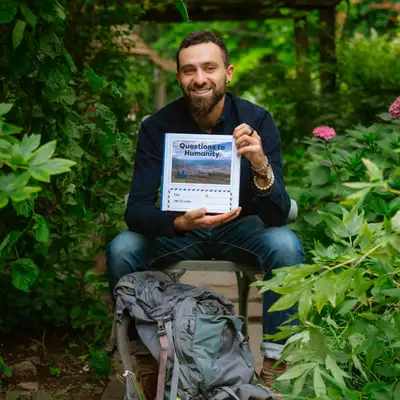
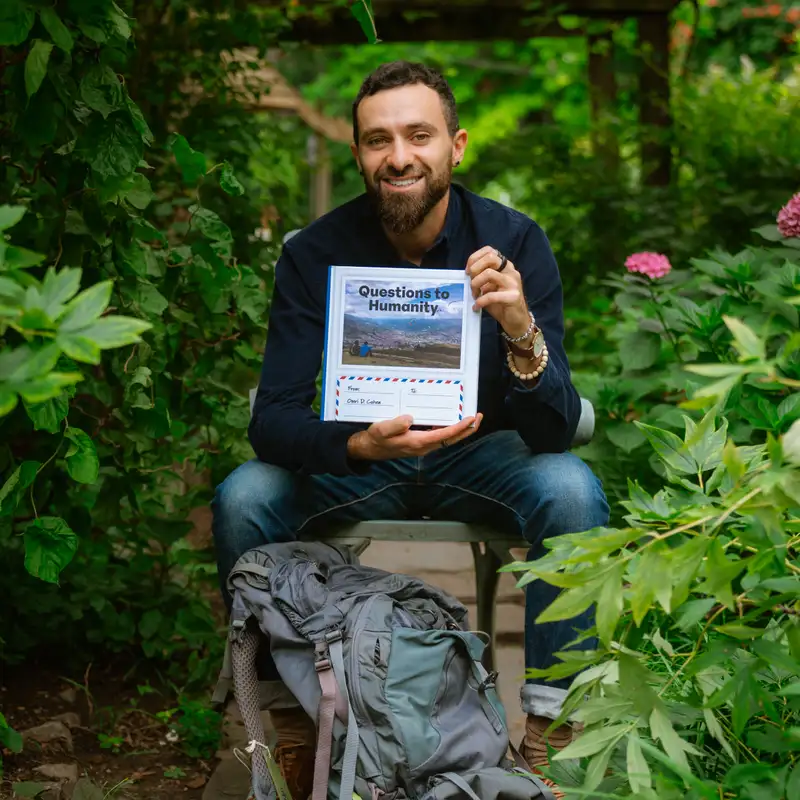
Today, I'm excited to welcome my next guest, Owen, to the program. They're an author, an explorer, and a realistic optimist. He has backpacked South America, gathered more than 7 million views through his landscape photography, and has spoken with more than 400 people from all walks of life about their question to humanity. His travel photo book, Questions to Humanity, documents the first 100 questions to humanity. So please welcome to the program, Omri D. Cohen. Welcome to the podcast.
Omri D.Cohen: Hey, Rob. Super grateful to be here, especially with such respect for your hustle, your grind, your curiosity. You're probably in the 900th episode, so super excited.
Rob lee: Yes, I am in the 900th. You're a part of a very select group of folks. Yeah, it's this podcast, much like your work, and we're going to get to this introduction for you, but much like what you're going to talk about today, this podcast is international. It's not just stuck into East Baltimore or even the East Coast, even the US. I've done interviews with folks in Japan, France, London, Brazil, just all over the world. Well, so yeah, I'm trying to select people.
So to start off, this is that first question. I'm going to soundscape in this one, because stories matter. So stories, specifically sharing an authentic story is important to this podcast, obviously. So I'd be remiss if I didn't invite you to do so. Could you introduce yourself in your own words? Because I think an introduction is always the beginning of a good story.
Omri D.Cohen: Yeah, definitely. So my name is Omri Cohen. I'm the author of Questions of Humanity. It is a book of me asking one question to 100 people that I met when backpacking South America for five months. This book is from a trip I did in 2019, actually. Those five months were right before the global pandemic hit. And it ended actually with me in quarantine in Peru for two weeks. So the book basically reveals like it's been six years in the making, I guess, to start.
And the book reveals basically like the answer and the wisdom from the people I spoke with. Stories from these people and then pictures from the beautiful continent of South America, specifically, I've been Columbia, Ecuador and Peru, and there's a little US in there too. Have you been to South America? I'm curious. I have not.
OK, I will any recs you need. Like I'm your guy. I got the interactive map and very timely as well, you know, after the Super Bowl, half and performance, that bunny. But I guess that's a little bit of the book. And then in terms of like, you know, my identity, who I see myself as, you know, the word I always think of is explore. I think that word can kind of go into a lot of different lanes. I think of myself kind of at my best of like exploring kind of the different layers of different places, different people, different stories, kind of like yourself. I like the like the unpacking and kind of know like the behind the scenes as well.
And yeah, I think that the book kind of brings out a lot of these sides and kind of reveals some of like my investigations of you will into like people and in a very exploratory state. And then I'd be remiss by then say from God, nowhere from I'm from Newton, Massachusetts. And I'm currently living in New York City in East Village, very special place, full of lots of lore and stories as well.
Rob lee: Nice. That's a great introduction. And we'll definitely be keying in on a few of those elements as we go along. But I want to move into this sort of somewhat introductory kind of setting the stage a bit. So like me, you started off with a business marketing econ background. I was a business admin guy and I dabbled in the science side of it.
And I still partially the day job is related to data analytics, right? And I found that I shifted, you know, around 24. I needed to shift to something more creative in addition to it. And that's what I've been doing for about a part of the last 17 years as a podcaster. So, you know, you also shifted towards something more creative with photography and so on. Talk a bit about, you know, what was the experience that drove you to kind of shift? You know, I think quit your day job is what I read, right?
Omri D.Cohen: Yeah, correct. So, you know, my first job out of college was in market research consulting. So basically doing a lot of surveys. Surveys are unique in the way that like you kind of quantify these things that are almost unquantifiable, like, you know, attitude, the needs, things that, you know, don't fit nicely in kind of like behavioral data.
They can just measure, like, on the internet, I guess. So I found it really interesting. But I just found that, like you said, like I have this more creative side. And there were things that I felt like I needed to pivot basically. And I felt like, you know, I got promoted at this job. And it was a good job that I'm very grateful for, especially like to have a job, especially kind of like relevant to the day with more college graduates.
Kind of struggling more in that territory. But I kind of like looked at my life and looked at like, what were my values or things I want to learn? And was I in a position that I could take like some more risks?
So I decided to kind of quit that job to go backpacking South America with a flight to Columbia. And I basically knew that, like I wanted a project to work on. And I didn't just want to go kind of into the unknown, like free-tab.
But some people are really good with that in terms of like, I will free spirit it. I will, you know, let, like, there's no path, there's no route. Like I wanted some structure. And I thought, like I wanted a project focused on people and their stories. One of the big inspirations for me is a lot of storytelling movements, like Humans in New York. Humans in New York is this photo blog from this guy, Brandon Stanton. He was a street photographer. He moved to New York City with kind of nothing after he left his job in Chicago. And he basically did interviews of people and then took their pictures.
And it went viral maybe around 2010. And this just opened, I think, like people's eyes to the power of like the story from random people, not even like celebrities, but just everyday people to share like our commonality, share our perspectives. And I've always been inspired by those types of movements. So I was like, I want to do something around people and stories. So I decided that while I traveled in South America, I would basically ask everyone I met, like one question that I was kind of just curious about. And I thought that question would kind of help me get to know people in a like faster way, like an accessible way also. And I kind of started doing that. And I've been doing it for the last six years as well. So the book is kind of the first 100 questions, but in my life, I've spoken with about 650 people now with these conversations.
Rob lee: See, we're touching on some other territories. We move along. So that's that's good.
Omri D.Cohen: I'm coming up on you also. Six, I mean, your podcast episodes are probably longer, but.
Rob lee: Too long, some might say, but yes. There. No, it's it's good seeing sort of the volume and obviously seeing that it's driven by curiosity and connection. So I may have mentioned it, maybe I spoke out of turn. But if you could confirm, what was your original creative love, if you will?
Omri D.Cohen: I'd say I was always a big like soccer guy. So maybe I'll separate that from creative. There's definitely a creativity to it. But I would say. I'd be curious if this is the same way that kind of my first creative love is the onboarding for a lot of people's first creative loves. But I had a teacher in school who helped me see the world in a very different way. So Mr. Weintraub, new in South High School, my sophomore year, or maybe a senior year, actually film and media studies. You know, like we all like movies and film, but then like there's someone that like shows you how to like dissect it and they analyze the different layers and everything. Yeah, you know, I know I heard a podcast for a big big film by yourself.
So I'm sure you're resonating with this. But you know, we dug into these fancy words like mise-en-scene, like introducing the French language, everything on the screen. But then also it was like he just showed us that didn't always have to be this like critical thing with film. Also we had an agenda item at the beginning of every class. And that agenda item was called Joy. And Joy was Mr. Weintraub picking a five to ten minute sequence of a movie that he loved. And the whole class watching it together.
And Joy persisted throughout like that entire class. And in really dark times also. So this is a kind of dark thing, but I think shows to kind of the power of what he was doing also.
And just the power of film as well. When I was in high school, my senior year, they were a couple like suicides in the school. And this was kind of like a pandemic that felt like it was taking over the school with a mental health crisis, so much pressure on kids.
So you know, do all the honors classes and kind of go to the best college. And a lot of classes were canceled, but Mr. Weintraub said, we're going to have class and we are going to have 90 minutes of joy. And we watched this one movie before sunrise. Don't know if you know it by Richard Linklater.
Just this beautiful movie. No one said a word, you know, in that class. He's an intro.
He just said, we're going to have joy. And it was such an inspiration with just like there are these moments where like the only way to get over some of these terrible things where like you can put into words is like maybe this artistic practice or maybe a film or medium. So first love, joy, film, movies, Mr. Weintraub. Thank you.
Rob lee: Thank you for giving us that. That's I think that's really important. And I think really interesting to touch on, especially with the state and the business around movies and that whole culture.
And, you know, before I move into this, the sort of next question, I just want to remark on it, like, you know, you probably picked up a bit of the movie podcast and some of my comments around like film. I just think it's just a really good opportunity to bring folks together. I know that we're feeling more and more isolated and more and more disconnected, but having folks in a room with a movie on a big screen, something that you've seen a thousand times.
You've never seen a big screen. You know, and I'll say one of the coolest things that I did early in, you know, my relationship, if you will, is the day that Prince died. My partner is a big Prince fan. And I was just like, are we going to do this? Like get together? It was like, I think Prince karaoke night. And she's like, I remember when this song came on this and it was just like reliving and connecting on a different level. And then I'd never seen purple rain in the theaters, right? It came out and think a year before I was born. And she was like, are you going to take it for this? We got to see this.
Omri D.Cohen: It's very, you know, and she's like, it's not good. She's like, I love it, but it's not good. It's a vanity project. But really being able to get into some of the lore and some of the discourse, I think when I look at stuff now, contemporarily, there are pockets of it where folks are enjoying and having that and not talking about, well, it didn't make a million dollars, well, it didn't make a billion dollars rather, but really just enjoying the sort of love of the game. I think also, like to speak to that, too, the unpacking of these shared experiences where it's not like, oh, we just watched this and then like, OK, on to the next thing, like, you know, something like, where's that time to kind of marinate into our experiences?
Where the pause is? And I guess also with the bridging of like film to what I found and kind of the travel space and the conversations I have with people. I love the unpacking like process of people also. It's just like process of discovery. And then like with movies or art where it's like, you share your perspective. I share my perspective like, oh, what did you see? Or like your favorite parts, like my least favorite part or something, you know, we're we're quabbling about that. But yeah, I think with the connection piece also, like all of these are mediums in which bring us closer together, ideally, and experiential kind of engaging nature of it is very human as well in a world that seems so fast paced at sometimes it's like we're in like a assembly line or something like that with our attention.
Rob lee: Yeah, you know, you were touching a moment ago on in my algorithm is now filled with it, but touching a moment ago on the Super Bowl. Now my whole feed is just filled with Puerto Rican memes. I'm like, I like one bad bunny. I like the entire album.
I like one bad bunny video. Now this is what it is. And it's like some of these were backdated even before the Super Bowl. What are we doing? And that serves as our discourse versus, you know, we have like an approved online discourse versus did we experience it? Where are we at now?
We almost in a journalistic way. I've got to get it before deadline. I got to make sure it's there. We're not marinated in it. And as we know, this is a good bit. As we know, the best food is marinated. The best food is marinated and we are consumers.
Omri D.Cohen: That's, I wish we could just merge this right now with like an Anthony Bourdain episode and be like, and what are you eating? Like, and I know you don't do the sponsors. They're like, oh, and sponsored by like your best restaurant Baltimore, my best restaurant, your main, the East Village. Um, that's funny.
Rob lee: That's funny. Um, so I want to, I want to move into even, you know, touching around it on a peripheral and somewhat directly. So let's, let's talk about, um, human questions to humanity.
Uh, ultimately, I think you touched on a little bit, but if you want to expand on it, what was the driver in creating it, um, and creating the book documenting? Because it's, it's pretty big. It's pretty ambitious. Um, and it's not something I've done. I've done almost a thousand podcasts as you, you know, you've talked about the number just to put it out there, but what was the driver, um, to, to create the, the book?
Omri D.Cohen: Yeah. So basically I had this experience, um, a backpack for five months, spoke with all these people, and I basically came back like, um, uh, during the pandemic and I was like, you know, like, wow, I learned so much. There are all these different ideas from people of different perspectives. The youngest person in the book is a 16 year old burger shop worker, um, in some random place in Columbia that like, I'm sure most people have never heard of.
Um, and then the oldest person is this 94 year old man on a park bench in white keel, Ecuador. Um, and I just felt like I, I was like, you know, what is this? Is this a fun social media thing? Is this, you know, like a business?
Is this a website? Um, what is the best way basically to kind of package these perspectives that people share with me, um, these stories that like I knew about the people and then give, uh, like respect to the incredible places where I got to speak with these people and also share the cultures from the places that I inhabited and some of the history there. So I felt that the book was basically like the best way to kind of sound like a postcard, like a meaningful postcard to someone of like what this trip really meant for me.
Not just like, this is like the, the nice picture from it and not just, you know, like throwing out that out there, but like, no, this is like, um, someone who shared an important question on how they view the world. He was an everyday person from Ecuador. Um, this project was six years ago. So that 94 year old man now, he's like a hundred also.
Um, you know, if he's still alive. And, uh, you know, hear stories about like their lives and kind of my experience also like on the road doing this process. Um, so that was kind of like why the book specifically, and then in terms of like why the question, I actually don't know if I said it, I would basically ask everyone I met, like if you could ask one question to everyone on earth, all eight billion people living today, different races, ethnicities, religions, what would be your question to humanity? Um, I speak Spanish, so maybe around half of the questions in the book were like my conversations in Spanish with people as well. Um, and I basically asked that question, like before I knew it was going to be a book or anything, just because like I was kind of curious in general. Um, like, you know, the curiosity bug and also like, um, you know, I knew I was going to meet really great people and, you know, eat great food and, you know, um, I see great things, but I kind of was like, what more to this experience?
What is some thread line? Which way I want to learn? And that's also kind of what I thought of, like when leaving my first job, I was like, I learned so many things I never imagined learning like survey design and field work and this data analysis, like, um, and that's a lot of the real world.
Right. You learn all these things that you never kind of expect to learn, but I feel like at some point we forget that we're like in control and in, we're in the driver's seat in many ways of our learning. So I thought that I'd be very curious in this. And I thought that, you know, I'd get to know people maybe like in a short amount of time, if I only have like a minute with someone, five minutes with someone, a day with someone, it's like, what would I really want to know? And I thought this is something that I would, uh, really want to know. And, uh, you know, the last six years I've been wanting to know it, uh, I guess consistently since then.
Um, I am curious your perspective also, um, when we first met, I can't remember if I asked you actually, and I remember all the questions. So I'd be doing a disservice to you. If I didn't ask you, probably what would be your question to humanity?
If you could ask one question to everyone on earth, no right or wrong, just whatever you would ask. How can we be more connected? Hmm. How can we be more connected to people?
Rob lee: Yeah. I think it's to what? Yes. Um, how can we be more connected to, to one another? One another. I think that there are these invisible lines, these barriers, um, some of them self-created, some of them, uh, spoke online and so on. Um, and I think there is an apparent disconnection, even with people who are in the same household in the same community from the same background, what have you, and for whatever reason, it's just like, well, you like this shade of red. Well, I think I'm more of a discolor red. It's just like, we're all, we all like red. We're all like red guys. Can we agree on that?
Omri D.Cohen: No, some common denominator, maybe. Nope.
Rob lee: So that's, that's probably, that's probably the question. And, and I think it aligns with what I do. You know, I'm looking for the humanity and the commonality with people. And there are these interviews and just again, sparked through curiosity.
Omri D.Cohen: Beautiful. There's a, definitely a lot of unpacking to do with that. I'll share two quick thoughts. You can choose if you continue to riff off of it. I feel like connection is also very variable based on your life stage. So I was going to ask, you know, what did you think of connection 20 years ago versus now, but like you were a very different person, maybe different friend groups, different life stage. So it's like, you can't really have this perfect bow and chapter on connection.
Cause I feel like it's so, it's so kind of different based on your specific context, but I just, I'd be curious, how do you think about connection based on different like time frames and then also like what you think is the biggest driver of disconnect that you see. Yeah.
Rob lee: I think you're right too with it. I find that, and maybe this is just woo with the astrology of it all, but you know, if aquariums, we tend to find out things a little earlier than folks.
And I remember reading about, I think with the Atlantic article, maybe from Derek Thompson about sort of isolation piece. And it was definitely keen in on me. And I find like, I have this running bit, you know, I do all of these interviews and folks are like, man, you must be super social. I was like, I have 1.3 friends and it's getting smaller and there's a lucky three times.
Omri D.Cohen: Literally. And it gets, it gets smaller sort of every day. And, you know, 20 years ago at 21, it definitely was different. I was, I was in college, I was around folks. I was going to class having those experiences and the friendships, I suppose, or the connectivity, if you will, was kind of baked in through the thing that you were doing. But yeah, you know, I didn't live on campus. I, you know, I went to, you know, much the school that was actually not far from my home. So I could walk to class every day. So my connection to that community on campus is very short term.
And I didn't, it wasn't a big number exchanger. Like, hey, let's. Chat afterwards.
I was like, nah, this is a job. I'm moving on to the next thing. So I think with that convergence, like I was against it sort of then or just not really focused on it. I have one or two sort of close friends at that time. Um, and I'll say over the last probably 10 years to be somewhere in that middle, maybe starting at that 10 year mark, realizing the value of connection and of friendship in a sort of different way going to what you were touching on with stages, I think it matters so much more.
Um, I think really amplified and highlighted by, you know, the pandemic, you know, that was a big piece where, and I've shared this before, but I think you may, may enjoy this. I was, um, I was the one, I think Instagram one day and someone just went live randomly random dude in Spain, you know, the beginning of all of this. He's like, Hey man, I hope everything is going well over there in the U S. Um, just wanted to say hi. I was like, I don't know you bro. And he's just showing me like they're having a watch party him and his group of friends and he's just like, I really like your picture.
You look a lot like one of my friends. And then there was like a spot in your Rob there and I was like, what is happening? But I had to process it like in a world of, um, in a world of sort of grips and scans and don't believe everything online, especially now. Um, I was like, Oh, this is human connection. This is an attempt to connect.
We're all sort of locked down and it's different at each place. So this random human is just reaching out to try to connect in that, that way that I took the barriers down a bit and we had like a nice little brief conversation. I just talked to a random stranger and now I do it three times a week. A lot of times. Yeah.
Omri D.Cohen: I think also to your point, like creativity and connection, like in the pandemic, we got more creative in the ways that we could connect with people. Maybe it's playing a game. Maybe it's a weekly check in, you know, online and like with the way that you do podcasting as well, connecting with people like, you know, I'm assuming you're in Baltimore now, like I'm in New York city. Um, it feels like a very creative way to connect with people as well.
And I think that like as a technology is changing and as people are like changing their life stages as well, maybe people need more of the creativity and ways in which we connect also and create like different forms, um, to do the same social need.
Rob lee: For sure. I 100% agree with it. And I think, I thank you for that. That's, um, a good piece to consider and a good piece to sort of thank on and chew on because it sits there. Like, you know, I try not to have these, uh, how can I put it? Like inauthentic conversations, like this is a real thing, but there is sort of this perception is like, Oh, you're going to be gung-ho and out there. I was like, yeah, not really what I do. And I'm good like this.
I'm good in the sort of one to one thing. And that's been there for a while. When there are more folks, you know, I start to over analyze a little bit. And I'm like, I want to make sure I'm giving this person the time and the attention and trying to do sort of all of the things.
And, um, I think it's important to, and I think you, you touch on it very well to just kind of know where you're at and what you're thinking about with connection to how that, that works. Always look back at how things used to be like, remember back in the day, these have like social clubs and things of that nature. Yeah. And now it's, Hey, join my community. You know, this podcast community is like, that's a Patreon here, isn't it? Like, and maybe there were dues back in the day, which is fine. Yeah. But I felt like it was a bit more substantive than this sort of short shrift, maybe per social relationship. It felt more like textual has something that you want. Yeah.
Omri D.Cohen: Yeah. Well said. I mean, even with the, yeah, it's like to be the organizer, um, of that community also, like sometimes I think, uh, it's like, Oh, well, where is the social club? But then sometimes like, um, you realize it's like, Oh, like, yeah, go organize, like, Oh, go, go do the meetup. It's like, I feel like everyone has some responsibility in it also. And like, um, one thing with questions to humanity, like, you know, I published the book in September and since September, I've been expanding into a video series also. Um, a lot of the project has been outbound with basically like, I'll basically live my life and I'll go up to people and, um, ask them just, you know, Oh yeah.
Hey, we're touch adding. By the way, I'm curious what's your question to humanity. And with the video series, I have a big sign that says, what is your question of humanity? And I'll do it in parks and people will come up to me like, but kind of like, I don't know, just this like gravity fluctuation. And, you know, there's times where it's like really cold. Like I went out, you know, in the winter and it was like me and a few people out there, but like they came and I was like, you know, I could just stay inside, but I feel some itch for myself to connect with people. And I think that other people also feel that. And then you show up and once you kind of organize and make some of these communities, you realize like, yeah, you can, you can do it. Like any day you can show up and you can organize and you can invite. Yeah.
Rob lee: And I think the messaging continually that it's going to creep through. It's like, almost it's not quite subliminal messaging, right? But it's enough of it of that phenomenon of folks like enjoying canceling plans and things of that nature.
Um, just like, oh man, I'm glad I don't have to show up to that. And I think there is a, I had this conversation with someone because I've been trying to make a few more friends, moving that point three up, right? Um, we'll make a few more friends and I had a really cool conversation that talked about sort of friendship, right? Using that as a proxy for connection that friendship isn't always convenient.
It isn't always easy, but it's always worthwhile. And I thought that that was a very interesting and curious thing. And I find that for a lot of people that there's this aversion to doing something that feels, that feels hard or feels inconvenient and we just love canceled plans and I, I don't, I don't enjoy canceled plans. I like to show up. I like to do the things. Um, one of my friends last week, uh, it was a birthday and I was like, man, it's super cold.
There's ice outside. I'm kind of coming up with the barriers. And I was like, let me make a deal with myself. Like at a minimum, go there for an hour. Enjoy it.
Enjoy yourself, have fun, be there for your friend because your friend matters to you and their, their birthday and all of that stuff matters. And then they'd stand there for like an hour and a half or something. I wasn't, wasn't counting, but it was one of those things where it's just like, Oh, this was a good time. I enjoyed myself and it was super cold, but you know, then it got warm and it was inside. It was very enjoyable. You showed up.
You showed up. And I think that's, that's a big piece of it. Um, so I'm going to ask another question related back to, uh, questions to humanity. So if you were to think through sort of being in it, but also having the, what, five or six, six years or so, as far as sitting with the work and being there with it and having the book out there, what were some of the common themes amongst the questions, um, that, that folks were asking, was there a commonality and also why South America?
Omri D.Cohen: Yeah. So themes from the book, um, you know, I think the, there are themes that emerge, which kind of as you read, like you will parse together. Um, but I didn't want to, you know, say like, you know, these are the big takeaways. I think people will realize that, but you do see kind of like big groupings around kind of like, um, happiness, you know, like, are you happy?
What makes you happy? And then kind of like learning about people's back story. And kind of better understanding little glimpses of, um, maybe their perspectives, um, you see a lot around like self understanding, like, who are you, what makes you, you and some of these questions that, you know, like, probably everyone is, uh, asking themselves and their day to day. Um, but we don't always realize it. And we don't always realize, like we maybe are asking very similar questions to people around us. Um, but we don't always see it.
And we don't always have necessarily that context or situation to share it. Um, and then you see, you know, questions around like societal improvement, um, change, but I think the most interesting thing with themes around this is that there's no theme that you'll get a kick out of this because you're a data guy. Um, there's no theme that is larger than, um, 16% of like all the questions.
So about one in six, maybe that's the biggest theme. I won't say specifically which one, but like, what does that mean that, you know, people are asking pretty different questions. Um, kind of how I think about it is that, you know, everyone's approaching this question from a very different angle. Um, a snapshot in their life, you know, they're 24, it's the 65 year old. They're born in this, but you know, their own different life experience. And that specific point in their life chapter, maybe even a specific day in that chapter and, um, Their question is humanity is usually something that's important to them. I can tell because people are very thoughtful in the way they answer. And sometimes it's not all deep philosophical stuff also or deep motivational stuff. There's a few raunchy questions in the book also. I'm not one to silt people's perspectives.
So whatever people said ended up in the book. But people approach this from a very unique life stage. And while a lot of questions are diverse, you get to see themes of similarity in people or maybe what they're going through.
And it kind of reminds me of the power of storytelling and sharing people's perspectives too. Maybe your question around connection, maybe that's not someone else's connection right now. But maybe someone's moving, I don't know, cities or something. And in one year, they're going to be thinking of your question is humanity. They're going to be thinking about your thoughts to it. And you have some wisdom that you shared with them without even knowing it. And by kind of reading other people's perspectives also, there will be questions where you're like, oh yeah, I remember at this chapter in my life when I was going through this specific thing or this thing with a friend or partner or something.
That was top of mind for me. So I think in many ways, it's kind of like this collective conscience of basically what is important to people today? What is kind of this mosaic of the human experience and realizing that everyone has these differences and kind of unique perspectives and everyone's stories are own. But at the same time, there's a lot of similarities in the life stages.
So kind of this like balancing between the singularity, I'd say, and the commonality. The last piece I'd say on it, which the book is in age order, so from the 16 year old all the way to the 94 year old. And when I was initially like, you know, thinking of the narrative, I'm like, is it by steam? Is it by country? Is it by this? Is it by that? And the 16 year old says, why do we believe in God if we can't see him?
He says it with this sort of like, like disbelief, kind of like doubtfulness. This is the burger shop worker. And then the 94 year old man, I'm in Ecuador on this park bench full of iguanas and pigeons. Like I've never seen a park like this. Literally like imagine your pigeon park, but then iguanas are bouncing on the pigeons.
The pigeons are bouncing on iguanas. And I'm talking to this guy in Spanish. And he's telling me like this thing about his life belief. And he says, like, do you believe in God? And he says it from this deep confidence and this deep kind of like conviction. And he tells me how he has all these kids and all these grandkids and what he did when he was younger. And this deep confidence and it kind of made me think like, is this the same person? Like, did I be like, is that 16 year old? Like, he starts with disbelief about, you know, this theme around God or, you know, like, what's the point?
And at the end, he has like some answer to it where he's like confident. And it makes me think like maybe this whole book is kind of just like our conscious as we're going through our life stages and as we're growing up and encountering these different, you know, stories and phase of our lives. So I'd be very curious about that. And then in terms of kind of South America, you know, I spoke some Spanish like growing up in high school and college. I studied abroad in Barcelona and improved the Spanish there. So I thought like, yeah, I'd like to practice my Spanish more. I really enjoy speaking Spanish.
And I love the idea of discovery. And I knew there were other cultures in the world where after high school or after a college where, you know, people don't have the next 10 years mapped out, like they're like, I'm going on like a trip. Maybe it's a gap year or something.
But just the idea of exploration, I think, is harder to integrate with that time period like into American society for a number of reasons. But I knew this was a thing and I knew that like I would speak Spanish and I knew it was going to be like education and adventure. And I'm really happy that I got to kind of intentionally create this own storyline through the people that I met also that continued to this day.
Rob lee: That's wonderful. And thank you. Thank you for that added contact. This is almost the when I do these interviews and in a person has like a film, a book or something. I feel like I'm getting the director's commentary version. I feel like that and two comments I want to say before I move into or two observations.
I want to say before I move into the next question, I think the the stages piece that's there, I think that gives it an evergreen evergreen quality. It's like, you know, because you were describing you perhaps were sitting there with a time traveler, you know, this is like so at 16. But then at 60 something, it's just like, so you do know you did learn in it. And that it made me think I was like, that's a time traveler you were talking to brother.
Omri D.Cohen: Oh, man. Yeah, it's yeah, maybe they're all well now you're in there too. You're in the project. So I mean, I'll need to find your younger 20 year old self or maybe your older 60 year old. That would be a good sci fi element to it.
But oh yeah. Yeah, it definitely with the life stages and there's definitely a focus on kind of like people in in between life stages. You know, backpackers or, you know, the job quitters or people in between people after graduating something but then also just like people who are like, oh yeah, I've never been out of the country and it's my first place. So I think also like the book isn't just for you know, people were like avid travelers or people have been to South America. I think it's for people who are kind of like curious about like, yeah, what else is out there and sometimes you know you hear someone's question and it's so different than you know. Or you hear the story and it's like, yeah, this person's been hitchhiked, you know, 3000 miles or something like that. And you're like, wow, this person's so different. But I think sometimes also the contrast with our own story gives us additional perspective and gratitude in the life we are living as well. And in terms of control of like the choice that we do make today.
Rob lee: Yeah, absolutely. So this next question. And I want to mention is I want to give you your kudos right here. First thing that appears, you know, after the lovely note when you sent me the book, which is really great.
It's in my office. You know, one of the first things I noticed the quote for the people, the places, the adventures and the feelings. Could you describe just one of those that really sticks out perhaps in the, I'm going to call it for lamest terms, the documentary sort of experiential portion of it or the processing or even the publication portion of this sort of full arc that really sticks out. Like what is maybe one of the people, one of the places or one of the adventures or feelings that sticks out in this whole process?
Omri D.Cohen: Yeah, I think, you know, it's always a combination. You know, it's never kind of just the people or it's never just the place or just the feeling just adventure. It's like this magic sauce of them. So I would share one of my favorite kind of number of favorites from the book, favorite question, favorite person, favorite experience. So I had just crossed the border from Columbia to Ecuador. And, you know, in my trip, I was staying in these like hostels, which for, I guess, listeners who haven't stayed in the hostel, it's not that big in the US kind of hostile backpacking culture, but it's basically like a, like living quarters, but with like option of private rooms or shared rooms. So it's very big in like Europe or South America. So you show up into like a hostel room, there's lockers for stuff and maybe there's four or eight bunks there.
Ideally not like a 16, the 1632, you're like, oh my God, what is this ladder that I have to climb or something? But there's this guy in my bunk, his name was Andre. He's Brazilian from Minas Gerais. And he was a big kind of like traveler. He'd been backpacking, I think about two years then, and I had been traveling maybe for about about two months then. And we, you know, went to this night market, we're chatting.
He was a friendly guy. And then sometimes on kind of the travel trail, you're going the same direction as another person. You're like, oh, let's get on the same bus. So the next day, like, oh, we're on the same bus.
Let's head over there. I thought it was a good idea to go to get some like food before I went to a local market and sometimes at the local market, like, they kind of throw like water. Maybe it's like non non-drinking water, like on like some of the berries, they look nicer. So I was one of the lucky people who got one of these berries and right before the bus I had like, I was eating them.
I think I washed them too, maybe not well enough. But then we're in the bus line and I'm next to Andre. He's maybe around your, you're pretty tolerate. Maybe he's about your height.
I'm like five eight for reference. And I'm like, oh man, like, I don't know if this is going to be a good bus ride. And he's like, what do you mean?
I'm like, yeah, I don't know, man. So we get on the bus. I have this glorious seat. Basically every seat is full. I am in the absolute back in the middle, no armrests with like two people on either side.
So like on the hump and like in the way back and we're moving on this bus within the first 10 minutes. I'm like, I will be vomiting on this disclaimer after not comfortable with one of these. So there's a little plastic bags. I'm yacking in one of these. They have to stop this bus on the side of the highway and it's like the red carpet there. Like I am just going through like the bus. I get all these, you know, like Ecuadorian people like look yummy. Like what's going on? Yuck on the side of the road.
Like, okay, I think we can keep going 20 minutes later and you do the same thing. And man, I felt so bad. I've never had food poisoning like this. And Andre gets out with me. He's known me for maybe 12 hours. And we have a very rough like, oh, maybe we're both going to keto Ecuador. He's like, man, you don't look good.
Like, do you need to go to a hospital? I'll grab your bag, my bag, like whatever you need, I'll go with you to this place. I'm like, that's really kind.
I think I can make it. He's like, are you sure? And I was just so like, wow, he's such a kind person to even offer that. We keep going, end up in keto at night. He said when we got off the bus, like my eyes were so bloodshot red and like, yeah, I was, I was some pain man. And Andre, the giant, he grabs my huge backpack, grabs his huge backpack. And he's like, we're going to the hostel.
Get us a cab, get us to the hostel, checks both of us in, throws me in my bed. And Andre's question is humanity is, do you believe in the goodness of people? So the people, the places, the adventures, the feelings, you know, there were a lot of better feelings other than through poisoning, but like the contrast also with, yeah, sometimes these terrible things happen, but also sometimes they end up bringing out some surprises and some of the goodness of people. And also make me realize when I like see someone that I'm like, oh, I know they're not in an ideal state or they need help, but you know, they won't ask. It's like, sometimes you feel a responsibility. You know what it felt like and you know when you need to share that love and show people like the goodness of people. Sometimes you're the one and sometimes you're that spirit guide that someone had to meet and that's the person who's going to be like, yeah, dude, like let's let me know what's best for you or something like that. So that's the dedication, a lot of people like that. But Andre, the giant, never forget you. Wow.
Rob lee: That is a two for right there as well. Because I definitely answered one of my other questions. That's really, that's a really interesting experience and it aligns with his question. That was a very kind, challenging experience and as much as I try to be cool and like, man, I'm so detached from people. I try to be goodly about it. I try to engage in a conversation. I'm always, I guess, being in sort of corporate America or having that still that rooted in that background.
Go, go, go. And it's like, sometimes you just have to stop for a minute and have a conversation or just be a human to another human for a minute, especially if you need. So I got this one last real question. Then I got some rapid fire questions and then we'll close it out with the sage advice. So this is still in that similar territory upon completion of the book. You know, I got to ask, where do you spend your time, energy and resources? What do you spend your time, energy and resources on to to find meaning?
Omri D.Cohen: Yeah, I mean, I mentioned this in the intro of the book. This was one of the questions that, you know, I asked like six years ago before I made this big pivot. And it's like the question like, yeah, I wish I had, I wish like this was my sage advice that I could say this exact thing. And, you know, sometimes after, you know, speaking to all these people and, you know, maybe you feel the same way also and hearing all these stories and perspectives and the journey is like, you almost feel like you should have like this, you know, like the playbook or like the, you know, answers and obviously like our society is pushing everyone to like, yeah, you have to have that.
But I would say like, yeah, this is the question. And the most important thing for me is like to reevaluate it at different reflections and touch points. Like, personally, I keep like a values worksheet in terms of like, you know, what are my foundational values? What are some of my kind of core values? What are some of my minor values?
What are some of my imaginary values? This is inspired by like the minimalist who focus a lot on like, what is it to live a meaningful life? And I'd say like, maybe I'd answer the question with the question. Very questions between me and I, but like, what I thought of sometimes in the past is like, if you had a blank day 24 hours with absolutely no constraints, you could be anywhere be with anyone.
Do anything like, what would you be doing in that day and getting really specific about like your morning like, okay, your breakfast, like, oh, what are you cooking and like, oh, are you cooking or are you eating out? Are you, you know, with someone? If so, who are you with? And then what are you doing? Are you in a city?
Are you in a mountain? So this exercise kind of like, is very scary at first because you're like, oh my God, I had time. What would I do with kind of like this time? But it's good in making you realize like, what are your northern stars? And I think that like, after kind of producing questions to humanity and launching it kind of in New York, I love that I get to integrate this into my lifestyle with the people and stories that I meet. And then also just thinking of like, what is the next phase for, you know, version of myself in terms of what are my next curiosities? And then also, how do I bring questions to humanity along with this? How do I kind of go deeper?
How do I maybe add different kind of experimental layers to it also? So, you know, this is kind of the like, not giving you like this concrete answer to it. But I really say, you know, like thinking of what kind of intentional like sustained joy looks like in my day to day life. And then if I week to week, I'd say I've gone really good at like the day to day. But I'd say like with returning from kind of these long term travel trips, like you get a lot of the minutia of everyday life that comes in where you're like, yeah, that's a big block for my Tuesday or something or like, I need to recharge my energy. So I think thinking of that from like, yeah, your day to day, what are the questions you ask? But then also like the week to week and how to make sure that like you're kind of scratching your big pockets that you need scratched and finding like those joys and, you know, people and moments and exploration and occasionally questions to humanity conversation.
Rob lee: I love it. I love it. That's really important. And it's a good part for us to kind of kind of kind of wrap that main portion of the podcast on. I was paraphrasing your question because, you know, when books are created, I don't want to be copying, you know, I don't want to copy my question. I don't copy your question. So I have to modify a little bit. I would like to go into my rapid fire questions. I have three of them. And the way that rapid fire works is, you know, if you can answer in one word, great.
If you can answer in a short sentence, also great. But show one over. Thank these. You'll be surprised how many people get stumped when I ask, so what's your favorite ice cream? Oh, who depends on what stage and life on it. And I was like, wow, what are we doing? This is ice cream.
Omri D.Cohen: Okay, no, no follow ups. Okay, you got a you already know that was going to be like, oh, you're like three curiosity follow up to find it. Okay, pure fast fire. All right, so here's the first one.
Rob lee: Okay, I read somewhere that one of your favorite words is layers. How does layers relate to your work with questions to humanity?
Omri D.Cohen: You got the question, you got the curiosity, you got the place, you got the person you got where they're from, you got what their story they're sharing with you. You got all these things that stack on top of each other and they give you like a little glimpse like you're digging into the earth. And you're like, oh, whoa, that's an interesting color of you know, like dirt or something that's an interesting, negative knowledge.
So I'd say layers is like it's the negative knowledge from that you get a glimpse into and you got to appreciate, you know, whatever layer of the cake that you're randomly given from some random person, some random point of their day, some random perspective, some random person. That was way too long.
Rob lee: No, no, that was explained. Well, I was going to go with the seven layer dip because I was counting. I was counting when you were going through the different layers.
Omri D.Cohen: I should have hit seven. I didn't hit seven. I'll need to do a redo. You can cut them. Oh, right.
Rob lee: No, we'll keep that. We'll keep that whole thing in there. Okay. That's great. So earlier, you mentioned having the opportunity to employ your Spanish, your Spanish, if you will. So I must ask, during your travels, is there any Spanish phrases or sayings that you picked up that really stick out?
Omri D.Cohen: Oh, man, such a hard fast part. Oh, my gosh. Yeah, I'm just like going through the countries. I'll say Salud. Okay. That is, yeah, that is such a, oh man, I was going to say maybe Kapasito also. That was like the, I had no fast reaction to this. Yeah.
Rob lee: I'm not a timer. It's no timer, by the way. So you're good. Because that's the thing. Like, you know, I've been doing the duo lingo for nearly nine hundred days. And I started off spending a lot of time doing Japanese and then I just relegated myself to just playing chess on there. But over the last like month and change, you know, because we were getting close to that Super Bowl, I was like, I need to brush back with my Spanish. I have like remedial Spanish and I was like, all right, let me, let me bring this up a little bit. And so, yeah, pulling out different terms and just trying to make sure that I'm at least somewhat knowledgeable.
Omri D.Cohen: Did you get one to a hundred in Japanese? One to a hundred. Or like the, were you able to count from one to ten or one to a hundred in Japanese?
Rob lee: Yes, yes. I was able to, and I was like, I was using it so often that I would, I wasn't able to get, I wasn't able to get the sort of diction in the inflection down well, but certain words I was good with and definitely numbers and funny bit before I moved to the last Raptor Fire one. I interviewed a filmmaker earlier this week who's Japanese American and he was just like, yeah, you know, I did a movie and I directed my mom and my mom's Japanese. And I'm playing the character who's Japanese American and my Japanese is not as good as I thought it was in filming. My mom was telling me, oh, Japanese, you know, Joseph, what have you, it's good. But she kind of turned on me in the movie. It's like, yeah, your Japanese needs to be better for the film. Like real life Japanese, fine film. No, it needs to be better. Yeah, that's funny.
Omri D.Cohen: Well, you can fact check me on my one to ten then. If you got it, please. I think I know this in Japanese. That was close.
Rob lee: That was very close. I wasn't sure about you, but that was very close. I was there because here's the thing, you know, what is it? Six is important to me because it's a version of my half of my name and half of my partner's name. Yeah. Oh, yeah. Yeah. And it's a TV company.
Omri D.Cohen: Oh, okay. Yeah. Wait, I don't know if I'm putting these pieces together. Six is Roku. Yes. Roku, okay. Yeah. Some guy, this Japanese guy in the book, Oka, he's 47. He taught me how to count from one to a hundred in Japanese one morning in the hostel. Oh, wow. So, yeah, it's not every day you hear someone is like, oh, yeah, I speak some Japanese, learning Japanese on to a lingo. That's quite the undertaking you did.
Rob lee: Look, I have a buddy in Philadelphia whose name is Rob, also Rob. And Japanese American dude, there is a temple space that he was running at a point and has the Shinto elements, all of the stuff. And he's probably your height. And he's like, Rob, just so you know, the walls in here and the ceilings are low. So you might want to duck everywhere you go in. He's like, you know, I don't want to have a concussion.
You fall into like the koi pond. And I was like, let me throw a little Japanese at you. He's like, that is good. That is good. I was like, I just want to understand my anime and Japanese wrestling a little better. That's all I want to do.
Omri D.Cohen: That's funny. Yeah, simple goals, simple goals.
Rob lee: So here's the last rapid fire question I got for you. We were talking a little bit about film, about movies. I must ask you this one. Is there a film universe you would want to explore, explorer, traveler?
Omri D.Cohen: Oh, film universe I want to explore. I was thinking favorite film. You know what movie? Kickass? Nice. It's like, yeah, why can't everyone be a superhero? And like random people are dressing up as superheroes and stuff. If it was a good ending for me and I didn't get like off. That would be a good superhero. I think that would be a good one.
Rob lee: That's good. That's good. That's definitely of an era. Like I'll counter with it if I could somehow be in the, because I think it came out around the time, same time, that Scott Togrom universe. I would love that. I could just like be it. Well, actually just Canada, right? If I could just be.
Omri D.Cohen: Yeah, same universe. Maybe we could have a combo. We could be like a back to back. Well, you're super tall. So yeah, we can be a little brains from that one.
Rob lee: Yeah, it's just like an 80s movie is like somehow there's a there's a dog there and someone's glasses are like sunglasses that tilt it down. You know what?
Omri D.Cohen: Oh, we definitely both. We need a pet, obviously. Yeah. Or like a little like parrot on your shoulder. I think I'm like that you could have the dog. I could have a parrot on my shoulder.
Rob lee: This movie is going to be a throwback and we're going to have people get the best superheroes.
Omri D.Cohen: We're going to be so good. I'm looking forward to that. We're definitely we're not getting off in the first 20 minutes for sure.
Rob lee: So here's the stage walk advice. This is sort of the last question. This is a bit more open. So travel is a huge part of your journey, right? And in life and in creating this book, Questions to Humanity. When we met, I was traveling on Mother's Day weekend a few years ago. I was coming from New York and I got some coffee and we had a little bit of a chat. And traveling is really important for me. I get a lot of juice and energy from it from your standpoint. Why is travel so important?
Omri D.Cohen: I would say I'll share one of this kind of mantra that I've used. I've had like six years to basically dwell on my first trip. And then about a year and a half ago, I actually went back to South America to backpack for five and a half months. So it's kind of been two trips. There was the first pre-pandemic one and the second one where it's like, I get to go back and at an older age. And this one that I thought of with kind of... Wait, remind me the exact question again. I was just on the tip of it.
Rob lee: The importance of travel.
Omri D.Cohen: You learned from the travel. Follow your gravity. People say, follow your curiosity in the personal and the professional world, which I love. I used to work in tech at a big company and I've seen this in the business lens. I've heard this in kind of the personal space.
I love that phrase. But follow your gravity is something I discovered with traveling and with my first trip specifically in terms of like, let yourself go towards what you're curious in. Like free yourself to ask a question to that person who's there. Be immersed in this experience. I feel like in the same way that, you know, planets, smaller planets are moved into the gravitational force of bigger planets.
It's like, as ideas, as people in the physical world, in the ideal world, like we are drawn to certain things. And one of the best pieces of advice I heard when traveling is like, whatever you do is the best thing you could have done. What if we all treat our days like that? And I think that in order to treat your days like that, you need to one, know what your gravity is. Know what you're drawn towards. Know what to avoid.
And, you know, become enough and comfortable enough with yourself to bring yourself to just follow your gravity where it takes you and integrate more of your gravity into, you know, your lifestyle, your job, your personal life, your relationships. Add that spice. And bring it back.
Experimentation Lab, the travel world, and bring it back. I fell in love with coffee in Columbia, actually. I stayed on the coffee farm and, wow, maybe that's my first big recommendation for you. Coffee farm in Columbia. I highly recommend.
Rob lee: Okay, I'm taking into account, I'm a big coffee drinker, obviously. We met in that way and I'm on my, what is it, two quartados before noon? Two triple quartados before noon because I'm a mad man. And, yeah, yeah, no, that's sometimes I get to a third one and then it's just like, all right, we're going to do several podcasts. But yeah, thank you. 24 hour all nighter. Look, I'm caffeine-intensive, I don't know.
Omri D.Cohen: I wouldn't doubt you, man. You did like 300 something episodes in a year. Did you get one a day from?
Rob lee: It was, sometimes it was several in a day, I think at one point, I was blocking it out. I was doing, at one point I did six in a day and another point I did 18 in a week. And it was just batch recording, getting these things in and trying to be a little bit more cognizant of giving myself some breaks. I wasn't really good at giving myself breaks then, but now just giving myself breaks and trying to hold space and have a little bit more of a meaningful with the intent of connection because I've described this podcast this way before. A lot of times it's like blind dates with creative folk and it's just like, I don't know if I think I'm a ghost here. I think I'm a ghost you created. Come on, Rob, this was better than a blind date, right?
Omri D.Cohen: No, no, no. You thought about it. The best blind date you've ever had. 100%. But you're a great, I'll give you your flowers to like, with fall your gravity and learning things from the travel space, putting into everyday life. Like I feel like you're a great example of the follow your gravity and what you pull in and turn of like under understanding, you know, like what kind of experiences you want to kind of bring into your reach. And super grateful that yeah, we got to meet in the energy calibration of crazy New York City.
Rob lee: Thank you. It was really a pleasure, really a treat. I'm glad we were able to connect in this way and have that conversation there because it was very meaningful for me coming from it. And it's like, I think when I popped over there to the shop, my train got delayed. So I was going to get home later than normal. So I wasn't going to hang out with my mom on Mother's Day.
And I was, oh, that's a bummer, but we made it up later. But having that chat, the conversation with you and really enjoyed the coffee from the place. All of the whole thing was just like a really positive, you know, experience and memory and this sort of adds to that file, if you will. So thank you for that. Thank you for this conversation. And there's two things. Well, one more thing really I want to do is give you the space and opportunity to share anything you want in these final moments. Websites, social media. This is kind of the shameless plug portion of the podcast. I'd like to check you out. So the floor is yours. Nice.
Omri D.Cohen: Well, yeah, questions to humanity. You know, I released this book in September. I actually ripped up every page of this book, put on a big wall in the East Village and have like 80, 90 people come share their question to humanity at great time. And I love basically sharing, you know, the perspective of such incredible people sharing the places and continue this project. So if you're curious to learn more, you can get the full experience kind of with the book questions to humanity.
You can follow on Instagram. The letter is qto humanity qto humanity also qto humanity.com. And I'm continuing the video series where basically I have conversations with everyday people kind of with questions to humanity as an icebreaker learning more about them, integrated into this podcast. And yeah, I'm curious about, you know, continuing to bridge these connections with people. So I'm excited to see where it goes and excited to share the adventure with anyone wants to join it.
Rob lee: And there you have it folks. I want to again thank Omri DeCoen for coming on to the podcast and sharing a bit of his story around questions to humanity. And for Omri, I am Rob Lee saying that there's art, culture and community in the roundabout of the woods. You just have to look for it.
Creators and Guests