Paloma Vianey
Download MP3On the thing
ROB LEE: Welcome to The Truth in Us Art, your source for conversations connecting art, culture, and community. These are stories that matter, and I am your host, Rob Lee. Accept no substitutes. Today, I'm thrilled to welcome an interdisciplinary artist from Ciudad Juarez, Mexico, now based in Washington, DC. She holds an MFA from Cornell University and has created large scale public art installations along the US Mexico border with work exhibited at major museums and galleries internationally.
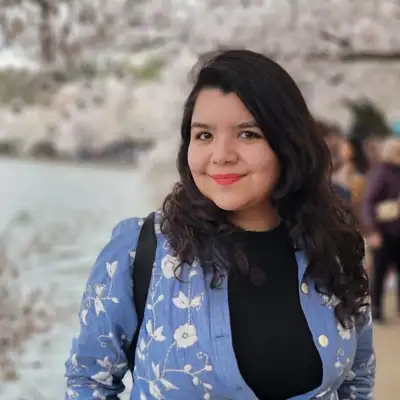
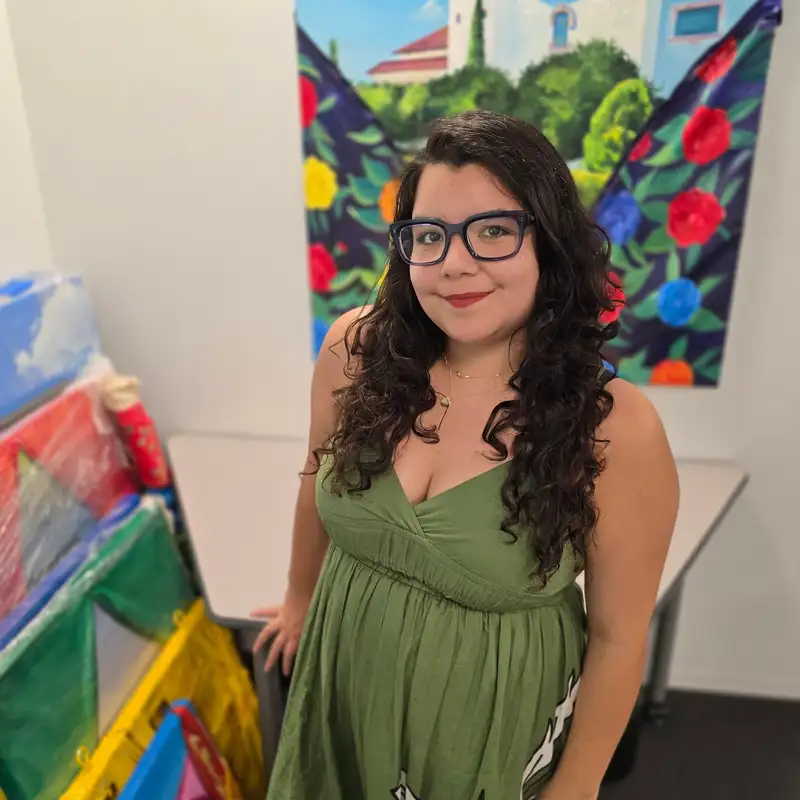
So joining me today is Paloma vianey. Welcome to the Truth in this art. Thank you for having me. Thank you for coming on.
Thank you for for making the time. Um you know, it's it's always great because when I have the opportunity to go to an art fair, it's rare that I go outside. It's rare that I encounter stuff.
So when I go outside and then I take my notes, right? And I remember seeing maybe your art ad umbrella or something like that. Maybe it was something in that that vein, right? And I went to my phone and I took down names and then I forgot it for like two months. And then I just started going through going through people.
I was like, man, I gotta hit these people up, and now we're here. So I'm really happy to be talking to you today. So as we kind of start off, I want to give you the space and opportunity because I like to start up these conversations with giving the guests the subject the opportunity to introduce themselves in their own words. So please tell us about yourself, who you are, what you do, and what's important for people to know.
PALOMA VIANEY: Yeah, well I'm Paloma vianey and I am an artist from Ciudad Juarez, Mexico. It's a city located right across the border from La Paso, Texas. Um I'm an immigrant. I've been in this country for about eight years now, and um I'm primarily a painter and I'm also an educator. I'm a professor at the collegiate level.
ROB LEE: Love it. Love it. And see, you know, I like I like hearing those, like hearing those connections. Um so educator is there, and we talked a little bit before we got started, so we we share in that area of being in education, so that's really great to hear. Um so I've read in your background, and let me know if this is true. I read in your background that you began uh painting in your teenage hood. So what drew you to painting and what were some of those early influences.
PALOMA VIANEY: So I began painting when my city was labeled as the most dangerous in the world. Um violence took over the city. Um and you know, being a teenager is already very difficult and um now there's this layer of having to confine at home. I really um would mostly go to school or get out of the house to go to school. So um I painting became this indoor activity that I could do at home. Um and I just found so much relief in it.
Um and uh so I began painting and um and I taught myself how to paint as a way to cope with the violence and what was happening and um it was a really difficult time for everyone um back then, right now. Um you know, hot as is not is not as violent at all. Like it's that wave of violence lasted maybe three, four years, but um it's not what it is, however the image persisted. So um through my work I tried to challenge that image.
ROB LEE: I think we're gonna have some overlap and similarities with uh my hometown and a bit of what you've described there, and so in that early work and having this environment, this backdrop that is just really challenging. Uh lots of, you know, as you touched on, like very violent times and very just just challenging and being a being a a teenager uh and be and being you know, going as close to a lot of stuff that you're seeing and experiencing. What was some of the early paintings or early works that you did that that come to mind? Like what do you stick out at what sticks out about it, like maybe themes or or colors or you know, what what comes to mind when you think of that early work?
PALOMA VIANEY: Well, um I really was teaching myself how to paint. So I would replicate images, I would do you know, paintings of animals. Um my name in Spanish, Paloma. Um isn't that although people often think of the tequila drink, it means dove in Spanish. So I have a lot of dove paintings. Um and I was also very interested in surrealism. So um really I was just trying to come up with these images and a lot was trying to feel hopeful. Um trying to probably provide relief to people um through painting I think even being that young that's what I wanted to do. Um and yeah provide some sort of relief to people that um especially through times that were very difficult.
ROB LEE: Yeah. And I I like that too you you added that detail in it. Like it means dove. It's not that drink. Um so one of the other things in that vein I think of some of those earlier years and I relate to this like, you know, you you'd asked me before we got started like sort of how long I've been doing this podcast and you know I mentioned um a few times I started like podcasting in earnest. I was like twenty-four. So it's been seventeen years of me doing it. But there have been different periods before that where I would just record conversations a little handy recorder with friends or I dabbled with painting, I dabbled with writing, I dabbled with film, these these different things but at twenty four podcasting became the language. It became the thing that I was doing. So having those earlier experiences, painting and really from from what I'm taking from it, using it as a tool you're teaching yourself but using it as a tool for catharsis.
Like this is a lot of stuff that you're processing um and maybe getting it out there through a c a creative medium that's really really helpful. When did you realize it was gonna be a an endeavor or a language for you um even now at a stage in your life like what was that period where it's like this is going to be a part of my life for a long time painting.
PALOMA VIANEY: Well I think when I started painting I something clicked but I always I I always had the dream of being a painter. Um I guess I wasn't aware of how difficult it was gonna be um but i it it's always it it's it's been such a journey um that yeah it's it's I think it's something that I always thought I'd be doing in some capacity. Um it was my dream to just paint it just gives me so much freedom and expression. Um and you know I was actually gonna go when I w when I was going to college I wanted to study engineering and mostly because I didn't want to be a struggling artist and my dad convinced me not to.
You know, I was good at math. I I just I thought that's that's what made sense um and um he told me no you're gonna be a painter you have to follow your dreams and and you know I I I listened to him
ROB LEE: Yeah having having that um that consideration and that push from a from a parent from a loved one of hey follow follow your dreams. Follow your dreams. Um I I had similar ideas actually it's funny you mentioned engineering I wanted to be a um a mechanical engineer. That was the thing and um I I ran into I was good at math but I ran into like a physics class and I was like mmm this is a lot of work.
I don't I don't know if I like all this extra work. I'm more of an efficient guy and um and I remember just just talking with my parents 'cause my initial and I don't think I've ever said this on this podcast, the thing that I was really considering was culinary arts. And my parents were like, I don't know if there's any money in it. And then I was playing with the idea of being a comic book artist 'cause I used to draw all the time. It was uh doing my own comics, all of this different stuff and when it got to you need to really seriously think about what you want to do because you don't want to be broke. You d you want to have money because these are gonna be these sort of struggling fields right at least for me, not really for anyone else I suppose. And you know it was kinda like maybe engineering. And I was like sure and then physics I was like maybe not and it's like well how about business? So that's what I pursued. I have
a business degree but with a background and like analytics. So that's that's what I did. But it was definitely those nudges from parents and but also the art thing or the creative thing it just doesn't go away. You know like I I still had it there. I was always like alright I'm in this meeting I'm gonna sketch out something. I'm gonna draw something here or I'm gonna come up with some ideas and things of that nature and just years later those touch points I guess creatively helped inform conversations with folks such as yourself and just how I approach my work with this podcast. So let's talk a little bit as we kind of move into this this sort of next stage and this next stage of your your story what drew you to well actually could you describe the the work that you're making right now? Because, you
know, obviously with time passing, it's not the same drawings of your name, and does this such as more. So talk a bit about what you're making these days, the work that you're doing these days.
PALOMA VIANEY: Yeah, well I I like to believe my work has matured since um but I um a lot of my work is about T Juarez, is about challenging the negative image that the world has about this place, not only because of that wave of violence that it suffered, but it's also on the border, um, a place that has a lot of political tension. So um another thing uh about myself is that I for college, for example, I lived in Mexico but went to school in the US, so I was crossing the border every day. Um so my work um also talks about the uh unity that exists in the border, um, especially when it comes to community. Um but my work focuses on um depicting Ciudad Juarez um and you know, portraying it from a lens of resilience, portraying its people and and the community. Um I think it's important to show um especially now that I'm showing my uh work to different audiences throughout the US to um show that there other parts of Mexico but the border is like well, at least my perspective of the border. And um yeah, every time I go home I walk around and take pictures in all different neighborhoods and um this is very important uh because see that Juarez is very very big city. Um it's
the fifth largest in the country, I think. Um so um yeah, uh walking around getting to know my city more and taking pictures is also is very important to what I do. Um I don't always know how I'm gonna use the reference images, but in one way or another I do. Um and I work in series as well. Um right now I have a show at the Mexican Culture Institute here in DC that is called un mismocelo entre Washington Juarez. Um it translates to the same sky between Washington and DC. And it's
a show about immigration. Um, you know, I've I've moved when I got to the US I think I moved like six times in like five years and it was it was a lot. So um now that I've been in DC for over three years, I wanted to compare the city where I'm from and the city where I currently live. So this is a show um that has eight diptychs where I'm comparing uh the landscape of Juarez and um DC and there are two murals of the sky. Um I portray the sky a lot in my work because it's the only part of the border that doesn't have a physical barrier. Um and I just see a lot of hope in it. Also um see that Juarez is the desert, so it's mostly, you know, this bright cerulean. Um I grew up not checking the weather, like I'm still not used to it. I'll walk out and it's raining because I just don't have that habit. Um it's working on that currently.
ROB LEE: That's that's that's great. Um and we we're gonna go into that a little bit more in a moment, but I have a part two that the the the question as far as the the the recent work. Um so talk a bit about that interdisciplinary like approach, like what does that mean to you and how are you I guess expressing sort of your ideas, the themes through that insp interdisciplinary like approach.
PALOMA VIANEY: Yeah, so I I just like having a lot of fun with it and adding three dimensionality or other materials is is really appealing to me. I began that when I was doing my MFA and it was an interdisciplinary program and I just had access to all these labs and and different studios and you know, I I learned how to do different processes of printmaking, I even learned a little bit of ceramics and so like my work became a lot more cultural and um I just yeah, I just felt so much freedom that I just began to experiment and experiment. So that's why um like there is always a three-dimensional component in my paintings. Or kind of always.
ROB LEE: So having that I I I guess for maybe a a lack of a better term or this this opportunity to have access and explore you're able to take these ideas and experiment in that different dimensionality you spoke of versus generally when I think of a painting. Two D, right? But when it comes to this sort of broader thing, it's like, well, I'm reinterpreting or I'm ex stretching what the boundaries of a painting are. Now it's uh another dimension there. I'm gonna add these elements and those but that comes through that sort of exploration. Is that true for you or yeah, totally.
PALOMA VIANEY: I the uh there's also a lot of you know, what you said, blurring the boundaries of what's a painting, what's the sculpture. I have these knot pieces that are just about tension and I cut the canvas, not them and stretch them and um and it it they c they can become quite heavy and when it comes to logistics it's that's where it can be difficult if I have a show somewhere and they're like, Oh, just unstretch it and ch chip it, I'm like, I can't really do that. That would be uh destroying the work. So but um and but yeah, I I think that's very important for me, just trying to challenge just challenge what painting is. Yeah.
ROB LEE: Yeah, that's um I I like that. Like I've had different guests on over the years and I always love like taking their t taking their brains a little bit. I think we were sharing it uh I was sharing that idea a little bit before we got started of it's one person that comes to mind, he's a DC based artist, and he was like, Yeah, you know, I'm a quit mo quilt maker. I was like, where's the where's the fabric? Where's the
materials? He's like, No, I draw them. And I was like, Oh, okay. And I and I'm seeing it and I'm like, Oh, all right, cool. And in observing this like the work is done really well, and I was like his means of doing it isn't a traditional thing. And it's like you open up your mind, you open up your approach to see it in a different way, and it's in part it's not suspending disbelief or almost distrusting, but it's just like all right, you're making the case. You're you're
pitching it. It's like this is a painting. Or on the converse, I I've had an artist here in Baltimore who's like, Yeah, you know, I'm I'm I'm a I'm a textile maker. Um and it's like, oh, so you do it in this way, and it's like I happen to use um uh ceramics to do it. And I was like, wow, that's uh interesting approach and and lastly, the other person that comes to mind is a artist named S. P. Frazier,
um, who makes like uh w she she's famous for this sort of uh watermelon iconography and she makes hats and so on and it's out of like different materials, but I believe she described her work as drawing. So it's like you're not using a pen or an instrument. I was like, I like this, you're it's stretching the idea.
PALOMA VIANEY: Yeah, I remember when I was working on my thesis show for my uh for my MFA, I made this massive sphere. It was like six thick six foot circumference. I mean,
I mean in diameter, right? So it was it was massive and um I painted it with oil and I one of my classmates he was a sculpture uh got mad because it called it a painting.
ROB LEE: And y and you'd like to work big I've seen too, because and we're gonna talk about some some really big pieces later. Um so yeah, it was just it was uh it was a little um it was some sizism going on there. Like, oh,
six feet in diameter, that's that there's no way that's a painting. Can't be so I I wanna I wanna move a little bit into we we were touching on it. You visit, you go, have this experience, you were talking about Um in in undergrad I believe, where going back and forth across the the border and you you know, back home really and um seeing sort of maybe different elements of home when you're going there, I think I see it here sometimes when I don't go back to my old neighborhood or to my mom's house, things look so much different, and it's the same city or what have you and all of that stuff and I observe things in a different way and you know, things are changing all the time. So sometimes capturing those memories is really important. You capture sort of the memory and the character of a place. Cities are living and breathing. So how does that capturing of of home of of of Juarez like sort of show up like in your work and I'm thinking of a few of the paintings, uh Chamara paintings. Um so could you talk a bit about about that?
PALOMA VIANEY: Yeah, I think my chamero paintings is the way where I kind of archive the city um in this particular way. Um so I yeah, I when I go home I go around and take pictures of the urban landscape and then um a lot of them become chamera paintings, which are these paintings uh um where uh chamara is a Mexican word for jacket and um I hand sew jackets, wood zippers, it's all canvas. Um and the jacket is monochromatic, um and then I paint over the jacket. So um in a way these painting the jackets and through permorphize uh painting, I see them as portraits of the city. Um they're also kind of comical, you know, it's pe uh people always find them interesting or I just want to be really attention grabbing, which is why I picked very uh bright colors. Um but I've made I think right now I'm number thirty six. When I title them it's um it's it's I title my number and then either the street or what the building is. But uh
yeah, I've made a few of them as just a collection. I hope to keep growing. Um hopefully I get to the hundredth one um at some point and um one way that you say the landscape changes. I remember I did this one where I painted a city. I mean I painted a a house that I would see every time I would cross the border. It was this pink house that always got my attention. And one of the last times I went back I saw it was paint it white and it's like that was a little heartbreaking for me. So um they are uh painting the memory of the city that will continue to change and evolve.
ROB LEE: Yeah. I'm I'm I'm on I'm back on the website right now and just going through it and I see I I think it's the the pink house. I'm seeing that and I was like, this is like just amazing work. It's it it it it does have a it's almost like I I think of this like maybe this doesn't work and I'll and I'll get rid of it if it doesn't, but just when someone like has a jacket on and they're like, show you a little bit. Just say a little bit, it's gonna open it up a little bit and it's almost like peeking into sort of the s the landscape that you're capturing with your eye. But it's almost like here's a little here's a little bit of a taste and almost inviting the viewer to come in and explore it a bit more perhaps.
PALOMA VIANEY: Yeah, and I I mean the uh uh they're definitely th that's what I try to do. I try to get the viewer to look at these places and um you know sometimes they're people think they're interactive and we'll try to pull up and down the zippers and that actually approves the painting. People will do whatever they want. But um so yeah, they're and I get all sorts of different reactions from people, um and everyone comes up with different interpretations and I think that's that's a big part of it.
ROB LEE: Yeah. Conversation and and discourse and I talk about this a bit where I don't know and if I were to be very it usually I see I don't know when it comes to certain things. But if I'm gonna be it's either this or it's not, I think we don't spend enough time with with art and considering it, uh appreciating it and all of that. So having
someone that's invited in to view it and see all the details, the intricacies, do not touch the zipper guys. Um but to really kind of appreciate the the work, I think questions do come up. It is uh work that is and and and this is sort of the segue into this next question. The work is labor intensive. I mean
you were talking about the size earlier, talking about you know, sort of transporting it. It's it's a lot that goes into the work that you're making. Um and you aim to create an intimate and immersive experience for the viewer. So you know, uh I I know that they're sort of series and so on, but could you walk us through what your process looks like? Like how do you build that intimacy? And I have a second question, but at least when I just talk about start off with talking about your process.
PALOMA VIANEY: Yeah, so with these paintings, um I begin by um painting the urban landscape first and then I hand sew a jacket that I tailor for it. Um and this this is this can be a multi week uh process because oil painting uh takes forever to dry. So um that's why my students cannot procrastinate their paintings and something always tell them. But so because it takes forever uh it can take two, three days to dry. So I'm usually working on three to four paintings simultaneously and um yeah, making the jacket it's like a whole day or it's just depends how big it is. Um I get this industrial zippers and um put on a podcast and just soap um and then I prime it and then paint stretch it and paint um over the painting. Um and I really make sure it looks incorporated. There the they can be difficult to make just in the just to make it look okay. It can be quite difficult just because sometimes paintings and or when you kind of sculpting with canvas it will do whatever it wants. And um controlling it can be a little tricky.
ROB LEE: You're I I'll I'll put it this way. I was writing this note down because I didn't want to forget it. You're you so you got oil, you're making jackets. You're just doing art on hard mode. So shout
out to you. and so talk a little bit about the the choices in material and in scale and technique y you know as a as it is it opposed is it uh relates to maybe even your your your current work um uh that's that's on display now but in with those uh components in mind do you are you thinking about the viewer like to which degree are you thinking of the viewer when it comes to material scale and in technique
PALOMA VIANEY: used well something that became very important for this series is that it's always vertical. Um it that's because you know as I said I see them as portraits. It's it's
important that they're vertical. Um and I've done all sorts of different scales from um some that are taller than me to some that are just really small. Um so when it comes to scale I do think a lot about what the subject is gonna be, what the building um and also I think the m maybe the more I I care about this building or like the louder I want it to be I I size up and um making really big work um is tricky just because of um transporting it. Sometimes I
just do work that I know is the biggest will fit in my car. Um but um I the big ones do um they're very fun to do and um you know I wish I could make a monumental one.
ROB LEE: Um maybe one day coming soon you've heard it here first folks. Um monumental piece coming soon you um so thank you for that. Um wanna I wanna talk about um I want to talk about where is a bit more so I I'm from Baltimore. Um we
were talking a little bit earlier and we're definitely gonna dive back into this this subject matter a little bit later but um to talk about like home. You know, for for folks who aren't familiar like I when I go to a different city and I go to a different community and I come there as a person from Baltimore. I don't hide that I don't say I'm East Coast. I don't
do the thing that a lot of people do. Oh I'm from Maryland. That's like I'm proudly I'm from from Baltimore City East side specifically and I I hold that with a lot of pride and I'm very uh specific when folks say something I'm like that's not what we do. That's not what a city's about what about this, this and this so I'm gonna invite you in that way to talk about like how you see home. Like what it what is true for you because letting other people you know talk about it, they can't do it justice unless you're from there. They won't really get it. So for folks who are unfamiliar, could you share with them, you know, home
PALOMA VIANEY: yeah so I guess Hua is a really big city. It has population. I think it just reached one point seven million um and it's just a city that keeps expanding and expanding. I think it's a city that's very poorly misunderstood. Um it's um and the border and um a lot of people when they think of it they think of it's violence um but it's a city again very big. Something I like to say a lot about my with my work is that there's more to a city than it's violence. Um it's
the community um and you know I've been away from home for eight years now and the longer I am out of there or I see other places and where I understand it I think it helps me get more perspective and um also painting it helps me understand it a lot more. Um so I think it's it's a city that's very misunderstood. Um there's a lot happening there and um it's and it's also a gateway to the US in a way. You know it's right across from El Paso, Texas into just say a little bit of history um it used to be called El Paso del Norte um the Pass of the North and that was back when El Paso and Juarez were a single city. Um and before that land became the US uh Texas um and before the Treaty of Guadalupe Hidalgo it um it was a single city but once uh the tree was signed it became two cities. So El Paso and Juarez but people continue to go back and forth, you know um there are many bridges that connect the cities um and a lot of people spend their time lining up to get to the other side. People from El Paso and going to Juarez for the food and um for the movies it's cheaper or like some like cheaper groceries and people from Juarez go to El Paso to visit, to go to school, to go to work, um to get some American goodies. Like I really it's a it's a very much bicultural community. Um so
I grew up with that access to the US. Um and it's like I said um it's a very big city. Um and I really hate how it's portraying the media like um movies like Cicario make me so mad. Um and um that's why I do my work to challenge that.
ROB LEE: I love that. Yeah I think it's and this this definitely goes into this next question but I'll I'll say this you know for years you know here in Baltimore it would always talk about the murder aid and sort of how many violent crimes and so on and in these goofy lists. Like my day job, I'm a data analyst and I'm like the data doesn't line up with the narrative that you're trying to talk about in this city and I know that there are so many different motivators for particular narrative to be out there. You know, Baltimore is sixty three percent black and it's you know it has all of these different things that's there. It has a rich art history. It has a great food scene it supports the all of these different things but for twenty years so have you you know growing up so teenager into adult into older adult it's always just the murders and then in the last few years those numbers and that violent crime rate started to drop and no one is talking about it. It's just
like yeah you know Baltimore one of the worst places like based on what details your criteria doesn't even work now. So that's a thing that you know when you you mention sort of you know the notion of it being misunderstood I relate to that so much and I'll say this that's one of the motivators for for this podcast. It's just like we should be able to speak for ourselves and you know based on the way that it's described from people who've never set foot here or don't have any interest here I shouldn't be able to record right now. I should be in a in a war zone, you know what I mean? I shouldn't
be able to have internet access. So I just you know I just I just relate to that so much and using sort of our talents and creative uh background and interest to try to provide that counter narrative. You know, not saying that I'm going to completely change it and turn it in it's never true. It's 100%
not true, but it's like this is also part of the story and you guys keep leaving that out. And this is this is sort of this question that relates to that. Like your work obviously is is deeper than purely creative expression. So what
does it mean for you to be an artist and sort of what responsibilities do you feel that are there for artists specifically the type of that type of art that you're making.
PALOMA VIANEY: Yeah so it's I think it's something I I try not to take for granted. Um I have a life where I could spend most of my days in my studio. Um and I can just spend my day painting and I try again not to take that for granted so I um I'm always trying to paint as much as I can um and um learn as much as I can I also try to show my work in places that matter to me and um just trying to continue growing and and you know seeing what's next. I try not to get stuck in something or um always trying to challenge myself or challenge my work tr trying to see what I should do next.
ROB LEE: Yeah having that push that that challenge um and you know when I think of doing this especially now and you know being having an awareness of what's happening around me you know and doing this. It's like my job is to tell the truth as much as I can and in in try to just do good stuff like in a world of how do we clip that I need clickbait. I need
you know sensationalized media and sort of fake st stuff. I don't I don't want to do that. I'm not interested in that it might get me more clicks and I guess like you I could sit here all day and just record interviews. It's like this is great. And sometimes I've done that. I there
have been times I've done six interviews in a day and I'm exhausted afterwards. It's like where's the T I need I need to get this right, you know and um but it's it's fun and I love it. You know and I love doing it. But I also I don't take it for granted. I can you know run out of interest for people don't want to even be on. Like, you know, for someone like yourself, you could have said no I'm not interested and it would it would have stunk, but you know, it's back to the drawing board, but I'm really happy we were able to to chat a bit and um you know so yeah I I try to think about it and try to be really honest on why I do it and continue that and always check in on that and know that this could be something that just potentially goes away, you know. So to
take me back I teased us a little bit. Um it's a border bridge installation from from years back. Twenty two thousand eighteen, right? So could you talk about that with nearly a decade removed from from you know sort of the installation date that I see what was the experience like in making it and how do you feel about that work retrospectively so set the stage for us.
PALOMA VIANEY: Yeah so that is my biggest work to date. Um when I was in college and I was crossing the border every day um going back when you go back from El Paso and cross the border to Juarez there is this big structure seventy two foot wide structure um and it was installed by a former Mexican president or the president um at the time and it said no more weapons and the weapons were made with I think weapons they confiscating from um narcos and um the message was saying that we in Mexico don't want your weapons and um I think about seventy percent of weapons that make it to Mexico are from the US. But that became very polarized and the message got taken down um and the structure remained empty for maybe two years and I um yeah I was on I was a senior in college and I was would look at it and I said that would be a really cool platform to put something on it and I was on my last semester and I asked the federal government, I submitted a proposal um and my dad was very encouraging and he never thought it was like you're crazy what what are you doing? No he supported me all throughout the way and um so they said yes to my proposal but um the structure needed a lot of construction because it wasn't a flat surface. So my dad actually my d my dad's an engineer and he designed this theramic uh wall um that was and I it was I had no money to construct this um so I actually fundraised all the money from the community. I got donations um for materials for paint for everything. So it's a project that's completely made um what was made with the community um and ask for what's depicted on it that's actually a painting I created when I was fifteen and it says girl blowing bubbles and each bubble is um emblematic image of Juarez you really have uh a lot of different buildings um in that image um and there's uh just trying to represent everything there's also one bubble representing the femicides of Hot is which brings brings tribute to that um to the women that got killed in this cotton field um but I painted that on site I was on this lift um so this is a bridge that thousands and thousands of people are crossing every day and they were just honking at me or sometimes friends who were also went to the same college I did and would were like see me they would hunk and I was just very high up um painting this. Um and I painted it all in three weeks um and it was just really fun to do. I it was my first public art project of um I'm working right now with um the government of Juarez to create another one so hopefully another one will happen soon. Um but
it was that work was really important for me and I just showed how powerful the community can be um and I was twenty two and and I did that I still can't wrap my hands around that.
ROB LEE: Wow that is that is wild. That is great. Um you know see is I as I saw some of the images of it I was like this is massive and then also I'm looking at you I was like you're look like tiny right next to it. I was like this is huge. Um so that's that's great it's great to hear that story in that background and hear potentially that you know I may be able to have you back on here to talk about the next one that uh is again, you know, we're we're out here laying out, you know, teasers for for big projects. You know, you you said you want to work on a monument earlier. I'm kidding.
Coming soon. Something really big. I love
I love hearing that. Um I got one more real question. Um and then I have a few rapid fire questions. Give you a little bit of a break, some fun questions after this, but um this next question and and sort of final real question, there's an extra layer. Um you you you touched on it in the introduction you're an immigrant. You you
touched on that and you know you're you're you're based in DC. So how do you balance being an in an immigrant artist amidst sort of some of these things that are happening this this regime and this noise and this really terrible frankly um and I'm saying that um time and sort of period where just we don't value the diversity. We don't value sort of well governmentally I do and a lot of people I know do but sort of this current climate and how like it's crappy things. How do you balance that with being an artist and sort of living in this country and being in DC where a lot of this is sort of spewed from
PALOMA VIANEY: yeah so I I will start by saying that it's the moving here has been the most difficult thing I've ever done. When I graduated from college I had very little savings and I bought a one week ticket to New York um and I was in an F one visa which gave me a permit to work for a year and um I was it was very difficult to live in such an expensive city um and it was just the journey was really really difficult. Especially as an artist And it was just for many years life felt very precarious um that I think now I'm at a better point in my life. I have more stability so I think that helps um and just feeling um more feeling more stable but I I I like I said I don't take that for granted and I think I try to help just figure out ways I could help with the show I currently have it's about migration and just trying to um really establish the positive contributions of migration and um another way I try to help for example I um did a print um for this show at a silk screen print and then um sold animal proceeds I uh gave to Ayula, a local nonprofit that gives legal assistance to immigrants so just really trying to figure out how to help even outside of art I try volunteering um being um an immigrant I just try to find a good community I know life is very difficult right now and um I just really try to empathize with people and um I think with my journey being difficult that also makes me really want to help and um again having a community is really important during these times. And as for DC that's something all people always ask me about because they think well obviously the the president lives here all policies happen here but I feel it so distant because I have such a wonderful community and DC has been really good to me as an artist. It's been giving me platforms to show my work and um it's it's just been really good to me. I think the people have may have helped me and um I'm never around that world of politics um that I just feel it very distant even though everything's happening here. Yeah.
ROB LEE: No thank you. That um that makes sense um you know helping being aware of it but also there's a degree of like you know having a community and and not being so immersed of it by also being very vigilant of what's there, what's happening um I'll give you this little context before I go into the rapid fire questions. My birthday is inauguration day so I'm always like no and since um since since last year um since you know my fortieth birthday that same week I've been coming down to DC every like every two weeks or so just as an act of resistance of like oh I'm not supposed to be here. I'm absolutely
gonna come there like every couple of weeks, whether it be just to work for the day, whether it be to um patronize like a restaurant, you know, just like I I need to do this, not just be inside and tucked away and just insular in that way, but really, you know, witnessing it and trying to help, whether it be fiscally or whether it be reaching out for folks for interviews and trying to just give that space and an opportunity to just share it and in sort of a safe enough space, I suppose. So that that's that's just that two set I wanted to throw in there. Um before I move into the rapid fire questions, and here are the rapid fire questions. And I'm gonna give you the sort of preface here. You don't want to overthink these. You know,
these are sort of short answers. I've changed all three of them since we've been talking. I've been muting and typing because I now have all new rapid fire questions. So thank you for that. You gave me new questions. You gave me more work to do, so thank you. Um so here's the first one I have for you. What is the last book you read?
PALOMA VIANEY: So I am currently reading a book by Stacey Abrams, but the last book I read was uh this short stories collection on flippers uh uh flappers. Okay. So you know from the jazz age. Yeah.
ROB LEE: Oh yeah. Um now I know this this one might be a little bit challenging. We were talking about food before we got started. And so I'm gonna put you on the spot right now, right? I need you to tell me three places in in DC and that sort of region that you know you really like, three restaurants you really like, but one I'm looking for looking for a Mexican recommendation. So if you will, sort of like two and then one is like this is somewhat authentic. This is good, you know. So please, could you give me a couple of suggestions?
PALOMA VIANEY: I will start with the Mexican one, which I will say it's difficult to find um Mexico good Mexican food here. Uh but one that where I eat it, I feel I do think this is just feels like tastes like Mexico. It's called Dakeria Sochi X O C H I and on the one on U Street, uh specifically that one. There's many locations, but the one on U Street is from very uh uh they don't you can't even eat there, it's a takeout only place and the guess everything else others really really good. Um I love that place. And um another place I really like, um, which I get take out from a lot is Karen. It's an Eritrean place, um which I think is also on U Street.
ROB LEE: Maybe I should give you three own answers. Um and a third one.
PALOMA VIANEY: Um I've been there for many times on my birthday, but it's lapis. I don't even heard of it, but it's just Afghan bistro. It's uh nice restaurant to sit down and it's enjoy a special meal. Yeah. I like it.
ROB LEE: You you have a diverse palette there. I like I like hearing us. It's like, yeah, I'm all over the globe with my my palate. So shout out to you.
PALOMA VIANEY: Yeah, I think DC would you know, Disney has a big international population and always telling my brother, oh, I just had a lot of ocean food or just like who's scenes that a lot of people haven't tried yet.
ROB LEE: That's great. That's great. I'm I'm I took down several notes when I go back through the edit. Definitely making a little trip to U Street. Uh yeah, yeah. Um, so this is the the last final uh the last rapid fire question. Um, you know, so we talked about last book and you mentioned a movie that you don't really like the way that you know, Warez is depicted. So I gotta ask you, what's your favorite movie?
PALOMA VIANEY: What's my favorite movie? I I I don't know, I feel like that answer changes every time. Sure. Um I movie I like a lot is whiplash. Um I really resonate with the character trying to become good at something that's really hard or like become at the top of his field and something that and that in a field that's really hard to be the best at.
ROB LEE: Yeah, I I just want to be the guy that's just drilling him the whole time. Like I just want to be that guy. You know, I I thought I'd do to the podcast. That's what the rapid fire questions are. Are you sure that's the right answer?
PALOMA VIANEY: I feel like J Case him and had a lot of fun with that one.
ROB LEE: Yes. Um when it when I was definitely living a movie snob's life, I went to the Oscar Best Picture Showcase and I saw that amongst like four of the movies that day, and I was like, This is a great performance. I am terrified. I'm not
pursuing anything creatively. Um so thank you for that. Um that's that's good. It's a
good movie choice. Um so here's the things like advice question. This is the last question for our time together today. Um as I touched on earlier, I'm from Baltimore. I proudly aim to authentically represent the city, as I was touching on earlier in my work, whether it be through who I invite on, the types of conversations I have, and so on. The city's
had a reputation of crime, corruption, those things are main points that people point out when um about the city and and they just tout that. Like, well, what about this? What about the crime? What about
that? And there's so much more. And that's a deeper conversation, and people just don't want to engage in deepness. They want
to go surface level, and that's where that misrepresentation we touched on happens. And, you know, I've only heard, you know, prior to this conversation, sort of, whereas in that Sicario way, in that sort of negative way, and then the conversation I've had with you, it's a bit it's deeper, it's more, it's more interest that's there. It's like you you you're gonna have a different perspective than I'm getting through media, and I have more trust for you than the media, because I don't trust the media. So from your perspective, with all of that in mind, what do you hope people, especially those who've never been to uh CL or as take away from your work? What conversations are you trying to engage in, but using your work as perhaps the starting off point for a conversation? What are the conversations you're looking to spark from your work?
PALOMA VIANEY: I hope that they see the city for more than if they were types or its past, you know, like I said before, there's more to a city than it's violence. And I hope that they see um the portrayal of the community, which I don't paint people at all. That's something I question I get a lot, but I do try to portray all of the community through its buildings, um, which the buildings are witnesses of everything that has happened, um, where people have lived, where people be where people um all the bad and good things. Um so
um I really hope that by looking at these uh fragments or these snapshots of the city that like they they become more open-minded or kinder to um this city. Yeah.
ROB LEE: That's good. It's good. And um that's it for the day. I think that I think we got it. Um there's two things I want to do as as we close out there. And and and again, thank you. This has
been uh this has been a treat for for Tuesday, for a Tuesday afternoon. Uh so there's two things I want to do as we close out here. Um one, I want to thank you for coming on and spending some time with me and being a great guest. And and secondly, I want to invite and encourage you to share with the listeners um social media website and anything that you have coming up um that you want folks to check out. So the floor is yours.
PALOMA VIANEY: Yeah, so my Instagram is my name, Paloma VNA. Um my website is also Paloma VNA.com. And um please check out my show at the Mexican Cultural Institute, unmismocielo, and then Washington, E DC. Um and yeah, please come see it. It'll be open until July twenty fifth.
ROB LEE: And there you have it, folks. I want to again thank Paloma VNA for coming on to the truth in a start and sharing a bit of her story with us. And for
Paloma, I am Rob Lee, fan that there's art, culture, and community. In and around your neck of the woods, you just have to look for it.
Creators and Guests