Rée the Interdisciplinarian on Impact Producing, Education, and Baltimore
Download MP3Rob Lee: Welcome to the Truth and its Art, your source for conversation, connecting arts, culture, and community. These are stories that matter, and I am your host, Rob Lee. Accept no substitutes. Today I'm thrilled to welcome my next guest on to the program. She is a social impact producer with a BA in fine art in MFA in filmmaking and 15 plus years of international teaching experience as a TSOL certified educator and learning designer. Joining me today is Ray the Interdisciplinarian. Welcome to the Truth and His Art.
Ree the Interdisciplinarian.: Hi, Rob. I'm so excited to talk to you today. I've listened to so many of your episodes. One of my favorites, um well, we don't have to talk about phrase favorites. Maybe I just realized maybe I shouldn't talk about that. But um I'm very excited to be here with you.
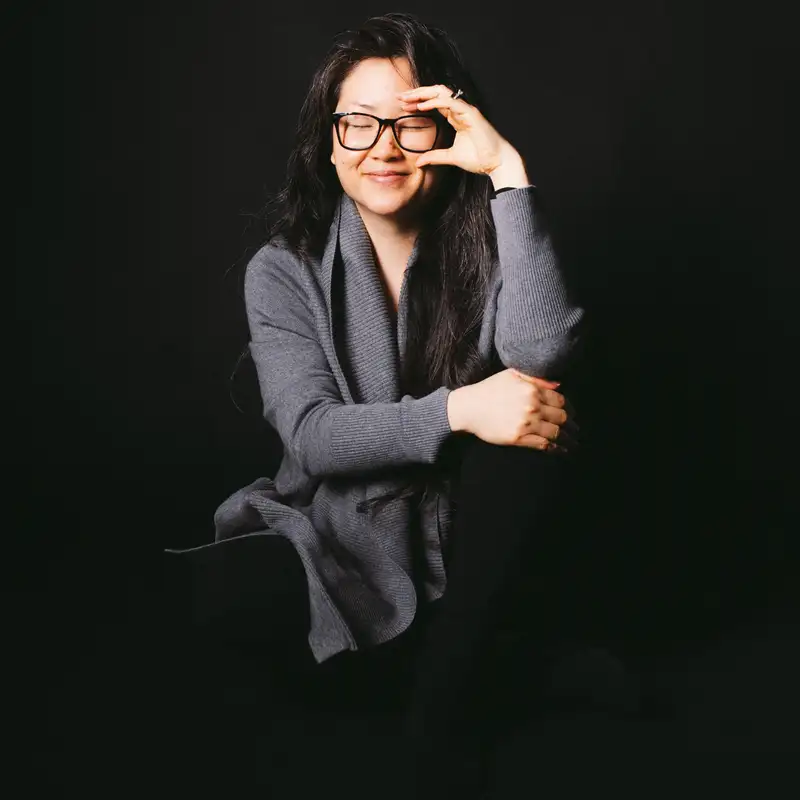
Rob Lee: I'm excited to have you on and and two things before I go into my like my intro, my first question is you know, since you're a listener, you probably are aware there's certain quirks, certain nerdy things as we talked about a little bit before getting started, that I always engage in. Thank you for wearing your glasses. I like when people put on their spectacles. It's look, I've been wearing glasses since I was three, right? And when I see people come with these new eyes, this this new surgically enhanced eye, I'm like, no, no, no, you sold out.
Or if they put on the glasses aren't the real ones, it's like stolen valor. I don't like it. I don't like it. So thank you for wearing a real the real deal. Awesome.
Ree the Interdisciplinarian.: I love my glasses. I think I faked having glasses for a long time, and then my eyes actually got bad, so we had to get them for real.
Rob Lee: See, that's what happens with the stolen valors.
Ree the Interdisciplinarian.: Totally. And also you you pulled out the the microphone as well. So always a a plus, you know, game recognized game, you have the podcast background as well. So shout out to you.
Ree the Interdisciplinarian.: Thank you.
Rob Lee: So as as we we start off, um I want to go into this first question, give you the the space and the opportunity to introduce yourself in your own words, and if you will, in an introduction, where'd you grow up? What's your background? So please, the floor is yours.
Ree the Interdisciplinarian.: Yeah, so I'm originally from Los Angeles, California, and I actually went to film school in Baltimore. So a lot of people are like, wait, you grew up in Los Angeles, but you went to film school on the East Coast?
Like, what is that about? Um, and you know, the thing that I like to say is when you grow up and in a place where everybody is in film, that's not the most interesting thing for you. Um, so when I got to Baltimore and I was like, actually, I have this filmmak, like I have a lot of understanding of how the film world works. Um, and so I naturally fell into it and I was like, okay, let's just go in on filmmaking because that's my legacy or that's that's where I was from.
Um But yeah, to go into like sort of my background, I'm a visual processor, and ever since I was young I've been a storyteller. Um but after graduating with a BA in fine art, I moved to South Korea to teach English. Um and I found that my job became more about trying to engage my students. Um and so about ten years into teaching, I went back to school to get my MFA in filmmaking. Um and now I work as an impact producer, which really is about building audiences for filmmakers or media makers. So it's all about engagement.
Rob Lee: It's great. It's it's great to hear that sort of trajectory and how the and and also in a very brief way. It was done in such a way that's I could say like, hey, you know, I think we got it.
I think we but there's so many other parts along this path. So to to go into it a bit, you know, your reps your website reads, and I'm paraphrasing slightly, you you live at the intersection of education and media. So what led to that that intersection and you know I I come to this question from perhaps like maybe even one of my first interviews. I I go back way, way, way to the beginning, and I just remember doing an interview with James Nasty, and and we were talking about sort of like just having your stuff in order, and he's speaking to in terms of like business, and it's a certain acumen and it's a certain like literacy and a certain education, and it's like that's where I think people are sort of lacking. So that's what maybe bubbles this question up for me. So intersection of of education and media, what led to that intersection for you?
Ree the Interdisciplinarian.: Yeah, you know, I really think it is that piece that I realized like I am a visual storyteller, but instead of going right into visual storytelling after college, I was really interested in understanding my heritage. Um and so I was like, what is the reason Korea keeps calling me?
Like, why do I have to go there to learn about my roots? Um and so when I got there, you know, that answer was or that question was answered, but then a whole bunch of new questions emerged. Like, what is my role going to be in visual storytelling? Um and I think so much of it was about designing conversations in the classroom to meet students where they were at and to make sure that they were engaged and we were um bringing their curiosities and their interests to uh the forefront. Um and so a lot about impact producing is really about um not teaching but uh being in spaces where we're learning together um and we're building a conversation together, starting a discourse of sorts. Um and so that's why I feel like I'm at the intersection of education and media.
Rob Lee: That's that's great. And you know, and I there's gonna be another a question around sort of um the the impact producer background and so stick staying in sort of education a little bit, um you know I share it with you a little bit before we got started that um I do done the education thing. And um and it's funny, like I've completed my third year of teaching just third summer, but still don't want to like, you know, diminish it too much. But there was summer of teaching a podcast course and you know, I came into that almost in this sort of internship way where I told a little workshop and then, you know, for a year I did teach at, you know, BSA for a year. So it was high school was involved as well and sort of building to this this polishing and refining, but really rooted in this notion of one, maybe trying to shape or have some influence on maybe the next uh generation of storytellers, the next gener Yeah, the next generation of podcasters and you know, the first opportunity I had was with this workshop and it was all girls in the class. And I they're all high school girls, and I'm like, all right, you know, you don't want to have like some whack producer that's some dude that's not gonna let you have your voice. And really coming from that perspective and even in the college courses that I've taught for the the three years, the the I usually have mm, six to twelve students, so not a huge class.
There's maybe two guys, and the rest are are women. And it's just like yeah, you know, it's the desire to share voice and a share story. So leveraging sort of the better part of 20 years of experience, you know, and sharing that knowledge.
One, it keeps me honest in that I don't just well, you know how to turn that on. It's like, no, they don't even know what a microphone is. Bring it all the way back to the beginning and then help grow and help, you know, um help them kind of bring their thing along, but also open up my preconceived notions uh of what a podcast is, but also be a snob sometimes. So come coming come from it from that perspective. It keeps me honest, it keeps me fresh, and it's that that novice mind that people talk about. Yeah. So what continues to spark your passion for education?
Ree the Interdisciplinarian.: Oh man, that's such thank you for that context. Um I think voice is so important and to give the gift of being able to utilize your voice in the classroom is like the biggest thing you can do for your students. So yes, um, so glad that you're doing that. Um I think like what sparked my passion for education, like it's kind of a long-winded road, but I'll reduce it a little bit. Um so I had a lot of undiagnosed neurodivergences when I was younger. Um, and they were identified as learning disabilities. And so I really struggled in school and so the messaging I received was that I wasn't intelligent and that my skills as a visual storyteller or just storyteller in general, um, was not valuable at school and therefore not for the economy. Um and so when I was younger, like this really impacted my self esteem. But as I got older, the sense of injustice that this messaging imparted incited a type of like rage inside of me. Um and that's I think what continues to spark and fuel me today. It's this rage of injustice that we're sending the message to people that some people are valuable and some people are not.
Rob Lee: That attracts attracts so much you know where I I've said this on a podcast and I'll continue saying because it's identity but I'm six foot four. I'm giant dude and it's just like hey why aren't you playing sports it's like I'd rather do poetry or or something like that or do something creative. It's like oh you paint you know I used to pay and draw and even now in the day job like there is a specific way that people go about learning things and I just think it doesn't work more often than not and I think it's not adaptable. So you know going back into it one of the learning experiences I had and maybe how to better connect with people and polish and refine what I'm doing is you know I had those students for a year. And I'm like, you know, these high school seniors none of them are studying audio. I'm like an elective I'm like a three hour impediment to the end of the day right and I remember first day they were like you're old I was like appreciate you appreciate you and eventually seeing those small glimpses. I remember some one one girl in class who you know she she was just going through it a senior and trying to get through the whole thing and she was like kind of leaving class early having to go home for whatever reason and I was just like you know I feel like I'm here to do a job and I had to learn sort of what that process was. I you know it was hands off right and I think during that time learning um through other teachers there because this is really like I had no teaching experience right and I remember after I started doing less lecture and more hands on you started seeing these light bulbs go off.
Yes. And we had this session where and I'm trying I trolled her a little bit because I was like I gotta troll these kids. I was like I I can't not be me just up there stuffy. So I think it was one person that was out of class and we had like an odd number and everyone is paired up duo style and I'm like yo, I'm the I'm the other number.
I'm the even number right here and it's the one person hadn't been in class. I was like I guess we're working together and I leverage sort of my background in doing you know interviews such as this or we're connecting in that way and I got her to open up. I got her to open up so much about wanting to be an actress and Marvel we were going into some depth and I was like this is amazing. Um and before moving into this next question I think about as far as the day job right where you know I've had to quickly try to learn just new skills. I had no challenges and learning but the confidence gets hit sometimes where if there's this is how you learn this like I go back to 2020. I think a lot of people try to pick up new skills. I know that I was trying to learn how to code different things at the time and I'm like yeah doing this on my own pace my you know building my own curriculum. I'm gonna learn uh Python for sake of argument.
Wow. That's why I was trying to learn because I was at home right and um sort of building that out and I go back into the setting where people who are doing the instruction it's a very like static, non-dynamic way of learning and some people are getting left is just a thing to do. And I know for me there's a you y you mentioned anger there's a frustration that builds of why am I not getting this is there's something off with me but then relying on that confidence of I've learned things. Maybe there's something wrong with how this is delivered. So I try to think about that um just in the classes that I'm doing and making sure not doing it in a slow pace but doing it in a way where I feel like folks are engaged because I think that that's the thing that's lost.
Ree the Interdisciplinarian.: You know, I want to say something about that. So something that I've been learning in my own podcast. So I call it a podcast but it's really um it's a human-centered design uh research project where I'm trying to understand what in our education systems are working and what isn't um and I think people are much more interested in talking to me if I have a podcast rather than oh doing this research. And so I've in a almost over a hundred accessible concept and what's not and coupled with my own education or like my teaching journey of twenty years um there are many things that I learned and one thing is so much of our education systems are designed um to be taught top down. So people at the top are the teachers and school administrators and they have all the answers um and students are these vessels of information and that's not really going to work going forward. Not that it really did in the past either, but especially with AI and everything else that's changing in the economy.
That's really not gonna work. So going back to what you were saying about when like you were teaching your student or you were with your student and you got her to open up and she's now engaged, and because you're giving her attention and showing that like it's okay to talk about herself and it's that shared connection between you and her that's really going to teach her because it's really about connection, safety, and trust. So thank you so much for bringing that up.
Rob Lee: Yeah, it's it's you know, it made me feel like, oh, I'm getting through to these kids. I felt like I was in I felt like within some movie from the mid uh mid 90s. It's like, yeah, I'm really connecting with these kids. Dangerous minds, I guess.
Ree the Interdisciplinarian.: Yes. Michelle Pfeiffer. I'm not wearing a leather jacket, it's not happening. No, don't do that.
Rob Lee: So what that that that um sort of part touched on, and we will go we'll definitely touch one um a bit more further further in depth because we're gonna go back into the the podcast discussion a little bit. So impact producer, like, you know, the the why is this role so important in today's creative and media economy? I have a few ideas, um especially kind of touching on maybe what you just mentioned about a few pieces of technology and use and data floating around. But please, why is it such an important like role in today's creative and media economy?
Ree the Interdisciplinarian.: Yeah, I mean, that's such a great question. It really is. Um I think like the easiest, first of all, I think the easiest way to explain what impact producing is that you know, it's marketing, but with the goal of making the intended impact, our films are trying to make. Um so for example, uh let me give an example. Uh let's say there's a film that centers the work of uh nonprofit working to reduce housing vacancy in Baltimore. Um an impact campaign for that film might be to like raise awareness about racist practices like redlining, which started in Baltimore, or um, you know, working with policymakers to make home ownership more accessible for low-income or first-time home buyers, um, or you know, bringing decision makers together in the same room, like at a screening to increase cooperation and headway, I guess, towards that goal. So I guess so that's what impact producing is, and that's what you know, there's a lot of um opportunities to bring people together to design these conversations. Um, and I think the reason why this role uh is so important right now, especially, you know, like not going too much into the weeds of the changing landscape of filmmaking. But um, like in society, like we're moving out of an attention economy. Um, there's like a lot of noise right now and distraction, and I think people are really tired of that.
They're tired of chasing these like cheap dopamine hits, right? Um and I think we're all craving and looking for meaning and purpose. Um, like what are we doing with our time that can change the world in only the way that we can.
Um, and so to focus on a topic, you know, it doesn't have to be forever, but to be driven by a cause that's bigger than you and that connects and collaborates with people around you, you know, I think we're all searching for that. Um, but to kind of bring it back to the creative economy piece, right? Like independent filmmakers have access to like development and and production and post-production grants, right, for their films. But traditionally, once um a film is done, like the entire burden of marketing and distribution um for that for that film falls on the filmmaker. Um, but marketing and distribution, like it's an entirely different skill set. Um, there's a lot more business acumen, which we talked about earlier. Um, there's fundraising knowledge and community organizing expertise and you know, PR really, that needs to happen while the film is being made.
Um, that filmmakers can't additionally bear alone. Um and so we need people who can start conversations around topics that matter to their community. We um need people who can bring people together around a mutually aligned cause or topic. Um, and we need people to translate those really complex concepts and ideas into meaningful media um that can move people towards ex action and so enter the impact producer.
Rob Lee: That makes sense. And you know, and doing this, you know, being a podcaster and doing it the way that I do it, I I I don't approach it purely as, oh, I put on a microphone and I just yap, you know, it's just there's uh a journalistic bent to it as an archival bent to it.
I I want to have I just I don't want to feel like it's something that's like disposable, you know. And you know, but I there also is that awareness because I I have a business background. My first job was in marketing. So yeah, that's that's what it was. And you know, having that, so i it's I I identify what the challenge is.
It's I don't have three other mees as I was, you know, sharing before we got started. It's like a lot of times when I'm having a conversation with someone, it's just like hmm, as far as the the suits, it's like I think my ideas are better than yours, or I can speak the language and I know a bit of the jargon to kind of because I it's like I said this, I forget which um I I think it was it was a guest I interviewed and we were talking about something, and I was like, man, when I have to engage in this, my ass off the itch. And he started laughing so much, but I definitely get an aversion to when someone floats business jargon at me because I know what they're saying and it's a lot of nothing usually. And the other piece of it is when I have conversations around like analytics and things of that nature, I'm an analyst. That's my day job. And I just keep it real, like, oh yeah, really?
Tell me more about all these this this data. And I just think like recognizing the importance of someone who can take that on as a set of responsibilities, the because a lot of times people run into I can't do the admin or I don't have the time to do the admin because I'm exhausted from doing a creative piece. So that's what kind of leads me into this this next question, which I think is a nice sort of you know, trajectory.
So how do you see the role of the creative professional changing in response to these like broader social and and economic shifts and how does that change specifically like uh manifest in in Baltimore? Because you see it, I see it. Yeah. People are I I see stuff online that's not done with intention, it's just cash grab and griff.
Ree the Interdisciplinarian.: I know it's so bad. Um and you know, actually before I jump into the the answer portion of this, like so I recently attended Baltimore Data Day, and um Robin Lewis, I think she's um 44th district, she was talking about um we it was a panel conversation about like policy and how do we get them to care about what we care about in the community and she said, you know, yes, give us your data, um, but tell us the story behind the data, like move us with not the numbers but the story, like get us involved, right? Um and so I think going back to like data, data is so important and like to make decisions based on data is I think a very smart thing to do. Um, but to be able to translate that data in a meaningful way, um, in a way that can actually move like people who don't know how to engage with data, um, like the everyday lay person, I think it's really important. And so when you ask about like the role of you know, the creative professional um and how that role is changing amidst all of the different changes. Like, first of all, I think we need to understand data better.
Um, but we also need to be able to tell stories behind why that data is important. And so I think in this age of AI, like people are realizing that you know, like you're going to have to go all in on being human, um, being the most human you can be um in order to survive this economy. Um and I think it's also because like we're moving away from attention economy to uh can I call it a collaboration economy?
Like only those who are able to form these mutually beneficial relationships with others are going to be the ones left standing. Um and so, you know, and because the economy is changing, I think also the education systems are which are preparing our students for the economy are also changing. Um and so like I do think that we're gonna see a lot of like more real world experiential learning opportunities happening. Um and I think that's really gonna drive um how we make decisions for the next generation going forward in this like socio political era.
Rob Lee: I I think you're right. And here's here's the good thing about that, it's starting to like it actually answered a follow up question there, so that's great. And um but I but I will will say in it, I think that there's a few other things that are at play. I think that there's this pendulum thing, you know, you you said being more human, right?
And being more of a person. It's we've uh uh the attention economy, the we're so tired. So the way to sell efficiency and let someone else do it for you, you know. Sometimes you gotta go just very simple about it.
Like I think you have to earn things, right? So you know, again, I look at 2020 being an inflection point for multiple things, obviously, but it definitely shifts in how we work, how we communicate, how we engage. So I read this research um just in the day job that oh yeah, 2020 just you know, more higher ed spaces brought in this sort of uh what is it, uh project manager, and that project management doesn't necessarily mesh with the culture the the culture in a higher ed space. I start because again I start itching, I'm like, ooh, that's a lot of jargon I hear floating out and it's nothing being said, and it's sort of an illusion of power. So it's like do these things because we've that's we found some data that says we should act in this way, but they don't actually know the data, they just know the data maybe from another industry and they're applying it to an industry that it doesn't quite fit.
Right. Um secondly, I think there's sort of two other things that are at play. There's the critical thinking piece and discernment. Critical thinking is hard, it's it's challenging, it makes you you can make your head hurt. So but it's worthwhile and worth that time, and because it's so important to have that in discernment, this is where there's this shift in messaging and you know, sort of maybe books and maybe censorship and things of that nature because it's in the best interest in this sort of state for the narrative to be controlled and people to kind of be lulled into this this sense of uh this is this is fine, right? Yeah. This is actually stretching it.
Ree the Interdisciplinarian.: You know, you know what that reminds me of? Um you mentioned critical thinking, um, and something that I was synthesizing based on some of what my guests said, um, is that I really think that in order to be a critical thinker, you have to feel safe in sort of your status in society. Um and so if you don't trust yourself, um you're not gonna be able to think critically because you're always gonna be relying on somebody else's you know, findings or opinions to guide your own. Um and so when I think about critical thinking, that's something you know the education system I feel like actively hinders us from doing is it does not allow us to rely on our own intuition and our own gathered data to have opinions. They all have to be, you know, like taken from what they give us.
Rob Lee: It's it almost almost almost cut you off because it maybe laugh in my head a little bit of just when someone's like, I'm doing my own research. Usually usually that's not good. But but I think in the the true sense, like this is just someone who wants to be right, but are you actually almost in a compulsive way looking for I need to know, understand, I think there's different levels of it, maybe consideration, knowledge, understanding, and and sort of things in that that sort of trajectory. And I just don't think we're we're doing it, and that brings me back to you know, sort of the frustration I was sharing of how training and how teaching it is done. It's just like, well, can we stay on this a little bit longer?
Oh, we don't have enough time to do this. And you know, even the the class that I teach. So during the summer, it was a it was a four-week class, but it was like twelve hours over four weeks, so super, you know, and then we kind of stretched it out that let's do two hour classes for six weeks, and that's been a model that's worked. And really it's like this is foundational with the idea of can we get to a two point oh class or perhaps a two point three, and I find and and this goes into I know the thing that I'm doing. Yeah. When I talk to some of the students, I'm like, let's not lean into conversations around monetization.
That's a whole different thing. Let's lean into you figuring out what that red light means on the microphone. Oh, funny, yeah. So it's it's it's sort of that and it's a pace, and then having it open in a way that well, can I do this this way? Yeah. Absolutely. I mean, it's ways of figuring it out, and especially comes up when it comes to the editing piece.
Sure. Where it's, you know, my thing is it's it's more of a it's more of an art than a science. And I'm like, oh, you just don't want to teach that part. I was like, no, it's like how do you want to go about it? And I have a philosophy that I've shared um of um pre editing or or editing as you go along. Like and I've done a little editing of film back in high school and college. So I'm like, let's get everything we need, and then let's figure out what we're gonna keep. You know, and I apply that same thing to to the to the audio, so to sphere. So when I send this file or whatever I'm recording to my editor, he's like, Oh, that's pretty clean. I just need to do this, this and this. I was like, Yes, cause speed.
Ree the Interdisciplinarian.: Yes. For sure. No, makes total sense.
Rob Lee: Yeah, so as I go into that that tangent a little bit. Um so back into the education piece. I think I have one one other piece I'm gonna touch on here. Um you were talking about the collaboration piece. Um so talk a bit more about sort of other shifts that perhaps you're you're seeing in and noticing because um there's terminology that floats out there, and I see it, you know, as far as the the podcast space per uh, what is it, parasocial and community, and it feels somewhat like hmm, is this real just a grip, and but when you see community and you see collaboration, it feels pure. Yeah. So I I is that the collaboration piece or that that sort of communal learning piece, are you seeing a shift more to that from the educational space? So what are you seeing in that regard?
Ree the Interdisciplinarian.: Yeah, that's a really good question. So you know, I had a um guest on my podcast, and he was talking about how everything is collaboration, right? And so one thing that we see, like the way that we teach math in classes, it's like here, you're going to learn a set of equations, um, and then you're gonna go to your science class, and then you're gonna go to your social science class, and then you're gonna go to your physical education class, right?
So all of these subjects are contrived in a way where you're isolating from the way that they're naturally forming in in real life. So he was saying like he knows somebody who works at Google, and when they have like this really big problem that they're trying to solve, a bunch of these people come together and they're collaborating on solutions, right? They're all brainstorming together, and what each of them are responsible for or what their title is doesn't matter at that moment. They're all solving the problems together. But the way that we teach our students is hey, you got a bad grade in math, you got a bad grade in science.
Um you do really well in English. And so we're separating people by their perceived strength. I say perceived strengths, because the way that we even assess students, it's like you know, that's that's a huge can of worms.
I'm not even gonna open that one. Um but we're assessing our students' abilities by what they can achieve alone. Um and I think going forward, that's not gonna be helpful. Um I think we really need to start measuring the success of our students based on what they can achieve in community and how well a community can thrive. Um and so when I say we should be measuring students, we should really be measuring education systems. Um are you producing the type of students who are collaborative who do intentionally try to create connection instead of division in our societies. I I think that's the way that we should be going about um yeah, teaching, really.
Rob Lee: Yeah. And and I think because of the that sort of perhaps well formed, you know, uh it's not necessarily identity, but how how we're prescribed a certain identity of you're this type of learner or this is your thing.
Sometimes if it kind of, you know, we hear things that feel perhaps negative but we don't really identify with that when we hear something good, it can inspire us to keep it rolling. So when when I think about that, I think about uh this is forever ago, but I think about um you know, my last I think two years in undergrad and you know, going out for jobs and all of this, and I remember going to like a job fair, and I just go over there with my suit. Again, I'm just tall, right? And I just remember someone from uh Verizon, which was where my first job was at out of college uh a big marketing job at Verizon. I had no idea of marketing in my head. I was a business admin major with a few more marketing courses and the analytics was besides like uh bachelors of science, right? And I just remember this person from Verizon, a professional.
Yeah seems like you like a marketing person. And I've just right there, I was like, that sounds sexy. I'm I'm that now. I I uh identified with it and 'cause it was sort of like a a blank canvas in some ways and connected with it. But if it was just like you look like you're a janitor, I was like, oof, I don't I was a janitor at the time, but also d do I look like one And I would have over identified with it. But
here's the thing though. In a collaborative setting, I think that the I'm a Swiss army knife in many regards where um whenever there's a collaborative thing of who wants to be the speaker, it's just like, well, you're told so you should be, or you know how to talk, or you have this voice, I'm like, I don't really believe you guys. But I'll be the person that has the idea or the point counterpoint person and just I'm always the tech person, right? Like
you know, and that's sort of like an idea that I lean into so I can run this, and that's something that's probably a skill that I have and I trust, going back to the sort of trust thing that was touched on earlier versus something that's ascribed to me. Right.
Ree the Interdisciplinarian.: Exactly. Like how do you self-identify rather than being defined by the external yeah, labels. Yeah.
Rob Lee: And I like my time being a janitor by the way. It was a wild time. I was like, I'm barely working. This is amazing. That was my college job. Like, you know, scholar during the day, janitor at night. I'm like the worst superheroes. Crazy.
Ree the Interdisciplinarian.: Oh my gosh, that's so funny. But that's another thing. Like, I I don't like there's so much of a like negative understanding of certain like labor intensive jobs. Um and I don't think we should be doing that to our students. Like, oh, you better be studying math and science so that you don't end up in this type of profession. And I think that's such a disservice. But yeah.
Rob Lee: It is. And especially, you know, with this sort of uh thing, you know, of uh what we've been, you know, told over the last few years that, well, you'll be lucky to have any job, you know,
Ree the Interdisciplinarian.: especially now because they have coming for everything. It's just like is it? is it um so I have a few more questions before we go into creative projects.
Rob Lee: Um so it seems counterproductive. This is this is sort of in that same vein. Um the competition is is pushed over collaboration. Um and we're we're taught to work together, you know, like group projects as I was referencing a little bit in grade school, higher ed, and even in a job. And I see I push for collaboration, like in doing this, this is a collaborative colla collaborative art project the way I've described it. I'm
like, yo, I'm only as good as the person that's doing this thing with me. Let's all get it together. Why is competition still pushed so hard? Uh it's like we we're pushing one C and it's not collaboration a lot of times. It's a different C, but I'm not good.
Ree the Interdisciplinarian.: That's a different podcast, but Yeah, it's like I think I know which C you're talking about.
Rob Lee: Yes.
Ree the Interdisciplinarian.: And I might need to bring it up in my response. Um So why is competition still prioritized? And it's really, you know, the economy benefits from people competing with one another for resources. Um so in other words, capitalism wouldn't survive if competition wasn't prioritized. Um and you know, I think a lot about capitalism and you know, there are nuances and layers to capitalism. I think in a functioning capitalism, which I don't think we have, maybe it's a different story. Um but the way what we have right now, you know, I think it's like and I can't talk really about capitalism or this version of capitalism without talking about patriarchy. Um and patriarchy is really, you know, designed with the scarcity mindset, you know, a fixed mindset where if you don't exert power over someone else, they will eat you for supper kind of mentality. Um
so it's a very fear-driven system. Like you need to get good grades to go to a good college because if you don't, then you'll get left behind. Or you need to get a good job um that is well respected or and pays well, or else you'll starve and be homeless or not get married, or you know, whatever the threat is. Um but you know, like after speaking with so many people on my podcast about how do we reimagine education systems, um a major factor that I think can that contributes to lack of interest in life is realizing that you're not living your life for yourself. Um and so oftentimes there are these students who go off and do these jobs that were prescribed to them or told that to them were um gonna be the jobs that would make them happy or have them have a good life. They're miserable, they're often super miserable, they're numbing themselves with alcohol and whatever whatever other substances, they're complaining about their job every day. Um
like they've made so many sacrifices of their joy um to live this life that somebody else told them to live. And so I just think like when we talk about why is competition still prioritized, the whole system wouldn't work if all of us pursued our joys and our interests uh because who would be you know in the Bureau of like labor and statistics, right? Um, oh no, we need this amount of people studying XYZ in order to push them out into these industries. Like
if that wasn't measured and standardized in the way that the economy is currently structured, everything would crumble and and nobody would be relying on these systems to I um, I guess, steer uh and keep the certain power structures in place. Um and so I could ramble about this forever, but I think you got a little taste of some of the reasons that I think we that comp competition is really prioritized.
Rob Lee: I agree with you. Um Yeah. And I see it in in this, you know, as far as applying for grants or applying for this, and I see it all the time. It's like, oh, you know, there's another black guy that does a podcast talking to people. I'm like, that there's a there's a limit, there's a cap. And I, you know, I have to have to turn it off sometimes because you know, discernment and critical thinking are and pattern recognition is running wild over here with this guy. But but then I think uh that's probably why the the business thing, because I see those sort of threads. I
like write a Kool-Aid w maybe one time when I was in business school because it's just hammered in and um but I knew it was kind of like BS to a degree because it just didn't feel pure. So I think we have that meritocracy conversation, we have that sunk cost fallacy thing that's there. We have that uh I guess it it's a binary sort of thinking that's all baked into the you know uh patriarchy thing that's sitting there. It's just like it's either you either win or you lose. That's it. It's like, well, how do you define l losing? It's a question I would ask. How
do you define success is a question I'd ask. Uh-huh. And then frankly, um, it's a lack of imagination. Oh, yes. And that's that's the thing. So it's like as I was saying before we got started, it's a slow burn, not something that's trending. And if it's not trending, if you're not always turning out and creating something, you won't be successful. And that keeps the machine going. That's right. As I get on this tenfold hat of me over here preaching.
Ree the Interdisciplinarian.: No, continue. I I mean I'm so in agreement. Yeah, exactly. No notes.
Rob Lee: So um, so this is the last thing before I go into the sort of like last two questions here in the real stuff. In what ways is collaboration necessary when we we talk about success. I know I was just saying like how do we define success, but when we were looking at it specific to, you know, independent media makers. Because I'm an independent media maker. Yes.
And I know a lot of folks listening are in that. So it's just like making that case for collaboration when at times folks feel tired. They feel like there's no traction, they feel like, hey, I could do something else with my time and that maybe this isn't worthwhile. And other times really beautiful, interesting work comes out of these collaborations and collaborations are hard and we're pushed for these easy things. So what's your take on that area?
Ree the Interdisciplinarian.: Oh man, this is also like one of those really good questions that's hard to just give one answer. But if I were to keep this kind of relatively succinct, like let me give an example. Um so I'm currently managing um the social media strategy for one of my clients who's uh running a fundraiser for the last leg of production on her documentary film. And um the trailer that we posted yesterday, so like 25 hours ago, um, as of before we hopped on into this conversation, was saved 383 times, shared 415 times, reposted 222 times, and we got 198 followers as a result of this trailer being posted. And I have to explain we could not have done this if we did not spend the past six months pre-arranging our outreach partners ahead of our campaign. And these outreach partners are mission aligned or closely mission adjacent with the topic of our film. And so I feel like to any independent filmmaker or media maker listening to this, we go farther and higher when we band together. And so to make those partnerships to make sure to be building a community while you're creating your projects, um that's the only way we're gonna be left standing going forward.
Rob Lee: It's the best answer I I've I've heard in that area. It's and it's so true. Yeah, you know, we're we're better when we're together. Exactly. So here's the last sort of real questions here. As we Bring it home. I'm
sure you notice what I did there. So let's talk about some creative projects and let's start with uh homework. Um what sparked the idea of the the web series and what did you hope to create or uncover and I'm sure as we kind of with time pass we're gonna pepper in some of those details we've earlier discussed but you know sort of what sparked the idea and um what do you hope to create and or uncover
Ree the Interdisciplinarian.: yeah so this is a great question. So this was my thesis film um and the MFA program, the filmmaking the film program. I was raised by a single immigrant mom and she was so busy making ends meet that she wasn't able to give me the attention I needed both for my self-esteem and also the guidance on my future. And so she outsourced that task of preparing me for life to public schools. And I when I was in film school they were like oh you need to create um a story that um talks about something that you believe in or something that you live through or something that you experience very deeply. And
the first idea that came out was a personified version of the current political administration um and they were undermining minorities in public schools and preventing them from and preventing them from succeeding in schools. And so I was thinking that this was a dark comedy and I wrote it that way but I ended up when I was directing it it was not a comedy at all. It was just it was just really sad. But I imagined each episode of the seven um the seven episode series to be indicting some aspect of our social systems. So like the first one was public schools um the second one was going to be uh a bigger commentary on the school to uh prison pipeline um the third one was going to be about you know our medical industry and so on and so forth like the food administration um how we're allowed to sell these types of candies and sugar um products and ultra processed foods to our children at a very young age where their brains are still developing um and it was just really uh an anger letter to um societies that um prioritize profit over morals um and so I didn't really have like a huge vision or like hope for it I just really wanted to put like document my anger with systems.
Rob Lee: So what and thank you so when it you know going back a little bit you touched on like sort of you know potentially aiming for sort of um a dark comedy and it just turned out to be sad how do you how do you address the Zed or is it like it's malleable in a way that as it's taking form it's just like no it's gonna be more of this than maybe what that original intent or original writing was I know with some folks ah I gotta insert some comedy to bring it back up with the yucks and then it takes away from perhaps the steam and the message that naturally d develops.
Ree the Interdisciplinarian.: So that's a really good question. And you know, I really struggled with it and I I know my whole cohort was really sympathetic and empathetic with me because I had written it to be a darker comedy, but when I was shooting it and directing it I started seeing myself in the character more than I had before and it became so personal. Um and so you know I salvaged it to the extent that I could um but you know it did premiere um well let me just say it was the opening film at three different public screenings. Um so I think it did somehow resonate with programmers.
Rob Lee: It's great. It's great. And you know I see that that's sort of same thing in going through through this like I'm like all right what's the story? You know, what am I aiming for? And it's like, oh this person does this work and then I start to get through the conversation and I've I've said this at times where I might have I like to keep it feeling like it's a conversation versus here's questions. Alright you got an answer. Let's
keep it rolling. It's it's a non-traditionalist like sense. Like right now I'm working on an art talk and I'm very I'm less inclined to do those because the structure doesn't really align with what I like to do. But you know in and talking to the organizers, they were like what's the aim? That's
like a companion piece to the art, not just so you chose this color, why and what have you I'm not a I'm not an art historian. So I I say all of that to make the point that sometimes that that notion of this is what I had done initially but this is where I think the actual story is that that's what you you found and as you you touched on it resonated with folks. So that's like fantastic. It's
relatable in that way. Um and the last thing I'll say before I move into the last bit here is um I was just talking with my my mother yesterday about um just I have a guest that's coming up that's kind of big that my mom's gonna be into trying to impress people and sometimes and she shared with me that she ran into um that this lady who knew about my work and she was like yeah you know um because uh her um my uncle was doing some art show and the person who organized it asked do you have any other artist people in your family? And she's like oh my son he d he does his podcast and blah blah blah and I'm like oh that's that's really cool and um she was like yeah you know his name is Rob Lee. She was like oh I know Rob Lee And I was just like oh I'm known in these streets and my mom had that proud mom of she's like yeah you know he's the greatest podcaster. This is a woman that doesn't even know what a podcast is but she she's gassing it up and I was um kind of uh kind of a cool moment there yeah
Ree the Interdisciplinarian.: that's so funny she doesn't even know what a podcast
Rob Lee: yeah put some m microphone on sometimes if you talk to people hey all phone calls I was like they're they're not but I hear
Ree the Interdisciplinarian.: you but it's um it it's cool to to have that and have sort of what you're doing resonating with people and the things that not
Rob Lee: always yeah right and the thing that the uh the person my mom was talking to was like yeah you know I l I love Rob Lee because you know he's funny. And
I was just like I don't do a comedy podcast but I guess those quirks and that nerdiness is at the forefront uh it just exists and it resonates and connects with people I suppose.
Ree the Interdisciplinarian.: Well I think the way that something that we touched upon throughout this conversation is this piece on connection. I think you're really good at connecting. Like you're great at listening. Um you're also great at synthesizing um what people are saying and connecting it sort of to the next piece that you're gonna bring up um and so I feel like you know that's really an art um like being able to connect a conversation um while trying to engage an audience like you're 30 things are happening in your brain at this at the same time. So it it's it's beautiful. Um and yeah I I re I do very much enjoy listening to you talk because you also make things very funny. There are a lot of moments of levity where you make a joke or you know where you make a pun or yeah it's it's it's it's entertaining.
Rob Lee: Well thank you I'm over here blushing now. Um so here's the last thing I want to touch on with the um the wordsmithing if you will we we talked about homework so let's talk about home room. Uh so with Home Room what are the conversations of the stories um you know from the podcast that 'cause you've you've referenced it a number of times in in the conversation so definitely giving space for that but what are the conversations of stories from the podcast that made you realize that hmm this is more of a documentary. I'm gonna go in this direction. So talk about that and just the podcast overall if you will if you want to just go right into it.
Ree the Interdisciplinarian.: You referenced it Yeah thanks Rob. So you know, I started the podcast during the pandemic. Um, and so if I could have started it as a documentary series, I think I would have. Um, but what I enjoyed about having it audio based or like having it be a podcast, um, was that I could talk to people in all areas of the world and get their thoughts on what would make a better education system um like going forward, especially in the age of AI. Um and so it gave me an avenue to really listen to people who I normally wouldn't have approached if I had just been thinking about a documentary because I'm very limited in a very particular location. Um and I think the switch that uh so I actually moved back to Baltimore. So I
was living in South Korea for about eight years right after getting my MFA. And I came back to Baltimore because all of the things that we were exploring on my podcast were very systemic. Um and I was like you know where I've lived where all of the systemic issues come together in concert to fail citizens is Baltimore. Um and so I'm gonna move back and I'm gonna focus very much on Baltimore stakeholders. And you know that I'm not from Baltimore because I'm not saying it's Baltimore. But um,
you know, I'm very sorry, listeners. But um and so I remember thinking, okay, I know exactly which topics I want to focus on. I want to talk about public safety. I want to talk about um housing vacancy or like housing insecurity and instability. Um I
want to talk about so many different things. Um let's go to Baltimore where I already have a lot of connections to people working on these issues. Um and I've never actually felt more at home than here because um, you know, it's it's like a small town feel in a big city. You you
know, you can't leave your house without running into at least three people you know. And so there's this community connection building thing going on. Um and so yeah, I I guess I'm finally back in a place where I can where I have enough of a community uh to highlight the community leaders um and interview them and follow the work that they're doing, like Rob Lee. Um, you know, and see how we can all co-create an education system that invests in community, um, in collaboration and in connection. So we're driving with connection rather than competition. It's great.
Rob Lee: It's a great it's a great pinning of some of the previous topics that you I like I I like what you did there. It was real smooth right there. It's like
you've done a podcast before, obviously. Um that's um that's it's tight. And um we're we're looking forward to to the future here and what's and what's next to come because I think that's a a great idea, great vision, reshaping things and in real time, especially in seeing some of these things that are happening right now and the response on all levels, I think, of people who are engaged in waking up as you you touched on the shift away from the attention economy when you have these strong rebukes against the the uh the com the the complacency, the the the conversations around oh, this is ease or this is inevitable and all of that when it when it comes to the whole AI and reshaping it and having the desire to reshape it, but based on the observations and based on the climate that we're in and what it could be. I think that's um that's really important and really to be uh applauded and looking forward to now to go into well and we'll go back into a real question after this with the sage advice, but I want to go into rapid fire. Normally normally people get three, but you've earned a fourth one. Oh boy.
So you don't want to overthink these. That's that's what I always say to people. All right. So here's
the first one. We we've talked about collaboration a number of times. What is one like if you had a cheat sheet, right? What is one sign of a collaboration is gonna go well?
Ree the Interdisciplinarian.: Ooh, that they're great listeners and they always say yes and. Improv.
Rob Lee: Yes, exactly. That's great. Here's the next one. Uh what is something um Baltimore has has taught you recently?
Ree the Interdisciplinarian.: Um that people can come together in a very quick amount of time to address a a threat or um a community concern.
Rob Lee: That's good. It's good just folks banding together. I mean like I my uh my partner's uh kid he was talking about um our current regime um one of the I guess drivers and starting this podcast of the the whole Baltimore is the city that we're advanced and whatever and I just remember he was just like man say that stuff over there at Green Mount I was just like wow that's that's great. We re we there's a few things we don't play around with and you know like we we we can talk about our own city but nobody else can be talking about our city. Say that over here. We'll have
a conversation we'll band together. Um exactly what's the last book you read and would you recommend it? Oh my gosh people read some whack books sometimes I gotta finish it but I wouldn't recommend it
Ree the Interdisciplinarian.: Oh my gosh I can't even remember the last book I read like okay actually I do. Um it's Biting the hand um and I think it was by Professor Julia Lee. Um I felt like it was very s uh similar in like style and essay writing as minor feelings by Kathy Parkong I definitely would recommend both. Great.
Rob Lee: And this is the one I added because I thought I was being clever so um home is is a word that's come up a number of times, especially in the latter part of the conversation but I'm curious about the the quirks that my subjects have on so what is a food that feels like home for you Oh my gosh.
Ree the Interdisciplinarian.: Um my husband is a really good cook and um he makes soups from many different stocks or different soups, but he always uses one stock and it's an anchovy broth and that broth feels like home to me. And cherry broth okay.
Rob Lee: I like it I like it. See I'm not a huge soup person but there is but there is a thing like when it's a certain thing like for instance um I'm not huge on chicken wings for sake of argument, right? And there's a running bit that people that know me IRL and I'm like yo you eat chicken wings? They look
at me crazy. However it has to be something very very good that makes me get rid of that anti chicken wing or in this instance an anti soup vibe. When I was in Atlanta that was nothing but wings and I was like all right's pretty good. Let me eat these wings. I I remember I I text my text my my partner I was like yeah I've had th I had three orders of wings today. She's like,
oh you're really in she's like you don't have three in a year so you're eating wings again? And um when it comes to soup I'm I'm I'm I'm a I'm uh I'm a I'm a dude that enjoys rich richness and taste. I'm a high flavor guy and you throw a lobster bisque my way cream of crab soup? Baltimore? Come on. Come on. But it
has to be it has to be done right so I would definitely connect when it's just like look it's anchovy broth it's a hit. If I can just have a thermos of it. Yeah we got it you know it's gonna get cold soon.
Ree the Interdisciplinarian.: It's gonna get cold soon that so the Antony Roth itself I don't think I've ever had alone but he uses that stock to make other soups so just wanted to clarify.
Rob Lee: I'm injured I'm just I'm just look providing options. No that's great. That's great. Um so that we've had a little fun with the the rapid fire and as we go back into the sort of concl conclusion, the the the real wrap up here with the page advice so for educators, creatives, independent media makers trying to build um meaningful work amid economic uncertainty and constant pressure to to compete, you know kind of topics we've covered what advice would you offer about staying collaborative, adaptive and or adaptable and connected to to purpose. I think with those things they're noise and distractions that get us away from those three things the collaboration, the adaptability and that purpose.
Ree the Interdisciplinarian.: Ooh, okay I'm gonna try to wrap up this question with some of the things that I've probably already referenced in our conversation. Um so for my for the advice that I would give um is in order to stay competitive while doing meaningful work you need to stay human. What does that mean? In both
what your work says and does and how you bring your work to market you must prioritize connection both with yourself and with others. But I do want to clarify about that particular self um The self that I'm referring to is the inner child part of yourself, the one that brings you joy.
Rob Lee: That's exactly what I was hoping to hear.
Ree the Interdisciplinarian.: You know, just it's because it's there. It's it's it's baked in throughout this conversation and just we love consistency. We love synthesization, synthesizing, synthesizing. We like when folks empathize and kind of bring it together and you know
Rob Lee: you'll be successful if that's what we're looking for by having those aims at the forefront of what you're doing. They kind of go hand in hand and you know uh you can't really mess it up, you know? Yeah. It just
has to be there at the forefront. Um so thank you for that and thank you for for being a part of the podcast actually we're we're closing out here. So um so with that um you know thank you for spending the time with me we've been on here for like an hour so that's tight and um and secondly I want to invite and encourage you to to share with the listeners where they can um find you engage with your work follow you any of those things this is the shame llug portion where you know we like to like to throw out links and such. So the floor is yours.
Ree the Interdisciplinarian.: Oh thank you so I am Ray the interdisciplinarian on Instagram I am just the interdisciplinarian I do have a podcast called Homeroom and that's at homeroomed on Instagram. And I do want to say that I just got a really small grant to publish my first children's book. It's an inner children's book and that's coming out later this year in November. And so whenever this podcast goes out I'm sure I'll have some copies of it. So come reach out. It's gonna have no words it's all going to be image based and so it really requires collaboration with the reader to make that story personal for you.
Rob Lee: And there you have it folks I want to again thank Ray the interdisciplinary for coming on to the truth and its art sharing a bit of her story with us here today. And for Ray, I am Rob Lee, fan that there's art, culture, and community in and around your neck of the woods you just have to look for it
Creators and Guests