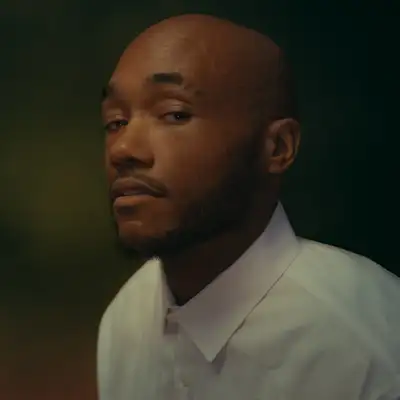
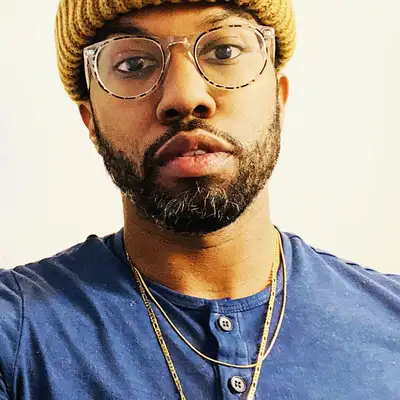
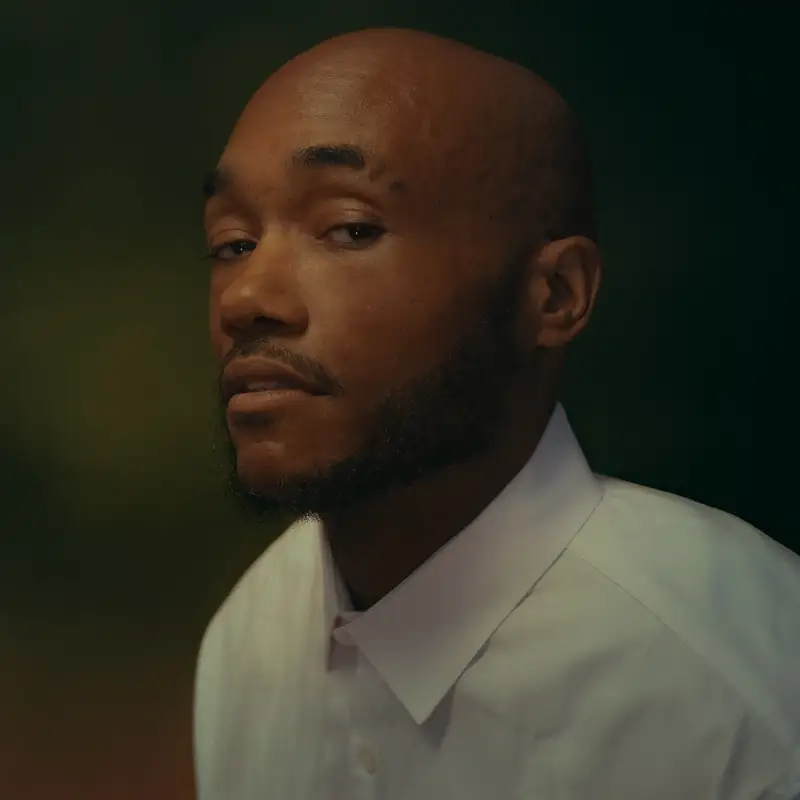
Rob Lee, creator of 'Truth In This Art Podcast'
Download MP3Music
Camille Kashaka Maurice James Jr Zoe Lintzeris: So I want you to introduce yourself, but imagine aliens have invaded Earth. All right. And they have knocked on your door. They say, who are you? What do you say?
Rob Lee: Zeep Zorp is a...
Camille Kashaka Maurice James Jr Zoe Lintzeris: I would say I am a big man who does audio conversations with people who paint and make creative expression. I don't know why it's a caveman for some reason, but I would try to get it to the simplest thing.
Camille Kashaka Maurice James Jr Zoe Lintzeris: Well, no, we're going to imagine that they have universal translators. Starter.
Rob Lee: Oh, universal translators. Then I am Rob Lee. I am the host of a podcast called The Truth in His Art. People seem to enjoy it. It's been around for seven years and really it's a storytelling archival project through the lens of arts, culture, and community. And it's a big passion project that's gone from Baltimore and beyond.
So it's not just where we're at, where you're going to fucking take me to the ship, but also international and hopefully interplanetary. Most overrated vegetable. This is a... Vegetable slander. Vegetable slander. It's broccoli. Yeah, I like broccoli anymore, but it's broccoli because I think it's readily available.
People think adding broccoli to a plate serves as your vegetable serving. It has a really good publicist. It has a really good vegetable publicist, but it's only okay. I mean, it's like, I don't have any vegetables. I don't really feel like putting any effort in. Let me just steam some broccoli and boom, here's a vegetable.
I don't really care about it. It's only really good, depending on how you season it. Like, I've tried to roast it.
It's not as good. I've put in an air fryer, not as good. It's just, you could just boil it and it's fine. It goes in your plate.
Now, it's, you know, the only time I think it really works when it has something that's a good compliment. So cheese and broccoli. Oh my gosh, delicious. Beef and broccoli. There are Timbalands named after that. So also great, but broccoli, broccoli? Nah, no one wants it.
Camille Kashaka Maurice James Jr Zoe Lintzeris: Okay, I didn't know how divisive this would be, but like, we're going to have to have follow-up conversations. I need to do some broccoli.
Rob Lee: It's like, my partner's going to be very, she's going to be pumping this into air, like punching the air because she's like, yes, he hates broccoli as well. This is like, no, you hit broccoli. I just think it's a rating. Martin or a living single?
Camille Kashaka Maurice James Jr Zoe Lintzeris: This is going to be a surprise for some folks. It's a living single. That was the correct answer. I remember at one point. So during the history of the whole MTR podcast and then now where we're at Truth and the Sartre, there was a bunch of different guys who had worked on the pod and I had a co-host who, who he liked women of a larger carriage. So I was just like, yo, can we just redo the intro from living single? All of us dressed like the main players. I just wanted an opportunity to say it's a 90s type of world and Dan likes black girls.
I just wanted to do that and no one rode that train with me. So, so yeah, so it's definitely that Martin was, was good. But I think Martin got really inconsistent on the back end where I think living single was pretty consistent throughout. And there's some fair amount of behind the scenes drama that became public with the Martin stuff. And I think just living single was, I think it didn't get its due and it was very, very good.
Camille Kashaka Maurice James Jr Zoe Lintzeris: Is there any saying that's like a constant through line with everybody that you interview? That's like a common thing that artists and other creators have that's just like that you just recognize and or just always see?
Rob Lee: Yeah, that's a good question. And thank you for having me. Thank you for the question, actually. Oh, no problem. I'll say it's like, I'll answer it in a very, in a very difficult way, right? I'll say the three line through everyone, right, is what is the actual story? What's the story beneath the work? What's the story beneath the creative or artistic contribution?
I think that's the thing that I'm seeking us. You know, there's a bit more depth than you did a really good painting. You did a really good song or what have you, what's that depth that's there? And I think sort of more with certain individuals, I find like, you know, sometimes I'm talking to chefs, there's a certain conversation that we're having, which is really great. Sometimes I talk to photographers, it's like, Oh, that's, you know, what's the perspective through your lens, literally and figuratively. And then I talk to painters, it's just like, Oh, okay, so what do you got?
And we, the types of conversations differ. And I get certain tells out of it, like, maybe with the let's say, someone's got because of their style of work, they're going to be looking at all these different intangibles that are there. Like sometimes I'm talking to photographers there, because their work has the light and composition and things of that nature, they are maybe approaching the conversation in a deeper way. Or if I'm talking to a chef, I may have a conversation with them that has parallels to a conversation I may have with a musician. There's usually different types of overlap that happens. And I love talking with someone who has like multiple things that they care about. But they're perhaps really famous or noteworthy for one thing, like, you know, there's an artist that I'm friends with actually DC based, you may know them, Zinia Gray. Yeah, absolutely. Yeah.
And she's great figure to paint and all that good stuff. But then it's just like, yeah, you know, it was comedian for a while. And I was an actor, it's like, hold on, run that back. And so having that extra level, right?
Camille Kashaka Maurice James Jr Zoe Lintzeris: You can joke with that person because they're not taking themselves too seriously, but also it's a short hand. They're they're comedians that are going to get the off hand, or they come with a comedic sensibility. So they'll get that off hand thing. And then all roots back to, did you get who the person was, the humanity within their story?
Camille Kashaka Maurice James Jr Zoe Lintzeris: So I remember like some early conversations, you huge on movies and film and so anything surprised you this year? Or like, I guess in the last two years, film wise, that kind of like, you know, stimulated your mind and they kind of crazy white?
Rob Lee: Yeah, I'll say this. You know, I like, I like when black folk come together for movies, I'm just going to be very direct about that. And I felt that with some of the weird dialogue around centers early on, it's not going to make its money back. And then it just kind of breaks several records, but it's kind of deprecated or have you I was like, is there a racist AI writing this? Like what's happening?
Like, it's doing very well. I think that movie was very, very, very good. I've seen it twice. Generally, I'm really good at retaining a movie. I really have to see it multiple times.
Let's say if I'm watching it for like a film review or something, which I've been negligent in doing, but if I watch a film review, I may watch it a couple of times, but I retain it. And I went to see centers twice last year, once an initially came out and enjoyed it. And then the second time I rewatched it in IMAX. And it was a whole different experience. And just really appreciating some of the things that were done there and some of the things that really worked. And I think sort of the discourse, film discourse and the experience of seeing film, I think that's the thing that sets out. Like, you know, how it goes, you go to a movie, you see it with essentially your people. And, you know, people are getting some of the end jokes. It's a movie for black people.
It's just, you know, keeping a buck. And I think it became something that made a money that was popular and it kind of drove a few things culturally. And it was part of the dialogue through memes and social. And it did that on its own merits, on its own merits. You know, like Ryan Coogler and company, they made a swing and they swung for it. And I think it's one of those things of seeing one's creativity and one saying, look, I'm better myself. And, you know, I understand where some people had some criticism about the sort of the music sequence in it.
Music over the years. But it's like, yo, and I think I said this when I watched it. And I'm not ending when I rewatched it. I was like, he earned that. I was like, you did this movie.
And people accused it of all of these other things that are not even in there. I was like, oh, you know, why are there Asian people? I remember I had that thought initially. I was like, what's happening here? And I was like, are we pushing for some diversity thing? And then it's like, no, I will research this. This was part of the culture down there.
And it's part of Mississippi. I was like, then he earned it. I think he's a little bit of an earned it. And then, of course, you know, I don't know if you run into this because you have a you have a sibling, right? Or a couple of siblings. And I brother, I have a younger brother and an older sister and another and an older brother.
But me and my younger brother are closest. And so inevitably, you know, I was like, yeah, so you stack or you smoke. And my brother was like, you're just both. And I was like, you might be right. You might be right.
Camille Kashaka Maurice James Jr Zoe Lintzeris: Man, just something about my pure joy that I just I appreciate. I don't really got to be into it. And my feet, why that really like just had that kind of glee on their face. So their experience, I went to a wrestling, a lot of wrestling event. Also, we're going to the radio station in Philly. And we have free tickets to not only a WWE show, but it was like a award show at the same time. It was like one of their their their award joints at the same time. And it was insane. It was like, it was one of the most beautiful experiences I had in my life. I just I have never been up to that point to a lot of wrestling and joint because we weren't going to E.T .W. That was just that was just too extreme. And it was like a very fun.
Camille Kashaka Maurice James Jr Zoe Lintzeris: The first live show I went to as an adult was actually at the E.T .W. Arena. I went up with my my buddy, Greg. This is the first time he and I met. We were taking a bus up to go to an indie show at the E.T .W.
Arena. We've never met each other before. So I was like, I hope this dude isn't weird because we're in a room.
The whole thing was wild. And I went to AJ Styles I think his last his last match on the indies and Shinsuke Nakamura's last match and both of them were at E.T .W. Arena. I think this was 2014, 2015. And Philly is always been I think I've gone to more shows wrestling shows in Philly than anywhere else.
Camille Kashaka Maurice James Jr Zoe Lintzeris: Man, ECW New Zealand Museum, man. That's devil such a such a wild organization, man. Yes.
Rob Lee: It was an error to just like, what are we doing? Fire right now.
Camille Kashaka Maurice James Jr Zoe Lintzeris: I got it. Channel for us in Philly Channel 48 and a where Tom at night. Us kids will find it. It was like going to a where station. Do you had like movie antennas around you at bad TV and just to find ECW because it was just like it was going to wear at a where time on a where channel.
But it was like public access like this crazy ass wrestling man. So I just you know, I like when I go back and watch clips, I saw it. I get that thing kind of small on my face because I just I remember it just takes you right back to my childhood. I remember being a kid just like just pulled the enjoying this stuff, man. So that's tight.
Rob Lee: It's definitely a good experience. And then watching some of the stuff that I'm watching now in a through line for watching the I've been watching a Missile matches from Japan pro wrestling.
And that was born out of me listening to a podcast about his life. And you know, I was just like, let me look at these dudes like best of some of his matches and just falling in love with it in a different way. And when I met that sort of, you know, this part of the year, beginning of the year, it's sort of that the temperatures are crazy.
It's dark earlier. And then I'm getting a year older. It's like all of these losses for me. So it's a little bit of the depressive period. And what pulls me out of that depressive period is watching like just something that brings me that joy you were referencing. Yeah. And watching old wrestling discovering something that's old, but discovering it for the first time, it's new discovery is really cool.
Camille Kashaka Maurice James Jr Zoe Lintzeris: No, man. So I would say maybe on the other on the other side of it, man, like I've had exhibits where I've done some art pieces when people or I've done exhibit there and then people who are just really enjoying it will like come up to me and like with a smile on their face and they I'm like, yeah, I think they don't they like it's not one bother you. Like, yeah, I say, you're not bothering me. I wonder that you enjoy it, man. Like if I put that smile on your face, that feels good to like, I know that you really enjoyed it because the work is not in vain, you know, say. So absolutely, man.
Rob Lee: No, it's good. And you know, when I do these podcasts and all of that stuff and people will see me and they would chitchat with me, chop it up with me and just like, yes, let's let's do it. And I'm not trying to speak for community and not be of the community. Like, you know, it's that that sequence in that the Diddy documentary, right? Where, you know, before he's going to get arrested, he's going to see the people and be around the people. And then he says something like, I've been around too many people, I need to take the shower where I need to get all of this off of me.
That just rung in a certain way for me. And it's just like, I never want to be attached to something in that way of not all of the stuff that he did or he's accused of and all of that, but sort of being kind of fake of the people and just popping out to get whatever those kudos are, but really being around and having genuine connections with people. And I work better, I think, in one to one or small groups because it feels more authentic when there's a opportunity or photo shoot or say, I'd rather be in the background. I'd rather be in the coffee one-to-one with somebody.
Camille Kashaka Maurice James Jr Zoe Lintzeris: nd nd nd nd nd nd nd nd
Camille Kashaka Maurice James Jr Zoe Lintzeris: nd nd nd nd this type of city and hence going back to why we should be grateful to live here. Again, given everything that's going on, you know, Amy can do something like that here. You can do what you do here and be a voice and a presence and that's very powerful.
Rob Lee: And thank you. I actually want to see that show. It was great.
Camille Kashaka Maurice James Jr Zoe Lintzeris: It's on my list. I have yet to see it and I feel like I have to see it.
Rob Lee: Making the point to go to support and to be there and kind of going back to adding a bit more texture to maybe what I was getting at the community piece. I think in when the result of the result happened almost a year ago of, you know, Agent Orange being back in the office, you know, that was on my birthday. So it's just like one of those things of like, oh, this is where we're at. And just kind of thinking through maybe a stoicism, maybe a how do we, well, how do I, and then perhaps how do people who encounter me, how can we like navigate through this, you know, to the degree in which we can. There are certain things that it's going to be messier.
They're doing sort of whatever they're doing, the lawlessness as you were touching on earlier. But as far as the navigating of it, because being under stress, cortisol builds, all of those things and being under this constant dysfunction, it's not good for us from a health or psychological standpoint, I would imagine. And a certain degree of stoicism of like, almost expect the worst.
And then if it falls, you know, somewhat below the worst, it's like, all right, cool. Am I getting ice cream later? What am I doing? Am I still like kind of thinking about those different things? And, you know, I think from that standpoint of like, we made the same mistake twice. And just kind of thinking about it from that way.
So being exposed to it. And I may have said this before, just seeing the impact of podcasting, the medium that I'm in, being a part of kind of opening that door to bring him back. I had feelings around that. And I was thinking like, all right, what can I do through sort of this podcast thing?
And that's how I started approaching that in, you know, the class I was teaching the last two years, and we'll be teaching like this year, and just have some ethics, you know, it's as we learn, when it's online and there's no law around it or no ethics, no criteria around it, then whatever's the worst thing that can happen, that's the thing they're going to choose.
Camille Kashaka Maurice James Jr Zoe Lintzeris: You know, you mentioned this musical artist you're kind of being drawn to now. Actually, my question on this wonderful little post-it note I made earlier. He was going to be like, what art form have you been gravitating toward recently, whether it's more music or visual art or books going to the theater much?
Rob Lee: Well, I did get some tickets for a play in a few weeks. So that's looking forward to that. Ironically, right? I'm not a big podcast listener. I've recently been gravitating in it and by recently or the last probably month, month and a half, I've really, you know, dove in on some audio dramas. So Spotify and their, their what they are. I saw that the whole library from these old dramas from the 30s and 40s on there, from CBS, their whole platform is on there. So these old hardboiled detectives like shows, there's like 50 episodes of this one joint called Box 13, the lead guy. He's a writer and he will help solve people's problems.
He's just looking for adventure and which ultimately will turn up in the book that he writes. And I've gone through for the last month, I've gone through all the only 26 minutes. I've gone through like each episode.
I was like, yeah, this is the one way he does this. And another one that I've been listening to is called the 10 Bell Podcast. But I'm really caught on this one episode about this Japanese pro wrestler named Mitsuhara Masawa.
And whenever I'm in this sort of stage of the sad, the seasonal, all of that. I'm like, Japanese pro wrestling, here we go. And, you know, I get a lot of joy out of that. And I've been diving in and watching some of his old matches. He has a really, really, really tragic ending. He actually dies in a ring during a match and kind of knowing that I knew about that before I saw any of his matches. So this is where I was like, oh, I already know the tragic ending. And now going back through his catalog and appreciating pretty much ultimately what he gave his wife for, you know, and that both contained through podcasts.
Camille Kashaka Maurice James Jr Zoe Lintzeris: I don't know what I'm waiting for, but I don't know about you, but I'm waiting just like for a hero. Like I'm just like, come on, like who's going to come save us? What is happening? Like, where's the Superman? Where's the Batman? Where's the spotlight in the sky? I don't know. I'm just like, I don't know. Who's our superhero?
Rob Lee: I'm waiting for Johnny Fahs. What does AI go on? You know, I'm just waiting for Johnny Fahs to pop up and like, oh, we got you. You know, Johnny Fahs feels like human and he jumps in the air. I think, you know, one of the things you were touching on, I think it relates to this term because I'm really diving into my philosophy. I've earned two, you know, I earned a nickname so far this year and something in this sort of this new idea I'm playing with. One, I'm a philosopher, a fake philosopher.
Or a philosopher. But the idea is algorithmic relationships. You know, I think one of the things from previous generations that they were crushing it, they weren't letting these sort of online, these sort of weird, you didn't like this post, you didn't see this post, these sort of communication barriers get in the way. People were worth being friends. People have social clubs.
People were spending time with each other. We want these things that feel like they're easy. And I think that's one of the ways that we get out of it. We, the algorithmic nature of it, you get online, you see everything that's refined and polished to exactly what you like.
There's no room for discovery there. So I can see that affecting art. I can see that affecting how we socialize and so on. And I think having this notion of we don't want something as hard or something that's earned that has a direct impact on the relationships that we're having, I'm protecting my peace.
This isn't serving me, whatever you do, Jor. And sometimes spending time with people, sometimes having friendships, sometimes different relationships can be very, they can, they can be a burden sometimes, not like a burden burden, but they can be very inconvenient. Like I travel to see some of my friends and I maintain it as a bit.
I have 1.33 friends. I always say that because I think it's funny. Sorry. But it's a thing. And I find that I'll go travel, I'll make that extra time and fit it in as a person that's pretty busy.
And I find that a lot of other people haven't gotten that same lesson. And, you know, let's take the shot for the gram and make sure that's up there to show that we spent time together. I rather just like, let's get a coffee and do something low key.
Camille Kashaka Maurice James Jr Zoe Lintzeris: When I think about the movie experience, I really miss that. I think Barbie might have been the last one I saw in the theater that I really enjoyed. Like I'm trying to think of, I saw anything else that wasn't like a classic or a revival, because now that's really just what I go pay for.
Rob Lee: It was probably centers for me. I saw it twice last year.
Camille Kashaka Maurice James Jr Zoe Lintzeris: I've been needing to see that. I've heard it's so good and I haven't seen it yet.
Rob Lee: I was in early. I saw it the first time, but the second time that I saw it, I appreciated it that much more. I'm notorious for not seeing movies twice.
It'll be like five or six years between the second watch. And the second time I watched it, I went to Georgetown and watched it in IMAX. And I was like, this is now an upper experience. And I was like, yeah, it's as good.
It might even have grown like an extra half a point for me. That was a very, very good film. Overhyped in some regards, just sort of the response, I think Vanity Fair sort of dragging of the movie or trying to drag the movie was very weird. And I think that added to some more positive or amplified discourse. But the movie is deserving of sort of the accolades and the attention that it got. And so I'll go to see like you, if there's a revival, let me get that. Let me see that. Like, I think I want to see the revival for Mortal Kombat last year. The 1995 one of a yes, test your might.
Camille Kashaka Maurice James Jr Zoe Lintzeris: The how then do I decide what is important? What is being decided for me? That is important. But also what if we just came together and we're like, hey, through all this, let's just hang out. And this is what's important. I mean, that doesn't mean we're turning a blind eye to the world in situations. But maybe we can figure out how to deal with those situations when we come together and we don't have to do like a photo op for it.
Rob Lee: I think if we're almost in a counterculture sense, so like I have this this idea that we're seeing more and more, not even an idea, it's just an observation. We're seeing more and more sort of this state sponsored flop that's being masqueraded as news.
And I think people are like kind of waking up to it and perhaps they go even deeper, root cause that joint. Like, you know, there shouldn't be news all the time. There shouldn't be like sports news all the time.
Like ESPN, while I enjoy it, should not exist. And, you know, we recently had a John Hall bar fired from it from the Ravens. And it just it's just in the feed. Just just going there and it's like, that's that's cool. That's cool.
Okay. Oh, you have a take on it. Oh, you have a take. Oh, your take is the same as that take, but you're saying it. And it's just like there's there's no news.
There's there's no information. It's it's funny, like when we see some of the local news and we get to the lighter side, it's like, oh, and a cat was up a tree. And it's like, that's not a news story. And I think it's a desperation that's there. I'm very sensitive to seeing things that just come off as insecurity and desperation. And I see it all the time and sort of these media outlets to justify trafficking clicks and views. And what was the thing? The nickname I forgot to mention that the nickname that I've earned is Rose Gold Rob, which is which is great.
Camille Kashaka Maurice James Jr Zoe Lintzeris: And I feel like, you know, I got rid of all my subscriptions. Like I don't have a subscription to any film, which I know is not great because I want to support my fellow artists. You know, I'm like, I want to do all these things, but I'm also stubborn. This is the contrarian aquarium in me. This is the stubbornness just raining the dream where I'm like, no, my principles are like, I cannot contribute to like Netflix anymore, et cetera, because just of how they're treating the like what was and the artists platform kind of like Spotify too, in a way with the artists and treatment. And I know those are all separate discussions, but that's a struggle for me. Honestly, I don't like, I'm not trying to burn bridges or so, you know, seeds of wrath or whatever, but I just, I don't know. It's a weird place for me.
Rob Lee: I think what I did was try to lower it, you know, you know, and I actively steal like, all right, how can I go on a horrent or your rent or something that rhymes with that other word and put as ETN on and just get the content that I need, but also not be a part of, be part of it in that way.
Camille Kashaka Maurice James Jr Zoe Lintzeris: And, you know, I think the famous book, Steel Like an Artist. Exactly. Yeah.
Rob Lee: But I think it's, it is a good point to reassess. And I would share it with anyone to reassess, you know, what your involvement is and just know why you're doing it and know what you're doing and have something that you're standing on. It may be, you know, one of those things where until we get these things sorted out socially, until we get these things sorted out from how we're appreciating, you know, artists, how we're compensating artists and appreciating sort of their art, their contributions, their work, then I need to bow out for now. And I think that that's something and sort of one of the last things I'll say in that regard is I'd like them people drag these companies for the nonsense that they do.
So like, I know a lot of people like that show and I watch it and I enjoy it. Fallout, they're talking about the recap for Fallout was literally just an AI composite of different clips from the first season and it just got characters wrong. It got sort of what their motivations are wrong. So it was a good guy position as a bad guy and they had to take it down because he was getting dragged online because it was bunk that they put out there and it's just like hire someone to just edit it. But that would cost money.
Camille Kashaka Maurice James Jr Zoe Lintzeris: They're paying him peanuts.
Rob Lee: You know, but it is, it is that and I get very cautious. You know, there's hundreds of hours of me yapping. I probably said every word that I know in some words that I have forgotten over the years over this time. And if someone's like, I'm going to do an AI Rob when eventually I, you know, stop doing this, what have you, you know, there is sort of that, but the engine, the battery or whatever it is, the feeling as you were touching on earlier, that's not going to be in it. You know, and I've been saying that some of the early interviews for this season, I'm your host Rob Lee, but except no substitutes.
Creators and Guests