Rolando Reid (Jamaican Bobsled Team)
Download MP3Rob Lee: Music Welcome to The Truth in This Art, your source for conversations connecting arts, culture, and community. These are stories that matter and I am your host, Rob Lee. Today, I am thrilled and honored to welcome my next guest, a Jamaican bobsledder and fellow Morgan State University alum. A former Morgan State Bear track star turned bobsledder.
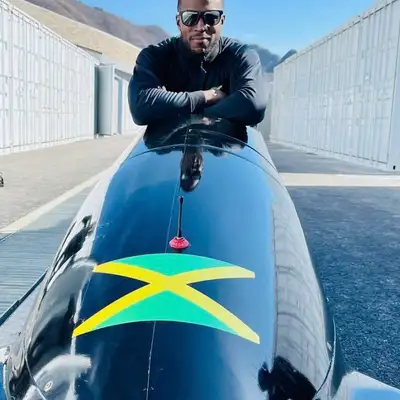
He made his Winter Olympics debut in 2022 as a part of Jamaica's first four man team since 1998 and he's gearing up for a return to the 2026 Winter Olympics. So please welcome to the program, Rolando Reed. Welcome to the podcast.
Rolando Reid: Hi Rob, thanks for having me. It's a pleasure being on this podcast. When I got the phone calls from Heidi stating that you wanted to speak with me and I heard you were from Morgan State, I was like, alright, this is the one. I'll help you despite my busy schedule. Thanks for having me and how do I introduce myself?
I'll say a man of many cap. I'm just all over the place, honestly, when it comes on to doing things. I hold several different positions or different roles in different organizations, that kind of thing while working here and there as well. And this is something that I'm going to say in my status as a professional athlete. So yeah, I'm a Jamaican box player with which participated in China. Of course, I'm a Morgan alumni and of course, a former beer beer. So running track. So yeah, pretty much who I am.
Rob Lee: So, you know, I have to ask sort of like follow up questions with that introduction. And thank you for going right into it because normally it's always a little of me trying to figure out how to get the folks to open up and talk about themselves because I find a lot of times folks are like talking about themselves. They're like, I'm just a regular person. It's like, you're an Olympian. Let's see, you know, so how did you end up like going from track athlete, you know, being a Morgan to an Olympian bobsledder? Like I'm trying to understand that sort of track. So what was that moving from sort of one sport to another sport?
Rolando Reid: Hopefully by the end of this we'll figure those together because I don't know how I ended up in both. It wasn't something I dreamed of in terms of saying, yeah, I wasn't supposed to get picked in both. I have this big dream when I was a kid to become an Olympian in both. My dream was actually track and field and representing Jamaica at a high level in track and field, which would have been the Olympics. If you took my track career, it's been from Monroe College in Jamaica to Morgan State University performing at the D1 level, division one level and competing in the mex, that kind of thing. But I did actually, fun fact, I did actually retire from track and field and other spikes and was coaching at one point at a young age. And then I went to Florida and was just playing pick up soccer for the most part. So it wasn't as smooth as a transition I would say from directly from track to box sledding. It actually was track, window closed, Olympic dream, all gone. So we just played pick up soccer in Florida and then I got a phone call from my brother stating that, hey, I want to train for this particular trios for the Jamaican box sled.
And from there, I kind of thought about it to be honest, but then you take him to Sears and then he did a follow call in 2019. And this is very strict to me. I would say, see if that's okay. I want you to coach me for this particular event or a trios. And so yeah, you need to come back to Jamaica to coach me. So I said, you know, all right, if I'm going to coach you, I can do that part. But I'm not really that interested in box sledding.
It looks dangerous, that kind of thing. And I moved back to Jamaica and then started coaching him for these trials. And then on the day of the trials, I actually went in and take part and then came out on top as the top of coach from that actual section. So that's how I got into box sledding, I would say.
All right. But I would say Truck & Field also prepared me along the way. Not more than those early mornings, those balancing the schoolwork with training, competing at the highest level as well. And just that team orientation. So I think that was a step in stone towards becoming an actual box sledding. Wow.
Rob Lee: That's amazing. And those brothers, right? Those sneaky brothers. It's like, oh, I thought I was helping you. Oh, no, no, no, no, no, no, brother. I got you. I got you.
Rolando Reid: Yeah, definitely not a kid's like you. You made sure, you know, you made sure.
Rob Lee: So those those lessons at Morgan and me also being an alum, you know, sort of I carry on some of the non-athletics. I'm an Olympic athletics, of course. But it's sort of what I do. Like there's lessons that carry over into what I do in this podcast, whether it be relationships, whether it be work ethic, you know, as you touched on getting up early and just having, you know, sort of a routine. And there's an artistry to it, right? There's an art to box sledding. I've learned about, could you talk a bit about that as, you know, transitioning, you know, from sort of that track career and sort of like box sledding. I think seeing it sort of perhaps at a different stage in life, you maybe see it from a different perspective than someone who maybe started in it earlier. And I heard that there's an art to box sledding. Could you speak on that a little bit?
Rolando Reid: Definitely. Box sledding is a whole different beast out there. I did truck and I thought truck was hard over the years. But then I met box sledding and personally it really took a toll on the body. The mind, the mental operation, it takes a set box along the way. That kind of thing.
It's a lot, you know. I think the best way to describe box sledding is you're training like a Olympic sprinter in the 100 meter. You're lifting like a Puma Ruffler, right?
I'm eating like someone from Nathan Hot Dog competition in New York. Because you have to keep up on weight and you have to be powerful and you also have to be fast. So it takes a lot of grit, I would say, to prepare for box sledding. My journey, man, that's a whole book in itself. It was COVID time. So that's a challenge in itself on the way to Olympic. I was also a teacher at the time, teaching in Jamaica, economics for high schoolers. So trying to balance work and training also was coach at the same time. So when I said I'm a man of many hats, I really mean that. Like I do a lot of things.
And yeah, it's box sledding. The training required, the climate, your performing high levels at the cohesiveness, the teamwork that requires. It's a lot. And I don't know what words to use, honestly, to really describe what it is and what it actually takes.
Rob Lee: So in that, and thank you for that context, like really not getting that, you know, that piece of your eating like you said, like you're in your, what is it, Joey Chestnut from the Nathan's contest or lifting very heavy running, having that sort of speed. It's a combination and it seems like it's a very, very challenging and at the highest level.
So then also you touch on a little bit earlier that, you know, it's very fast speeds, you know, a box sled. And there's a certain fear, I suppose, that some people engage in. So talk about that a bit, sort of like, you know, you're touching on the preparation that goes into it, but how do you overcome sort of the fears and the challenging because the challenge is because this is now you're headed into your second, you know, time. So you'll be second, go around second rodeo, if you will. So the better part of what almost what 10 years really, because is that before years for the Olympics?
Rolando Reid: Before years, so technical, when I started in 2019, so I had a very short first year. So I was already behind for preparation for the last Olympics, but we managed to get it done just by teamwork. And I'm a guy who I can identify problems, but what I do better is to solve them. So there's a lot of gaps in the Federation in terms of what is required on the ground. And I identified those problems and was able to put solutions in place. So for instance, in preparation for the Olympics, I was the driver for the team, one of the driver for the team.
In terms of driving the team around from practice to the gym, all that kind of thing. I was also one of the chef. I was one of the medical person there as well, ensuring that everything I was the person to deal with inventory. So grocery shopping, that kind of thing. So I did many little jobs.
A lot of times we see that at least we only see them pushing or running, but there's a lot that goes on behind closed doors in terms of what the athletes have to do in addition to prepare for these major circumstances. And trust me, I had my eyes full. Some of the times lacking of sleep, driving, I'll share one story with you where we had some issues with our sled at one point. So my self-advertisement, we drove from part of Utah to Calgary in Canada. And that was about 13.5 hours drive, right? So we drove there, picked up the sled, had some french fries, and then had a ride. So we did about 26 hours there about.
So about 26 hours on a turnaround. And when I got back to Utah the next day I was in that sled, so we do things like that, crazy stuff like that. So in terms of the experience though, like who prepares for going down an icy slope or icy mountain at 9, 15 miles per hour.
How does one prepare for that, you know? The equipment that we're in is strictly metal. There's like ice, metal, skin, and bones all in one. And it's just dangerous in terms of the speed that was going down. But the sport has gotten better over the years. We're safety is concerned, I would say. But hitting the sled together, all these runners getting the set up to par, getting ready for a race, it's a lot. It's a lot. Wow.
Rob Lee: I mean, I'm still stuck on the 26 hour round trip with just french fries in the middle. Like what do we do? I mean, I complain if I have to get on the train to go down to Virginia for like a four hour and a quick turnaround. I say, oh, I need a meal. I need something more. And you're out here being hardcore. You're going across country lines, you know. Yes.
Rolando Reid: It's really good to get a job done, I would say. So in the world of bobsled, we don't think about the post life out there. It's really just get things done. And unlike say track and field, you have a little bit more luxury. Monster, there's no luxury. There's no luxury.
Rob Lee: I like that subtle jab at the track homies. It's like, yeah, you know, it's a little bit more posh there. You know, we make it happen over here at Bobsled.
Life is sweet in the track side. I love that. And one of the things I keyed in on that you touched on is sort of the being the problem solver and, you know, this theme that you said even in your introduction of wearing many hats. And that's a really important thing.
Like in doing this, you know, we were chatting a very brief period before getting on. I'm going to be the tech guy, the host, the interviewer, the person prepping the book or all of these different things. And then again, I think being there at Morgan and going through that sort of the four years there, you know, kind of help prepare. Like I look back at that time, you know, it's sort of a huge resource and sort of figuring it out and exploring. And, you know, I had the bachelor's of science, you know, and analytics and figuring out sort of how to troubleshoot, how to problem solve. And I think that applies to what I do here from a creative sense, just the way of thinking.
Rolando Reid: That's good. And there's something that stuck with me from Morgan as well. I had a professor by Dr. Randall Reed and he was one of the major guys in economics and he said something to me one day that stuck through life in a sense where he said, I will pretty much you'll bring me the problems, right? I will need the problem so he doesn't really teach you how to solve them in a sense. He gives you a problem. You'll then have to go and figure research and then figure it out. And I think that moment actually said some light in my life where I said, you know what, if I can figure out things on my own, right, without being spoon-fed, then I think in life any challenge that comes, I will find a way how to figure it out.
And that was the lesson he was trying to teach us. And it's very key because it lines up with what I go by as well as saying. My saying is you need to be a student of the sport, right?
Which means that if you're a student of the sport, you're going to try to research as much as possible about this particular sport. I'm not just for it in general, but anything in life that you're trying to do. So if you're starting up a business, you want to do all your research, right?
If you do all your research, then you will find the flaws before you even get into it and then you can make it the best thing. And as you go along, you're still learning whether you always been doing research because you are a student of that particular sport.
Rob Lee: I love that. That's super important. I think in whatever it is, whether it's just applying it and broadening it out a touch, you know, whatever else that you're doing, like, you know, not everyone's an athlete.
So I think it applies. So like in doing this, like if I, you know, stopped, you know, it's like, oh, I know everything. Eventually everything passes me by and I'm not, I don't have the capacity to problem solve when things get hard, when it gets challenging.
When I have to take that 13 hour drive and just only have french fries, I'm still stuck on it. Yeah. So I want to touch on, you know, you mentioned being in a bobsled. I want to talk a bit about the importance of teamwork and leadership and sort of your time at Morgan and some of those lessons that you learned in that vein of, you know, teamwork and leadership. And how does that translate into specifically into like the Olympics because both are sort of like teams and working together. Yeah. So teamwork.
Rolando Reid: All right. So track and field. I think track at Morgan. So I'll speak on track and field. You can have that individual team track and field, but you also have team when it comes on to relays and stuff like that. Right.
Yeah. I know they have an overall goal to win a championship. They have to play your part and they have to kind of lean on your teammates as well.
In bobsled is totally teamwork. All right. I'm a breakman and I'm the one who is supposed to have the pilot get the bobsled up to speed to get it down the track.
All right. After I do my part in a sense, I then rely on the pilot to get me down the track safely. So my trust in the pilot. Now, when it comes on to teamwork in terms of both, getting the flight to the line, you can't leave it to the pilot.
The pilot can't leave it to me alone. Right. So after work together to get the flight to the line to begin with.
Yeah. Now, it is our job to get the flight up to speed to get the flight up to speed for them. He can take it down as a pilot. And then it's my duty now where he has to trust in me that I'm going to pull the break after I get the finish line. So it's all teamwork there.
Truck and field at Morgan prepared me for this moment like every day while I was at Morgan. When it comes on to coach, coach doesn't play when it comes on to timing. Right. Yeah. So if training starts at three o'clock or training starts at five o'clock in the morning, we've got to be there because he's coming from the country.
And if he gets there before us, that's problem. Right. Yes. So Morgan has been preparing for this, the time management aspect of things. That in my schedule for classes around training. Yeah.
I'm sure that I catch up on work whenever I have trapped me on a Thursday on a Friday. Right. So I have to make sure I have someone in place in class that's going to feed me those information.
I have to send emails that kind of thing. So Morgan will find management is concerned has been prepared before this. As a company leadership, Morgan has to pay me for that as well. Coach always have me in a particular place or a role where I have to be helping in terms of the team. So what I'd be a relay team or whatever the case is, I'm the guy that's going to go there and rally the guys around. I let them know what's at stake. All right.
No playing around. We need to win this championship, whatever the case is. And the same thing went on in the guys that I've played with for the 2022 games. I didn't know them ahead of the ahead of September and the qualifications started in October. So we had like a month.
Right. We had a month and a half. And so I'm there in US with three strangers, pretty much no coach there at the time. And we're just there winging it. So we had to come together and say, you know what, we have a common goal. We're going to force the hands of the Federation to make sure that they start assisting us the way we need the assistance to make this happen.
And with us doing those things, the Federation then jumped in, start finding the funds for trips, start finding the money to make this dream actually a reality. So, yeah, the leadership qualities that it takes. Sometimes the team is not feeling well. You have to remind them constantly that look, this is what is at stake. Sometimes you have to pick up the flux here and there as well. Someone for whatever reason decide I can't help prepare this place. You have to jump in.
As I said, I have to be cooking that kind of thing to make sure the team is prepared. And I think those traits were actually developed, I would say Morgan and even before then, you know, in high school, I went to a boarding school in Jamaica. So they actually had a team effect, a ripple effect. So one actually is like a stepping stone going from one to the other and they all made their part in where it was.
Rob Lee: Sounds like a natural progression. And, you know, there's certain, I think there's certain traits, right? That we have as individuals that align with what we do. So that's sort of the premise of this next question, this follow-up question. You know, for me, I'm a very curious individual. So one of the ways to exercise that curiosity is interview people.
Hey, how do you do this? And I'll get to talk to Olympians such as yourself. So how does your personality align with the roles that you've had in both track and, you know, in boxlet?
Rolando Reid: You know, you're a coach, you'll tell your leaders, alright? If you're a high school coach, you'll tell your leader because I'm always the guy that puts in my self in a position where I can actually help more than just being an athlete.
So I'm always taking on a more spinny role and just trying to understand things from a different perspective. How can I help the coach help myself or help the team better themselves? So I would say there is a big correlation into the roles I've played as an athlete at Morgan and how I carried that over in the boxlet. So I've always had these, like a captain kind of mentality, that first of all is the lead of the team kind of mentality. I'm going to push you, I'm going to carry you on.
I'm going to get the best out of you, best of you, best of you, best of you. So that's the kind of personality I have. I like winners, I like to win very competitive first. So I always try to encourage my teammates and just have that fight of spirit in me to get things across the line. So yeah.
Rob Lee: I love that. And I think I relate to that as well, but even going with one of the things you touched on earlier, you're doing it as well. Like you're not asking someone to, you're giving that nudge and giving that push of putting folks in a position to succeed. You're also putting in that effort, whether it be, as you said, sort of going to Calgary or whether it be being the medic at times or whatever is needed.
You have the capacity to do that because there's a goal in mind and you want to make sure that you and your team savor and win at the best possible way. Definitely.
Rolando Reid: And there's always someone that will need to step up. And that's how leaders are born most of the time. You see problems, you identify problems. Not everyone is willing to challenge those problems that we face.
And I'm the guy that doesn't bottom from that. I tend to call myself a nomad because I can adapt in different spaces. You know, I, if you ask my friends, they will say, look, where are you this weekend? Because I'm always somewhere, right? And I'm always trying to adapt.
I like to go out, spread my wings and just try to get the best results. And you learn a lot in interacting with different environments and different scenarios, different cultures, that kind of thing that makes a stronger character.
Rob Lee: And one of the things you said earlier too of like, you know, sort of that initial, and this is a lead into the next question, you know, as far as, you know, the 2022 games, like you didn't know your teammate. You didn't know them.
You had like a month to get to know them. So what was that like? And what was sort of the overall experience leading into the 2022 games as far as culturally you're touching on spreading your wings and being a nomad? And usually the Olympics are in a much different place than where a lot of us are from just by nature. It's international games.
Rolando Reid: Well, in terms of the chemistry, we're a team. We actually did develop chemistry quicker than I thought we would have because I mean, at the end of the day, we were all Jamaican.
The other guys were living in UK at the time and they came out to Jamaica. I mean, came out to US where we met. And we just kind of missed because we knew that we had a common goal. So we know we needed to get it done.
And I think everyone was invested because the first initial step that we made, the Federation didn't really contribute in terms of our flight or anything going there. So there's still trying to figure things out in the back, trying to get money together to get us on the road. But we made a decision, an executive decision, saying, you know, we can't wait on them to start our journey. So we decided that look, we're going to find the money and we're going to go out.
We're going to fly. I want to get this from you. So we'll figure out an active and that's literally what I know my know my desk. So it was right up my alley and we got there and then we just start to plug in please. We did a lot of things outside of just pushing out the truck or preparing the flat back and I think to build some sort of chemistry between us off in our downtime. So we did adapt pretty well.
I just pertain to the games. Yeah, we were COVID-19 in China. The jumping times, I was expecting times. Lovely atmosphere, lovely people. We're very, very much welcomed when we were there.
The environment was really good in terms of the hospitality. I didn't really come to the realization that I was at the Olympics until the closing ceremony. So a lot of people have experienced it a little different where I heard my teammates saying, yeah, when I got to the start line, I felt for the first time going on the truck, that wasn't the moment for me actually. It was actually at the closing ceremony. That's when I actually woke up to the reality that I'm actually at the Games, I'm actually at the Olympics, actually the biggest for Jamaica, a kind of thing. So yeah, I think it's just probably that no matter what I'm doing again, where I'm in a new space, I'm just going to get things done.
I'm just going to focus on the task at hand. It's just a norm. They're kind of rob me a little bit out of experience having that trait. But yeah, it was a good overall feeling. The closing ceremony really did it for me out there. I was a plug there in the closing ceremony as well. And I think yeah, I was the only one actually from Jamaica in the crowd or in the walk. So that is probably why I was able to reflect the way I reflected moment. So yeah, cheers, cheers, big come to mind.
Rob Lee: So what I was hearing there is sort of advanced chemistry building, advanced team building, in a short period of time, but that unifying trait that you're all Jamaican. So you're going to figure it out, you're going to connect on some of those small things and really build out that chemistry. And I love that piece of making the executive decision, not necessarily getting the support as quickly as one would like, especially with the time ticking. Like you mentioning the kind of like a one month turnaround to like get to know your teammates that as you touched on earlier, you're trusting folks.
You're in a dangerous to use of your skin, ice metal bone, you know, and having having to trust and build that trust, it's an advanced thing. And so cheers and Bravo there. So in going to, you know, the 2026 having, you know, the 2022 under your belt, you know, how are you feeling now in terms of the preparation leading up to, because you're in the midst of it as we're having this conversation out. Imagine. Yeah.
Rolando Reid: So I would say more confident that the team currently has more chemist, more chemistry in terms of they been together for a longer time than we did in 2022. So there is that chemistry while I'm speaking, I'm the other one because the team is actually in or just left our party to going back to which law because the first competition actually coming up next week, next weekend, so in which left. So yeah, I would say the chemistry is there.
It's building still younger guys than myself. So there's that guidance that is needed as well. They haven't gone through the stage yet or the spirit of just back to back races and training in between, just traveling and all of that. So it will be sort of new for them. So the extra guidance is important.
My first as well as a new more who's there with another senior manager who questions through my youth there as well. So that's sort of guidance is important. But I would say we have learned from the last experience that we need to do certain things differently.
And even this time we're often where my experience is concerned in 2021 and trying to qualify for the 2022. As I said, we met in September and the first race was in October, the first week of October. In September, I had never run an ice before.
So that's in the south of the New York State. This time I'm not having that issue because I have run an ice. I've raced multiple times now.
So there is back difference, sort of difference. But even the first back in September, I had to learn a lot from the guys that were there as well because they had some sort of experience. I didn't in terms of running an ice. So yeah, this time I'll be the one passing on the knowledge to the ones that are here and just building that team chemistry to get into the sled, hitting the sled on time, that kind of thing. And just becoming one unit while they're inside the sled going on the track. So a lot more things to pass on to the team that I didn't know going into the last Olympics. So yeah, I think we will be breaking some start records this time around and doing some really good stuff.
Rob Lee: I love that. I love that you're able to, with that experience, being able to help the next generation that's coming along, being a part of the team and being able to have that sort of player coach vibe a little bit. And supporting that next gen, folks are doing something because you had that experience of this is the first time that you did it in 2022 and being able to take that experience, being that it's four years ago, but it's not that long ago on a big scheme of things. And then you're coming back with it and just like, hey, this is what my experience is. So speaking from what that experience is and being able to pass it on to some of the younger guys and learning from some of those things that you can improve upon. But having that experience under your belt, I think it's so key.
Rolando Reid: Yes, definitely key. And I try to share the knowledge, you know, in this world of sport, you have to share knowledge and you have to try to learn from each individual. Like as much experience as I have, I can still learn something from even one of the younger guys and that's just how you have to approach the sports in the world.
You can't be too big for the sports, right? There's always something there to learn and you just have to be open minded as you go along. And that's what helped me to get over my hurdle in the last Olympic qualification. And I hope these guys now will receive that information very well, because I was a coach at the time, I could say, you know, I know what I'm doing. But at the time, I said, you know, I need to learn as much as possible, but I can become a stronger link within the same, you know, so that was my objective. And so said, so done, we got it over the line by every means necessary.
And I think this time around, we will get it done. Qualifications are a little bit harder this time, I would say. The IOC decided to even out the sports in terms of the amount of spread for females and males. So last Olympics, it would have been 28 spread for the male. I think this time around, it's going to be 25 for the two men. And I think, no, 20, yeah, 25.
And then I think 28 or somewhere around for the four men. So the next spread is going from the male perspective, the male side of things. And so the qualifications will be a little bit tougher. So something new to adopt is adjusted. So still learning.
Rob Lee: Well, with your experience in being a person that's adapted that no bad thing you've gotten over a few times, it makes sense. And I know that you're up for that challenge and success is coming. Then, you know, sort of, I have two more like real questions that I have a few rapid fire questions that want to run by you. So this next one, I'm very curious about this.
We're always curious about the story. So I read a Baltimore Center article called Cool Runnings 2.0, a reference to the real and the pop culture legacy of Jamaican bobsledders. So how does it feel for you personally to carry on that legacy in bobsledding, but also as great Jamaican Olympians?
Rolando Reid: You know, the article actually made me smile, I must say, because it shows how strong the legacy still is where Jamaican bobsled is concerned, you know, something that most people like myself heard about through the movie called Cool Runnings, right? Yeah. However, I must say it is more than just a movie. It's more than just a movie.
It's actually guide out here or four guys initially who they're still around and they thought opportunity to step into the unknown. And they did just that and represented Jamaica very well in that regard because of the big, I think it's the most talked about team in terms of winter sport and winter Olympics. So it is good that we are still carrying that flame in a sense and from generation to generation. It's been over 30 years now, say 33.
Yeah, the 33rd anniversary. And when you think about it, having three decades of consistency, making it through Olympics after Olympics after Olympics, not only from the male perspective, but we also had our first female team in 2018 that took part. So we're building and we had our first junior Olympic female athlete as well this last year in a sense.
So steam those things pop in and just how we're building on to that kind of thing. People start to take us very serious and we're we're moving into a direction where we're now trying to compete for medals. So project 2034 is where we're trying to get our first medal. But if it comes before then then we'll take it. So we're working we're working towards project 2034 and we should have started competing for medals. But we're good for all the Staric this year, I must say. So we can look out for that.
Rob Lee: I love that it's sort of like building out and adding to that the story and that legacy, you know, and having sort of goals there. But as you touched on, it's like we'll take it earlier if it's there as well.
Rolando Reid: And it comes early then we understand we will take it. But we have a long term goal and we're working towards a long term goal. I think relatively closer than we think. Once you have the right equipment, I think we'll be okay because that's the other aspect of things as well where we are still behind on equipment for for perspective when we were in the 2022 Winter Olympics. We were racing in a in a box that was just from the museum in Canada in Calgary.
So that 13 hour drive that I did, it was the pick up of sled that was in the museum in Calgary. So it was a retired play that finished I think third in the Olympics in 2010 2010, I want to say in Vancouver. Yeah, so literally racing. It's like showing up to an F1 race in a ladder or a something there about a football, you know, very outdated. But at the end of the day, that's the sled that got us to the Olympics, you know, but we technically are already defeated before we can get to the line because when you're racing against players that are made in 2021 2022, then the car most are are sure lost.
You know, when you're competing against guys that have similar traits in the push, similar drives in our event better, you're you're you're fighting a losing but we thought regardless, you know, yeah.
Rob Lee: And I think and thank you for that context because it's, you know, like being able to have something that's effectively an artifact, but be able to like make magic with it. And another thing I think in terms of perspective is it's like the thing that they say in like weight training, right? It's the reps, you know, there are some times where it's like, I couldn't get that one up.
That was too heavy or what have you, but you're going to be stronger the next time. And as you've you've alluded to, you know, we're looking at 2034, you know, we're looking at sort of this long term planning and with some of the leadership stuff that you've touched on earlier and how you're helping that that younger generation and passing that along, that's going to just really put you guys in a really great, great position to succeed and have everything that you need. You know, so that's wonderful. So I got one last real question and it goes a little something like this. A in HBCU and you're an HBCU alum in and you're in the winter Olympics. You know, second time's pretty rare, right? So what's something that surprised you, you know, being at the games in person versus perhaps watching it on television?
Rolando Reid: Okay, so not in my own gym or how did you plan that I would represent Jamaica and my HBCU as a winter Olympian? And I think never was on the bucket list.
All right. So some of I got the top of the bucket list. And I would say I did represent with pride, you know, being a Jamaican in itself, I mean, unknown in the unknown where winter sports is concerned, because do I even belong here? You know, I Jamaica is known for track and field and the sunshine and the beaches and all that good stuff, right?
The tropic looking thing. And then here you have a team where black, green and gold representing in a winter sports like where you guys been here? But you know, and same thing in terms of being from HBCU, his talk of blackology, you find that what are you doing in this sport?
This is not like a black man sports, you know, it's not your thing. This is our thing kind of thing. It actually open your eyes and just help you to sit back and actually embrace the moment that you have talked into some sort of unknown. It's like you are here and you're presenting not just your country, but you're presenting something greater than your country. You're presenting your race, you know, you're presenting your culture.
So it was really good being there. And I am not many, I can't recall any other HBCU athletes that have taken part. Maybe there have been, but I haven't heard of any of yet. But I know there's one actually that went to AMT. He's representing USA this time around again.
And hopefully he will make it as well. But I think it's really good to pop into the unknown and just bring in that kind of culture, the near culture, the HBCU culture into somewhere that we, I would say a lot of people would say you don't belong. So it's a good field, very good field.
Rob Lee: It's great to hear that, just stepping into the unknown.
Rolando Reid: Hopefully that will encourage others to come, you know. There's a lot of HBCUs out there and a lot of them may not have thought to step into a different sport to get that Olympic dream. So hopefully my story will also help them to step into that unknown and see the light there as well, the way they can become something greater and just step outside of that box of track and field.
So hopefully it will inspire someone, I must say, you know. And even if it's not just Bob'sletting, it might be another winter sport. Or even another summer sport, who knows? But that's why I'm here and that's why I keep doing what I'm doing to inspire the next generation, connect the world through sport in a sense.
Rob Lee: I love that. And you know, it is definitely it's inspirational. You know, you mentioned the nomad. I think that there's a novelty component too. Novelty in that there is a newness there. And as you're touching on the surprising component, is the unknown doing something in a different country doing something that you hadn't had a lot of experience in doing.
And with people that you know, your teammates that it's like, Hey, I'm just getting to know you guys like we haven't known each other for six months yet or whatever the thing may be. And really, it's just everything is new. So it's like seeing it all for the first time with with new eyes. So that's that's just amazing. And I don't know the large world stage as well.
Rolando Reid: Yeah, I think that's the most shocking part of it is like, not only that I'm doing it, but I'm doing it towards an Olympic year. And I don't want to say we're crazy, because no one believes that this team actually came together one within one month.
And it's not even a full month. But yeah, put together that kind of team and that kind of grip and that kind of chemistry. And along with the setbacks here and there along the way, it was an amazing journey. And I would not trade it for anything else. That's awesome.
Rob Lee: So I got three questions that I got to ask you these rapid fire questions. So if you can answer in one word or one sentence, that's all we're really looking for here.
So here's the first one. I know athletes have rituals and hobbies. What's one ritual you have when you're preparing to do anything athletic, it could go back to your track time and go to the Olympics now? What's one thing that you have a ritual or a habit of doing?
Rolando Reid: Music.
Rob Lee: Okay, that's a good ad. See, now you give me a question. Yeah, so what's what's the last song you played then? I got to ask that then, just use that music.
Rolando Reid: Okay, yeah. So I'm a hardcore guy. So either dance or I'll do some hardcore hip hop. And if I'm in the mood, I'm gonna do so. So as usually, that's usually where I go. So I'm looking for the most aggressive songs there to get that kind of adrenaline up in a sense. So aggressive songs is what I would normally go for.
Rob Lee: Okay, I love it. What is your favorite memory at Morgan? Favorite memory.
Rolando Reid: I think I would say jelly with my Caribbean people there. I have a good friend. So we used to play dominoes. Like, people tell my Caribbean people, they're fun, that's the most I've named people now. I've returned them are Rohan, Zaykar, Alcove, and Tanejo. Like, those are my boys. And we actually just played dominoes and that's my extra thing. Love that. Let's go get the most of IKEA as well. Dominoes.
Rob Lee: That's great. Like, you know, those are some, you know, when I think about Morgan, I think of very similar things like the people that I connected with, maybe it's the people in the program that I was in or what have you. But when I think back on that, you think about a class here and there, but it's really about the connections that you made. Yeah. So here's the last one, you touched on this earlier.
So I got to go back to it. You know, I know that the, you know, Winter Olympics, the games are in Italy, the, you know, upcoming. So I'm always in awe of how much athletes eat. So what are you looking forward to eating during this time? Like, what are you looking forward to eating?
Rolando Reid: Okay, so good. The good thing is that I'm in the United States this year. And the last time they actually said, said me some things that I've never came across. What am I looking forward to? Ah, pizza.
Rob Lee: So you get that. That's like the real pizza. It's like, look, this is the certified.
Rolando Reid: Yeah. Yeah. So pizza pasta. Well, I think it would be more pasta though, because we'll need that for carb loading.
Rob Lee: I was, I was waiting for you to look at the person that does some of the fitness stuff. I do powerlifting and all. And I was like, yeah, you're going to be carb loading brother. You're going to be getting those extra calories in.
I remember, you know, listening to as far as swimming in the Summer Olympics, but listening to the diet that like Michael Phelps had, I was like, 10,000 calories. Yeah. I look at like, you know, 3000. And I'm looking at like, how are you going to eat that? So yeah, carb loading sounds about right. Yes.
Rolando Reid: And I started learning about that from Morgan, actually. So coach, I used to talk about carb loading a lot in terms of ensure you're eating right before the night before two nights and four.
So like, you have that enough energy to carry it through the meat. Because we used to be doubling up on events and that kind of thing, like three events. I was doing three, four events sometimes on a weekend. So yeah, carb loading, dieting was really important. So I've been preparing for this post-picking out.
Rob Lee: So the last thing I'll say on that, you know, in a, in a world where it's just like, you know, pieces, delicious pastas, delicious, it's, it's, it's those things, at least you get the load up on things that are pretty tasty. So that's pretty good.
Rolando Reid: All right. Now, now, now we got to talk about the gelato. But now I'm kidding. So that's, that's pretty much it for our conversation today. So there is, there's two things I want to do. I want to thank you for coming on and spending some time, you know, with me today. And secondly, I want to invite and encourage you to share with the listeners any final thoughts, any social media or anything along those lines you want to close out with. The floor is yours.
Rolando Reid: So I want to say thank you. I really appreciate this opportunity. And I hope my story will resonate with some people and just remind some people that there are different parts to getting to your, to your goal or your dream, you know, because sometimes you'll have tech box here and there that injured, which kind of closed one door for anybody also opened another door. So keep an open mind. And I go by this phrase as well, where I said, let yourself be great, even if you don't believe. And what that means is you should not be the person who hinders yourself from achieving the best you there is. So let yourself be great, even if you don't believe. All right. So even without yourself, don't hinder yourself from the people that you need to achieve. And I, yeah, so I'm actually a personal trainer as well.
So that's another hat that I wear. And if anyone is looking for personal assistance, whatever you want to train to become an expert or just this job, whatever the case is, and they want to do some activities to help train posture, that kind of thing. Also come the next year, turn balls free to reach out to me. I do have Instagram handles.
You can type in Rolanda read and you'll find me as simple as that. There is a blue tick. So that was story that I'm certified on there. And you're actually linked to not with the right person, but it's also on there as midnight puncture on the score roll.
All right. So to find those handles and I would say just follow the journey. We are Jamaican Boxers concerned. There will be a lot of footage on the JBSF website and the JBSF handles for Instagram. You'll find all the actions and I will be doing a lot of the social media aspect of things as well. So you can expect some good content.
Rob Lee: And there you have it folks. I want to again thank Rolando Reeve coming onto the podcast onto the through the Nizard to share a bit of his story gearing up for the 2026 winter Olympics. And for Rolando, I am Rob Lee saying that there's art, culture, and community in and around your neck of the woods.
You just have to look for it. Go Bears.
Creators and Guests