RUBY/DAKOTA'S Hannah Studnick on Art Being Fun, The TV Glow Sees Me at Ipso Facto in Hudson NY
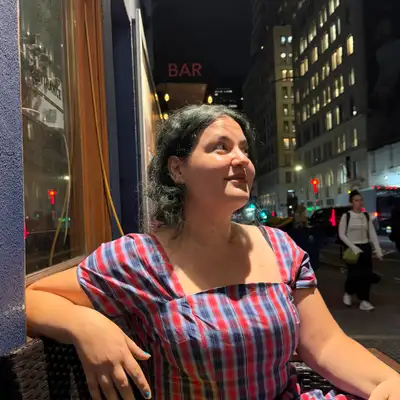
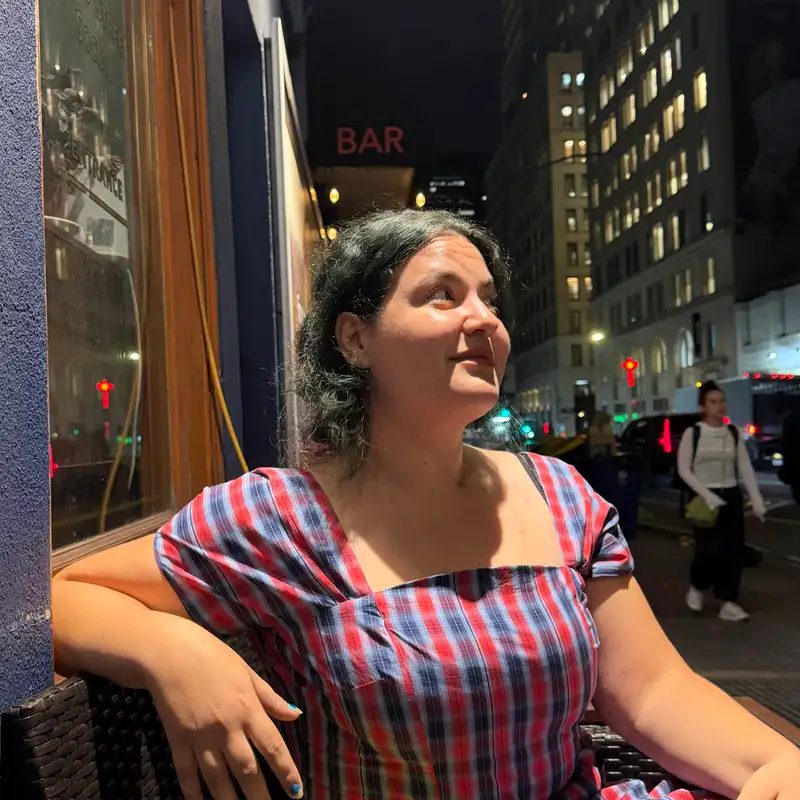
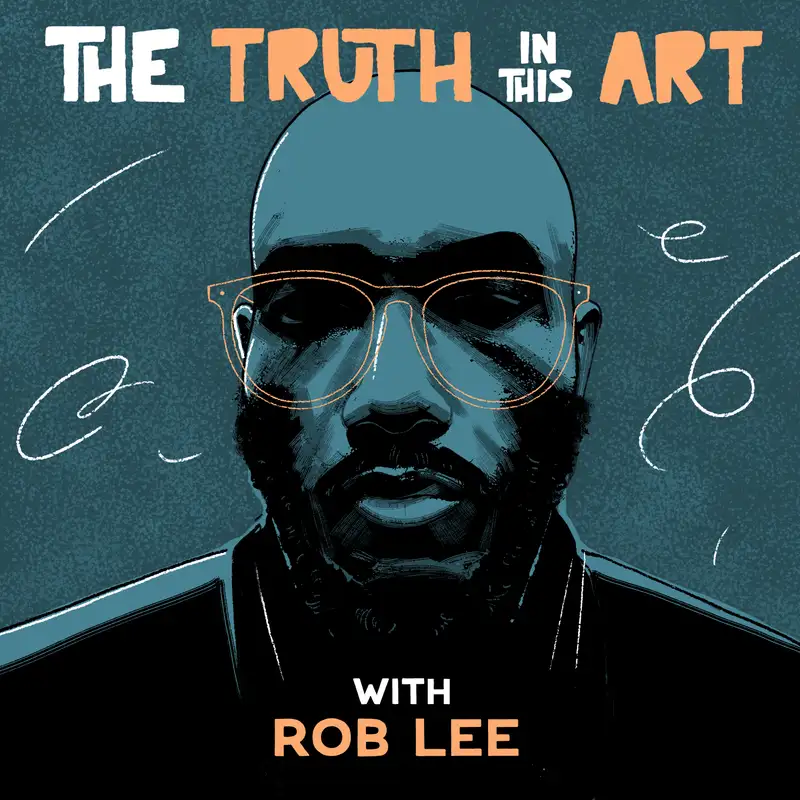
Download MP3Rob Lee: Welcome to the Truth and its Art, your source for conversations, connecting art, culture, and community. These are stories that matter, and I am your host, Rob Lee. Accept no substitutes. Today I'm excited to be drawn by my next guest, an impossibly young and beautiful poet, as well as the founder of Ruby Dakota, a tiny but mighty gallery born out of New York City's East Village. She believes art should be fun and that people should buy more of it. Please welcome to the truth and its art. Hannah Studnik, welcome to the Truth and Its Art.
Hannah Studnick: Thank you so much. How are you?
Rob Lee: I'm doing well. I'm a little uh a little sweaty. I was uh lifting some weights before I came up here. You know, you gotta get a good pump before you get on a audio video podcast. So yeah.
Hannah Studnick: I'm nodding emphatically like I've ever pumped in my life, but I did forget that there was a video component to this. I wish my hair was a little less greasy.
Rob Lee: Um we're not using the video though. We're not using it.
Hannah Studnick: Okay, amazing. So that's me and you. Thank God. Okay, then like, why am I wearing lipstick right now, Rol?
Rob Lee: I well, I appreciate the effort.
Hannah Studnick: I mean No, I do too. I think you should always show up as your best self. Um, but I do also think that showing up chopped is an act of resistance, and I saw that in a TikTok today.
Rob Lee: That's very funny. I'm gonna start showing up chopped more often. Um it's hard. It's hard, I've been told. Uh, but you know, starting off before we get into the main conversation, I'd like to step into the lore, and I'd love for you to introduce yourself in your own words. Who is Hannah Studnik?
Hannah Studnick: Sure. Um, Well, I'm Hannah Studnick. Um when I was five, my best friend who went on to be a professional musician, Jessica Best, um, wrote a song about how I was the best girl in the world. And if you search for that album, uh, or like if you search for that track rather, a whole album of covers will come up because all of her musician friends thought it would be funny to cover that song for her 26th birthday, or 25th birthday.
The the album's pretty old at this point. But anyway, um that's who I am. I'm the best girl in the world, and um about two ish years ago I opened a gallery in the East Village in New York City called Ruby Dakota, and we've had about I don't know, something like 17, 18 shows at this point. Um we've done a couple fairs in a way. I mean, officially we've only done one. Um, and yeah, we're gonna be doing more stuff.
Rob Lee: No, no, no, you're you're good. And so here's the thing. One of the things that's good about this, it's sort of two pathways I have. I had a had an interview recently where I was just like, hey man, what's your story? Guest talk for 30 minutes straight.
Hannah Studnick: I know, but I'm afraid of that.
Rob Lee: And so you have that, right? And then you have the other side, because ultimately it makes my job easier. I'm like, I'm just checking off questions because you're giving me the answers. But the other side of it, the other side of it is I can just start peppering stuff your way, and it's like, yeah, I'm I'm open conduit.
Hannah Studnick: So I you know, it doesn't seem like it from everything that I sort of present online and in person, but I am actually a people pleaser, like and I used to work in production, so like my goal, of course, is to give you what you need to make a good episode, but I'm also happy to go on about how I got here.
I mean, it started at birth, but like we can fast forward to that five-year-old range. Like the song was written about me, and I also won the honor of having my art on the cover of the school directory, elementary school. There was a contest. I don't know who juried the contest, but I drew a picture of a dog in the sort of like outdoor scene. The dog was put on the school directory, and for that year, when I was in kindergarten, I literally thought I was the shit. Like I thought that I was the I and then the song came out and I was like, wait.
Um, but the funny part about all of this is it's of course a lie. I was a very shy child. Um, and I really like lived in the shadow of my twin sister who was much more outgoing than I was. Um and it's only in hindsight that I think about five years old that I'm like, that was my year. I won the school directory cover and I got a song written about me.
Best girl in the world. Like, so my bar like bar in terms of like being in my life, you have to understand it's quite high, because it's like I am used to being amused. And then at the same time, I'm also used to like playing a supporting role in someone's life and kind of stepping into adulthood very, very young. And so I think that I have a silliness about myself that lends to this job in a way that's kind of like whatever it's shocking to people that I'm like not that serious. But you know, I can turn it on very quickly and I I take this incredibly seriously because it's so personal and the silliness does help because art really should be fun. I mean the reason why the entire financial world envies the creative is because it exists on a plane that is much sturdier than money. And so for that reason to me art is the most important thing in the world and anybody who's resisting this fact is hurting themselves. Like and they have, you know, Julia Cameron wrote The Artist's Way.
And part of the reason she wrote that book is because she was married to Martin Scorsese. And like what is that like? What is it like being next to this gargantuan force and I feel like in a lot of ways my childhood and my upbringing being a twin and having a twin sister you know I sort of felt like maybe Julia Cameron felt like you know and and I couldn't do anything because she was so good at everything. And like, you know, it's funny that I ended up becoming a poet particularly to process that grief. Because she was a much better writer than me and that is part of partially why like I got started so late. Because I was always good at writing but I wasn't prophetic like Emma was and you know after her death we found this poem in her room like a year later I was like Marie conduiting my parents' house 'cause like I had a breakup and I was like time to go through your shit. So
I went to my childhood home and I was being like a sergeant. My mom was scared. She was like, when is this gonna end? And I was like it's gonna end when it's finished and we're not done. And like I made her get rid of all these DVDs. She's
still upset about it. I made her like go through every closet and then we finally got to my sister's room and of course that was the room where I like we couldn't throw anything away pretty much we got rid of all this like there was a clean out but like every single scrap of paper we kept and like didn't really go through all of it. But we found this poem it was like in a very old notebook. She was probably like fourteen, thirteen years old when she wrote it and it's like the best poem I've ever read in my life and I could never I at 33 I could never write that poem. And
I like referenced that poem in my own writing and it took me many years to realize that that poem was also a reference to Sylvia Platt's poem called Daddy because it was a poem called Mother and I didn't like and I loved the poem Daddy and I didn't even put the two and two together until like very recently. So I'm just saying this girl was like she was too smart for this world and I see that in so many artists. Yeah.
Rob Lee: And you know and I think you know it it it is a thing is I I want to go back a little bit on the sort the sort of taking what you do seriously but not taking yourself too seriously. That's the thing that I've been returning to like a lot and even in it, you know, since we I guess we're we're in the subjects and whatnot reveal right. Um you know there have been two times in this this year that I've been up to New York the first time was right after like literally a week after a terrible personal loss and I was just like I need to go into something creative and the the solace I suppose of being around artists. Like I want up to Future Fair and I want to see my friends up there at these different shows and it was something about that energy and I think that's kind of what's there and the importance of it that kind of just all of this serious doom and gloom everything is super sad and it's like where's the light and being able to come up and see some folks that I know but also see some new folks and see some new art and be able to experience some things. I was like this is this is life right here. There's something about this that really clicked for me and it was a power to that and you talked about being a you're five. I
talked about this yesterday it's funny. Um when I was five I was a masters of thermometer six. I was a masters of ceremony right I get incredible stage fright at like forty one. I'm like nah I'm not gonna get on stage and my mom told me recently she was like, You know you were an MC for like your graduation from like baby school or whatever, right? And I was just like, No, well, then she was like, literally, you were you sang and everything. I was like, I don't believe any of that.
Hannah Studnick: I don't know what happens. I think like well, sometimes it happens in reverse. My friend was telling me today that I'm obsessed with fear. I'm like, Yeah. I'm like, I'm obsessed with fear. I'm I'm just obsessed with fear and shame. Um, those are the two most powerful ones, but like, you know, I think you're born either wide awake or afraid. Or
wide awake and then afraid. I don't know, but I'm just saying, like, some kids are so like wide open to the world, and that was absolutely my sister. It sounds like it was you too. And then, you know, like something happens, whatever, and you know, sometimes that breaks or or you learn why you shouldn't be that way or whatever. It could be something that you don't even remember learning.
Rob Lee: Or are you and I and I think you're right, and naturally I find the thing that makes me maybe feel ill or I'm against it, I'm like fighting against it is sort of that suppression. I
think as we get older, we're it's not necessarily beaten out of us, but it's kinda like pushed out of us, perhaps through that shame or through that sort of lack of acceptance. Like you've met me in person, I'm a giant person.
Hannah Studnick: I stick out, so you're not giant, you're like tall.
Rob Lee: But uh, but it's like I I stick out, right? And in that it's just like somehow you're you're different. It's like, oh, you do art too. I used to illustrate when I was younger and I wrote for a little bit rap, not poetry, because same thing.
Hannah Studnick: You were my poem my poems became songs for a little while. I've never written a rap, but that's just because I that's not my place.
Rob Lee: But black a huge huge part of my upbringing was of course hip hop, but that was like a very, you know, like two thousands, early two thousands thing. Yeah. It was it was the only popular music, pretty much. And like, you know, mountain goats or whatever, like the really like white people music. But that I was listening to that too.
Rob Lee: That that is a wild blend.
Hannah Studnick: I know, but that was the culture, like Indy Fleas was psychotic 'cause it was like some guy named the Cobra Snake, like taking a camera in your face when you're like fifteen and on drugs, and then like you're driving home listening to like the shins. Like and then you're also listening to dipset, and then you're also driving to Washington Heights, and you're also like you're playing but being a New Yorker is like having a split personality a little bit.
Rob Lee: Well what you're what you're describing is you know, even down here, you know, in Baltimore, I used to do these uh I used to burn these CDs, I used to call them mad shit mix tapes, and it would be literally this is what I was listening to over the last two weeks, and it is a mix of that type of stuff. And they were like, What's the curation? Well pass
it out to people, like share what I'm listening to. It's like what is this combination of of music? And that's just what it was. It was a um entry point, a pathway to my psyche as a I guess early twenties, late teens. Um But since since we're in this sort of topic, we're talking about your your your your being a poet and and having that background. I I want to talk a little bit about uh bad on purpose, if you will.
Hannah Studnick: I'm shocked.
Rob Lee: I looked on I looked up things, I do my research.
Hannah Studnick: Um I know, I didn't know how like journalistic you were gonna be about this.
Rob Lee: H what what was that uh doing my nard war, right? Um what was that that process uh like and what does the collection like mean to you like now, perhaps with time removed.
Hannah Studnick: Yeah, uhwh thanks for asking. Bad on purpose was like my first child because I was working in television, I was like very repressed artistically. I dated this painter and like met his best friend, like mentor person, and like I just remember getting wins that he asked if I was an artist, and my ex was like, she's not, but like she gets it. Like as
if he had like defend back. And so when I met this guy, I was like, I don't give a fuck about this. Like we went to a bunch of galleries on the upper east side where you had like buzz in, and I was like looking at these ceramics as if they were anything more than decorative objects, and I was like, This is bullshit. And I remember saying on the train too, like, this is stupid and you're stupid for caring about this. But what
I meant is like the commercial art scene as I understood it was so incredibly exclusive. And we talked about like being shy as children. We're like for me, you know, maybe you started out open and then became shy. Like I started out shy. I was
born protective. I don't know what that is. So I don't want to go too deep. But then later on I broke. And I that was very much so in the footsteps of my sister, but I was sort of like I don't want to be this person anymore. I don't
want to be scared. And I just decided to stop and it just kind of snowballed from there to the extent where now people think that I'm you know people will use adjectives to describe me that I don't even recognize because I don't identify with these things. But anyway, that on purpose was like a book that I wrote over the course of maybe two years. Um and it was published by a small press in LA called Sunflower Station and they're very sweet people and I met them through my friend Tori who also put out a book with them and she was like they're looking for their next project and I think yours would be perfect because it's like all ready to go. Um and I was going through a period which was following doing the artist way where I I didn't finish but and I will not um but I was writing every day and these quickly turned into poems and that's how the writing practice started again and then I started a live show in LA called the Erogynous Zone with two friends and it was a variety show but it was really centered around poetry and so we would open the show with a first time performer poet. Wow and sometimes this person was very young and they would read one piece and then the show would start I would host it. I would also do a set of poems during it and then we would end with music but we would invite comedians. We invited performance artists, clowns someone once did a performance with plastics like race oh my God, Rush Rishma Meister. I'm probably saying her name wrong now. But anyway we had a ton of performers on that show. Robbie Hoffman
performed on that show. She hated it but she did it like um and that wasn't like oh this is too small for me. She was um there was a an audio issue happening with something a little experimental we tried to do and she was not about that. So just
fine fair. But LA was a very like generative creative community for me. Um we ended up doing the live show at night gallery which is in Boyle Heights and it has like a really respected program and that was super exciting and the director at the time Nicoletta Pollara was like so I don't know she like really believed in me as a community organizer and I really I still am so grateful that she gave us that space um to do the show. Like it meant a lot and it kind of was the thing in a way to get me into this whole world because Nicoletta and Night Gallery represented something in the art world that I did not know existed. Like these women who were really like running shit and obviously the mega like they're of the mega galleries like there's a woman involved in most of them but for the most part they're being fronted by these like really powerful men. Night gallery was just like a different model and they had started out in a strip mall in I believe Koreatown and they painted the walls black and they were open at night for the people who work during the day. I mean
gallery hours standardly are very elitist it's like oh you work like but the one day where people can come Saturday. So like they shifted that and obviously now they're like barreling towards blue chip but like I just really appreciate what they do. And um so we did the show there we also had a residency at this place junior high which was like a great community arts organization nonprofit like sometimes gallery space um and they really really supported the show too and that was amazing. And so that was like my first taste of both performance and also writing to perform and then yeah that's how I met the sunflower people and then we put out the book and the drawings are this artist that I've loved for a long time like they weren't drawn for the book but Danny O'Brien did the illustration like the drawings in the book and yeah the whole process was so incredibly thrilling do I think anybody read this book no but it's okay like in a weird way it's the journey so it's the it's a climb.
Rob Lee: And it it also is kind of like you know in it it was something that that unlocked or re reengaged or was uh using a conduit term again for you to go into your creativity and to really explore that and it sounds like it was a very interesting period making making the putting the collection together and then sort of exploring the directions in which it could go as far as like the show and and and things of that nature and literally it's a whole different coach. Yeah, yeah, I was in yeah, I was in LA for a bit, you know, with the I was I was.
Hannah Studnick: I'm I'm a little bit, you know, I've gotten a lot better, but I I was really impulsive in my twenties and into my thirties. So I did. I got in a car one day during the pandemic after a pretty brutal this was like months and months after the breakup, but you know, I was still like and I was processing grief that I hadn't really touched, you know, at that point my sister had only been dead for a couple years, and so I couldn't really be with myself. So I got in the car and started driving and you know, ended up in Florida and then ended up in Texas and then ended up in LA and I didn't even tell anyone that I was leaving other than my friend Laura in Houston. But like, you know, my parents didn't know I had left. Umbody knew.
And there was like a freeing aspect to that. And then I got to LA and you know, life started to settle in and I I clicked with LA really fast and I had a great first year there, and then you know, your troubles follow you.
Rob Lee: I I I sometimes I I romanticize that idea of like, no one's gonna be looking for me, I'll just dip. The closest version of that I did before I move into this next question how you and I kind of became familiar with each other. Um I remember I was going through a bad breakup. So yeah, again, breakups.
Hannah Studnick: Something about breakups and rejection and artists, like it's very intertwined, like it's all about suffering, and I think in a way we we lean in to the suffering 'cause I think a part of us thinks it's gonna generate something.
Rob Lee: So I w I wanna go into this this one question because we we kinda got a piece of that. I want to go to this one question where like I'm curious, like and I like to also get into people's business a little bit. You you'll probably notice that and as this conversation continues, but I think that desire to almost like a kid, and then what and why and why that sort of thing perhaps makes me a decent interviewer. So you seem to have a similar like ability to connect with people. I mean, I'm for whatever reason it's just like, hey, I stopped and we chatted and then now we're here. And it's so many things in these art shows, there's so many things to see, so many people to connect with potentially. Yeah. As it relates to your your work with Ruby Dakota, what makes you good at it? What is that sort of trait that's that's there?
Hannah Studnick: Being a mother, but also reality TV production, which is the original version of being a mother. I was no, I joke. I mean, I worked in reality TV as a producer for on some level of the production ladder, but mostly producing for like thirteen years. So I think there's a lot you can learn from the entertainment industry, um, not just on a communications level, but also the way that they operate is very militaristic and it's very um specialized, and so you become very efficient and you also become very efficient in what you do. Like you have a good global picture of how things should work, and then you also see where you are in that, and I think that's why television is able to generate so much more money than art. It's much more regulated in a way. Um it's much
more commercial, it's much it can be mass produced and uh everything they're not comparable and yet they overlap. But like in terms of why I can do this job, yes, I think part of it is that I'm a Scorpio Sun, Cancer, Moon, Cancer Rising. I'm incredibly maternal. I also, as I alluded to before, have more or less been taking care of people, you know, my whole life. And also this idea that for so long my job was completely confined to the communication aspect. All I did was talk to people. It's a lot like sales, but it's more complicated because you're not selling anything. You just need
a yes. So it's actually like much more I don't know, like a tune or something, and I think you learn how to talk to people because you get faster at identifying what they want. And I feel like so much of my job in TV was that, and so much of my job, if not all of my job and art is that. You know, I'm speaking to artists who are insecure and angry. And sometimes they want to place those frustrations on me too. Like and sometimes, you know, you're talking to someone who really wants attention but doesn't want to pay for it. Or like, you know, someone who wants to be part of an art scene but is not necessarily investing money, but maybe they are investing time in some other way. Maybe they are doing something like this in terms of giving coverage to artists. Maybe they host a reading and they want to do it at your space. And like all
of those things I'm incredibly welcome too. I just, you know, I don't love when a guy pretends to be loaded just 'cause like he wants to have a conversation. Um because art really is for everybody and like, you know, you don't need to pretend like you want to buy something to get that sort of special attention. However, it's also my job to stuff out who is real. And you know, for the most part, if someone wants to buy something, they don't tell you they want to buy it. Right. They just buy it.
And like, you know, that part comes from my dad. My dad is like a very good people person and he was very good in business and he also had a job where he had to manage a lot of really complicated personalities. And he was doing
it in the nightlife scene in a in a space that wasn't always conducive to professional behavior. And like I see so much parallel in terms of what my dad did in nightlife and what I do in art. And I identify with my dad a ton, you know, the older I get because I spent so much more time with my mom growing up. I kind of always thought I identified with her. But you know, as I become an adult I've realized that, you know, my dad and I are like the same person. And it's sometimes a
little bit scary but he's he's giving me adages all the time and he has my whole life namely, you know, watch what people do, not what they say. And I think art as an art you know, as anyone who is an artist and has to navigate all of these offers. Um and attention because ultimately that's what it is. And it's an attention economy. You know, I just I think that I'm kind of good at getting attention. And I feel like
I don't need to say a ton more than that. Like I I learned it in T V I learned it from my dad. I learned it from being in New Yorker. I learned it from
being feral on the streets of Park Slope. And I searched it all the way through up until now. And so like you know and I have I have an eye for video and like social media and marketing, whatever also kind of feeding into the fact that I have this more commercial past. And I think all of these things, like it's not spelling out like these are tools to harness attention um which is what we're all trying to do. I mean artists are trying to harness attention too but they don't want to nor can they do the work required on the other side of that.
Rob Lee: So it's it's like that conversation and thank you. It's that conversation around sort of discovery. Like you know again like I remember like exactly what you said to me and I was like who is this chick? That's literally what my brain did because it's just like oh my attention has been triggered and it is one of those things where generally because like New York is so busy I'm like what are we doing? It's like I'm just trying to figure out how I got here. What trend did I
take? I'm doing all of this math in my head. Yeah, I know. And then you know y y we we were able to sort of connect in that way and that that pops is like it got through sort of that that luster. When I'm in a different city, I am a different person. I put on just cold I don't know who you are, I'm here for business, we're gonna do this, but being able to connect and engage it took that that the sort of filter down and to me it just registered as this is a trait and then I think that sort of like openness that I recall because I remember the T V thing. I remember the reality TV thing that you'd mentioned all of these these sort of different details and you know so it it is stuck. It's just like we didn't talk for an hour. It may have been
ten minutes, maybe fifteen minutes, who knows? And it's something about that that I think i is is relatable and something that I admire and I I'll I'll say this as well sort of this this next question because you alluded to it a moment ago and I don't want to like forget it. You know, you mentioned sort of uh Ruby Dakota being in a more nomadic phase at this stage. You know, so why persist amid and I'm and I'm mainly asking that also for myself why continue, you know, now with sort of being in a different phase. I was asked that sort of recently like, hey, you know, podcasting this hard is super saturated and you know, um you're almost at a thousand episodes. Why do you keep doing it?
Hannah Studnick: And I'm reading it. That's the that's the that's the thoughts. That's also like the illness it's the mental illness of it all. It's like I if it wasn't clear already like I can't stop doing this.
Hannah Studnick: And it I've never felt other than like in my own writing in my own poetry, which let's be honest like that's never gonna generate income um unless I gain notoriety for something else. And then maybe it'll sell but like you know I feel like in terms of a job in terms of a life path and a role that I feel like I can wake up every day and fulfill gleefully it's this it's art dealing and supporting artists and it's um it's modular you know it's the game that moves as you play and I really think that the time we had in Alphabet City was huge and formative and it's what you know put us on the map. It's what established the gallery but I also don't think you know I'm not saying I'm special. I'm a dime a dozen I'm a Jewish Italian New Yorker who cares about art and likes to talk you know like I'm just saying like I have friends who like fit my exact archetype I'm meeting people in this industry who reflect back something to me that you know I almost can't look at but what I'm saying is like I do think there is a purity about my project that doesn't exist in anyone else I've met and I think people see that and in terms of why keep going like I mean because it's everything to me like I but it doesn't make sense the overhead of a permanent space doesn't make sense anymore not with the way people are buying art. It's a long game so you know if the artist's life is about suffering in terms of sacrifice for the work I feel like I'm on a very parallel journey to the artists I work with. And on one end I'm posturing that I can afford to go to Paris but on the other end I'm sleeping on someone's floor and I'm you know I'm making it work because I don't buy food you know like I don't go to out I don't go to wine bars. I don't go to
restaurants I go out to dinner with my dad once in a while and then I go to openings and I drink there if I really need to drink and you know there's nothing in my life that has monetary value other than the art on my walls and you know that's that's here and there. Um so yeah I for me the only thing that matters is not the results. I mean the psychic was wrong.
Rob Lee: I have not made it you know like I'm not I'm not making money from this right now. I'm making a little more than some people but you know I struggle to survive I have parents who worry about me but I'm the only one now you know so I'm just like I'm not holding back and doing what I want and I'm encouraging the people that I love and I consider my artists like people that I love um and I'm encouraging them to do the same thing in their lives because a lot of them don't have families that support the practice because their families are scared for them. You know, I'm a little unhinged but at the end of the day I can button it up and I can try to get the money if we need to and I can write the proposal and I can keep doing this for however long we need to tread water until like this is a real fucking thing again and you know that's just how it starts. Like it starts with this bang and then life unfolds but in terms of like the capital that we need to continue like there is a business plan in place like we're gonna be nomadic for a while we have this show opening in Hudson October 17th at Ipso Facto and that gallery's owned by I don't know if they even want this publicized they're like it's owned by two sisters, okay? And that matters to
me. And you know Caslan and I especially have just really hit it off and it turns out we know each other from a long time ago but we didn't know each other then and so there's just so much overlap. We want to do this like she wants to do the things I don't want to do. I want to do the things she doesn't want to do and I'm just like listen I'm jealous of you dude because you've been open three months and I've been looking for you for two and a half years like I and I just walked in though in the same way that I met you like there was a glimmer of connection she showed an artist that I had shown in July in New York And so I walked in when I was in town visiting another artist I knew who was doing a pop-up at a store. And I just walked in to say hello. And I I just and that's the reading people part, but not even. Like I just knew where she was, like because I was there and I thought to myself, what would I want someone to say to me if they walked into my gallery month three. And so I just like introduced myself, said what we had in common, and then I made it clear, I don't want anything from you. I don't want anything from you. I just want to help. Um I know how
hard this is. Your program is amazing. It's the best thing on Warren Street by far, no offense. And like this is the future, and we're all leaving the city. She's a born and raised New Yorker, she's leaving the city, like she got there before me. She's setting shit up, like I'm gonna be spending time there now, and like it really is like kind of a collective vibe, and I I think something I really admire about Ipso Facto is that they have this element of community, collective, whatever you want to call it, but it's not corny, it's not forced. Every Sunday they have a party four to eight, it's open to the public, and they have a really good DJ set and usually some pretty good food, and like, you know, it's really it's been amazing to watch them kind of get their footing, and I'm super super super excited to be a part of that. And you know, Cazlon and I are teaming up to go to Miami together in December, bringing a lot of the same artists from the October show to Miami, including a few new people, including Dana, including an artist from Philly named Kate McCormick, including some airbrush pieces from this artist I've worked with named Brock Saunders. Like these are just
like all kind of like my guys, and some of them I haven't even gotten to show yet. So since since we're there and we're we're kinda talking about it, tell us about that particular show in October editing. So facto that's that's coming up and what's the what's the name of the show? What's the the themes? What's this about? Give us the rundown.
Hannah Studnick: Um so the show is called The TV Glow Sees Me. It's a reference to the 2024 film I saw the TV Glow. Um and Jane Schoenbrunn, like Schoenbrunn, I don't know how you say your last name, but like amazing. It's an amazing film. Obviously it had an effect on me. Um the show is not really about the film, rather but rather our relationship with technology and every show that I've conceived of, every press release I've written has reflected unfortunately whatever I was going through at the time. Kind of like what
you said with the mixtapes. It's like this is sort of just where I'm at. And so I've been thinking a ton about relationships as always. I've been thinking about connection, and I've also been thinking about how AI stands to morph and change that. It's not like an on-the-nos AI show whatsoever, but I think it's acknowledging a certain tension in the zeitgeist surrounding AI, where it's like a lot of people want to embrace it, and a lot of people are really scared, and a lot of people are virtue signaling somewhere in between. Like, and you know, AI ultimately is a tool, and it's scary. Of course it's scary, but like it's been scary since I robot.
Rob Lee: Like it's it's been scary. Like, I think for me, where I become shocked is like who who am I speaking to when I tell Claude AI that I had a confusing interaction with a man? Like, who am I really talking to? Am I talking to myself? Am I talking to
an aggregate of like Google searches mashed up into a conversation? And I think it becomes really interesting, and I know a lot of people are using AI as these sort of surrogate ther therapists and friends, and I really try to limit like my youth just because I don't fully understand it. Um but when it comes to certain like autism spectrum disorder things, sometimes I just want to know, like, if someone says this, does it mean like does it mean that, or does it, you know, and for whatever reason, a computer is sometimes okay at like reflecting back to you the face value, and and I I can get a little all over the map, clearly, but um the show is about it's about our connection to technology, it's about AI, and it's also about this idea that there are a group of us, perhaps quite educated intellectual people who are really um curious about this revolution, and we are sitting inches away from the screens of our lives begging to be let in. I mean, anyone who takes like a moral high ground when it comes to AI is I don't know, I I just have to roll my eyes 'cause it's like you're using your phone all day long. You're using a Google search that doesn't even allow you to opt out of AI being part of it. And so or maybe it does, but you haven't even done it. And it's like, you know, I understand wanting to save water. Well then stop eating almonds.
Yeah, I I think I think you have like some some interesting points there when it comes to that sort of AI piece because there's direct extremes to it, and I think like part of it is in my day job, I use it regularly. Um and uh, you know, I at a point was looking at using it to bounce questions off of for interviews, and it's like oh and at a point I noticed that I'm losing my voice within it. And I was like, that
doesn't really work. This has to be me. It's dependent on me. And to the same question that you're asking, is this just an aggregate of me? Is it an aggregate of
Reddit's or any of these different things that are using this as material? So you have that in one spot. And I like that you referenced the friggin' twenty-two-year-old movie with iRobot. I'll I'll I'll raise you this. We can go back to the dick of it all with the Philip K. Dick and look at any of that stuff, and it's just like we've always had these different periods of technology popping up and what it's gonna look like. We've seen it before. This
is not the future that we were getting its commercial and it's all of these different things, but I think perhaps maybe that's one of the the the threads of the show is being aware of our relationships with AI and figuring out like let's be more considerate and discerning of what those relationships look like.
Hannah Studnick: I just think that no matter what, if it's like real creative intellectual property, if it's something that's like um, yeah, if it's going on into the world with your name on it, then of course you have to write it yourself. I think AI is a good research tool. Um and I think it can do sort of like formulaic type communication, um, but it can't feel, it can't, you know, can't really read, it can't see, and it tells you these things. When you try to get
it to communicate like a human, it will remind you that it can't cannot see, it cannot hear, but then you can push it a little bit, and it does know how to do those things. So it's like it's weird. It's it's it's interesting to me. It's like this machine is pandering to our fear about what it is without being able to experience fear, but they can experience something similar in terms of what they um anticipate a human reaction to be. I don't know, I guess
I do find it really fascinating. I also feel like with everything I'm late to it. Like I got a smartphone like post-college. Like, I don't know. I'm just I'm just saying what I find more interesting than my opinion about AI is how I see it cropping up in terms of the work, like Jackson Daughty, who's a painter out of Kansas City, who I am so incredibly like excited by, he's making work that's using like inkjet printers. Um but he's also like stitching together square panels of canvas, like hand stitching, and then he's printing with the inkjet on this like weird Frankenstein support, and then he's painting on top of that, unlike Gen Z in general. They they're so interested in the layers of perception, and um, yeah, I love the way that Jackson's work is incorporating a computer language, which is connected to his personal narrative. Like his job was a
computer programmer, so like this language existed for him too before whatever. Jesse Moritzberger is making these amazing paintings of video game landscapes that he remembers. Like, at first I was like, I don't have any connection to these boy paintings. They're painting the boy and screen, they're paintings of boy and game, and I've never played any of these games. But once I met him
and I heard his story and I really looked at the work and how well done it was, I was like, okay, he's painting these from memory. That's that's brief. That's all that that is. Like he and he can't let go of this period of adolescence of childhood. Like, you know, he's been swirling around this motif for years, and I find it so fascinating, and I find it really beautiful too. And you know, there's something to be said about repetition, there's something to be said of someone who wears the same thing every day and does the same thing every day, and like I learned so much from the artists I work with about all of these things and the way they process and their quirks, and like I am I'm really excited to show Cason Bevington's work in this upcoming show. Um Cazon the model at
Ipso Facto has been more so like desperation. Um because and the reason for that being is that Cazon is actually an artist. So she has this space with her sister, but she's also a showing artist and she's represented in the city by Keith Smith and yeah so we're gonna put some of her work in Ipso for the first time and again her work is like uncannily fall falling into this category of like painting that is digesting technology and um and then there's an artist up there Mina DeVore who's also making work that is very heavily about surveillance and the digital age and then we have Alison Packer who she like develops her own printing process and she made these photos that are they're images that she had sourced from the library of pictures which is an incredibly interesting place if you want to look into it and she sourced all these images with the help of assistants they were given some guidelines like what she's interested in and she created these prints onto acrylic and they're pretty large they're like maybe twenty by sixteen ish and they're double sided. They have a photo transfer
on either side the acrylic is transparent but it's or rather it's like translucent and so it's like a cloudy white but when you put a light through it you can see both sides of the image and when the light flickers it's creating almost like um an analog GIF and I think these works are fascinating. We're also screening her film October 24th that actor but I'm I sensing you have to go.
Rob Lee: No. No no um I'm I'm just I was checking one thing and I'm I'm listening.
Hannah Studnick: Okay no I wasn't saying that I was like I didn't wanted to be careful about time for you.
Rob Lee: Oh, no, you're good you're good and you know I think um one, I think w one and and it kind of actually answers you know one of the questions that I like skipped over. That's what I was looking
at. I was like do I have all my questions covered um but I think I got that and I I love that it's this sort of combination of using you know sort of techniques using technology and it's just like this work while sort of interesting outside of perhaps the traditional source of what a painting could look like or what a you know sort of um uh a a canvas could look like or what have you it's just like we're trying different techniques and technology which usually there's a line separating them it's like oh this is purely this work and leave your technology out of it. It needs to be your fingers only and you know nothing with the machine involved but it's like the work that you're describing has those elements that are in there that seem to be sort of desperate.
Hannah Studnick: It's weird like Kazlan's work is very rooted in the digital language but it's entirely painted. Jackson has work that's like really figurative and kind of painterly that incorporates a lot of inkjet printing but like it's a very rudimentary style of printing and um you can only get so many colors from it. He's also like distorting the image before it's printed he's also layering the images and painting on top of it. So it becomes something i entirely different I think part of the reason he does the hand stitched panels which are almost difficult to see at first unless you get very close up to the work but I think he is trying to offer because he's a people pleaser too and um he's trying to offer something to the viewer in terms of labor and he's trying to show I think I mean he might not agree with me but I think he's trying to show like hey I spent hours on this and like I really carefully considered what this is and like yes there's a digital like a printed aspect to it but that's really only to accelerate like the part of the process that doesn't matter as much. Like I think you could consider the printed parts of Jackson's work as underpaintings and then you paint on top of that. But I love that his work is sort of like you know straddling that line whereas Kazlon's this too but it in the other way in that it's completely painted. And then you know I also love that Jesse and Mina are like they're taking a lot of liberties in terms of their figuration. I you know Jesse in
particular like his characters are sort of in line with the characters in the game. Like I've never asked him who the boy was sitting in front of the screen. I just assume that it's him but like I think sometimes it is and sometimes it isn't. Sometimes it's his brother sometimes
it's a friend. I think a lot of the time it's him but you know I'm really excited to see especially where Jesse's work goes in the coming months because I know that he's planning kind of a departure from what he's been working on um for a long time. I mean the paint handling and paint style will stay the same but you know he's a really talented painter and I think we can all get like locked into patterns um and then yeah I don't know Alison Parker like I didn't I didn't know how I was gonna be able to show her work at first but like we did a studio visit and she did something so bold in the visit which nobody has ever asked of me which is can you I want to show you this video and it's nine minutes but I don't think she told maybe she told me how long it was but like it's so I know from having been in film school I know just from like video was like my first medium and I know how vulnerable it is to sit with someone in an edit and watch what you did. Yeah and like she did
that and it was like I can only assume the reason she was able to do it is because she knew it was fucking good and I'm sure she showed it to a bunch of people but yeah that nine minute film however long it is nine ten minutes bad actor it rocked my world and like it reminded me of what I got into this for it reminded me of my mentor Nathaniel Dorski who's an experimental filmmaker but these were all these digitized images from the library of pictures and like the voiceover was haunting and it was Alison's voice but it didn't sound like her at all and like it was almost as if it was like a manifesto not just for women although it seems like that at first but like it's a manifesto for people in this exact moment that I'm talking about in this show in the press release like this whole show concept is very much so inspired by Alison and that studio visit and that film which again we're gonna be a screening but like I think the thesis of the film and you can come see it and tell me what you think but to me the thesis of that film is look around dear. You know it's like Simba. It's it's blanket over the head over the fire escape of the hotel, whatever that look at the world or don't it's exactly what we deserve. Right. It's exactly what we deserve
and like this radical thought that we did this to ourselves like and sort of like now what? I just was I was obsessed. I was so entranced and I love that she didn't try to soften the blow. She brought you straight the fuck in like a David Fincher like a David Fincher movie.
Rob Lee: Well and and that's and that's one of the things where as far as I guess a sense that I've been posting and I'm gonna move into the rapid fire questions in a moment. Sure, sorry. No you're good. No no no people pleasing here. We're we're good well you know it but but I'll but I'll say this. Um you know whenever I see something that really makes me feel like we kind of we kind of deserve this we kinda did this to ourselves I'll just say something and sometimes it'll resonate with people and it'll click. I'm like we sold it. We we sold that shit. We you know we gave
it up without much of a fight. Whatever the it is whether it's the cultural component, whether it is the sort of uh the fight for our attention or any of those different things. The fact that we're constantly bombarded with sort of you know we're not even getting like the sexy tech. We're getting just how can I sell you more stuff. We're getting that and I'm like no well let's just go against it. We just let them have it and I remember I made a quote about um just as a lyric from an old De La Soul song like the stakes is high. And it's just like so we let this shit happen. We gave it up the
stakes is high and we still gave it up and it's just like that's not how that is supposed to work and it speaks to sort of the social thing. Like when we start looking at this stuff that's around us. We just look around we're observing I I try to practice a degree not dude bro but the degree of stoicism that because she can drive you crazy. Just being around it and and and just everyone is go go go but then no one's actually really winning except for people that suck.
Hannah Studnick: I mean listen I think I'm winning. I think you're winning too but you know don't like don't ask for receipts.
Rob Lee: I think that it's not always um it's not always about money of course and
Hannah Studnick: I really I it's so corny, but I think that like being yourself is really cool, and I totally agree with you that it can help to have a persona, whatever that may be, like it may be stoic, it may be whatever the hell I'm doing, it may be but it's always gonna be there, like there's always gonna be something that protects you from the outside world, and for me it's performance, and like I think it goes back to sort of the mothering of it all, and maybe in general, it's like even if you have no intention of having children, like it's about how you speak to yourself and what type of parent you want to be, and also of course what type of parent you had, but like, you know, do you wanna be the pushover mom who says yes to everything and smiles at everybody and everybody loves her, you know, and like all whatever, like all your son friends are like obsessed with you and like you just want to be popular, or like or whatever, it's not gender like that. But like, is it that, or is it like, do you wanna be discerning? You know, my mom would
always tell me I'm not your friend. Which sounds like a thread. It sounds like okay, so you're my op. But she's like, No, I'm your mother. Like, I want what's best
for you even if that's not what you want. Right. And I'm not going to apologize for you being born. And I was like, Well, okay. But I think I'm something
in between. Like, I my part of my whole persona in terms of like being an art dealer, you know, running a gallery, whoever Ruby Dakota is, whoever be your Dakota is. I and I always thought Ruby Dakota was such a funny name because she kind of sounds like a little Southern. And then she also sounds like kind of like a high class like courtesan, like Ruby Dakota. And then it's like the reality is uh she's nobody, it's two little girls who never got to exist. And the gallery is a
place where they can exist in a sort of metaphysical way, and it's been really freeing for me to be able to play this role, and it's been even more freeing for me to be able to like drop the facade with certain people once they you know earn that trust. But I'm with you. I think these guys are scum and I wanna see the whole thing burned down. Um and I used to be much more anti-establishment than I am now. I I know that my you know, someone asked me the other day, because there's a profile coming out. I don't know if I can even say that. But they asked me if um I felt that my sister like her spirit was incorporated into the project. And I said, No. Not even a little bit.
She's dead. Like, people want to hear something like that though. You know, they want to hear, yes, but she's she's spiritually incorporated, she's in the bones. Sure. I mean, she's in
the bones in the way that that's the thing that stops me from fully losing myself in this, is that I think of Emma and I think of her laughing in my face about this whole thing and being like, This is fucking stupid. And in the same way that I said to those guys on that train, that's my sister. But I've always been a
little a little funny, and like I've always kind of wan like she was more like and I was more like, well, maybe they're kinda cool. Like and so I I play this role, I do it for my sister, even though she doesn't want me to, I do it for the artist. I do it for myself because if I can become as powerful as these guys, and who's to say that I can't? A lot of them are
already pretty threatened by me. So like maybe I could end up running something like night gallery. It's not a mega gallery, it has a heart, but they make money. And I want to make money.
Rob Lee: So I got these two sections I want to go into. Got the rapid fire. And I got the sage advice. I think the rapid fire is gonna be something. It's a nice little callback. So, you know, way rapid fire works, whatever is top of mind. You don't want to overthink this because you know, folks will like, you know, I I've had this, I've had the movie thing, I've had the color thing, and I've had the ice cream thing. I'm like, hey, what's your favorite ice cream? Well, depends on what part
of the year it's kind of like god damn it. No. Alright, so here's the first one. What is your go to coffee order? Because we had a coffee conversation when we met.
Hannah Studnick: We really did. It's simple as hell. Drip coffee splash of half and half. Sometimes people call it cream. Sometimes I say regular milk. Huh? But that's my coffee order. Drip coffee slash of half
and half. And then if I'm home at my mom's house, I've never called her that in my life. Um but if I'm at my mommy's house, uh she thinks that I really I hope she doesn't listen to this actually. She thinks that I really love the specific type of coffee meat creamer. And like I do, I like it. But it's like she doesn't know that I would like I would use regular milk, I would use half and half. Like, but she's like continues
to stalk it. It's the coconut flavor one of coffee mate. But it's not coconut milk, it's dairy flavored like coconut. Uh it's very important to me. I shouldn't be having dairy, but neither should any of us. We're not cows. Um but yeah, so coffee mate, coconut coffee mate when I'm at my mom. And then if I'm out and about just drip coffee with half and half.
Rob Lee: It's like, Mom, I don't even really need well, mom, I don't really need that, but it's just
Hannah Studnick: like they're calling my my Jewish Italian mother mum. She'd be she would be most horrified about that.
Rob Lee: She'd be like, What the hell are you talking about? um So here's the here's the next one. Um this one b especially for a New Yorker, right? Is it might be a little political.
Hannah Studnick: Um Is it food related?
Rob Lee: It is food related. How did you know? How did you know?
Hannah Studnick: I said yes.
Rob Lee: See, it's patterns. I don't want to just scrap the question now. No, no. Okay, here's the question. Here's the question. I don't know what food. What is uh what is the best bagel? The best bagel.
Hannah Studnick: Um, okay. It's okay, it's on paper. I'm doing the thing you hate. On paper, but uh but I'm telling you, I'm listening. I I have to give my own answer to my dad's answer. This is like cultural. It's if you ask my dad, and I don't even believe that he believes this, but he read it somewhere. If you ask my dad, it's bagel hole in Park Slope. Okay. That's the best bagel
in New York. If you like all respect to bagel hole, but if you like kind of a smaller denser bagel, that's your guy is bagel hole. I honestly, H was my favorite growing up. Like I like a sort of like doughier situation. And then of course, if we're going like California style, which has been happening here, like Apollo bagel and stuff, like, you know, I can kind of get down with that, although I'm always disappointed. But yeah, I don't know. Like is H H still even open?
Rob Lee: And and then what would the specific bagel be too? That's the other piece.
Hannah Studnick: It's an everything bagel toasted, scooped, maybe um like if it's like a if this is like a luxurious morning, I would I would say, yeah, like scoop, scallion cream cheese, lock, tomato, capers. I don't need the onion because it's already in the cream sheet, scallion form. I don't want just like a slab of raw onion in my morning. But I could do that. I would recommend that for anybody and you know, eat it open face, eat it like a sandwich, like do whatever you want. If I'm like in my neighborhood, 'cause you know, if I need a bagel and I'm in my neighborhood, I'm probably going to Baker's dozen on Manhattan Avenue in Greenpoint. Okay. It's just like a very
standard, like, you know, they know what a flagel is. Like they'll do like whatever, like the coffee's probably not that good, but like the bagel is good. What is the flagal though? It's sacrilege, but it's like uh flat bagel. It's like a it's like it but it's like a very New York bagel shop, like we're not trying to like be fancy. Like I don't know why they did it, but it's yeah, it's a flat, larger bagel. There's more surface area, so more toppings, which is why I like it, because I I love an everything basel. Yeah.
Rob Lee: I I'm a I I've gotten criticism for for my bagel choices. I'm a I'm a sweet bagel guy. I don't believe in it believe in any of these savory bagels.
Hannah Studnick: That's that's beautiful.
Rob Lee: It's not traditional, but that's what I hear. That's what I hear. Like I have friends in New York that are like, you what, bro? No onions?
Hannah Studnick: Like, actually, like it's so admirable and it's normal for breakfast. Like, I think Jews are insane that we're like pumping our veins full of onion first thing in the morning, like, and smoked fish, and we're looking at each other like this is delicious. We love it. But the thing is, it's not
an ass. We really do love it. That's very funny. I love it. I you know,
a lot of people ask me if I a comedian. I I'm like, you know, whatever, I'm trying to be something right now. It's like but um, you know, people tell me that I'm funny, is all that I'm saying.
Rob Lee: It connects to the bagels. I promise it connects to the bagels. Um it connects to the Judaism of it all. Because it's another reason that I think I'm good at art dealing. And it's all it's all about like that kind of connection and humor. So anyway, when people ask me
if I'm a comedian, I say no, I'm just Jewish, and it lands or it doesn't. That's that's that's great. That's great. Here's the last rapid fire question. That's really funny. Um so in terms of what you wear day to day, we talked about like sort of briefly, sort of kind of having the same outfit, right? Right. What is the color? And I think I know the answer, but what's the color you're always in? Wait, do you know the answer? I think I do.
Hannah Studnick: That's so funny. Okay. I had so I've been waiting my whole life to be asked this woman. Can you imagine someone asking you like about anything you're wearing, like the thrill of that? I feel like a celebrity. Um but so I went through this period over the summer where I was like, you know, I was having a rough time. Like some would call it clinical, but I went through a period I try to make light of it, whatever. But I went through a period where I only wanted to wear blue and I bought a bunch of blue clothes, and then I realized like that that commitment was large and I love the color of blue, but it's not necessarily the color I look best in. So I'm I I I'm curious what you think. I feel like online, most of the photos that get posted of me by myself, like not by like the paps. Um most of the photos I post to myself, I'm wearing some shade of red. But that's like a money thing, like that's uh traditional Chinese medicine. I don't know. I I think I wear a lot of red and I think I would love to be wearing more blue.
Rob Lee: I think it's one of two colors. What what I remember when you you had on that day was really dope, and I think it was like purple. I think that's sort of kind of kind of hedging right there. It's a little bit of the red, a little bit of the blue, you bring it together and you get purple.
Hannah Studnick: I believe you. I cannot for some reason remember what it was.
Rob Lee: And um I I just think most people in the sort of art situation are always in black. So I'm always happy if they're like not wearing black. You you look good in black, yeah, like the dark hair.
Hannah Studnick: So that's it so much. I recently dyed it blue, but it took on like a blackish hue. Yeah. Um, but I it's better, like so thank you. Also, I think from the jump, like when I decided I was gonna be Ruby Dakota, I went to El Train Vintage. I could have gone to a better thrift store, but like um I went to the one in Crown Heights, which was like kind of new at the time. So they had like it was being curated really well and like the prices were good. They were like having some summer
sale. And I just started like intuitively like embodying this woman, like Ruby Dakota. And I was like, what does she wear? Like how much sex appeal is she giving and how much something else, and how much pattern and how much color, and I started pulling these like gem tones, like magenta, turquoise, like deep royal purple, things that were sort of soft and like satin, things with pattern and like structure. And as I started pulling more and more of this stuff, I looked at all of it and you know, one of those like crazy days, like it all fit, and I just walked out with it. And um, you know, a lot
of those pieces I still wear really regularly when I'm like in my persona. Um And I remember describing it to someone that I met on a roof. I was like, I don't know what's going on. I'm trying to develop I was like still like going back and forth between the veil without quite. So I was like, I'm developing
this persona. She's an art dealer. Her name's Ruby Dakota, but she kind of dresses like a gay Miss Frizzle. And they were like, were like to my surprise, they were like, was it Miss Frizzle gay? And I was like, okay, so just Miss Frizzle. Valerie Frizzle. Um and like, yeah,
I don't know. I I I like to bring a little like kindergarten teacher to it, and I also do try to like incorporate one small element of sex appeal. Um, but that part is just like sales, but obviously you're not like being inappropriate, but it's like something where you could like see the shape of your body, God forbid. But some people try to go the other way where it's like you will not see my silhouette. Um so we're all playing into different advantages, I guess. I don't know. But yeah, I don't know. I
think the pattern and the color pops help me sort of make people feel a little more comfortable in a world where everything is so stark. It's like this colorful, bright little moment where you could be like, Oh, you know, whatever. I guess honestly, maybe because I'm not this way, I want to appear from the outside like I'm nice.
Rob Lee: I like it. I like it. The the persona thing works, and I'll say this before I go into set uh Sage Advice. Early on, I my costume essentially for the persona, it was just all car heart because I'm always working. That was the bit. And then
the other side, uh when I was up in uh up uh in in New York back in May, I wore a piece that was a bit, you know, bit more of a uh departure for me. I had a crochet shirt on. I was like, all right. And I think I I this is something new, the beard's a different color, usually it's super black. It was really gingery. Like I'll
I'll send you a picture so you have a reference point of it once we get off. I need, yeah. And um it was looking crazy, and it was just like a combination. The further we went up north,
I would send the people, what do you think? Because I was like, I could cut this off. It could it it grows. And my friends up north look fire. My friends closer to me, you look crazy. I was like, thanks. What are we doing?
Hannah Studnick: Listen, women have been pretending to be crazy for years to protect themselves from unwanted advances, and I feel like maybe it's your way of just being like, if you mess with this and like you're my people, and if not, like you need to just like adjust your attitude. Like I I to loop back to the very beginning.
Rob Lee: Shut Showing up chops is an active resistance in 2026 is an active resistance. Like when I said, Oh, I forgot, like, no, I I knew there was gonna be a video component. I thought you were gonna be recording it, and I was like, fuck, I have to like brush my hair and put on makeup, like, and then of course we come to this and you're like, no, like, and you kind of suggest it in your tone, like, it's a nice thing to do.
Hannah Studnick: for me And for me, I'm like, no, that's not a nice thing to do. That's like that's how you suit up. That's how you suit up to go into battle. But I think we should all be showing up more chops.
Rob Lee: It's gonna be I don't want to start just showing up shops because I've done that. I've gone I've gone into the I've had this shirt on all day. I worked out this morning. This is the same gym shirt.
Hannah Studnick: It's crazy. So here's the sage advice the you know, as we we sort of close out in this this this portion, and we'll definitely re-plug the uh TV glow sees me as well. But Sage advice.
Rob Lee: So here's the question. Um and it kind of ties everything together through this conversation and through the tone of the conversation. Uh people can take art very seriously, sometimes so seriously that it clashes with the personality or the persona of the artist. I've had some of the most fun conversations with artists who've positioned them themselves very like seriously, and you know, those capital ARs. Once I be am able to crack them, they you can just see it come off of them. They're like, ooh, yeah, fine, I
can just let my shoulders down. And your bio, you talk about, you know, art should be fun and people should buy more of it. Why do you think it's important to keep fun in art and what advice would you give to someone who wants to hold on to the fun aspects of art?
Hannah Studnick: I mean, even if art is depicting something really severe or heartbreaking or whatever it is, you know, I'm not saying that the work has to always be fun. And I think, you know, some of the most important work is really gnarly and gory or kind of difficult to look at, but you know, from a realistic point of view, in terms of the things that people actually want to live with as opposed to like institutional placements, I think it I think it helped. I think it helps it to
be a little fun. And that doesn't mean colorful, and that doesn't mean figurative. Um but I just want to be surprised, you know, and I think a lot of people want that too. Um I look in more art than your average person, but I'm no expert, you know. I have a point of view, I have my own taste. I've known since I was five that I was gonna be a tastemaker, and you know what? Nobody's arguing with me yet. So
I just I know what I like and I've I've looked at a lot of shit. And I grew up here and I saw a lot of stuff, and I would collect little things I found on the sidewalk in an old sunglasses case, and I was a little autistic, and I mean it's everything. It's ever this is not a
unique story, but I think that the fun comes from the surprise, whether or not it's a happy fun. And um there's there's something for everybody, and you know, I did not get an MFA. I did not go to art school in the traditional sense, but I'm pretty smart, and I read, and you know, I have access to the same cheap toes as everybody else. And all I have to say is walk into a room of confidence, none of these guys know what the fuck they're talking about. And a nod, a smile, and just a very, very quick totally. It's Don't get you out of Air Me thing. Anything. Someone wants to tell you that, you know, your ceramic pieces giving duchamp. You just nod. You just nod and smile and say totally. And I think that's why that's why art dealers exist, 'cause like I can do that, because I didn't make it. I can do that. You want to
think that this is, you know, some historical reference as opposed to like, you know, this woman using her own menstrual blood, not in the lineage of anything, just using it, but you want to say that it's connected to all these other people. I mean, fine, it is. It is. It is. Like, whatever you can observe about what you're looking at, it's true.
Rob Lee: I I almost could see someone very snootily saying that's a pastice of battery right there.
Hannah Studnick: The fact is that are so fucking funny. I mean, but like at the same time totally. Totally.
Rob Lee: We we just pretentious ourselves through our discourse right now.
Hannah Studnick: You could have made up a name and I would have said, sounds familiar.
Rob Lee: I had a I had a buddy who was like pre-food influencer. I was like, Oh, call yourself an epicurean journalist. He's like, Oh shit, please. I was like, Yeah, brandish it. Just make it yours. And but I
think you know, it's very salient what you what you said there. And yeah, I I think it's a reminder for folks when you're going into these spots, like whenever I go into these places, I've been doing this for a long time. I trusted my taste, I trusted my
eye. I I do that pass, and it's like, what pops, and don't overthink it. And I go around, I see stuff that pops, I take a note, keep it rolling. I'm trying to do this in a limited period of time. I try to recreate sort of that thing. But every now and again when this sort of, oh, you're not of this, you're an outsider. I could just go with yeah, totally. I could just do that. Yeah.
Hannah Studnick: I mean, and also it's like the people that are trying to posture, they never know, you know, and that's why they're doing it. You know, everybody wants to feel important.
Um, but I've had the best conversations at openings, at galleries about TV, food, um, what you know, what sports are happening in the world. Like, I feel like and there's that whole cliche, or maybe it's more of an adage that you should never talk about the work at the opening 'cause you never know who can hear you. You know, whatever. I mean, talk about it if you want to talk about it. I just think there's more interesting things to talk about. Like, it's not so fun to talk about art, and that's part of why it's important. Like, it's just about the way it makes you feel. And whether or not you can articulate that doesn't really matter. Most of the people, most of the artists that make the work can't articulate that. That's why they make the work. So if you're trying to go, if you're trying to spar with me about who's gonna talk more or better about this work, you know, I'm gonna let you win every time because I know what the work is about. But I also could never know. And you know, I've worked with artists who are very sparse with their words, so I've had to make up something.
Rob Lee: This is this is why I I have folks come on, and this is the value proposition. Hey, help let me help guide you to a conversation about your work and let me sherple you up that hill. And uh yeah.
Hannah Studnick: Nobody wants to seem narcissistic except you know, if you're me, of course, and and later on you can say, Oh yeah, that's just my character that I play. But no, I mean, the reality is we're all insecure. Um, you know, I'm I'm scared of rejection,
just like the next person, but again, I think as it pertains to art dealing and being sort of like public facing at this point, I learned a ton from my time as a producer. Like I I would get nose all the time. Like it became fun. It's just like and it's funny because I'm only just now able to apply that to like dating. Because before it was like, oh, I think I had nose like all day at work, but like this, like is too much. But it's like, you know, whatever. Your friends who just came back from Burning
Man, they'll tell you like a rejection, a no, that's just information, baby. Like, I don't know. It's kind of funny too. Like, it's funny. It's funny. Like the I the the comedy of sort of like me, this like loud mouth, like whatever, like coming into a guy's life and them like not liking it, like, yeah, that's comedy. That's I'm laughing. And like the ones who do like it, you know, then that they join the roster.
Rob Lee: So it's good. That's amazing.
Hannah Studnick: Um I'm just kidding. I try to work with only women, but it doesn't always work like that.
Rob Lee: Let's let's close out. Let's close out. That's flooding. Let's close out. Um, so there's two things I want to do. Um, one, this has been a like truly, this has been a treat for a this is Wednesday, right? For Wednesday recording.
Hannah Studnick: I know, it's fun.
Rob Lee: I've but I didn't think I was gonna be laughing as much as I am. You're you're you're pretty silly, and um you're you're fun to talk to. And you know, I want to thank you for coming on and spending some time with me today, and in these final moments, I also want to give you the space and opportunity to share with the folks whatever you have going on. Tell them again about the show October. Uh, tell them again about the website, social media, anything in these final moments, the floor is yours.
Hannah Studnick: That's so incredibly sweet. Rob, thank you for having me, putting on my serious hat. So Ruby Dakota is nomadic. We started at 155 East Second Street in the East Village. We are now nomadic. Our next show is October 17th. Um and that is in Hudson, New York, about two hours from the city. You can take Amtrak there. You might even be able to carpal with me. Um, who knows? But if you go to
Bard, if you're an art writer, uh in the upstate area, like if you just bought a new house and you have walls to fill, come to that show. October 17th is when it opens. Then we will have on the eighteenth, uh, Ipso Facto has a weekly party called Slippery with music and food and drinks. Um, and that's four to eight. Um, and
it will be every Sunday that the show is open. And then the following week, that's Saturday, the 24th, we're gonna screen Bad Actor by Alison Packer, and that's gonna be at 7 p.m. Like we'll do it'll be at 7. I we'll probably start the film around 7
30. And you can follow us on Instagram at Ruby underscore Dakota dot NY. Um you can also buy my book since we talked about it from Sunflower Station Press, or you can send me a DM or an email, and I will probably give it to you for free. But you should really buy it from Sunflower Station Press. Um and I believe it goes for twenty
dollars. Um, but it's it's a lot of poems, it's a lot of beautiful drawings. It's called Bad on Purpose because it's about my sister and I growing up, and um we were kind of a little bit of that. And so sometimes you know, when you're when you're too afraid to not be perfect, sometimes you lean the other way is all. So bad on purpose is available in some
bookstores as well, stories, skylight, books, and LA. Um Miami in December, if that's not too far away. Clantistina is a uh art fair that is also kind of adapting a known alternative model of being in a hotel, um, and then I'm going to have a room there, a booth, whatever, with ipso facto, and that's gonna be December 3rd through 5th, and we're bringing a few of the same artists that were showing in October, Jesse Morrisberger, um, Jackson Darty, and then a few new people as well.
Rob Lee: Busy times, busy times.
Hannah Studnick: Um I know, I like I keep doing names, but I keep saying the J's because they're in the they're like at the front of my brain right now.
Rob Lee: It's all good. And um I want to thank you again for for that, and I'm gonna close out. So, um there you have it, folks. I want to again thank Hannah Studnik for coming on to the Truth and this Art from Ruby Dakota and catching us up, giving us the story, telling us about the origins and catching us up for what's to come in October and December. And for Hannah, I am Rob Lee saying that there's art, culture, and community. In and around your neck of the woods, you just have to look for it.
Hannah Studnick: That's so nice.
Rob Lee: There you have it, folks. I want to again thank Hannah Studnik for coming on to the Truth in this art and telling us a bit about Ruby Dakota, her background, and her story and some upcoming events. And for Hannah, I am Rob Lee, saying
that there's art, culture, and community. In and around your neck of the woods, you just have to look for it.
Creators and Guests