Sand Is Still Sand: DC Artist Dina AZ. Salem on Memory, Texture, and Transformation
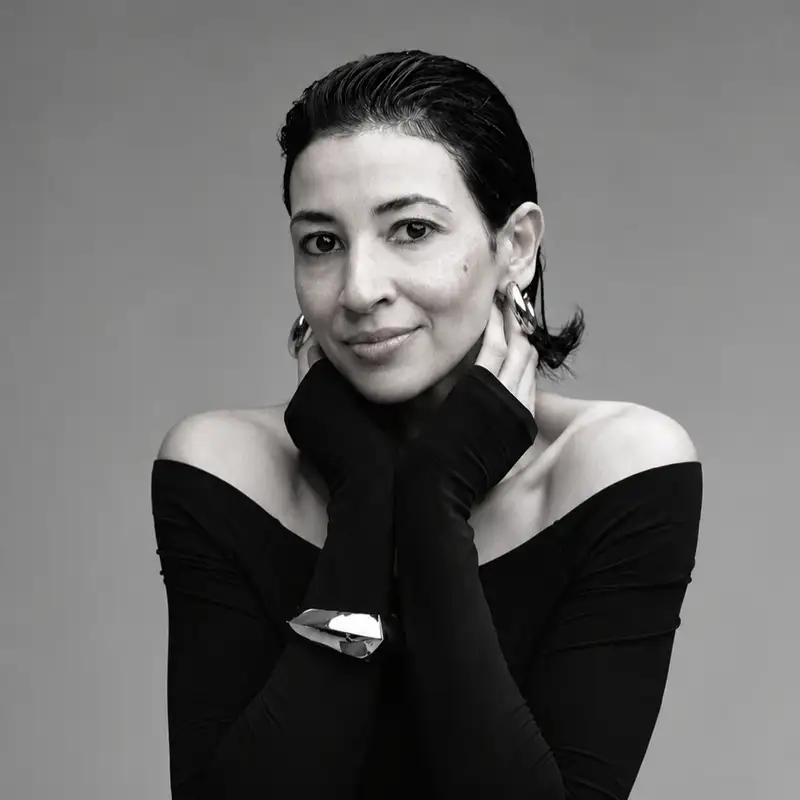
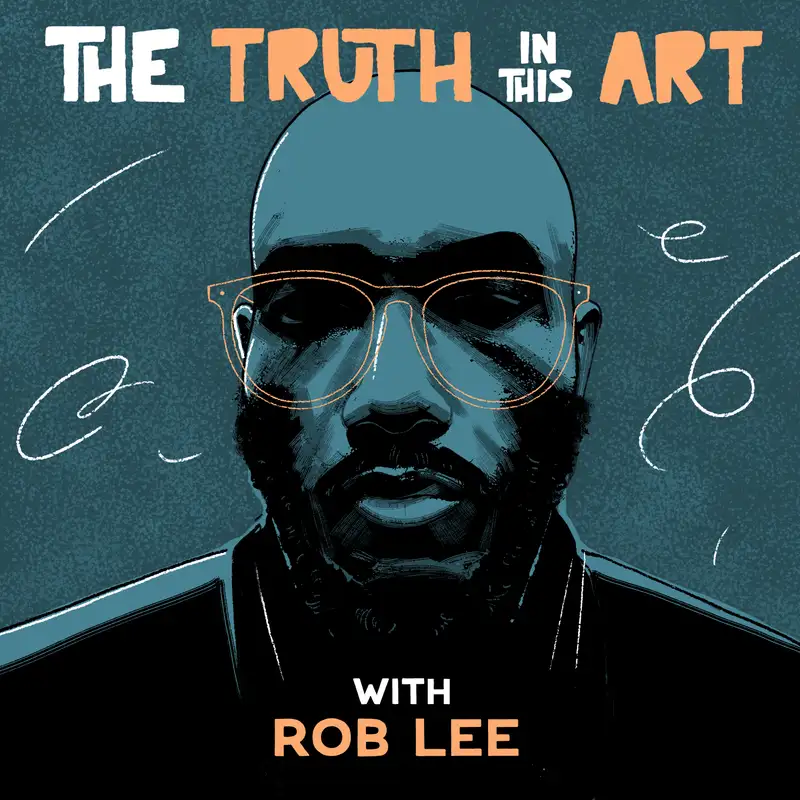
Download MP3Rob Lee (The Truth In This Art): Welcome to the Truth and This Art your source for conversations connecting arts, culture, and community. These are stories that matter, and I am your host, Rob Lee. Accept no substitutes. Today I am thrilled to welcome my next guest on to the program, an Egyptian born Washington, DC based contemporary artist whose abstract paintings and sculptures explore themes of healing, transformation, memory, and resilience through layered surfaces and unconventional materials. My guest signs each work with the initials of her late father, a person who first recognized and nurtured her artistic journey. So joining me today in studio at Hotel Eden here down in DC, my guest is Dina A Z Salem. Welcome to the Truth in its art.
Dina AZ. Salem: Thank you for having me today.
Rob Lee (The Truth In This Art): Thank you for being here. Um thank you for being doing us in person as well. I think it's um it's m I won't say better, but it's a different experience during the conversation in person.
It's more of a sort of a connected thing. You get to see how sweaty I was when I was walking over here. I was like, she is gonna see me at my sweatiest. This is the rawest podcast you'll have.
Dina AZ. Salem: But um you look fine. Okay.
Rob Lee (The Truth In This Art): Uh but to start up these conversations, um I always like to let the guests introduce themselves in our own words. I think that I can do a very heavy and weighty taking a uh a script from off the website, it's like I'm just type this in and this is the intro, but I would love it for you to tell us who you are, um, what you do and what's important for the listeners to know about you.
Dina AZ. Salem: Sure. Um, first of all, my name is Dina Easy Salem and I can talk later about why I have easy in the middle. Um I am uh I was born and raised in Egypt in Alexandria, not this Alexander, Virginia, the one the real one. Yeah, and um I am um like contemporary artist. I um I do a lot of painting recently I'm doing I'm adding more sculpture to my practice. Um I explore like more uh healing transformation and um like memory and resilience in my work. Um I use a lot of texture, l layering, rebuilding material that's um some interesting material, some like very normal um normal material, like I try to mix the kind of material that I use. Um my idea about material they they carry memory and I want them to actually communicate emotion and experience and then they don't always have words.
Rob Lee (The Truth In This Art): So we're we and we're gonna go further into into that. So you gave us a little bit of a tease. Mm-hmm. I like that. Um so go back a little bit. Um you what was the like you you mentioned the real Alexandria, right?
Dina AZ. Salem: Yeah, this is uh yeah, because people when I usually say I'm from Alexander, they're like in Virginia, they're like, No, the real one in Ca in Egypt.
Rob Lee (The Truth In This Art): the main one What is it? Um have you have you heard of the two Manhattans here and uh you have like New York Manhattan and then it's like one in Kansas?
Dina AZ. Salem: I heard about that a little bit.
Rob Lee (The Truth In This Art): And it's like Kansas. Yeah, we're a little apple. It's like I'm from real Manhattan, you know, for the real New York.
Dina AZ. Salem: But what is that? Yeah, exactly. This is how I feel. Yeah. The first library in the world was in Alexandria.
Rob Lee (The Truth In This Art): Oh, okay. Humble brag? It's like, Yes, yes, uh, you know. Just your books and history, yeah.
Dina AZ. Salem: Yeah libraries and such. Yeah.
Rob Lee (The Truth In This Art): So growing up in Alexandria, um, how does this aspect within your background, like of your stories, is this where stories matter, right? How does that continue to to inform your work?
Dina AZ. Salem: Alexander is very um small city, um, in Egypt, and it's very beautiful and it's literally on the Mediterranean and also have a lot of different history and if you walk around there's a lot of textures and a lot of like uh beauty that you don't see in um in a lot of places in Egypt.
Like Alexander's so different from Carrie, don't find permanent, you don't find this kind of like energy. You find it's very calm, people very happy, very shill. And what I love, the whole example is just literally three main streets.
Yeah, and it's simple and I love that. But at the same time it's very fast. Um so I feel like this is part of like didn't have time to even explore a lot of stuff in my life when I was living there because you just try to survive. It's too fast and it's very crowded at the same time. But it's full of life. Yeah.
Rob Lee (The Truth In This Art): So having perhaps that sort of fast pace. does that inform how you go about like making work and making moves down here 'cause DC, where we're at, right. When I come down here, I always talk about it. I'm like, I'm from Baltimore, I've been in these different spots. It's like the pace is different. I notice when I go up to Philly, I'm walking a bit faster. I was like, why is that happening? When I'm down here, I'm walking a bit faster. So do you think that's what the pace kinda was an easy adjustment?
Dina AZ. Salem: Absolutely. Like even I was there like last month, it's just too fast to even to be able to keep up and it's like people are in survival mood. So this is interesting when you see two different places living the same period that had different perspective and surviving so different from each other. Um and make you appreciate the like being here makes me appreciate a lot of stuff that I used to have back home and also vice versa. But it's like effective me because back there you just experience life. You
don't have opportunity to sit down and try to understand what is happening with you, why you interact with this subscription way, why you have this reaction, why you are the way you are um it just like you always survive mood all the time because the country is like we have no time for anyone. You just have to keep going. And it makes me stronger in a way and I see that my work more is like I never was interested in why stuff happening. I was interested after the effect afterwards. I'm always like and another thing is like make you also understand that um identity is never fixed. It's always evolving. So I feel like living in two places make me evolve way more than if I stayed in one place. And this is actually benefiting me a lot in my work. True. I don't think if I stayed in Egypt I would create the same uh style of work at all.
Rob Lee (The Truth In This Art): So in having so going back y you mentioned something I thought was kinda interesting the sort of almost retrospective reflective nature that's there of like I'm not really concerned about the why and I was like what's the response afterwards? What is the I don't like this word but you overlay the impact.
Dina AZ. Salem: What is the RI here Return an emotion here. that sounds terrible No I mean more for me is like transformation. So there's a theories that created calling perfect. I was emphasized is like not necessarily when you transform to something else it's gonna be bad. Not necessarily because you went through something difficult and you trying to c transfer like and go to the other side this is like bad like you have a scar because you went through something a surgery because you need it. You survive that. True. So this is I'm interested how this make you feel like how when you look at this car make you feel and after that is like I feel the most beautiful discovery and interesting discovery we find when we fall is actually happen more like if your life has no event and it's completely boring and you're doing the same thing every day. You would never discover anything.
Rob Lee (The Truth In This Art): There's no opportunity for adversity a in growth there is people throw this around the the whole stoicism thing and I think there's certain people, certain cultures about to do that or certain communities it's like I've always dealt with hard stuff. This is light. Yeah, exactly. Yeah, y you you have that capacity built up and and before I move into the sort of this this next question it makes me think of I I did this talk with some uh fun some some post folks are getting some money. And like here's some money. Tell your little stories with black and brown people. I
was like oh let's do it. And um one of the things that I share 'cause I'm never really good at those things, but I try to lean on being honest. That's what gives me the most it makes it easier for me. And one of the things that I shared is this money not only able it enabled me to make the work that I was curious about making but also built capacity that I can extend and do more. So as I was sharing with you before we got started um that I'm used to doing a lot of content, a lot of episodes, a lot of conversations so when I'm doing like less I'm like this is a lot easier. I've I've already had the experience of doing that that year when I mentioned um doing eighteen in a week. It was three hundred and twenty two that year though. Yeah. So I already have that is I've experienced that I got through that and I'm not thinking of damn man I'm at episode two hundred. This is so hard I'm like after experiencing that full scope. Yeah I can always do that again. I'm not going to but I can always do that again.
Dina AZ. Salem: Yes you know like you're capable of doing this and this is good for us to even ha have that belief that we can do horror stuff. Because this one of the reasons keep you going. But he gained you have a beautiful experience so that's why your I'm sure your podcast now is so different from the one you did like the first one. And this is the experience makes difference.
Rob Lee (The Truth In This Art): One could argue it's gotten worse. It's just like ah this guy just talk now.
Dina AZ. Salem: All he does is talk. He gets on these tangents. He starts talking about cartoons too much. I'm like, what are you saying? I have so many good guests. Yeah they're great.
Rob Lee (The Truth In This Art): You're not self-deprecating that's what I do. Um so in so moving into this the sort of like this this next question you you you referenced it a bit in your introduction. So let's let's talk about your dad a bit. Yeah. Um
so you know there you're your your dad is a part of your art story. Your father's a part of your art story. Even in how you sign your your paintings and all and uh and he encouraged your artistic journey and he's included in your works. You signed each piece with his initials so if you will what is what was his name? What is his name? And what did that inclusion when did that include you start within your
Dina AZ. Salem: work so to start like I have been painting my whole life since I was maybe four or five years old. Um and my mom actually the reason she discovered that I was a very hyperactive kid. I always
need something I need my hand to be busy uh to calm me down and my mom started to give me a lot of craft and stuff like to do in during summer time and I started to paint and I found this is the the most peaceful and beautiful thing and make me calm and I can do it for hours. Then I discovered that. Then my father used to sit next to me and see me drawing and painting and he always very fascinating my dad is like um he's an accounting and he is um he's very smart. He never used calculating his life. This is how he's smart he
Rob Lee (The Truth In This Art): is so yeah he's like for him have a creative child he found this is so beautiful and um so he used to sit next to me and just watch me. Then eventually when I was a little bit better he started to buy my painting for like very small amount but this is part of him like trying to encourage me to do more. Um and I was doing this like for a couple of years and um he was like really very supportive. Whatever I
need he said like I'll do it for you. Then I was like nine years old and um had to visit him in his office. My dad was like the CFO of a big company in Egypt so I was like he's a big deal like and you go in there everyone's scared him. Yeah like
it's a big deal. Like Ahmed Zaki, his name is Ahmed Zacki Uh that's why AZ. Then um it's actually very famous actors in Egypt. His name is Ahmed Zeki and everyone I use the door of this open her, but I was just like, let me. I don't know I wish I had then no. Then I walked to his office and I found like very serious old school office like and all my painting is hanging around and usually I was upset with blue and like it's all like have the blue like main color in all my painting and I'm like Dad my paint of course I'm so proud of you. Like I
am really so fascinating with your talent. Um but unfortunately he passed when I was twelve. Um so the journey stopped here for a long time. I didn't I unfortunately I was not able to paint for a couple of years because I feel like the support that I used to have from from him is gone and is affecting me in a way I didn't understand. I didn't know that I'm actually not painting. My mom noted that like you didn't you have been you didn't make any painting for a long time. Then eventually years goes life was life. That's what
I say Then many many years and finally I found time and peace to connect again with my art. Literally two years before the pandemic Just in time. Just in time. then I didn't have any expectation then eventually when people start to want to show me I decide um I wanna dictate m all this to my dad because he starts that journey with me and I want him to be part of this journey so I found when I sign his name is like he's still with me somehow. It's beautiful. Thank you. And um it it's uh we we were talking a little bit before we got started and um I produce another podcast. I'm recording later I'm doing a movie podcast and it's a podcast where I revisit movies from my childhood and um and my dad was the sort of focal point of like yeah we're gonna go to blockbusters we're gonna get five action movies, make some popcorn that was literally every Friday through like the nineties right and I once reviewed one of my um favorite movies with with my dad and he's a veteran all of this different stuff right this sort of like tough, you know, old school black guy from like the mid fifties or what have you and it was a fair f full circle moment sort of uh deepening that memory of yeah remember when we watched Bang Dam in this movie this is the one we played twins double impact from nineteen ninety one see memory. And um and I just remember him sitting there with me he's like, yeah man. And man was crushing it. And it's like he likes it, he supports it, he's like, I am out of my debt but I like rocking with you here. And it was just like a really cool moment. Not that's absolutely not my best episode of that particular podcast that is definitely a very memorable one and it adds to the memory of watching that movie each time after, right? Yeah. So do you have like a a favorite memory when you think of it is it is it that visit to the office and seeing your
Dina AZ. Salem: work there absolutely the business to the office was uh something I would never forget because I never visited him before in his office. My dad is so serious. My dad
is like very Arabian old fashioned father. Like literally if he put the key in the door we have to rant for our lives. This is how I'm not coaching I'm not kidding. And we
have we know allowed to watch TV during school time. Oh like my dad is very but I also he's so much fun. He bores. Yeah and I and I'm grateful for this because this is uh build me in very specific way and very unique. My dad was very unique.
Rob Lee (The Truth In This Art): Yeah that's great. I mean you when you mentioned the memory so I never used the calculator.
Dina AZ. Salem: I was like I I'm good with numbers. I always use the calculator to make sure that math is right. No, he never used calculator all his life. That's that's fine. And he was CPA.
Rob Lee (The Truth In This Art): That's fire. Yeah yeah he's uh he was very that's why he always um and he was colorblind. So it was very interesting. He only we have three girls and he only takes me when he goes uh called shopping because he cannot see the colors. Ah yeah I don't I don't know about that one. Did you look you know what? Actually yeah that's a good one. That's a good thing.
Dina AZ. Salem: It's like yeah so I was told by my my coworkers that I'm wearing like this red suit I'll blue suit that you mentioned.
Dina AZ. Salem: Yeah yeah yeah yeah so like he can see like only three four colors I remember like uh and it was very interesting how to go shopping with him is like Tina, what's the color like okay dad this is blue. This is it and this is very interesting.
Rob Lee (The Truth In This Art): I could almost see like one of those things where it's like yeah I'm gonna buy this piece of art from you right yeah yeah I'm doing this in my head. I'm not sure about your your rate's kinda gone up a little bit how does that work it out you know as I
Dina AZ. Salem: grow, you know I can be more experienced you're having that pre-art market conversation That's fantastic. Yeah like my dad never also treat me like a shot never a day so I love that and uh and he always deal with me like an adult. Yeah.
Rob Lee (The Truth In This Art): That's that's really good because um you know like I don't have any kids and whenever I talk with my nephews or anyone I literally it's just like you're we're we're on the same level. Like I'm just older than you and you know I have a responsibility of you know if something happens I gotta take care of you but for the most part it's just like we're the same page. So I'm gonna teach you how to cook. I'm gonna teach you these different things. Yeah. And it's it's almost like this is gonna be so nerdy before I move to the next question.
Dina AZ. Salem: It's almost like being like one of these like anime he's like you're gonna come to the master and I'm gonna put you on. It's like teach me the way for podcasting. Yes. You
know your mic's not on right. So fix that. But I
thought you're gonna let me go easy. No no no you gotta fix it. There's a job to do here. We gotta learn these these skills. Yeah. And I also my niece is um I'm gonna guide you but I would never advise you. It's just two different That's important.
Rob Lee (The Truth In This Art): That's super important. Um because I think sometimes folks get into this habit of well I've I've had these mistakes and I want you to avoid 'em no you gotta learn from those mistakes. Like you know, if it's just like depending on what the mistake is, it's like you shouldn't walk in front of that car right there. I mean but some of the things that are when it comes to as we touched on a little bit earlier, building capacity and having sort of that scar if you will to learn something that I think that lesson is a bit deeper and more embedded if you experience it yourself. Exactly. Yeah. Speaking of which we're gonna talk about a few of the
Dina AZ. Salem: themes
Rob Lee (The Truth In This Art): so senior work is described as a vehicle for healing, transformation, self discovery, resilience also comes up. How how does this investigation show up in your work? And I'm curious as to why sort of these themes is it a catharsis, is it a I want to exercise this talk about like why those themes and um why are you investigating it through your work
Dina AZ. Salem: First thing is um I'm usually look at healing and perfection and texture as a tool. True. But what I'm more interested in is like how do we become someone new without losing who we were. Mm-hmm. Because even if I use sand for example, like as a texture and building a piece. Mm-hmm. I can change it. I can shift it. I can completely make it something different, but it's still sand. Like sand is still there. Pretty. Yeah, so
this is what I'm saying. This is how we are. Like I'm interested in how we become some new but still connected with used to be because doesn't mean you went through bad something bad or or a big life event that you have to change completely who you are. Sure. You have
to learn how to adjust. And this is the same start from this. I went through a lot of adjustment in my life and I feel like I'm doing very well with change. I don't do well with loss. And I feel both are different. Yeah. And change because it's like I think this is coming from where I used to um like I grew up in Egypt and it's like changes it's content. And I feel like moving here with a big change also. So I feel like I was doing very well and I adjust in every stage of my life very well, as much as I can. Some stuff like I didn't do well, but I'm learning, I'm moving on. What's the good about me, I don't look back. Like wherever I happen, I cannot change it. Right. What I
can change is like what happened to me now. Don't want to keep that change. Don't want to still to change that change. And this is have been also a thing that I have been thinking a lot, why I am the way I am. And why some
stuff I cannot get rid of it. Right. Then I come with a piece, some stuff I don't want to get rid of it because it's part of my identity that I like, that's why I'm keeping it. So the b part that it's not that I don't like, sometimes it doesn't serve me well now. So it used
to serve me be well, like maybe I was younger. Um and this starts to help me in a way like how I kinda translate all this thinking of emotion that I know is universal, like everyone going through something and how to translate that in a painting or something that you visually can't see and words cannot express. Then I found like that's why all this theme, this chart, like because every time I go through something, it's one thing is affecting me. Like part I was healing. Part I was like very resilient to this change because I don't think it was good for me. Part is transformation that is changing me and left impact on me doesn't mean that I failed. I actually transfer I move with it. So it's and
it's good that I was able to adopt. One of the things that's always fascinating me, like Japanese uh there's well, I was watching this documentary and I didn't want a lot of culture inspired by that. So they used to have the y they still use they get a lot of earthquake. An earthquake like completely damage any building. Mm-hmm. Well it is. And instead of like okay, we only can make like building one or two like level let's do it the way normally and put something in between and make it actually good when every time the earthquake happened it's adjust and move with it. So this is for me like you have a structure. But you adjust
it because there's something we cannot control. And I found this is so interesting and fascinating and I start to I made one sculpture looks like a building. There's a structure because we need a structure. Yes. But we need
also the structure and and whatever the procedure and the rules to be adjusted to the situation. Sure. Yeah. And I feel this is also part of me, like every time I go through something it's fascinating me, feeling I address it. Then I start
to make a theme out of it and I found like also using texture or color is um it can translate this kind of memory and the theme. This is how I feel. Yeah.
Rob Lee (The Truth In This Art): I I I I like that you connected to sort of the that Japanese piece, right? There's something I've learned uh in it, what is it uh wanna butcher some Japanese real quick, uh gum barrel? Uh which also is gabata, it's just sort of like you don't worry about luck. You just kinda do it. You kinda just
do the thing and if it's you've done what you needed to do if you're prepared properly, luck's not even part of the equation. Yeah. And I use that in some ways to settle things down, like when I'm doing um like uh like a public speaking thing or it's like, hey, we got you on stage and you're talking. It's like, ooh and naturally the impulse is you look for evidence of what have I done before. And my inclination is I've done terribly before. I've not, but
I kinda lean into that like it wasn't perfect, it's never gonna be perfect. But it's like, did you prepare? Yes. Are you here? Yes, or right
here at the time. And or you know, is this the thing that you should be doing? All of these different things. I start checking through these these things. And that approach coming from the sort of Japanese idea, I've applied that to doing interviews. I've applied that like us being here right now. Sometimes I'll do an interview with someone, I'm like, this they're gonna hate me. This is gonna
go terrible. But it's learning something from maybe taking something from those past experiences that may be successful, the fact that you that I did it. Yeah. Because it's like you've done a lot and you're still able to do it, you're still interested in doing it, and you didn't fail in such a way, so just kind of look at it from that perspective and just trust that you've done the right thing. I mean, luck
is not a part of this equation. And that's helped me a lot. So I think in looking at it through not a not purely adjusting, but that adaptation, like seeing something like we know we have these earthquakes. We know that we can't have this seventy foot tall building. That's just that's just not gonna work under these circumstances. But let's really adapt and adjust and modify sort of our behavior or our policy or how we're going about things to accommodate for what's happening at this moment, not the past, not the future.
Dina AZ. Salem: Exactly. And don't give up, like I feel being artists we go through a lot of rejection, creative people, period. You go along rejection, you go along like it's hard. You compete with a lot of people in a in a very hard way. These days is
way more difficult than back in the days. So you have to be very positive in a resilient p person, otherwise you can might go through something really bad and how to get unless yourself out of that is like the imposing imperfection on us. That's why I insist to have a serious imperfect because talking to my niece is how they're conscious about everything have to be perfect. Well, like too hard, nothing will be perfect.
Rob Lee (The Truth In This Art): It sets a precedent though, like this notion of speaking specifically on like perfection, right? Mm-hmm. If people live online, we're we're adult adult. When people live online, it we we're given this idea everything is perfect. Uh you know, like we have these pictures, it's like, man, that's not a blemish on my face. Wow, all of my grades are gone. This is amazing.
And that's not how real life is. And but we set this idea that if it's not perfect, if it's not perfectly polished, then it's not worthy, it's not good. It it's it
doesn't work. And I share this before moving into this this question about materials. Um early on, so I is been doing this for like podcasting for like seventeen years. And w when I used to edit my podcast, right? I used to do all of the editing as I was doing five podcasts out of network. I was uh I was unemployed at the time, so I didn't do that. That's why maybe that's why I get you know. And um I
used to go through and I would very meticulously go through and look for every um, every gap that was too long and so on, and I would trim it out. Then we'll listen to the edit. Sounds terrible. It's perfect, but it sounds terrible. It's no dead
air. Sounds terrible. All the ums are gone to sound terrible. And the reason it sounded terrible because it's no longer what it was. It's no longer a conversation. Mm. It's just a stream of words, and I was like, that's what I started thinking about perfection differently. Exactly.
Dina AZ. Salem: Like I feel there's a lot of beauty in perfection. Like, and we need to embrace this more. Like, I have this conversation with a friend yesterday because felt like I would love to explore explore different city or country. If you want, what is better than here? This is wrong. Don't think about
what is better what is better for you. Maybe like on the paper, the place here is amazing, according to like 'cause I never heard that phrase before in moving to America. The best of like Americans are the best of everything.
Rob Lee (The Truth In This Art): SEO SEO. Like I don't know how to who Yeah, like who wrote that? Yeah. That's all like it can be I can go somewhere completely simple city that's best for me being and now in that phase of my life. Doesn't necessarily be the best in the whole world. So this is how you think about stuff. Don't think because you
have to have all this stuff that makes you happy. It's it's what's happening at that moment and you know, as I was touching on doing it as long as I have, um, my brother is like my biggest fan of the podcast, right? And he's almost like the historian of it. It's it's very weird.
Dina AZ. Salem: Like he'll he'll point out certain things. He's dangerous, I remember an episode that's the old podcast they used to do. Like episode ninety of Mastermind Team's Rob Cast, you said this. I don't know if that's accurate. Let me fact check. I'll say hold the
phone. And and I look at it right, doing sort of in some ways really like growing up and you know, I started podcasting when I was twenty four, forty one now. So looking back at stuff that I was talking about or how I did stuff, like I hate this kid. I would I would look up like wow, why why was I into this?
Rob Lee (The Truth In This Art): Or I would maybe value this like let's say if I'm talking pop culture, right? Mm I would value maybe this movie in a different way, like the the thing I was saying about my dad and watching Double Impact. Like yeah I would look at it maybe in a different way and maybe my perspective would mature and change and maybe I appreciate it in a different way than let's say at twenty four I appreciated it for this quality at thirty I appreciate for this quality and at forty it's like I have a whole new perspective, new ideas, new experiences such as talking with folks such as yourself. And that maybe informs how I look at it. And it's like this is what's good for me right now.
Dina AZ. Salem: Exactly. Exactly.
Rob Lee (The Truth In This Art): If I over explained that No no you explain this perfectly yeah.
Rob Lee (The Truth In This Art): So I want to talk about um sourcing materials. Um uh and you guys are my materials. This is the art that I'm making. People and materials this is not a weird taxidary podcast but um you know I I think about it in terms of curation. I think about it in terms of like why. Um so how how are you sourcing materials? What are the considerations
you're making when seeking out materials like is it driven by availability is it's driven by like curiosity. Because I know early on, right, When I was bringing on guests I'm like, hmm I wonder what a clown does like people who are like school and it's like there's a performance aspect to it. I wanna talk to someone about that 'cause I'm curious. And other times it's like, all right, I I remember I did a series of jazz interviews. It was here, Baltimore and Philly. Oh okay. And I was in each city these like in person, I was like, this is fire but some people weren't available so I had to maybe find a place in it. And that's why I turned it to a set of three cities. I think I maybe added somebody from New Orleans that I ended up going down. And so it was initially driven by curiosity, then it eventually became partially motivated by availability.
Dina AZ. Salem: Oh okay.
Rob Lee (The Truth In This Art): So talk about that as it relates to how you're sourcing material. Is it like I want to work with this material, is it I have this material available and I have a lot of this material available.
Dina AZ. Salem: So interestingly I start to think about um what feeling or idea deserves this material. Okay.
Rob Lee (The Truth In This Art): Feeling nice. So for me sometimes you look at the material, okay what what does make me feel so the first picture I ever had was um I was dealing with a big scar inside me. Not a literature scar. I was something literally before the pandemic like two three years ago and um
Dina AZ. Salem: the healing process is difficult and I feel like there's car inside me and I find when I look at tone and the grid like the like a material like look like a scar then I feel like ah this can be good representation of what I'm trying to do here. And I start to be like became like interestingly like that. Every material look at it and I think oh this reminds me of this kind of feeling or idea. So um plaster also like starts of like texture and I found like this can be like a scar and I start to be like thinking about it like that. And another time I found
like a banded shirt and DC you can find crazy stuff when you walk around seriously people get rid of weird fears. There we go. I think you're doing that. Yeah, like something like really
okay. Then became like actually very interesting part of my process. So I walk around I source some m material like that. I go to my favorite places uh Home Depot, you find crazy interesting material and everyone's very helpful over there. So it's it's a really fun place to be this is my happy place.
Rob Lee (The Truth In This Art): It's home depot. Home Depot. Not a plug. No, no. Take me to home deal I'm happy that Yeah. So um so it's actually become like and also I found a lot of picture carry memory.
Dina AZ. Salem: And I feel when you touch them they carry your memory and I feel when I look at them I remember my status during that process when I care them. Um and the same thing when I grow up in Egypt I feel like because Alexander was like I have a lot of history with Greek and a lot of British and French, like I have a love like different uh culture. And also there's another old
Alexander underneath actual Alexandria. So you walk around and you all this building and all this historical places these touches people touch that before you and I found this is material translate memory because have been when you're dealing with this m material you already have emotion, you're already touching it and you give this to someone else or someone eventually will come and see it. So this is how I see the material. I source it from different places as much as I can. For me when I look at it, they usually make me feel a very specific feeling then I feel like okay, that feeling the idea deserves this material. Then I start to do that.
Rob Lee (The Truth In This Art): So it's a it's it's uh it's a feeling thing, it's an intuition thing that it kinda kinda comes along with it and I I'm gonna move into this this next piece but I think how I relate to that is um I went to I went to an art show a couple of months back and um in in New York and I have some friends out there who work in the soda space and they're like chiming in and they're saying MPs they're like, Oh man, you know, art and they're kinda like drag it a little bit and they're like, Why are you seem so interested? And I was like, Well,
I'm looking for the story. Do I feel something with this person with their work? So if I see their work and I'm able to correspond with them, I'm like, I already see what the story is in my head. Like it hits in that way. And it's something like a knowing a sort of intuition that comes from the perspective of what I'm doing. I'm not gonna see it the same way as an artist perhaps that's going there and they're like, I don't like that they you know, use that brush stroke or why did they use that color? That can is a little loose. Whereas I'm looking at what
is the full in the terms of a packaging lane, what is the full thing. So and I did this interview recently and I'll I'll share it with you after we we finish here, but immediately when I saw sort of the story that was there and the kicker was the um the the the person, the artist who I ended up um interviewing recently, he just came over and just posted up next to him and just start started telling me how he made that particular effect on it. Oh, okay. Just out of the blue and I was like, I'm in the right spot right now. I was like, this is exactly where I'm supposed to be. It's like I felt it initially, I felt drawn to it and then it just connected. I was like, Alright, you're on the podcast now.
Dina AZ. Salem: I add one more thing. So when uh material also like sometime I like when I have something like I used to have like a big piece of rock and I break it. I love like breaking stuff and rebuilding again. It's just part of like how this is texture can give you this perspective. It's like um uh rebuilding is I found it like I built like you build something, you destroy it and re rebuild and you keep going and it's like become something beautiful again. Yeah. So this is give me some kind of excitement and power that I can fix that and I can make it something out of it. So it's also this is why I love using material, not just paint.
Rob Lee (The Truth In This Art): We're see, we're gonna get you on a path for you've heard of Kinsugi, right? Well? Have you heard of Kinsuki? Yeah. So Kinsugi is the traditional Japanese.
Dina AZ. Salem: Oh yeah, no, like fixing with the goal. Yeah. Yeah, I know that.
Rob Lee (The Truth In This Art): So that's yeah, I'm in my I mean my gold era. Yeah, yeah. So this is actually that's why my first ever uh series was called mend compomending. So I'm I would break stuff and put it together again. And I found it very relaxing and fascinating. Which is the theme of the next question actually. I guess you already have the So talk about talk about men, talk about um the blue series as well, 'cause I'm curious in sort of this idea of progression, doing sort of this iterative and incremental like work, exploring it in that way. Um, you know, like I did that a little bit, um so starting this podcast in twenty nineteen, so before the pandemic. Mm-hmm. And I had folks on
like early on. And then I went through and I was like, twenty twenty five, I was like, I wanna see where people are right now. Like, you know, we're post pandemic, we're in a different stage in their career and everything is hustle and bustle. It's not Alexandria. Everybody's moving very fast. Especially with
sort of like like art, so seeing like what that progression looks like and I'm like, I can't do this every year. I can't interview like, yeah, bro, so 2024, what are you doing? Okay, I'll come back to you in 2026. It's like still making the same work, bro. Still working on that book I haven't finished. So talk about what it means to work in this sort of iterative, progressive way when it comes to series and and things of that sort.
Dina AZ. Salem: When comes to series is um I usually like I'm kind of person who works very small first and I just go with yeah, very, very small pieces. I call them prototype. And I
don't think much. I'm less like the unconscious part of my head lead the process and enjoy it. Yeah. Because I don't wanna lose
that part during or being professional artists that I cannot enjoy that's that something mean we're more than life to me. So I want to still be able to show up for my art and enjoy it and love it. I don't want this professional and
business and commercial take away that joy from me. So I I I I even switched some time to do completely even different kind of art to keep the creativity just going. Yeah, so for me it's like um I do small prototype first and um if I connect with a piece, I have to connect with the piece. If I'm not, I cannot create series out of it. This is how it starts. If I feel something and I look at it on the put on the wall for a couple of days, lit
Rob Lee (The Truth In This Art): thinking like, yeah, this is we feeling that, we're not feeling that, I don't know, maybe the color, the texture, the shape and everything. Then I if I like it, then I start to think about how to make it a series. Okay. So the series usually can go bigger, couple of pieces. Recently, the last year, I'm doing different approach. I do what I love and I don't care anymore. Doesn't have to be a series. And I have been called out that I'm not consistent and because my pieces I like my pieces, someone told me cannot we cannot tell us by the same artist.
Dina AZ. Salem: I was like, I don't think so. They still have the same feeling and idea. But I feel I'm enjoying the process that now like I am doing what I feel and this is a process more. If I like it and I'm interested in it, I will create serious outfit, but not because I have
Rob Lee (The Truth In This Art): to I It's funny you said that. I was literally in this room. I had this conversation, it was with the curator. Um he's asking, like, so why do you pick the guests that you have on? That's like because they interest me.
And he was just like, I sounds like a little bit of an ego. I was like, I have a huge ego. I have a giant ego. And
and I and I said it with a certain degree of stank on like you'd probably see my face go on a thing. And I it did a thing when you mentioned like uh like just people like, I don't know if this is done by the same artist. It is moving on, like what do we what are we dwelling on? And I I think it's a small mindedness that's there and a packaging, and I think you explore whatever you're interested in because like you touched on, it's giving you joy. You're you're going through that, but
also it is um it's something that you have to do that you want to do. And I think too often we have this sort of idea, not necessarily from people who are being critical, right? It's from people who are just chiming in, who have like a take. But it's just like I value critique, but I'm starting to find more critique of value from people who are quote unquote novices. It's like, are you actually interested in this? Is this actual like feedback I
can use or is it just a take because you need to fill the the dead air? And when people are making stuff and making work and they're getting something out of it, let them took. Let them do what they're doing.
Dina AZ. Salem: Yeah. To a certain degree, You still need to be in touch with what is working in the world because if you still want to make a living out of out of it, this is the part that you still need to be in touch. But also like being free is very important for you, creative progress. If you're not gonna be free and let yourself get to the peak and enjoy that at the point you don't care, you will never find like your high potential and you create stuff like it's crazy and beautiful and it's amazing and catching people's eye and make people feel the overfeeling. You would never be able to get to that if you very tie and obsessed with like what is working, what people tell me and listen to every critique. The only critique I will say, like, is about yourself for yourself. Are you progressing from last year, from last week and that's all like everything else is noisy.
Rob Lee (The Truth In This Art): Yeah, and I think if you're making something that comes from you that you that that you're touching on with the the sort of self-critique or uh or that that's that's self-consideration. I find that people external of it are fickle. So it's like, oh, I don't like this right now. It's like yeah, but you know, it's like I remember it's a couple years ago, it was just like and I know it comes in waves, but it's like we're looking at only creators of color. Okay, now we've moved on to something else. And we're in a sort of era of is this AI slop or not, you know, it we're in escort of spot right now, and I think the push I see from a marketing perspective or from a discourse perspective, all right, let's go into this almost brutal um real or or like brutal, this is authentic. We know this can't be this.
And it's just like it's just a wave and it's just like are people making stuff that they care about and it's potentially resonating and connecting and you can continually make sad because you don't run out of that if you have that as sort of the the feeling and the motivation behind it. But if you're doing something that's too sp to specifically hit uh a certain idea, I think that it falls short. I'm thinking purely from sort of
the lane that I'm in. Like if I'm just like, Yeah, I want to go to talk to these artists in this way then I run out of stuff eventually because what if people are making work that I am curious to even talk to them about. I'm limiting myself. Yeah. Yeah. So I got two real no, three. Three real questions left. Okay. Then we have the rapid fire. And then we have the sage advice. Rapid fire. It's gonna be a doozy for you.
Dina AZ. Salem: So there's something about novelty in in my work. I'm always looking to talk with new folks, like again, they're creating and we'll well we've talked before now IRL.
Dina AZ. Salem: Um and I could have those standard questions for like sort of each painter and but I prefer experimenting with the process. Let me switch this out. Let me try this. I wonder what they're into. I
know this in this one you painted this. Oh, you notice that? I did. Yeah. Um it's like it's like
this guess I had on some uh painter, uh, artist I had, uh Terry uh Thompson, he had this this quote I thought was really fire. He's just like, I like to contaminate my process.
Rob Lee (The Truth In This Art): And I was like, I like that, bro. That's uh crazy, I like it. So you've been experimenting recently. So talk a bit about that.
Rob Lee (The Truth In This Art): What is it like to just be in it, just be in a sort of experimental sort of like hmm stress out a little bit.
Dina AZ. Salem: I get very excited about trying anything new, like truthfully, like I I don't know where this is coming from but it's um if I'm like if I have an idea I want to experiment at some time I cannot even sleep because I'm excited next day I gotta get up, I'm gonna try, I'm gonna put my hand it. I love to get like my hand and dirty and trying and stuff and I love I I always call them beautiful mistakes. Uh I I found any mistake
is actually beautiful and introdu introduce me to completely new words. I never create I have like days like I notice I didn't I'm gonna experiment the whole day and I can spend like eleven, twelve hours experimenting and I don't even feel the time. And every time I'm I'm trying to try something new, I discover something different, then I go that route, then I discover something else and it keeps going non stop. And um experimenting give me excited because I feel I'm kind of person who doesn't like control at all. Like I don't like like resist structure. I feel a lot of stuff
need some room to be free. Part of like even kids are way more creative than us because they don't understand the consequences of their behavior. And I feel sometimes it's very beautiful to get to that part of me that I'm not scared. I have been raised in a way that I have to be careful, don't don't don't get into your emotion too much, just move on and I never even s discovered myself till very late in my life. And this part makes me a little bit sad but I'm happy at least I discovered uh but this part of me like I always want to be loose and free and there is a lot of happiness and peace in that um in that experiment part that I wish a lot of people can have that. I wish I can get all everyone in my studio and be free and just experiment and enjoy that and see how it's gonna affect you in your real life. Yeah. Because I feel sometimes you need a reset to be able to go back to this crazy life. And I feel my experiment, this is my reset. This is my um my therapy. Yeah.
Rob Lee (The Truth In This Art): Yeah. I I relate to that in coming to do this and this person this this sort of personal sort of setup where you know, sometimes I don't not really big on it because I think space is important and uh it's just stuff that I've learned from the process of doing this podcast as long as I have. You know, I can do a lot of them remotely, do a lot of them online or what have you, and it feels somewhat impersonal and you know, maybe there is a a setup later that you get up and like, hey, you know, we establish a bit of rapport, maybe we're friends or whatever. But the the aim is trying
to build something towards friendship because the conversation in my head at least is not disposable, it's not like sort of false, but part of it is doing that in person gives me that extra layer that it just doesn't feel like it's work. And one of the things you said earlier, uh you're talking about um so stupid. You're talking about like me, I'm so stupid, you're not. Uh thinking about like just kids having uh young people having that and I was gonna say, like, yeah, we should give them bad lives. They need structure. They need more structure, damage. Where's that at? Where's that colorful drawing?
Dina AZ. Salem: That's a cat. I don't think that's a cat. Yeah. What artist did this? I I only took two classes, uh our classes in my whole life. I am self-like I uh I had so I have a hard time for the instruction and I have to completely dri drive away from the instruction and do my own thing and the structures are kind enough and let me do it, but I don't come to creativity, I love the freedom and when I start to get into this more professionally I found all these rules and it bothered me and who put that rules and why we have all these rules. Creative people need more freedom and and they need flexibility. Yeah. And I feel these two words is like really uh two different but for me experiment is just it's m give me a life. Yeah.
Rob Lee (The Truth In This Art): I think when we start looking at it as experimentation or we start adding certain traits to it, it adds more quote unquote legitimacy to it in the way that people kinda frame legitimacy. So like when I think of experiments, right? First thing I think about is science. It's like, oh we revere scientists.
Well, I'm I'm experimenting as well. Well, are you though? But you are. It it is. It's it's a noble it's a noble craft, it's a no no no noble uh vocation, noble undertaking, but it doesn't get that regard that it should.
Dina AZ. Salem: Well funny fact is the last time I did my sculpture I because I usually used when I was very young I used to do a lot of culture of clay. So this one was acrylic. I learned so much about acrylic and glue and ha and and math. You have to be very good with math. If you want to build something. And You need to be very good with science. Which kind of glue is glue
to acrylic to acrylic and filling and so I l you as an artist you learn a lot. And all this is like interesting. Oh, I'm reading about this. Oh, really? I didn't know that. And it's like part of me
like you learn something new every day. Yeah. And for me I always I always kind of personally very I love that people who build and have the capability to build and create good things for human beings more than consuming. Yeah. I'm into that really kind of person. Like I try to consume less and give more and build more.
Rob Lee (The Truth In This Art): Yeah. I try to consume more.
Dina AZ. Salem: Sure you do. I'm just actively being Contrarian, which is the name of my company. What is it? Contrarian Aquarian, yeah. Um so here's the last sort of real question that I have two part question. Okay. Um to go back a
little bit about sort of you know, that the that that foundation and that how did you end up in D C Ts? 'Cause uh a lot of places. Like I'm just not gonna go to fake Alexandria. I'm gonna go to go back to real Alexander, but not fake Alexandria. But how did how did you end up in DC and um and I'll just chime this in the reason I became aware of your work was the umbrella art fair um DC like late last year. And um talk about how did you end up here and the I guess importance of sort of the community or being in this sort of creative hub with so many different cultures are 'cause I think DC is a creative hub, but it's like low key a little bit.
Dina AZ. Salem: It it is very low key, so let me start from the beginning. First shout out to Peter for Umbrella and his partners for putting this together. It was very good, um art show. Um I moved here because my first I always want to leave Egypt since I was young. I was like I don't know why. Yeah, but I never felt um that it's not like I don't belong. Maybe I don't and I still don't belong here too is either but here I'm adjusting more and there's more freedom that I didn't have back home. I always want to leave but always my I was in Italy on Italy and I and I apply for school there. I always want I I am I love
fashion so I always like uh um I was like fascinating with shoes at this stage of my life and I apply for a shoes designer school in i in Italy and I got accepted but my mom, very mm old school, she like no you're too young to live about by yourself. Then she killed us so it didn't happen. Then years happened and my sister she married and moved to New Jersey and she started like come to America. I said uh let's try this. Then happened like I moved but um I got accepted in uh Virginia Tech. Uh I went for school. Okay. Yeah, and um and I I connect
with other friends that was able to move to Virginia, then I lived there for a long time, then I moved to the seas a lot four years. Uh I didn't choose it choose me, this journey chose me more and I think now I feel I understand why. Every person I met and every place I live is had impact on me. I know you don't like that word. Sorry. Uh but I have like a fingerprint
on me and it I became the person I am and I think I'm still have work to do but I feel like this is way better virgin if I stayed in Egypt. I don't know about if maybe Europe will be interesting, I don't know. We still have the opportunity to try that.
That's why. But I feel also I am lucky because to get into the art art um in DC is more gentle and nicer if I decide to do this in New York. Right. Because I feel like at the beginning
of my life I really want to go to be graphic designer and more like into and try to animation. When I was very young I was very fascinated with cartoon and I used to want to go work in Disney. But every phase in my life I changed. So but anything like I feel DC was a very soft introduction to the art field and I'm I appreciate that was not harsh on me and didn't make didn't push me to hold myself back. So um and uh and there's of course
like it's very little difficult because I'm a migrant too uh to get into easily but the moment you're resilient and you try to show up and you're there and you show your support and respect to others eventually I actually get this year I didn't apply for anything and I got a lot of people calling me we want you and the show it and we want you and other stuff and I feel this is the hard work that I did uh through the last seven years. Um so I that's why I think DC it might be not the perfect market for all kind of artists. True but it's a very good introduction. That's why I kinda leave it at that.
Rob Lee (The Truth In This Art): It's yeah because you it it allies with some of the stuff you touched on it's like this is good for me at this point. And that is kind of what works and also kind of being around and not like overthinking it. Mm you know it's just like I'm here, I'm doing this and because I'm doing this I'm getting these calls and these people reaching out and it's like oh you you've done it yeah we know you we know you and so that's that's really great. That's like I said I thought I became aware of you and I'm very fortunate to have become aware of you.
Dina AZ. Salem: No thank you. Like I appreciate that when someone um one time I was in um in a group show I have like two pieces and uh there's a lady she came to me I was like Oh my god that person is stole Dina Styles and I'm like I found your name I'm like okay I'm relaxed this is very sweet that you recognize myself I was looking for it.
Rob Lee (The Truth In This Art): that you mad at someone's I was going to pay off the wall.
Dina AZ. Salem: Yeah. I I in Umbrella there's another artist and he came by the way Dina, I stole like at least two pieces from you. I was like okay I don't know if should we get mad or happy about that's the thing. Inspiration it's an inspiration. Don't feel it's an inspiration.
Rob Lee (The Truth In This Art): I've said it before I just play love, you know you gotta be influential. To inspire and for folks to feel you gotta be you know worthy of death for people to feel Yeah. So that's that's it for the real question. Mm-hmm. And now for the main event question the the I've added to by the way because you said you said it's good if you started. Well I've added two You added two?
Dina AZ. Salem: oh wow, okay.
Rob Lee (The Truth In This Art): Or rapid questions for you and then you have the sage advice question. So it's like sort of be easy when it comes to rapid fire. And then when the sage comes in it
gets goofy again. Okay. Alright so here's the first one. And with Rapid Fire you don't want to overthink these Whatever's the first thing that comes to mind, that's what we're going with. You don't want to overthink these questions.
Dina AZ. Salem: Oh okay, I'll try. There's the first one. Okay.
Rob Lee (The Truth In This Art): If your current mood was a color, what color would it be? Red. See look how quick you answered that.
Dina AZ. Salem: See Love Red. I would never wear it but I love it.
Rob Lee (The Truth In This Art): You're wearing black right now so I'm worrying you know that's um when you when you're in your studio space, your studio environment like today is this is my studio environment today. The first thing I did was sweat.
Dina AZ. Salem: It's beautiful Yeah, I did nothing here. Uh what's the first thing you do when you hit the studio and you get to the studio
Dina AZ. Salem: environment like artistic thing or just um whatever it is. Um I have to have drink something tea in the morning. The this is the first thing I like to write my thoughts first. One very short sometimes is one paper or short a half paper I have to write my thought because if I have myself crowding my brain I cannot create so I have to MPT like this is for me like completely discharge and get rid of all this thoughts of good or bad. I don't want noises. I want like a to be clear then I start to move on and I try to think about um what color and what surface we're gonna use today.
Rob Lee (The Truth In This Art): I like that I I recently, you know, from some of the stuff we talked about earlier recently got into a writing practice and literally it is that sort of dumb. It's uh similar to I think I've heard
from writers who are like, hey I need to get out like a few pages to do this one regularly to exercise the muscle but two I need to get to the good stuff so I need to get rid of the bad stuff first. Mhm. Um let's see uh what do you listen to for inspiration?
Dina AZ. Salem: Okay. I think my neighbor he think I'm crazy because I listen to everything. I am I'm really um so it's an English song, I'm still in my eighties and nineties.
Rob Lee (The Truth In This Art): I don't know anything about Yeah, I I don't know like most of RB and all this is like it's eighty and nineties, like an old school, or sometime I can go opera. Yeah.
Dina AZ. Salem: Beethoven and stuff like that, and I love it. And sometime I go Arabian. Okay. And Arabian can be anything like the the more modern whatever happening now and there is a bad, bad one is called Marogana, like bum listen to it.
Rob Lee (The Truth In This Art): It's really bad. It's a new genre that actually Egyptian created.
Dina AZ. Salem: Literally. You know at that time someone created a new music genre is a big deal. Yeah, yeah. And then and even someone very popular in America stole one of their songs.
Rob Lee (The Truth In This Art): Well, as one does.
Dina AZ. Salem: Yeah, yeah, yeah. I'll send you something like it's loud, but it's can make you like get a very happy mood. Yeah. And I'm uh also love uh Rye. Rye is uh is more from uh Morocco and Tunisia, Andrea. Okay. And I there's guy called Chapel. This is like my obsession. So technically this is what I am.
Rob Lee (The Truth In This Art): I I like this. It's a mix. I like this. Um I always have this running bit uh like because um this is so stupid. But because I fall into this pocket of being somewhat racially ambiguous, I'm like, yeah, yeah, my people.
Dina AZ. Salem: It's like you're not Moroccan. I've been Moroccan Dominican multiple things. I'm just standard black. But I I I play with that, it's funny. No, it's beautiful, like Moroccan, they have beautiful music. This Beautiful. Yeah.
Rob Lee (The Truth In This Art): This is the last one. And this one came up. This is the most recent one I wrote.
Dina AZ. Salem: Oh right, okay. This might be controversial for you. Okay. Favorite Disney cartoon.
Rob Lee (The Truth In This Art): Uh Mickey Mouse you sold out that you sold out on that one. Ah, Mickey Mouse!
Dina AZ. Salem: I yeah, that's the thing to say. I don't think it was Mickey Mouse for a long time. Well else. Oh, no. Actually my favorite was the Lion King. Okay. Uh I'll tell you why. It's actually beautiful memory. It's more than the character itself. But the movie's amazing itself. I watched it in movies here. And it was the last time I watched something with my parents both alive. So and it was very I was very young, and they say this is time I'm gonna spend with me only. We uh I have like other two siblings,
so it's very difficult when you're young as to spend any time with your parents alone. So they gave me that an American, like I remember that there was an American child behind me in Cairo theater and he's crying, he's like, Mommy, he's dying. he's adorable. So I would say that was my favorite like character with Sandba. So I'll say that. It's it's adorable.
Rob Lee (The Truth In This Art): Yeah, that's fire. I mean it's something about that era of um uh of Disney and and so on, and I think once that era kinda went to the wayside, I think the last sort of real animated movie was probably Princess and the Frog. Yeah. And all we seen Chuck people and I asked them, I was like, what's your movie? And when I hear something, then like, alright, we're the same age. That means we're about the same age. And mine's was Aladdin, like I freaking love Aladdin. I was like, I know that there is some stuff going on in there that I can't really jam with.
Dina AZ. Salem: However be careful and that's um you're not wrong.
Rob Lee (The Truth In This Art): Uh but i it's probably it's probably that b more so um when I was uh I think that was what like maybe ninety-three. So we had the game, we had like the the game. I said this is this is inappropriate. However,
I remember watching it at school, we had like we turned our um auditorium into like a makeshift theater. So we had like a concession stand that's run by students. Mm-hmm. This is like elementary school. Yeah. And I was like, this is a fire setup. This is really cool. It's like we have
money growing up, so we would go to the movies for very rare occasions. I was like, yo, we have a movies in school. I'm in the I'm watching Aladdin versus going to math. I'll take this. I'll take the movie.
Dina AZ. Salem: Can you do the movie? Yeah, yeah.
Rob Lee (The Truth In This Art): So yeah. That's that, but it's Lion King is probably up there um for me as well. I have a um I have a buddy and he's just like I can't watch Lion King anymore, man. He's just like, I just kinda want Scar to win, which says a lot about who I am now.
Dina AZ. Salem: So it it's it's good.
Dina AZ. Salem: It's gonna be live. Like, oh you go we all go to the bag villain. Yeah, they tried to do like another version of it and I tried to watch it with my youngest niece and we like we're not feeling it. So like, no, you need to see our original.
Rob Lee (The Truth In This Art): I like the jungle book one, they tried to go live. I like that. But uh the the there's no lights in the line the eyes of the lions.
Dina AZ. Salem: I was like, I like Donald Lover, Beyonce, you're fine.
Rob Lee (The Truth In This Art): What if suddenly these dead eye lions? I don't like it. I need some life of my lion. Yeah. Alright, so let's reset to go back into this last piece of business. This is the rapid well, we've done the ratifier. I'm about to do another round of rapid fire. You're like, no.
Dina AZ. Salem: Oh wow.
Rob Lee (The Truth In This Art): Uh you get to you'll be the first to have it up to you. Um this is stage advice. So th this is sort of like a little little bit of depth, but I think it definitely tackles something that I think a lot of artists and a lot of people listening to this encounter. So managing the responsibilities to multiple aspects of our lives can be hard. I have a day job. I I do this podcast, I teach, I
have other personal responsibilities. Um, and uh how d how do you balance the requirements of having a full-time career in a dedicated like studio practice? And what does the sustainable life look like for you navigating and having this balance?
Dina AZ. Salem: I would say different stages of life equivalent to different style of balance. Um when you're younger, you're very hungry and passionate and you want to follow the books and like I have to be in the studio in this specific hour, and I have to do this, otherwise I'm a failure. And I used to talk to myself like that a lot at the beginning. And I'm like, searching how people balance in this, and I'm trying to copy other people, their balance. But they don't have my personality, they don't have my they may be in different stages of their life, they may be older, younger. Because believe it or not, age is is a factor how you balance because how you see life. Also what you go through in life is facting how you see balance. For me, I used to be like the
whole weekend I have to paint it, otherwise I'm so mad at myself. Now I don't. Now it's like quality over quantity. It's like I can be there when I feel like it, when I want to. I doesn't have to be in the morning in the weekend. Can be an evening, can be early morning
before I go to my professional job. And if I want to create during that time, I would do it. If my soul needs to go to museum someday and take myself on the date, allow this because this is the balance that I need to allow me to create and be inspired. If I need to meet a friend and this is the time I dictate it to my practice, but that friend, I might not be able to see them for a long time, take that chance. Yeah. This is my advice for me. The
guidance is like you have to see where you are in your life and balancing, but don't follow other people like advice. Guidance is versus advice. Yeah. This is why I say. Good.
Rob Lee (The Truth In This Art): Good. Perfectly said. I've got nothing else to add. I'm going to check my mind out. So that's just great. Thank you. So there's two things I'd like to do as we close out here. One, I want to thank you for coming on and spending some time with me.
Dina AZ. Salem: No, thank you. This is perfect. I love that.
Rob Lee (The Truth In This Art): And uh thank you. And um and secondly, I want to invite and encourage you to share with the listeners where they can check out your work, where they can follow you. Anything that you got coming up, the floor, it's it's a shameless club.
Dina AZ. Salem: I like to have people club. Yeah, okay. Um, I'm usually Instagram. I have my website to uh I update my website regularly more than Instagram. I'm not really Instagram, I'm trying to mean
that it's like Dina A Zellum. And I'm gonna be umbrella, the partner, they have another offer coming in August. Is uh starting the twenty sixth all the way to the period and it's only female artist in the area. It's called Tema. So come see me. I'm
gonna have some new work. I usually have big, this will be a
mix of like different size, so I'll be happy to uh walk you through it and also my niece, she never been in America, she's gonna be with me, so come say hi to her too too, and to use her to the culture. That's fire. Yeah.
Rob Lee (The Truth In This Art): And there you have it, folks. I want to again thank Dina AZ Silim for coming on to the truth and it's hard and spending some time with me today on site here at Hotel Eaton. It's a wonderful space to record, and it's always great to record in person. So for Dina, and again, thank you for sharing your story with us today. I am Rob Lee saying that there's art, culture, and community in and around your neck of the woods. You just have to look for it.
Creators and Guests