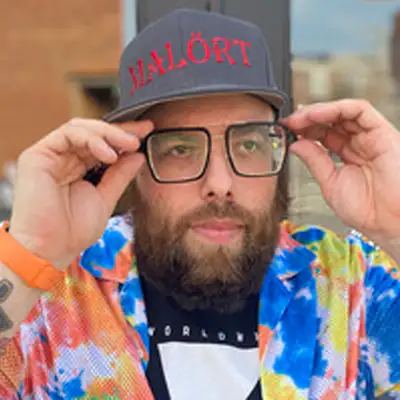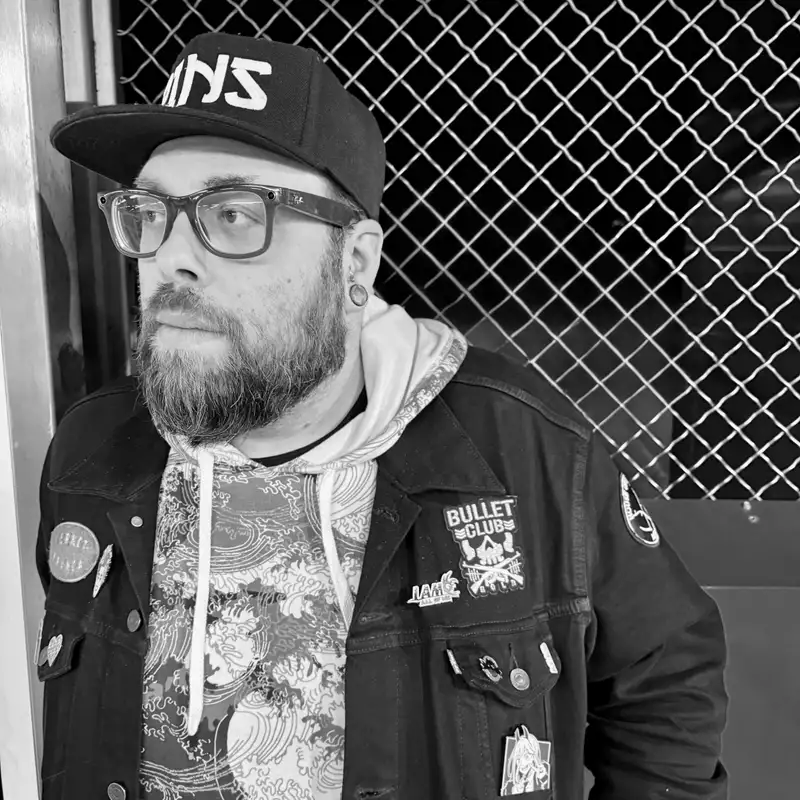
Shaun Stewart of Patterson Pins
Download MP3Rob Lee: Welcome to the truth in this art, your source for conversations connecting arts, culture, and community. These are stories that matter, and I am your host, Rob Lee, except no substitutes. Today I am thrilled to welcome a returning guest on to the program. My guest is killing the business, one cocktail at a time. He is the HBIC of Patterson Pins, which is one of the oldest duck pin bowling alleys in the country.
It is located in Baltimore, and a little over a year ago it was reborn, getting an arcade gaming and vapor wave soak rebrand, and of course, with some great drinks. So please welcome back to the program, Sean Stewart. Welcome back to the truth in this art.
Shaun Stewart : Thanks, man. It's been a long time that we should have done this before, but now I have like a moment in my life.
Rob Lee: Look, that is a question that comes up later, but thank you for coming back, and as is the custom. You know, you wore them in the first one, but I got to say it, you know, thank you for wearing your glasses. You know, as four-eyed individuals, I'm seeing so many elastic people. I'm seeing so many contact people. I'm like, no, no, no, put the specs on. Be a real person.
Shaun Stewart : I know. I've always used it like now. Like I used to bartend with contacts in for a long period of time, and then they just aggravated my eyes, and then I started wearing glasses, and then like I get with the connection to people, it becomes a little bit different now too, right? Like I don't feel like, I feel like I'm not that typical bartender behind the bar that's just going to talk down to you the whole time and, you know, judge your situation of you placing your order, even though I'm probably going to do that anyway. At least now on the flat brim hat and the glasses and, you know, looking like I'm a little bit more relaxed, allow somebody to open up a little bit more to me and not feel like I'm going to judge them for their vodka soda.
Rob Lee: So now I'm never going to open up to you again, because we have conversations when I show up to your spots. It works. It works, man. You know what I mean? So one of the things that's been a thing since, because this is a, you know, as you said, it's been a while, it's been a couple years at this point. And then one of the things that's remained true in that is this notion of killing the business. So I'm picking up on the Young Bucks reference there, if I'm picking up on that correctly, but apply it to, you know, what you're doing it, doing. I understand that it's sort of a reimagining of the business and your business is cocktail and that all works. But could you, you know, give us a bit of your philosophy on cocktails and things of that nature? Yeah.
Shaun Stewart : So to go back to killing the business and the reason why it's like in my bio and what it is, is because I believe there isn't really rules to this anymore, right?
There was the strict, I'm going to put in quotes, right? There are these strict rules of you have to do this to do this, to be felt like you're a proper bartender in this and you're not going to get noticed unless you have this amount of knowledge in doing this or working in this space. And my reason they're killing the business is like, why does that matter anymore?
Right? Why does it matter that, you know, I can't use the fun ingredients that I want to, why can't I put Kool-Aid into a drink? It's going to taste good.
That's what matters, right? Why can't you come into a space and get like a dirty martini and then go play Marvel vs. Capcom 2 with your friends and feel like you're still in a fancy environment, right? Or in a place that you can enjoy yourself. And that's kind of what I mean by that more is like, we shouldn't take these things serious. We should just enjoy this time.
It's a whole different world that we're living in when the big cocktail boom in the late 80s and like what gets mid 90s to early 2000s when the general public was starting to see that trend happening and having speakeasies and being quiet in the corner and all those things that be in a cocktail environment, it doesn't matter. You should enjoy yourself into space. You know, I should be able to go to a bar and just get a beer and a shot. It doesn't matter how amazing the bar program is and the bartender should understand like people just want to enjoy what they want to enjoy and we're giving them an experience from every single thing that we're doing in the space.
Rob Lee: And that philosophy, because you touched on a little bit there, that blends even into the hospitality part as well. Because, you know, I think that's the thing that has been re-litigated really over the last several years of, yeah, I can get this and, you know, go elsewhere or I can make this at home because a lot of people are kind of staying at home and so on.
And it's like, yeah, does it taste good? What's the cost looking like? What's the environment like? And do I feel good leaving this place or do I feel good coming to this place where I want to come back to the place? Right.
Shaun Stewart : Yeah, I mean, that's kind of why like we'll talk more about the space that I'm in now. But that was why gaming became a focus downstairs, right? So we understood that we can go to any bar in the city and get a proper drink and get something that is a great experience. Doesn't matter if it's just the little dive on the corner or we're going to something super high end. Like you can find a place that you can enjoy yourself and feel like that is. But you should be able to feel welcomed in that space and feel like you can kind of work in the environment. And with going with us with hospitality, it's also going back to paying our employees like a proper wage, right? Like that's kind of crazy.
Rob Lee: So unique.
Shaun Stewart : I know, right? Like I want to make sure that you have a living situation and make sure that, you know, you're not just trying to get something from the dollar store to eat, which that's super cool if that's what you want. But we want to make sure that you have the ability to afford the things that you think you need in your life. To be able to survive.
You want to make sure you have a roof over your head. You know, it's the same thing from a, from a guest standpoint. We're aggressively pricing some of our cocktails, mainly so then that person coming in here is understanding that you can still get a very fantastic drink for 12 bucks because they put the time and care to be able to make that work for you.
But then when we put a $20 cocktail on the menu, you know that we took our time and put something together that's going to be amazing and it's going to be worth the 20 bucks.
Rob Lee: Yeah. It's, it's funny you mentioned that. I feel like several of those talking points because, you know, prep, I was preparing for this conversation and part listening to our previous conversation and I'm talking to a coworker.
I was like, yeah, I'm talking to my man, Sean, later. And the thing about cocktails, right? It doesn't matter, you know, what it tastes like, you know, and I'm starting just breaking down different price points and so on.
And then because and I think since you and I had that initial conversation, I almost have a criteria of what I look at now. Like if I go to DC, it's like I'm already at $22. I just know that's where I'm at and it's just flat. I can go to the sort of hangout, pop up, activated space and I'm like, Hey, can I get an old fashioned? I was like, you can probably make this in batch. All right, let's see what you guys got. And then lo and behold, batch made. I'm like, cool and still $20.
Shaun Stewart : Still $20 and like to kind of push the curtain back a little bit on that. A lot of it is, is paying your staff to prep all that, right? And make sure you're having the right ingredients at the time.
It's going to take to do that. And you know, with me being the person doing the prep here, we get to change your costs a little bit differently for that reason. Like we were talking about like New York, right? Like I'm going to go to New York and I'm going to go to like my favorite bar in the city, which is like behind like a little Korean restaurant and it's like a little city pop spot, uh, five, six, seven, oh nine. And I'm going to get a $20 cocktail, but that $20 cocktail is going to blow my mind because they're crushing it or I'm going to go to the Katana kitten or super bueno or, you know, bar snack. And I know that yeah, I'm going to spend $20 on a cocktail, but I also know the staff and I know what they're doing and I know the time and care that goes into there. But it's when you're saying when you go to a place and you're just like, cool, I've got the old fashioned I got everywhere for 20 bucks. Yeah. Yeah. People are going to do that and that's perfectly fine, but we want to make sure here that if we are giving you that old fashioned for $20, it is from your standard, not even just our standard from your standard, feel like you got something that's above and beyond. Like the care it's open for the whiskey or how we made our syrup or what bitters we're using. We have to have that talking point to somebody.
Rob Lee: Yeah. And I, and that remains true just to set the stage because, you know, I've been following you my, you know, from location to location and it's remained true to the degree where it's just sort of like those threads and that sort of philosophy is there and it's kind of permeated the scene a bit. So instead of going back, let's go to right now. Let's talk about, you know, sort of the current location. Let's talk about Patterson pens. What's the story behind it? How did it all come together? Give us that sort of introduction right there.
Shaun Stewart : So, I mean, you know that I was running him and yards and consulting for that. And one of the owners there was working with another person that he buys building with to do rental properties and everything. And they had an opportunity to have like a mixed use space, right? And they were really eyeing the old Patterson lanes building, which is what we're in right now, which was at one time the oldest active, not just up in Bowling, but physical bowling alley in the U.S. And when they kind of went under right before the pandemic, they really aggressively tried to purchase the space because they wanted to do something that was kind of fun for the neighborhood, try to keep bowling in some way, shape or form into there and just try to make it another thing for the neighborhood because one of the owners is like lives in the neighborhood. He's lived in the neighborhood for a while and he's seen things go and come and all those kind of things and wanted something that was going to feel kind of fun for the neighborhood and allow everyone to experience something. So, they reached out to me and asked me if I wanted to do a cocktail program and I pretty much didn't want to. You know, I've done enough in the city with it. I was really kind of enjoying doing this instant gratification and trying to get super creative and trying to figure out, you know, how to do crazy batch cocktails like we were talking and try to keep them in your hands at 15 seconds and then they got back to me and pretty much said I could do what I wanted. So, for that reason I said yes.
Surprise, right? When you have the opportunity to kind of put yourself out there and put your stamp on every moment from the way the bar set up, from the way the room flows. And from there, I just wanted to do everything that I thought was what I missed in cocktailing, right? Having an opportunity to have a really good drink and then have something to do. You know, when I go back home to Philly, me and my partner, Elisa, the first place we go to is Bar-Kit.
Nice. You know, it's not that I want a beer. It's like I just want to go get a drink and then go do something because I feel sometimes just sitting at the bar is fun but not every single time. It feels like, all right, we're just sitting here and now what are we doing next?
Are we going to go on our phone and try to figure out the next place are we going to or are we going to go do something? So, when I pitched them more of this kind of like arcade entertainment lounge downstairs, we kind of like fully ran into it, which was really cool. So, we get to do, we were talking about cocktailing that feels in the best way, shape and form to say it, which isn't the best way to say it, is not pretentious, right?
We just want you to enjoy yourself. You want to really well put together cocktail. We're going to be here for you for that. You just want a vodka soda or whiskey and coke or something of that mindset. We've got you. You want to just do a beer? Perfect.
You're not drinking today and you want to partake in something that looks like everything else that everyone has. We have an extensive NA menu, right? So, we get people to enjoy themselves in the space, let alone as dictating exactly what they're doing. Yeah.
Rob Lee: And thank you. I'll chime in with this from a personal, I'm not only a client, I'm a member, you know, that's sort of a vibe. But, you know, we get these milestone birthdays. It's probably that a Pat and Oswald joke will have you get like every 10, there's a birthday, but not like 41 or 43.
Shaun Stewart : It's just like, it's a waste of cake and paper, right? But yeah.
Rob Lee: But I want there for, I want to pat us and pens for my 40th birthday. And it was sort of a thing. And I was just like, I'm already in the sort of stage and I want to do something that's memorable and something that's cool. And, you know, sort of the 39th birthday, no, actually, the, the, that was sort of the month is like the leading of this sort of month of birthday oriented stuff was Patterson pens. And then, you know, definitely the battery of going to Mardi Gras. That was sort of the month, but you guys started it off and that's part of that memory of the 40th for me. And it's a special thing.
And I was able to be there with, you know, close friends and family. And the only thing that sucked about it had nothing to do with Patterson pens is just that the Ravens lost that night. And I was like, come on guys, come on guys, I had nothing to do with that. It was, it was some Philly guy that was there. I was about to start yelling and I was just
Shaun Stewart : like, no, I would have definitely yelled at that Philly guy. That guy was awful. He was terrible. He was terrible. Yeah. I don't know why that would be a thing. Yeah.
Rob Lee: I was just like, what are we doing? Like the Eagles already won. Let us enjoy. We watched. Yeah, yeah. I know. We watched they call and do his thing. What are you talking about? But it was just a really cool experience. And I had family and friends who were there all from different backgrounds there to celebrate me and celebrate the moment. And they all felt welcome and enjoyed the space and were able to do so many things from doing the duck paying from going over there to playing some of the arcade games or just even getting a drink and just enjoying the sort of ambiance that was set up there.
So really high marks for my family. And I'm very selective of where I'm like, Hey, I can go here. But you know, I don't just invite and invite everyone everywhere. You know, right?
Shaun Stewart : I mean, that's really what we tried to put into this space, right? It's why sat in a space for months and just like stare at a wall. So like, what do I think makes sense here? Or like, how does this flow go this way? Where I still do that to this day. How we added our like menu when you walk in the front door that has all photographs into it. So people can understand what we have in this space to now putting that downstairs to give people that chance to be able to see everything in this space and live it the way they want to.
And it's it's hard to go to a lot of places that have, you know, multiple uses or even a single use and feel that like it doesn't matter where I'm in this space, I can find something for myself. And I think it took us about a year and three months. I feel like we're at a really good spot from what we got going on.
Rob Lee: Well, with that, that kind of takes me into this, this next question. So having a chance to breathe as you touched on earlier a little bit, we were going to do this interview like last year and schedules that just didn't work out. But so with that time in it and being really dipped in and having this experience, because I've been there from sort of early on to, you know, a few weeks ago, a little bit more recently, what's the experience been like running things now, like, you know, more than a year into sort of the venture what's been working, what's on the horizon, I have a follow up, but those are the first two parts of it.
Shaun Stewart : Yeah. I mean, to even backtrack a little bit, I was, you know, consulting for two different places the same time at that. So it's like technically putting three businesses together when we had this moment. And now I'm doing one, but there's other things in the future to do, right? Because I felt that I couldn't give myself 100% to each space, right? And seeing the way this was progressing since day one, this was me in every spot. So it was better to, you know, now get that time to breathe in this space and be here 10 days a week and understand how the flow of the place is going. And like the things that are working is, you know, one, the hospitality of being able to greet every single person that walks in the door, right? It was the one biggest thing that I teach my staff here, like that's what you have to do.
Yes. It doesn't matter how busy we are, doesn't matter if I'm making seven drinks in front of me, we see the door open, we got to say something. So it's about trying to welcome people into the space. And I think that's been working really well, where now it's the evolution of letting people see how the place functions when they walk in the door by seeing the way the drinks are to see how downstairs is functioning.
And kind of given that into there. And I think now how we've gotten our games and how we presented ourselves through socials with, you know, our marketing team and all that, I think is now getting into a space where, you know, we're getting recognized for what we're doing. And people now are finally understanding that it's not the bowling alley that it was at one time, right?
We are a cocktail bar with an entertainment space and people are getting that. And you can understand that, yes, we don't have food here, but it's more because we're in a historical building and it would have been too expensive to put a kitchen in. So please support our neighbors to be able to bring that in, right? So it's now building a different part of like the community love that we can do. And I think that's where we're finally getting this stride in what we are.
Rob Lee: So I do want to comment on that piece as well. Showing love to the neighbors because there's what, what is that Johnny Rads across?
Shaun Stewart : Yeah, Johnny Rads is directly across from us.
Rob Lee: So in that, you guys are the new kids on the block. So really sort of showing that traffic and coming in as a, as a good neighbor and it's like sending some business that way and air sending business your way and all of that sort of stuff that happens. And I'll just say it from my own vantage point as a culture guy and documentarian is that so many places just aren't doing that. They're acting as if they're on an island. And then six, eight, 12 months later, oh, your guys are selling your place because it's like you're acting as if you're not a part of that community. Like if someone is having a good time, enjoying playing the arcade games, enjoying bowling, enjoying the drinks and all of that, they're going to want to eat. Or if someone's having pizza like, Hey, let's keep the night going. You know, they have an arcade across the street and they have cocktails.
It's, you know, it works together and just folks don't connect those dots sometimes. It's arts districts that come to mind that have several places where folks can be at and they use that term in marketing where things can be sticky. And it's just like, I go back to the county, go back to wherever you're at. And it's like, stay out here for a long time, enjoy it. Yeah.
Shaun Stewart : Exactly. I mean, I took some of the, the philosophy of some of the places in Philly that I used to go to when I was last living there, right? Like, garage on Paschianc was, was a great representation of kind of how we flow with food.
Right. When they first opened, they didn't do food at all. They had a $250 cup of noodles behind the bar that they had to purchase twice a month. So they could have that to be they sold food, right?
But their big thing was, it's like, you got passion genoes right across the street from you. Yeah, just go get a cheese stick and then come in here. And then because they don't have beer or anything, so you can come in here and have a beer and relax. And then, then they got ski ball machines and then pinball machines and then it became more of a community place for people to hang out. And that was kind of with my time hanging out there, like that's kind of how I've been trying to push it here.
Right. I know Mondays, it's half price pizza across the street, but you have to eat in house. That's dope. Get a beer, eat half your pizza, put in a box, come over here, have another beer, go play some games, you know, try to live in that world so that everyone can be able to kind of enjoy themselves.
Rob Lee: And that's really what it's about. And one of the things I want to also touch in on is, you know, I talked about acknowledgement. I was one of the things you touched on. So talk about sort of, you know, you have like this great cocktail program, but also you have this like in a program and there's some notoriety, Baltimore magazine sort of stuff.
Shaun Stewart : So let's talk a little bit about that. Yeah. Baltimore magazine and the readers poll. We got nominated and won best cocktail program and best non-alcoholic program in the city. Congratulations.
Thank you. As much as I can say that I'm super, super proud of the cocktail one, I am overly proud of the non-alcoholic one. From a person who doesn't drink as much as they used to, right? It's not that I feel like it's not healthy or it's, you know, not great for me. It's just a lot of times going out and having drinks, like I do this for a living and I kind of just don't want it, but I want to have something unique and fun and different. And that's kind of how I fell into this non-alcoholic world where there's some really cool ingredients that we can use to supplement some of the stuff that is even in a full-proof cocktail, right? Like we're using the Pathfinder, which has become like my favorite thing in the world to drink at the end of the night. It's just like a non-alcoholic Amaro that I just use as an Amaro in a cocktail now.
And it doesn't mean that it's non-alcoholic. It just has the flavor profile that we're looking for, you know, and then using some of the other stuff that we have, like the Amare and the Floriel and even Ritual, to be able to build out these cool cocktails that someone can have, you know, something well put together and, you know, in the same glass, in the same presentation, in the same kind of care and thought put into it, then just being an afterthought. And with having so many more of my friends either having issues with alcohol or just not wanting to drink anymore, it was more how can I have them come out to a place regardless of if it was here, hand in the yard, blue bur, wherever I was working, like how do we get that person to come out and feel comfortable spending $15 on a non-alcoholic cocktail? You know, where someplace you're going and you're getting $4 mocktails that are just lemonade, which sounds super dope. Like I'll go to Applebee's and do that or Red Robin, I'll drink that all the time. You know, I'll have some Monin syrup in there. I have no problem with that.
But when we're living in the environment that we are, we need to make sure that we have something that someone's going to feel comfortable with and feel okay spending the money. Like we only have four beers on draft and one of them's a non-alcoholic beer all the time. And we know that we are not going to crush that keg as much as I'm going to crush the IPA keg that I have. But that person who comes in and knows that we have it on draft is going to be super pumped and excited to have that. And they're going to remember that, that they could bring no friends who want to hang out with them and they feel that they can now drink something non-alcoholic around them. Absolutely.
Rob Lee: And, you know, like I drink differently. I drink more on the weekends and I don't really drink super, I don't drink a lot on the weekdays, but you still want that social component, you know, after spending some time not doing a social thing and wanting to do the social thing. And, you know, sometimes I'll just go to a different spot because of what it has to offer. And that's a segue into the next question. But, you know, during the week, I may have a non-alcoholic beer, which was not a thing like three years ago.
I was not drinking those and I'm like, oh, this is delicious. This works. This fits as a quality there. I'll get like a, what is it like a Peroni double zero or something?
Shaun Stewart : Okay, the Peroni's are good. We really are big with the Barrow. Okay. As much as I don't want to say that I'm going to enjoy a celebrity owned brand, but I don't care. Tom Holland hired the right people to crush that beer because that West Coast IPA they have is the first at a beer that I had that had to say, mouthfeel and like texture of that beer that I was missing in an NA beer. Like someone would be like, cool, this tastes really good. But like this one's like, it's a West Coast IPA. There's something, what the hell are they doing? Right.
Rob Lee: And then there's other instances where I go to what in the Ander and they have these, they have this, it's almost like a, it's like a coconut drink that's really good.
And that's what I'll go get. Cause it's like, I want a coconut kick throughout the week. I start off the morning with like a coconut trip.
Well, sorry, two coconut triple cortados. And then sometimes at the end of the day, I was like, and the drink is so good. Just the regular like non-alcoholic joint there. I think it's just a Cocoa Colada. I think it's the name of it. I'm like, damn, I wish I had some rum to go in here. Is that good? I want to add alcohol to it.
Shaun Stewart : You want to add something? We have one on our menu that I play second in the Pathfinders, like death of a mocktail competition, which is like ube, coconut cream, and like calamansi and pineapple. And like, I just built pretty much a Filipino pina colada with an Amaro in it. And it's the one thing sometimes you don't see it. Like you see that like NA cocktails kind of toe the line of being sweet.
And it was really great to make this like super earthy and like also like bright purple. But you know, you said one of those out, you know, we've made it with alcohol because people want it that way. And we've, we've built a lot of our NA cocktails to be able to supplement someone who wanted to add alcohol to it, or it is, Oh, you like this, here's our alcoholic version of that cocktail already. So then you kind of have that moment for people to partake and invite in the way they want to. Yeah.
Rob Lee: And the last point I'll say around the NA piece is I was at one of my buddy spots, just just having a drink post that because you know, your boy had a drink named after him. So I always had to go there. It's like signature drinks. I got a, you know, it's almost like it's like where's Waldo spot Rob Lee having a Rob Lee.
It's great. And as you remember, it was a person coming in, it was a little, little dickish. And I'm sitting at the bar and I'm like, I post up, I don't try to cause trouble, right?
And you know, the person's like, yeah, you know, you have anything, you know, to drink and so on. I want to see a menu. It's like, Oh, we have a drink menu. Oh, I don't drink.
You know, I don't, I'm not this age because I drink. And I'm like, all right, what are we doing? And the person's been very nice and charming. Say, Oh, well, we have a nice in non alcoholic menu.
I don't drink sugar water. I was like, what is this? But what you're describing is intention and work that's done into it, making something that has like flavor notes that is not just as you were touching on the red robins, uh, lemonade or have you, but something that is a constructed, thought out, like drink that just happens not to have alcohol, but could have it in here. Yeah.
Shaun Stewart : I mean, don't get me wrong. I want that sugary lemonade from red Robin way too much. Moberly who works for Monin would hate me if I didn't say that I would really want to have that, which shout out to him with helping to produce some of the best syrups that are over the counter that will work in anything.
Um, but yeah, it's, it is that world where people think that they're just going to get juice and sugar in a glass as a non alcoholic drink. And it was that for a while. And there are still really prestigious bars in not just our community, but other communities still doing that because they don't see the longevity or the life of that for the guests. And again, it goes right back to hospitality. It goes for us trying to get somebody to think they want and not just the thing we want to make for them.
And it took me a while, like in my bar world to like understand that and be like, no, this person just wants a vodka soda. Yeah. Just make that. Don't try to force them to get the thing on the menu.
This person wants a cocktail with none, like no alcohol in it, but like they like these flavors. How do we get to there for them that they feel like they're getting something great? That's not just like, here's this, right? Like we want to have that moment for people. And it's now trying to be that teaching moment in the best way possible for someone coming into, we just need to say it our space. Like someone will come in and ask me what the best cocktail is on the menu and I'm never going to give them that answer. Yeah. Because that's not the cocktail that you want.
I already know that. So like, let's have a conversation to find out what you like. And then let's make that instead of like, cool. My number one selling cocktail is, you know, right now it's the missing Shinobi, which is like in a Chinese to go box. Of course, that's the whole selling point, but it's like a lower ABV cocktail, right? It's a peach and chili soju with passion fruit and cherry blossom, I see.
And I just wanted to make this like low ABV crusher that just was in a cool container that like, know that that can sell 50 of them at a night. And the person who was like asking if we have long islands is not the person that's going to go for that. You know, and it's now about educating the, tell them that they need to find out what's going to make sense for them. And not just what I think is cool. Because what I think is cool is hydrating you and I'm just going to give you water. I can't mess that up for you.
Right? I know that you're going to drink water and you're going to be okay with it. But if I give you a cocktail that's like gin forward with basil and you don't like any of those flavors and that's my number one selling cocktail. I lost you.
Rob Lee: Well, your approach and I've had multiple instances of this that you've never steered me wrong. You would ask questions and so on because there are certain things that I've discovered over the years. I was like, oh, I can't have cherries or passion fruit and that's good. And you're like, yeah, cool, man, whatever.
So what do you like? I was like, oh, well, this, this and this. And then here's a drink that just comes out of your wizard like fingers. That is amazing. That's just what it is. And one of the things that I've noticed, and this is sort of the segue to that previous chunk is this notion of the third spaces, like, you know, the place I referenced earlier is a third space. I think the history of Patterson Penn's in this previous iteration and where we're at now, you know, being a, you know, bowling out, being duck pen and now being sort of a place that has, you know, RK, but really it's a community spot that has this sort of mixed shoes. You know, aside from being a business owner, what do you think of third spaces?
Like, what's the importance of it? And like, how do you, you like look at just this notion of folks being outside? We were touching on a little bit earlier, but folks being outside of their home and being in a space like yours. Yeah.
Shaun Stewart : I mean, well, the great thing about third spaces is in my opinion, is it allows you to have something to do that's different than what's in your own environment all the time.
Right? Like, you're not going to go to a third space that is exactly like your apartment or home. Like, you're just going to stay home for that.
Right? And yes, we like, you can stay home and play games, but are you going to be able to play vintage arcade games or play big buck hunter in your living room? No, I don't know if you have that, right? Or can you play duck pin or are you going to be able to make that overly fancy cocktail?
Or are you going to be able to hang out with 25 of your friends in your house? Right? So that's why I think like third spaces are a big deal. I don't remember the article and I've got to butcher a lot of it. But there was a person who wrote, I think it was like in the late nineties was writing about the death of kind of like what the proper bowling alley was, was going to change the way society functions outside.
Right? Where there's a space where people can go and be a community moment and go hang out with multiple different groups of people that they maybe not didn't hang out with and be in a space and all of a sudden you become friends with someone you didn't know or, you know, you got to be competitive with somebody in a game and like have that camaraderie. And we kind of lost that in some places because it's not the direction that everybody wants to go. Right.
And what I really like what we're trying to do is we're trying to find bits and pieces for anyone to come in here and find something. Yeah. You know, like for that fighting game fan, like yeah, I finally got Marvus Capcom for you.
You know, finally got the second one for you. I mean, now we don't have to play Marvus Capcom 1 and the Japanese 1, which was too difficult for most of you guys because it was a little bit harder. Or when I found the one-off Japanese Dragon Ball Z fighting game that all the moves are overly precise, I understood why you didn't play it then. I get it. You know? But we learned upon that and now we, I think we've got like our first time with the 14 games that we have down there. I think we finally have this moment that anyone that goes downstairs can find a game that they can enjoy regardless of age group, how much are into games or anything. I think we found this really great world where now people can come and bring all their friends into the space. And now I feel like, oh, we have to go here because this person likes this, but then we have to go to this bar because they have these ingredients where I think that's the real great thing about what we're trying to produce in this third space is finding that one moment for anyone who needs to get out of the house or just doesn't want to stay home at that moment to give them a place they feel comfortable. And that's really what should be done in third spaces, right?
Like I want to go to an art museum and have a drink, but that doesn't happen all the time, right? So then how do we get that to kind of go on too?
Rob Lee: Yeah, that's good. And thank you. Thank you for that. So I've got a couple more questions I want to hit you with. And one is very specific. I want to talk about the menu, the menus, because there's a rotation that happens. You know, I see wrestling, I see video game references across your menus and for multiple years at this point.
And even your menus are in video game cases. I remember the last time I was there, I was judging the group of older dudes that came there. And I was like, what drinks are you getting?
I'm dumb. I'm listening and judging while I'm enjoying the spoke drink that you made for me. And even your tab handles are video game references, you know, like the Muriel Powerups and so on. So, you know, talk a bit about, you know, sort of, you know, unexpected sources of inspiration because, you know, those all track, but, you know, sometimes I would imagine, you know, there are certain things you're like, these people don't get this. This is good.
Shaun Stewart : And that's what's going to be, right? Like, I understand like our menu right now is based on fighting games. And I know the average person that's walking in here is not going to know a single reference. And that's fine. Right. We were utilizing this as kind of like something to push our staff and to push myself, right? To build a theme menu that's going to last for six months. Like, how do we do that?
That's going to be fun month one to month six. So why not get inspired by a game or a game series and kind of have that moment to have this tangible menu in your hand. So when someone comes in, you get that nostalgia moment of, you know, from the person telling me it's a DVD case to the other day that it was a PlayStation four game and I'm just like, cool, man.
I hear someone, someone, someone told me it was from GameCube. I was like, cool, man. Like, whatever.
This is where your references. And that's great. But by doing that, like their last menu being Pokemon and our first menu being the Yakuza like a dragon series, we're able to produce cocktails in the space that are really cool and fun and unique. But every time that we do it, it still feels like it's in the space. Right. And with other places, like, yeah, using wrestling or video games or whatever pop culture reference that we could find at that moment to be able to do that is to build that nostalgia moment for somebody. Right. When they finally get that recognition of understanding what a scorpion deftrop is, right?
Or the silhouette that we have on our menu and understanding that, you know, it's a Morgan reference, but what game is it from, you know, in having this moment? It's really cool to have that for somebody to enjoy that and then allows the staff to get overly creative because now the staff isn't tied into I need to make a vodka cocktail or is this a whiskey cocktail and it's got to be brown and it's got to be stirred. And it can't be that enjoyable because anyone who wants whiskey doesn't want that. No, you get to actually enjoy yourself and have the staff make you something super cool. Yeah.
Rob Lee: Yeah. It's, you know, like, and being there, I have seen the menus and just different elements, even for my own crew or even just people I observe when I'm there because, you know, part of what my job is is noticing, right?
And just seeing people for more. Is that like the power from Mario right there? Or is like, you know, so what's this menu again? It's like, it's a DVD. It's a case so heavy.
Shaun Stewart : But you're going downstairs and you're seeing all the weird 3D printed stuff that we're doing in this space. You're like, wait, your straw container is a blue and orange Donkey Kong barrel? Like where the hell did you get that? Or like, I never saw that logo from Zelda.
Where did that come from? But you know what you have that moment and that's something really cool that we've been able to incorporate in this space. Again, it's that nostalgia, like, that, uh, ADD moment for somebody, right? Like where it's all just shiny colors everywhere and all of a sudden all those shiny colors come together and now it's like this, oh, I get it now.
Rob Lee: And I can almost see it is like, yeah, I want the thing that has the thing. And it's like, cool, you know, like that's, that's what my partner will say. And I was like, you mean, because I'll be very specific.
Oh, you, you, you mean the, the reference to this video? And she said, yeah, just go get it. It's like, cool, cool. And then suddenly it's like, yeah, I like that video game drink and it starts to build on it and it's like, I like that video game drink too. I like that video game place that has the drinks. And then now it's, this is just where I go now. Yeah.
Shaun Stewart : So you get that photograph online of someone holding the, the missing Shinobi in the Chinese to go box and you're like, wait, that every time he's served that they're like, oh, it's not ceramic. Like, no, I ordered these online.
The same ones that I would have got in any other Chinese restaurant that I would have had noodles into. I mean, don't squeeze it too hard. Like that's the only thing I can tell you, right? It's going to hold the liquid. You know, and we really try to do that with like our last menu, having something in like a Capri Sunbag to have these moments for people to have that almost like kid nostalgia or like super shocked moment that they got something super cool. And I guess you could say an arcade bowling alley.
Rob Lee: So continue down this, this theme or creativity. When you're building out a new drink or creating a new theme menu, when do you know, like, you know, I definitely have to follow the rules here from trying to really make a riff on this or really hit this. Or one of those moments where it's like, I know that I'm going to just do something completely different, but it's still going to work. It's still going to taste the same. It's still going to be a hit.
Shaun Stewart : Yeah. I mean, I have that on one of the menus right now, right? I got cracking skulls. I wanted to make a mezcal watermelon, Jagermeister pineapple for that bronca cocktail. Right. Well, not for that bronca. I wasn't supposed to have that in there.
That became a mistake and I grabbed the wrong bottle to try to balance something and I put a bar spoon of Furnette in there and all of a sudden it worked. Right. But like that was me trying to make like a tropical cocktail by using ingredients that I knew that were going to be questionable for somebody.
Because sometimes we want to push that element, right? We're, we try to have a cocktail on each menu that has an ingredient. When you look at it, you're like, what's Mountain Dew reduction? Or what is black cherry Kool-Aid shrub?
Like I don't know. These are not words I see in cocktail menus, right? But then you're getting it in a cocktail bar and then you get a cocktail with it. And you're like, oh, that was just really good.
Yeah. Or the person the other day is like, I can't drink Jagermeister. And I was like, dope. What if I sold you it was a German herbal liquor and they looked at me and it's like, it's the same thing, you know, like do the shot.
You don't like it. That's cool. But going back into like following the rules and not following the rules, I, I learned not very quickly, but I learned at a point in time that the rules don't really matter. What at the end of the day, what matters is what's going in that glass and how it's going to be presented and how it's going to taste. How you get there might be following some traditional rules of shaking citrus and, you know, doing different dilutions and stuff, or maybe you want it to be under diluted. So you decided to stir that paper plane that is the only way that I actually really want to pay for playing. Because I want it to be more acidic to hide some of the stuff that's in there. You know, like there's those moments with drinks where I feel like rules don't have to matter, but you still have to build it on structure.
Right. So you still have to figure out that, you know, element of strong element of sweet element of bitter, but you have to figure out those elements into there to be able to still produce a cocktail really well. But like, how do you get there?
There's no rules. Love that. Yeah. It's really cool teaching, you know, like I have a couple of people on the staff that have never had drinks on menu, maybe didn't start bartending until the first month that we were open. But now they have cocktails on the venue that they're building themselves and it's like watching them being able to be taught to just make something really good and not have to, you know, feel like you have to make the best daiquiri in the world to make a really great drink. You just have to put really good elements together to produce something.
And maybe that person believes it's like a daiquiri and that's cool, but that was never the direction you wanted to go to, but that's your best way of selling it. Awesome.
Rob Lee: 100%. I think of some of the specifics when it comes to the way I order coffee, right? Yeah, I go to, I would go to the same place, especially known at the height of the pandemic, I would always go to this one spot. I was like, yeah, if I can get like a flat white and I would always get more coffee because I want something that's more coffee forward. Yeah. That's my personal preference.
And, you know, the person was like, you're not going to do a longer pull on this and it'll be stronger on the coffee and it doesn't, it's not going to cost you an extra shot. And I'm like, oh, let's, let's collaborate on this. Let's, let's build this out. And moment, right? Yeah. And it's something that hits. So the point of it is when they see me, because it's not just me being a number and I'm a creature of habit, I'm going to keep going to the place until I feel like they've disappointed your highness and then you just won't see me for a year or two.
You know, there's a, as a place I just don't go to as a result of that. But ultimately the person would see me and it's like, oh, I know what you want. We're going to get it loaded up. You know, so when I get my, um, cortados in the morning, every now and again, I keep them on as I was like, no, no, it's just going to be a red eye today. It's like, oh my God, you switched it up. It's like, we already had the coconut syrup pumped and ready, sir.
Shaun Stewart : Well, I guess I got to get that now. I mean, my, my, my coffee go through drink is an espresso and tonic. It's good. You know, and like that's literally what I want. Cause I, it's not that I don't like to taste the coffee. I unfortunately just like to taste the caffeine. So I drink way too much of it.
And I'm not saying there's a monster exactly next to my MacBook right now, trying not to drink that right now. But I find that like when I start drinking caffeine with carbonation, I enjoyed a little bit more. So I got turned on to that and turned on to espresso and Mexican Coke. And then that turned into now putting a shot of Furnette into it at certain times and then making like the best simplest cocktail that I possibly could drink in my life right now. Yeah. Yeah.
Rob Lee: I have a crippling caffeine addiction. I do this move sometimes when I still have some like ice coffee left over or really strong ice coffee, always put cinnamon in it.
And I'm like, yo, I still have some for Moose. So at least I'm going to go together. And the partner would look at me.
She's like, what are you drinking? I was like, don't worry about it. It's not, it's not even important. It's not even important. It's like, I'm enjoying it. That's all it really matters.
Shaun Stewart : Yeah. So at the end of the day, that's what it has to be. If that has to be my vice is caffeine. Fantastic. I'm glad I'm not doing heart drugs or anything. You know, No, it's true. Yeah. I mean, I work in this bar world. I mean, it's the easiest thing for an older culture, not the same culture that we're in now, but like an older culture. When I first started bartending, it was, you know, people were doing more drugs and stuff behind the bar and I didn't want to do that. So I just started drinking caffeine. Yeah. And I can get the same kind of feel they were at the time, but I didn't feel like I was going to die at the end of the night.
Rob Lee: So that's a win. That's important. That's important. And that's hugely important. I remember it was a bit, it was a funny throwaway that I think, I think it was, I think it was that time I was there for my birthday. You said something. I was like, oh man, this is good. It's all poison. He was like, oh, let this poison. And I started just laughing. I was like, the man has a point. Yeah.
Shaun Stewart : I mean, we're just poisoning ourselves every single time. It just depends on how much we're putting into our body. Yeah.
Rob Lee: Like what's the dosage? Are you enjoying the poison? Yeah. Exactly. So I got this like last two part real question. And I think this was the question that you enjoyed. I know you make these different riffs and these plays on like familiar drinks and in many ways you make them your own. I love that it's moving the needle a bit to the left, a bit to the right and making it your own. So with that in mind, what's a perfect six star big Dave Meltzer, like a level drink that you wish you'd created?
Shaun Stewart : There's two. All right. And I've taken both of those and did my variation of it, right? Mainly because you get inspired by something, right? You have this cocktail that, you know, blows your mind and you're like, why the hell didn't I think of that? And you want to do your own homage to it. You don't want to do the same thing.
You want to do something that just seems cool and fun and it's original. But at the end of the day, it's like, I could crush so many of these. I do that, right? Yeah. Uh, the first one was that JBGBs. That was that mustard cocktail. I originally had a mustard cocktail at V street in Philly.
It didn't always run the pandemic. So that's what I felt like it was okay for me to do this homage to this, like mustard drink that I had that to this day, I still don't know if I like it, but it was still the best thing that I had with my meal. And it still was like the best thought of a cocktail that I had. I was like, you made this like Corpse Survivor number two rift with like literally yellow mustard. It tasted like a pretzel.
That is super dope. I don't know what you did. I don't want to know what you did. I don't even want to the recipe.
I'm just going to make something that feels an homage to it in the way that I can. And I made that kind of like gin mustard, margarita, highball thing that I was doing, which was, I knew that I wasn't going to sell a hundred a night, but I knew I was going to make someone overly intrigued by this, like a weird thing that we did. And then the last, I guess, six star Kenny Omega and the Tokyo Dome cocktail.
Five six seven oh nine in New York, that I mentioned earlier. When I first went there, the very first cocktail I had was their Usagi, which was like a play on an aviation. And I haven't had a cocktail in a long time that I just took one sip and like could have just cursed all night about it because I didn't think this cocktail. We have a cocktail on our menu right now that is very much an homage to that drink, which is not the same thing, but it was just like, I can't have that cocktail anywhere else I go.
Where am I going to do this like Granny Smith, Apple, like juice cocktail that just felt like I was watching an anime at one o'clock in the morning and you know, like where am I going to find that? Right. So we kind of did that. So that was like probably the last cocktail that I had that just like, you kind of get angry and you're like, you look at this and it's like, there's nothing fancy about this, but it's perfect.
Like, oh, yeah. I mean, I go to other places too. Like there's some places that like Katana Kittman in and like, and, um, bar snack that I've had cocktails that blow my mind in Tennessee. The Fox has probably the best espresso martini that I've ever had and it's on draft and it's batched and everything too. So, uh, it was the only cocktail that I ever get there.
After that, it's just to cut day at mezcal afterwards. Cause then I don't have to tell you if the drink is really good, but, um, but it's, it's the best thing that I've had from them. And whenever we try to go back there, it's the one place we go and we have to have that drink, right? Like those are the drinks that are memorable and there's a little six star drinks, right? So the one where you know, you're coming back into a city, you haven't been into a long time and you have to get this one. Yeah. Cause if you don't, you're just going to hate yourself at the end of the day.
Rob Lee: That's good. That's good. And that's sort of the, the, the main questions that I have. So thank you for indulging sort of the first half or the first portion of the pod. I got a couple more questions, but this is in the rapid fire variety and a little sage like advice. Um, and it's sticking with the wrestling theme of that last question. Um, so here, this is this, you don't want to overthink these.
Shaun Stewart : This is a rapid fire one. You don't want to overthink it, but it's fine.
Rob Lee: I do the first one I know you're going to overthink. Um, you can only have two, like this would be at Patterson pens. You can only have two, like behind you where the Mew is that I see them. I've seen them you the entire sort of episode. Yeah. So you can only have two, uh, I WGP world heavyweight title, James Beard award, Stanley cup, or the Agio world class global bartender of the year award. Which are the two that you would have behind you?
Shaun Stewart : Oh, I hate you so much. I know. Oh man, my aunt's going to hate me. Um, I, I want the bartender world award and I want the heavyweight title as much as I want that Stanley cup as much as I want that Stanley cup. I don't want any of that bad juju to happen to my team. So I can't have that year because I'm going to drink out of it. In a way, I can't have that in this space. So world title bartender of the year.
Speaker 3: Here's the thing. This question came up with the last time I visited you, we talked a little bit about hockey and I was like, I'm going to troll him in a few weeks.
Shaun Stewart : I, um, to go back to the quick before we go to the next question, there's been something in my save listings on Amazon for the longest period of time. And it is a Stanley cup popcorn maker that I can't buy. I want it. Can't buy it because then I have to touch it and then the flyers will never make the playoffs and they will never get a Stanley cup because I have the stupid Stanley cup in my apartment.
Rob Lee: You don't want to, you don't want to watch it. You don't want to watch it. Um, so this is the next one because you're, you're, you're a Philly guy. I got to exclude, I got to put a qualifier on there.
Shaun Stewart : I've been wearing a sixers top. Yeah. It made the playoffs. Okay.
Rob Lee: Excluding pretzels. Yeah. What is your favorite bar bar adjacent sort of snack?
Shaun Stewart : Oh, so we went to a bar, um, in that city.
Rob Lee: Um, or just generally, just generally like, yeah, but I'm just excluding pretzels because I have a shorthand. I like your pretzels. I like your doughy, brady stuff.
Shaun Stewart : I spent enough time. I feel like there's maybe a certain style. Yeah. A hundred percent. Like doesn't it be overly breaded? Like when we can talk for 20 hours on that. How pretzel talk? Yeah. Pretzel talk.
There you go. Um, if I have to say the one thing when I go home and I have to have, uh, it's typically going to triangle tavern off of Pash Yunk and either getting their cheese steak or their wings. So both vegan, right? So either they're vegan wings or they're vegan cheese steak, uh, by far one of the best items that I've had in that city in a long period of time. And I've had other people go there and have had it and they're just like, this is great and it's vegan and they don't really know that it is that. And that's one of the things when I go back home, that's what I have to have. I don't know if it's a bar snack. I guess the wings would be a snack.
Rob Lee: Yes. No, I think that tracks. It's like whatever you're having with it. I mean, you know, with some of the things happening in your neck of the woods, pizza is becoming a bar snack. So it's all good.
Shaun Stewart : I just want to get a, you know, super cheap logger and have a cheese, I have a vegan cheese steak or vegan wings and just sit at the bar that I think I feel comfortable at.
Rob Lee: That's all that really matters at the end of the day. Yeah. There's, there's a few bars where I'm like, this doesn't fit me. I had one situation years ago where I was with a couple of my buddies and a few words were thrown around because me and my buddies have a certain ilk weren't appreciated. And I said to one of my buddies, I'm going to stone cold stun this MF her, are you going to follow up? And he was just like, are we doing wrestling moves? All right, we're doing this thing. Yeah. He's like, this is the fight style we're doing comedy.
Shaun Stewart : Yeah. So I don't want to expect you to hit you in the midsection and then grab you by the neck, but
Rob Lee: don't want to do the fingers and all of it. So this is, this is definitely, I want this is insight oriented. Um, so bartending trend cocktail trend and that sort of vein of in 2026 that you just want to show this. Like we got to just, let's push just out of here. We got to get this gone. So many, I knew it would be many. This is putting you in a sort of a spot. Yeah. Um, as a dude would take, I knew you'd have several.
Shaun Stewart : Yeah, I have several. Um, what's, what's the safest one that I can say? That's probably the smartest one. Um, not everything needs to be clarified. Even though I'm working on a clarified cocktail right now for our next menu.
I heard. Um, but the idea of doing a milk punch or doing a clarification on anything, right? Like your old fashioned does not need to be clarified. Um, or there has to be a reason, I should say there has to be a reason for you to clarify something. Don't clarify just because it's something that you learned. Yeah. Yeah.
Rob Lee: Earned a clarification. Yeah.
Shaun Stewart : Like we're, we're doing one where it's going to help add texture and body to the cocktail. We're not looking to take like color or anything out of the drink. We're looking to make that drink smoother by clarifying it. Right. So like there's a reasoning why we're putting that together compared to this is a trend, everything needs to be clarified.
Rob Lee: That's good. That's good. And it goes back to the, and I know it wasn't the term that you wanted to use, but around sort of the being unpretentious in it. Like when I see that on a menu, I got to own it.
I'm a snob, right? So when I go there and I see it's like, a lot of words in here, what, what do you mean by this? What is this effectively? And I think one of the really, really cool things that I admire about how you go about your business is you make your stuff very, very approachable and relatable in a way. And in addition to it, you will explain it with a sort of, um, with obviously an expert, but almost like an overattention to detail that just gets it across versus, well, it says clarified on there. Now you should understand what this is.
Shaun Stewart : I mean, I'll also say the cocktail that we're doing on there, I might even put in the word clarified on it. We're, we're saying it's a wash instead. Because I feel that that takes away a question from somebody, but also adds another question.
I mean, like, what do you mean it's like coconut milk and cereal washed? What does that mean? Right. I want someone to ask that question then to see it and see clarified and then you're like, what do you mean? Like, what is that? You know, or you just saw the clarified cocktail on it and you saw it at 12 other bars in the city and you're like, you have that cocktail that was, you know, clarified at this bar and then you had it and you're like, this was the worst thing that I had.
That gives you a stigma every single time that you look like that on the menu. Right. It's going back to the Yeager thing, right? When you see Yeager on the menu, you had a moment that it wasn't your thing or tequila never works for me.
And it's like, understandable at times it is mental when you're looking at something, but then it also could be the condition that you had it in. Sure. Sure. You're chicken a lot of like Yeager bombs. Of course, you're chickening it up or in a downer. I would have been sick too. Yeah.
Rob Lee: I mean, that's probably one of the worst times I got sick was I had that. I had the Yeager bomb. I was like, I made that mistake. Probably shouldn't have done that. But also I started off with drinking a bottle of Cappacier and a 40.
That night because I was being an asshole. And I was like, oh, the last thing I had was the Yeager bomb. And I was like, I don't remember most of that.
Shaun Stewart : It was the Yeager bomb that did it. Not the bottle of Cappacier or anything else.
Rob Lee: Look, I was on one, you know, Buster Rouse is playing. And I was like, I might as well just drink this. So here's the last real, real question of this full podcast. We cover a lot of ground and sage advice. This is a thing that I really want to get some insight on. So there's a real effort. Like I think people are now in 2026 trying to do things that are low effort.
And we perceive that showing up requires a lot of effort. Getting off the couch after a long week, leaving those familiar spaces, going somewhere you may not know anyone. And for bartenders, artists or anyone in a craft based life, really, what's the value of putting yourself out there with other people that do what you do? You're out there traveling, you're visiting, you're being a part of this bartender universe in that cocktail universe and then bringing some of those lessons back that you're learning, whether it be at different conferences and so on. So talk about the value of that and the importance of getting out and just like, I got to get here and make this and learn about the industry and learn about the scene, learn about the trends and things of that nature. Yeah.
Shaun Stewart : I mean, we go into my life. I've been doing this for way too long. And I think now where I'm at is I'm finally where I wanted to be 10 years ago bartending. Right? Like I'm finally getting the right knowledge and the right things and meeting the right people and getting now the accolades that I wanted.
Right? Like I worked at all these other places and we got really cool things and, you know, be written up in Esquire and winning competitions. Those are really cool.
And those really helped to find and get me out of my comfort zone. Right? And I feel as a bartender, everything's just going to take time.
Nothing's going to happen next day. I got a really good question. And it's just probably like rambling a little bit. But when I first started bartending, the person who was teaching me asked me, what kind of bartender I wanted to be, you know, and technically I was working in a music hall. So, you know, we're expecting, you know, fastest, make the most money, all this. And I just wanted to learn why.
Yeah. Why am I doing what I'm doing? And I feel like taking that philosophy and understanding that I have to put myself out there and reach out to people that, you know, my anxiety and, you know, the way that I want to present myself and not go to all these places and not do all these things and not talk to all these people. I just want to put my head down and make really cool drinks and then everyone just buys them.
And it's never going to be a thousand percent that. And you have to put yourself out there and you have to just keep learning and pushing for it because it will come. You know, you will get the things that you're looking for in some way, shape or form. You know, I've seen people in this industry who, amazing bartenders who have left and then found the right thing they're doing, but they wouldn't have been able to go to that if they didn't start bartending and do something and went and put themselves out there. You know, and I feel, you know, with the way that I'm trying to present myself and the way that I'm going to these events and trying to get all this knowledge and trying to do all these things. When I was first becoming a bar manager and doing that, I'm doing things complete opposite from what I was doing.
Because I was told I had to do things like that, but that was never authentically me. And now when I'm able to be authentically me and, you know, have this moment of, you know, now I'm going to be calling all my favorite cocktails, six star in the Tokyo dome cocktails. And then having that moment, like 10 years ago, I probably wouldn't have had that moment with somebody because I would have someone look at me like I was crazy.
But now it's because I've met people that are very similar to me and have the same mental philosophy and have these things and having an ownership that stands behind me, which was something that wasn't always what I had, right? You know, having owners check up on me and making sure I'm okay. And like, do you need a day off?
Do you need me to get someone to come in? Like, I'm finally at a point where I feel that like all this work that I did is now becoming what it needed to be. And if I would have quit and didn't do these things and didn't keep pushing myself, I would never have been to where I'm at now. I wouldn't have this thing. I wouldn't have a 3d printer probably.
Rob Lee: Maybe you can print yourself the championship about us.
Shaun Stewart : I may or may not have a file to do something like that. But if I can get a belt, I just really want Daniel Bryan's vegan title because I think that's the only one that makes sense for me.
Rob Lee: That's really funny. Yeah. Just like you have a vegan ribera steak.
Shaun Stewart : I almost bought one of those jackets just so I can get somebody to sew a patch onto it for me. Just because it would be funny.
Rob Lee: Yeah. Yeah. 100%. That's really funny. So that's it. Thank you for coming back onto the podcast and spending some time. You're definitely my favorite bartender in the city. One of my favorite people in the city. One of the favorite people I've met through doing this podcast and even outside because we met before even doing this freaking podcast.
So yeah. Thank you for coming back on. And in addition to that, I want to give you the space and opportunity to shamelessly plug. Just tell folks where they can check out you, Patterson Penn, social media, all that good stuff. The floor is yours. Thanks.
Shaun Stewart : Before I do that, Rob, thanks for showing up and always trying to push me a little bit too and saying that I'm actually am doing really good things. Because sometimes it doesn't matter how much in your head you think you're doing good. When someone tells you you're doing good, it makes you feel better.
And I really appreciate all those words. Patterson Pins were in Upper Fells. So 2105 Eastern right across. Fantastic. Johnny Rads. We're here every day about Tuesday and Wednesday. Our socials are just Patterson Pins on everything that we're attached to. And you know, you get a chance, come in, swing by, get something that could be kind of fun. We'll find the right thing for you and you get to go hang out with your friends downstairs and kind of find out why we got nominated and won those awards. And why the city, you know, people in the city voted for us to have that. Because it's different than, you know, just getting Baltimore magazines or whatever else's award for that. This means people had to vote for us, you know, whatever they went on to that to do that.
And that, that's crazy. To finally have that validation from the city and having people just really enjoying what you're doing and seeing more and more people do that. And it's really cool. And hopefully more people like from this or just other things that we're doing, we'll be able to you know, find out how you fell in love with the space, right? And like you, you could have your birthday here and have that same experience with your friends and family that may not have want to come to a bar or don't want to come to an arcade, but they can find the elements in the space that you can really kind of hang out with and be that. And hopefully you come by and swing and do all this.
Rob Lee: And there you have it folks. I want to again thank Sean Stewart for coming back on to the truth and the sard to give us an insight and background and story behind Patterson pens. And for Sean, I am Rob Lee, saying that there's art, culture and community. And in around your neck of the woods, you just have to look for it.
Creators and Guests