(On Painting Bananas as Humans) "That Kind of Kept the Idea Open of Humor and Art": David Molesky, Oil Painter, on Humor in Contemporary Art & SPRING/BREAK Art Show
Download MP3Rob Lee: Welcome to the Truth in this Art, your source of conversations connecting arts, culture, and community. These are stories that matter, and I am your host, Rob Lee. Accept no substitutes. Today, my next guest is an oil painter whose work moves between organic abstraction and mythological figuration, using humor, symbolism, and turbulent natural forces to examine masculinity and the human experience. A former art journalist, he also brings a thoughtful understanding of communication and the larger cultural picture to his practice.
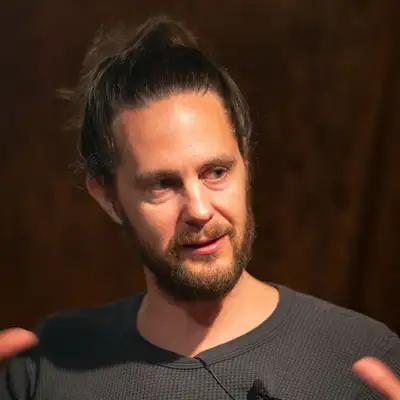
Joining me today is David Molesky Welcome to the Truth in this Art. So uh so David, tell me a story. Could you introduce yourself and you know, talk a bit about your introduction to art.
David Molesky: My introduction to art was through drawing at my family's house in Northwest DC. Uh I d I did a lot of sketching and at but at one point I discovered a portfolio of my dad's drawings in the basement, which really terrified me because there was a furnace down there, and you know, I thought it was haunted because there, you know, like roar and there's flames. But one day I got over my fear and I went down there and you know, in the dark, lit by the furnace, I found this portfolio of drawings, kind of you know, one of those like accordion paper things with a little string that goes around the disc.
Yeah, and I carried that up the steps and looked in it and I brought it to my dad. I was like, what is this? And he said, Those are my drawings.
And it completely blew my mind. I had no idea that my dad did any drawing whatsoever. And and there were so many of them, and that made me want to also make a lot of drawings. And so I don't know how I got this idea because I didn't know what an artist was or that any that anyone did it as an occupation, but I cleared out a closet and I dragged my little tiny desk in with a little cubby under the seat, and I just got to work in there making drawings, and I was like working in series already and sticking them on the wall with tape and yeah, it was really strange.
But yeah, that happened. And then um my brother also kind of egged me on in a way, um, because he saw I was doing all these drawings and he came over and he showed me this drawing. He's eight years older. Um he showed me this drawing of a dragon, like a kind of a simple line drawing, but I was really impressed and said, you know, how how'd you do that? And he said, I'm I'm never gonna tell
Rob Lee: you. So, you know, I I took that as a as a challenge, but like uh, you know, an inspiring challenge. That's it's it's funny, it's almost like um I'm not gonna tell you there's some wizardry there, and then the fact that it's a dragon, it's just like there's some mysticism there that you're creating older bro.
David Molesky: Yeah.
Rob Lee: That tracks.
David Molesky: That tracks. That was, yeah, my my little my little intro. And we we had we didn't have any original art in the house. We had some uh prints that you know, some posters that my parents had picked up at museums and maybe some catalogs of art around.
But that was about it. And you know, growing up in Northwest DC, I'm sure I was taken to the National Gallery a few times as a kid, and um, but yeah, I was also really um in awe of of nature, even like small pockets of nature, just like you know, a little patch of woods behind the house.
Rob Lee: Yeah.
David Molesky: Yeah, I could get lost in for for hours, just looking and listening to things.
Rob Lee: When when you think about sort of that timing or even sort of maybe later experiences, do you think of any particular works, any like artists, exhibitions or because you know I I see like street art at times, like when I, you know, I'm headed down, usually when I'm going to DC, for instance. I'm I'm on that mark train. I'm like, oh, that's I know where I'm at. I see that graffiti on the tracks, or when I'm in a certain part of DC now, it's like I know where I'm at based on that graffiti, that landmark that's part of the visual language or iconography when I think of DC, when when you go back and think of sort of perhaps time after the this earlier period, are there any works or artists or or exhibitions that left an impression on you?
David Molesky: Um I can't really pinpoint any works that left an impression on me until probably like middle school and high school.
Rob Lee: Sure.
David Molesky: You know, I think I I got really obsessed with animals and nature in my you know early childhood and and would like study these um Peterson field guides.
Rob Lee: Okay.
David Molesky: Which were all hand painted uh illustrations of of animals and I was really into the reptiles and amphibians and and all of their you know their intricate markings and the you know very colorful dots of green and yellow and red and um yeah but but yeah then high school was when I really dove into oil painting and that was um that was a big moment and I had I was in a a peer environment with a lot of other kids who were excelling in painting it was it was outside of DC and Bethesda school teacher and um yeah he had won a lot of awards and you know I think it was more than every other year he had a presidential scholar.
Rob Lee: Oh wow
David Molesky: yeah and so there was a group of us and we would all go out painting together um you know we'd be painting in oils at night in Georgetown in the rain like
Rob Lee: wow
David Molesky: yeah um yeah
Rob Lee: it it was that's a that's a pretty strong experience like you you're saying I'll uh it painting the oil in Georgetown in the rain those detail that order it's just like
David Molesky: how yeah I remember we're like you know one instance we it was like two cars full of us uh and we we all went down there and spread out in various places and you know I I was on one of the main streets just standing there and it had a kind of a monk look to it because I I was really obsessed with Edward Monk uh my parents had a book of his and I really gravitated towards him and then go but especially him and I pretty much looked at his the book of his like every night before I went to bed for a long time.
Rob Lee: What was it about the uh about the two of them that really stuck out was it sort of you know what the images were what the style was or is it just like this was what was there and I kind of fell in love with it naturally what what was it about it that really hooked
David Molesky: you uh I know like with with Van Gogh it was his use of color.
Rob Lee: Sure
David Molesky: and for for whatever reason I really zeroed in on his use of green and red together.
Rob Lee: Yeah.
David Molesky: And Munk, I don't know this is kind of this like spooky dream atmosphere that I really liked.
Rob Lee: Yeah.
David Molesky: Um yeah I just I just felt you know being a kind of like a angsty melancholy teenager that I could really those really spoke to me. Okay.
Rob Lee: Yeah. Yeah.
David Molesky: Especially Munk.
Rob Lee: Yeah. That that tracks attracts. And that actually satisfies one of these one of these questions I wanted to see I like the like the storytelling piece of it. You know it's like when you have folks kind of do their thing you get a little bit richer a richer answer versus so yeah back to these experiences checklist style it's just like no let's let's go through it naturally and that that helps. And we'll be talking about some some more recent stuff in a moment but I want to talk a little bit about um almost chronologically right you spent time on both coasts. Like you already touched on the the sort of DC connection that's there and this podcast ends a fair amount of time in DC but also you studied in California right and living and working in New York for this 30 plus year art career now we're at so you know and you've in it you've inner uh you've exhibited internationally as well so in addition to being exhibiting artists you know also writer curator so a lot of stuff here
David Molesky: how do you know these geographic and professional experiences sort of inform your perspective on the larger like cultural component here because I think making work and having a
Rob Lee: career in that area you know exhibiting work making art but then also writing and communicating around art those are two sort of separate perspectives and then there's that sort of worldly being in so many different places. So speak a bit about that.
David Molesky: Yeah I mean that was definitely something that I knew I knew I needed to do even before, you know, way before my forebrain got online. I just had like you know the instinct that I needed to experience other places and and different types of landscapes and light and um you know, so in high school I just knew I wanted to be on the West Coast. I didn't I didn't know exactly why. I barely knew anything about it.
Rob Lee: Um
David Molesky: so I was determined to go to school on the West Coast, even though you know I considered uh a couple places in New York, uh my parents really wanted me to not double down into art right away, which annoyed my high school teacher who came over to my parents' house unannounced, banged on the door and started yelling, like what the heck, you
Rob Lee: know, why are you why are you sending them to art school?
David Molesky: So um, but yeah, I went to I went to Berkeley and without really knowing it, without knowing about the Bay Area figurative
Rob Lee: painters, uh within half a semester, my work started looking like them.
David Molesky: And we had this big critique where all of these different classes came because my work was like in the lobby of the school, and some of the MFA students were there too, and someone accused me of copying the Bay Area figurative painters. I was like, who
Rob Lee: I've never heard of them. Who who are you talking about? Yeah, I was like, Who are you talking about? And I I looked them up and I was like, well, yeah, I could see that, but I don't know, I didn't know about them. I think it I think it was just the atmosphere of the place and the way the light
David Molesky: is, you know, almost more candy colored in the East Bay. I mean, it's like very beautiful light, and I think that just and and seeing those big vistas from up in the hills, and you know, that just changed me as a as a painter.
Rob Lee: And you know, the scale got bigger, and
David Molesky: it's not because I was uh, you know, I'm a like on the personality scale, I'm a a feeler and not a thinker.
Rob Lee: Sure.
David Molesky: So, you know, it wasn't some kind of logical uh decision that I wanted to like do this or that. I mean, I really go by instinct. And so, you know, I kind of, you know, at Berkeley I meandered through I'd say high school kind of took me through post impressionism, and those were kind of my my people that I was absorbing their the way they handled the paint and their use of color, and um, and then when I got to college, everything got kind of a little like larger scale, and I went into these larger figurative works that were more expressionistic and and uh like heavier use of color.
Rob Lee: And and then one of the teachers there challenged me,
David Molesky: you know, he said something which I don't think is untrue. He said uh I think I think you're using representational and representation as a structure and that you're you're just a painter and you really don't care what you're painting as long as you're painting.
And he's like, Well, what if you just got rid of the framework of you know depicting something from reality and just let the paint do what it wants? And I I did that and it was it worked out well, I thought. And you know, it's still you know, a lot of the forms were kind of uh dictated by my you know, rotator cuff and my shoulder, and so things had a kind of uh organic abstraction. And so that was like wonderful to experience the like making works that were large and let my like physicality uh go through me. So and then and then I had a um, you know, I've had a lot of good mentors.
I met uh Winston Branch, who's originally from St. Lucia, he was a visiting professor, and right when I was doing this kind of abstraction, he came in as like a color field painter, and so I dabbled in kind of like uh you know, American action painting for a bit. And so then I got into even larger scale, and I got I went to this uh paint recycling place, like uh, and I got I don't know, like hundreds of gallons of house paint and started, you know, opening the lids and making them thicker so that I could pick them up with my hands and I would stay up really late in the, you know, I would wait until no one was using the studios and either in like middle of the night or the weekend, and I'd clear out all the easels and I would paint these huge canvases, and it was it was so much fun. Uh so but I kind of felt like I was getting to the sidewalk's end a little bit, and I was studying a little bit of neurobiology at the time, and I was having dreams about the paintings, these abstract paintings I was making, where I would see a section of it that was you know, where the form was created with like a gesture of you know, like a trajectory and force of like a volume of paint into a surface, and so there was like a chance aspect of it, like a you know, almost like a Rorscha ink plot test. But then in my dream, I would kind of uh and it would always happen with like uh like a like a twitch from your body, like when you're falling asleep, and it was almost as if like the twitch from my muscles was like producing the image in my head.
Rob Lee: Ah, yeah, yeah.
David Molesky: And so it was like seeing the the the painting created a feeling in my body, and then my body was like, I don't know, muscles or nerves were repolarizing, and they were like creating the image back, but in this more like idealized way. So anyway, in a really bizarre twist, I went from you know, full abstraction into like classical painting because it seemed like I I realized that I hadn't learned about the history of painting.
Like I had learned all about like art theory, and I didn't study art history, and I really wanted to understand um idealized form and like uh like human form, and and that I didn't, you know, all I knew was kind of uh a type of painting that you would say you could call direct painting, like a la prima painting, like it's just you're thinking about it in one layer, and but around that time I I was going to New York, I was uh you know, just turned 21. That same teacher, Winston Branch had kind of put me on to going around and bringing my slides because that's what we had back then, you know, a slide sheet. You just put 20 35 millimeter slides in the sheet, and he was like, you know, he would tell me things like uh so many good words of wisdom that he would say things like uh David, you have to keep the crazy on the
Rob Lee: canvas.
David Molesky: He's like, You you you need to be presentable, you know. So you know, I was I was looking not preppy, but like, you know, I was looking pretty sharp and and would bring my slides around and trying to talk to galleries, you know.
Chelsea was just becoming a thing. Um there weren't too many galleries there, but I talked to some, I went to Soho, and then I met a gallery in Midtown, and he that was a just a crazy experience to go from you know, painting at Berkeley, and I was selling paintings, sure, and uh, and I had my first solo when I was 17. So I was a little you know, experienced with the commerce of of art a little bit, but um, but that was like the big time, and like he had big names in his gallery, but he he showed an interest, you know. I was walking around, he said, Are you are you an artist? And I said, uh, are you a painter? And I said, Yeah, how did you how'd you know? And he said, Because you keep looking at things
Rob Lee: sideways I
David Molesky: on. I was looking, you know, to see the edge and see how it was made.
Rob Lee: Right.
David Molesky: Um he's like, Do you have slides? I was like, sure, yeah, here. And he looked at each one quietly, and he said, Where do you live? I said, Berkeley, and he said, Oh, I have a godson there. And he's like, I might be out there in a few months, you know, gave him my number, and no one ever had called me at that house, and yeah, I met him, he introduced me to I'm rambling now,
Rob Lee: but like yeah,
David Molesky: he introduced me to another artist who had trained as a conservator who was living in San Francisco, and I like went into uh kind of a boot camp in like Renaissance style painting.
Rob Lee: This sounds like almost the second boot camp going back to that previous. We're in a rain in Georgetown. It was like just saying that you're you're you I have a more militarized approach to you know, it's just that's always a boot camp. It's fatigues and easels, it's fine.
David Molesky: Yeah, I mean, uh yeah, she was like, you if you want to study with me, you have to read this big stack of books. It was all material and technique books, and of course I wanted to learn, so I just like read through them as quickly as I could and then found the you know the common thread of ideas and got kind of like a a basic logic of how pigments work and how you know fat over lean and you know, all of that kind of technical stuff. And then, you know, basically rather than going to do an MFA, I I kind of created my own MFA and I I studied with a few artists that the uh critic Donald Cuspet would call uh a new old master. So, you know, people who are I don't know, you carrying the European tradition of like figurative narrative
Rob Lee: painting
David Molesky: into the contemporary times. So they were they were doing it back when you know abstraction was still the thing and um I mean that's a whole nother can of worms about like uh you know the rise of modernism and the the smashing of plaster casts in the you know Ivy League schools. I mean, there is a whole crazy program, and then the um you know, the illustration tradition kept it alive in the United States. And then in the 90s it's the resurgence, and now like figurative painting is pretty normal and pretty common to see. So and then and then they're bananas.
Rob Lee: So we're gonna talk about bananas.
David Molesky: We're gonna be talking about bananas in a in a bit.
Rob Lee: Um so
David Molesky: I heard that word that was a long uh
Rob Lee: no, no. No such
David Molesky: thing, no such thing.
Rob Lee: Um so also in there, because the the question is long too, so it requires a a longer answer. So, you know, we have a few of those pieces in there. So having also the the curate the the cure the curatorial sort of background and the writing background, you know, writing, you know, being published in juxtapose and five fine art connoisseur, how how does that sort of add into how you just kind of think about the sort of larger cultural picture?
David Molesky: Like because having that the the work perspective and and making work and having that in that bical sort of makes sense.
Rob Lee: Um obviously it all makes sense, but that
David Molesky: that makes sense when sort of working, I have this perspective as an artist. But from the vantage point of being a curator or being a writer, how does that inform it?
A lot. I mean, I it gave me it gave me a project and an opportunity to take a very close look at my contemporaries and you know take on an article about them as like a pro like a collaborative project that we're doing together. And you know, and and you and often there's some kind of realization that we we get to where we both share realizations about their work, and it's it's productive for them to just have someone who's listening and and wants to really understand and and go deep on how and why they do the things they do.
Rob Lee: It makes sense. Um I think I was sharing with you before before we got on sort of what most of my day had been of like doing interviews or really thinking about this and asking sort of those questions on you if approaching a thousand interviews. What are folks getting out of it? What are guests getting out of it? I was like, maybe an opportunity to share their story, their insight, their background in an authentic sort of freer form without any real the conversation is the goal, but not trying to, hey, as a black artist, I want to really key in on this, or as an artist that makes bananas, I want to really get into the fruit of it all. You know, you know, it it's no sort of ulterior thing outside of let's have the conversation and it has a free flow to it. It's not scattered, but has a free flow to it, and I find that folks tend to come back to me afterwards like, damn, I've never been able to really talk freely about my work without it having another uh goal behind it.
David Molesky: Well, yeah, what what would what kind of questions you have for me to kind of
Rob Lee: pry pry open the the nut that I haven't
David Molesky: cracked.
Rob Lee: Well, you know, because there there are more. Like, you know, if you want to have a different conversation, we have a different interview if you like. But um, yeah, it's you know, it it's one of those things that that pops up I think of like what is the question that you feel like you have the best answer to, right?
David Molesky: But you've never been asked by any of these sort of art peers. It's like, hey, I really want to talk about this if you got 15 minutes, but no one's ever even gotten to the stage of asking you that question.
Or even a question that you floated out there that you wish was turned back onto you. Yeah. Um I don't know, like one thing that a podcast was covering the show at spring break, and they were you know diving into the bananas.
Rob Lee: Um
David Molesky: he was talking, he was a former critic and artist, and he was talking about how the the joke component of
Rob Lee: the bananas.
David Molesky: And you know, I've always been attracted to things that have kind of like expansive association that they're like they d they're not you know immediately defined. Like I like, you know, you can have different types of narrative paintings. You have narrative painting that is like from a known literary source, like that maybe everybody knows the story, and so it's pretty clear what's happening.
Rob Lee: Sure.
David Molesky: But I feel like contemporary narrative painting there's more of this kind of like choose your own adventure, like uh, you know, project your association. I think this is like a you know, a concept that's coming off the back end of modernism where you know the I the concept that the viewer is the it finishes the the work, so it's the you know the artist makes it, but the viewer is the one who through their connection and their they make they put the meaning into it.
Yeah, and so I've you know I've dabbled in that type of narrative painting and I've noticed that that is a type of work that's happening, and and with the bananas, there's definitely a kind of you know,
Rob Lee: comedic
David Molesky: uh entry point, and that's and I like that, and I think that works because you know, I can have the technical part or the work in the studio be
Rob Lee: serious,
David Molesky: but the part where I'm you know the subject matter is kind of the the um I don't know, it's like the the atmosphere of the planet. It's like it's like what you it's it's what you talk about with people, and and if you and if and if it's very light and funny, I mean that's just like a good way to start. And maybe there's some kind of more serious message undertone or uh you know, hidden in it, but at least the beginning is kind of is fun and and silly and light, and and I can appreciate that, especially in the in the world today where there's so many like heavy things that we're having to listen to on the news and and such. Like I think uh lighter, less serious art is is appreciated.
Rob Lee: I like the heavier and more depressing stuff. I like to I'm kidding.
David Molesky: Okay, no, but it it's it's funny that that's the direction that you wanted to go in because that's actually was the next question, um, which was really funny. I was just like, oh, go ahead and cook, go ahead and cook, brother. I hear you. Um because you know, it's it's sort of this wit, this irony, this sense of disruption that's that's there. And um and and it seems like I said, you know, before we got started, I wasn't glazing, it's just like you
Rob Lee: you I made a couple of passes at spring break since we're in that territory, and I went back to yours and I remember because you can't help it, and I've realized I went the wrong direction the first time. I was like, how did I get in here? Why did I go in here backwards? And I ended up seeing seeing your work, and I'm like, watching it.
I was like, this is really technically why is there a banana there? I'm doing that, and I just remember like laughing, and I was like, whoever did this is silly, but then they're super talented. That that was sort of the thing that I was looking at, and you know, as I was saying before we got started, this is the second of a number of conversations I'm gonna do with folks that uh you know met or engaged with and reached out from spring break. And the the first theme or one of the takeaways from the first conversation is why can't it just be why can't it be fun? Why can't it be good?
But also why can't it can it not be fun? Like it can be fun and good, it can be serious work, but the person's not taking themselves too seriously, and that's a thing that clicked. It's like balancing sort of the the satire, the the humor potentially in there with a high level of technical skill. And I admire that because so because also in this, I've this podcast, I've tried to add some humor in, as I said before we started. I like art talks because they don't feel like conversational. They don't feel like they fit.
David Molesky: I like to throw in a bit of my thing and this personal voice while producing something that's researched that I send the questions over beforehand. I try to make sure the person's prepared. But that way we have the foundation that if I want to throw in a few goofy jokes, there's room for that.
Rob Lee: Yeah.
David Molesky: Yeah. I I mean a humor with this kind of I I'd never encountered enough humor, I felt like in the kind of the seriousness of the the kind of figurative art that I was interested in, and a lot of the peers that I had around me who were doing this very serious work.
Rob Lee: But we'd get together and they would we would be h we'd have fun and you know, have dinner parties and
David Molesky: you know, but their their work was just very serious. And I had a friend in California who does uh some design work for like different surf brands, and h I love his work because it's so funny. And I have I have a painting of his of um that's that I got in a trade before I moved to North Carolina only to discover that this is like a you know kind of like a sasquatch figure that is from the the swamps not too far from me this thing called a um a swamp booger. It's and it's a weird taxidermy of like an upside down white tailed deer's butt.
Rob Lee: That's ridiculous.
David Molesky: It's ridiculous, but it's like so well painted and it's hilarious. And um I think you know, it's just one painting I have, but I think that kind of kept the idea open of humor and art, and then also this town has the whirly gig parks.
Rob Lee: What's that?
David Molesky: The whirly gig park. So there was a outsider artist here who's uh um had been in World War II
Rob Lee: and worked on machines and he started cutting up metal and painting it and putting reflectors on it and made these huge wind powered
David Molesky: uh like things with like figures moving and it's very like whimsical and and it's such a large feature of this town, and I think that kind of whimsical character made was one of the attractions of being here that made me feel like I was taking on the banana work
Rob Lee: as my main project, like right around the same time I moved here,
David Molesky: and so that just made it feel right, I think. Just like I'm in the whimsical
Rob Lee: art
David Molesky: town.
Rob Lee: So this is sort of gonna be so corny, I'm gonna preface it right there.
David Molesky: Okay.
Rob Lee: So if you want to, you know, like if we want to like peel it back a little bit, uh normally would be peeled the onion bag. If we want to peel this banana back a little bit and talk about that experience at spring break, how how was that?
David Molesky: Um like for you. Yeah. Yeah, yeah. This is my second year. Um the first year I kind of hopped on sort of last minute, because I had always understood it to be, you know, because it's branded as a curator-driven fair.
Rob Lee: Sure.
David Molesky: And I was like, geez, I don't know. Um have a curator that I can work with, uh, you know, and it'd come around and it would and I just wouldn't find a curator in time and it'd be gone. But this but last year they had a artist solo spotlight application that popped up and it was like the last call for that and I applied and I got in and I was got the word that I was in when they were already
Rob Lee: installing and
David Molesky: I was in DC, had driven uh had gotten a ride with my brother and was visiting, you know, my girlfriend who's now my partner, and we live together here in Wilson. And so I had to like take the train back to Raleigh, get my car, come to my house, grab the paintings, drive back up. But it all worked out.
I did the install in like record time in an hour and a half, I had my car found parking on the street somehow. I mean, it was just really flying by the seat of my pants and it was great. I met so many people, had great conversations, work sold. I was just kind of uh amazed and super happy with it, and then um applied again this year with my partner as a curator and I really wanted to have as many works as I had the year before because that was one of the things that people had said that made it so strong. You know, they'd say, like, you know, if it had been one banana
Rob Lee: painting, I'd be like, oh that's cool. That's and it'd been a couple, I'd be like, oh, that's pretty awesome. You know, but they said what was really made the experience was just that it kind of never ended.
David Molesky: It just kept going and going, and they you know, they just were shocked by how many there were. So I wanted to do that again, so I worked really hard this past year and and was able to deliver the same amount of work. And I think the quality got better too.
Like my uh ability to handle detail and yeah. And also the banana themselves, the peels got more expressive. You know, Because the first the first batch, they were a lot of them were um inspired by you know, the first composition, the origin story of the banana.
Rob Lee: Sure um,
David Molesky: so I was it was like 2014, my sister was getting married, I was visiting my parents, but I had some shows coming up. I was painting in their basement um and came up for breakfast, and my dad always has a banana with the cereal, and there was a New York Times on laying on the table with the Ebola outbreak in the Congo, and and there were you know, these people in hazmat tending a body bag, and I was like, that that body bag has to be a human-sized banana. And I was like, what? Why are you thinking that? I was like I tried to shake it out of my head.
I didn't make any attempt to hold on to it. And that damn weird idea just kept, you know, I'm like was making paintings of the Ukrainian revolution, like all these people like throwing fire, you know, all these other like more serious heavy dramatic work.
Rob Lee: Sure.
David Molesky: But this silly idea just kept popping up in my head. And so finally I I did it, and I made another version and another version. I ended up making like six different versions of that one first composition, and then until someone said, Hey, what if you made a whole series and we we gave you a show? So I did that and was like, why am I why is this image attract me?
What do why do people like this? And thought, oh, you know, it kind of reminds the stage setting and the lighting reminds me of Renaissance paintings and you know, the barrel of Christ. And so then I started making paintings based on Renaissance paintings, but then having friends model in hazmat, mimicking the you know, the different figurative arrangements, and um, but as I went, and especially into now into this year, I've started the bananas have not been like dead weight being carried, they're they're alive, they're doing things, and and um getting really into like how to make an expressive hand gesture articulated through a peel. And that's kind of where I'm at now. And those are those are really fun, and they're even more ridiculous than the first one.
Rob Lee: Yeah, I mean, like I said, uh when I walk through, I giggle to it, and before I be remissive, I don't say this. You did a bunch of banana paintings. Yep. Yeah.
David Molesky: A bunch, yeah.
Rob Lee: Thank you. Thank you. Thank you. I just wanted to make sure it was there because I didn't want to just leave that hanging. That's like an unplugged in pocket.
David Molesky: But yeah, it's definitely again, it's just something that that truly works. And that's like I said, you know, of all of the the pieces that stuck out or that I observed and I took notes on. I circled yours for a reason. And I was like, I want to hear more about it, and
Rob Lee: you know, and then sort of listening to how you think about it, or even a piece of that origin, like you you touched on earlier, finding you know, your dad's like old drawings in that sort of like uh uh accordion sort of like full folder, what have you, and then hearing like your dad always has a banana. You're like what what's this connection point, you know, that that's happening right there where this idea sparks, and it's just kind of interesting to hear that.
David Molesky: Thank you. Yeah, I mean it's not like I was looking for an absurdist surrealist idea, like I wasn't working, making that type of work. So it was just kind of like this weird backburner idea that I had around, and every once in a while I would make another one of these and serve it up and see how people how how the people like it, and you know, and like wow, they really like it, huh? Oh well, maybe wait a while, do my other things, do it again, and and now it's been yeah, the main focus for the last four years. And I feel like of all the different things that I've tried all the different series in the body different bodies of work that I've made, like this actually fits me really well as a as a person, you know, it it gives the goofiness of me,
Rob Lee: yeah,
David Molesky: a voice that you know it didn't really have in the other work I was doing. Maybe the other work was too serious. And um, yeah, and the kind of like abstract way of thinking, or maybe this sort of like um like maybe like almost like a shape shifting
Rob Lee: sensibility
David Molesky: to be able to like look at a person and see them as a banana.
Rob Lee: Now I'm thinking if I were to
David Molesky: avatar into your head, I was like, is this dude think that he's podcasting with a banana right now? I'm like, no, I'm not a banana.
Rob Lee: I That would be wild. It's like I just ever wanted bananas now.
David Molesky: The older people, they're they're you know a little rotten, you know.
Rob Lee: Uh
David Molesky: yeah, yeah. And then we you know you just touched on like one of the concepts that was playing with, especially in the last show, is like how the banana when used in place of a
Rob Lee: figure,
David Molesky: you can talk about you know the fragility of life and how we age and the kind of the you know, the sun spots on the hands that people get and the thinning of the skin is like appeal, you know, the peel gets thinner as the banana ripens, and um, you know, but yeah, banana the banana lifespan is is very quick.
And once you open it, it's even quicker. So yeah, when I'm working in the studio and uh I I like I still really love to work from life. So I'm you know, I'll have a banana in front of me, and I'm just holding the banana like you know, propped on my
Rob Lee: easel, or you know, sometimes uh I have like one of those wire armatures for making little figurines, and I'll I'll hold it up with that, and sometimes I'll I'll get like a little exacto blade and carefully open the banana peel up and then use the wire to hold the peel.
David Molesky: And and then you have to work, you know, very quick. But I feel like some of these, you know, thick, confident brush strokes, you know. I I used to I had a time where you know, in high school with one of my friends, we we did this thing for a whole week where we painted sunsets, and I would just drive up with the car and honk outside of his house, and he'd come running out with his easel and his palate, and we would drive down the Potomac River, and we'd make these paintings, but you could you have to make them in like you know, half hour.
And everything changed while you do it. But but it really, you know, that kind of experience trains you on the the like immediacy and how like fleeting something is in front of you, and that you have to like capture the essence or the um you know just the f the something of like the the physicality of something that you can't that doesn't quite come across in a photo. I do use photos. Um but yeah, that's a whole nother thing, like the dogma around like technology, even photos. Um but I'm I'm pretty like pretty much a Luddite. Um I don't really know how to use Photoshop, but I do have um I do look at photos of things.
But I I don't let them either more of like a jumping off point, and it's more about like how the paint feels on the canvas and that little bit of you know, that that really small space in between the bristles and the surface and just the feeling of that and how much happens right in that tiny little space.
Rob Lee: Yeah, I mean listening to the Luddite piece of it, yeah. You know, definitely that I wish more people were Luddite because there's a lot of big tech bad technology being used to make up for shortcuts and doing something that perhaps is I guess it's close to tactile is you know, but sort of it's involved with the person because I'm still going back to the articulation of the peel. Like, what are we doing? And it's like you're really into that, and you know, again, it's applying very serious technique to something that when completed and when done, there's so many different responses that are elicited from again, that's very well done.
This is technically wow. But then it's just like that's a banana, and that's done well, and like I didn't know a peel could move. That peel is a hand, and it's it's done there, or even the fragility of it, like looking at some of the the paintings that were there at spring uh spring break, it's just like, oh, that's an older banana because I see sort of these spots, the sort of aging. It's like that's the type of banana that's gonna go into a banana bread. You know, that's the age of this banana is that.
David Molesky: Yeah, yeah, yeah. There was a painting in the show called uh it was it had a little island of uh Arnold Bachman's Isle of the Dead, and that painting was called Journey to the Isle with an A of bread. I know.
Rob Lee: So
David Molesky: um
Rob Lee: what's gonna end up happening here? I'm gonna have more banana related puns as we start to wind down on this one.
David Molesky: Um cool.
Rob Lee: And uh, you know, I'm just trying to I'm just talking to the top banana right now. There's one. I am sorry.
David Molesky: I'm sorry. Um but before we split, there's another one. Damn it. Uh moving beyond spring break and sort of that time because that's when you know I became a big thing. That's a really great community, by the way.
Rob Lee: Like uh if you were ever interested in dabbling in uh curating since you have worked with so many different artists, um that could be that could be cool. Okay, you put the bug in my ear. I like that. I like that. Uh that's that's an idea. I can expand my my background a little bit and um so thank you for that.
And it is a a great community. I've like really look at all of the interviews that I did from from last year and for this year, they've just been really great, really interesting, a certain degree of quirkiness, and the recommendation for it came from a um artist I interviewed, uh uh Kumasi J. Barnett, I was like, yo, I'm going up to do this. And he was like, No, you should go to spring break as well. And I was like, why is that? He's like, more more like your people. I was like, what do you mean by that? And he was like, you'll see. And then I go up there, I was like, these are my people, you know.
David Molesky: So he was right, he was right. Um so what are you working on now? And I think you you touched on a little bit. What are you working on now? And like how does perhaps that new work, and I think you're touching on the articulation a bit there, but how does that new work extend or challenge the ideas behind the sort of most recent body of work with this the banana series and such? Yeah, I think um, you know, having more bananas that are kind of alive and and doing things, like uh I I started a huge painting that I didn't get around to finishing in time for spring break, but I just uh agreed to do a show at a local art center here in North Carolina, and I told them about this big painting and they they would like that on the center wall, but it's a a painting based on Jericho's Raft of the Medusa, where you have all these figures who are kind of lost at sea on the raft and they're in, you know, various the human figures in the painting are in various kind of points of decay themselves. So I just feel like that and the gestures calling for the ship and you know, holding and comforting one another and you know, some of them are and that'll be extremely fun to render as bananas and um but you know I'm following up the with spring break. I'm uh you know, all the banana whales
Rob Lee: had sold out and people want more of those. I saw one in the background.
David Molesky: Yeah, yeah, there are two in the background here that I'm working on. I've probably got like 11 eleven that I'm working on. I I tend to work on a lot of paintings at once.
So like the beginning of the year I started and drew the like underdrawing for like more than fifty paintings. Wow. And then just saw what I could get to. Um so yeah, there's always lots of ideas piling up. Um I did some this summer that I really liked how they turned out where um it was sort of a formula where it was like banana red drapery and skull. And um, you know, the the bananas like holding the skull and contemplating and maybe like holding its head and yeah, some more, maybe some more of these like kind of like almost portrait format of the bananas where it's not the entire banana, but it's kind of like close up so I can really get into that you know, peel hand gesture articulation.
Rob Lee: Sure.
David Molesky: Um and and then you know, another idea that I want to play more with is just kind of like uh maybe stepping away from the inspiration from art history a little bit and kind of doing more like everyday banana things, like maybe just even posing myself around my house and and starting to be my own model for my bananas.
Rob Lee: But what would I look like if I'm making coffee but as a banana?
David Molesky: Yeah, yeah, just like everyday stuff, like um could be cool.
Rob Lee: There's a it's just sort of like I have a friend, uh Zoe Lonzares, who did this series that had like hands involved, but did the series like on sort of the banality of like life, like this sort of like regular everyday like life and like she's a painter, Baltimore based. And well both from Baltimore, I don't think she's based.
I think she's moved out of uh Baltimore somewhat recently, but it's something about that. Like we we have to capture this really grand thing, but most the everyday life is kind of just regular and that makes it relatable. So taking something that is just what you do normally. It's like, ah, gardening as a banana. That can be just something uh, you know, that's relatable in that way, but also it's like I've never seen that.
David Molesky: Yeah, I've I made me think of a a really random thought. Maybe it's just like Halloween is around the corner, but it was like this I don't know if it was like a question to someone in after life, like what do they miss most about um being alive and they and they said like the everyday thing.
Rob Lee: It's
David Molesky: like just do like brushing my teeth, you know, eating my breakfast, like those very everyday things, like um our you know, important experiences uh uh as being you know, being human. Yeah.
Rob Lee: Yeah. That's that's that's that's so true. And um before I move into the last portion of this pod, the last two portions of this pod, it goes back to one of these things that I wrote when I was uh trying to uh transition sort of some of the podcast stuff I was doing years ago, and I wanted to build out a portfolio portfolio and I did a episode that was specifically for the portfolio, and it was trying to uh find the extraordinary and the ordinary, and it was literally about that, like being sort of like mindful and enjoying a walk through the park, enjoying your you know, favorite meal. Not the best meal, not the greatest souffle ever made, but like look, I'm gonna have this grilled cheese, it's gonna be amazing.
David Molesky: And
Rob Lee: it's
David Molesky: something about that that it always hits, and
Rob Lee: yeah, just something that's regular, and I think appreciating that is is super important. I I want to go into the rapid fire portion of this high potassium podcast.
David Molesky: There's another one. There's another one. I'm I'm saving them all. I'm I wrote all of these down specifically for you today, by the way. I've been doing some extra work here. So the way the rapid fire works, you listen to the podcast, so you know how this goes. Um Yes.
Rob Lee: So going back to your time in New York, uh, which borough inspired you the most?
David Molesky: Well, probably the one I spend the
Rob Lee: most time in is um you know, I was in kind of the border of east East Williamsburg and Bushwick, um, you know, it turned into Bushwick when you cross flushing, but just like all of those
David Molesky: four story warehouse buildings that were just like full of artists, maybe maybe possibly the highest concentration of like working artists anywhere.
Rob Lee: And like all at like very high international level too. I mean, it's just incredible.
David Molesky: You know, you just go get coffee and just you might see a bunch just kind of passing through, grabbing their coffee on their way to the studio. Just really wonderful um community and completely aesthetically ugly and disgusting, however, like you know, just like garbage and there's like a garbage transfer station there, the garbage trucks lining up, there is this like Chinese fish factory behind the building where it's like disgusting putrid smell, like kind of leaking out and coming into the building.
Rob Lee: So aesthetically not nice, but like super inspiring by you know who is there. That's good.
David Molesky: Uh I'm
Rob Lee: gonna save the my favorite one for last. The next one is you know, I I find that folks who paint sometimes they're and even illustrators, so you know, people who draw as well. So you can answer it either way, but what's the most unusual surface you've made work on? Hmm.
David Molesky: Probably copper. I mean, just recently, because it's just there's a whole there's a whole like historical weird technique about it. I mean, you gotta like sand it and then you gotta like rub it with alcohol, and then you gotta chop up garlic and rub the surface with garlic.
Rob Lee: What?
David Molesky: And then Yeah, and the garlic helps with like how the paint spreads so it doesn't slip as much, but yeah, weird.
Rob Lee: And then and then um and then the the copper will like make a chemical bond to lead white. So if you do like either like prime it or an underpainting of lead white.
David Molesky: but Yeah, I think that's even though it's traditional technically, it's still pretty weird to paint on.
Rob Lee: No, it it it it is. I mean when you describe like so yeah, you saw a little bit it's it's almost like you were describing a a witch's recipe for a spell. You start out with a clove of garlic and then a bit of this.
David Molesky: The hell are you talking about? That's that's that's pretty unusual. Um so here's the last one. This is my favorite, it's the shortest one. Okay.
Rob Lee: What's your favorite fruit?
David Molesky: I have to say a banana.
Rob Lee: You're actually obligated, I think.
David Molesky: Pretty much.
Rob Lee: I mean, it's it's very useful and interesting. It's got crazy historic, you know, background.
: It's incredibly uh vulnerable as a you know, as as a produce, you know, it's you know, mono monoculture, like it, you know, it's the Cavendish banana, you know, that was named after a guy who grew it in a greenhouse in England because it was resistant to the blight which killed off the groomy shell. But like, yeah, when I use them as uh my models, I guess I'd say, like I I don't waste any of it. Like I use the peels, I chop up the peels and like soak it in water to make fertilizer for my plants. I I freeze the fruit part and then have it in smoothies.
Rob Lee: Like, yeah, bananas are amazing. I mean there are many fruit that like grow in their own packaging. This this is the big banana get to you.
David Molesky: Is this a it feels like a banana banana commercial right there at the end? Yeah, well, I mean, I'm sure, you know, there's uh I think it was maybe Michael Pollen who who had this idea that um plants actually domesticated us and not the other way around. So yeah, so maybe maybe I'm I'm uh the banana has like somehow gotten into the control room.
Rob Lee: Got to you.
David Molesky: my brain
Rob Lee: Got to you. Chiquita has signed in, it's gotten to you.
David Molesky: I mean, you know, I enjoy plantains for a whole different reason. Uh, you know, you can fry them, you need to do a few things with them. You spend time in New York, you know how it goes. Um so now we got the fun part out of it. We can go back into a little business as we sort of like continue to the wind down and go into this um sage advice.
And this is sort of like the the culmination here. And you know, recently, and we touched on this a little bit. Recently, uh I found myself saying that I take my work seriously, but I don't take myself too seriously. Do you see a connection between the idea of the way that we present ourselves or the way that you present yourself as an artist? Do you see sort of that and that you know humor irony? Does that you know play a shape in how you navigate the art world?
Like how do you present yourself and view yourself? And I think we we've gone into that. But you know, but frame it in the way of advice because there are artists that are out there, podcasters that are out there, but but artists in this scenario, that
Rob Lee: you know, are overly serious until they get that point where they're like, nah, I need to take this, I need to take my work serious, but I don't need to take myself so seriously. Like I don't need to be Capital A artist. So, you know, how do you
David Molesky: view yourself and what advice would you share to artists and sort of that view? Yeah, yeah, we touched on it a little bit. I think, you know, be serious about your craft. And then I think and look at your like subject matter as an opportunity to interact with other people and make it fun and make it playful and make it inviting.
Rob Lee: That's that's good. It's it's simple, it's sage is real advice. Um yeah, that's that's kind of kind of it, actually. And um, so there's there's two things I want to do in these final moments as we close out here. Uh one, David, I want to thank you for coming on to the truth in us are. I'm glad we were able to make this happen, frankly. This is great.
David Molesky: Thank you so much. I'm I'm super honored you would choose me to to be on your podcast. We've had so many different talented people.
Rob Lee: Well, thank you. And um really, you know, I always go with like, hey, I had a I had an unvoluntary or involuntary response, you know, a laugh at your work, and I was like, all right, you got something out of this black potassium-filled soul. I threw that in just because
David Molesky: and I needed to uh move forward on it. And and secondly, um, in these final moments, I want to invite and encourage you to share with the listeners where they can stay up to date, whether it's social or website, anything you want to share where folks can engage with your work and check out your work. Um the floor is yours.
Okay, thank you very much. Um well, I have an Instagram Milleschi Studio, M-O-L-E-S-K-Y, and I have a website, David Milleschi.com. So those are pretty good places. And um work with a gallery in California, Andrew Norris Gallery in Burlingame, and uh probably be doing some more things with spring break, I would imagine this you know, 2027. And uh yeah, and uh a show at Green Hill Art Center in Greensboro, opening February 24th with a talk on March 24th and going until April 10th.
Rob Lee: And there you have it, folks. I want to again thank David Milleschi for coming on to The Truth and His Art and sharing a bit of his story with us today.
And for David, I am Rob Lee, saying the bears Art, Culture, and Community. In and around your neck of the woods, you just have to look for it.
Creators and Guests