Solana Rostick
Download MP3Welcome to The Truth In Its
Rob Lee: Art, your source of conversation connecting art, culture, and community. These are stories that matter, and I am your host, Rob Lee, except no substitutes. And I really mean that. Today, I am thrilled to welcome my next guest.
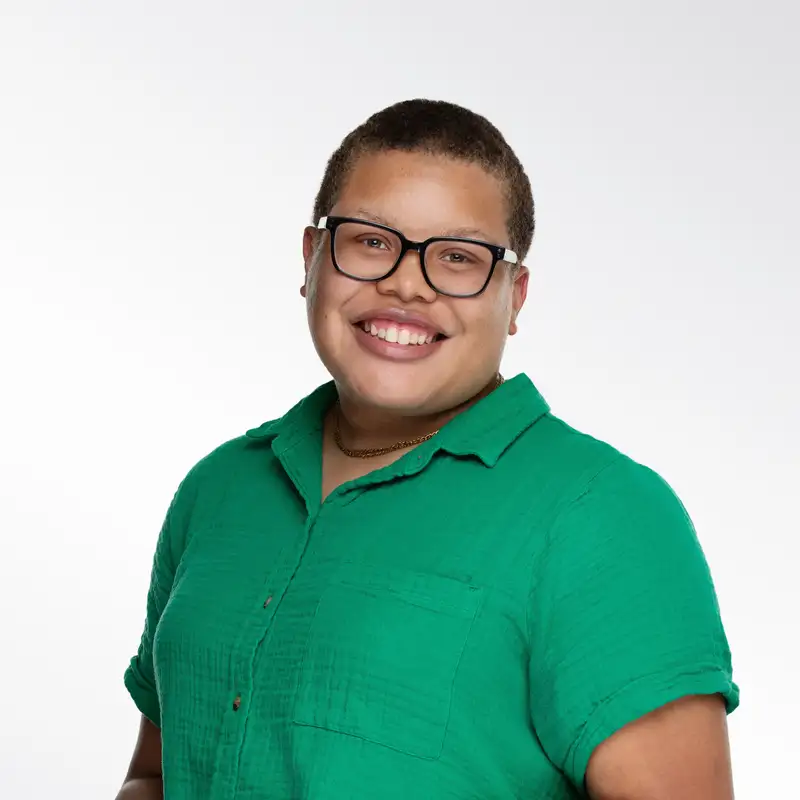
And this is one of those instances where I have a listener, so I've got to be on my P's and Q's. My guest is an emerging museum professional who is dedicated to ensuring underrepresented groups are reflected within institutional collection holdings. So joining me today is the Registrar and Collections Manager at Clark Atlanta University Art Museum, Solana Rostick. Welcome to The Truth In Its Art. Thank you. Thank you for coming on. It's one of those things where, you know, when it's like we have the online piece, we have like the social media piece, but when you do something that feels like this is a real thing, it's very exciting.
Yes. So thank you for making the time. And I would love to open up the conversation by, and as I am one to do, having my guest introduce themselves in their own words. I can do a glossy, well said. It's just amazing Oscar award-winning sort of introduction, but I would like to let the guest do it because they could do a better job than me. So please, if you will, tell us about yourself, who are you, what you do, and what's important for people to know.
Solana Rostick: Yes. So my name is Solana Rostick. I am currently the Registrar and Collections Manager at the Clark Atlanta University Art Museum. I just started there back in January this year.
So I'm almost six months in. But my story really starts in the heart of Atlanta. I was born here and when I was a year old, we moved to Tampa, Florida. So I was primarily raised in Florida. And my birth introduction to art was through my dad. My dad is one of the few black professional photographers that is based in the amphora right now. And he was kind of my first introduction to, oh, I see my dad taking these photos, whether it was just out on the beach or in the neighborhood, just consistently taking photos. And then for myself, I got into art at a pretty early age.
I would say around three to four years old. I went to the local public school for a specialized program. And one of my assignments for just at home was getting shaving cream and putting it on the windows and making little doodles. And it was such a fun practice that I got to do.
I don't have any photos, unfortunately, of it. But that was kind of my first introduction to actually creating art. And I had dabbled in other fields of the art, whether that was through dance or through music. I played the violin for a little bit. I still did not know how to play.
I forgot all about it. But something that stuck to me was visual art. I enjoyed it. It was a window for me to create and express myself. And at the time, when I was in school, I was quite lonely. So I went through art classes from elementary school through middle school. And that was my outlet for myself to express myself. I did painting, drawing, pottery. You name it. I did it. Surprisingly, though, I do not know how to do photography.
Rob Lee: That's the one thing that is just not there. It's I joke about it and thank you. And then I will definitely go into my next question. It's kind of a follow up. But it makes me joke. I used to have a running bit. So you've listened to enough of the podcast. You know, I'm 6'4". I've talked about that. And I used to have this term.
I called myself. It's like I'm sports literate because I've never played any sports. It's just like, I'll write poetry and draw.
But sports, football, what are those? I don't do that. Yes. Yes.
So you could be like, hey, big for nothing. I was like, ooh, language. Yeah.
But, um, yeah, it's just kind of like you, you would almost have this, this notion. I had a, I never met him, but I have an uncle. He passed before I was born, but he was sort of the artist in the family. And early on when I was a kid, I wanted to go into illustration, comics and so on. So at a point it had the impression of like, oh, you're going to be a comic artist.
You're going to pick up for where your uncle. And then I was like, I like to record stuff or microphones. And I shifted in a completely different direction, I guess. Wow. Yeah. So it's just like when you have those connective things of like, oh, family connections. And then you talked about your dad at bed.
You talked about being exposed early on. So when you get to that stage, and for me, it was probably high school, I guess. When you get to that stage, when you realize like whatever the vocation calling is going to be and for this, it's art for you, right? Is there a piece, is there a moment, is there an experience that left a mark on you sort of later in your story that kind of led you to where you're at now? Yes.
Solana Rostick: And surprisingly, it happened also in high school. So back in 2017, I was a junior in high school. And we never really took field trips. I was in the public school system.
So that wasn't really a thing. However, my art teacher, I believe I was taking a painting class. He had mentioned, hey, we're going to go to the Brangling Art Museum in Sarasota, Florida. So that's about two hours south of Tampa. And it's a really big museum. They not only have an art museum, but they have a circus museum, which I've not been to yet, and the estate of the art collector who started this museum and collection. So I remember going inside the Brangling Museum, and it was like covered from the very bottom to the very top of just these big artworks. And it started in the Renaissance period, I would say, the artworks were starting from. And I was just in awe at our time because it was just absolutely gorgeous.
And I don't think there was a certain piece that struck the chord, but I just enjoyed the feeling I had being inside the museum. And at the time I was thinking, I started my career, I was still thinking art. But in my mind, I'm like, well, maybe I should do something a little bit more practical, like maybe become a nurse or something along those lines. But then I talked to my art teacher and he had said, hey, I notice you enjoy art and making art. But there's also a way for you to actually major in art and also analyze historical pieces. So I was like, huh, OK. And he had said, you should consider art history major in that you could still enjoy art, but you also get that history component too and the content piece. And I was like, oh, OK. So I just stuck with it basically after that.
Rob Lee: I love that. I love that when you have that opportunity to talk to someone and say, hold up, wait a second now. You know, you can combine these things. And I was just having this conversation yesterday with a friend, Bernard, who's in the media industry.
He's independent now, but he spent time working with Vice. And we were just talking about having those things like you don't know until you know. And I was like, oh, this is a whole lane for me now. This is a whole niche. Exactly. So and I'm hearing wrangling and you said circus. Is it wrangling, brothers, like a Barnum and Bailey, that sort of thing, right?
Solana Rostick: Yes, I'm pretty sure. Yes.
Rob Lee: Wow. Oh, wow. And, you know, just before I move into this next one, was there like you mentioned sort of the size mentioned the Renaissance period. Was there like a particular piece that really stuck out for you? Was it something that really made it memorable? Was it the size? Was it what was depicted? Yeah.
Solana Rostick: So I remember that this museum had a special exhibit at the time. So the first five years of our time was the title of the exhibit. And I believe it was like a mixture of contemporary pieces. But I remember seeing Nicolene Thomas's A.I.
Woman Sandra. And I was like, for the first time, I'm seeing myself represented in art. But I'm like, wow, because for most of the time during our time at the museum, I was seeing a lot of predominantly white artists or white subjects. So I was like, OK, I'm I still feel that. I guess I enjoy the beauty of the art, but I'm not feeling that personal connection. So seeing Thomas's work really struck a chord in me. And I was like, OK, this seems like I could do something with this in the future. I don't know what yet, but I want to be studying art and I want to work in the museum. So I went with it, basically.
Rob Lee: Barker engaged. I love it. Yeah. I said this a little bit in the the intro. And so I got a got a touch on it. So you're a listener for Art Podcast and Art Adjacent Podcast, such as your noble podcast here.
And thank you for always shouting me out and putting me out there. So as a listener, in your opinion, what are some of the advantages of like checking out a podcast that might be an interview with an artist or an interview around art versus like physically going to a show or a gallery? Those experiences are different. And there is a follow up question, but that's where I want to start as sort of the advantages.
Solana Rostick: Yeah, I feel like when you hear an artist or like hear about certain work on a podcast, you kind of are getting the insight so the behind the scenes aspect, which I enjoy personally. And also, I feel like you get to hear about the said artist or curator or museum professionals like personality, their story. And it kind of, you never know, it could struck a chord just as equally as like seeing artwork or seeing that person at that museum. So that's one way that I just feel like podcasts are able to strike that chord again for listeners. And also, you never know, you could hear about a exhibition that you probably wouldn't have come across on social media or, you know, hear a little bits and pieces about maybe upcoming works that the artist is producing. I also enjoy personally hearing about the studio practice, what their studio looks like. I could visualize it in my head, which sounds very nice. So, yeah, I love that.
Rob Lee: Using the mind's eye, using that imagination to fill in the gaps. I love that. And the follow up to that is, you know, you're you're you're emerging, an emerging professional. So, you know, you haven't been silly jet in like, I know how I do this. It's just like I'm still open to discovery. So in that vein of discovery, what are some other, I suppose, non-traditional means that you're discovering artists, like being come aware of them, we touched on podcasts a moment ago.
Is it the social media? Is it like, hey, I always visit this coffee shop because they always have like sort of the best, you know, talk about that a bit. Yeah.
Solana Rostick: So since moving to Atlanta, some of that almost six months in living here. So sometimes all this again, I'll go on social media, but sometimes I hear about things from my coworkers. They'll be like, hey, you should check out this art exhibit.
That's just down the way from your apartment. Or my boss will send me a link to a webinar or some type of speaker series that's happening at maybe the High Museum that I didn't even know about. So those are kind of the ways I'm discovering. I'm hopeful to because I do go to this local coffee shop. So maybe a challenge for myself, I could like ask them if they have any recommendations on any galleries that I may have not considered going to or just didn't come across. But yeah, those are the ways that I kind of seek out those opportunities, whether it's like an exhibit or an artist talk or a curator about speaking on their practice.
Rob Lee: It's great. It's great. It's I think we run into this thing around discovery that is really challenging. I look purely at music on set of like, when's the last time I checked something out? I was one of those music blog listeners and going to all the places to try to find the most obscure thing. And I'd like that you touched on sort of an area for me as a podcaster and an instructor in the space that, you know, we view it differently. A lot of people think of video podcast is purely a podcast and the way you were describing it as a listener and as a professional in a field that you're, you're listening, you know, and then the other side of it listening to recommendations from coworkers and so on. So it's the thing that I find that we've deprecated because everything is visual. Oh, did you send me a meme of this latest art show? No, I had a conversation like a human with you.
Solana Rostick: Exactly. So I always reference these books that I like. You know, you'll hear the artist and Cleon, you'll hear the death of the artist, my way in residence. And one of the things that he talks about in death of the artist is the major art centers, you know, New York, Chicago, you know, LA or the one set at the forefront and then you have sort of secondary ones or ones that might be in there, but it depends on what type of art it is. So you're in Atlanta. So what is the energy like in Atlanta right now for art? Like always hear, you need to get down there, bro.
You need to do that. You know, Atlanta Braves. I was like, it's not even art. That's baseball. So what is the energy like down there? And what is it like being a professional, a museum professional, you know, in that landscape?
Solana Rostick: Yes. Um, first of all, the energy is quite palpable right now. Um, I will say, I know I mentioned the high earlier, the high museum has a retrospective of Amy Sherrill's work, um, right now. And Amy Sherrill did go to Clark Atlanta University, um, for her undergraduate studies.
So that's a really big thing that's happening right now. And then as well as these like smaller art galleries, um, there's two that I really enjoy. It's the one contemporary gallery in Atlanta and also the sun Atlanta. Um, it's like a combined, not really combined space, but they share galleries on a street. Um, and they feature a lot of the local artists here in Atlanta. Um, and as a young professional as well, just getting to my, into my career, um, I find it, it's important for me to go to these shows or go to these openings.
It's possible. Um, to kind of just learn what else is out there as well. Um, as far as the artists, um, and connecting with them as well. Um, there is one artist here, which is, um, she knows my dad, her name is Sue Ross. She literally documents everything.
I see her all the time. It's very funny. Um, but someone like that who is documenting real time, the rich culture that we have in Atlanta, also working at an HBCU is very incredible with, uh, Clark Atlanta's art collection, having so many historical works, but also contemporary works too.
Um, it makes my job exciting and just, I feel like Atlanta is going to get up there and we'll also be in the books as well as one of those major art centers. Yeah.
Rob Lee: This is why I need to get down there. Just, just give me the, the passcode. I mean, I need to get down there. So, so, uh, you know, one thing I want to do is go back a little bit and I have a follow up question about sort of being a professional.
I want to go back a little bit. Um, so your thesis, let's talk a little bit about that. So there's two like similar black led spaces that your thesis covers the gallery 32 and rainbow side. So can you tell us about the research and through that lens, like how do you, how do you, how do you think we need to be more experimental in black heart today? Like it's going to get your, your take on that, but really it's just opportunity to talk about that thesis, that research.
Solana Rostick: Yes. So, um, I just ended my thesis last October as part of my master's program at the University of Florida while doing museum studies. I opted to do a paper, uh, just because I do enjoy writing, um, but see the meat of it all, uh, with the thesis. Um, so I decided to focus on the black arts movement. Cause I feel like black arts movement is such a pivotal time for art in America and especially like political art, art that deals with activism as well. So, but something I realized was when I was reading books on like the start of museums or really non-traditional museum spaces or gallery spaces, I did not hear a lot about specific black spaces. I heard about the studio museum, but I wanted to dig deeper.
Like what was going on in Los Angeles. And that led me to discovering gallery 32, which was in Los Angeles, California from 1968 to 1970. Um, it was founded by an artist named Suzanne Jackson, who's currently based in Sedana, Georgia, but, uh, she had this art space that she ran all by herself featuring black artists, really any underrepresented artists at the time in California. And I found her story quite inspiring because she was doing all this work to promote, um, her, the fellow folks in the artistic community of Los Angeles.
Um, but unfortunately she did get burnt out from handling so much responsibility. She still teaches, uh, she still practices art to this day. Um, and then the other space that I wanted to look at was Rainbow Sign Gallery, which was founded by Mary Ann Pauller and the art consultant for that was E.J.
Montgomery, who also was a practicing artist. Um, and for that one, I was very drawn to the fact that it was very much black woman led to the board. The entire like founding of it was black woman led by also enjoyed that they not only have provided visual art classes, but they had poetry readings, um, music.
It was really very much touching all points of the arts. Um, and something that I learned was that, um, Kamala Harris actually used to go there as a child. Um, that was like a space that she would hang out in. But, uh, I wanted to highlight black women and put them into the kind of the making of these amazing spaces because they really did have a big part in it. And eventually if I have time, I would love to have a black art movement impacted other areas or if any other regions in the U S had a somewhere movement at the time. Um, definitely want to explore the Southeast though, if they had something similar, cause I would really enjoy diving into that.
Rob Lee: I saw that art historian energy just cascading out of you right there. I really love to dive into that. I was like, I love it. I love it. It's like me looking at microphones.
It's like, oh man, what is that? Yes. So from an experimental like sort of standpoint, like when you look at stuff today and just, you know, put them on your sort of like professional head, but also sort of your lover of arts hat, like how are we doing right now? Maybe that's a tough question. Cause you know, I have some, uh, guest on that, you know, who we're making art in a way because they might be commissioned and it's like, Hey, you're the black artist. So you got to have XYZ in your work. And it's like, I want to do something that's a bit more experimental and that is not looking looked at it's like, uh, something that would perhaps sell or get attention or pop or social. So talk a bit about that, if you will. Yeah.
Solana Rostick: Um, when it comes to experimentation art, I think people just need to go for it. I mean, I understand the parameters or those guidelines to fit into this one box, but I think there is more of a pool to do something experimental and you should do that. Um, and I feel like maybe people will be struck by it.
You never know. If you don't go outside those boundaries, um, that are created. Um, and also I think with the community aspect, especially right now in such a dark time right now in the world, really, um, I think about art and the importance of creating, making even just like listening music or, you know, going outside and I, you know what I miss? I miss like those days when he would go outside, have a chalk with you, make these little doodles. I, we need a little bit more of that for sure. Um, yes, but definitely for, I think artists should experiment and should not feel afraid to experiment, go outside those limits. Um, and I'd be excited to see what they would create without those boundaries. Yeah.
Rob Lee: I agree with you. And I'll say this as a non person in the industry. You know, I'll just say like, you know, I think that it definitely does two things. I always talk about this, the nostalgia and novelty thing like nostalgia. Like man, I remember when people just went for it, nostalgia right there being hit. And then sort of the novelty of I'm going to try this for a bit.
It might not be the direction that I am fully going into in the future, but it might be a stop on the way to that, that destination. And then another thing is that play, I saw this and I wish I remember who said it, but it was a guy, you know, I see things on social media and it's a guy. He was just like, there's a period when you're making quote unquote bad art. And to me, it's just like that's experimentation. You're figuring it out. You're working through something and, you know, we have to make all of this perfect stuff and needs to be perfectly, needs to be polished and something that's lost.
There was a brief six month period when I thought I was going to go back to painting and I have all of the paintings in my house and I look at each one of them. They're not perfect by any waste shape or form, but the one that I gave my partner is the best looking one. So right there, there's some intent there. And then secondly, the one that is, you know, in my, my bathroom, it is, it's interesting because that one is just feels like an emotional painting. It's like I'm feeling something from my own work and it's 10 years old. You know what I mean? Exactly.
Solana Rostick: Yes.
Rob Lee: It's not like I'm like, Hey, here's the companion, a podcast to go along with it because I have to stay on brand. It's just like, no, I try something else as a creative individual. So emerging professional, we're back to that. And so, you know, six months to end. So how, how are you feeling six months in? How everything is great.
Solana Rostick: Uh, it's definitely been a learning curve. Um, I had recently graduated with my graduate degree. Thank you. Um, so it's where my challenge is I'm in that phase where I'm thinking, Oh my goodness, I'm doing an internship, but no, that's what my brain is like an internship mode. So then when my boss or my coworkers ask me things and ask me for direction, I'm like, Oh, Oh, I'm the person.
Okay. So it's definitely been in transition, but also I've had so much grace from all my coworkers and they just want me to get settled and also equally see this as a learning experience as well. Um, but yes, it's definitely, I've had my good days and I've had my days where I'm just like, okay, I've made a lot of mistakes today, but guess what? We're going to be learning from them and going forward. So that is where it is at right now as far as the adjustment period. And I'm sure it will probably take me up to a year just to feel fully settled.
Rob Lee: You're, you're going to crush it for Wally, but it'll do great. So shout out to him. So there's, there's a question I'm very curious about here. I think, you know, we have sort of the, the outside thing of it, right?
Like I'll use this as reference where. I thought radio was done a certain way until I went to a radio station. I was like, oh, this ain't make the sausages. You know, can he make sausages at the radio stations I go to?
I don't know about the ones you go to, the ones you're around, but he makes sausage at mine. Um, so, it's so stupid. So from, from your perspective, like, you know, being there as a museum goer and a person that studied art, art history and now a professional in the field, like what's like an old school or like a museum tradition that you're really excited to see evolve or maybe grow into something new that you're like, you know what, it was one way, but now I'm behind the scenes. I think this could be different. Yeah.
Solana Rostick: Um, so in the past six months in my job, especially during the school year, we have a lot of class visits. And this one class in particular that visited back in March was like, hey, we'd love to bring students down to the collection storage. Now, traditionally, you never really bring groups down to collection storage because it is a secure space. You don't want everyone to see what you have in your collection. However, I think we should start doing that or really kind of letting people have a taste of what it's really like. Because for me, going into the field of registration and collections management, I have learned not only do you spend a lot of time at the computer, but you're also spending time in storage.
So I would love to give students that glimpse of, hey, this is what I actually do. I have to take inventory, which is what I'm currently doing now on every piece that we have in our collection. Also, showing them how I ensure that the collection is protected when it comes to the climate, making sure it be temperatures at a steady temp that's not fluctuating too much, and also the relative humidity, especially living in a place like Georgia where we have high humidity, that does affect what's downstairs as well for our collection.
So making sure that the levels are good and, again, not fluctuating too much because too much fluctuation shows there's an issue. But I want to show as well for students that there is more in the museum field as far as careers go than the director and curator. Those folks are important, but also the folks that are behind the scenes. So what I do in my own job and ensuring that our collection lasts for a very long time. So yes, I definitely want to get more students involved, whether that's through volunteering or internships. I just definitely want to see if they have a spark or that interest in that.
Rob Lee: I love it. And so you're helping me out because that part you were selling, the sort of back of the house piece, that's a segue into my next question. It's like it wasn't to me yet on a podcast before.
So I'm very curious about this. How can the back of the house sort of the sort of unheritance, but crucially important folks back there in terms of cataloging, metadata, how can that work be used to help protect and highlight the long-term legacy of marginalized creators, underrepresented creators and artists?
Solana Rostick: So I know for when it comes to cataloging and metadata, especially now I'm doing inventory right now, something that's really important is making sure we have the correct names. I did some miscellaneous names. I'm like, how will we know who did said work if the artist's name is not correct?
Also, life and death dates as well. Is this personalized? Do they have family members that are around that may want to see their ancestors' piece that's in our collection? Also, just in general, when I'm doing inventory as well, saying, okay, what are the gaps here that I'm seeing as far as maybe an artist that we don't have as much that's not as repeated? Or even in the contemporary section, who are you missing? Do we have any locals here that have work in our collection or maybe we don't? That's something I would bring up with the curator and director as well in my final report. But yes, those types of things, those are the things you need to look out for in order to make sure the legacy continues for the collection, making sure you have everyone fully represented.
Rob Lee: Thank you for that. That's a good point. I think even on the back end to take it back to one of our earlier points about discoverability, having the information full, complete, and correct as full as possible can help with the discoverability, whether it be internally.
You know, say, let's dust this person off. Do we have the correct information? You know they went to show previously, right? Really? And it even connects to this. I had a conversation, a couple conversations, someone recently around, you know, you would go back and you see like old interviews.
It's like, ah, Basquiat sat down with this person and this is part of what could be the full like story. Like you have the artwork, you have print interviews and you have sort of audio and visual. And I started looking at it and I was like, oh right, this is an archive.
This is podcast as an archive. And really thinking about it like that. And the artist I was talking to, you know, about this, he was just mentioning sort of like, you know, his work is what he thinks he will leave once he's gone. This is what you'll have with me once I pass on to the sort of next stage. And I was just like, yeah, and I guess this interview will be a part of it, right? And he's like, absolutely.
He's like, 100% is. And I just remember years ago, painstakingly going through, because I didn't index this stuff well early on. Painstakingly going through. It's like, who did I talk to? What name do they go by? No, what shouldn't real name brownie to art? It's like, what's your, you know, I can put that in the little quotes, but what's your real name?
And what's your social? Because I, you know, I got to get out some debt. That part. But it is, it's paying, you know, care and taking time.
It's never perfect. But the intent is to make sure folks are covered and, you know, again, added sort of consideration that I have and in covering. And this is why I relate to what you were touching on. It's like kind of getting this stuff right and who fits and who should be at it. So, you know, I can't get everyone obviously, but, you know, if I go down to a place, go down to a different city, I need to talk to someone who's in the know, such as someone like you of like, who should I talk to? Why should I talk to this person and really go through versus this person has 10,000 followers?
That's the first person I want. That doesn't matter as much, but it's like, does it fit from a merit standpoint? You know, does their work interest me? Things of that nature? And can I get them? Can I get to them and can I have a fun conversation?
Solana Rostick: Exactly. Yes, for sure.
Rob Lee: Because I know that you're going to be listening to it later and you're going to be like, oh, Rob, that one wasn't good. You know, it's just not your best work. Oh, so something you're a critic now as well. Oh man. So not only are you a critic.
I hear you. So I've got two more real questions for you that I want to run by you. How do you find a balance between like the precise and technical rules of being in that registrar, being in that collections manager role and like your personal passion for like equity?
Because that's the thing that I've been hearing earlier. How do you like find that sort of balance like it's done this way? And maybe we should look at it a little bit differently.
Solana Rostick: So I'm still trying to find that little ground of how I split that up. But I do like to talk to other registrars and seeing what they're doing as well in their own work and seeing, you know, have you experimented with anything as far as with cataloging or inventory? Or even database management too. And I'm also trying to see what I could share because I do think there is kind of like sometimes that disconnect of like, what do you actually do in the museum? And as much as I would love to share most of my things, I really can't for security reasons. But also not compromising my job or my coworkers in that mix.
You were so. But yeah, that's something I'm really still trying to find a middle ground on. I do still share on social media like things that excite me whether it's a podcast episode or a show that I went to. But yeah, to be fully honest and concerned, I'm still trying to see how much I want to share and how much I want to speak to myself, but also continue that passion for equity and arts because I think it is very much important. And I would like folks that have that dream of being in the museum to achieve that dream as well.
Rob Lee: I love what I'm hearing because you know, you run into this thing like I'm on a bit of a detox from social right now. So I love that I'm hearing that, hey, I had a conversation with someone.
I talked to other registrars. What are you guys doing? And even going back to what you said earlier, I'm getting referrals and conversations with my coworkers. Yeah.
And stuff like if you didn't have a and I'm going to get shade for this, but like a breathy influencer saying these are the top five places you need to go to Atlanta this weekend for art. That's fine. And it has its place, but sort of a more bespoke and personal and conversation oriented so much more out of that. And I love hearing that from you because that's popped up a number of times of a real life interaction for ultimately real life things like people, their art is very personal to them. Having a gallery and a collection that requires people you talk about students like visiting. These are people oriented things. So getting back to that even one of the things you touched on earlier about just going back outside with the chalk. And it's just like these real life things.
Solana Rostick: I'm going to make you on the earth that the shaving cream situation make you on the earth though you will find them. You kind of fipped a little bit there.
Solana Rostick: Yeah. I'm sure there's photos out there that my dad has probably taken. But it was a fun time. Like I encourage folks to do it. You never know. It's actually quite relaxing. I would say so.
Rob Lee: So this is sort of the last real question. And then I now have four rapid fire questions. There was only two. And then you said, yeah, you said a few very fun things that I definitely need to draw home. But this last one is sort of it's a pinning of things.
If you will, you've shared the desire throughout this conversation to see, you know, museums promote, you know, underrepresented groups more specifically, you know, in their collection holding. So from your perspective, what are some of the practical steps, maybe one or two steps that you're like, this is low hanging fruit. Maybe this is something that could be done or maybe in conversations with other registrars that you've had that. Okay, these people are doing this. We could maybe try this.
Solana Rostick: Yeah, I would first say if you are in a museum that has a registrar or someone that does that role of conducting the inventory, cataloging, looking at the metadata, I want them to do the full inventory. See which artists come up. If you have a lot of a sort of artists that's coming up, maybe be like, okay, we're, I think we're good on collecting that said artists. Let's see. Okay, there's maybe this one piece that we have from this one artist.
Do they have more pieces that they add or really enhance the collection? But that would be my first practical step. And also just talking to your coworkers. So for a register, I have a lot of interaction with the curator and directors. So having those conversations like, okay, let's reassess how we collect. Let's look at our policies, our acquisition policies of the work that are coming in. Do we need to tweak some things? Do we need to add more language that makes it inclusive that we're wanting any artist or a specific maybe region where you want to collect from now.
Based on clear and said policy as you are creating it. But those are the first two things. A full inventory and kind of assessing, okay, who are we missing? Whose voices are we missing from this collection?
Rob Lee: Yeah, that's a few actionable steps. And again, that theme of having a conversation.
Solana Rostick: I like to write. It seems like you talk. I like it. I like it.
Rob Lee: I got sort of two pieces of business as we, you know, have to wind down here. I have the rapid fire and I have the stage like advice. The stage like advice is going to be similar to that last question, but it's going to be in a slightly different territory. But, you know, but with this one, you know, rapid fire and one thing I have to do, I didn't do in the beginning and I, you know, I can't disappoint my listeners. You know, you're being a listener. Thank you for wearing your glasses.
You're also you adjusted them as I said it. Yo, yo, she is on it. Yes. I knew you were waiting for us. I was like, I haven't said it. I wrote it down. I wrote myself a note. So thank you for wearing your glasses and they're kind of artsy glasses too. They kind of have that thickness that's there. Yes.
Solana Rostick: Try to see in my eye doctor's office. I got them there.
Rob Lee: So wait, wait until like you're one year in, right? And it's going to be these giant red glasses. I'm like, okay, I can't even have a conversation with you anymore. It's just like, I'm just, I'm so out of the pocket. Yeah.
Solana Rostick: Yeah. I probably will. Who knows?
Rob Lee: I can see it. I'm, you know, not sure that Rob Stradamus. What? So here's, here's my rapid fire questions and you don't know when I would think these, you know how this goes.
Yeah. So I want to, I think the last show that I went to was a Doreen Fletcher show here in Baltimore. You know, a Jeweler of the Afrofuture, which was fantastic. And I went to the preview, right? So there was some fire food there. So I must ask, what is the best food that you've recently had at like a preview of it?
Solana Rostick: Typically at our openings, we have these little sandwiches. I can't tell you what's in them. They're delicious. That's why I know. And there is always sweet tea, which I love because in Florida, I wasn't really getting that.
Rob Lee: I was waiting for that. Thank you. I was waiting for that. It's a running bid. My partner wants to film it. So we always joke about it. And she's like, yes, she's like the brunch scene down as kind of crazy. It's like, yeah, I'm going to have this cinnamon toast crunch waffle.
Solana Rostick: With the legs, this alcohol infused, figure out the saying and don't forget the lemon pepper on anything. That's a thing.
Rob Lee: They have these lemon pepper french toast sticks with a cognac reduction. Exactly.
Solana Rostick: It's the most crazy thing you've heard. But then people say, oh, it's really good actually. So I'm like, okay, you're selling a ticket.
Rob Lee: Okay. Here's the next one. So it can be on your computer, it can be on your phone, but which app do you use the most?
Solana Rostick: Oh my goodness. So this is kind of hilarious. I use TikTok a lot. Do I make videos? No. I scroll through on my 4U page. Lately it's been World Cup things.
So the soccer players coming in from all the different countries experiencing America for maybe the first time. So I saw this one video that was talking about this guy who went to Walker House and was like, this is the best thing I ever had. Like it's so delicious. Y'all have this? This is incredible. I'm like, yeah, that is a staple.
Rob Lee: Don't go there certain times because you know, we have these other videos guys. And also, I must say, you know, we not always like those visiting number one. We're not going to go to America for the first time. We're pretty good. It's just, this is a weird time. We're in a weird stage right now.
Solana Rostick: Yes, but it's very wholesome seeing those videos. I'm like, yay, y'all are going to Costco, Walker House. Those are the top two places I've seen people go to.
Rob Lee: So the next two questions are music-ish. Okay. So I learned previously through extensive research that you share a name with SZA. You know, I've learned that on my own. No one told me that. Do you have a favorite SZA song?
Solana Rostick: Yes, I do. I love good days. It's always puts me in a good mood. It reminds me of summer, the nostalgia of being young and not having a care in the world, not having a good job, and just all the things that summer can bring, joy, happiness. But yeah, that's like the first one. I like the last. Nice.
Rob Lee: Now, this is the last one and I put effort into this question. So I read that you're handled and I follow you. The term SOSO's Museum Adventures pops up, right? So in the spirit of Atlanta, there's a record label SOSO DEF. Right? Yes. So what artist are you signing to this sort of museum label? If you were bringing it up and you're like, hey, I got to go through SOSO DEF's inventory of artists. Yeah. Who do you think is like, you know, you can work in a museum setting. You can actually be a painter or an artist.
Solana Rostick: Honestly, probably Kendrick Lamar. Like I feel like he might have a fire art collection or maybe he does move around the side. I'm not sure. But I remember with the Alicia Keys exhibit with her own art collection that she shares with her husband, Giants. I love seeing that. I feel like if you are a celebrity, I want to see your art. Yeah. Whether it's a big art collection or a small one, I want to see it and just kind of get the vibe from like what you thought they were who you're collecting. I want to see it. Right.
Rob Lee: There's my, it was one of the goals I had a couple of years ago and thank you for indulging me. I sort of did it in the rapid fire, but it was a few years ago. So my partner's daughter is like in like a famous work that's owned by Swiss beats and Alicia Keys. No, what was it? It is a portrait of her and this was like, who bought this? And it's like, oh, really? And it was just like one of these sort of like, oh yeah, they're having a thing and I'm going to go there.
I was like, huh. So out of somewhat jealousy, but also it's like not only am I having to our conversations, I need to be in the art. So it was, I think at one point, have artists here, Monica Kegwu and you know, she was just like, yeah, I need sitters and so on. So I was like, I can sit and she did a portrait of me.
Right. And I'm like, all right, I'm going to buy that. I'm going to have me in their home.
That's the thing that I'm looking at now. Like, I have friends who are like, you're big. We can do a portrait of you. You have interesting features. You just circulate a lot. And I'm really curious about who's collection is my visage going to show up in.
Solana Rostick: Exactly.
Rob Lee: I'd be really into that. All right. Yeah. So thank you for indulging to wrap the fire and you survived the fire. That is rapid. So here's the last sort of real order of business.
This is the sage advice. We've kind of gone back. We did the real questions.
We had a little fun and now it's time to get like button ourselves and get serious again. So touching on your thesis again, we talked about that, which was fantastic. You know, so basically your research, right?
And sort of your interest. What kind of merging and even established museums and art professionals do right now to be more, more reflective of the times that we're in. There's a lot of stuff happening. There's a lot of stuff that could be covered and kind of leveraging back on that experience and covering sort of, oh, this is politically right. This is covering some things.
This is really speaking to the times. What do you think it'd be done right now? It could be done more of whether from individuals or institutionally to be more reflective of these times. We have the immigration stuff. We have the sort of racial dynamics that are so much better than they used to be. Not at all. Yeah.
Solana Rostick: Yeah. Honestly, at this moment, I would tell people to give themselves grace, especially if you are established or emerging and especially if you are a person of color because it is rough out here right now. So just give yourself grace, but also realizing you are making an impact by being in these spaces. When people see someone that looks like them, that immediately puts someone probably at ease.
Yeah. So just be like, hey, I'm going to give you a little bit of a little bit of a portion of your job, especially if you're back of the house because those jobs are just as equally as important to see. And also when talking to visitors, if you do interact with visitors, just be like, hello, how are you?
If you can. But yes, the biggest thing is to give yourself grace, but also remind yourself that it is such an impact being in these spaces. And just having your face there, that's incredible.
Rob Lee: That tracks so well even through the crux of the conversation. As you touched on earlier, early exposure and even seeing Nicoling Thomas' work and seeing yourself reflected there as being there, being in a space. And I think having folks that are looking like us, well, you look better than me.
I'm just kind of sweaty with that. But having folks that are representative and reflective. And as you said, have a conversation again. People are just there, but it's just like, oh, hey, this. I'll share this last piece before we get to the closing here.
But as you remember, I went to Future Fair back in May. And I'm just like my inclination is I need to just get in, get out, do all of my networking, but I'm very quick. It's like a ninja.
That's my angle. And I pop over to sort of a father-son duo, Frank and Tyreek Morrison. And I'm like, yo, this work is fire. And I'm talking to the curator initially. And then Tyreek comes over there. He's like, yo, did he tell you making this dust was kind of crazy?
And then he's given me the rundown of his, you know, making this piece of work. I think while I was over there, they sold four paintings. I was just like, yo, this is insane. Because like the dots was going up each time. And I'm like, huh. And I'm going to remember that experience and just being around it. But also the fact that I had a conversation that was very warm and opening from the curator representative from the gallery, but also the two artists.
I think I might have popped up in a picture randomly with them. And I'm like, yo, this is fire. This is a cool experience and distinct from previous experiences I've had of, hey, you're just a journalist. You're just a podcast guy. But it's like, yo, I'm having a conversation with the artist in this fire way.
Solana Rostick: And I'm holding my own. And I was like, yeah, you know, by the way, I do this podcast. I'm like holding my hands together like, yeah, yeah, I got to do the networking thing. That's why I'm here.
Rob Lee: I was just there enjoying myself. Yeah.
Solana Rostick: Yeah, I that's what I love. You never know like who you will interact with. And you may get a play by play. I said how they did the work or have a lovely conversation with the curator gallery representative. So just get out there and do your thing. Continue to do your thing.
Rob Lee: Being as part of it. So that's it. You've survived. You've made it. You've class up the place of it. You class up the place of the youthful exuberance and just the art of communication. So there are two things I'd like to do as we close out here.
One, I want to thank you so, so much for coming on to the podcast and spending some time with me. You've heard this before. I don't, you know, what, bye.
How about that? But, but two, I'd like to invite and encourage you to share with the listeners, you know, where they can follow you, where they can check out, you know, so your work, check out the museum. All of those things, the floor is yours.
Solana Rostick: Okay. So if you want to know all the things about Clark Island University Art Museum, our handle is at CAU Art Museum on Instagram. If you do want to email me, my email is salana. S-O-L-A-N-A, rostik-r-o-s-t-i-c-k at gmail.com. So if you have any further questions or want to hear more about my career journey, feel free to email me there. So, but yeah.
Rob Lee: And there you have it, folks. I want to again thank Solana Rostik from Clockett Landing University Art Museum for coming on to the truth in the dark and sharing a bit of her story with us today. And first of all, I am Rob Lee, saying that there's art, culture and community. In a round your neck of the woods, you just have to look for it.
Creators and Guests