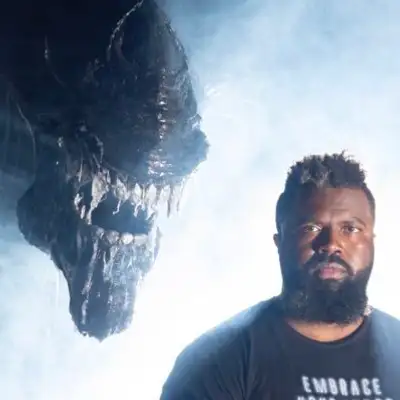
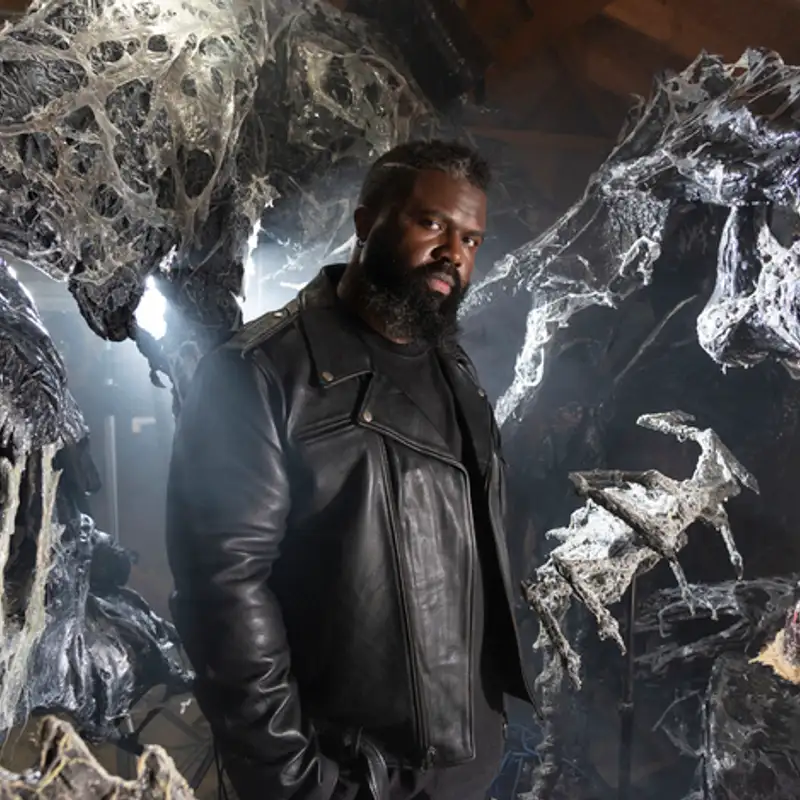
Tristian TrisRex Johnson
Download MP3Rob Lee: Welcome to The Truth In This Art, your source of conversations connecting arts, culture, and community. These are stories that matter and I am your host, Rob Lee, except no substitutes. Today I'm excited to welcome my next guest onto the podcast. My returning guest is a masterful monster maker, practical FX expert, phone fabricator, and a filmmaker.
His film, Aliens Resurgence for the Hive came out in 2025 and it is a doozy and I am eager to catch up. So please welcome to the program Tristan Tricerex Johnson. So sharing our stories, right? Sharing our stories in our own words is vastly important. So while I gave the bio for you earlier, I'd love it for you to introduce yourself in your own words.
TrisRex: Yeah, yeah, that's a good one. And it's weird because I don't know. You know, it's like I do all of this other cool stuff. Sometimes you ask me to talk about myself. I get all like, oh, okay, like where do I start?
But I am Tristan Tricerex Johnson, Chicago's on Hitler from the South Side, England was specifically. I am a horror sci-fi creature enthusiast. And that already always drove my passion when I was younger. And then as I got in a little bit older, I got into cosplay as a form of therapy. And that went directly into monster making, which has now turned into film maker. So if anything, I guess you could say the creepy visionary dude from Chicago, that counterflamed later in life and having fun.
Rob Lee: I love the creepy visionary. That's good. What's going to happen since this is the second time we've chatted? I'm going to line them up together to see what the arc looks like.
TrisRex: Yeah, man. I've done so much stuff now. It's like, I don't even know. Just see the artist like Prince. I'm getting like Prince now. I'm like the artist.
Rob Lee: I hear you. I hear you. So obviously that, and this is inside baseball, because we've chatted before and we've been in touch before. So I have sort of one question that I had from a while ago that I didn't ask before and I'll ask that second.
But I'm going to already put you on the spot. What are your thoughts on FX, specifically like the state of film like FX today? Like why do you prefer practical effects over VFX, things of that nature? Give us sort of your take on effects right now in film.
TrisRex: You know, effects right now in film is, I would say like in the last past five years, I've been very kind of myth about it. Mainly because there hasn't really been anything going on or being made to actually use it, right? It's just been like as the past couple of years, movie monsters, films have come back and I'm very happy about it. And it went from being one of those things where it's like, okay, if you want to see some cool practical effects, you're going to have to go that indie route or see something smaller or just watch something older, right? But one of the things I am happy about is that a lot of directors and producers are leaning on practical effects because it's the one thing that just can't be beat.
When it's in the camera, it's in the camera. You know, it's helpful for the director, the actors, the audience, like everybody wins when you use practical effects. Good practical effects. And it also hasn't fallen death on me that a lot of studios and a lot of people don't know how to shoot it. You know, one of the things that I had in my back pocket was looking at a lot of the makings of like the alien line, the work that they did on like Alien 3, Alien vs Predator, Requiem, even a little bit on Prey and they showed like how they shot certain things. So you can see where it's like, okay, you can have the coolest monster suit. You can have all of the, you know, the coolest animatronics in the world. But if you don't know how to actually shoot it, it's all for nothing.
Rob Lee: No, it does make sense. Like I had a conversation earlier with Leah Anderson who's just really dope like film scholar, horror scholar, and you know, I mentioned I was talking with you and you know, we were just talking about some of the old monster movies back in the day and this notion that, you know, nothing really beats a dude in a rubber suit sometimes. It's just like, it's a time and a place for some of these things. And you know, I'll say, I saw this video about why like a lot of the VX has gotten kind of kind of crappier over the last probably 10 years. And like, you know, it's just it's a bidding system and there's not a lot of care and attention and so on. And it's a film version of this kind of AI flop that we're seeing. And it's not people making something that has artistic merit where when I look at practical effects and I'll watch stuff on shutter and I really think about this.
I was like, yo, all of these dudes are weird. They're the person that should be making this. This is great. This is the person that should be making this suit. This is the person that's figuring out their craftspeople. They are folks with a really weird set of skills and they're applying it to solve a problem. That's artistry to me. Yeah.
TrisRex: Yeah. Yeah. And that's that's what it is. And that's where you gotta go. You know, shutter has been doing some really cool stuff as far as like keeping practical effects alive. And, you know, then you got certain people like Guillermo de Toro, you know, he he demands it.
You know, it's one of those things where he comes, you know, you when he comes to the table with the producers and the people forking over the money, it's like, you know, this dude is going to want a nice size of his budget dedicated to practical effects. So we got some people that's keeping it alive. Yeah, yeah. And I know I'm glad I'm very glad to say that. And hopefully I could, you know, add to that that lexicon of folks that's still trying to keep things in camera. Keeping people paid too, you know. Yeah.
Rob Lee: And that's the thing. It's a good point that you're making there as far as keeping people paid. When I see sort of this rush thing, it's again, it reminds me of having like a VA, you're paying someone but you're trying to figure out the exchange rate, you're trying to find it and get it done for the least amount. That's why the auction thing is happening. But if you're bringing in people who are actually doing stuff, paying attention to stuff, figuring out problems and being artisans really, then, you know, you have to pay them. And it's not like it's a crazy amount. It's a very unique skill set.
But it's not like the crazy amount of money. But if you can squeeze, squeeze, squeeze, that is a point where you take out the artistry and the soul of the thing that you're making. And it just, it just falls flat. It just doesn't work. Yeah.
TrisRex: Yeah. And it's obvious. It's obvious when it's like, you know, one of the things that I have saying, even my wife says this is just like, with us, we know with the monster stuff that I've been doing since like 2020, right? It changes the way we look at films and like how things could be shot and why they made this choice versus that one. So sometimes it's kind of like, it will, it can't, I'm not going to say ruins, right?
But it lets me watch with a different lens. Let's say that. Yeah. Yeah. Sometimes I'm like, really, y'all did CG for that.
Right. But also, me being me, you know, knowing how a lot of this stuff was done from yesterday year, you know, a lot of people don't know how to do it. And then as people do, you know, you know, kind of like one of the things I say, you know, a couple seconds ago is that, hey, man, practical effects is hard to do. That's why you keep seeing the same. You know, that's why you see some of the same names in the same studios over and over again. Like when they do have a practical budget that get that money, right? Because they're the ones that know how to do it.
You know, the and you can see like in some of the, you know, some of these shows, or in this case, the effects show where they use the guy in a suit, you know, I could even see the guy in the suit. There is there's a difference and not necessarily just saying from like old to new, but also having those people there for advisory. Yeah. You know what I'm saying? Like knowing how to make the monster, you know, knowing to show too much knowing the different angles, knowing the different shininess, the different textures, all of that stuff. You know, when to use small, when to ease up on small, I just don't we can talk about that for hours. You know what I'm saying?
Rob Lee: This is the thing I want to insert there that I think is really, really important. You know, you touched on the, you know, you kind of see the same names, right? As far as the people that are making I immediately think of Greg and Nick terror. I immediately think of Stan Winston. I think of even Jim Henson to a degree back in the day, right?
And when I think of the folks that are in those suits, not just the suits that are being made, but it's a skill in showing that the movement that goes along with it. Like I think of Doug Jones, I think of who is the guy that played Alfred in the last Batman movie, you know, frigid. He's been in circus.
Yeah, Sandy circus. And even most recently, the only the first movie I've watched of this year with that primate movie, and I was very pleased to find that that's a dude in that suit.
TrisRex: Just being a brother. Right.
Rob Lee: And it adds so much to it because when you're looking at the movie, you're like, all right, when is this going to look real CGI ish? And I was like, no, this this works. This is effective. Oh, that's a dude. Got it. Yeah.
TrisRex: And another person that really has been making waves. Shout out to Derek Mears. Derek Mears was one of the guys that he, how I found out about him is his character will he's acting with the swamp thing show.
From 2018 2019. Yeah, that he did. He was so good at swamping. And he really made you he really made you feel something as well as people like Ian White.
Ian White was a he played some of the predators in ABP 2004 as well as the engineer in Polypius. So it's a lot of it's a lot of folks that they really take feature acting beyond feature acting. And it's just acting. You know, I'm saying they're really the perp they're really the creature. They're really the person that they're portraying. And they put a different level of prestige to it.
You know what I'm saying? And it's not just somebody in the suit like this is a these are classically trained actors playing creatures. So it gives another it gives us something else to be proud of as monster makers, you know,
Rob Lee: Yeah, which is a good segue to my next question that color less is a couple of points. It brings together sort of like an actor or person that put respect on the name of the thing and Chicago a little bit. So I didn't have a chance to ask you previously. You're you know, you touched on South shot, you know, Chicago do so. Does Candyman count as a monster movie? Why or why not?
TrisRex: Yeah. So it doesn't count as a monster movie, but it does count as a flasher. Okay. So monster movies and flashers sometimes kind of get like, get lumped together just under horrible, but they're both sub genres underneath. So the flashers always think about people, people with knives, the men to people doing like crazy things, right? Like Freddy Krueger, Jason, I wouldn't say Freddy.
Freddy, he's kind of like a mix match because he kind of got some doing like stuff. Well, I don't know. Okay.
The flashers right. Those face, Jason, Michael Myers, Candyman, people with knives, you know, those are like, you know, I don't really gravitate to those as much because I'm a creature person, right? Yeah. But Candyman itself, the Lord, it goes down as a slasher. It goes down as one of those good slash moves.
Rob Lee: But the only reason I'll say he might be a closer to, and I think it's a good point you're making, but I think it might be a closer to Freddy because like, when you open up his rib cage, you see bees and stuff coming out of dude. I was like, when I think of a flasher, I was like, I think of what's the movie I watched recently, the remake sequel of it. I know what you did last summer. I was like, I made him into a flasher. The fisherman. I was like, that doesn't count where I was like, he's using this hook, but he has a supernatural thing going on. But you're right. That's the word.
TrisRex: Yes. Yes. Supernatural. And that's where it's kind of hard to like put place him, Freddy as well as Chuckie.
Rob Lee: Right. Right. Because the Dewey Day Dempola, I know it all. The voodoo.
TrisRex: Yeah, because it's like, where do you, where do you really put him? Because we know that they're not monsters, but they used to be people, but they're no longer people. So it's like, you got them in this middle ground.
Rob Lee: Yeah.
TrisRex: That's a good point. I think it's the same for like Jason and Michael Myers, who has some supernatural things going as well. But I think it regardless is how the actual look. Yeah. Right. And then you have what they're doing. Because technically, if you rewatch Pumpkin Head, it plays like a flasher.
It's good. Pumpkin Head is a monster. Yeah.
So a lot of the monsters, the monster movies of back then, you know, they play a flasher movie. They's kind of like, you know, the N.E .A. They do the same thing. It is looked really different. Yeah.
Rob Lee: It's this conversation on how do you define a monster that's like, all right, I hear you. Yeah. But, you know, we're touching on like, I think when we're when we're talking about monster movies, we're talking about a specific thing.
And I think that's I think that's really the point that you're getting across. And I like I like what you said right there about Pumpkin Head. It's just like, yo, that is the grotesque. That is something that you won't see in normal, you know, in normal life, even though you're suspending your disbelief in this sort of fantasy film element.
But it's just like, this is not this is nowhere near human, but then it's doing the thing as you touching on with it has elements of being a flasher that a human would do. So it's just like, oh, this is overlapped, but it still this is a monster. Exactly. Exactly. See, we're having a very nerdy black guy conversation about the efficacy of movie monsters. Gosh. The taxonomy of preaching.
The theological. So I want to move back. I want to move into your film.
That's one of the new superlatives that is background for you since we last talked. And I had a chance to watch it. Congratulations.
It's really dope. Your name is throughout. So shout out to you. Thank you. I appreciate it. So let's dive in.
Aliens resurgence for the hive. So you're involved in everything in the movie. Let's talk about the process of making the film at one point, right? When I'm looking at the credits, I'm like, oh, can I see my man's name? I was like, you did the music too. It's like, come on, dude, overachiever. Let's talk about the process, my G.
TrisRex: Yeah, man. The process. It really is like that. It's exactly how it is. It's like the next level of all tour. Well, actually, no, it's exactly what it is, the all tourism, you know, of being like having that soul creative direction being put into every facet of the film to tell the story. But I always say it was it's literally the hardest thing I've ever done in my life because it took everything, everything I've ever learned creatively. Everything I've learned through like project management, being an analyst, doing all other stuff, you know, on a big job at the corporate level.
And move that into one thing. You know, you're one person, how do you make those different departments mesh? How do you take care of the scheduling? How do you know, you know, how to direct certain actors?
You know, how do you know when to schedule certain scenes based off what's actually ready, what you need to actually make? You know what I'm saying? When it'll be the right temperature to do so because we're actually people and we get sick and we overheat.
You know what I'm saying? We get cold and things of that nature. And it just really forced me to grow in so many different ways. You know, I'm really, I'm an even more of a nurturing person. I'm even more of a listener.
You know, I'm my wife even say I'm a better husband because of it too. I've grown in so many ways, but the biggest thing, the biggest thing, patience. You know, I could build creatures fast, right? I've built up a next kind of different techniques. I know what's going to work with foam.
I know what I need to do with certain clays and things of that nature. I'll perfect it. That's a certain level, right?
Where I can floor it. But this was the first time where I was like, you can't forward because you don't know what you're doing. Even if you didn't know what you were doing, if you're not patient, it's not for you.
Rob Lee: Here's the thing. And I think it's a good point that you're touching on sort of patience, right? Like, when I started this podcast, right, you know, we talked, I guess it was what, maybe 2021, maybe 2022.
TrisRex: It was some time ago. Yeah.
Rob Lee: One of them, she. But at that point, right, when I started this podcast in 2019, I had already been a podcaster for 10 years. So I knew the elements as you said, the lexicon, right? I was having the techniques, how I do things, and this is what I do.
Now, bring this thing in of the truth that it's all right. This podcast is very much collaborative is very much archival is very much involved with other people, right? So sometimes you might be troubleshooting with people. Sometimes you may have to account for other things that just pop up where when I was doing my old podcast, it was literally me and maybe my co-host, right?
So it's very isolated. Now, I'm talking to multiple people in a given week and working with multiple schedules, multiple personalities and just trying to figure it out. And sometimes we've got to figure these things out. So patience. I've always had a fair amount of patience, but having that patience and also having a sort of like a shorthand in the language to be able to get folks to come outside of their things.
You know how it goes. Like looking at the past and the folks that you brought on, there's a I can see that connectivity. These are people you know, these are people in the scene. These are people that are probably friends and such.
So there's a shorthand where and some of your cast is even, you know, cast that you've made. And we'll talk about that later. But you have a sense of what you're getting where I'm dealing with strangers for the most part all the time. And sometimes we become friends after, but to cut through sending that representative and kind of get to like, how can we bring this to life? And how can we do that together? Take so much patience. And you have to get rid of that ego.
And as you're also touching on outside of it, it has an impact, especially if you're spending a amount of time. Like, this is not like a short film. This is like a 40 minute joint. And I was like, yo, what are you doing? This is like an episode. Like, what are we doing?
TrisRex: It's not a short. I say short, because I don't want to say, I like fan, like fan film, maybe, but I just like taking way more serious than fan stuff. I don't know. It's just a movie.
Rob Lee: You're an overachiever is what I'm hearing. But I think it is. And the cast is not like two or three people. It's a fair amount of people in there. It's like one in a dozen people. And so, yeah, it in having all the different things that, you know, all the different pies, right, that your fingers are in, you're doing so many different things. So talk a bit about, you know, that, you know, first time filmmaker, right? Self taught. So why this film and what it was, was it a logical next step in sort of you have this background, you have sort of this, you know, this lexicon, you have this background, you know, how to make all of the stuff. But now working with many collaborators. So talk a bit about that part. Yeah.
TrisRex: Um, that's one of the things where you really got to be in the soul monster maker, right? There's there's a level of confidence, bravado. You kind of know who you are.
You know what you stand for, you know, everything is pretty much on you. But when you cast people to bring your art to life, there's a certain level of self limit selflessness that has to come along with that. And everybody becomes your art. So how you talk to them, how you like the character, how you do all of these things, how you divvy up who's going to make what track for the movie and where it's going to go.
It all, it all matters to it really, really, it really matters and really takes you stepping out your own way. Because one of the things that I wanted that I did do for the film is, you know, I did this workshop with Haven Studios, which is part of guitars overdone in Chicago. And what they do is they give at risk use. They only got to be at risk.
You just got to be young in Chicago, right? And basically, they teach them music industry skills from people in the music industry, and they show them how to do things for commercials, rap albums, movies in this case, all kinds of stuff. And I really wanted to bring it to them because they love this stuff as well. They want a cosplay. They love sci-fi.
They love horror. And I want to do something special for Chicago and especially just to give back, you know. And I gave, I held a workshop there and I gave them a specific scene after giving them the introduction of the film and the why, right?
And it was really cool to see how quickly they picked up on it because everybody loves horror and everybody has a favorite monster. I don't care how cool or how stunning somebody might be, right? Or whatever their personality is. When they see that big monster, everybody collectors, we say, oh, shit. You know, if there's one equalizer that we got in the world, you know, monsters, everybody loves monsters.
They bring people together. And that's one of the things that I leaned on and just seeing how those young brothers like really took what I was thinking and put it into a sonic story to be able to match the certain tones and elements as well as some specific scenes of the film was really cool. It was really cool to see that. And just to see, you know, somebody who's people I've been knowing for like 15 plus years since I was in college, you know, and being able to see them transforming to, you know, these characters that I've been like writing in my mind for years now. And it's one of those things where it makes you feel very powerful and very fortunate at the same time. So I don't feel because it's like I made this shit in my mind and now it's here.
Yeah, fortunate. These people are my friends and they gave a shit about me before I told them about aliens movie or before I was making things. You know, so I get the privilege of being able to do this with some people that I even call family, you know, in just the homes. All these people that you see in the movie. Yeah, if they popped up over on the holiday is expected. Six of play. Enjoy yourself. Enjoy yourself.
Rob Lee: It's super important. I think, you know, being able to have those folks around, they're going to ride and rock with the vision. And, you know, it's better when we're able to do these things together and doing what your people doing, which it ninjas as it were. And, you know, I aspire for that. I look for that. I look for those collaborative opportunities to just do it. And especially in bringing folks back on, you know, to the podcast, like we're doing this now and it's like having a rapport, having a kinship, having a friendship, whatever the thing might be. That's super, super important.
So I got another question regarding somebody. I want to go back because we want folks to check out the film. So we want them to do that. But give us like that quick elevator pitch of what the film is and where they can check it out. I don't want to put that at the very end. I want to put a smack dab in the middle of the podcast as we're talking about it. Yeah.
TrisRex: Yeah. Good question. And thank you. Because I need to say this more, but the film takes place 20 years after the events of James Cameron's aliens. And it pretty much puts you right smack dab in the middle of a team of high ranking military officials, in this case, Marines. And they're still in this mission that will change them forever. You know, there's people that's not going to live. There's certain things that you see come to light. And let's just say, wailing in tiny is still wailing in time.
20 years in the future or 100 years ago, there are certain things that just continue to happen when it comes to wailing in tiny. So yeah, that's it. That's it. And you got to see different aspects of the xenomorph and I was in the more high, but it's going to have more of a psychological tone to really get you into the mindset of how these people really think. And where can folks find it? You can find it on my YouTube channel at Tris Rex.
Rob Lee: See, boom. That's it. I was like the shameless plug right there in the middle smack dab, some might say. In the middle. Yes, sir. So I do have sort of this follow up question where we're at in the subject. So inevitably, we run into challenges when we're making the thing like, I know, for instance, sometimes the challenge that presents itself for me and making a season of episodes is sometimes it's funding. Sometimes it's access. Sometimes it's just like, you know, scheduling conflicts, you know, as they say in the film business, right? What were some of the challenges that, you know, happened during this production and how did that sort of, you know, what did you rely on from those earlier experiences in your creative process and making monsters and maybe even your project project management skills in your background in that area? What were some of the challenges and what did you use to get through them?
TrisRex: You know, the biggest challenge that we faced was not necessarily, scheduling was one, right? But we kind of got into a rhythm after the third or fourth shoot, mainly because everybody's like way over 30. We got, you know, Mary, how all kinds of responsibility. This is like, a million for millennials, basically.
But I will say the biggest challenge outside of just scheduling was the set because I built the set in my backyard in Chicago, Wayne, Tarps and PVC pipes and things that they said, yeah, it just wasn't, it wasn't easy to maintain. Let's say, you know, let's say that there was a couple of times I actually got, you know, texts and calls from my neighbors like, hey, your tent is in my yard. I'm like, what?
Rob Lee: I didn't write that in the script.
TrisRex: Yeah. So I was very fortunate to have some really cool neighbors on the side of me too. And they actually, they enjoy it. They was in on it. I mean, outside of like the property damage part. You know, that was the biggest challenge. And it was the biggest, it used to piss me off because I was being like, as you've seen the movie, there's some, you don't know, I went out the way to make sure that the set design and things matched the characters and the actual tone and what they're supposed to be. And just to see like walk outside and see some of your stuff like completely destroyed is just like real good punch.
Yeah, real good punch. So that was that was the hardest part. But really what made what helped me is just saying that I got from this professor when I was at a university at Akron, and he was just, he just said, playing the work worth the playing.
And that's been one of my models ever since then ever since then like 2007 2008. And as a project manager, you know, it got me, it got me through a lot. And then it's like at the end of the day, what's what's so different from making a movie to do in a cell force migration project with change management with this budget that has to be completed and blah, blah, blah, blah, blah, you know what I'm saying? Yeah. At the end of the day, it's all work.
Rob Lee: Yeah, I think I think your work for me. I think what you're you're keying in on though is like that that that piece I it's still work. So if you have a plan, you spend some time with it and I have to remind myself of the same thing of like, all right, this is no different. Like, you know, I get nervous sometimes when I'm doing like a live podcast and some of the things that you're touching on, right?
Like, I'm like, I put this effort in, I got these questions ready and then no one else is ready. The microphone is it's the control thing, but it's a certainty thing. I think that I'm closer to certainty and perhaps control, but closer to certainty when I have all of the elements, I know what the problem is.
I know how to fix them as you know, as we kind of had, you know, before we got started, like I know how to address these these different things and have multiple options. But when I'm further away from those things, I'm like, ooh, ooh, just to give you a little frustrating and there's some anxiousness. But what I do and what I've tried to remind myself to do is just it's just a podcast. Just do your conversation.
You're prepared. You got good questions. Even if I don't have good questions, because I've had that before where I'm on site with someone and I might not have gotten my research on point. I did my questions, right? But like, I find out something in the questions isn't right. So I got to scrap all of the questions and I just have to improvise the whole thing.
And it's like, you have thousands of hours of experience doing this. It'll be fine. And it's the thing, you know, just just, you know, work the plan. And, you know, it's there.
It just sits there. And it's that reminder to do it. So, you know, the inevitable can happen.
You can have a top blowdown PVC pipe in someone's tree or something. You're like, all right, let me get that down. Let me just fix this. And then we can shoot this. It might set us back an hour. It might set us back half an hour, whatever, but you can make it happen. And you put together a really, really ambitious and really well done project.
TrisRex: Thank you, man. I actually appreciate that. And at times it felt like a thankless job. You know, not to making in type to cool effects, you know, sometimes it just feels like, damn, does anybody care about this? You know, when I go post something or like have moments like this or have moments where I'm at a loss.
I'm at a convention where I'm at the screening, right? You know, it kind of reminds me like, you know, keep going. Your work matters. Because it's a very lonely job. We're just talking about production.
We're not even talking about posts. Pulse is like doing a big. It's like, you have to be locked in. You have to, you really got to go there. You know, and there's so many possibilities as far as like where you could take the film. And then, you know, reshoots.
Things get scrapped completely. You know, you really got to keep that mindset. One point is just to plan the work and to work the plan passionately. And it all comes down to just like, We being super vigilant and disciplined and delusional as well.
Like a lot of people, you know, you hear about it, you never made a movie before, but you gonna make the alien film? I am great, I am a little bit off my shit. But me being off my shit is one of my greatest superpowers.
Rob Lee: I mean it tracks, it's legit. And you know, when I go through and I talk about like, yo, I'm over nine hundred episodes of this podcast, it's like why? I was like because I enjoy what I do and all of the thankless stuff as you're touching on that goes into it, the post production, the research, the pre-production, the post production, the actual, you know, managing your imposter syndrome, managing all of these different things. And a litany of folks have things that they're encountering and they're engaged in while they're doing something, making something creative, making something that's an artistic expression. And, but to your point, one of the points you were touching on is when you may go to a convention, go to a screening and you maybe get something, something small out of it, it might be, you know, getting covered in shit, right? If damn, this is a lot of work or you see some of your own, you know, perfectionism, right?
Like damn, I could have done a little bit better on that in the edit or whatever. But when someone comes to you is like, yo, this is fire. Talk to me about a standout response from maybe one of those screenings or, or maybe online or something that you heard about this particular project that really just kind of gave you like, all right, it just doesn't matter. People dug this or I feel really good that they noticed that part of my film.
TrisRex: Yeah, it was one of the things that really stand out to me is the appreciation for old school monster making shows like old school, 80s, guy in the suit, animatronics, no CGI at all, one liners, all kinds of stuff.
It's like, I jokingly say, like we made this movie, most of the movie was made in 2024 and 2025, but it's like, how do you make a 80s horror sci-fi film in 2024? And you know, it's just like, oh, maybe the idea of having all of this other stuff and just doing everything in camera and just really, just really leaning in on one of the things that made you love film. You know, and it was just seeing that response to people loving that too was very validating.
Like when I did the screening, there was a lot of people that were actually in film school that learned about my project and they wanted to see and they wanted to see it done from somebody that really cares, that passion. And it's also cool to see people that's like zero tolerance for horror, right? But they love my stuff. You know, it's like, you don't like horror films and blood and all that stuff, but they find appreciation in this, you know what I'm saying? Because I know I'm already know, like I know my fans.
I know that we're Tristan's shit. Even for everybody. I'm not for everybody.
So why should my heart be? That makes sense, right? And then you got those people that you would never think, you know, and people just just like love it.
Yeah, yeah. And it's crazy, you know, but it's like not knocking. It's a lot of standout moments right now. There's a lot of kind things that have been said about the film. Um, you know, as far as me being on grossly underrated, one of the better alien films as of late, you know, I've heard a lot of it and I appreciate it all, you know?
Um, like it's just, you know, being able to pull people from areas that you would lose expect those are those are the ones that always, you know, yeah, yeah, like what? That's what's up. But you don't something right.
Rob Lee: But you touched on earlier. You touched on earlier. Mom on the flip side.
TrisRex: Oh, also on the flip side. There's also people that saw the trailer. It was like, I love you. I support you, but I am not watching that. Demented shit also makes me feel great because I'm doing my job. I'm not here to make people feel comfortable, bro.
Rob Lee: It's like the thing that happens.
TrisRex: It's called mass fear.
Rob Lee: It's the thing that happens in wrestling, though. It's the thing that happens in wrestling, right? When it's like, if I'm getting the people to support me or the people that hate me, I've done my job and it's just like, yes, that's the job of a heel in the face. You got to elicit a response or someone. So everyone shouldn't be, you know, afraid of a horror movie or something that sci-fi and has monsters in it. And everyone shouldn't be like, you know, it should be somewhere between a bunch of people are like, oh my God, how'd you make that? And a bunch of people should be, this is really cool. I like this story, you know, because Aliens is also an action movie. And then there should be a bunch of people who are like, yo, I bang with you. I like what you do. I ain't rocking with that. I'm terrified. Yeah. Yeah. So I'm effective. You're effective. If you hit those three, you're effective.
TrisRex: I'm effective. And people know my brand. So it's just like, it's certain things, you know, once you see my name, attached to certain things, like, oh, shit. And with great respect, with great respect.
And I'm very happy. And it's hard for certain artists to do that, you know, to come up with a signature or to come up with a brand, especially, you know, when it comes to, you know, coming from the cosplay space where everything is, you know, it's about popularities, about all kinds of other things. What's the new movie? What's the, you know, what can I latch on to? And there's, there's duty in that too. You know, because that's how you get that diverse background as far as making different things and different characters that really could, you know, build their lexicon of what to pull from.
And that's dope. And then there's stuff like me. You know, where, you know, you're going to get like large creatures, super organic stuff, glitzy style screens, super loud, done shots, raw. I come with a certain brand and a lot of the science fiction and, you know, horror people love it. And, you know, if they don't love it, I really don't care. It's my medicine. Yeah.
Rob Lee: No, no, no. But it's a good point you're making though, when it comes to having a brand and I'm going to move into this, this next question. But having a brand like I would imagine, and I've heard it from folks when they listen to these interviews, they're like, you know, I knew this subject, the person that you talked to, and I never knew that about them.
Somehow you're able to pull out something from these people. They get very comfortable with you. And do you know this person? Did you know this person beforehand?
And I always share like, usually I don't know the guest. And it's not me trying to act like I'm such a good interviewer or something like that, but it's just like, you know, I, I have an intent and I'm, I'm curious. And it's something to be said about that. So my brand, I think is being real and being curious. And, um, yeah. And I think some people want to get that and, and I try to keep the, the stuff in there. Sometimes I might ask a stupid question or sometimes the question might be a little like, all right, you kind of answered that before, but it's, but it's real.
And I think in a world going back to the VXX, VFX conversation we were having earlier, we want something that's real. You can grab on to that monster. You can grab on maybe to an authentic conversation. And, um, and that's just kind of what that is. Um, so this next question I got for you, uh, because it's funny to talk about editing a little bit, right?
Being authentic. Um, everything can't make the final product, right? Everything didn't make the final film I would imagine, but what's something for you that was a non-negotiable, it needed to be in your film. What was something that you cut either that was filmed or something that didn't even make it to the filming stage?
Cause you're, you're, you're rote it as well. So talk a bit about like what that was like of, all right, we filmed this. We need to be at 40 minutes or so. This is going to take us over or something that I don't think we can make this happen in the timeframe with the parameters we have in place.
TrisRex: Yeah. There was, now one of the things I made a promise with myself, right? Yes. I wasn't going to like Zach Snyder myself and have to make like the directors cut to be able to fill my full vision, right? Release the trish rakes. I want to, yeah man, the trish rakes cut, you know, like I didn't want to, I didn't want to do that.
Whereas like you got to get the special edition for everything to make sense. You know, if I want to make some dark cryptid shit, well, I'm trish rakes. I'm a dark and cryptid person. You know what I'm saying? That's how the movie's going to be, you know? Um, however, there was a certain scene in act three that I had to omit, but not because of the, the sake of, not for the sake of time or like any other constraints, right? It was that it was so damn cool that it needed its own time. I didn't want to, I didn't want to rush it.
I didn't want to breeze over it. I want to explore that. And, um, I would say everything else, I would say things probably look a little different, like, because there, you know, there's one thing that I really like storming through that I really, really, really understand now. And that's the film that you write, the film that you shoot and the film that's added.
And those three are totally different. However, I will say I'm very proud that I hit the mark as far as what I intended to make. Cause one of the things I came to you like, there's probably, am I going to do a director's cut or something? Yeah, that's, it's fun. But however, the story is the story, things might look a little different.
You know, I learned more stuff with puppetry on the southern things. You know, so what's happening is always going to happen. Sure. You know, directors cut or not. Things might look a little different or might have certain things. Yeah. But the story is going to be the story. So if you like the story, cool, you're going to love part two, the directors cut and you're probably going to love my original IP when it comes out to, you know, so there, I would say not necessarily for any budget or time, things, strengths, it's just, it's like, Hey, you know what?
That's so cool that that should be its own thing. You know, so yeah, I can't, I can't tell you what that is because, you know, it's, uh, you know, under wraps right now, but just know that part two is, uh, yeah, it's already like in pre-production.
Rob Lee: I hear teasing things though. I like that. So like this is like, we got to keep some of the movie magic behind the curtains. I hear you. I hear you. Um, it's so, so I got two, two sort of final questions, um, two part actually. It's one really final question and then a few rapid fire and then we'll, we'll kind of wrap it up. Um, so one of the things I noticed, uh, that, you know, that this is connected to an existing sort of sort of IP. So that's what these two questions are around. So one of the things that can connect that, uh, is constantly connected to you is the, you know, aliens franchise. Um, but then also I gather and I've seen, you know, especially in watching the film and then, you know, previously interviewing you, you're in that scene where you're problem-solving, you're a tanker or you're a person that's doing things innovatively. So, you know, how do you marry those two taking an existing franchise that's over 40 years old, or, you know, at this point where it, you know, as far as alien reals, but also making it new, making it fresh, making it your own.
How do you marry those, those two? Is it like you need to be rooted in the things that you really liked about the alien and then aliens movie, but the alien franchise applied to kind of how you go about things, your brand, if you will, how do you marry those two things?
TrisRex: That's a really good question. And one of the things that I always think about and how I envision it is dealing in a same box, right? I didn't make this same box, but you're allowed to play in it.
And you're allowed to play in it. So on and so forth, that you follow the rules. And it's not necessarily because the rules are the rules is because without the rules, then, you know, alien, you know, it seems to get misconstrued, but we've seen that in Hollywood.
The rules are the rules for a reason. And so because I'm going to play in this sandbox, I want to do it in a respectful manner, because in this sandbox, not only do I know about, you know, extensive knowledge about how all of the films, how the alien film were made and things of that nature. I'm also coming from the comic books as well as the video games. And I know that there's a lot of certain, there's a lot of aspects that you might get from other forms of the alien franchise media that you don't always see on the big screen. So if anything, I took some creative liberties on like, mixing different elements from the Dark Horse comic books, which I love. But also, mixing that with what I'm going through in my life, in my life, you know, with what you see in my character, you know, people that's super close to me in they know some of those lines, they know where they came from.
Some of that dialogue, it was like, OK, that's just Tristan Vinten like that. I know that. I know that person. I've heard that before. You know, so that's another thing that's cool to see, you know, just how people could say that was a very Tristan film. You know, and I wear that as a badge of honor because I am who I am.
Like we were talking about with the brands like a love of the hate. I'm going to ride and rock this thing to we don't fall off. You know, but, you know, being in that sandbox, what could I add to this sandbox that's actually going to elevate it? You know what I'm saying?
While being respectful to the actual rules, right? What's going to bring more people to the sandbox that might not be an alien fan, you know, because at the end of the day, I do want to do some service to it because I'm a fan as well. And my fandom is the, you know, the one thing that drives my passion. And, you know, without me being a fan, this doesn't happen. You know, and I think that's for a lot of us as filmmakers and directors and writers with fans first. And that's kind of how you get hooked on the crack, you know, and it's just a gateway drug at a certain at a certain stage. But just making sure that I'm respectful, asking myself, does this make sense?
I had this been done before, you know, and just doing your research, doing your research. Oh, so, you know, and it's just one of those things where I think people forget just how every day and normal those characters were in those alien films in respect to their universe. You know what I'm saying? Like this wasn't Luke Skywalker or somebody like him doing like the House of Traders.
No, no, no, no, this wasn't these are like regular blue collar Marines and truckers in space. You know what I'm saying? And being able to relate that to what's going on now, especially with some of the hints or how I wrote the AI characters, right?
You can see where I'm where I'm going. We would think as far as how they're used or where they're used. So just being respectful to everything that the sandbox entails. But being respectful in a way, excuse I keep on saying respectful, but also adding to the canning in a way that's going to make it more attractive for others, but also tell a different story.
Rob Lee: That's a good point. I like that. It's an acknowledgement of what's been there, what's come and then how to make it, make it your own kind of boost it up. But it's like coming from a position of, I don't lose my alien cred here. You know what I mean? Mm hmm. Yeah.
TrisRex: Yeah. And it's just some of those things that I do flex in certain ways. It's like, yeah, that's what my deep cut home. For the people that read or for the people that play fire team elite or for the people that read the alien's library. And you know, you know, I'm going to do that because I'm part of the culture too. You know, I'm a fan.
So it's like I pick and choose where I'm going to flex in certain areas. And the cool part is a lot of the people and some of the people in the screenings picked up on that, that they picked up on it in the Q and A. I'm like, oh, and that is kind of like, it made me so happy that they picked up on it and a lot of people, even I see two, two when I first presented to aliens, they, some of the deep cut people also picked up that they mirrored some of the toys that came out of the 1992 one. Aliens operations, which was originally supposed to be a cartoon. It was supposed to be a Saturday morning cartoon. They made the toys for it and everything. They even made all of the episodes, but it got scrapped for some reason. And now it's just a part of lost history.
Rob Lee: I mean, I like that you, you are flexing a little bit with it, with the deep cuts. I like that. And I think people.
TrisRex: I'm not new to this. I'm new to this. I don't want to make this movie since 1988, man. I am not playing with motherfuckers out here. She was my friend. But it's really that damn serious when it comes to these aliens, man. I hear you. That is, that's, that's tight. That's tight. I'm very Dr. Oomar when it comes to these aliens, bro. That's really funny.
Rob Lee: So the follow up I have for that question is, it's sort of like the last real question is has anyone, you know, reached out to you from 20th century Fox from like the OG alien folks, you know, recognizing sort of your work, your background, maybe they stumbled across it, or maybe you, you know, may have done what I would do. And it's like, I sent this out. Have you heard any feedback from folks in the, in the universe?
TrisRex: Yeah. A lot of the people from, um, I reached out to some of the people like I also did like a, a special Instagram live with Jeanette Goldstein. She played the character of Vazquez and she was very cool, very complimentary of what we're doing, but also very forthcoming was like how certain things were shot in the mindset.
And that's really what led me to know that we were headed in the right direction. I also sent a couple of things to, uh, Alec Gillis and he's one of the, uh, people from studio, right? He operates for the total different names now. Um, but he's been working on the aliens franchise for since 80 years. Oh, wow.
And, um, he really, he really does some of the stuff too. So yeah, nobody officially from 20th century, but I think that I'm pretty sure they know of it, right? Because, you know, be on the news or certain things that had to get cleared, but, um, yeah, it really made me feel good because this is an homage to them at the end of the day.
Right? This is a love letter. It's a, it's a straight up love letter to aliens. You know, there's certain aspects that, that go throughout the whole alien, you know, timeline, but I really, really lean on to aliens because that's where, um, that's where I got bit. That's where the buzz bit me, you know, I'm here 20th century fox. I got, I got so many ideas. You probably had probably explode, but the difference is I can make this you that.
Rob Lee: That's a, that's a good spot for us to kind of wrap on the real question. I love that. It's a nice, uh, pin to it. Um, yeah, you know, that's, it's really good. A lot of, a lot of insight and sort of fandom comes through and sort of expertise comes through as well, being able to get it done and to pop off.
So shout out to you on that. So I got four, because I added one since you were talking. I thought it was really funny to add this.
Uh, that's when you heard me typing earlier. Um, so I have four. You don't want to overthink these. You want to, whatever's the first thing that comes to mind, you don't want to spend too much time on these.
So I got four rapid fire questions for you. All right. Here we go. Here's the first one. What is a movie monster that doesn't get enough love? Look, that's all good. Okay. Um, what is your favorite cute creature from the aliens universe? That's TV, film, comics, the whole thing, deep cuts.
TrisRex: Oh, clean alien. Okay. So I'm all G queen alien from 86.
Rob Lee: I dig it. But me and my partner have been running this running bit of she loves from alien earth. She loves that eyeball character.
TrisRex: Yeah. She's like, yeah, I love that bitch. She's like, look, I'm all about eyeball. If I could just do a whole show about eyeball. I was like, you're, you're bugging. Um, yeah. All right.
TrisRex: I want to say at the same time, it's adorable.
Rob Lee: That's that is twisted. It goes into people's heads. It goes into a goat's head. Nevermind. Nope. I'm not going to talk about it. You're not going to be talking to. I'm not going to read you talking. I'm not going to re litigate this. I'm not going to re litigate this. Uh, all right. So I'm going to ask you this one. This was the one I added. And then the, the, the, the, my real closer is I'm going to leave that one for last. Um, so earlier you remarked that post production was like doing a bid.
So I'm curious, what was your favorite snack during post production? Because it's lonely. You're by yourself. You're getting, but you need energy. So what are you eating? Cause I know everyone's eating something. What are you eating? No, I'm post production.
TrisRex: Dark chocolate almonds, as well as Geary's popcorn on a weekend
Rob Lee: has real Chicago, which you just set down the back end. Yeah.
TrisRex: Chicago mix Saturday and Sunday. You got to power through it. Chicago mix. Look, every, am I my every other day and in my every day, uh, dark almond, uh, dark chocolate covered almonds.
Rob Lee: I can't, I can't knock it. I can't fade it. Also, when I was in Chicago live, I definitely got loose on that Chicago mix. It is fine. I've gotten in my life in my 41 years of life at this point. I've gotten two 10s from, uh, from Garris. I got one that's in like the triple OG classic 10 giant 10s, by the way.
And the other one was when I was being a black Hawks fan for a little while, I got like a black Hawks 10. The popcorn didn't last more than a week. I got loose on it. Delicious.
TrisRex: The fact that it lasted a week is telling. Like, I really feel like, damn, am I really like that? Like, yeah, I guess I'm like that, but I will like dismantle a tin full of popcorn. Like, front of the face. Um, I keep like nothing ever, like, like it's nothing, you know.
Rob Lee: See, I was trying to be respectable, you know, it's just one of those things. And we'll, we'll trade some Chicago food knows because I think I got to, I'm going back there soon or have you and we'll, we'll, we'll tap in.
TrisRex: Um, we don't have to have a live one, a live podcast or we even in talking. I'm with it.
Rob Lee: Um, so here's the last rapid fire question. Um, so your cast is made up of real people like quick cosplay, play sova. And some cast members are made up like, you know, that you've created like, like big poogie. So of the cast members you made, who was the biggest diva of the ones that you've made?
TrisRex: Of the ones that I've made, I mean, well, I made all of the characters I made up, but the biggest diva is big pookie. The Royal Guard alien is a bitch, man. He is a bitch to work with. And the reason why I say that is because I underestimated just how big he can be. Right. And when it comes to like getting him in and out of the garage, so the garage is a normal door. It's not like the, the, you know, how you have the lift to get to my yard.
You got to go through a normal door. And so you kind of forget the actual dimensions of the monster sometimes, you know, because when I'm in the garage working with him, or if we're shooting a scene in the garage, everything is already laid out. He's big, you know?
He is such a pain to get into certain areas, but he's also very tricky to film because he is so big. You know what I'm saying? Cause when I originally, when I originally made the Royal Guard, you know, the first, he was the first one, but also back during this time, it was only going to be one alien. The queen and all of the warriors and the centuries, you know, all of that other stuff came later on once I got really deep into the script. And I wanted to tell more of a high like story around the different hierarchies and around the different warps that she wouldn't see on the bigger, on the big screen, right? But he was the one that was the hardest to work with mainly because he was so massive and not just like puppeteering wise, but finding the right angles to shoot him at.
And a lot of that, uh, you know, some of that I leaned on even wins, right? With the queen. Yeah. Because he was around the same size in certain areas, but to be honest with you, my saving grace was Jurassic Park. The Jurassic Park and Jurassic World movies really gave me creatures of that size moving at a different speed.
Um, that really, you know, gave me some frames to work with as far as like, okay, if we approach it from this angle, we can make big poop. You really look good. Cause he always going to look good. Right?
It's just for the actual. See what's happening. That power load of fight was a little bit trying. It was trying not to, not to spoil anything, but that, that last thing. Yeah, that's some work.
Rob Lee: I mean, you, but you, you know, you true to this, that's the thing. And you, you made it happen. And thank you for that. That's a, that's really good. And, um, so I got this one last, this is the sage like advice question. And we really want to peel the curtain back a little bit. Um, again, we've killed the curtain back a lot.
You know, you kind of gave us the full film school of making this joint. Um, so what would you tell someone who. Obsessively is, is looking to take their fandom and then their sort of talent and their interests collaborate with people and put together a movie. What would be the first thing or where should they start?
TrisRex: Oh, this is, this is, yeah. Um, and should you do it? Well, you know, that's the, that's the other, the other third question, but yes, you should do it. We want, we want to promote. Positively when people do and create a shit, right? Yeah. Well, one of the things that I will say, and one of the things that even like, just as a monster, making you know, when I was doing like armor and cosplay, right, I always leaned on my passions. Cause if I'm passionate about it, I know that I'm going to see the fruition, you know, it's not something that's the flay, the flavor of the week, right?
You know, as far as like whatever is being made from Marvel or DC or whatever IP that pops up, right? That was what you know, though, what you love. One of the things that gave me a lot of confidence in making this movie is like, I never made a movie before, but I know all of the frames of aliens. You know, I've watched this movie so many times and I also, I know, I know good taste. You know, you got to, you got to lean on some of the things that make that, uh, that made you a fan of it.
Like why was it so cool? You know, lean on some of those things, but you know, the past, go with what you're passionate about because you want to make sure there is something that you can continue to love and feel good about because it's not good, you know, doing these endings and things of this nation is not going to be easy. And there's going to be days where you're going to question if you should still do it. There's going to be things that happen and, um, the passion is the one thing that's never left. Like no matter how many times I walked out there and got my ass, maybe the passion was always high.
I'm not going to be pissed at certain times, you know, but there was never one moment or one shoot where I wasn't in love with what I was doing. That's good.
Rob Lee: It's really good. That comes through. That's, uh, that's amazing. I mean, that's, it's a similar journey. You know, when I do this, I really enjoy what I'm doing. There are times where it can be frustrating.
There are times where you're like, where am I going to get it from the day? But still loving it, still being a fan and still just, just caring about the thing that you're doing. Um, because really you're, you're, when you're bringing other people along, the stakes are a little higher because it's like, you don't want to feel like you wasted their time. You don't want to feel like you've, at least from my perspective, did a disservice to their story or did a disservice to their talents. So yeah, I, I relate so much and I'm really, um, really fortunate we were able to tap back in and have this, this conversation. I feel like I got the, you know, uh, direct or commentary version of your film. So that's really tight.
TrisRex: Yeah. Yeah. This is, this is the real right off the cuff. Um, yeah. I'm probably next time you talk to me or somebody you think is going to sound pretty much the same cause this is how I feel. But one of the things that I will say, this is the question you, you looked over on this far as like black people not liking sci-fi or horror. Um, there's a notion that black people don't like sci-fi and horror.
That's a lie. Um, and just keeping it on the aliens, just keep it on the aliens tip. Right. If you notice, there's always a big black dude. There's a big black dude for a reason.
You know what I'm saying? They know black people love, uh, horror and sci-fi and it's just something that's deep rooted within our community that people will probably wouldn't expect. But yeah, you, a lot of those things that made candy man pop off for, uh, some of the Jordan Pills stuff pop off or even like the latest, uh, great movie centers. Yeah. No, that's black people love horror and we know how to be scared of some shit and we know what to be scared of.
Rob Lee: But that's, that's the thing that's really good point. I gotta think about it. Right. I'm blinking on maybe alien resurrection and that sort of timeframe.
TrisRex: But resurrection, it was a guy that was part of the, uh, he was part of the pirates. His name was Christie. He had, uh, he had dreadlocks, remember?
Rob Lee: You know what you're right. And that's, and that's the only thing I'm getting at. I think in every movie in this franchise and even TV shows, the black character is very noticeable. It's not like just some one off dude. Like when I go to aliens, it's, you got like, you got like Alpone, which is my guy, by the way, that he gets, you know, a car with that. When he gets nerfed off and then you have, um, what's the other, the dude that's one of those? Yes.
TrisRex: Who's on Chicago too. You from Chicago. Who shot out Rico Frost.
Rob Lee: Exactly. Cause he's on, uh, what's the show he's on? A beauty in black right now. Um, so it's just like dudes have been around forever and it's, it's just great. Um, so that's a really good point. And thank you for adding that. Um, so that's kind of it for the, for the conversation for today. So there's, um, two things I would like to do as we wrap up. One, I want to thank you for coming back on and spending some time and giving us like all of those, those details. This has been, um, a treat. And two, I want to invite and encourage you to share with the listeners once again, where they can check out your film and where they can follow all of your work and your exploits. The floor is yours. Yeah.
TrisRex: Thank you all for rocking with me for this hour and, uh, giving me the opportunity to let you lean on a little bit about my journey as, uh, the artist known as Tris Rex. Since we just saying the artist now, we're not going to try. We just don't say the artist Tris Rex.
I'm on my print shit. Um, but you can find me at Tris Rex on all social media platforms, but specifically for the movie, go to YouTube. My channel is at Tris Rex and you'll be able to see the full movie there with the credits and everything.
And that's the same one I premiered on Halloween as well. And, uh, make sure to follow the channel, but also follow me on socials too. I'm very active on it. Uh, you'll see some funny stories. Uh, if you comment on something or DM me, don't be surprised when I return.
A message because I believe in talking to everybody and it's part of being social. And, uh, I love the community that I'm a part of and what I've been able to build. So yeah, Tris Rex on all social platforms, but specifically, um, go to YouTube to check out the movie. And, um, I want to let me know if you guys have come, uh, to check out the film from our podcast, let me know. Keep me honest. Let me know if there's some things that you saw or pointed out that, you know, that you might want to ask me about cause, uh, I'm all for that. I'm all for the community aspect of it cause we all want to have fun.
Rob Lee: And there you have it folks. I want to again thank Tristan, Tris Rex, Johnson for coming on to the podcast and catching up with us and telling us about his film, Aliens for Surgeons for the Hive and much, much more. And for Tris Rex, I am Rob Lee saying that there's art, culture and community in and around your neck of the woods. You just have to look for it.